
REVIEW · SUNRISE TOURS
Beautiful Sarankot Sunrise with Full Day Sightseeing in Pokhara
Sunrise gives Pokhara its finest opening scene. This private day tour starts around 5 a.m. with a drive to Sarangkot, where clear weather can reveal snowcapped Himalayan peaks above the valley. I like the strong mix of nature and culture here, especially the early mountain view and the chance to cover Devi’s Fall, Gupteshwor Mahadev Cave, Pumdikot, and the World Peace Pagoda in one outing.
I also like the private format, since only your group takes part and the air-conditioned vehicle handles the hills between stops. The main drawback is that the driver may function more as transport than as a guide. You can see many important places, but you may receive little spoken explanation about what you are seeing.
In This Review
- Key points to know before booking
- Why the 5 a.m. start is worth it
- Seti River Gorge and Pokhara’s white water
- Bindhya Basini Temple, a working religious stop
- Gupteshwor Mahadev Cave and the underground view
- Devi’s Fall, a short stop with a strong name
- Pumdikot Shiva Statue and a second mountain viewpoint
- World Peace Pagoda for the final wide view
- What the private vehicle changes
- Who will get the most from this day
- Is the $50 price good value?
- Should you book this Pokhara tour?
- FAQ
- What time does the tour start?
- How long does the tour last?
- Is this a private tour?
- What places does the tour visit?
- Is transportation included?
- Are sightseeing admission fees included?
- Can I cancel for a full refund?
Key points to know before booking
- Sarangkot begins the day at about 5 a.m., with the best chance of seeing sunrise colors and Himalayan peaks.
- Seven major stops fit into roughly 6 to 8 hours, making this a useful first look at Pokhara.
- The private vehicle keeps the day flexible, with pickup from your hotel and no strangers in your group.
- Pumdikot and the Peace Pagoda provide broad mountain views, but both depend heavily on clear weather.
- Gupteshwor Mahadev Cave and Devi’s Fall work well together, since they are connected in the sightseeing sequence.
- The $50 price includes admission, parking, taxes, and transport, which makes the package easy to budget.
Why the 5 a.m. start is worth it
Pokhara is at its most dramatic early in the day. The road to Sarangkot begins before most sightseeing activity, and the purpose of the early pickup is simple: reach the hill in time for sunrise over the Himalayas.
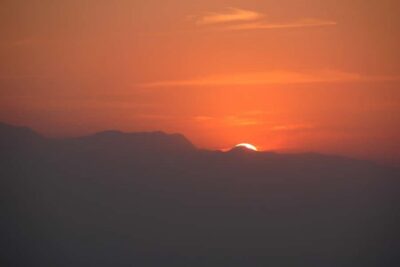
At Sarangkot, you have about two hours for the viewpoint and surrounding area. On a clear morning, the sun slowly lights the snowcapped mountains while the valley below comes into view. This is the part of the tour that receives the strongest praise, and it is easy to understand why. A sunrise from Sarangkot gives you a memorable first impression of Pokhara before the rest of the day becomes a circuit of temples, caves, waterfalls, and hilltop monuments.
Weather is the key variable. The tour can take you to the viewpoint, but no operator can promise clear peaks. Cloud or haze may reduce the mountain view. Still, the early departure has practical value even on a less-than-perfect morning because it leaves most of the day for sightseeing.
The driver is also praised for knowing good places to stop for photographs. That matters at Sarangkot, where the best picture may depend on your exact position and the direction of the light. Bring warm clothing for the early start, though the tour information does not specify temperatures or clothing requirements.
More Sunrise Tours in Pokhara
- From Pokhara: Sarangkot Sunrise Himalayas Tour
★ 4.7 · 218 reviews - Pokhara: Sarangkot Sunrise with Half or Full-Day City Tour
★ 4.8 · 100 reviews - The Best of Pokhara: Full-Day Private Tour with Sarangkot Sunrise
★ 5.0 · 66 reviews
Seti River Gorge and Pokhara’s white water
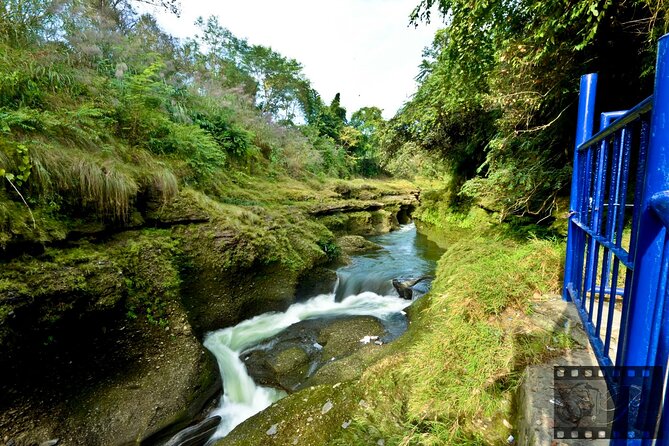
After Sarangkot, the tour moves to Seti River Gorge for about 30 minutes. The Seti is also called the white river because its water appears pale. The explanation provided for this color is that water coming from the Annapurna Himalayan area mixes with limestone.
This is a short stop, but it adds a different kind of scenery to the day. Sarangkot gives you open mountain views. The gorge brings you closer to the force of the river and the cuts it has made through the land. You should not expect a long walk or a major activity here. Think of it as a compact viewpoint stop that breaks up the drive.
The short visit also shows the tradeoff of packing seven places into one day. You get a broad introduction to Pokhara, but no single stop receives unlimited time. If you prefer slow walks and long pauses, this schedule may feel brisk.
Bindhya Basini Temple, a working religious stop
The next visit is Bindhya Basini Temple, with about 30 minutes set aside. It is described as a famous Pokhara temple associated with weddings.
This stop brings a clear cultural change after the mountain viewpoint and river gorge. You can expect a religious site rather than a museum-style attraction. The value comes from seeing one of Pokhara’s recognized temples within the city’s daily life, not from spending hours on historical interpretation.
Thirty minutes is enough for a short visit, but it may not satisfy you if you want detailed information about the temple’s beliefs, ceremonies, or architecture. This is where the guide issue matters most. The experience may give you access and transportation without much context unless you ask questions or already know something about the site.
Gupteshwor Mahadev Cave and the underground view
Gupteshwor Mahadev Cave is another 30-minute stop. It is a famous cave in Pokhara, and from inside you can see Devi’s Fall. Placing the cave and waterfall one after the other is a smart use of time because the two attractions are connected in the sightseeing plan.
The cave gives the day a more enclosed, physical experience after several open-air viewpoints. You will move from the city and hill roads into a darker underground setting, then continue to the waterfall. That contrast helps keep the day from feeling like a series of similar lookouts.
The short time limit may be the main consideration. Cave visits can feel rushed if you like to stop often, take photographs, or examine the surroundings carefully. The supplied details do not state the cave’s exact walking conditions, so you should not assume that every part will be easy for every participant. Most participants can take part, according to the tour information, and service animals are allowed.
A completely different way to spend the day:
- ZipFlyer Nepal – The World’s Steepest Zip-line
★ 5.0 · 608 reviews - Bungee Pokhara by HighGround Adventures
★ 5.0 · 366 reviews - ATV Adventure Tour in Pokhara, Nepal
★ 5.0 · 194 reviews - Full-Day Tibetan Cultural Tour to Tibetan Settlements Pokhara
★ 5.0 · 184 reviews
Devi’s Fall, a short stop with a strong name
Devi’s Fall follows the cave and takes about 30 minutes. It is described as a famous waterfall near Lakeside Pokhara.
The attraction works best as part of the larger route. You see the cave first, then the waterfall, creating a natural pair of stops. The name may suggest a grand, extended walk, but the planned visit is brief. You are stopping to view the falls, take photographs, and continue rather than spending half a day beside the water.
This is a good example of the tour’s overall character. It gives you a sampler of Pokhara’s main sights rather than a slow, specialized visit. I would value it as a way to get your bearings, especially if you have limited time in the city. If you have already seen the waterfall and cave, the rest of the day’s hilltop viewpoints may offer more new scenery.
Pumdikot Shiva Statue and a second mountain viewpoint
After Devi’s Fall, the vehicle drives uphill for about 15 minutes to Pumdikot Shiva Statue. The stop is scheduled for roughly two hours, making it one of the longest visits of the day.
Pumdikot is described as a famous tall Hindu Shiva temple, with a large Shiva statue as its main feature. If the weather is clear, you can also see the Himalayas from here. That gives the stop two reasons to visit: the religious monument itself and the elevated view.
The two-hour allocation allows more breathing room than the 30-minute stops. You have time to look around, take photographs, and enjoy the hilltop setting without immediately returning to the vehicle. It also gives the schedule a useful pause after the cave and waterfall.
Do not book this tour solely for a guaranteed mountain view at Pumdikot. Clear weather is required, just as it is at Sarangkot. The benefit is that the day offers several elevated viewpoints, so a hazy morning at one location does not necessarily mean every view will be poor.
World Peace Pagoda for the final wide view
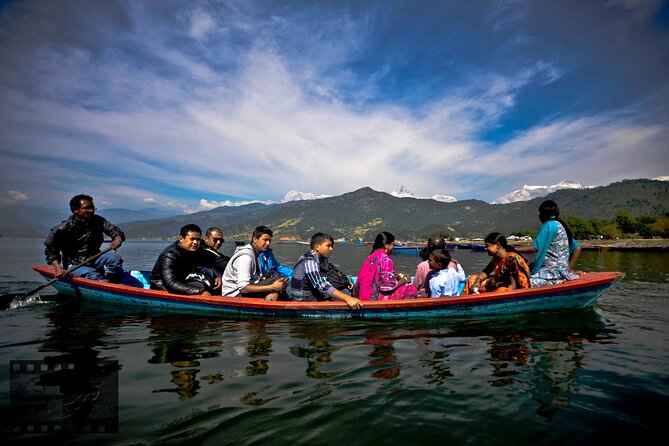
The final major stop is Pokhara’s World Peace Pagoda, also called the Peace Temple. The tour allows about two hours here.
The pagoda is presented as a place for peace of mind and meditation, with Himalayan views when the weather cooperates. Compared with the busy movement of the earlier sightseeing stops, this is intended to be a calmer ending. You can take in the monument, pause for the view, and let the day slow down before returning.
The Peace Pagoda is especially useful for visitors who want more than city streets and mountain photographs. It adds a reflective element to the route, although the experience will still depend on how much time your group chooses to spend looking around.
The schedule lists two hours here, but the full tour is estimated at 6 to 8 hours. Actual timing can vary with the early start, road conditions, and time spent at each stop. Since the tour is private, you have a better chance of discussing the pace with your driver than you would on a large group outing, though the available information does not promise a dedicated guide or adjustable stop lengths.
What the private vehicle changes
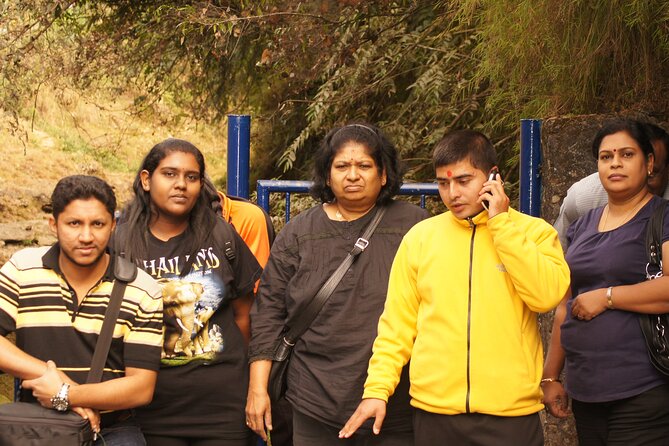
This is a private tour, so only your group participates. Pickup is offered, and the transportation is an air-conditioned vehicle. Parking fees, sightseeing admission, taxes, value-added tax, and service charges are included.
That package is convenient in Pokhara, where the route combines city sights with hill roads. You do not need to arrange separate rides to Sarangkot, Pumdikot, or the Peace Pagoda. You also avoid spending time working out transport between the cave and waterfall.
The private format suits families, friends, and small groups who want to begin early without joining strangers. Group discounts are offered, but the supplied details do not state the discount amount. At $50 per person, the value depends partly on group size. For one person, the cost may feel higher than using ordinary local transport. For a group sharing a private vehicle, the included admissions, parking, and full-day routing make the price easier to justify.
There is one important limit. A private vehicle does not automatically mean a private guide. One piece of feedback praises the driver’s ability to find excellent photo spots, while another says the experience felt mainly like a taxi ride with no commentary. I would book this for transport, views, and efficient sightseeing first. If detailed cultural explanation is essential, confirm whether a guide is included before paying.
Who will get the most from this day
I would recommend the tour most strongly to a first-time visitor with one free day in Pokhara. It covers the city’s major scenic and religious stops, gives you a sunrise start, and removes much of the planning work.
It also suits families and friends who value privacy. The air-conditioned vehicle, hotel pickup, included parking, and admission fees simplify the day. Since most participants can take part and service animals are allowed, the tour has broad appeal, though the available information does not give detailed accessibility notes for the cave, viewpoints, or temple grounds.
You may want a different plan if your priority is expert storytelling, long hikes, or a relaxed visit to only one or two places. The schedule is full, and the driver may not provide the kind of commentary you expect from a licensed sightseeing guide.
The booking pattern suggests people often reserve it about nine days ahead. That is useful timing advice if Sarangkot sunrise is important to your plans. Confirmation is provided at booking, and free cancellation is available until 24 hours before the start time. Changes or cancellations inside that window are not accepted for a refund.
Is the $50 price good value?
The price is $50 per person. That includes the air-conditioned vehicle, parking, all sightseeing admission fees, taxes, value-added tax, and service charges.
The clearest value is convenience. You are not paying separately at each listed attraction, and you do not have to arrange a 5 a.m. ride to Sarangkot followed by several hill transfers. The private setup also gives your group a quieter day than a shared coach tour.
The weaker part of the value is interpretation. If you expect a guide to explain every temple, cave, river, and monument, the price may disappoint unless that service is confirmed in advance. If you mainly want a reliable route with a driver, good photo stops, and a wide sample of Pokhara, the price is more attractive.
Should you book this Pokhara tour?
Book it if you want to see Sarangkot sunrise plus Pokhara’s main sights in one private day. The sunrise is the major reason to go, and the combination of mountain views, Seti River Gorge, Bindhya Basini Temple, Gupteshwor Cave, Devi’s Fall, Pumdikot, and the Peace Pagoda gives you a useful overview of the city.
Before booking, ask one direct question: is a guide providing commentary, or is the driver only handling transport? If the answer is transport only, bring your own background notes and treat the day as a scenic sightseeing circuit.
For a first visit, a family outing, or a short stay in Pokhara, I think the tour is a practical choice. For a slower cultural experience or detailed local history, choose a tour that clearly includes a guide.
FAQ
What time does the tour start?
The tour starts at about 5:00 a.m., with hotel pickup and an early drive to Sarangkot for sunrise.
How long does the tour last?
The full experience lasts approximately 6 to 8 hours.
Is this a private tour?
Yes. Only your group participates in the private tour or activity.
What places does the tour visit?
The route includes Sarangkot, Seti River Gorge, Bindhya Basini Temple, Gupteshwor Mahadev Cave, Devi’s Fall, Pumdikot Shiva Statue, and the World Peace Pagoda.
Is transportation included?
Yes. An air-conditioned vehicle is included, along with parking fees.
Are sightseeing admission fees included?
Yes. All listed sightseeing entry and admission fees are included, as are taxes, value-added tax, and service charges.
Can I cancel for a full refund?
Yes. You can cancel at least 24 hours before the experience start time for a full refund. Cancellations or changes made less than 24 hours before the start time are not accepted for a refund.
New in the Pokhara listings
- Pokhara: Pokhara Highlights Tour by Bus★ 3.6 · 10 reviews
- Discover Pokhara in Style: Private Vehicle Service with Driver★ 5.0 · 5 reviews
- Multi-Day Tour from Pokhara, Poon Hill and Mulde Trek★ 5.0 · 1 review
- Pokhara in 5 Hours: Lake, Museum, Cave, Falls & Pagoda Hill★ 4.5 · 16 reviews
- Private 4 Day Poon Hill Trek from Pokhara★ 5.0 · 16 reviews
- 4 Day Mardi Himal Base Camp Trek from Pokhara★ 5.0 · 18 reviews
- From Pokhara Full Day Entire Pokhara Tour with Guide★ 5.0 · 1 review
- Things to do at Pokhara World Peace Stupa tour with Guide★ 5.0 · 2 reviews
Sunrise Tours, compared.
Nagarkot Sunrise View and Day Hiking from Kathmandu
Read our review →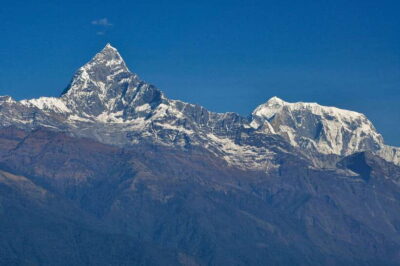
Nagarkot Sunrise and Hike Tour to Changu Narayan
Read our review →
Nagarkot Sunrise & Hike to Changu Narayan Day Tour from Kathmandu
Read our review →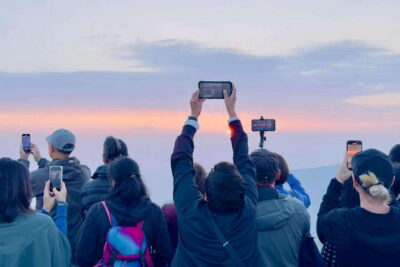
Nagarkot Sunrise & Hike with Lunch -Private/Group
Read our review →
Sarangkot Sunrise with Half or Full-Day City Tour
Read our review →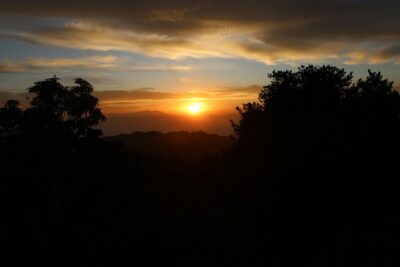
Nagarkot Sunrise Trip & Day Hike with Lunch from Kathmandu
Read our review →Browse the lists this tour appears in