
REVIEW · POON HILL TREKS
7 Days Tour on Poon Hill Trek and Chitwan Jungle Safari
Sunrise comes early in the Himalayas. This seven-day trip pairs the Poon Hill trek with a Chitwan jungle safari, giving you mountain villages, Gurung culture, wildlife, and a taste of Nepal without committing to a long expedition. I like the smart combination of walking and safari, and I like that transport, permits, guides, lodging, meals in Chitwan, and park activities are arranged together. The main drawback is the pace: seven days leaves little spare time, and the trek requires moderate fitness.
You will hike through Birethanti, Ulleri, Ghorepani, Tadapani, and Ghandruk before trading mountain trails for the Rapti River and Chitwan’s forests. The reward is variety. The tradeoff is comfort and time. Guesthouse nights on the trek are basic, the road transfers take hours, and the final day allows travel to either Pokhara or Kathmandu, so you should confirm your preferred finish before booking.
In This Review
- Key points to know before you book
- Why this Nepal combination works in seven days
- Day 1: From Pokhara to Ulleri through Birethanti
- Day 2: Rhododendron forests and the approach to Ghorepani
- Day 3: Poon Hill sunrise, then on to Tadapani
- Day 4: Ghandruk and the return to Pokhara
- Day 5: The road south to Chitwan
- Day 6: Canoe, forest walk, and jeep safari
- Day 7: Bird-watching and the final transfer
- What the $750 price really covers
- Who should book this seven-day adventure?
- Should you book the Poon Hill and Chitwan trip?
- FAQ
- How long is the Poon Hill and Chitwan tour?
- Where does the tour begin?
- Is transportation from Pokhara to the trek included?
- What fitness level is required?
- What wildlife activities are included in Chitwan?
- Are meals included?
- Can I cancel for a full refund?
Key points to know before you book
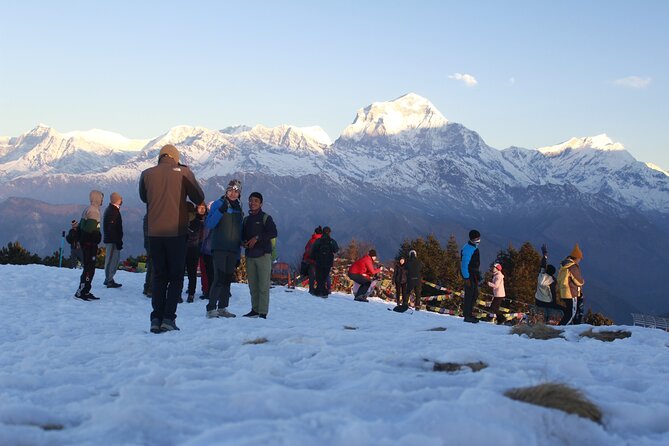
- Poon Hill sunrise: An early climb brings wide views of Annapurna, Dhaulagiri, and Machapuchare.
- Gurung village culture: Ghandruk adds local history and a museum visit, not just mountain scenery.
- Chitwan wildlife days: Canoeing, a forest walk, bird-watching, and a jeep safari give you several ways to see the park.
- Guide Amrit: Amrit is specifically praised for keeping the trek well-paced and helping create a smooth experience.
- Private group format: Only your own group takes part, with hotel pickup and private transfers at key points.
- Good seven-day value: The $750 price covers a lot, but you should check exactly what is included in transport and meals before departure.
Why this Nepal combination works in seven days
Nepal is often sold through one major attraction at a time: a Himalayan trek, a wildlife park, or a city stay. This trip gives you two very different sides of the country. In the first half, you walk from village to village in the foothills of the Annapurna region. In the second, you travel south to Chitwan, where the focus shifts to crocodiles, birds, rhinos, and the possibility of tiger sightings.
I like this plan for someone with limited vacation time. You do not spend a full week on a demanding high-altitude trek, yet you still get a proper mountain sunrise and several days of walking. Chitwan also changes the rhythm. After stone steps and uphill trails, a canoe ride and jeep safari feel like a welcome reset.
The schedule is full, though. Four trekking days are followed by two days connected with Chitwan and a final transfer day. You will not have much room to recover from delays or add extra sightseeing. If your priority is a slow trek, this is too compressed. If your priority is seeing a broad slice of Nepal, it makes good sense.
More Poon Hill treks:
- Poon hill Trek 3 days
★ 5.0 · 176 reviews - Pokhara: 4-Day Ghorepani, Poonhill & Ghandruk Mountain Trek
★ 5.0 · 132 reviews - Ghorepani – Poon Hill Trek 3N-4D
★ 5.0 · 125 reviews
Day 1: From Pokhara to Ulleri through Birethanti
Your guide picks you up at your Pokhara hotel in the morning, using a name card to identify you. A private car takes you to Nayapul in about an hour and a half. That private transfer matters because it gets your group to the trailhead without the uncertainty of arranging a separate local ride.
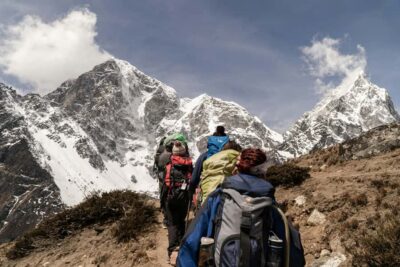
The walk begins around Birethanti and follows the Modi Khola river. The day ends at Ulleri and takes about seven hours, so this is not a gentle warm-up. You should expect a substantial first day on foot, with village paths and mountain scenery arriving quickly.
The route introduces the character of the trek: small settlements, river sounds, changing views, and a steady climb. Ulleri is a useful first overnight stop because it places you in the mountain rhythm from the start. At the same time, you should not underestimate the day. Good shoes and a moderate fitness level are important, and your guide’s pacing will make a real difference.
Accommodation during the trek is in guesthouses. That means you are choosing location and local atmosphere over hotel comforts. Pack with that in mind. The tour provides lodging, but the supplied details do not promise private rooms or a particular standard at every mountain stop.
Day 2: Rhododendron forests and the approach to Ghorepani
The second day takes about six hours and leads through rhododendron and oak forests toward Ghorepani. Waterfalls and mountain views break up the walking, making this one of the more scenic trail days.
Ghorepani is important because it positions you close to Poon Hill. It is also the place where the next morning’s early start becomes real. You will need to rest after the trek and prepare for a pre-dawn walk. The sunrise is the central prize of this route, and arriving in Ghorepani gives you a practical base for it.
The forest section offers a different view of the Annapurna foothills than the open village paths. In some stretches, trees frame the mountains rather than giving you a constant panorama. That variety is part of the appeal, though anyone expecting uninterrupted mountain views may find the forest walking quieter.
This is also a good point to keep your expectations realistic about food and drinks. They are not included as a general tour benefit and are available for purchase. The trip does include the listed meals in Chitwan and specific breakfasts, lunches, and dinners, but the mountain portion is not presented as a fully catered package.
Day 3: Poon Hill sunrise, then on to Tadapani
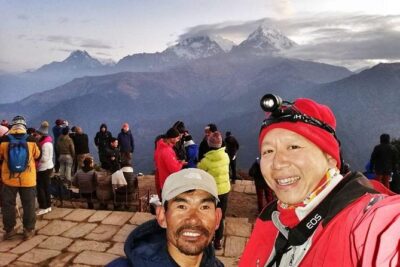
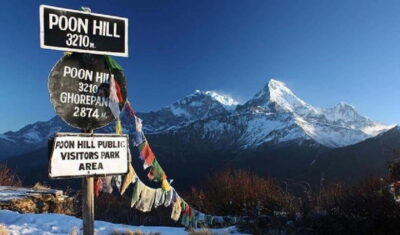
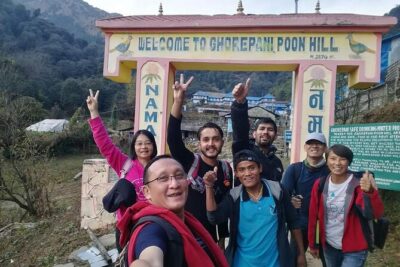
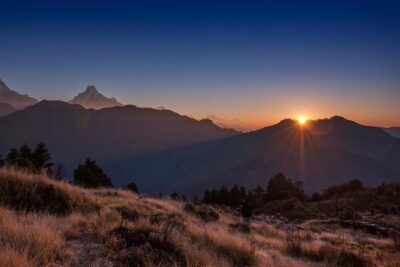
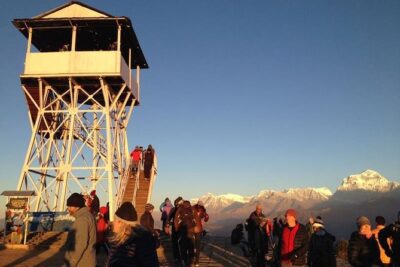
Day three is the emotional center of the trek. You rise early for the walk to Poon Hill, where the reward is a sunrise over the Annapurna and Dhaulagiri ranges. Peaks named in the tour description include Annapurna, Dhaulagiri, and Machapuchare.
This is the moment to keep your camera ready, but do not spend the whole time looking through it. The changing light is the point. Weather can affect what you see, and no sunrise view can be guaranteed, but the early walk is worthwhile because Poon Hill is known for its broad mountain outlook.
After returning to Ghorepani for breakfast, you continue toward Tadapani. The full day lasts about seven hours. That makes the sunrise more demanding than a simple viewpoint visit: you walk before breakfast, return to eat, then continue for much of the day.
The pacing deserves attention. A positive account of this trip specifically praises Amrit for keeping the trek well-paced. If Amrit is your guide, that is an encouraging sign. In any case, tell your guide early if you need a slower pace. A good trek is not a race to the next lodge.
Tadapani gives you another mountain overnight and keeps you on course for Ghandruk. By now, you will have experienced the main pattern of this trek: early starts, long walking days, guesthouse lodging, and scenery that changes between forest, village, and open mountain views.
More jungle safaris in Chitwan:
- From Kathmandu/Pokhara: Private 3-Day Chitwan Safari Tour
★ 4.7 · 34 reviews - 2 Night 3 Day Chitwan Jungle Safari Tour from Pokhara
★ 5.0 · 6 reviews - 3-Day Chitwan Jungle Safari Adventure From Kathmandu/Pokhara
★ 5.0 · 6 reviews - Pokhara: 1 Night 2 Day Chitwan Safari Tour
★ 4.9 · 6 reviews
Day 4: Ghandruk and the return to Pokhara
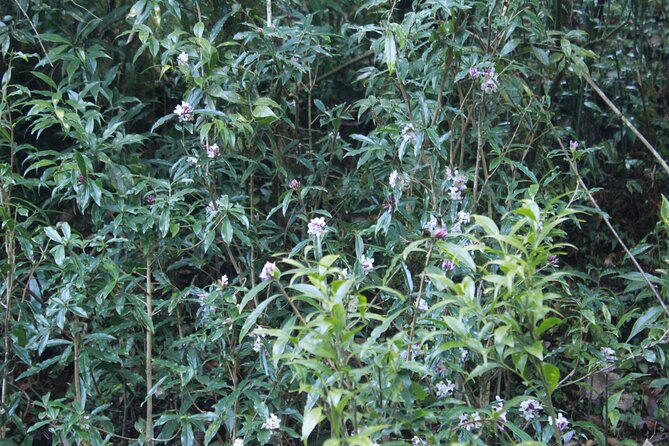
The fourth trekking day goes downhill to Ghandruk, a traditional Gurung village. This is more than a scenic stop. Ghandruk gives you a chance to see a different part of mountain life and visit the local museum.
I like this part of the route because it adds cultural context to the walking. The mountain villages are not simply photo backdrops. A museum visit and time in Ghandruk help connect the trail to the Gurung community and its traditions. The tour also includes a traditional cultural focus in Chitwan, so local life remains part of the trip rather than an afterthought.
From Ghandruk, you descend farther to Kimche. A private vehicle collects you there and takes you back to Pokhara. The day lasts about seven hours, including the downhill walking and transfer connection.
Downhill can be harder on tired knees than uphill, so do not assume the final trek day is easy. Once back in Pokhara, the plan includes one night in a two-star hotel with breakfast. That night is useful. You get a proper pause between the mountain section and the long journey to Chitwan.
The itinerary labels this stop Pokhara Lakeside, but the detailed plan centers on the walk from Ghandruk to Kimche and the drive back. If time around the lake matters to you, ask how much free time remains after the transfer.
Day 5: The road south to Chitwan
Day five shifts from walking to road travel. You travel through green countryside and along the Trisuli River before reaching Chitwan National Park. The journey takes about six hours, so this is a transfer day with a destination worth anticipating.
At the jungle lodge, you receive a welcome drink and a briefing about the upcoming activities. That briefing is useful because Chitwan days involve different types of outings, each with its own pace and purpose.
You also explore a nearby Tharu village and attend a traditional cultural dance performance. These details give the Chitwan section a local connection. The park is not only about trying to spot large animals. A Tharu village visit helps you understand that people live around and alongside this protected area.
Accommodation is in a two-star hotel, with breakfast, lunch, and dinner included during the Chitwan portion. This makes the $750 price easier to assess. You are not simply paying for a guide and a few trail permits. The package also covers the southbound transfer, lodging, meals in Chitwan, and several guided activities.
Still, two-star lodging means modest rather than luxurious comfort. The tour description does not provide room details, so confirm the arrangement if private facilities or a particular hotel standard matter to you.
Day 6: Canoe, forest walk, and jeep safari
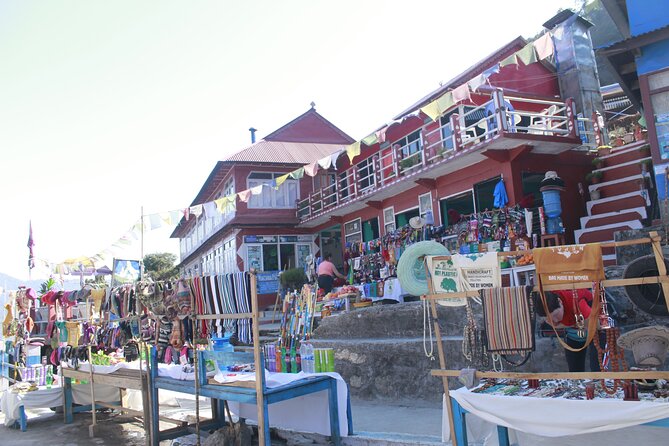
Chitwan’s main activity day begins early with a canoe ride on the Rapti River. This is a quieter way to see the park and gives you a chance to look for birds, crocodiles, and other wildlife near the water.
The canoe is followed by a guided forest walk. You search for rhinos, tigers, and bird species, with the guide helping you read the surroundings. The tour description names some of the park’s most sought-after animals, but sightings are never certain. You should book this for the range of wildlife experiences, not for a promised tiger photograph.
The day also includes a jeep safari. A vehicle covers more ground than you can on foot, while the forest walk offers a slower and closer look at the area. Combining both is a strong feature. You get different views of the park instead of repeating the same activity.
At about nine hours, this is the longest day of the trip. The early start, canoe ride, walking, and jeep outing can leave you tired, especially after the preceding trek. That is not a flaw so much as a scheduling fact. Keep your expectations practical and treat the day as a full outdoor program.
Chitwan is also known for its birdlife, with about 500 species noted in the tour information. You do not need to be a serious birder to enjoy this. The bird focus simply means you will have something to look for even when larger animals stay out of sight.
Day 7: Bird-watching and the final transfer
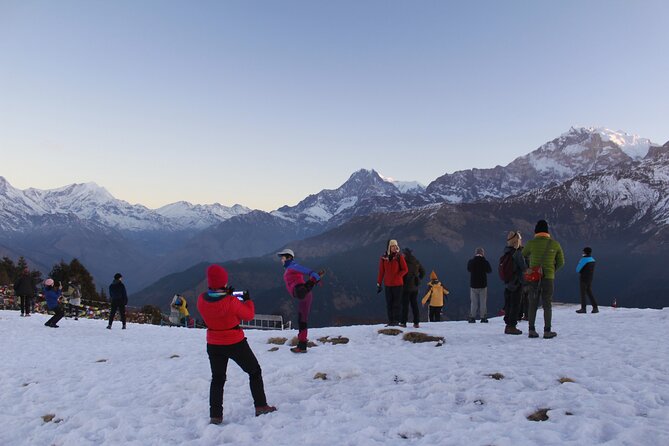
The final morning brings another early bird-watching tour. It is a sensible closing activity because Chitwan’s birdlife can be active in the morning, and the outing does not require another major trek.
After breakfast at the lodge, you travel by luxury sofa-seat tourist bus back to Pokhara or Kathmandu. The listed driving time is about six hours. This creates an important planning question: the trip is based around Pokhara, but the final transfer may take you to either city. Confirm the destination you need before you leave Chitwan.
The transfer option is useful if you are continuing a wider Nepal trip. It is less convenient if you have a fixed flight or a tight connection. Build in caution around road travel, since the schedule gives an approximate duration rather than a guaranteed arrival time.
What the $750 price really covers
At $750 per person, this is not a bare-bones trek. The price includes hotel pickup and drop-off, a private car from Pokhara to Nayapul, a licensed English-speaking trekking guide, trekking permits, official documents, guesthouse accommodation, first-aid equipment, entrance fees, and the private transfer from Kimche to Pokhara.
It also includes the Pokhara hotel night, the tourist bus connection involving Pokhara and Chitwan, Chitwan accommodation, meals there, a jeep safari, canoeing, a forest walk, and other guided park activities. That bundle can offer good value for a visitor who wants one booking to handle the main moving parts.
The price is less attractive if you already have transport, guides, and lodging arranged. It may also feel higher if you prefer independent travel. The private-group format is a plus for people who want their own group rather than joining strangers, but it does not mean luxury service.
Food and drinks are listed as available for purchase, while gratuities are optional. The included-meal wording also lists two lunches, three breakfasts, and two dinners, so check the final meal schedule against your personal plans. Small clarifications like this prevent surprises.
Who should book this seven-day adventure?
I would recommend this tour to you if you want a compact introduction to Nepal and have moderate fitness. You should be comfortable with trekking days of six to seven hours, an early climb to Poon Hill, and a long nine-hour activity day in Chitwan.
It suits couples, families with fit older children, and small private groups who value a guide and organized transport. It is also a good match for first-time visitors who do not want to arrange permits, trail transfers, park activities, and hotels separately.
I would hesitate to recommend it if you want a relaxed holiday, high-end hotels, or a slow cultural trip. The schedule is tight, the trekking accommodation is in guesthouses, and the final transfer day could be tiring. You should also consider a longer itinerary if mountain walking is your main reason for visiting Nepal.
The guide can shape the experience. Amrit is named as exceptional and praised for keeping the trek smooth and well-paced. Ask who will guide your group, and clarify the walking pace before departure. That simple question can matter as much as the mountain views.
Cancellation is free if you cancel at least 24 hours before the local start time. Changes or cancellations made later are not accepted for a refund.
Should you book the Poon Hill and Chitwan trip?
Book it if you want Nepal in two strong flavors: a Himalayan sunrise and a real national park program. The combination of Poon Hill, Ghandruk, Tharu culture, canoeing, forest walking, and a jeep safari gives you more variety than a mountain-only trip.
Do not book it expecting guaranteed wildlife, effortless walking, or lots of unplanned free time. Confirm your final destination, meal details, guide assignment, and hotel arrangements first. If those practical points suit you, the $750 package offers a useful and active week with genuine variety.
FAQ
How long is the Poon Hill and Chitwan tour?
The tour lasts approximately seven days.
Where does the tour begin?
The tour begins in Pokhara, with hotel pickup offered.
Is transportation from Pokhara to the trek included?
Yes. A private car takes you from Pokhara to Nayapul, and a private vehicle transfers you from Kimche back to Pokhara.
What fitness level is required?
A moderate physical fitness level is recommended. Trekking days last about six to seven hours, with a nine-hour activity day in Chitwan.
What wildlife activities are included in Chitwan?
The Chitwan program includes canoeing, a guided forest walk, a jeep safari, bird-watching, and other guided park activities.
Are meals included?
Breakfast, lunch, and dinner are included during the Chitwan tour. The listed package includes two lunches, three breakfasts, and two dinners. Other food and drinks are available for purchase.
Can I cancel for a full refund?
Yes, if you cancel at least 24 hours before the experience start time. Cancellations or changes made less than 24 hours before the start are not accepted for a refund.
New in the Pokhara listings
- Pokhara: Pokhara Highlights Tour by Bus★ 3.6 · 10 reviews
- Discover Pokhara in Style: Private Vehicle Service with Driver★ 5.0 · 5 reviews
- Multi-Day Tour from Pokhara, Poon Hill and Mulde Trek★ 5.0 · 1 review
- Pokhara in 5 Hours: Lake, Museum, Cave, Falls & Pagoda Hill★ 4.5 · 16 reviews
- Private 4 Day Poon Hill Trek from Pokhara★ 5.0 · 16 reviews
- 4 Day Mardi Himal Base Camp Trek from Pokhara★ 5.0 · 18 reviews
- From Pokhara Full Day Entire Pokhara Tour with Guide★ 5.0 · 1 review
- Ultralight Flight: Into The Heart Of The Mountains (90 min)★ 5.0 · 1 review
Poon Hill Treks, compared.
4-Day Ghorepani, Poonhill & Ghandruk Mountain Trek
Read our review →
Browse the lists this tour appears in