
REVIEW · BHAKTAPUR TOURS
Day Trip to Bhaktapur and Panauti from Kathmandu
History comes alive outside Kathmandu. This seven-hour outing pairs Bhaktapur’s grand temples and old city lanes with Panauti’s quieter streets, local homes, and farming culture. I like the contrast: Bhaktapur gives you Nepal’s finest Newari architecture, while Panauti shows a slower side of valley life that many visitors miss.
I also like the small-group format, capped at 10 people, and the guides’ personal approach. Guides such as Anup, Puspa, Sarita, Manju, and Raj have been praised for explaining Hinduism, Buddhism, architecture, and daily life in clear detail. The main drawback is practical: entrance fees, lunch, and hotel transport are not included, and the several hours of driving can feel long if you prefer a fast-paced city tour.
In This Review
- Key Points To Know Before You Book
- Why This Pairing Works So Well
- Bhaktapur Durbar Square: Three Squares, Many Layers
- What I Like About Bhaktapur
- What To Keep In Mind
- Panauti: A Quieter Town With Three Rivers
- The Community Homestay Experience
- Guides Who Add Meaning To The Sights
- Transport, Timing, and Daily Comfort
- Is $34 Good Value?
- Who Should Book This Day Trip?
- Practical Details Before You Go
- Should You Book Bhaktapur and Panauti?
- FAQ
- How long is the Bhaktapur and Panauti day trip?
- What time does the tour start?
- Where does the tour begin and end?
- Is hotel pickup included?
- Are entrance fees and lunch included?
- What is included in the tour price?
- How many people can join the tour?
- Can I cancel for a full refund?
Key Points To Know Before You Book
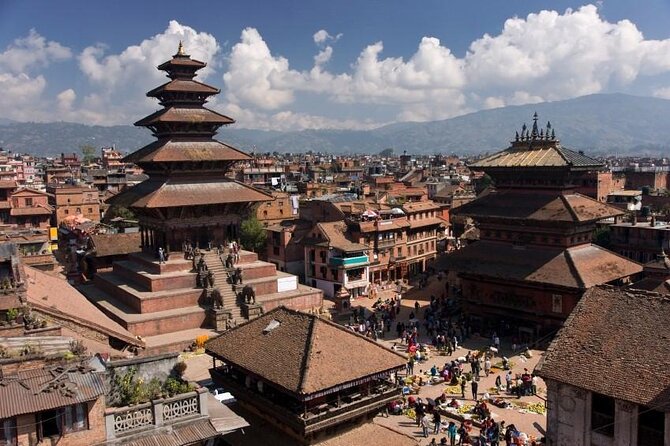
- Bhaktapur is a whole medieval city, not just one monument: You explore three connected squares filled with temples, shrines, workshops, ponds, and daily life.
- Panauti adds a quieter, more local experience: Its temples, Rana-era mansions, rivers, rice terraces, and community homestay feel far removed from central Kathmandu.
- Guiding is the heart of the day: The best part is often the explanation of Newari customs, religious symbols, architecture, and local traditions.
- Lunch can be arranged at a community homestay: The meal may include dal bhat and is designed to support local women and families.
- The tour offers good value at $34: You get a guide and air-conditioned transport for roughly seven hours, though you must budget separately for admissions and food.
- Plan around a 9:00 am start: The meeting point is Royal Mountain Travel on Lal Durbar Marg, and the tour returns there rather than dropping you at your hotel.
Why This Pairing Works So Well
Bhaktapur and Panauti are close enough to visit in one day, but they offer very different impressions of the Kathmandu Valley. Bhaktapur is a major heritage destination with monumental squares and carefully preserved buildings. Panauti is smaller, calmer, and more closely tied to local homes, agriculture, metalwork, and religious festivals.
That change of pace gives the day a useful rhythm. You begin with formal architecture and the story of a powerful Newari kingdom. Later, you see how old religious customs and valley traditions continue in a smaller town.
I would not choose this outing if your only goal is to check off famous sights quickly. The value comes from taking time with a guide, asking questions, and noticing details that are easy to miss on your own. Several hours are spent on the road, so the tour works best when you see the journey between the towns as part of the day.
The group limit of 10 people is another plus. A small group makes it easier to hear explanations in crowded areas and gives the guide more room to adjust the pace. Some participants have had private or nearly private outings when the group did not fill, though that should not be treated as guaranteed.
More time in Bhaktapur:
- Bhaktapur & Patan Durbar Square Day Tours
★ 5.0 · 122 reviews - Nagarkot Sunrise & Bhaktapur UNESCO Heritage Private Tour
★ 5.0 · 66 reviews - Kathmandu: Private Patan and Bhaktapur Sightseeing Tour
★ 4.7 · 64 reviews
Bhaktapur Durbar Square: Three Squares, Many Layers
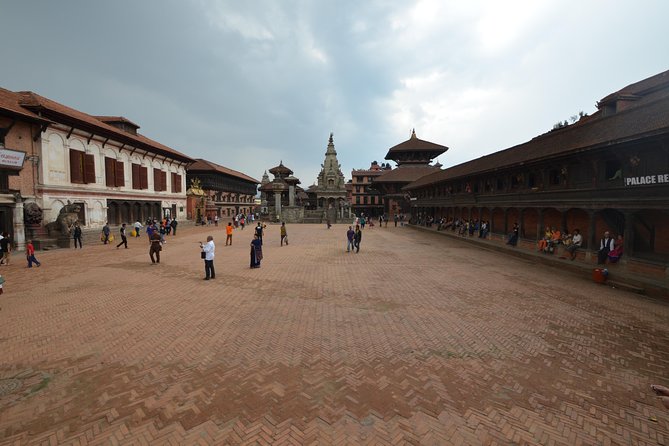
The first stop takes about three hours and centers on Bhaktapur Durbar Square and its surrounding old city. Bhaktapur was once the capital of one of the Kathmandu Valley’s three kingdoms. From the 14th through the 16th centuries, it was a major political and artistic center.
The name Durbar Square can be misleading. You are not simply looking at one open plaza. Bhaktapur’s heritage area is made up of three large squares linked by lanes, courtyards, shrines, temples, and working neighborhoods. The scale is one reason this stop deserves several hours.
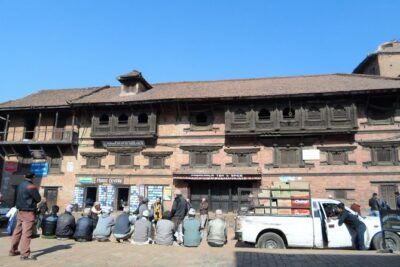
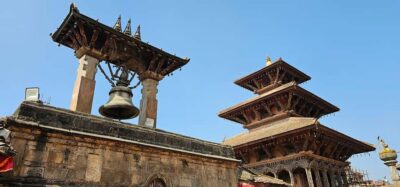
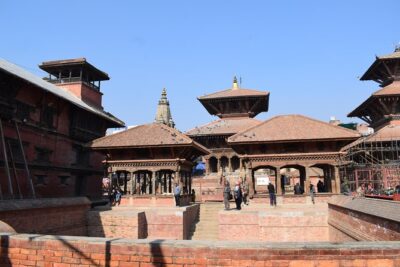
You can expect to see pagoda-style temples, intricate woodwork, stone carvings, shrines, and traditional Newari buildings. The architecture is the main draw, but the setting matters just as much. Bhaktapur is still a lived-in city rather than a silent museum.
Your guide can help explain how the buildings functioned, which deities are honored, and how Newari social life was organized. The town’s old neighborhoods were historically arranged around caste groups and community ponds, known locally as tanks. These water sites were used for drinking, washing, and religious ceremonies, and they still serve as social focal points.
This is where a good guide adds real value. Without context, a temple may look like another ornate building. With an explanation, you begin to see the carvings, roof levels, guardian figures, courtyards, and ritual spaces as parts of a larger religious and social system.
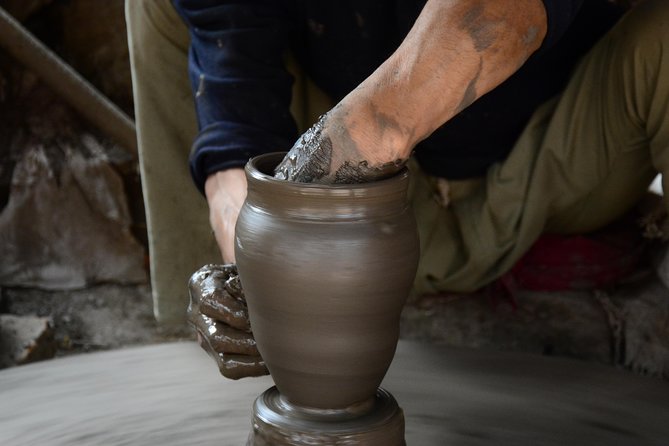
Bhaktapur also has a strong craft tradition. Pottery and delicate handicrafts are part of the city’s identity, and some guides may point out workshops or suggest places to look at local goods. One useful tip from the experience is to leave room for photographs and browsing rather than treating the stop as a nonstop lecture.
The city has suffered earthquake damage and repeated rebuilding, so not every structure has survived unchanged. That is part of the story. Your guide can explain how restoration and reconstruction have shaped what you see today.
What I Like About Bhaktapur
I like that the town gives you more than a single postcard view. You can move from a grand square into an ordinary lane, pass a small shrine, see a local pond, and watch daily routines continue around centuries-old buildings.
I also like the balance between major monuments and smaller details. The famous temples are impressive, but the best moments may come from carved windows, courtyard altars, pottery displays, or a quiet neighborhood corner.
What To Keep In Mind
Bhaktapur charges an entrance fee, and it is not included in the tour price. The supplied information notes that children aged 10 and above are subject to the entrance fee. Since all fees and taxes are excluded, check the current admission cost when planning your budget.
You should also expect walking on uneven historic streets and standing for periods while the guide explains the sites. One guest with back problems found the guide accommodating, but you should mention mobility concerns when booking so the pace can be discussed.
More days out at Panauti:
- Dhulikhel, Namobuddha & Panauti: A Scenic Day Tour from Kathmandu
★ 5.0 · 36 reviews - Namobuddha Monastery Hiking Day Tour via Panauti from Kathmandu
★ 5.0 · 15 reviews - Bhaktapur Sightseeing & Dhulikhel, Namo Buddha, Panauti Tour
★ 5.0 · 14 reviews - Dhulikhel Namobuddha and Panauti a day Tour from Kathmandu
★ 4.9 · 10 reviews
Panauti: A Quieter Town With Three Rivers
After Bhaktapur, the tour continues to Panauti for about three hours. This is the part that gives the outing its local character.
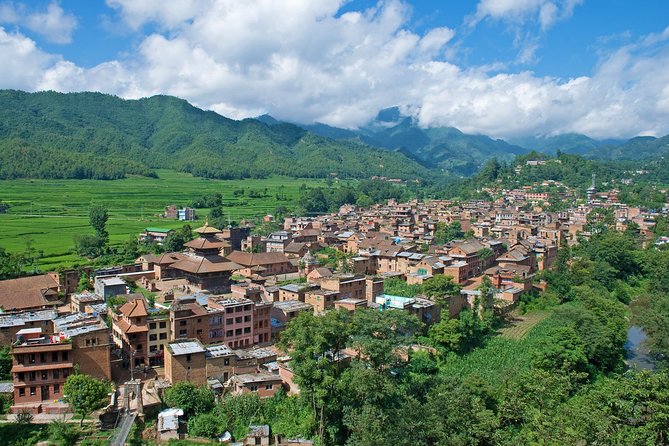
Panauti was once a commercial town, but today it has a much calmer feel. Its old center includes temples, stupas, stone art, carved wooden details, and restored Rana-era mansions. Three rivers, the Brahmayani, Roshi, and Punyabati, are associated with the town, which takes its name from the sacred Punyabati River.
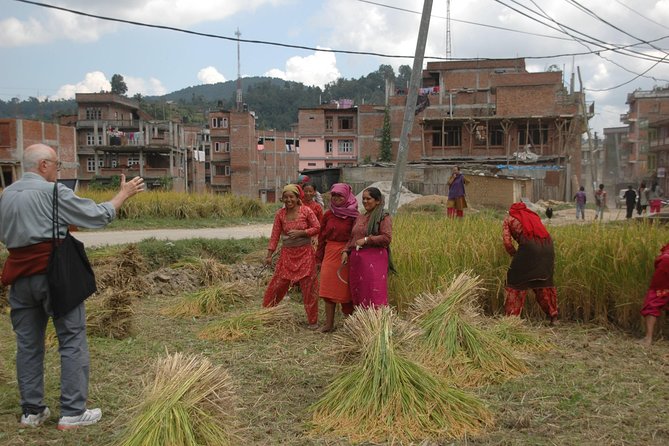
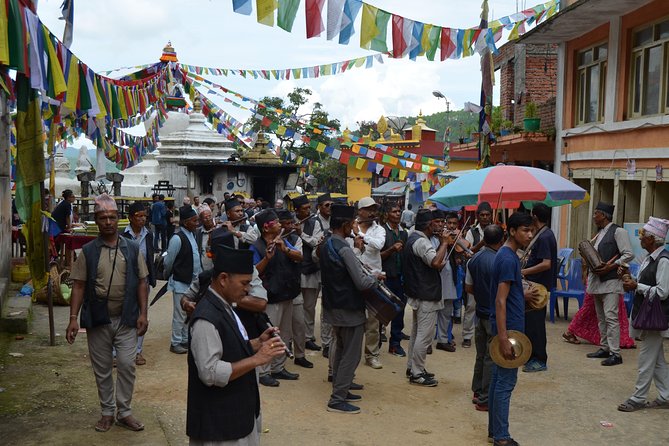
Panauti is also connected to agriculture and metalwork. You may see rice terraces and learn about a way of life that depends more directly on farming and local craft than central Kathmandu does. Festivals and fairs remain important parts of community life.
The town’s religious buildings are not presented as isolated attractions. They are part of an active place where people worship, work, gather, and maintain family traditions. That makes Panauti a strong counterpoint to Bhaktapur. Bhaktapur shows the power and artistry of a former capital. Panauti offers a more modest view of the same valley culture.
Indreshwor Mahadev Temple is one of Panauti’s key Hindu sites. The supplied itinerary begins to identify it as an important temple, and your guide can provide the fuller explanation on site. As with Bhaktapur, look closely at the woodcarving and stonework rather than rushing from one structure to the next.
The Community Homestay Experience
The homestay is one of the day’s most distinctive features. Lunch may be served in a local home connected with a community program supporting women’s empowerment. You are not simply eating at a standard restaurant. You have the chance to meet local people and see how food and hospitality fit into everyday life.
Several guests particularly enjoyed dal bhat served at a private home. Some meals were adjusted to suit personal preferences, including spice levels. That flexibility is helpful, but lunch is not included in the advertised price, so confirm the arrangement and cost before the day begins.
I like this part because it turns Panauti from a sightseeing stop into a human encounter. You can ask about food, family life, work, festivals, and the town itself. The experience remains brief, but it gives you a more grounded understanding of Nepal than another restaurant meal in Kathmandu.
Keep your expectations realistic. This is a community visit, not a staged cultural show with a long performance program. The appeal is its simple setting and the chance to support local households and entrepreneurs through tourism.
Guides Who Add Meaning To The Sights
The strongest feature of this tour is the quality of its guiding. Names associated with particularly well-regarded outings include Anup, Puspa, Sarita, Manju, Raj, Kalpana, Monica, Zuna, and Saruti. The exact guide is not specified in advance in the supplied details, but the repeated praise points to a consistent focus on interpretation and personal service.
Anup has been singled out for his broad understanding of history, culture, and religion. Puspa has been praised for adapting the day to individual interests, while Sarita has been appreciated for detailed explanations and help with a slower pace. Manju has answered extensive questions about Hinduism, Buddhism, and Nepali culture, making her a strong fit for anyone who wants more than basic dates and names.
Zuna’s connection with Bhaktapur added a local perspective, and her tour included advice about pashmina shopping. Monica was praised for tailoring the outing to a solo participant’s interests. These details suggest that you can ask for more explanation, more photo time, or a little flexibility rather than simply following a fixed script.
The guides also help bridge religious and cultural differences. Nepal’s temples can be difficult to read at first. A guide can explain why a shrine matters, how Hindu and Buddhist traditions overlap, and what behavior is respectful.
This is especially useful at Bhaktapur, where there is so much to see. Without guidance, you may notice the most famous temple and miss the smaller water tanks, social patterns, craft traditions, and religious symbols that make the city special.
Transport, Timing, and Daily Comfort
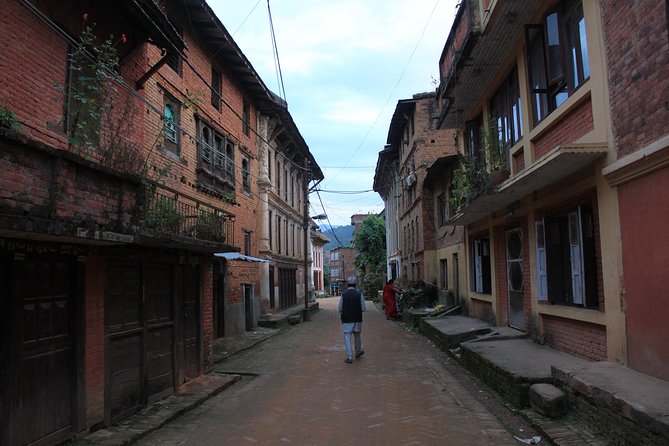
The tour starts at 9:00 am from Royal Mountain Travel, Lal Durbar Marg, Kathmandu 44601. It ends back at the same meeting point. Hotel pickup and drop-off are not included, so allow time to reach the starting location independently.
Transport is provided in an air-conditioned vehicle suited to the group size. Some recent outings have used a clean, comfortable electric vehicle with a female driver. Drivers including Shanti, Santi, Urmila, Usha, and Govinda have been praised for careful, patient driving.
The driving matters because this is not a compact walking tour. The total duration is about seven hours, with approximately three hours at Bhaktapur and three hours in Panauti. The remaining time allows for travel and transitions.
One practical warning is worth repeating: be prepared for multiple hours in the vehicle. If you dislike road time, you may find the day tiring. On the other hand, air conditioning, a small group, and a careful driver make the transfers easier than arranging the same route without support.
The schedule also leaves some room for photographs, shopping, and a meal. That is important in Bhaktapur, where rushing through the squares would undercut the point of visiting.
Is $34 Good Value?
At $34 per person, this is a strong-value outing if you want both transportation and a guide. You are covering two towns over roughly seven hours, with an air-conditioned vehicle and English-speaking guide included.
The price does not cover Bhaktapur or Panauti admission fees, lunch, or other taxes and charges. That means the final cost will be higher than the advertised rate. Still, the base price compares well with the time involved and the cost of arranging a private car and guide separately.
The value is highest for people who care about explanation and local context. If you only need transport, a cheaper independent arrangement may be possible. If you want someone to explain Newari architecture, religious traditions, city planning, and local life, the guide is the reason to pay for this experience.
The homestay also adds value beyond sightseeing. Money spent on lunch can support a local family or women-focused community initiative, rather than going only to a large city restaurant.
Who Should Book This Day Trip?
I would recommend it to you if you are staying in Kathmandu and want a fuller picture of the valley beyond the capital. It suits history and architecture enthusiasts, first-time visitors, solo explorers, couples, and anyone interested in how religion and daily life overlap.
It is also a good choice if you want a less tourist-heavy second stop. Panauti does not have the same fame as Bhaktapur, and that is precisely its appeal.
You may want to skip it if you have limited mobility and cannot manage historic streets without advance planning, or if seven hours with several hours of driving sounds too demanding. You should also avoid assuming that lunch and entry are covered in the $34 price.
The small maximum group size makes this more personal than a large coach outing. If you are lucky enough to have a lightly booked departure, you may receive an even more tailored day, but the experience should still be worthwhile with up to 10 people.
Practical Details Before You Go
Book with the following points in mind:
- The start time is 9:00 am.
- Meet at Royal Mountain Travel on Lal Durbar Marg.
- Return is to the original meeting point.
- English-speaking guiding and air-conditioned transport are included.
- Hotel pickup and drop-off are not included.
- Lunch is not included.
- Entrance fees are not included.
- Children aged 10 and above are subject to entrance fees.
- Most people can participate, but mention mobility concerns ahead of time.
- Free cancellation is available up to 24 hours before the start time. Changes or cancellations made within 24 hours are not accepted for a refund.
Should You Book Bhaktapur and Panauti?
Yes, if you want a well-priced day that combines major heritage sights with a more personal community visit. Bhaktapur is the headline attraction, but Panauti and the homestay may become the most memorable parts of the outing.
I would book this tour rather than visit Bhaktapur alone if you want clear explanations, reliable transport, and a chance to ask questions. I would also choose it if supporting local communities and women-led initiatives matters to you.
Just budget for admissions and lunch, wear comfortable walking shoes, and accept that the road time is part of the deal. For $34, this is a thoughtful way to see two very different sides of the Kathmandu Valley.
FAQ
How long is the Bhaktapur and Panauti day trip?
The experience lasts approximately seven hours. About three hours are planned for Bhaktapur and three hours for Panauti, with the remaining time used for transportation and transitions.
What time does the tour start?
The tour starts at 9:00 am.
Where does the tour begin and end?
You meet at Royal Mountain Travel, Lal Durbar Marg, Kathmandu 44601, Nepal. The activity ends back at the same meeting point.
Is hotel pickup included?
No. Hotel pickup and drop-off are not included. You must make your own way to the meeting point.
Are entrance fees and lunch included?
No. Entrance fees, lunch, and all fees and taxes are excluded from the listed price.
What is included in the tour price?
The price includes an English-speaking tour guide and transport in an air-conditioned vehicle according to the group size.
How many people can join the tour?
The activity has a maximum group size of 10 people.
Can I cancel for a full refund?
Yes. You can cancel at least 24 hours before the experience start time for a full refund. Cancellations or changes made less than 24 hours before the start time are not accepted for a refund.
New in the Kathmandu listings
- Traditional Momo Making Class★ 5.0 · 10 reviews
- Kathmandu: Ancient City Kirtipur & Pharping Monastery Tour★ 5.0 · 2 reviews
- Kathmandu to Pokhara Premium sofa bus ticket★ 4.0 · 17 reviews
- Women Empowerment Project(Nepali cooking class & jewelry workshop★ 5.0 · 15 reviews
- 7-Day Langtang Valley Trek from Kathmandu★ 5.0 · 1 review
- Kathmandu 2 Nights 3 Days Chitwan Jungle Safari Tour★ 5.0 · 9 reviews
- Yoga Experience Day Trip with Private Transfer From Kathmandu★ 4.0 · 2 reviews
- Wildlife Adventure in Chitwan Nepal★ 4.0 · 4 reviews
Bhaktapur Tours, compared.
Nagarkot Sunrise & Bhaktapur UNESCO Heritage Private Tour
Read our review →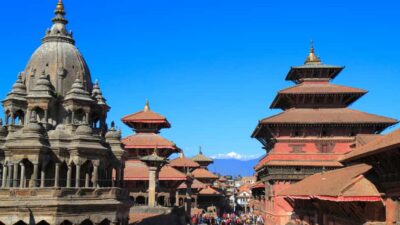
Bhaktapur & Nagarkot Day Tour with Lunch – Private/Group
Read our review →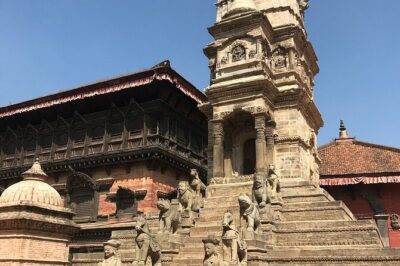
Nagarkot Sunrise & Bhaktapur Heritage Tour -Private Full Day Trip
Read our review →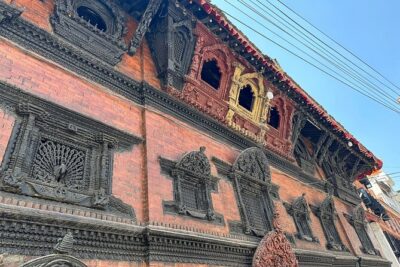
Browse the lists this tour appears in