
REVIEW · POON HILL TREKS
Kathmandu 3-Day Tranquil Poon Hill & Ghandruk Circuit Trek
Mountain mornings reward early risers. This three-day trek packs Poon Hill sunrise views and a close look at Gurung village life into a short route from Pokhara. I especially like the rhododendron forests and the chance to visit Ghandruk, where stone houses, temples, local dress, and warm hospitality add real character. The main drawback is the pace: the climb to Ghorepani and the steep descent toward Ghandruk demand good legs.
You should also know that this is not a soft sightseeing walk. The route reaches 3,210 meters, and the second day includes roughly six hours on foot. Basic tea-house lodging, extra charges for drinks and hot showers, and unpredictable mountain weather are part of the deal.
In This Review
- Key points before you book
- What this three-day route really offers
- Day 1: Pokhara to Ghorepani through Ulleri
- Day 2: Poon Hill sunrise and the descent to Ghandruk
- Ghandruk and Gurung culture
- Day 3: Ghandruk back to Pokhara
- Is $220 a fair price?
- Fitness, altitude, and what to pack
- Guide quality and private-group value
- How the trek fits different kinds of visitors
- Cancellation and booking details
- Should you book the Poon Hill and Ghandruk circuit?
- FAQ
- How long is the Poon Hill and Ghandruk trek?
- What is the highest point on the trek?
- Is food included during the trek?
- What kind of accommodation is provided?
- Is a guide included?
- What should I bring?
Key points before you book
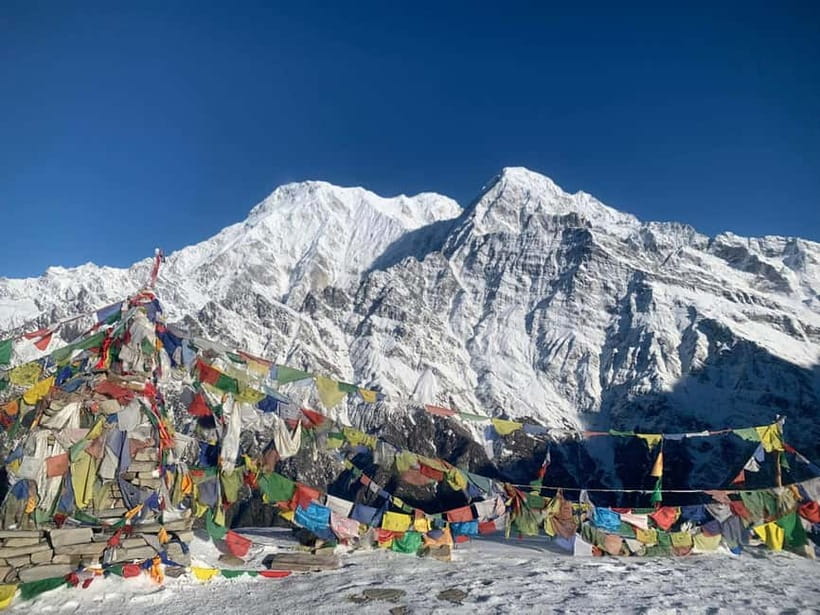
- Poon Hill reaches 3,210 meters: The sunrise viewpoint gives you broad views of Dhaulagiri, Annapurna, and Machhapuchhre.
- The route combines nature and culture: You walk through rhododendron forests, pass traditional villages, and spend time in the Gurung community of Ghandruk.
- The second day is the physical test: A pre-dawn climb to Poon Hill is followed by a long and steep descent toward Ghandruk.
- The package is private: You have an English or Hindi-speaking guide and pickup from your hotel, Pokhara Airport, or tourist bus stand.
- The $220 price covers a lot: Permits, guide costs, two trekking nights, transport, paperwork, and some Pokhara services are included.
- Pack for mountain changes: Warm layers, comfortable boots, sunglasses, sunscreen, a jacket, headlamp, water bottle, and trekking poles are sensible essentials.
What this three-day route really offers
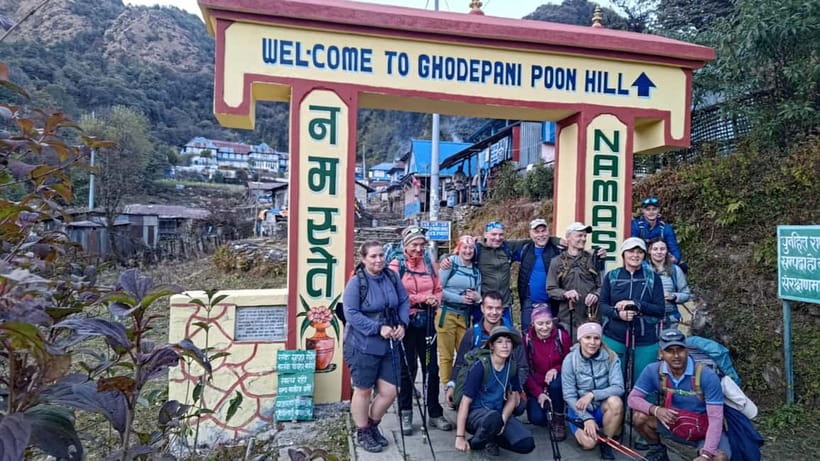
The Ghorepani, Poon Hill, and Ghandruk circuit is one of Nepal’s efficient short treks. You do not need a long expedition schedule to reach a serious Himalayan viewpoint. In three days, the route gives you forest walking, mountain scenery, village life, and a high-altitude sunrise.
The appeal is the contrast. One hour you may be walking under rhododendron trees. Later, you are looking across the Annapurna range. Then you are eating in a modest tea house or exploring a Gurung village with traditional stone homes.
I like this route for people who want more than a viewpoint reached by vehicle. You spend enough time on foot to feel the change in altitude and terrain, but the trip remains short enough to fit into a larger Nepal holiday based in Pokhara.
The word tranquil should be taken with some care. The forests and villages can feel peaceful, but the route includes long uphill sections, rough mountain paths, and an early start for sunrise. This is a moderate trek, not a casual stroll.
More Poon Hill treks:
- Poon hill Trek 3 days
★ 5.0 · 176 reviews - Pokhara: 4-Day Ghorepani, Poonhill & Ghandruk Mountain Trek
★ 5.0 · 132 reviews - Ghorepani – Poon Hill Trek 3N-4D
★ 5.0 · 125 reviews
Day 1: Pokhara to Ghorepani through Ulleri
Your first day begins with a four-wheel jeep from Pokhara toward Nayapul. The drive is part of the experience, with views of rivers, green fields, forests, small settlements, and mountain scenery along the way.
The route continues beside the Modi Khola River. This gives the drive a pleasant sense of movement, although the road portion is not simply a quick transfer. You are scheduled for about three hours by vehicle before the main walking begins.
The plan lists Tikhedhunga at 1,570 meters and Ulleri at 2,000 meters before the trek continues to Ghorepani. From Ulleri, you walk through rhododendron forests toward Ghorepani, reaching approximately 2,840 meters.
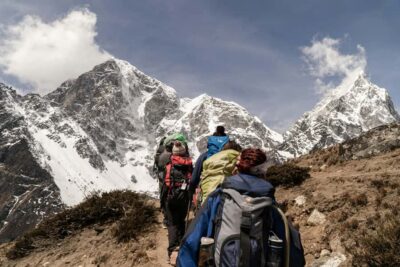
This is the day to settle into the rhythm of the trek. The uphill walking lasts about five hours, so do not use all your energy in the first section. Keep water close, walk steadily, and let your guide set a sensible pace.
The forest is one of the day’s rewards. Rhododendrons are a defining feature of this section, and the tree cover gives the route a cooler, more enclosed feel than the open mountain viewpoints later in the trip.
Ghorepani is your overnight stop in a tea house. Accommodation is simple, with basic village comforts rather than resort facilities. That is perfectly workable for a short trek, but you should bring a warm layer and accept that hot showers, bottled or boiled water, battery charging, and other extras cost more.
The altitude gain is worth taking seriously. You finish the day much higher than Pokhara, and the next morning begins before sunrise. If you are not used to inclines, your legs may feel the first day more than the distance suggests.
Day 2: Poon Hill sunrise and the descent to Ghandruk
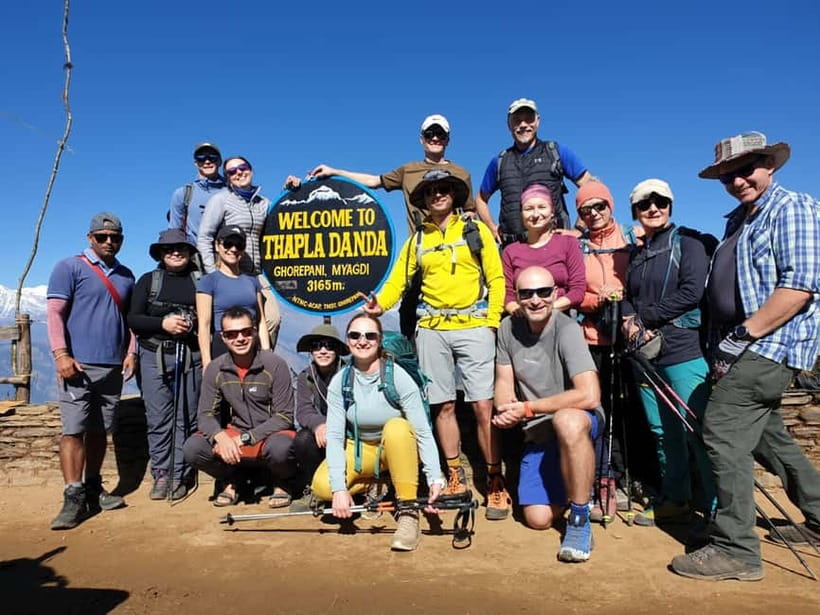
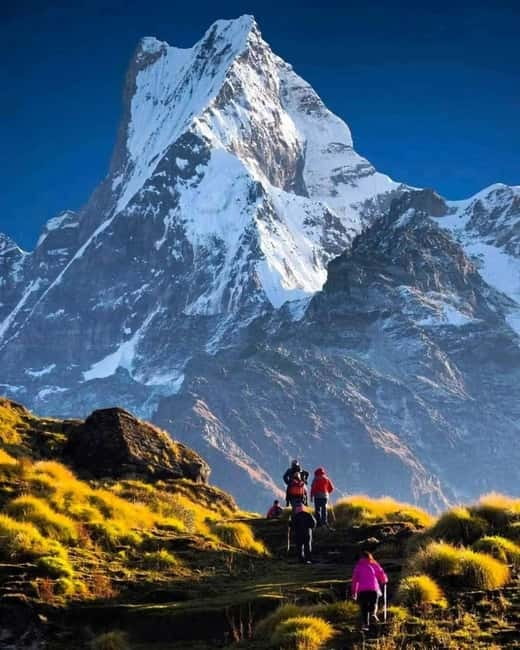
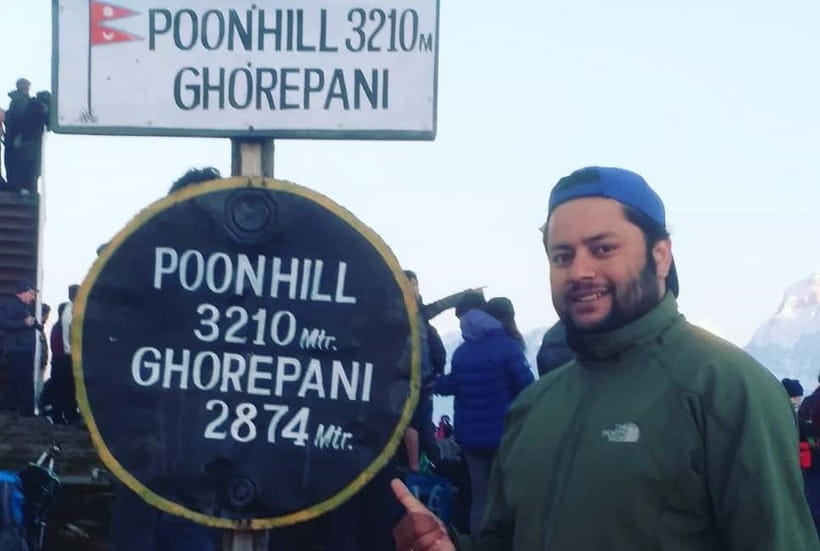
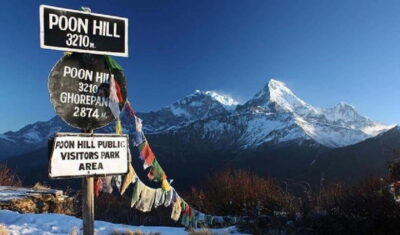
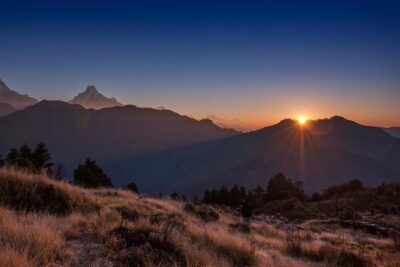
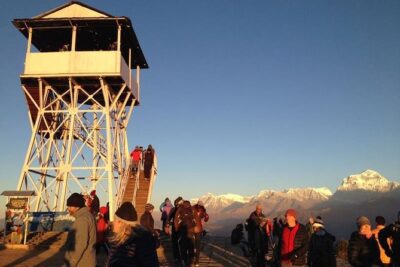
Day two begins early. The goal is Poon Hill at 3,210 meters, where you watch the sun rise over Dhaulagiri, Annapurna, and Machhapuchhre.
This is the signature moment of the circuit. The viewpoint is valuable because several major Himalayan peaks can be seen from one place, provided the weather is clear. The mountain light changes quickly at sunrise, so bring your jacket, sunglasses, and a small flashlight or headlamp for the pre-dawn walk.
Poon Hill is also the highest point on this route. You may notice the thinner air, especially after the previous day’s climb. Walk slowly and tell your guide if you feel unwell. The itinerary is short, but the altitude still deserves respect.
After the viewpoint, you return toward the trail and continue toward Ghandruk, with the route described through Tadapani and forested sections. This is a substantial walking day of about six hours.
The descent is the part many people underestimate. Going downhill can be harder on knees than walking uphill, especially on uneven or slippery ground. A pair of trekking poles can help, and sturdy footwear is more useful here than lightweight casual shoes.
The scenery shifts as you move through woodland and along views toward the Modi River. The river flows from the Annapurna Base Camp area, giving the route a strong connection to the larger Annapurna trekking region.
Ghandruk sits at about 2,000 meters and feels different from Ghorepani. It is not simply another overnight stop. The village is closely associated with the Gurung community, known in Nepal for hospitality and military service traditions.
You stay in a hotel in Ghandruk. The accommodation remains village-style rather than luxurious, but the setting gives you more time to appreciate local life. This is a good evening to put the camera away for a while, look around, and enjoy the mountain views from the village.
A guide adds real value on this day. A good guide can watch your pace, point out photo spots, and help you handle the steep sections. Santosh, one guide associated with this experience, has been praised for taking care of small practical needs, slowing down on slippery ground, recommending food, and finding a walking stick when a participant’s knees became sore. Those details matter more than polished speeches when you are tired.
Ghandruk and Gurung culture
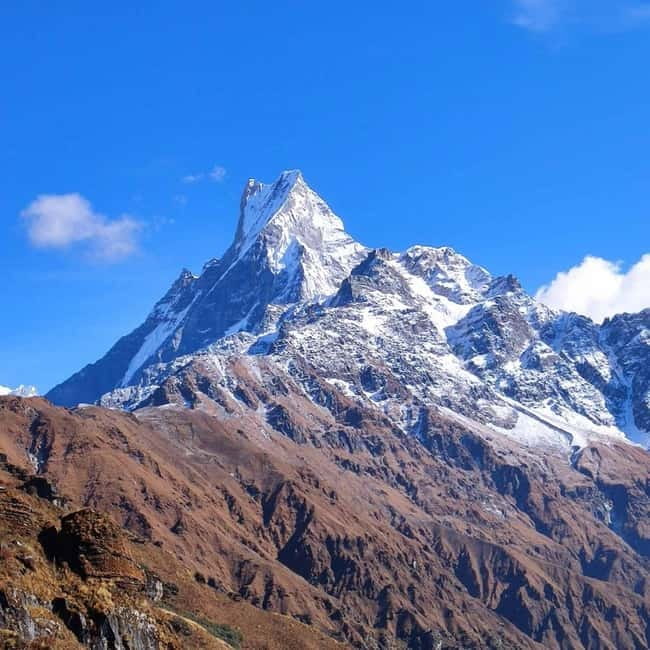
Ghandruk is one of the strongest reasons to choose this route instead of a simple out-and-back walk to Poon Hill. The village gives the trek a human center.
You can explore traditional stone houses with carved wood details, visit ancient monasteries and temples, and speak with local residents. There is also an opportunity to wear authentic Gurung clothing and take photographs.
The cultural element works best when you treat it as a real community, not a stage set. Follow local customs, ask before taking photographs, and keep noise low around religious sites. The advice to pack out your rubbish is especially important on a route where village services are limited.
Food also connects you to the place. Dal bhat, made with lentils and rice, is a practical trekking meal and is included if you choose the full meal package. Other food choices are available, but personal drinks and snacks are not part of the listed inclusions.
Ghandruk may appeal to you if you want a village experience that is more than a quick photo stop. You have time to walk around, notice the architecture, and learn about Gurung life through your guide and your own conversations.
More walking in the hills of Pokhara:
- Trekking in Annapurna/Langtang/Everest/Upper Mustang regions
★ 5.0 · 161 reviews - Pokhara: Annapurna Foothills Day Hike with Transfers
★ 5.0 · 100 reviews - Kathmandu/Pokhara: 5-Day Annapurna Base Camp (ABC) Trek
★ 4.9 · 72 reviews - From Pokhara: 3-Day Ghorepani Poon Hill Trek with Guide
★ 4.9 · 68 reviews
Day 3: Ghandruk back to Pokhara
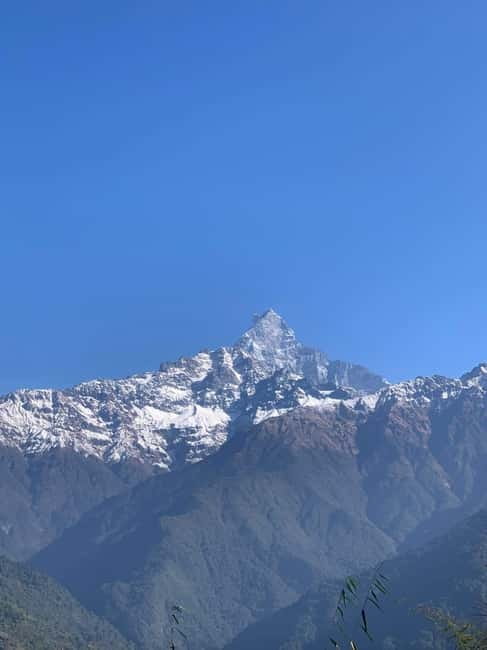
The final morning offers another chance to see sunrise from a viewpoint or your hotel terrace. You can also explore more of Ghandruk before beginning the descent.
The morning is useful because it slows the trip down at exactly the right point. Instead of rushing straight from breakfast to transport, you get a little time to look at the village in daylight and enjoy its mountain setting.
The walk from Ghandruk to Nayapul takes about four hours. The trail follows the Modi River, then you transfer by vehicle for roughly two hours back to Pokhara.
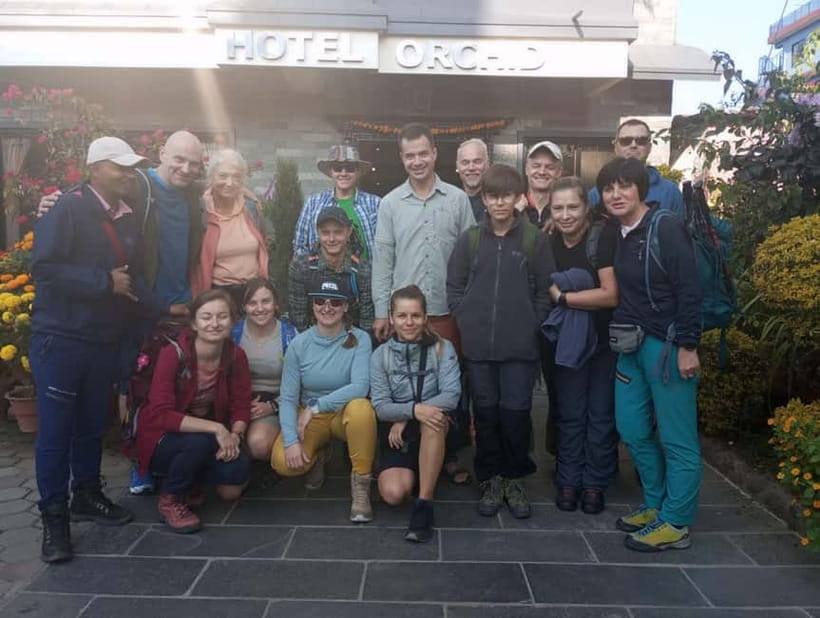
Once you reach Lakeside, the package includes a final night at Hotel Orchid, described as a tourist-standard luxury hotel in Pokhara. A farewell Nepalese dinner is also included in Lakeside. After two nights in tea houses, that return to a regular hotel bed and a prepared meal can feel especially welcome.
The route finishes where it began, in the Pokhara area, rather than leaving you in a remote mountain settlement. That makes the trek convenient if you are continuing your Nepal trip from Lakeside.
Is $220 a fair price?
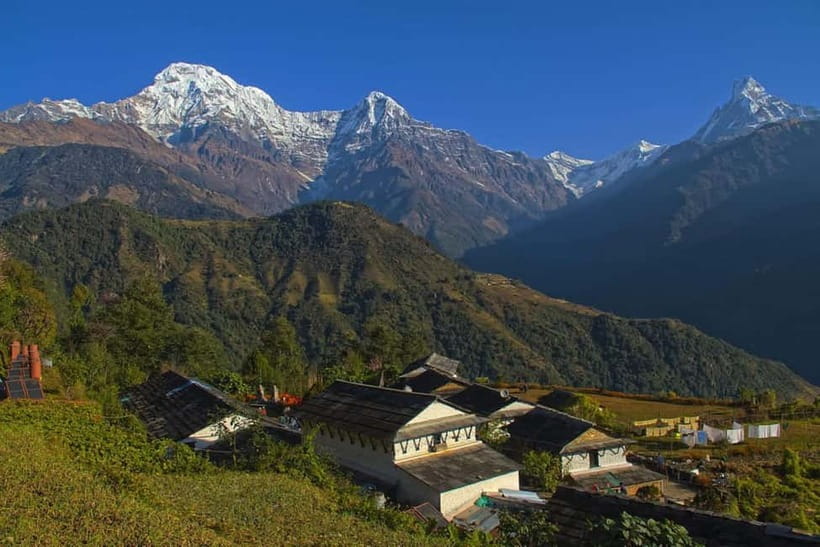
At $220 per person, the price is attractive if you use the included services. The package covers hotel pickup and drop-off, transport at the beginning and end of the trek, an authorized English-speaking guide, two nights of trekking accommodation, trekking permits, necessary paperwork, government taxes, and guide or staff expenses.
For the full package, breakfast, lunch, and dinner during the trek are included. You also receive the final Pokhara hotel night and farewell dinner. Luggage storage in Kathmandu or Pokhara is listed as part of the service, which is handy if you are carrying more than you need on the trail.
The package also lists a luxury sofa-seat tourist air-conditioned bus from Pokhara to Kathmandu. Since the three-day route returns to Pokhara, confirm how this transport applies to your booking before paying. It may be connected to onward arrangements rather than the core circuit.
The biggest cost exclusions are normal for Nepal trekking. You pay separately for soft and alcoholic drinks, bottled or boiled water, showers, phone calls, laundry, charging, personal purchases, porters, and insurance.
A porter is not included. You may carry your own bag or arrange an extra porter at additional cost. The guide’s own meals, lodging, salary, equipment, insurance, and transport are included, so you are not expected to cover those separately.
The price is strongest for a private group that wants a guide and organized transport without assembling every part independently. If you already have transport, permits, and accommodation arranged, a self-guided plan might cost less. You would also take on much more responsibility.
Fitness, altitude, and what to pack
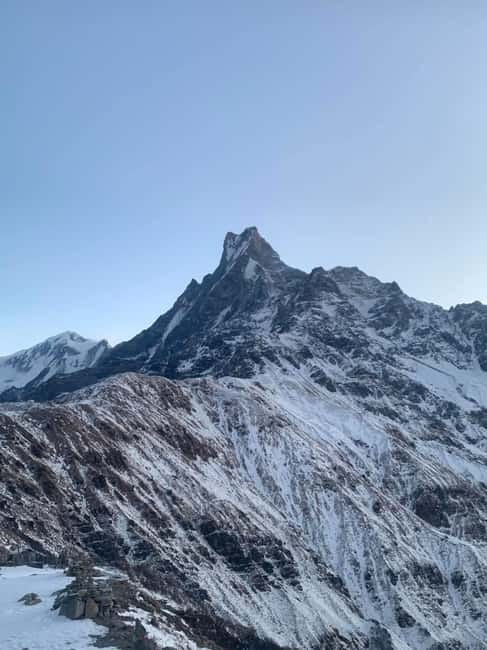
You should be reasonably fit for uphill walking. The first day includes a climb from Ulleri to Ghorepani, and the second day combines an early uphill section with a long descent.
Pregnant women should not book this activity. Travel and rescue insurance with high-altitude coverage is strongly advised, and the agency can assist with rescue if needed. That assistance is not a substitute for insurance.
Mountain weather can change quickly. The supplied guidance notes mostly clear and sunny conditions, with possible rain or snow. Pack layers rather than relying on one heavy item.
Your practical packing list should include:
- Comfortable trekking boots or shoes
- Warm clothing and a jacket
- Sunglasses and sunscreen
- Headlamp for the early Poon Hill walk
- Water bottle
- Trekking poles
- Passport or identification card
A headlamp is easy to overlook, but the Poon Hill start happens before daylight. Good footwear matters most on the descent to Ghandruk, where tired knees and uneven ground can make a moderate trek feel tougher.
Guide quality and private-group value
This experience includes a licensed English-speaking guide, with Hindi also available. The private-group format gives you more control over pace than a large shared departure.
That matters on the second day. Some people will want to spend longer at Poon Hill for photographs, while others will be eager to start the descent. A private group can usually make those small decisions more easily, subject to the guide and schedule.
The most useful guide is not simply someone who names mountains. You want someone who notices when you need to slow down, helps with slippery sections, suggests sensible food choices, and keeps the day moving without turning it into a race.
The feedback associated with guide Santosh highlights exactly those qualities. He helped with photo locations, adjusted the walking speed, offered a walking stick when sore knees became a problem, and kept the mood light. The agency also checked in during the trek, which gives the trip a useful layer of support.
Still, guide assignments can change. If Santosh is not your guide, ask who will lead your group and confirm the language before departure.
How the trek fits different kinds of visitors
This route suits you if you have three days, want a Himalayan viewpoint, and prefer a guided trip with transport and permits handled.
It is a good match for:
- First-time trekkers with reasonable fitness
- Couples seeking scenery and local culture
- Visitors based in Pokhara
- People who want a private group
- Hikers who prefer a short route rather than a week-long expedition
- Anyone interested in Gurung village life as well as mountain views
It is less suitable if you dislike early mornings, basic tea houses, long descents, or changing weather. It may also feel rushed if you want many quiet hours in each village.
The route gives you a lot in a short period, but that efficiency comes with full walking days. You will not have endless time for lingering, and the altitude gain on day one should not be treated casually.
Cancellation and booking details
You can cancel up to 24 hours in advance for a full refund, and you can reserve without paying immediately. Pickup is included, but you should wait in your hotel lobby 10 minutes before the scheduled time.
Starting times depend on availability. Pickup can be arranged from a hotel, Pokhara Airport, or the Pokhara Tourist Bus Stand. The experience is offered in English and Hindi.
Should you book the Poon Hill and Ghandruk circuit?
I would choose this trek if I wanted a short, well-supported introduction to the Annapurna region without giving up cultural contact. The sunrise at Poon Hill is the headline, but Ghandruk is what gives the route depth.
Book it if you are ready for five to six hours of walking on the main days, can handle a steep descent, and are comfortable with tea-house lodging. The $220 cost is good value when you use the guide, permits, meals, hotel night, transfers, and farewell dinner.
Skip it if you want a relaxed road tour or dislike carrying your own belongings. Also confirm the exact transport arrangements, meal package, guide assignment, and any onward Pokhara to Kathmandu service before booking.
For the right person, this is a compact Himalayan experience with a satisfying mix of high views, forest trails, local food, and Gurung culture.
FAQ
How long is the Poon Hill and Ghandruk trek?
The experience lasts three days. Day one includes about three hours of driving and five hours of trekking, day two has about six hours of trekking, and day three includes about four hours of trekking followed by roughly two hours of driving.
What is the highest point on the trek?
Poon Hill is the highest point, at 3,210 meters above sea level.
Is food included during the trek?
Breakfast, lunch, and dinner are included during the trek for the full package. Soft drinks, alcoholic drinks, bottled or boiled water, and personal snacks are not included.
What kind of accommodation is provided?
The trek includes two nights in available tea houses, lodges, or hotels. One additional night is included at Hotel Orchid in Pokhara.
Is a guide included?
Yes. The activity includes an authorized, licensed English-speaking guide. Hindi is also available, and the group type is private.
What should I bring?
Bring your passport or identification card, comfortable shoes, warm clothing, sunglasses, sunscreen, and a jacket. A headlamp, trekking poles, and a water bottle are also recommended.
New in the Pokhara listings
- Pokhara: Pokhara Highlights Tour by Bus★ 3.6 · 10 reviews
- Discover Pokhara in Style: Private Vehicle Service with Driver★ 5.0 · 5 reviews
- Multi-Day Tour from Pokhara, Poon Hill and Mulde Trek★ 5.0 · 1 review
- Pokhara in 5 Hours: Lake, Museum, Cave, Falls & Pagoda Hill★ 4.5 · 16 reviews
- Private 4 Day Poon Hill Trek from Pokhara★ 5.0 · 16 reviews
- 4 Day Mardi Himal Base Camp Trek from Pokhara★ 5.0 · 18 reviews
- From Pokhara Full Day Entire Pokhara Tour with Guide★ 5.0 · 1 review
- Things to do at Pokhara World Peace Stupa tour with Guide★ 5.0 · 2 reviews
Poon Hill Treks, compared.
4-Day Ghorepani, Poonhill & Ghandruk Mountain Trek
Read our review →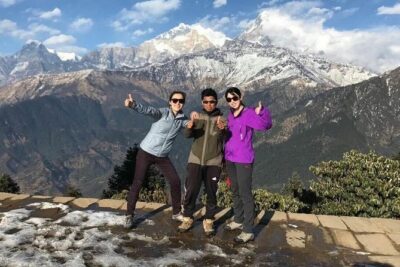
Browse the lists this tour appears in