
REVIEW · CHITWAN JUNGLE SAFARIS
Kathmandu to Chitwan luxurious tourist bus tickets reservation
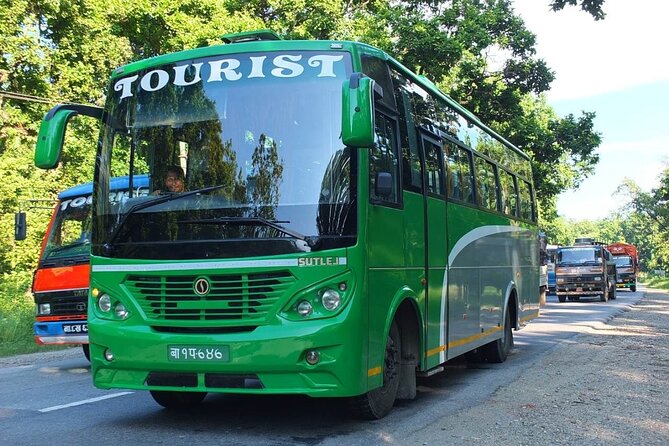
The road to Chitwan starts early. This $24.99 tourist bus gives you a direct morning connection from Kathmandu to Sauraha, with reclining seats, air conditioning, footrests, and a journey of roughly five to six hours. It is a practical choice if you want to avoid arranging several local connections.
I especially like the daily 7:00 AM departure and the direct drop-off at Sauraha Tourist Bus Park. The air-suspension bus and sofa-style seats should make the rough sections easier, though road construction, rattling windows, and inconsistent air conditioning can affect the ride.
In This Review
- Key points before you reserve
- Why this bus makes sense for Chitwan
- Leaving Nayabazar before the city wakes
- The route through Balaju and Kalanki
- Malakhu and Mugling bring the real road journey
- What the bus interior offers
- Rest stops and the meal break
- Arrival at Narayanghat and the turn toward Sauraha
- Sauraha is the useful end point
- How reliable is the comfort?
- The small group detail
- Is $24.99 a good price?
- Booking, cancellation, and practical preparation
- Who should choose this bus?
- Should you book the Kathmandu to Chitwan bus?
- FAQ
- Where does the bus leave from in Kathmandu?
- What time does the bus depart?
- Where does the bus arrive in Chitwan?
- How long is the Kathmandu to Chitwan journey?
- What is included in the ticket?
- Are meals included?
- Can I cancel for a refund?
Key points before you reserve
- A direct Kathmandu to Sauraha ride: You avoid changing vehicles in Mugling or Narayanghat.
- Early morning departure: The bus leaves from Nayabazar at about 7:00 AM, with check-in requested by 6:30 AM.
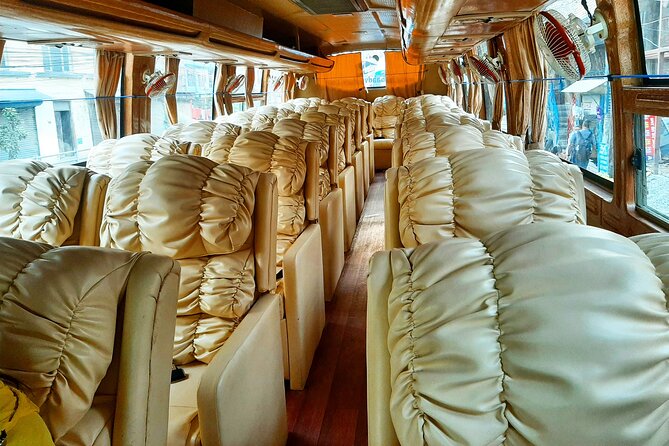
- Comfort-focused seating: Reclining seats, footrests, sofa-style seats, and air suspension are included.
- A scenic but rough route: The road passes through Balaju, Kalanki, Malakhu, Mugling, Narayanghat, and Sauraha.
- The final stop is useful: You arrive at the Sauraha Tourist Bus Park, near the main tourism area.
- Conditions can vary: One account described a rattling window and a hot cabin when the air conditioning was not switched on.
Why this bus makes sense for Chitwan
Chitwan is one of Nepal’s easiest places to pair with Kathmandu. The two destinations are about 150 kilometers apart, yet the trip can take five or six hours because the road winds through hills, river valleys, towns, and areas affected by construction.
A direct tourist bus keeps the plan simple. You board in Kathmandu, settle into one seat, stop along the way, and get off in Sauraha. That matters after a few busy days in the capital, where arranging a series of local rides can take more energy than expected.
The service is priced at $24.99 per person. I see that as reasonable for a direct tourist-bus ticket with air conditioning, an air-suspension system, reclining seats, and a dedicated tourist route. It is not the cheapest possible way to move around Nepal, but the value comes from reducing hassle rather than from luxury in the hotel sense.
Keep your expectations sensible. This is a road journey through Nepal, not a polished airport transfer. The vehicle may be comfortable, but road conditions and bus maintenance can shape the experience on the day.
More jungle safaris in Chitwan:
- 3-Day Chitwan National Park Jungle Safari Tour Package with Pick Up
★ 5.0 · 184 reviews - From Kathmandu/Pokhara: 3-Day All-Inclusive Chitwan Safari
★ 4.6 · 133 reviews - Kathmandu: 3-Day Chitwan Safari Tour with Hotel Transfers
★ 4.6 · 127 reviews
Leaving Nayabazar before the city wakes
The stated departure point is Tourist Bus Stop, Nayabazar 16, Kathmandu 44600. The service information also refers to Nayabazar Tourist Bus Station and a departure near Shorakhutte, so you should check the exact boarding point carefully before leaving your hotel.
The listed departure is 7:00 AM, while the meeting information gives 7:15 AM. That small difference is worth taking seriously. Plan to arrive by 6:30 AM, as requested, rather than trying to cut things close.
The early start is useful. Kathmandu traffic can build quickly, and a morning departure gives you the best chance of making progress before the day becomes crowded. It also leaves you with part of the afternoon in Chitwan, though the actual arrival time depends on traffic, roadwork, meal stops, and weather.
Your bus name, bus number, and seat number are sent through the Viator inbox or WhatsApp. Save those details before you leave your accommodation. A screenshot is wise if your mobile connection becomes unreliable.
The route through Balaju and Kalanki
Once the bus leaves the Nayabazar area, it continues through parts of Kathmandu and toward the valley exit. Balaju and Kalanki are important points on the route, and city traffic can make this early part slower than the distance suggests.
This section is less about scenery and more about getting out of the capital. You will see the city thin out gradually, with roadside activity replacing the denser urban streets. If you want a particular side of the bus for views, there is no reliable promise of which side will be best throughout the trip.
Kalanki is a major traffic point on the Kathmandu side. Delays here can affect the whole schedule, so the advertised five to six hours should be treated as an estimate, not a guarantee.
Malakhu and Mugling bring the real road journey
After leaving the Kathmandu Valley, the trip becomes more scenic and more demanding. The route continues toward Malakhu and Mugling, where the road follows hilly terrain and river corridors.
This is the part of the ride that gives you a clear sense of Nepal beyond the capital. You may see steep slopes, roadside settlements, bends, and broad views opening between sections of the road. The scenery can be excellent, but the ride may also be bumpy.
Road construction has affected this route. One account described it as one of the wildest road rides the passenger had experienced, while also praising the scenery, driver, tour director, and regular rest stops. That combination captures the route well: beautiful in places, but not always gentle.
If you are prone to motion sickness, sit where you can see forward if possible, keep water nearby, and avoid a heavy meal before departure. Those are sensible precautions for any winding five-to-six-hour road trip.
More tourist bus seats between the big towns:
- Kathmandu to Pokhara Tourist Bus Tickets reservation
★ 4.0 · 25 reviews - Kathmandu to Pokhara Bus Ticket- Sofa
★ 4.0 · 24 reviews - Kathmandu to Pokhara VIP Sofa Bus Ticket
★ 4.5 · 19 reviews - Kathmandu to Pokhara Premium sofa bus ticket
★ 4.0 · 17 reviews
What the bus interior offers
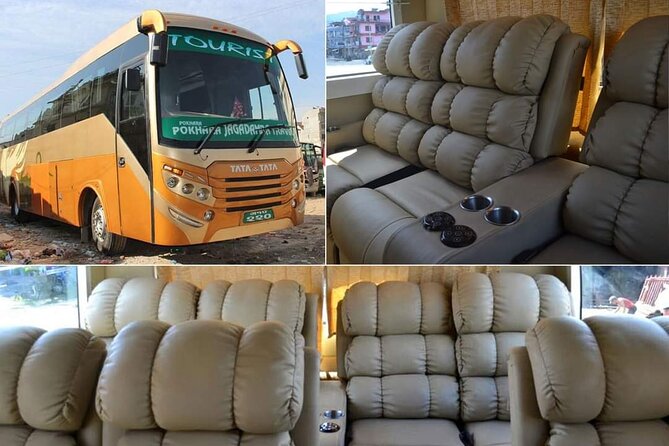
The bus is described as a deluxe tourist vehicle with reclining seats and footrests. The sofa-style seating is meant to provide more room and support than a basic local bus, especially during the longer sections between Kathmandu and Chitwan.
Air suspension is another useful feature. It cannot remove every bump from a road under construction, but it may soften the motion compared with a simpler vehicle. The benefit is most noticeable when you are sitting for several hours without changing buses.
Air conditioning is included, and an entertainment system may be available. Still, the actual cabin temperature can depend on how the crew operates the system. A reported problem involved the air conditioning not being switched on after lunch, leaving the bus uncomfortably hot, along with a window that rattled for much of the ride.
That is an important qualification to the word luxurious. The service aims for comfort, but the condition and operation of the individual bus may vary. Carry a light layer for changing temperatures, and keep a small fan or handkerchief available if heat bothers you. Do not assume the cabin will remain perfectly cool all day.
Rest stops and the meal break
The trip includes a stop for breakfast or lunch. Meals are not included in the ticket price, so you should budget separately for food and drinks.
The timing of the stop depends on the road and the bus schedule. Treat it as a practical break rather than a planned food tour. You may have enough time to eat, use the facilities, stretch your legs, and return to the bus, but the exact stop and menu are not specified.
Regular rest stops were praised in one account of the journey. That is good news on a route where sitting still for six hours would be tiring. Even so, keep your belongings with you when you leave the bus, and note the bus number before walking away.
A small day bag works better than opening your main luggage during every stop. Pack water, tissues, snacks, medication, a phone charger, and any travel documents you may need.
Arrival at Narayanghat and the turn toward Sauraha
Narayanghat is one of the final major points before the route reaches the Chitwan area. From here, the journey turns toward Sauraha, the main tourist hub for Chitwan.
The atmosphere changes as you leave the main through-route and approach the destination. You are no longer simply crossing Nepal between large cities. You are getting close to the base for wildlife outings, including trips where you may see the endangered one-horned rhinoceros.
The bus does not take you to a hotel. It ends at the Tourist Bus Park in Sauraha, listed at HGM2+5WV, Ratnanagar 44200. This is near Sauraha, but you still need to arrange the final walk or local transfer to your accommodation.
Confirm your hotel’s distance from the bus park before booking. The final connection may be simple, but it is easier when you know where you are going after a long road ride.
Sauraha is the useful end point
Sauraha is the main visitor base for Chitwan. From here, you can arrange wildlife activities and explore the local culture around the park area.
The bus’s Sauraha ending is more useful than a drop-off somewhere in central Chitwan. You arrive in the area where many visitors base themselves, rather than having to work out a separate connection from Narayanghat.
Still, the bus park is a transport point, not a hotel reception. Keep your accommodation address saved offline or written down. The service information does not promise hotel pickup, porter service, or a private transfer after arrival.
If you have a tightly scheduled safari or other paid activity on arrival day, allow extra time. A road journey of five to six hours can become longer due to traffic, weather, or construction. I would avoid booking an activity that requires you to arrive at a precise early-afternoon minute.
How reliable is the comfort?
The service is marketed around luxury, safety, and reliability. The equipment listed is appealing: air conditioning, reclining seats, footrests, comfortable upholstery, and air suspension.
The practical picture is mixed. A driver and tour director were praised for handling the journey well, and the regular stops helped make the long ride manageable. On the other hand, a rattling window and a warm cabin were serious comfort faults for another passenger.
That does not automatically make the service a poor choice. It does mean you should see the bus as a comfortable tourist option within Nepal’s road conditions, not as a guaranteed premium coach with hotel-level quality control.
The road itself is a major part of the experience. Even a well-kept bus cannot make construction zones smooth. If a quiet, perfectly cool cabin is essential to you, consider your tolerance before reserving.
The small group detail
The activity information gives a maximum of 10 passengers. That sounds more personal than a large public coach, although the vehicle is still described as a tourist bus.
A smaller number can make boarding and communication easier. It may also help the staff keep track of passengers during stops. However, the maximum group size should not be taken as a promise that every departure will feel like a private minibus service.
The driver and tour director received strong praise in one account, with the ride described as well organized from boarding in Kathmandu onward. Good staff matter on this route because passengers need clear information about stops, timing, and the final drop-off.
Is $24.99 a good price?
At $24.99, the ticket is aimed at people who want a straightforward connection without paying for a private car. The price includes the bus ticket, air suspension, comfortable seats, and air conditioning.
It does not include breakfast, lunch, dinner, drinks, hotel transfers, or personal expenses. Add those costs when comparing this with other transport options.
The value is strongest if you are traveling alone or as a couple and want a reserved tourist service. A private vehicle may offer more control over departure time and stops, but it will generally cost much more. A basic public bus may cost less, but the seating and ride conditions may be less comfortable.
The bus also saves planning time. You do not need to organize separate transport through the listed route points. For many people, that simplicity is worth more than a small saving.
Booking, cancellation, and practical preparation
Confirmation is provided at booking. You should receive the bus name, bus number, and seat number through the Viator inbox or WhatsApp, so check both before departure.
Free cancellation is available if you cancel at least 24 hours before the experience start time. Changes or cancellations made within 24 hours are not accepted and are not refunded. The cut-off follows local time.
The service requires good weather. If poor weather causes cancellation, you are offered another date or a full refund.
Before setting out, I would prepare the following:
- Arrive at Nayabazar by 6:30 AM.
- Confirm whether your departure is shown as 7:00 AM or 7:15 AM.
- Save the bus details offline.
- Carry food money because meals are not included.
- Keep valuables and essential medication in your hand luggage.
- Bring water and a light layer.
- Allow extra time if you have a fixed Chitwan booking after arrival.
Who should choose this bus?
This service suits you if you want a direct Kathmandu to Sauraha connection, prefer tourist-bus seating, and accept that Nepal’s roads can be rough. It is also a good fit if you are comfortable with an early start and do not need door-to-door hotel transport.
It works particularly well for solo visitors and couples who want a simpler alternative to arranging several local vehicles. The daily departure also makes it easier to fit Chitwan into a wider Nepal itinerary.
I would be more cautious if you have severe motion sickness, need guaranteed air conditioning, or are traveling with a strict appointment soon after arrival. The road construction and variable bus condition may make the ride less predictable than the description suggests.
Should you book the Kathmandu to Chitwan bus?
Book it if convenience matters most. The price is fair for a direct tourist service with better-than-basic seating, air suspension, and a useful Sauraha arrival point. The scenery can be excellent, the staff may be attentive, and regular stops make the long ride easier.
Just keep the word luxurious in perspective. The trip remains a demanding Nepal road journey, and comfort may vary from bus to bus. Arrive early, confirm your boarding details, pack for heat and motion, and leave room in your schedule for construction delays.
FAQ
Where does the bus leave from in Kathmandu?
The bus leaves from the Tourist Bus Stop at Nayabazar 16, Kathmandu 44600. The information also refers to Nayabazar Tourist Bus Station and Shorakhutte, so confirm the exact boarding point before departure.
What time does the bus depart?
The stated departure time is about 7:00 AM. The meeting information also shows 7:15 AM, so you should arrive by 6:30 AM and confirm the final time with the bus details sent to you.
Where does the bus arrive in Chitwan?
The bus ends at the Tourist Bus Park in Sauraha, near Sauraha, Chitwan. The listed location is HGM2+5WV, Ratnanagar 44200.
How long is the Kathmandu to Chitwan journey?
The journey takes approximately five to six hours. The actual time can change because of traffic, road construction, stops, and weather.
What is included in the ticket?
The ticket includes the tourist bus ride, an air-suspension bus, comfortable seats, and air conditioning.
Are meals included?
No. Breakfast, lunch, and dinner are not included. You should bring money for food and drinks during the journey.
Can I cancel for a refund?
Yes. You can receive a full refund if you cancel at least 24 hours before the experience start time. Cancellations or changes within 24 hours are not accepted and are not refunded.
New in the Kathmandu listings
- Traditional Momo Making Class★ 5.0 · 10 reviews
- Kathmandu: Ancient City Kirtipur & Pharping Monastery Tour★ 5.0 · 2 reviews
- Kathmandu to Pokhara Premium sofa bus ticket★ 4.0 · 17 reviews
- Women Empowerment Project(Nepali cooking class & jewelry workshop★ 5.0 · 15 reviews
- 7-Day Langtang Valley Trek from Kathmandu★ 5.0 · 1 review
- Kathmandu 2 Nights 3 Days Chitwan Jungle Safari Tour★ 5.0 · 9 reviews
- Yoga Experience Day Trip with Private Transfer From Kathmandu★ 4.0 · 2 reviews
- Wildlife Adventure in Chitwan Nepal★ 4.0 · 4 reviews
Chitwan Jungle Safaris, compared.
Jungle Towernight Stay In Chitwan National Park ,nepal-2 Nights 3 Days Package
Read our review →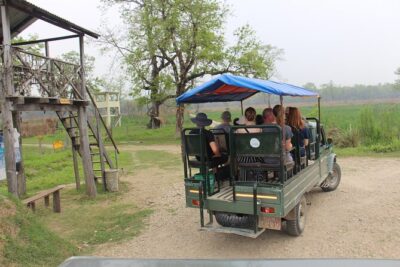
3-Day Chitwan National Park Jungle Safari Tour Package with Pick Up
Read our review →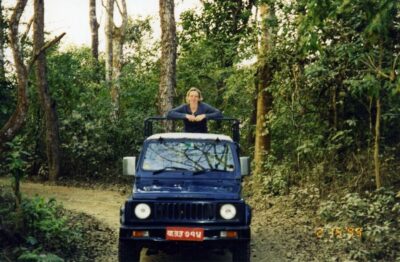
From Kathmandu/Pokhara: 3-Day All-Inclusive Chitwan Safari
Read our review →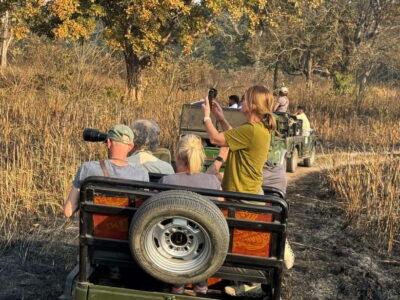
3-Day Chitwan Safari Tour with Hotel Transfers
Read our review →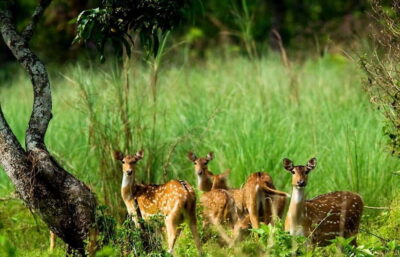
Kathmandu/Pokhara: 3 Day Chitwan Jungle Safari Tour
Read our review →
3 Nights 4 Days Chitwan National Park with Tower Night Stay
Read our review →
From Kathmandu/Pokhara: Private 3-Day Chitwan Safari Tour
Read our review →
2 Days Chitwan Jungle Safari Tour from Pokhara/Kathmandu
Read our review →Browse the lists this tour appears in