
REVIEW · POON HILL TREKS
Khopra Mohare Danda and Poon Hill Private Guided Trek
Quiet trails, huge mountain views, and long walking days define this trek. From Pokhara, you travel by private jeep to Galeshwor, then walk through forests, terraced fields, community lodges, and high pasture toward Mohare Danda and Khopra Ridge. You also get the famous sunrise at Poon Hill, plus time in traditional villages such as Nangi and Ghandruk.
I like the private format, which gives your group a guide, private transport, and more control over the pace. I also like the community-lodge route, where your money supports local homes and eco-tourism rather than sending you along Nepal’s busiest trekking corridors. The main drawback is the physical demand: Khayer Lake reaches 4,660 meters, and several days call for six to seven hours of walking.
This is a strong choice if you want Himalayan views without spending the entire trek on Nepal’s most crowded paths. It is less suitable if you want short walks, polished hotels, or a relaxed holiday. The price is $490 per person, but food costs about $25 per day extra, and gratuities are not included.
In This Review
- Key points to know before booking
- What the $490 price really covers
- Day 1: Galeshwor, the Kaligandaki River, and Bans Kharka
- Day 2: Nangi and the idea behind the eco-lodge route
- Day 3: The long climb to Mohare Danda
- Day 4: Mohare Danda to Ghorepani
- Day 5: Poon Hill sunrise and Swanta
- Day 6: Swanta to Khopra Ridge
- Day 7: The demanding trip to Khayer Lake
- Day 8: Forest trails toward Dobato
- Day 9: Tadapani and Ghandruk
- Day 10: Ghandruk to Pokhara
- Accommodation, meals, and guide support
- Who should book this trek?
- Final verdict: a strong route for serious walkers
- FAQ
- How long does the Khopra Mohare Danda and Poon Hill trek take?
- What is the price per person?
- Is transport included?
- What is the highest point on the trek?
- What accommodation is provided?
- Can I cancel for a full refund?
Key points to know before booking
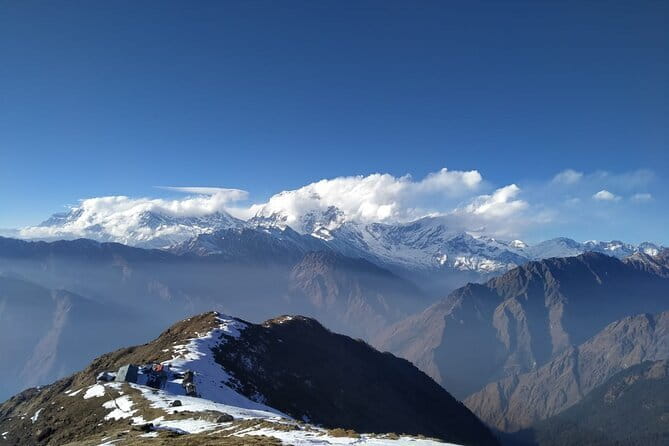
- Mohare Danda offers quieter mountain views of Dhaulagiri, Annapurna South, Nilgiri, and Machhapuchhre.
- Poon Hill sunrise is built into the route, with an early morning climb from Ghorepani.
- Khopra Ridge reaches a high, remote viewpoint with wide views toward Annapurna South and Dhaulagiri.
- Khayer Lake is the hardest day, with a high point of 4,660 meters and a long return to Khopra.
- Community lodges and homestays shape the experience, especially in Bans Kharka, Nangi, and Swanta.
- Private transport and guiding are included, along with permits, lodging, a trekking pole, and basic first aid.
What the $490 price really covers
At $490 per person, this trek offers fair value for a private 10-day Nepal experience. The price includes hotel pickup in Pokhara, a private jeep to Galeshwor, an English-speaking government-licensed guide, trekking permits, official documents, guesthouse accommodation, a trekking pole, basic first aid, and the guide’s food, lodging, and expenses.
The final ride from Nayapul back to Pokhara is also private. That matters after several days on foot, when sharing a crowded vehicle or sorting out local transport would be an unwelcome final chore.
Food is not included. Plan on roughly $25 per day for meals and drinks, or around $250 for the full trek. That brings the likely basic total to about $740 per person before tips. Since the route uses simple guesthouses, homestays, and community lodges, you are paying mainly for the guiding, permits, private transfers, and route planning rather than luxury accommodation.
The private setup is especially useful for couples, families, or friends who want to walk at their own rhythm. Group discounts may reduce the per-person cost, though the exact discount is not specified. Pickup is offered, and the mobile ticket makes the booking easy to carry on your phone.
More Poon Hill treks:
- Poon hill Trek 3 days
★ 5.0 · 176 reviews - Pokhara: 4-Day Ghorepani, Poonhill & Ghandruk Mountain Trek
★ 5.0 · 132 reviews - Ghorepani – Poon Hill Trek 3N-4D
★ 5.0 · 125 reviews
Day 1: Galeshwor, the Kaligandaki River, and Bans Kharka
Your guide picks you up at your Pokhara hotel with a name card. A private jeep takes you to Galeshwor, where the walking begins.
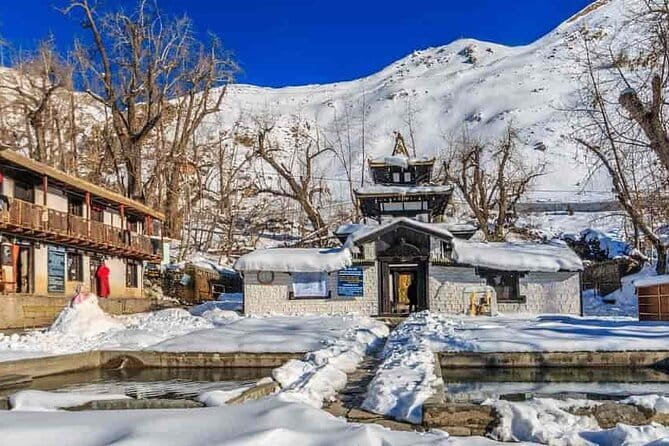
Before setting off, you can visit the Galeshwor Lord Shiva Temple. It is regarded by the Srimad Bhagwat Maha Purana as one of 15 holy pilgrimage places in the world. The trek then crosses a suspension bridge over the Kaligandaki River and heads through terraced fields and forest.
The first day takes about six hours. You finish at Bans Kharka, a settlement reached after a steady climb through rural Nepal. This opening gives you a clear sense of the route’s character: village paths, working farmland, forest, and simple local lodging.
The private jeep is a useful inclusion here. Galeshwor is the trailhead, so you avoid arranging the transfer yourself. Still, expect a full first day. The drive and walk together make this more than a gentle introduction.
Day 2: Nangi and the idea behind the eco-lodge route
The trail climbs through woodland and farm terraces toward Danda Kateri. After several hours, you stop for lunch with views toward the Kaligandaki Valley.
From there, you continue to Nangi, where you sleep in a homestay or community lodge. The important point is not just the bed for the night. This route was built around local cooperation, with residents using local resources and shared facilities to support tourism and development.
For you, that means a more direct connection with village life. Accommodation will be simpler than a city hotel, and services may be basic. That is part of the bargain. You trade polish for a closer look at how mountain communities share the work of hosting hikers.
The walk lasts about six hours. Nangi also gives the guide a chance to help manage your pace before the route gets higher and harder.
Day 3: The long climb to Mohare Danda
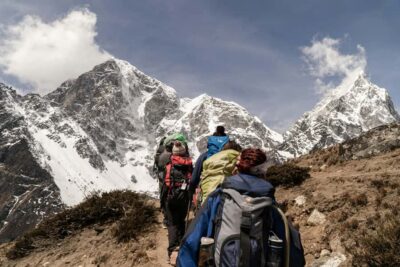
Day three is one of the route’s main tests. After breakfast in Nangi, you climb for six to seven hours through oak and rhododendron forest, bamboo groves, and open pasture.
The reward is Mohare Danda, a high viewpoint with broad views of Dhaulagiri, Machhapuchhre, Annapurna South, Nilgiri, and other Himalayan peaks. You may also see yaks grazing near the kharka, or pastureland.
This is the day for patience. You gain height over a long period, and the trail can feel demanding even when the views are excellent. A trekking pole is included, which should help on uneven ground and the many uphill sections.
Mohare Danda is a good alternative to a more heavily used mountain route. You still get the great peaks, but the appeal is the quieter setting and the presence of local lodges. Sunrise and sunset are both important here, so keep your camera and warm layers close.
More walking in the hills of Pokhara:
- Trekking in Annapurna/Langtang/Everest/Upper Mustang regions
★ 5.0 · 161 reviews - Pokhara: Annapurna Foothills Day Hike with Transfers
★ 5.0 · 100 reviews - Kathmandu/Pokhara: 5-Day Annapurna Base Camp (ABC) Trek
★ 4.9 · 72 reviews - From Pokhara: 3-Day Ghorepani Poon Hill Trek with Guide
★ 4.9 · 68 reviews
Day 4: Mohare Danda to Ghorepani
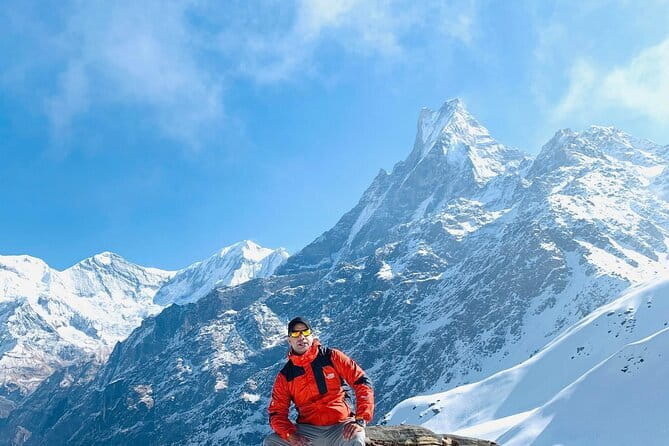
Wake early for sunrise at Mohare Danda. Morning light is often the best time for mountain photography, and this viewpoint gives you a clear chance to see the peaks before the walking begins.
The route to Ghorepani takes about six hours. It moves across flatter ground, then drops through forest before crossing a mix of uphill, downhill, and level trail. Expect rhododendron woodland, grassland, and wide mountain views.
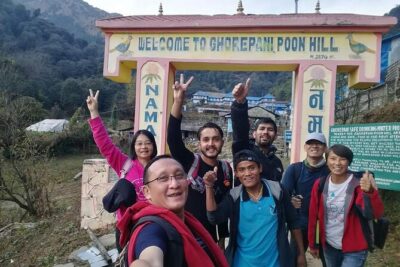
Ghorepani is more established than the earlier settlements. That brings practical benefits, but it also marks a shift from the quieter Mohare section toward a better-known trekking stop.
This day is not only a transfer between lodges. It lets you recover from the climb to Mohare while still walking through attractive forest. The varied trail also breaks up the rhythm, though the repeated ups and downs can tire your legs.
Day 5: Poon Hill sunrise and Swanta
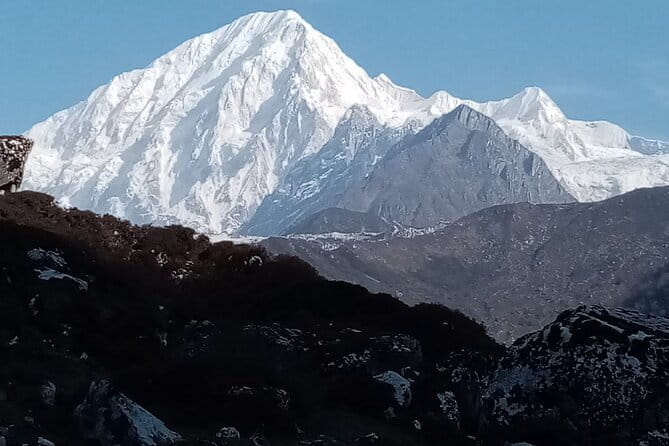
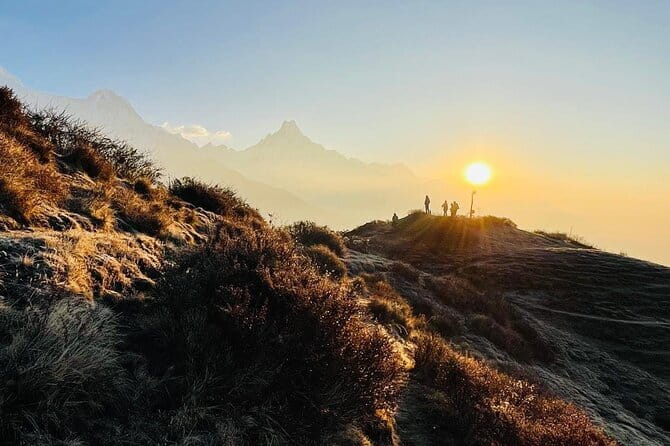
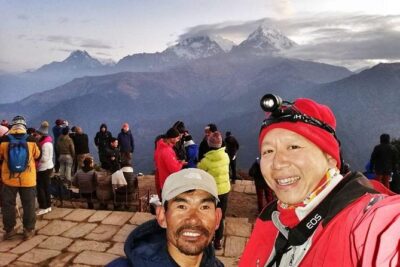
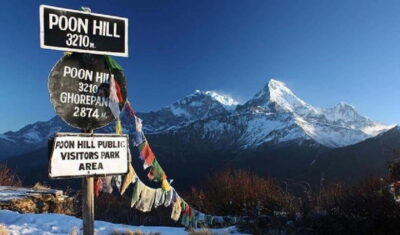
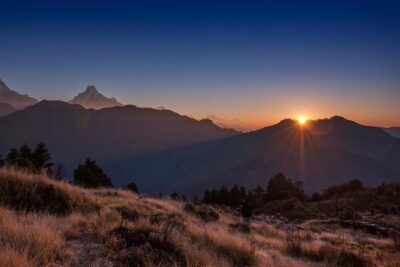
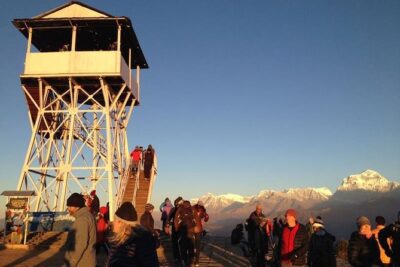
The early climb to Poon Hill is one of the signature moments of the trek. From Ghorepani, you walk up the stairs before dawn to reach the overlook in time for sunrise.
From Poon Hill, golden light reaches across Dhaulagiri and Annapurna. Rice terraces and the surrounding hills add depth below the snowy peaks. This is a popular viewpoint, so do not expect the same solitude as Mohare Danda or Khopra Ridge. The tradeoff is a famous panorama that is easy to understand, photograph, and remember.
After returning to Ghorepani for breakfast, you descend through mixed rhododendron, oak, and pine forest. The walk continues toward Swanta, including a crossing over a small river on a wooden bridge. The full day takes about seven hours.
You spend the night at Swanta Happy Valley Lodge. This is another useful point for the private format: your guide can help keep the morning organized, then set a sensible pace on the long descent.
Day 6: Swanta to Khopra Ridge
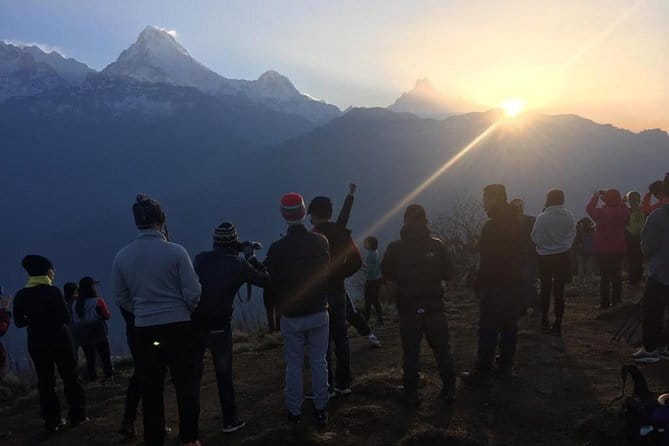
After breakfast, the route passes through woodland and near the local school, where you may see children heading to class. You then begin a steady ascent toward Khopra Ridge.
The climb takes about six hours. The advice here is simple: go slowly. There is no prize for racing uphill, and the guide can set a rhythm that lets you stop when needed.
The area is known for wildlife such as Himalayan tahr and the danfe pheasant. Sightings are never guaranteed, but the forest and open slopes give you a chance to watch for them.
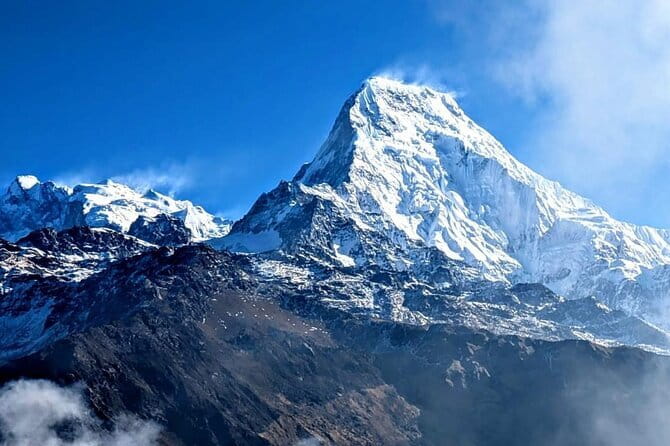
Khopra Ridge is one of the best reasons to choose this trek. From the ridge, you get wide views of Dhaulagiri, Annapurna South, and Nilgiri. The sunset view is another highlight, especially after the effort of the climb.
This is a remote-feeling part of the route, so expect basic accommodation and fewer facilities. The reward is space, quiet, and a mountain viewpoint that feels less arranged for mass tourism.
Day 7: The demanding trip to Khayer Lake
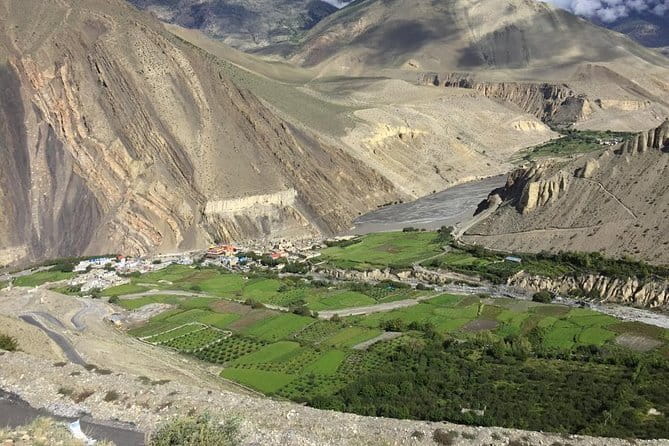
Day seven is the toughest section. Khayer Lake sits at 4,660 meters below Annapurna South and is sacred to both Hindu and Buddhist pilgrims. The Khayer Barahi Temple adds religious meaning to the setting, and local belief connects bathing in the lake with the pursuit of Nirvana.
The route offers views of Annapurna, Machhapuchhre, and Nilgiri. The high altitude, however, is the real story. The plan describes nearly ten hours of walking to the lake and back to Khopra Ridge, while the daily schedule also lists seven hours, so you should clarify the expected timing with CAN Travels before departure.
This is not a casual sightseeing walk. You need a moderate level of physical fitness, and the height makes a slow pace important. If you feel unwell, tell your guide immediately. The guide’s job is not only to show you the way but also to help you judge the day sensibly.
Khayer Lake can be a powerful part of the trek for hikers interested in both mountain scenery and sacred places. It is also the clearest reason not to book this route solely because the price looks attractive.
Day 8: Forest trails toward Dobato
The route continues toward Dobato through oak and rhododendron forest. The walk takes about five to six hours and includes a gentle descent, although the total distance is listed as 10.8 kilometers.
You pass through Chistibang and Bayeli. These smaller settlements help break up the day and show how far the route reaches into the Annapurna area.
Dobato sits at 3,420 meters and is known as a strong place for seeing sunrise over Dhaulagiri. If you walk in early spring or late autumn, snow may affect the trail. That seasonal warning matters, since conditions can make a supposedly gentle descent slower and more difficult.
This section is a good fit for you if you prefer forest paths and quieter villages to busy roads. It also gives your legs a partial break after Khayer Lake, though you remain at serious altitude.
Day 9: Tadapani and Ghandruk
The route to Ghandruk includes several ascents and descents through valleys, forest, and villages. After reaching Tadapani, you stop for lunch before continuing downhill.
From Tadapani, you can see Annapurna, Machhapuchhre, and Hiunchuli. The trail then descends to Ghandruk, one of the most attractive village stops on this route.
Ghandruk gives you a chance to slow down. After checking in, you take a walk through the village and see views of Annapurna, Gangapurna, Machhapuchhre, and other peaks.
The day lasts about six hours. It is still active, but the descent brings a welcome change after the high Khopra and Khayer sections. Your knees may notice the difference more than your lungs.
Day 10: Ghandruk to Pokhara
The final walking day follows the edge of the Modi Khola toward Nayapul. You pass through Kimche and travel via Lumle before taking a private vehicle back to Pokhara.
The walking portion takes about six hours, followed by the road transfer. A short rest in Nayapul is included before the drive.
This ending is practical rather than dramatic. You finish with a last stretch through villages and river country, then return to Pokhara without arranging another ride yourself. After ten days, that simplicity is welcome.
Accommodation, meals, and guide support
Accommodation is in guesthouses during the trek, with homestay or community-lodge options in some villages. The experience is functional and local, not luxurious. Bring the right attitude and you will get more from it.
Meals and drinks are available to buy, with an estimated cost of $25 per day. Since food is excluded, carry enough spending money for the full route. Gratuities are optional.
The package includes a government-licensed English-speaking guide, guide expenses, permits, official documents, a basic emergency first aid kit, and a trekking pole. Guide Amrit received especially strong praise for his work, with his organization and personal support singled out as reasons the trek went well.
That praise is useful, but it should not create unrealistic expectations. One named guide may not lead every departure. If having Amrit matters to you, ask CAN Travels to confirm the guide before booking.
Who should book this trek?
I would recommend it to you if you want:
- A private trek rather than a large group
- A mix of famous and quieter viewpoints
- Local homestays and community lodges
- Big Himalayan views without following only the busiest route
- A serious high-altitude challenge at Khayer Lake
- Private transport at the beginning and end
I would not choose it for a first mountain holiday if you dislike long walking days, steep climbs, basic lodging, or uncertain trail conditions. The Khayer Lake day deserves particular respect, and early spring or late autumn may bring snow between Khopra and Dobato.
The route also suits photographers. Mohare Danda, Poon Hill, Khopra Ridge, and Dobato all offer strong sunrise or sunset opportunities. You will need to balance photography with the walking schedule, especially on the early Poon Hill morning.
Final verdict: a strong route for serious walkers
Book this trek if you want a private Himalayan journey with real variety. You get the famous Poon Hill sunrise, but the quieter Mohare and Khopra sections give the trip its character. Community lodges, village schools, pastureland, sacred Khayer Lake, and the mountain views make this more than a peak checklist.
The price is reasonable once you add food, especially for private transport and a private guide. Before paying, confirm the expected duration of the Khayer Lake day, the exact accommodation, and which guide will lead your group.
If you want comfort and short walks, choose another Nepal experience. If you want wide views, local lodging, and a demanding route that leaves the busiest trails behind, this trek is worth serious consideration.
FAQ
How long does the Khopra Mohare Danda and Poon Hill trek take?
The trek lasts approximately 10 days, beginning with pickup in Pokhara and ending with private transport back to Pokhara from Nayapul.
What is the price per person?
The listed price is $490 per person. Food and drinks cost approximately $25 per day extra, and gratuities are optional.
Is transport included?
Yes. A private jeep takes you from your Pokhara hotel to Galeshwor at the start. A private vehicle brings you from Nayapul back to Pokhara at the end, and hotel pickup and drop-off are included.
What is the highest point on the trek?
Khayer Lake is the highest point, at 4,660 meters above sea level.
What accommodation is provided?
Accommodation is in guesthouses during the trek. The route also uses a homestay or community lodge in Nangi, and Swanta Happy Valley Lodge is included on the Swanta portion.
Can I cancel for a full refund?
Yes. You can cancel at least 24 hours before the experience starts for a full refund. Cancellations or changes made within 24 hours are not accepted for a refund.
New in the Pokhara listings
- Pokhara: Pokhara Highlights Tour by Bus★ 3.6 · 10 reviews
- Discover Pokhara in Style: Private Vehicle Service with Driver★ 5.0 · 5 reviews
- Multi-Day Tour from Pokhara, Poon Hill and Mulde Trek★ 5.0 · 1 review
- Pokhara in 5 Hours: Lake, Museum, Cave, Falls & Pagoda Hill★ 4.5 · 16 reviews
- Private 4 Day Poon Hill Trek from Pokhara★ 5.0 · 16 reviews
- 4 Day Mardi Himal Base Camp Trek from Pokhara★ 5.0 · 18 reviews
- From Pokhara Full Day Entire Pokhara Tour with Guide★ 5.0 · 1 review
- Ultralight Flight: Into The Heart Of The Mountains (90 min)★ 5.0 · 1 review
Poon Hill Treks, compared.
4-Day Ghorepani, Poonhill & Ghandruk Mountain Trek
Read our review →
Browse the lists this tour appears in