REVIEW · 3-DAY EXPERIENCES
Pokhara: 3-Day Trek
Small trek, serious mountain views. This three-day route gives you a gentle introduction to Himalayan walking without sending you far from Pokhara. I like the comfortable lodge stays with attached bathrooms and hot showers, and I like the mix of forest paths, stone villages, farm terraces, and wide views toward Annapurna and Mount Fishtail. The main consideration is that meals are not included, so you should budget extra and confirm the arrangements before departure.
I also like that this is a private trek, so your guide can adjust the route to your pace. Guides such as Jit, Prabin, Dansay, and Basanta have been praised for kindness, safety, local stories, and practical help. Still, the trip requires steady walking on uneven hill trails, and it is not suitable for people with mobility impairments or pregnant women.
In This Review
- Key points to know before booking
- Why this short trek works so well from Pokhara
- Day one: Naudanda, Dhampus, and Australian Camp
- Day two: Ridge walking from Australian Camp to Astam
- Day three: A short descent back to Pokhara
- Lodges, showers, and meals
- How difficult is the walking?
- What the $250 price includes
- Practical booking advice for Pokhara
- Should you book this Pokhara trek?
- FAQ
- How long is the Pokhara trek?
- Where does the trek take place?
- Where do you stay on the trek?
- Do the rooms have private bathrooms?
- Are meals included in the price?
- Is transportation included?
- Can the route be shortened?
- Is a guide provided?
- Is a porter included?
- What should you bring?
Key points to know before booking
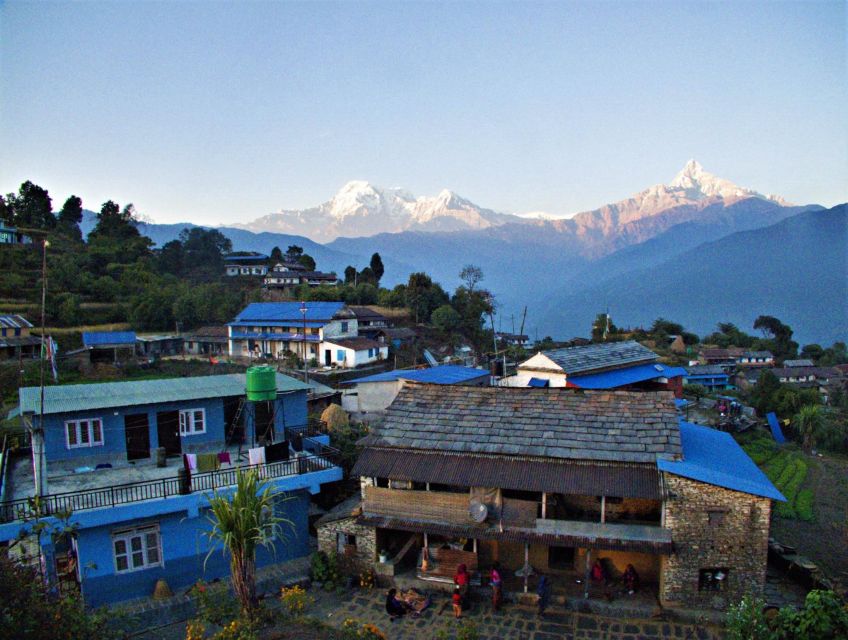
- Australian Camp sunrise: Spend the first night in a small teahouse settlement above Dhampus, with a strong chance of clear early views toward the Himalayas.
- A gentle Himalayan introduction: Daily walking is moderate, with about five hours on day one, four hours on day two, and two hours on day three.
- Two different lodge experiences: The first night is in a forest teahouse, while the second is at Annapurna Eco Village Resort in Astam.
- Private and adjustable: The route can be shortened by driving higher, or adapted to suit your walking pace and interest.
- Local life along the ridge: You pass traditional villages, seasonal crop terraces, forest, and countryside around Annapurna.
- Good comfort for a short trek: Both overnight stays include attached toilet and bathroom facilities, with hot showers at Australian Camp.
Why this short trek works so well from Pokhara
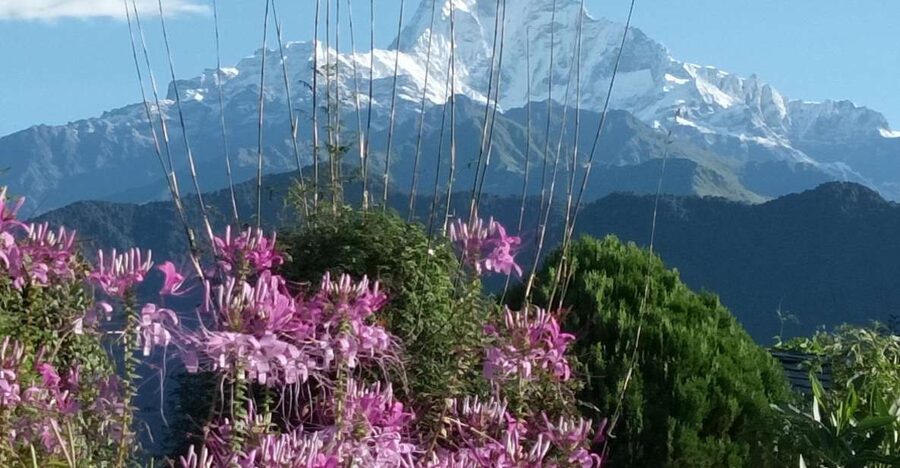
Pokhara is famous for its lake, cafés, and mountain views, but it is easy to spend your entire visit inside the city. This trek gives you a simple way to step into the hills without committing to a demanding high-altitude route.
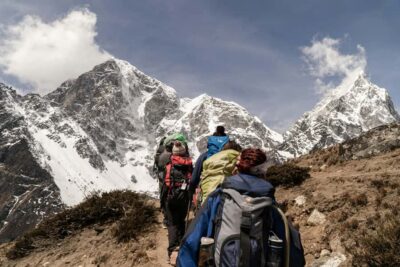
The walking area is about 30 kilometers northwest of Pokhara, closer to Mount Fishtail and the Annapurna Himalayas. You climb to a ridge, then follow it through Dhampus, Pothana, and onward to Astam. The route has enough variety to keep the three days interesting: forest, open ridge walking, village paths, cultivated slopes, and views across the valley toward snow peaks.
I see this as a trekking sampler. You get the rhythm of walking from one lodge to another, eating at teahouses, carrying a small day bag, and waking early for mountain light. You also avoid the harder demands of a longer Himalayan trip, such as extended high-altitude walking or several consecutive long days.
The private format matters here. A fixed group can force you to walk at someone else’s speed, while a private guide can allow more time for photographs, village stops, or a slower climb. The route can also be shortened by driving farther up the hill, which is useful if weather, fitness, or time becomes a problem.
More walking in the hills of Pokhara:
- Poon hill Trek 3 days
★ 5.0 · 176 reviews - Trekking in Annapurna/Langtang/Everest/Upper Mustang regions
★ 5.0 · 161 reviews - Pokhara: 4-Day Ghorepani, Poonhill & Ghandruk Mountain Trek
★ 5.0 · 132 reviews
Day one: Naudanda, Dhampus, and Australian Camp
The first morning begins with hotel pickup in the Lakeside area of Pokhara. The drive to Naudanda takes about 30 minutes and brings you to the western rim of the Pokhara Valley.
From Naudanda, the trail gradually descends toward a stream before climbing to Dhampus. This section takes about two hours. The walking is not described as technically difficult, but you should expect hill paths, uneven ground, and a steady uphill section. Comfortable shoes are essential. Sunglasses are also recommended, especially once the trail opens out.
Dhampus is one of the first important village stops. The trail then continues for about an hour to Pothana, where you stop for lunch. Meals are available at the teahouses, but you pay directly. The food is described as simple, varied, and suitable for an international menu, with some visitors especially enjoying the local dishes and fresh meals.
After lunch, it is about 30 minutes to Australian Camp. This short final section is a pleasant finish to the day. Australian Camp is a small teahouse settlement in rhododendron forest above Dhampus, and it has served trekkers for more than 15 years.
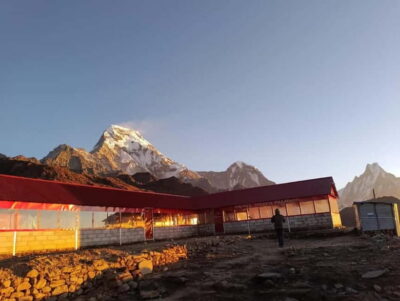
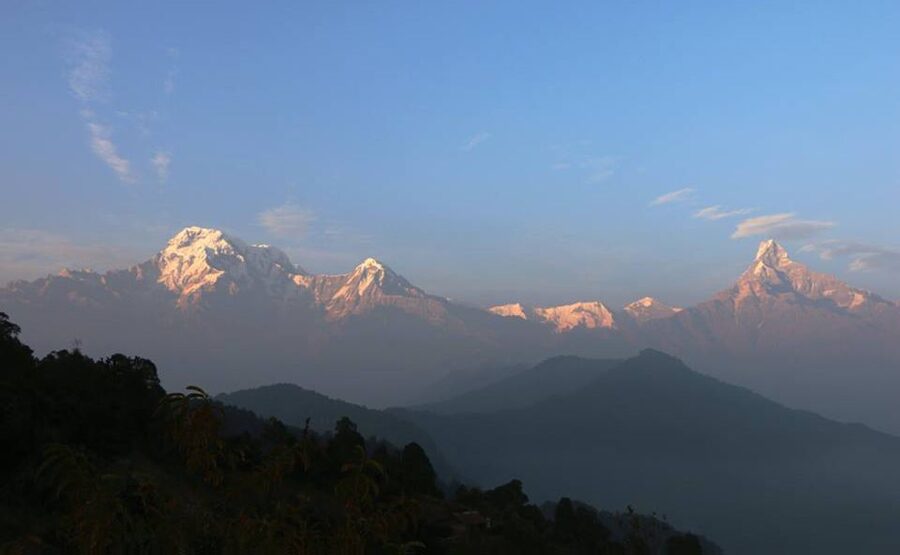
The setting is the real reward. The camp overlooks the Himalayas, and sunrise is often the most memorable part of the stay. You may wake to mountain peaks catching the first light while the valley remains in shadow. Sunset views are also part of the appeal, though clear conditions are never guaranteed in mountain country.
The lodge is basic in style but more comfortable than the word teahouse might suggest. The accommodation includes an attached toilet and bathroom, with a hot shower. That is a useful benefit after the first day of walking, especially for people who want a Himalayan experience without giving up all ordinary comforts.
Day two: Ridge walking from Australian Camp to Astam
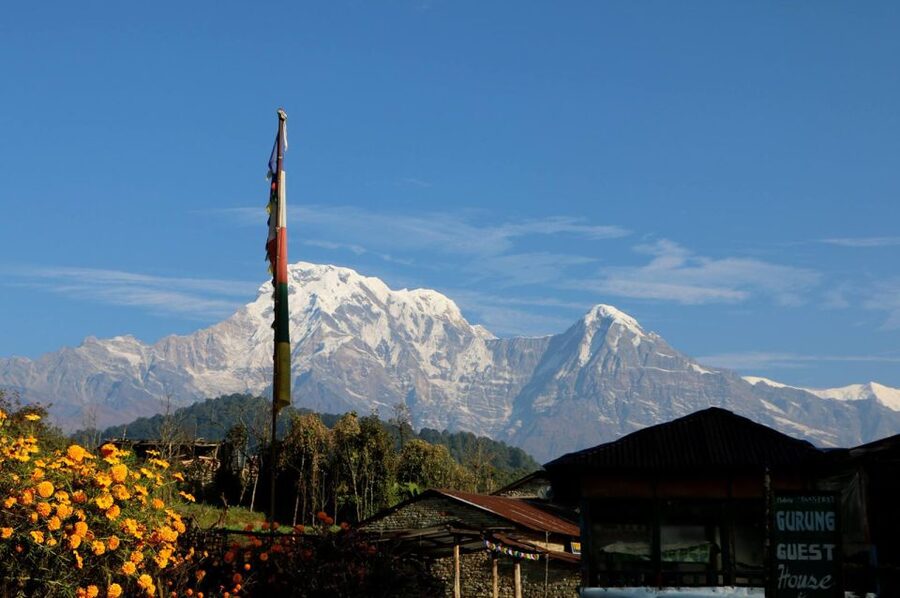
Day two starts with breakfast and a view of the mountains. After that, you follow the ridge toward Astam village for about four hours.
This is the most scenic walking day. The trail passes through rural settlements and countryside where seasonal crops cover the terraces. You may walk through forest for one stretch, then come out beside a village or open hillside with views across the valley. The changing surroundings help the day feel like a real journey rather than a long walk between two road points.
The countryside also gives you a look at daily life around Annapurna. The route is not built around large monuments or formal attractions. Its value comes from seeing homes, farms, village paths, and the way people live on the hillsides. Your guide can add context about local culture, plants, mountain stories, and village life.
The guides are one of the strongest parts of this experience. Jit was praised for making a solo trekker feel safe and well cared for. Prabin was appreciated for his information about botany, wildlife, Nepal, and the mountains. Dansay was described as attentive and full of interesting stories, while Basanta was praised for humor, kindness, and constant attention to comfort and safety.
A porter accompanies the trek to carry luggage to each destination. That means you do not need to walk with your full bag, although you should still carry water, sun protection, a phone or camera, and anything you need during the day. The porter can also provide a more personal connection to local life and mountain culture.
The day ends at Annapurna Eco Village Resort in Astam. This is a hilltop resort with simple but comfortable rooms and attached bathroom and toilet facilities. Its position gives you fresh mountain air and broad views, and the setting feels different from the forest teahouses at Australian Camp.
The resort uses eco-friendly measures such as reusing water, collecting rainwater, and growing organic food. You can learn about the farm and the village during your stay. This makes Astam more than a sleeping stop. It gives the trek a useful final layer, connecting mountain tourism with local food production and practical environmental measures.
The eco-village was the highlight for some people who took this route. That makes sense: after two days of walking, a clean room, a hot shower, fresh food, and a quiet hilltop setting are welcome. You should still remember that this is a village resort, not a luxury hotel. The comfort is simple and practical.
Day three: A short descent back to Pokhara
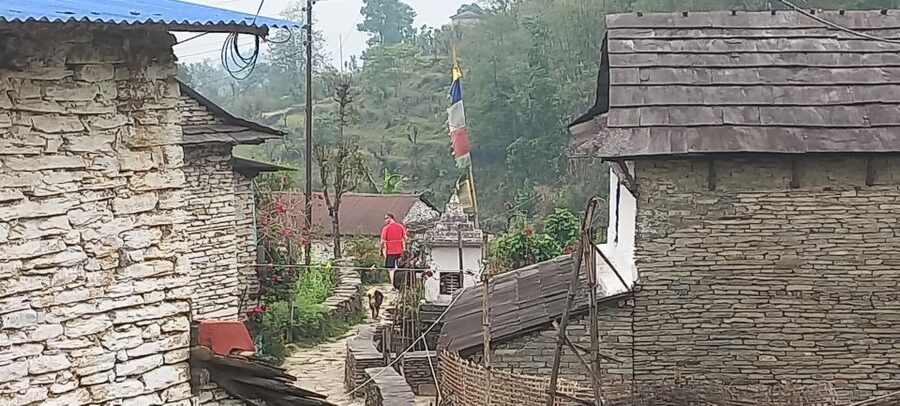
The final morning is much easier. You walk downhill for about two hours to the highway, then meet transportation for the drive back to Pokhara.
This short final section is useful for two reasons. First, it lets you enjoy a third morning in the hills without making the return exhausting. Second, you can finish the trek and still have time in Pokhara, depending on the exact departure and driving schedule.
The route is therefore a good fit if you want mountain scenery but have only three days available. It also works well near the beginning of a Nepal trip, when you want to test your fitness before attempting a longer route. If you find the first day harder than expected, the private format and optional driving adjustments give the guide some room to shorten the walking.
A short list of alternatives around Pokhara
- ZipFlyer Nepal – The World’s Steepest Zip-line
★ 5.0 · 608 reviews - Bungee Pokhara by HighGround Adventures
★ 5.0 · 366 reviews - From Pokhara: Sarangkot Sunrise Himalayas Tour
★ 4.7 · 218 reviews - ATV Adventure Tour in Pokhara, Nepal
★ 5.0 · 194 reviews
Lodges, showers, and meals
Accommodation is one of the main reasons to choose this trip instead of a more basic walking route. Australian Camp and Annapurna Eco Village Resort both provide rooms with attached bathroom and toilet facilities. Australian Camp also specifies hot showers, and the second resort offers clean, simple rooms.
This level of comfort changes the feel of the trek. You still walk through rural Nepal and stay in small hill communities, but you are not signing up for several nights of rough sleeping or shared washrooms. For many first-time trekkers, that makes the route feel manageable.
Meals are not included in the $250 price. You can order breakfast, lunch, and dinner at the teahouses and pay directly. The food is described as simple but delicious, with international choices available. At Astam, the organic meals are part of the experience, and some people found the food fresh, varied, and particularly enjoyable.
I would clarify the meal arrangement during the pre-trek briefing. One booking had confusion over included food, so it is better to know exactly what you will pay for before setting out. The operator meets you at your hotel one day before departure for a briefing and to arrange the departure time. Use that meeting to ask about meals, luggage, walking pace, and the planned pickup.
How difficult is the walking?
This is marketed as a short and easy trek, and the feedback supports that description. One person called it a fitness trek with no major difficulties, while another described it as neither too hard nor too easy.
That does not mean the route is flat. Day one includes a descent to a stream, a climb to Dhampus, and several hours of walking. Day two follows a ridge for about four hours, and the terrain can include forest paths, village tracks, and uneven ground. You need reasonable walking fitness and comfortable footwear.
The route is not suitable for people with mobility impairments or pregnant women. If you have concerns about hills, ask for the shorter driving option before setting off. Since this is a private trek, the guide can adapt the pace more easily than on a large group departure.
Bring sunglasses and comfortable shoes. Sunscreen and mosquito spray are also sensible additions based on the conditions described along the route. A small daypack is useful for personal items, while the porter carries the main luggage.
What the $250 price includes
At $250 per person, the value depends on how much you value private support and comfort. The price includes private transportation to and from the trailhead, two nights of lodge accommodation, a licensed trekking guide, and a porter.
That package covers the major practical pieces of a short trek. You do not have to arrange separate transport to Naudanda or organize a guide and porter on your own. You also receive en-suite accommodation instead of more basic sleeping arrangements.
The costs left outside the package are insurance and meals. You should also allow for drinks and any personal purchases, though exact extra costs are not provided. The price is strongest for people who want a private, organized experience with comfortable overnight stops. If you already have transport, hiking partners, and trekking equipment arranged, you might find a self-organized walk cheaper, but it would not provide the same level of support.
The guide and porter add real value. A good guide can adjust the pace, explain village life, share information about plants and wildlife, and help you feel secure on unfamiliar paths. The personal praise for guides such as Jit, Prabin, Dansay, and Basanta suggests that the human side of the trip is a major part of what you are paying for.
Practical booking advice for Pokhara
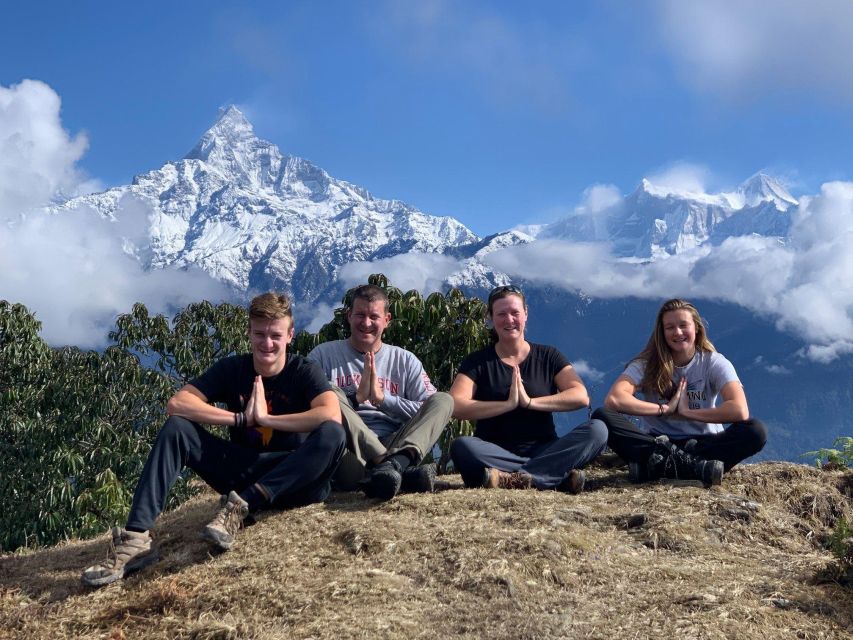
Pickup is included only from hotels in the Lakeside area near Phewa Lake. If you stay farther away, an extra pickup charge applies. Give the operator your exact hotel location before booking so there are no surprises.
The operator plans to meet you one day before the trek for a briefing. This is not just a formality. Confirm the start time, meal costs, luggage plan, route length, and any request to drive farther up the trailhead.
The guide arrives by car on departure day. The tour is conducted in English, and pickup is included under the Lakeside condition. Free cancellation is available up to 24 hours in advance for a full refund, and you can reserve now and pay later.
The overall rating is 4.5 from seven verified bookings. Most of the feedback is strongly positive, with particular praise for guides, safety, views, clean rooms, food, and the easy but worthwhile walking. The one notable problem involved a forgotten booking and confusion about meals, so confirming the trip in advance is wise.
Should you book this Pokhara trek?
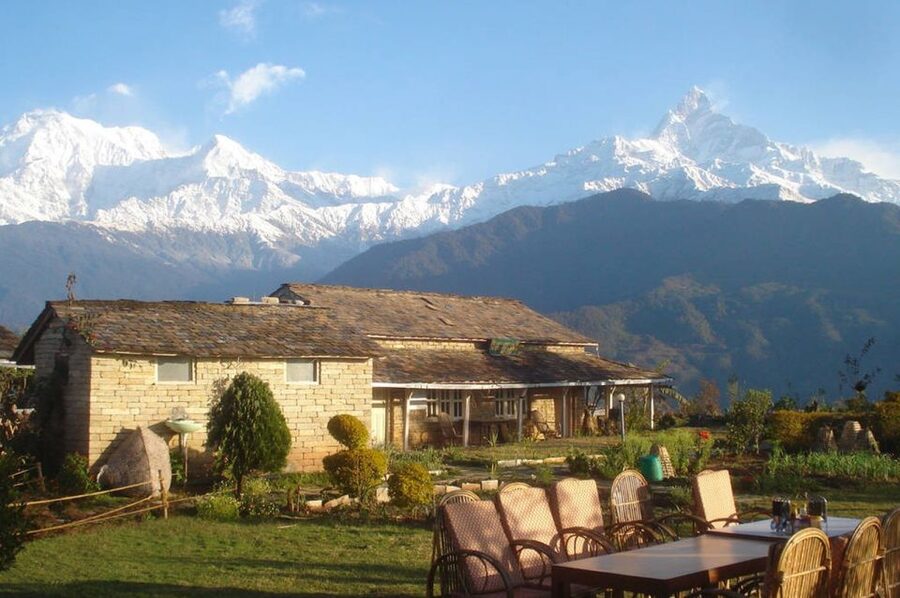
Book it if you want a three-day Himalayan introduction with mountain views, village walking, private guiding, porters, and proper bathrooms. It is especially well suited to first-time trekkers, solo visitors who want personal support, couples, and anyone who wants to stay near Pokhara rather than spend a week on a remote route.
You should choose it if sunrise over the Annapurna Range matters as much to you as the walking itself. Australian Camp provides the memorable mountain morning, while Astam adds organic farming and a comfortable hilltop stay.
Skip it if you want a strenuous high-altitude expedition, long daily mileage, or a completely independent trip. Also think twice if you dislike uneven uphill walking or want every meal included in the upfront price.
For the right person, this is a sensible way to meet the Himalayas: short, scenic, well supported, and comfortable without losing its connection to village life.
FAQ
How long is the Pokhara trek?
The experience lasts three days. The walking schedule is about five hours on day one, four hours on day two, and two hours on day three.
Where does the trek take place?
The route is about 30 kilometers northwest of Pokhara, near Mount Fishtail and the Annapurna Himalayas. It passes through Naudanda, Dhampus, Pothana, Australian Camp, and Astam.
Where do you stay on the trek?
You spend the first night at a teahouse in Australian Camp and the second night at Annapurna Eco Village Resort in Astam.
Do the rooms have private bathrooms?
Yes. Both accommodations provide rooms with attached toilet and bathroom facilities. Australian Camp also provides hot showers.
Are meals included in the price?
No. Meals are not included. You can order food at the teahouses and pay directly.
Is transportation included?
Yes. Private transportation to and from the trekking trailhead is included. Pickup is included from hotels in the Lakeside area of Pokhara.
Can the route be shortened?
Yes. There are options to drive to a higher point and make the walking section shorter. The private route can also be adjusted to suit your pace and walking interest.
Is a guide provided?
Yes. A professional, licensed, and experienced English-speaking trekking guide leads the walk.
Is a porter included?
Yes. A porter carries luggage to each day’s destination.
What should you bring?
Bring comfortable shoes and sunglasses. Sunscreen and mosquito spray are also useful items to pack.
New in the Pokhara listings
- Pokhara: Pokhara Highlights Tour by Bus★ 3.6 · 10 reviews
- Discover Pokhara in Style: Private Vehicle Service with Driver★ 5.0 · 5 reviews
- Multi-Day Tour from Pokhara, Poon Hill and Mulde Trek★ 5.0 · 1 review
- Pokhara in 5 Hours: Lake, Museum, Cave, Falls & Pagoda Hill★ 4.5 · 16 reviews
- Private 4 Day Poon Hill Trek from Pokhara★ 5.0 · 16 reviews
- 4 Day Mardi Himal Base Camp Trek from Pokhara★ 5.0 · 18 reviews
- From Pokhara Full Day Entire Pokhara Tour with Guide★ 5.0 · 1 review
- Ultralight Flight: Into The Heart Of The Mountains (90 min)★ 5.0 · 1 review
3-Day Experiences, compared.
Jungle Towernight Stay In Chitwan National Park ,nepal-2 Nights 3 Days Package
Read our review →
3-Day Chitwan National Park Jungle Safari Tour Package with Pick Up
Read our review →
From Kathmandu/Pokhara: 3-Day All-Inclusive Chitwan Safari
Read our review →
3-Day Chitwan Safari Tour with Hotel Transfers
Read our review →
Kathmandu/Pokhara: 3 Day Chitwan Jungle Safari Tour
Read our review →