REVIEW · POKHARA TOURS
Pokhara Day Tour
Pokhara rewards a day beyond the lake. This private six to seven-hour tour links the city’s main sights with a local English-speaking guide, private transport, and hotel pickup in the Lakeside area. I like the way it reaches places that are easy to miss if you stay near the waterfront, especially the International Mountain Museum and Gupteshwor Mahadev Cave.
I also like the flexible private format. You are not tied to the pace of a large group, so you can spend more time at a place that interests you. The main drawback is that entrance fees, food, and personal expenses are not included, so the $90 price is not the full cost of the day.
In This Review
- Key points to know before booking
- Why this private Pokhara route works well
- Phewa Lake and Tal Barahi Temple by boat
- Devi’s Fall and the water below
- Gupteshwor Mahadev Cave, a shrine beside the waterfall
- The International Mountain Museum and Nepal’s climbing story
- World Peace Pagoda above Phewa Lake
- The guide and the value of the private format
- What the $90 price really covers
- Who should book this Pokhara day tour?
- Should you book it?
- FAQ
- How long does the Pokhara Day Tour last?
- Is hotel pickup included?
- Is the tour private?
- Is transportation included?
- Are attraction admission fees included?
- Is food included?
- Can I cancel for a full refund?
Key points to know before booking
- A private vehicle keeps the day simple: Pickup and return are included for hotels in Pokhara’s Lakeside area.
- The route covers five very different sights: You visit a lake temple, waterfall, cave shrine, mountain museum, and hilltop peace pagoda.
- Phewa Lake includes a boat ride: The trip to Tal Barahi Temple is part of the day’s most scenic section, though the temple admission fee is extra.
- The guide adds useful context: An English-speaking local guide explains Pokhara’s religious sites, mountain culture, and major attractions.
- Admission fees are separate: Budget for monument and attraction tickets in addition to the tour price.
- It suits a stop before or after trekking: The route gives you a broad introduction to Pokhara without demanding a full day on foot.
Why this private Pokhara route works well
Pokhara is often treated as a base for the Annapurna region, with visitors focused on permits, trekking gear, and views from the Lakeside promenade. That is understandable, but it leaves out much of the city. This tour gives you a useful overview of Pokhara’s religious, natural, and mountaineering attractions in one organized outing.
The private setup matters most here. The sights are spread around the city, and moving between them by private vehicle is easier than trying to arrange separate taxis or local transport. You can ask questions as you go, and the day can feel less rushed than a standard group excursion.
The route also has a good mix. You begin with the calm waters of Phewa Lake, then move to the force of Devi’s Fall, the sacred atmosphere of a cave temple, the educational displays at the mountain museum, and the broad views from the World Peace Pagoda. No single stop carries the whole day.
The tour is priced at $90 per person, which is fair if you value a private car, hotel-to-hotel service, and a guide. It is less attractive if you only want transport to one or two sights. Since admission fees and food are not included, check the extra costs before you set out.
A short list of alternatives around Pokhara
- ZipFlyer Nepal – The World’s Steepest Zip-line
★ 5.0 · 608 reviews - Bungee Pokhara by HighGround Adventures
★ 5.0 · 366 reviews - From Pokhara: Sarangkot Sunrise Himalayas Tour
★ 4.7 · 218 reviews
Phewa Lake and Tal Barahi Temple by boat
Phewa Lake is the natural starting point for understanding Pokhara. Its quiet water, surrounding hills, and distant Annapurna views give the city its familiar postcard setting. The lake is also one of the places where Pokhara feels calm rather than hectic.
The boat ride to Tal Barahi Temple adds a welcome change from road travel. The temple sits on a small island in the lake and is dedicated to Barahi, an incarnation of the Hindu goddess Durga. Its pagoda-style structure is modest, but its setting gives it special appeal.
You can expect this part of the visit to combine sightseeing with religious life. Devotees come to worship, while visitors come for the short boat crossing, lake views, and the temple’s place at the center of Phewa Lake. During Dashain, one of Nepal’s major Hindu festivals, the site becomes especially important.
Allow roughly an hour for the temple portion, with time around the lake and on the boat. The supplied tour details do not give a separate duration for Phewa Lake itself, so your exact time on the water may depend on the day’s pace.
The temple admission fee is extra. Food is also not included, although you can buy lunch during the day. One useful point from the experience description is that the outing may finish with lunch near the lake, but you should treat that as a possible stop rather than a guaranteed included meal.
Devi’s Fall and the water below
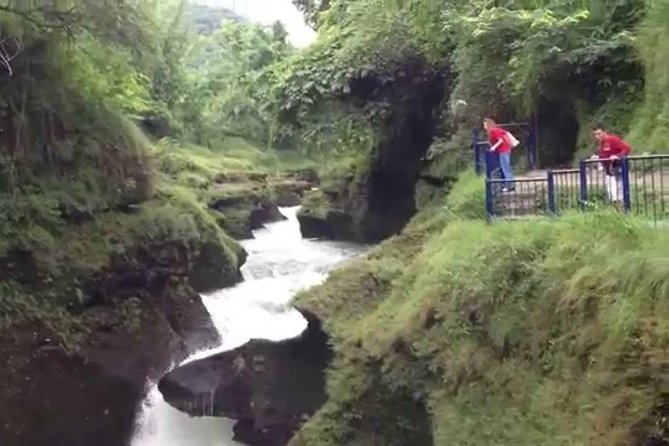
Devi’s Fall, also called Patale Chhango, is one of Pokhara’s best-known natural sights. Water drops into a deep gorge, creating a compact but striking scene that feels different from the open calm of the lake.
The waterfall is named after a Swiss visitor who drowned there in the 1960s. That detail gives the place a darker edge, so this is not simply a pretty photo stop. The water can be especially forceful during the monsoon season, when the fall is at its strongest.
The planned visit lasts about 30 minutes. That is enough for the observation area and photographs, but not enough for a long walk or a slow exploration of the surrounding area. If you enjoy geological features and rushing water, you may wish this stop were longer. The short visit makes sense, though, because the cave temple is nearby and the day has several other stops.
Entrance is not included. Wear sensible footwear and take care around wet surfaces, but do not assume the tour includes any special activity beyond viewing the waterfall.
Gupteshwor Mahadev Cave, a shrine beside the waterfall
Near Devi’s Fall, Gupteshwor Mahadev Cave brings the day into a more intimate and spiritual setting. The temple is dedicated to Lord Shiva, and the main shrine is located inside a natural cavern.
The cave’s most unusual feature is water flowing through it. That creates a cool, quiet setting and gives the visit a strong sense of place. You are not simply looking at a religious building from the outside. You are entering a natural space that has been made sacred.
Plan on about an hour here. That gives you time to see the temple and examine the cave structure without turning the stop into a hurried photo opportunity. The site is particularly important during Maha Shivaratri, a major festival dedicated to Shiva.
This stop may not suit anyone uncomfortable in cave settings or who prefers only open-air sightseeing. The tour data says most people can participate, but it does not provide detailed information about steps, surfaces, or access inside the cave. If those details matter to you, ask the operator before booking.
Admission is separate. Since the cave and waterfall are close together, combining them in one stretch of the day is efficient and saves you from making another trip across Pokhara.
A completely different way to spend the day:
- ATV Adventure Tour in Pokhara, Nepal
★ 5.0 · 194 reviews - Full-Day Tibetan Cultural Tour to Tibetan Settlements Pokhara
★ 5.0 · 184 reviews - Pokhara: Full-Day Sharing Bus Tour on 7 Iconic Destination
★ 4.1 · 179 reviews - Poon hill Trek 3 days
★ 5.0 · 176 reviews
The International Mountain Museum and Nepal’s climbing story
The International Mountain Museum gives the tour its strongest educational stop. Located in Pokhara, it focuses on mountaineering, the Himalayan environment, and the cultures of people who live in mountain regions.
The displays include photographs, climbing equipment, artifacts, and information about major expeditions, including those connected with Mount Everest. You also find material about mountain plants, animals, and local ethnic groups. That wider focus matters because the Himalayas are not only a setting for climbing records. They are home to communities with their own traditions and daily lives.
I would give this stop the full 90 minutes listed for it. A quick pass through the galleries will show the main objects, but a slower visit helps you connect the equipment, photographs, and cultural displays. If you are preparing for an Annapurna trek, the museum can give useful background before you head into the mountains. If you have already trekked, it provides a different way to think about the people and places you saw.
The museum is also a good balance to the religious sites. The day does not ask you to view Pokhara only through temples and scenery. It includes the city’s role as a gateway to Himalayan exploration and as a center for mountain culture.
The admission fee is not part of the tour price. Your guide can add value here by explaining what you are seeing, especially if you have limited time in the museum.
World Peace Pagoda above Phewa Lake
The World Peace Pagoda is the day’s broadest viewpoint. Built by the Japanese Buddhist community in the 1970s, it is one of 80 peace pagodas constructed around the world under the direction of the Japanese monk Nichidatsu Fujii.
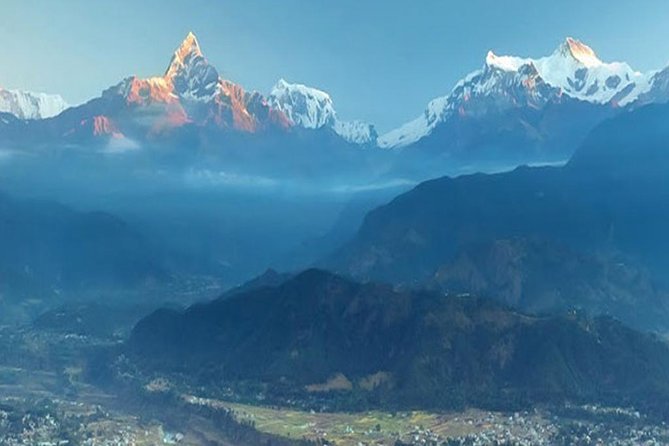
The monument sits on a hill above Phewa Lake and looks across Pokhara toward the surrounding mountains. On a clear day, the view includes the Annapurna range, the lake, and the city below. The pagoda itself is decorated with Buddha statues and serves as a place for meditation and reflection.
The listed visit is about 90 minutes. That should give you time to take in the monument and viewpoint rather than rushing straight back to the vehicle. Conditions matter here. Mountain views are never guaranteed, and clouds can change the scene quickly. Even without a perfect view, the pagoda offers a quieter setting than the city center.
The tour information does not specify how you reach the pagoda, so do not assume the route includes a particular hike, boat crossing, or cable car. Private transport is included, but the exact access plan should be confirmed with Adventure Bound if you have mobility concerns or want to know how much walking is involved.
This is a fitting final stop because it pulls together several themes from the day: Buddhism, the mountains, Phewa Lake, and Pokhara’s position between urban life and the high country.
The guide and the value of the private format
The strongest praise attached to this experience is directed at the guide. The guide is described as excellent and as having fantastic knowledge, which is important on a route with religious customs, local stories, and mountain subjects. A good guide can explain why Tal Barahi matters, put the cave shrine in context, and help you get more from the museum than you would from labels alone.
The private format lets you ask questions without worrying about holding up a busload of people. You can also give more attention to the sights that match your interests. Someone fascinated by mountaineering may want to linger at the museum, while someone drawn to religious sites may prefer more time at the temple and pagoda.
The tradeoff is that a private tour does not automatically mean every stop can be extended without limit. The route covers a lot in six or seven hours, and the guide still needs to keep the day moving. Tell the guide early if one location matters most to you.
Pickup and drop-off are included for hotels in the Lakeside area. If you are staying elsewhere in Pokhara, confirm the meeting arrangement. The listed meeting point is in Lakeside, and the activity returns there at the end.
What the $90 price really covers
At $90 per person, this is not the cheapest way to see Pokhara’s attractions. You are paying for convenience, a private vehicle, hotel pickup and return in the Lakeside area, and a guide who can provide local explanations throughout the day.
The price becomes easier to justify if you have only one free day in Pokhara, are traveling with family or friends, or want to avoid arranging several separate rides. It is also useful before or after an Annapurna trek, when your time in the city may be limited and you may not want to spend energy organizing transport.
The value is weaker if you are comfortable arranging your own rides and only want to see Phewa Lake or the Peace Pagoda. You will also need extra money for entrance fees, lunch, drinks, and personal purchases. The exact total depends on the tickets and food you choose.
The tour is booked an average of 44 days in advance, which suggests that early planning is sensible, particularly if you have fixed trekking dates. Confirmation arrives at booking, and free cancellation is available if you cancel at least 24 hours before the local start time. Changes or cancellations inside that window are not accepted for a refund.
Who should book this Pokhara day tour?
I would recommend it most to first-time visitors who want a clear introduction to Pokhara beyond Lakeside. It is also a good match for people with a free day before or after trekking, families who prefer a private vehicle, and anyone who wants a guide rather than a string of disconnected taxi rides.
The route works well for people with varied interests. You get scenery at Phewa Lake and the Peace Pagoda, religious sites at Tal Barahi and Gupteshwor, a natural attraction at Devi’s Fall, and mountain culture at the museum.
I would think twice if you dislike structured sightseeing or want a slow day at one location. Five stops in six or seven hours means the schedule has purpose. The waterfall visit is brief, and every attraction has an extra admission charge.
Should you book it?
Book this tour if you want to cover Pokhara’s major sights in one private day and value a guide who can explain what you are seeing. The combination of private transport, Lakeside pickup, flexible pacing, and a well-regarded guide makes it a practical choice for a short stay.
Skip it if you only want a boat ride on Phewa Lake, a single viewpoint, or the freedom to spend an entire afternoon at one place. For most people with limited time, though, this is a sensible way to see the city’s religious sites, mountain culture, and natural attractions without unnecessary transport headaches.
FAQ
How long does the Pokhara Day Tour last?
The tour lasts approximately six to seven hours.
Is hotel pickup included?
Yes. Pickup and drop-off are included for hotels in the Lakeside area of Pokhara.
Is the tour private?
Yes. Only your group participates in the private activity.
Is transportation included?
Yes. Transport by private vehicle is included.
Are attraction admission fees included?
No. Monument and attraction entrance fees are not included in the tour price.
Is food included?
No. Food is not included, but it is available to purchase during the day.
Can I cancel for a full refund?
Yes, if you cancel at least 24 hours before the experience start time. Cancellations or changes made less than 24 hours before the start are not refunded.
New in the Pokhara listings
- Pokhara: Pokhara Highlights Tour by Bus★ 3.6 · 10 reviews
- Discover Pokhara in Style: Private Vehicle Service with Driver★ 5.0 · 5 reviews
- Multi-Day Tour from Pokhara, Poon Hill and Mulde Trek★ 5.0 · 1 review
- Pokhara in 5 Hours: Lake, Museum, Cave, Falls & Pagoda Hill★ 4.5 · 16 reviews
- Private 4 Day Poon Hill Trek from Pokhara★ 5.0 · 16 reviews
- 4 Day Mardi Himal Base Camp Trek from Pokhara★ 5.0 · 18 reviews
- From Pokhara Full Day Entire Pokhara Tour with Guide★ 5.0 · 1 review
- Ultralight Flight: Into The Heart Of The Mountains (90 min)★ 5.0 · 1 review
Pokhara Tours, compared.
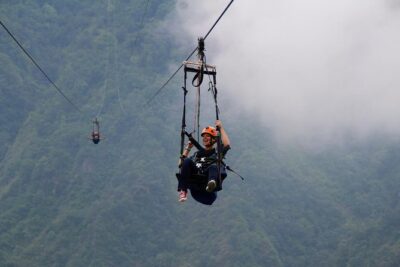
ZipFlyer Nepal – The World’s Steepest Zip-line
Read our review →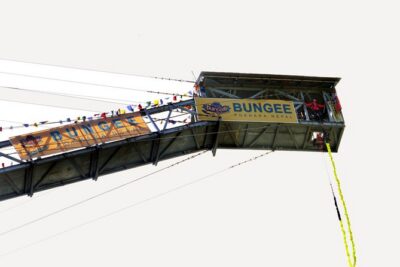
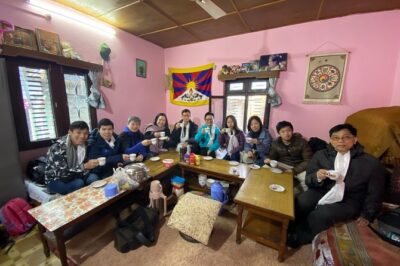
Full-Day Tibetan Cultural Tour to Tibetan Settlements Pokhara
Read our review →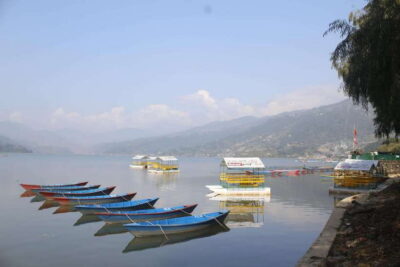
Full-Day Sharing Bus Tour on 7 Iconic Destination
Read our review →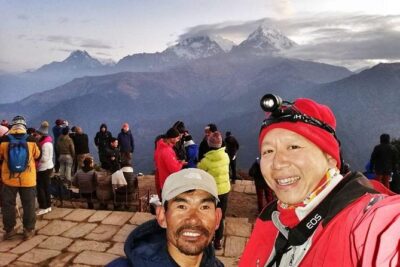
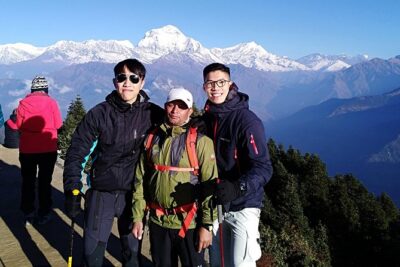
Trekking in Annapurna/Langtang/Everest/Upper Mustang regions
Read our review →