REVIEW · FULL-DAY
Pokhara: Full-Day Sharing Bus Tour on 7 Iconic Destination
Pokhara packs a lot into one day. This $12 shared bus tour links caves, temples, waterfalls, mountain viewpoints, and the Seti River without the cost of hiring a private car. I especially like the low price and the chance to meet a mix of Nepali, Indian, and international visitors. The main tradeoff is that this is mostly a transport-and-sightseeing service, not a traditional guided tour with detailed explanations at every stop.
I also like the easy hotel pickup within the Lakeside area and the broad route, which reaches places that are awkward to connect by taxi or bicycle. If you have only one free day in Pokhara, this is an efficient way to cover the major sights. Just remember that entrance fees, food, and drinks cost extra, and the advertised six-hour schedule may run closer to eight hours.
In This Review
- Key points to know before booking
- Why this low-cost day works in Pokhara
- Pumdikot’s Shiva statue and the first mountain views
- Devi’s Water Fall and the cave below it
- Mahendra Cave and Bat Cave: the most unusual stops
- The Seti River cuts through the city
- Bindabasini Temple closes the sightseeing loop
- Where the International Mountain Museum fits
- What the bus ride is really like
- Food, entry fees, and the real price
- Who should book this Pokhara day trip?
- My verdict: book it for coverage, not guiding
- FAQ
- How much does the Pokhara bus tour cost?
- How long does the tour last?
- Is hotel pickup included?
- Is this a guided tour?
- Which places does the tour visit?
- Are meals and entrance tickets included?
- Who should avoid this tour?
Key points to know before booking
- Seven destinations, or sometimes more: The route includes Pumdikot’s Shiva statue, World Peace Stupa, Devi’s Water Fall, cave sites, Seti River, and Bindabasini Temple. Some descriptions and experiences refer to nine stops.
- A self-guided sightseeing day: You are taken to each place, given time to explore, and expected back at the bus by the agreed time.
- Excellent value at $12: Transport and Lakeside hotel pickup are included, while monument entry fees cost about $4 in total.
- Expect a local-style bus: Air conditioning is not guaranteed, although it has been added during especially hot weather.
- Good for short visits: You can see much of Pokhara in one day without arranging several separate taxis.
- Not ideal for everyone: The caves can feel tight, and the tour is not suitable for wheelchair users or people with serious back problems.
Why this low-cost day works in Pokhara
Pokhara’s sights are spread around the city and its hills. Pumdikot and the World Peace Stupa sit away from the Lakeside hotel zone, while the caves and waterfalls lie in another direction. A taxi can connect them, but several rides quickly cost far more than this shared outing.
For $12, you are mainly paying for the route and the convenience. Hotel pickup is included from any hotel within the Lakeside area, with a name card used to identify you. The bus then carries the group from stop to stop, saving you the usual bargaining and map-checking.
The social side is part of the appeal. The bus brings together local and regional visitors with people from farther abroad. Solo visitors can find company without paying for a private guide, and families have used the day to see a wide slice of Pokhara together.
The style is simple. You should not expect a luxury coach, a small group, or a guide walking beside you at every monument. The strongest experiences came from skilled driving, friendly coordination, clear timing, and the sheer number of places covered.
A short list of alternatives around Pokhara
- ZipFlyer Nepal – The World’s Steepest Zip-line
★ 5.0 · 608 reviews - Bungee Pokhara by HighGround Adventures
★ 5.0 · 366 reviews - From Pokhara: Sarangkot Sunrise Himalayas Tour
★ 4.7 · 218 reviews
Pumdikot’s Shiva statue and the first mountain views
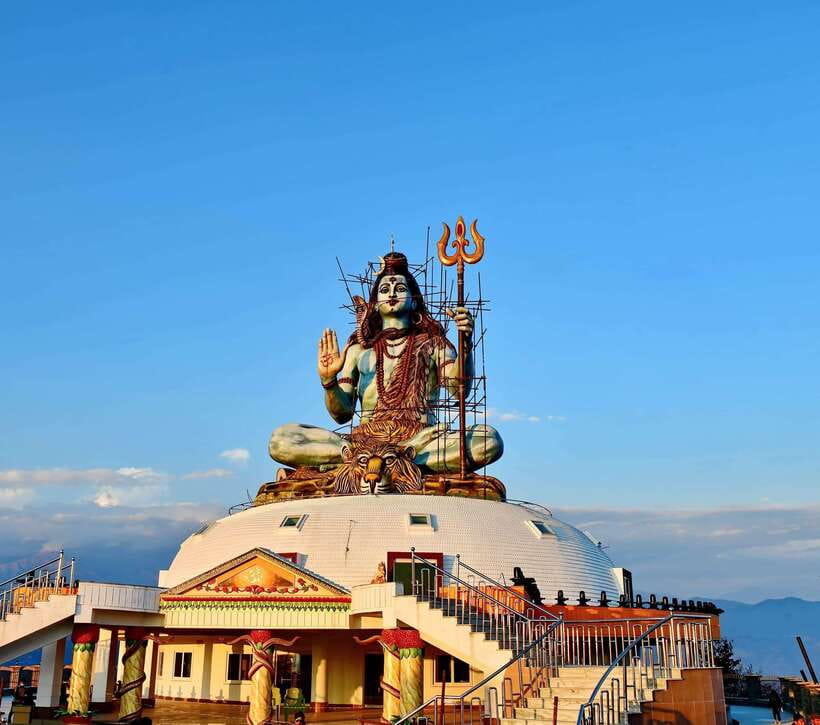
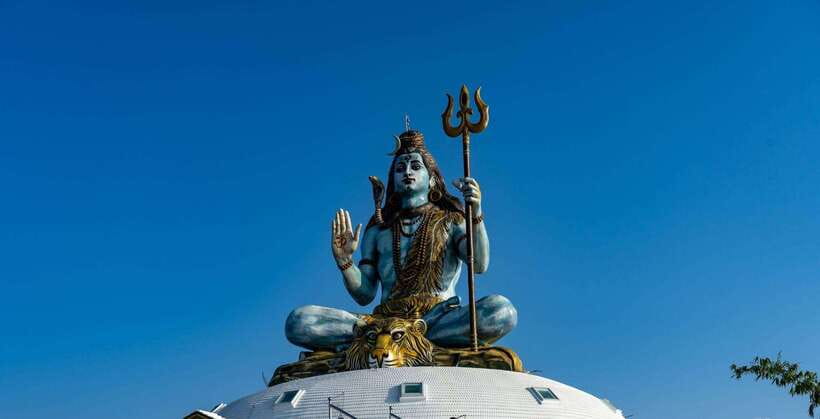
The Shiva Idol at Pumdikot gives the day a strong start. This large religious site is known for its Shiva statue and broad views toward the Annapurna range. On a clear day, the mountain sightline is one of the best reasons to take this route.
You will need to get out, walk around, and take in the views on your own. The stop is more about the statue, the hilltop setting, and the mountain outlook than a formal talk about Hindu worship. Bring your camera, but keep your expectations tied to the weather. Clouds and rain can erase the distant peaks.
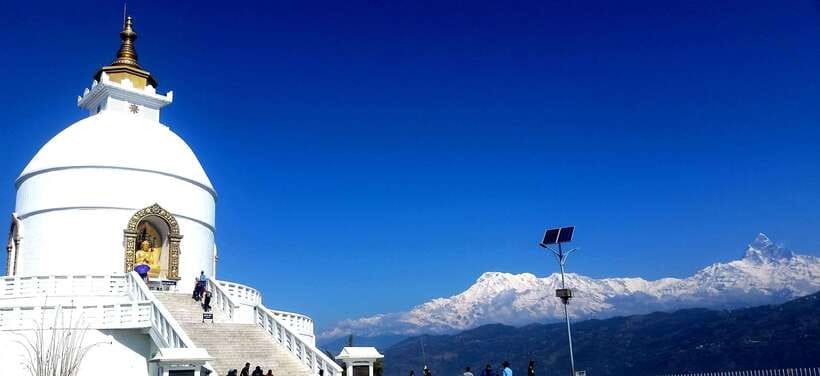
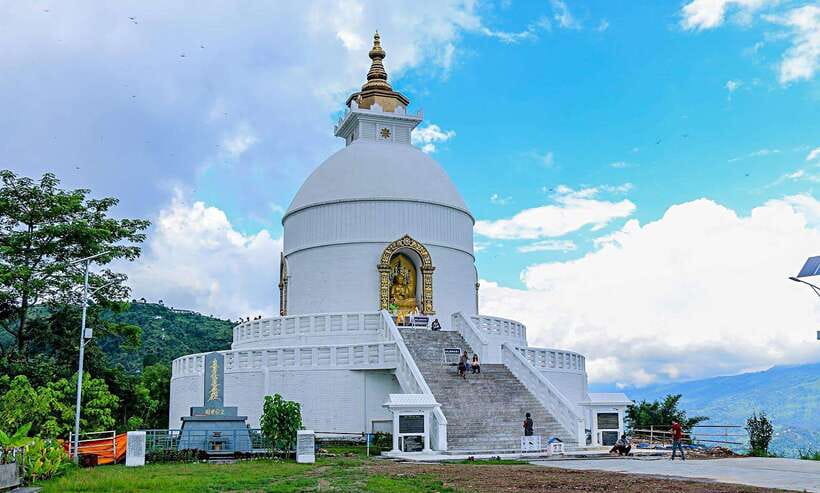
The route then continues to the World Peace Stupa. This is another hilltop stop with a calmer mood. The white stupa and surrounding views give you a chance to slow down after the first part of the bus ride.
The word peace is not just decoration here. The stop offers a quieter contrast to the busy sightseeing schedule, even though your time is still limited by the group timetable. Wear comfortable shoes, since the day involves walking at several sites.
Devi’s Water Fall and the cave below it
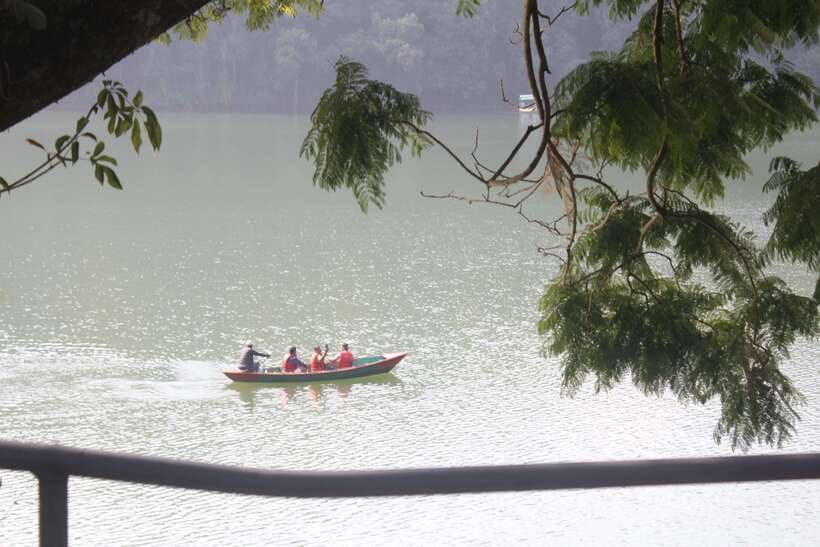
Devi’s Water Fall, also called Davis Falls, is one of Pokhara’s best-known natural sights. Water drops through a rocky channel and disappears below ground, giving the waterfall a more dramatic character than a simple open cascade.
The water level can change the experience. Rain can make the flow stronger, while poor conditions may affect access or even close parts of the stop. One person found the first waterfalls closed, so it is wise to treat the schedule as practical rather than guaranteed in every season.
The nearby cave area adds another layer. Gupteswor, also called Mahadev Cave, has a sacred connection and lies underground near the waterfall. This is a place to visit respectfully, not simply a dark tunnel for photographs.
The cave can be narrow and uneven. The supplied safety information specifically excludes people with claustrophobia, and that warning makes sense. If enclosed spaces bother you, you may prefer to wait outside rather than force yourself through.
The combination of waterfall and cave is useful because the two sites explain each other. Above ground, you see water vanish. Below ground, you encounter the religious and geological setting connected with that flow.
Mahendra Cave and Bat Cave: the most unusual stops
Mahendra Cave is one of the day’s main attractions. Inside, you can see stalactites and stalagmites, along with a darker, cooler atmosphere than outside. The cave gives the tour a welcome change of pace from viewpoints and temples.
You should plan for uneven walking and limited space. Comfortable shoes matter more here than fashionable ones. A camera is useful, but the dim conditions can make photographs difficult without steady hands and patience.
The Bat Cave, also called Chamere Cave, continues the underground theme. The stop is meant to introduce you to the bats that use the cave, though sightings are not guaranteed. On one visit, there were no bats, so you should see the cave itself as the reliable part of the stop.
These caves are not polished theme-park attractions. That is part of their appeal, but it also means you should expect a basic visit with a fixed time limit. You will explore independently, then return to the bus. Listen carefully for the departure time, since the bus cannot wait indefinitely for late arrivals.
The cave stops also reveal the limits of the tour format. A guide may provide general direction, but you are largely left to examine the sites yourself. If you enjoy reading signs, taking photos, and making your own discoveries, that freedom works well. If you want geology explained in detail, arrange a separate guide.
A completely different way to spend the day:
- ATV Adventure Tour in Pokhara, Nepal
★ 5.0 · 194 reviews - Full-Day Tibetan Cultural Tour to Tibetan Settlements Pokhara
★ 5.0 · 184 reviews - Poon hill Trek 3 days
★ 5.0 · 176 reviews - Trekking in Annapurna/Langtang/Everest/Upper Mustang regions
★ 5.0 · 161 reviews
The Seti River cuts through the city
The Seti River stop is less theatrical than the caves or the giant Shiva statue, but it gives you a better sense of Pokhara as a living city. The river runs through deep channels and shows the force of water cutting through rock.
This is a short, useful stop between the more heavily promoted attractions. You can stroll near the banks and watch the current rather than simply check off another monument.
I like this part because it breaks up the temple-and-cave pattern. The tour is not only about postcard sights. The Seti helps explain the city’s physical character and gives you a look at a natural feature woven into daily life.
Do not expect a long riverside walk. The bus timetable keeps the group moving, and the river stop is one piece of a packed day.
Bindabasini Temple closes the sightseeing loop
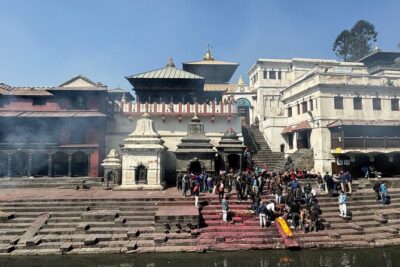
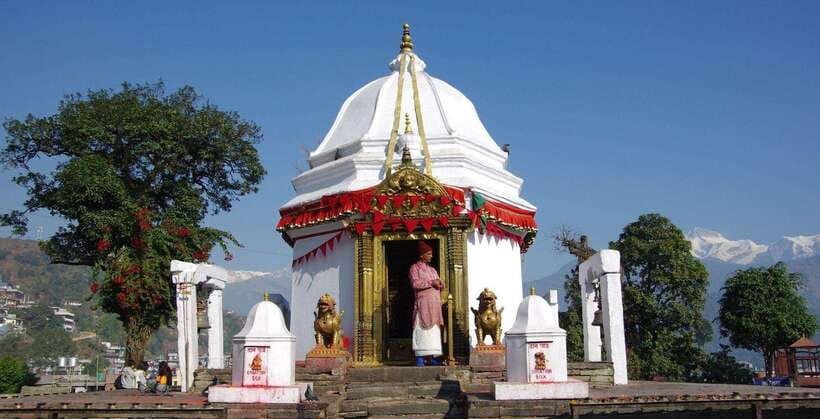
Bindabasini Temple provides the final cultural stop. The intricately designed temple is dedicated to the Hindu goddess Bhagwati and is an active place of worship. You will find a more local, spiritual atmosphere here than at a purely scenic viewpoint.
Dress and behave respectfully. Keep noise low, follow any posted rules, and avoid treating worshippers as part of the scenery. The visit works best when you give yourself time to sit quietly and observe the details.
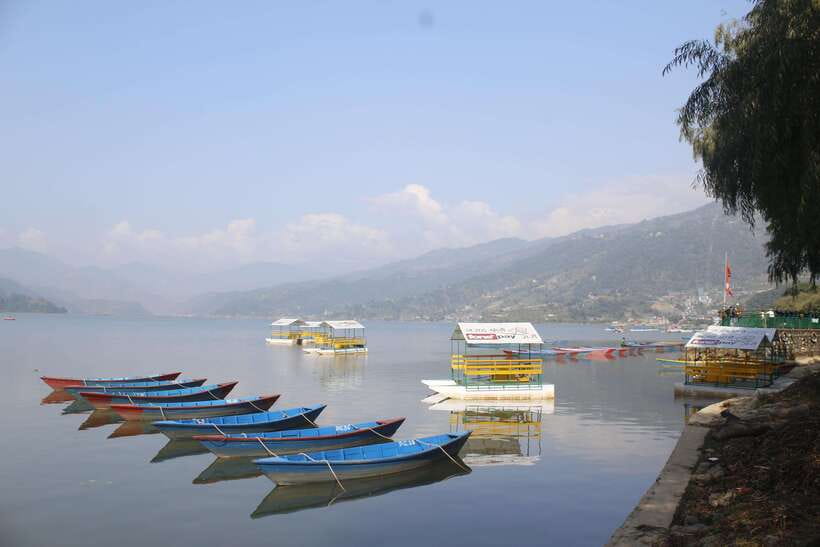
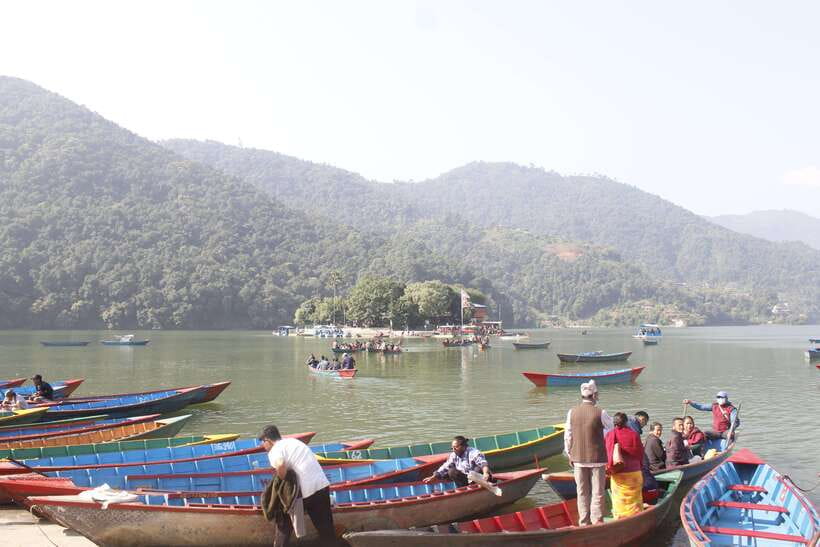
The temple is also a practical final stop because the bus returns toward Fewa Lake afterward. You can get off around the Lakeside area and explore on your own, or continue back toward your hotel on the same bus.
That end point gives you useful flexibility. If you still have energy, you can walk around the Fewa Lake area without arranging another ride. If you are tired after the caves and hill stops, stay on board and finish near your accommodation.
Where the International Mountain Museum fits
The tour’s description includes the International Mountain Museum among the Himalayan attractions, but the detailed stop-by-stop account focuses on the Shiva statue, Peace Stupa, waterfalls, caves, river, and Bindabasini Temple. Because the exact list is not fully consistent, confirm the current route before booking if the museum is important to you.
The museum is a strong addition for anyone interested in Nepal’s mountains, climbing, and Himalayan communities. Still, you should not assume every departure includes every named attraction, especially when the schedule is already packed.
The same point applies to the number of stops. The experience is promoted around seven iconic destinations, while some descriptions and accounts refer to nine places. This likely reflects how nearby attractions are counted, but the practical lesson is simple: ask for the day’s exact route and timing.
What the bus ride is really like
The bus is a basic shared tourist vehicle, not a premium coach. Air conditioning is not standard, although the transport has been upgraded to an air-conditioned bus during hot weather. In cooler conditions, the ordinary bus may be perfectly comfortable, but you should be ready for a simple local-style ride.
Driving quality matters on a route like this. Several strong experiences singled out the driver’s skill and professionalism, which is encouraging because Pokhara’s roads include hills, bends, and busy urban stretches. The coordinator and staff have also been described as friendly and helpful.
Pickup is usually arranged from the Lakeside area, but do not stand silently waiting if the bus is late. One booking had a pickup problem that was solved only after the passenger called the company. Confirm the pickup time in advance, and keep the operator’s contact details handy.
The schedule is another point to watch. The stated duration is six hours, but some outings lasted about eight hours. That is not necessarily bad, since it means more time on the route, but do not book an evening flight or a tight onward connection based only on the six-hour figure.
Food, entry fees, and the real price
The $12 fare is the tour’s biggest strength. It includes sightseeing by shared bus and hotel pickup and drop-off within Lakeside. For someone without a scooter, bicycle, or private car, that is a very low price for a full circuit of Pokhara’s main sights.
Budget around $4 extra for monument entry fees. The exact charge can vary by site, but entrance costs are not included. This catches some people by surprise, so keep small cash available.
Food and drinks are also excluded. A restaurant may be selected during the day, but lunch is your own expense. Bring water and consider a snack, especially since a full day of moving between stops can make an early meal feel a long way away.
The value is strongest if you want breadth rather than depth. You can see many important places in one day, but you will not have unlimited time at each one. I would call this a transport bargain with sightseeing attached, not a full educational tour.
Who should book this Pokhara day trip?
I would recommend it to first-time visitors with limited time, budget-conscious couples, solo visitors, and families who want the main sights handled in one outing. It is also useful if you do not feel comfortable renting a bike or arranging several local rides.
Solo visitors may find the shared format especially helpful. The mix of nationalities can make the day sociable, and you may meet companions for the stops without needing to organize anything yourself.
It is less suitable for anyone seeking a private, slow-paced day. You cannot choose how long to stay at the Peace Stupa, caves, or temple, and the bus must keep to its route.
People with back problems, wheelchair users, and anyone with claustrophobia should look for another option. The caves and repeated getting on and off the bus can be physically demanding.
Bring comfortable shoes, water, sunscreen, and a camera. Smoking, alcohol, and drugs are not allowed. Free cancellation is available up to 24 hours before departure, and you can reserve now and pay later, which helps if your Pokhara schedule is still changing.
My verdict: book it for coverage, not guiding
Book this tour if your goal is to see a lot of Pokhara for very little money. The Shiva statue, Peace Stupa, waterfall, caves, Seti River, and Bindabasini Temple create a varied day, and the Lakeside pickup removes much of the local transport hassle.
Skip it if you want long visits, detailed cultural interpretation, or complete control over the route. The best way to enjoy it is to read a little about each stop before you go, watch the clock, carry extra cash, and allow closer to eight hours than six.
For a short stay, the value is hard to beat. It is simple, social, and occasionally hectic, but it gives you a useful first look at Pokhara beyond Fewa Lake.
FAQ
How much does the Pokhara bus tour cost?
The tour costs $12 per person. Monument entry fees, food, and drinks are not included.
How long does the tour last?
The stated duration is six hours, but some outings have taken about eight hours. Allow extra time if you have evening plans.
Is hotel pickup included?
Yes. Pickup and drop-off are included from hotels within Pokhara’s Lakeside area. Bring the name card or booking details used for pickup.
Is this a guided tour?
The bus takes you to the sights, but the visits are mainly self-guided. You receive a set amount of time at each stop and must return to the bus on schedule.
Which places does the tour visit?
The route includes Pumdikot’s Shiva Idol, World Peace Stupa, Devi’s Water Fall, Mahadev or Gupteswor Cave, Mahendra Cave, Bat or Chamere Cave, the Seti River, and Bindabasini Temple. The International Mountain Museum is also mentioned in the tour information, so confirm the exact route before booking.
Are meals and entrance tickets included?
No. Entry fees cost approximately $4, and food and drinks are separate. A restaurant may be used during the day, but lunch is not part of the fare.
Who should avoid this tour?
The tour is not suitable for people with back problems, claustrophobia, or wheelchair users. The caves can be narrow, and the day includes repeated walking and boarding the bus.
New in the Pokhara listings
- Pokhara: Pokhara Highlights Tour by Bus★ 3.6 · 10 reviews
- Discover Pokhara in Style: Private Vehicle Service with Driver★ 5.0 · 5 reviews
- Multi-Day Tour from Pokhara, Poon Hill and Mulde Trek★ 5.0 · 1 review
- Pokhara in 5 Hours: Lake, Museum, Cave, Falls & Pagoda Hill★ 4.5 · 16 reviews
- Private 4 Day Poon Hill Trek from Pokhara★ 5.0 · 16 reviews
- 4 Day Mardi Himal Base Camp Trek from Pokhara★ 5.0 · 18 reviews
- From Pokhara Full Day Entire Pokhara Tour with Guide★ 5.0 · 1 review
- 7-Day Trek to Annapurna Base Camp from Pokhara★ 5.0 · 12 reviews
Full-Day, compared.
Full Day 7 UNESCO Tour with Lunch – Private/Group
Read our review →
Full Day Top 4 UNESCO Tour with Lunch – Private/Group
Read our review →Full-Day 7 UNESCO Tour with Lunch – Private/Group
Read our review →
Full-Day Tibetan Cultural Tour to Tibetan Settlements Pokhara
Read our review →
Full Day 7 UNESCO Tour with Lunch – Private/Group
Read our review →
Sarangkot Sunrise with Half or Full-Day City Tour
Read our review →