
REVIEW · MUSEUMS
Pokhara in 5 Hours: Lake, Museum, Cave, Falls & Pagoda Hill
Pokhara packs big sights into a small city. This private five-hour tour links Phewa Lake, Devi’s Fall, Gupteshwor Mahadev Cave, the International Mountain Museum, and World Peace Pagoda with a private car and an English-speaking driver-guide. I like the efficient route and the mix of nature, mountaineering, religion, and city views. I also like the personal service: guides such as Roshan and Bidur have been praised for clear explanations and helpful hotel pickups. The main drawback is time. Five hours is enough for the highlights, but not for long visits or a leisurely boat outing at every stop.
At $45 per person, the tour can be good value if you want a private vehicle and someone to connect the sights for you. Entry fees and personal expenses are extra, so your final cost will be higher than the advertised price. The tour is best for a first look at Pokhara, especially if you have only one free day or prefer not to arrange transport stop by stop.
In This Review
- Key points before you book
- Why this short Pokhara tour works
- Starting beside Phewa Lake and Tal Barahi Temple
- Understanding Nepal’s climbing culture at the mountain museum
- Seeing the water at Devi’s Fall
- Entering Gupteshwor Mahadev Cave
- Looking over Pokhara from World Peace Pagoda
- What the five-hour schedule really feels like
- Price, inclusions, and what you will pay extra
- Who should book this Pokhara tour?
- Booking details worth checking
- Should you book Pokhara in 5 Hours?
- FAQ
- How long does the Pokhara tour last?
- What places are included?
- Is transportation private?
- Who provides the guiding?
- Where are pickup and drop-off available?
- Is the boat ride on Phewa Lake included?
- Are attraction entry fees included in the price?
- How much does the tour cost?
- Can I cancel the tour?
Key points before you book
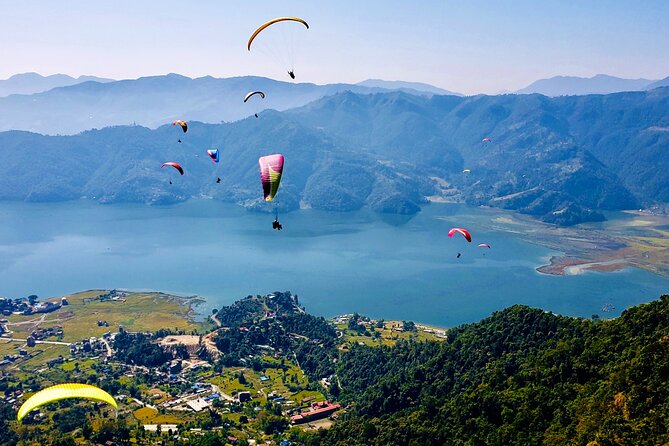
- Phewa Lake begins the day with a boat ride: You get a calm introduction to Pokhara and views toward the Annapurna Range when conditions allow.
- The International Mountain Museum adds context: Its exhibits explain Nepal’s mountaineering culture, famous climbs, and the challenges faced in the high mountains.
- Devi’s Fall and Gupteshwor Cave sit close together: These two stops make a natural pair, combining rushing water above ground with a mysterious underground setting.
- World Peace Pagoda provides the broadest view: The hilltop monument is linked with global peace and offers wide views toward the lake and mountains.
- The private format keeps things simple: A private, air-conditioned vehicle and a driver-guide mean no large group to wait for.
- Five hours requires a brisk pace: You will see the main places, but this is a highlights tour rather than a slow, linger-all-afternoon outing.
Why this short Pokhara tour works
Pokhara is easy to love, but its main sights are spread across different parts of the city. Phewa Lake sits by Lakeside, the museum is elsewhere in town, and Devi’s Fall, Gupteshwor Cave, and the World Peace Pagoda require more movement. Having a private car matters because you can cover the route without negotiating separate rides.
The driver also serves as the guide, with English listed as the tour language. That arrangement can be useful when you want basic explanations without paying for a separate guide and vehicle. The strongest praise has gone to Roshan, who was described as clear, kind, and highly informed, while Bidur was praised for professionalism and dedication. One guide also spoke excellent Hindi, which made the outing especially useful for a Hindi-speaking participant.
The private setup gives you more flexibility than a group bus. Pickup and drop-off are available in Lakeside, Pokhara Lakeside, and hotel pickup has been arranged in practice. One booking was even extended from five hours to seven, with a trip to Sarangkot added for extra cost. Treat that as a possible arrangement, not a guaranteed part of the tour, and ask before you set your schedule.
More museum visits in Pokhara:
- Pokhara in 5 Hours: Lake, Museum, Cave, Falls & Pagoda Hill
★ 4.5 · 16 reviews - 2.5 Hours Visit to Mountain Museum by Private Car
★ 5.0 · 1 review - Private Kathmandu UNESCO Heritage Sites with Narayanhiti Museum
★ 5.0 · 6 reviews
Starting beside Phewa Lake and Tal Barahi Temple
The tour opens at Phewa Lake, usually called Fewa Lake in local usage. This is a sensible first stop. The water gives you a quiet start, and the boat ride lets you see Pokhara from a different angle before the road portion begins.
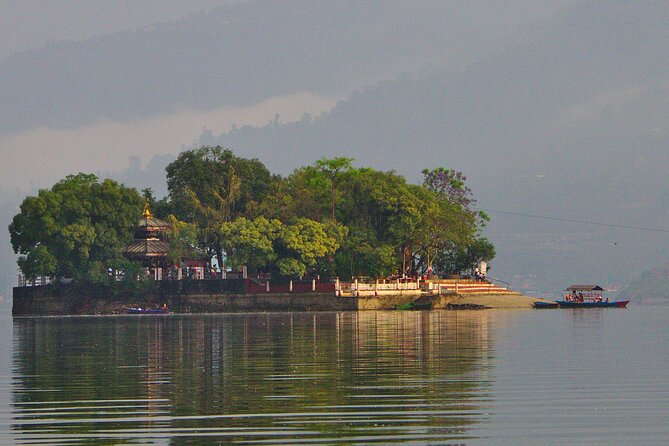
The plan includes a visit to Tal Barahi Temple, which sits on a small island in the lake. The boat ride and temple visit are scheduled for about one hour together. That is enough to enjoy the setting and take photographs, though you should not expect a long private cruise with plenty of time to drift around.
The lake is one of Pokhara’s defining sights because it brings water, hills, and distant Himalayan views into one frame. On a clear day, you may see the Annapurna Range reflected on the surface. Weather and visibility matter here, so the view is never guaranteed. Cloud can hide the mountains, but the lake still gives the morning a relaxed rhythm.
I like beginning here because it prevents the tour from becoming a string of roadside stops. You have a chance to slow down before moving into museums, waterfalls, and caves. Keep your expectations practical, though. The tour includes a boat cruise, but the supplied information does not specify the boat length, whether a boat fee is included, or how much time is spent at the temple itself. Ask the operator if those details affect your budget.
Understanding Nepal’s climbing culture at the mountain museum
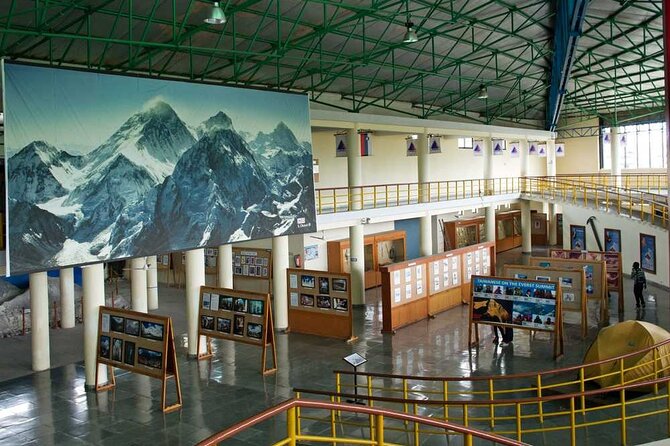
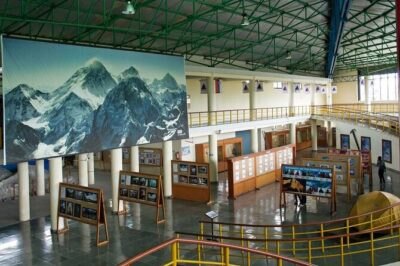
The International Mountain Museum gives the tour its strongest cultural and educational stop. Its displays cover the history and culture of mountaineering in Nepal, including the achievements and hardships connected with high-altitude climbing.
This is more than a quick photo stop. The museum helps explain why the Himalayas matter to Nepal beyond scenery. You can learn about the people, equipment, expeditions, and traditions connected with mountain travel. For someone seeing the Annapurna Range from the lake or pagoda, the museum adds useful background.
A guided visit is scheduled for about one hour. That is a reasonable amount of time for a first visit, particularly if your guide explains the main displays and points out what deserves attention. Roshan was praised for giving detailed information at the stops, and that kind of commentary is especially valuable here. Without context, a museum can feel like a room full of objects. With clear explanations, it becomes a key to understanding the region.
The museum also has a terrace with views toward the surrounding mountains. Again, the weather controls what you see. If clouds cover the peaks, the exhibits still make the stop worthwhile. If you are passionate about mountaineering, you may want more than an hour, which is one reason this five-hour route suits first-time visitors better than specialists.
Seeing the water at Devi’s Fall
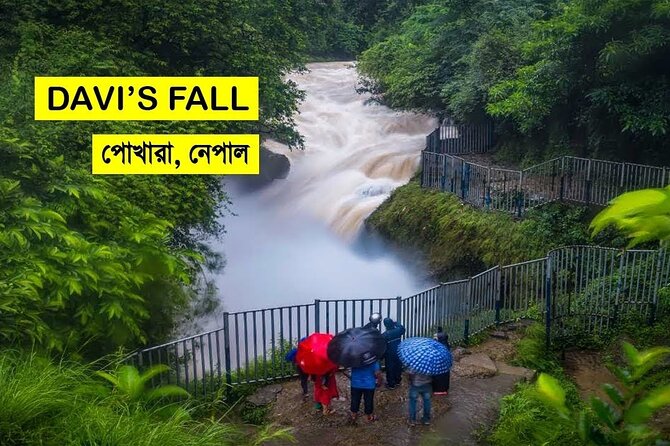
The next stop is Devi’s Fall, one of Pokhara’s best-known waterfalls. The visit is planned for around 30 minutes, so expect a focused stop rather than a long walk or extended time beside the water.
The fall is valued for its setting and sound. Water drops through the rock, creating a striking change from the stillness of Phewa Lake. The surrounding area is described as peaceful, and the contrast gives the tour a welcome shift in mood.
Thirty minutes should cover the main viewing time and photographs. If you enjoy standing quietly near moving water, the schedule may feel short. The advantage is that the route keeps moving, allowing you to see several different sides of Pokhara in one morning or afternoon.
Devi’s Fall is also conveniently paired with Gupteshwor Mahadev Cave. That makes the next stop feel connected rather than random. You see the water from above, then follow its story into the rock below.
A short list of alternatives around Pokhara
- ZipFlyer Nepal – The World’s Steepest Zip-line
★ 5.0 · 608 reviews - Bungee Pokhara by HighGround Adventures
★ 5.0 · 366 reviews - From Pokhara: Sarangkot Sunrise Himalayas Tour
★ 4.7 · 218 reviews - ATV Adventure Tour in Pokhara, Nepal
★ 5.0 · 194 reviews
Entering Gupteshwor Mahadev Cave
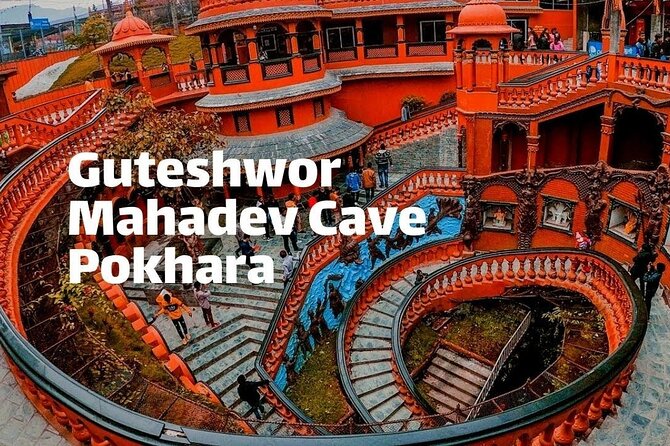
Gupteshwor Mahadev Cave is the tour’s most unusual stop. It is described as a mystical cave with an ethereal atmosphere, and the visit lasts about 30 minutes.
The cave offers a sharp contrast to the open views at the lake and pagoda. Instead of looking across the city toward the Annapurna Range, you are focused on the rock, darkness, and religious character of the site. The name connects the cave with Shiva, and a visit can add a spiritual layer to a tour otherwise centered on scenery and museums.
Your driver-guide is scheduled to accompany you and explain the place. That is useful because the appeal here is not only visual. The meaning of the cave and its connection with local belief can be harder to understand without some explanation.
The short visit keeps the stop manageable, but you should not expect an extended underground exploration. The supplied details do not specify cave conditions or the exact route inside, so practical questions about access are worth asking if you have concerns. The key point is that this is a compact cultural and natural stop, not a technical caving activity.
Looking over Pokhara from World Peace Pagoda
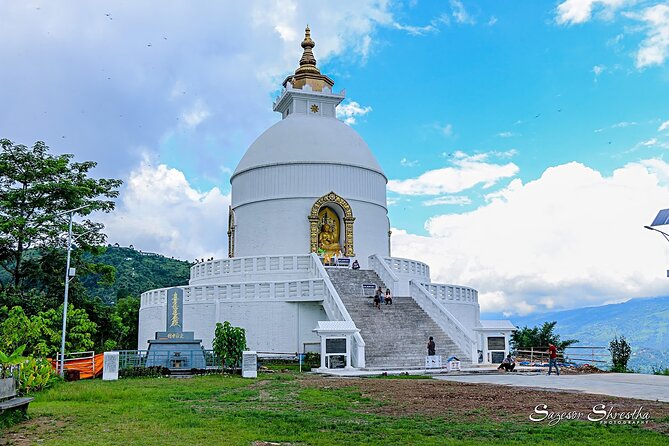
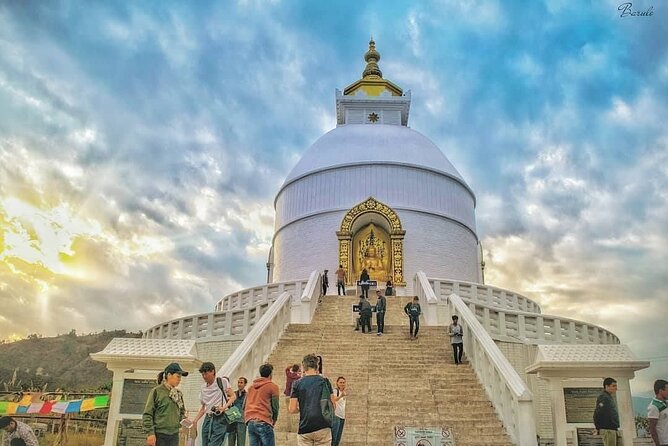
The final major stop is World Peace Pagoda, built to promote global peace and placed on a hill above the city. The journey upward is part of the appeal, with scenic views along the way and a broad outlook once you arrive.
This is where the tour gathers its main visual reward. From the hill, you can look across Phewa Lake and toward the Annapurna Range. The combination of water, city, hills, and distant peaks gives you a useful sense of Pokhara’s geography. It is not just a viewpoint for photographs. It helps you understand how the lake and surrounding hills fit together.
The visit is scheduled for about one hour, giving you more breathing room than at Devi’s Fall or the cave. You can take in the pagoda, listen to the guide’s explanation, and spend time with the view. Clear weather makes a major difference, especially if your main reason for booking is the Annapurna panorama.
The pagoda is also a fitting final stop because its message is quieter than the excitement of a waterfall or cave. The monument’s purpose, global peace, gives the end of the tour a reflective note. You finish above the city rather than in traffic, then return to Lakeside for drop-off.
What the five-hour schedule really feels like
The stated duration is five hours, and the listed stop times add up to roughly four hours. The remaining time is needed for road travel, pickup, drop-off, and transitions between sites. That is normal for a city tour, but it means you should keep your pace sensible.
You are not signing up for a slow day with long café breaks. You are signing up for a private highlights route. The schedule includes one hour at the lake and temple, one hour at the museum, 30 minutes at Devi’s Fall, 30 minutes at the cave, and one hour at the pagoda. Each stop has a clear purpose, and the private car helps link them.
A good driver can make this format work. Several people specifically praised punctuality, planning, clean vehicles, and helpful service. One driver arrived five minutes early, and another booking ended with an airport drop-off. Airport transfer is not stated as a standard inclusion, so you should arrange that separately rather than assume it is part of the package.
The main risk is rushing. If you want long time at the lake, detailed museum viewing, or a relaxed meal, five hours will not provide all three. If you want a broad introduction with minimal planning, the pace is useful.
Price, inclusions, and what you will pay extra
The advertised price is $45 per person. For a private tour, that price has real value, especially if you are sharing with another person or a small private group. You receive an air-conditioned vehicle, private transportation, and a friendly driver who also acts as your guide.
The price does not include entry fees or personal expenses. That distinction matters because the tour visits several paid attractions. You should budget beyond the $45 and ask for the current admission costs before departure. The supplied information does not give a total for those fees, so I would not treat the advertised price as the complete door-to-door cost.
The value depends on what you would otherwise spend on local transport, coordination, and a separate guide. If you already know Pokhara and are comfortable arranging taxis, you may prefer to visit fewer places independently. If you want one person to manage the route and explain what you are seeing, the private format is easier.
The air-conditioned car is another practical benefit, particularly when moving between several stops. A clean, new vehicle was praised in one detailed account. Vehicle quality can vary by day, so the important promise is private, air-conditioned transport rather than a particular car model.
Who should book this Pokhara tour?
I would recommend this tour to a first-time visitor with limited time. You get water, religion, mountaineering culture, a waterfall, a cave, and a hilltop viewpoint in one compact outing. That range is the main strength.
It also suits solo visitors who want a private arrangement without joining a large group. A solo booking praised hotel pickup, professional service, and a final airport drop-off, though the latter should be confirmed in advance.
Families and mixed-interest groups may also find the route useful. The museum gives adults and older children something to think about, while the lake, waterfall, cave, and pagoda provide visual variety. The tour is less suited to anyone who wants a long museum visit, extended time on the lake, or a slow spiritual visit at each site.
If you have a second day in Pokhara, you can treat this tour as an orientation. Afterward, you will know which places deserve a return visit and whether you want to add Sarangkot or another hill viewpoint. The previous seven-hour extension to Sarangkot shows that extra time may be possible for an added charge.
Booking details worth checking
Pickup and drop-off are listed for Lakeside, Pokhara Lakeside. The group is private, and the driver language is English. Cancellation is free up to 24 hours before the activity, and the reserve-now, pay-later option keeps your plans flexible.
Ask four simple questions before you confirm:
- What are the current entry fees for each attraction?
- Is the boat ride fee included, or is it paid separately?
- Can the tour be extended if you want more time?
- Can pickup or drop-off be arranged outside the listed Lakeside points?
These questions do not change the tour itself, but they help prevent surprises. They are especially useful if you want to add Sarangkot or need an airport transfer.
Should you book Pokhara in 5 Hours?
Book it if you want a well-organized first look at Pokhara with a private car, a driver-guide, and a strong mix of major sights. The most praised features are the guides, especially Roshan, the clean and reliable transport, the clear explanations, and the willingness to adjust arrangements.
Skip it if you prefer to spend half a day at one place or want every attraction included in the headline price. The five-hour schedule is brisk, and admission fees are extra.
For most short-stay visitors, I think the tour earns its $45 starting price. You get a practical route, personal service, and a useful introduction to Pokhara’s lake, mountains, beliefs, and outdoor character. Just budget for entry fees and accept that the day is about seeing the highlights, not lingering at every stop.
FAQ
How long does the Pokhara tour last?
The tour lasts five hours.
What places are included?
The tour includes Phewa Lake and Tal Barahi Temple, the International Mountain Museum, Devi’s Fall, Gupteshwor Mahadev Cave, and World Peace Pagoda.
Is transportation private?
Yes. The tour includes private transportation in an air-conditioned vehicle and is offered as a private group experience.
Who provides the guiding?
A friendly driver also serves as the guide. English is listed as the tour language. Guides named in booking feedback include Roshan and Bidur.
Where are pickup and drop-off available?
The listed pickup and drop-off points are Lakeside and Pokhara Lakeside.
Is the boat ride on Phewa Lake included?
A boat cruise is part of the planned visit to Phewa Lake and Tal Barahi Temple. The supplied details do not clarify whether any separate boat fee is included, so confirm this before booking.
Are attraction entry fees included in the price?
No. Entry fees and personal expenses are not included.
How much does the tour cost?
The listed price is $45 per person.
Can I cancel the tour?
Yes. You can cancel up to 24 hours in advance for a full refund. You can also reserve now and pay later.
New in the Pokhara listings
- Pokhara: Pokhara Highlights Tour by Bus★ 3.6 · 10 reviews
- Discover Pokhara in Style: Private Vehicle Service with Driver★ 5.0 · 5 reviews
- Multi-Day Tour from Pokhara, Poon Hill and Mulde Trek★ 5.0 · 1 review
- Pokhara in 5 Hours: Lake, Museum, Cave, Falls & Pagoda Hill★ 4.5 · 16 reviews
- Private 4 Day Poon Hill Trek from Pokhara★ 5.0 · 16 reviews
- 4 Day Mardi Himal Base Camp Trek from Pokhara★ 5.0 · 18 reviews
- From Pokhara Full Day Entire Pokhara Tour with Guide★ 5.0 · 1 review
- Things to do at Pokhara World Peace Stupa tour with Guide★ 5.0 · 2 reviews
Museums, compared.
Pokhara in 5 Hours: Lake, Museum, Cave, Falls & Pagoda Hill
Read our review →
Private Kathmandu UNESCO Heritage Sites with Narayanhiti Museum
Read our review →
Narayanhiti Palace Museum Tour (Former Royal Palace of Nepal)
Read our review →
2.5 Hours Visit to Mountain Museum by Private Car
Read our review →Browse the lists this tour appears in