
REVIEW · NAGARKOT TOURS
From Kathmandu: 3-Day Chisapani-Nagarkot Trek & Bhaktapur
Three days, two hill towns, one packed Nepal outing. This trip gives you Shivapuri Nagarjun National Park, village paths, Himalayan viewpoints, and two major cultural sites without sending you far from Kathmandu. I like the efficient route from Sundarijal to Chisapani and Nagarkot, and I like that the final day adds Changu Narayan and Bhaktapur instead of ending with a simple drive back.
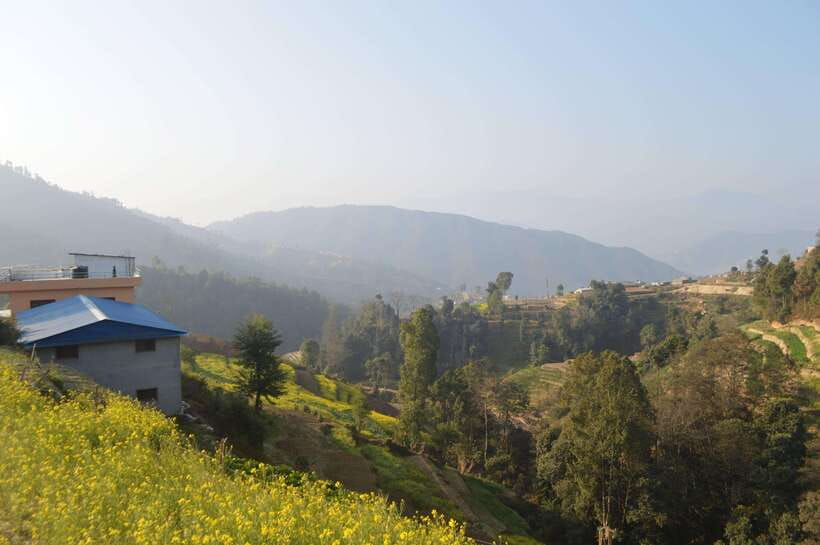
The main catch is visibility. April can bring smog and heat, and the mountain views may disappear completely. The second day can also feel more like a hot road walk than a forest trek, so I would book this for the mix of hiking and culture, not for guaranteed views of Everest.
In This Review
- Key points at a glance
- What this three-day route is really about
- Day one: Sundarijal to Chisapani through the forest
- The mountain-view problem: timing matters
- Day two: Chisapani to Nagarkot by villages and fields
- Day three: sunrise, Changu Narayan, and Bhaktapur
- Is $176 good value?
- Who will enjoy this trip most?
- Practical advice before you leave Kathmandu
- Should you book the Chisapani and Nagarkot trek?
- FAQ
- How long is the tour?
- Where does the hike begin?
- What altitude is Sundarijal?
- What altitude is Chisapani?
- What altitude is Nagarkot?
- Is breakfast included?
- Are lunch and dinner included?
- Are monument entrance fees included?
- Is a porter included?
- What language does the guide speak?
- Is hotel pickup included?
- Can I book a private trip?
- What should I bring?
- Is the trek suitable for people with mobility impairments?
- Can I cancel for a refund?
Key points at a glance
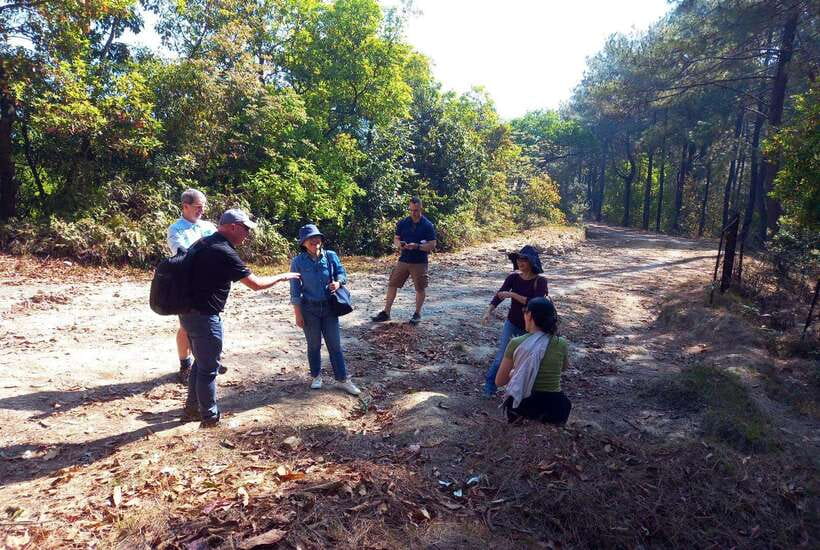
- A sharp start at Sundarijal: The hike begins at 1,460 meters, follows a large water pipe, and soon enters Shivapuri Nagarjun National Park.
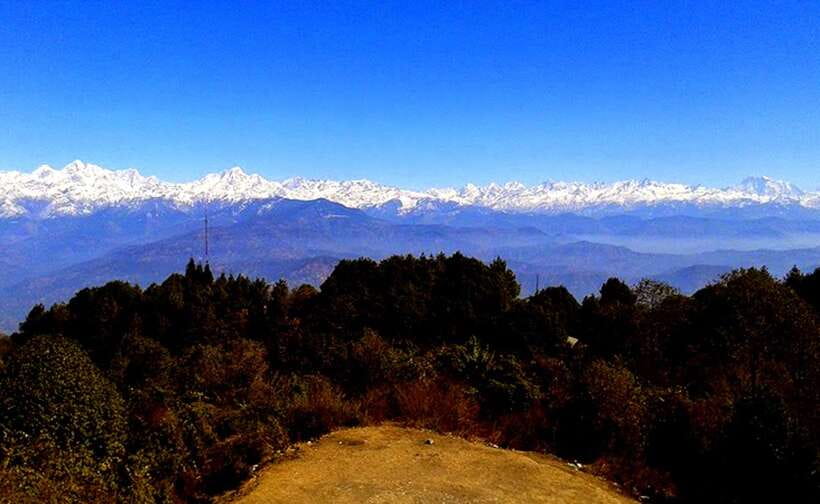
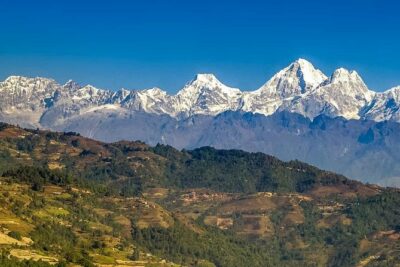
- Chisapani rewards clear weather: At 2,165 meters, the ridge can reveal Langtang Lirung, Annapurna, Ganesh Himal, Manaslu, and Everest.
- The route passes through real villages: Mulkharka, Tamang settlements, Jhule, Chauki Bhanjyang, and Kattike Bhanjyang give the walk a local setting.
- Nagarkot is the sunrise stop: You wake early for Himalayan light, then walk downhill toward Changu Narayan.
- The last day packs in culture: Changu Narayan, Bhaktapur Durbar Square, the Fifty Five Window Palace, Golden Gate, Nyatapola Temple, and Pottery Square fill out the return to Kathmandu.
- The price covers the useful basics: At $176 per person, you get private transfers, two nights of accommodation, breakfast, permits, and a licensed guide, but not lunches, dinners, monument fees, or a porter.
What this three-day route is really about
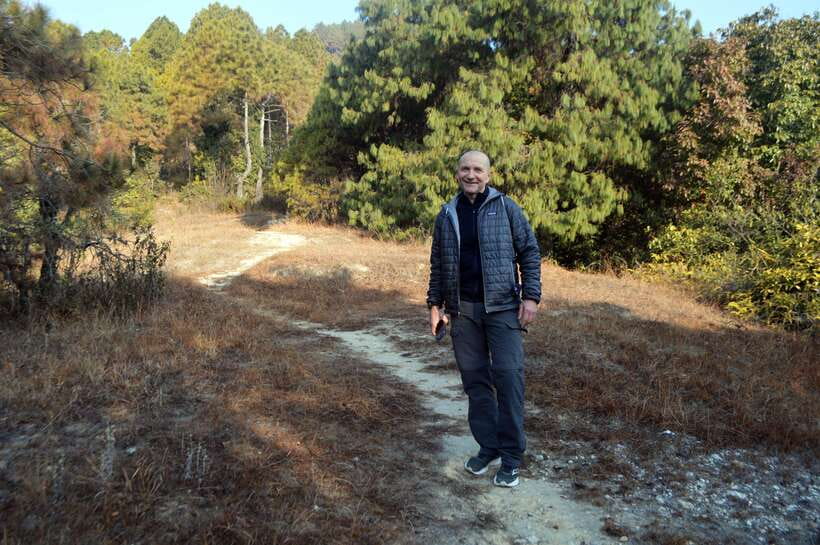
This is a short Nepal escape built around contrast. You begin with a forest climb, sleep in two hill destinations, and finish among brick courtyards and temple squares. You do not need a long expedition or a week of trekking to see a slice of the Kathmandu Valley’s countryside.
The walking is moderate but not effortless. Day one climbs steadily from Sundarijal to Chisapani, while day two includes both descents and another climb into Nagarkot. Day three is mostly a downhill route to Changu Narayan, followed by sightseeing and a drive.
I see this as a good choice if you have only a few days in Kathmandu and want more than city streets. It is also useful if you want a guide, arranged transport, and a private or small-group format rather than working out every transfer yourself.
The trip is less suitable if your main aim is a dependable high mountain panorama. The views depend heavily on air quality, season, and weather. April is a warning sign here: dry conditions can leave city smog hanging over the ridges, blocking the mountains.
More days out at Nagarkot:
- Nagarkot Sunrise View and Day Hiking from Kathmandu
★ 5.0 · 471 reviews - Kathmandu: Nagarkot Sunrise View & Morning Hike with Lunch
★ 4.9 · 188 reviews - Kathmandu: Nagarkot Sunrise and Hike Tour to Changu Narayan
★ 4.7 · 151 reviews
Day one: Sundarijal to Chisapani through the forest
Your pickup begins at your Kathmandu hotel, with a private vehicle driving for about an hour to Sundarijal. The starting point sits at 1,460 meters, so the walk begins above the city but does not throw you straight into extreme altitude.
The first section follows a large water pipe running down from the Sundarijal Reservoir. It is a practical, slightly unusual way to begin the trek, and it gives you an easy route marker as the trail climbs. You then enter Shivapuri Nagarjun National Park, where the setting changes from urban edge to forest.
The climb to Mulkharka takes about four to five hours in total, according to the stated schedule. You should expect a sustained uphill walk rather than a flat stroll. Comfortable shoes matter, and you will want clothes suited to active walking rather than sightseeing.
Mulkharka Village is one of the day’s useful pauses because it breaks up the climb with a glimpse of village life. The trail continues through a Tamang village before reaching Chisapani. Those village sections give the day more character than a hike that stays only on a marked park trail.
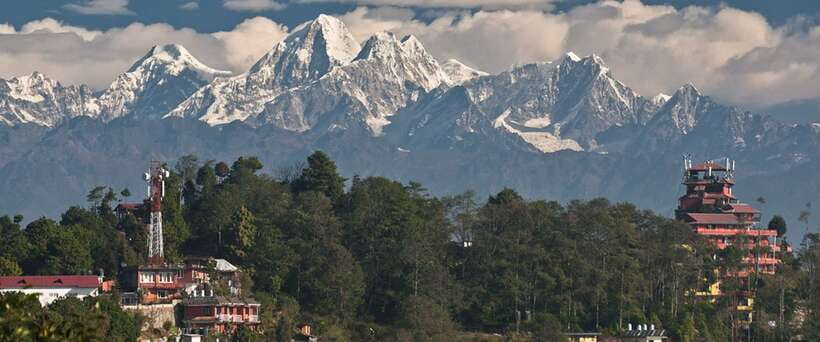
Chisapani sits at 2,165 meters. On a clear day, this is where the big views begin. The named peaks include Langtang Lirung, Annapurna, Ganesh Himal, Manaslu, and Everest. That is an ambitious list for one viewpoint, and you should treat it as a possibility rather than a promise.
The evening sunset is another reason to stay at Chisapani. You can watch the light change over the Himalayan range from the lodge, provided the air is clear. If haze blocks the peaks, the sunset may still be pleasant, but the grand mountain scene that sells this route will be missing.
Accommodation is in a guesthouse with a private bathroom, and breakfast is included. That private bathroom is a worthwhile detail after a day on the trail. Lunch and dinner are not included, so budget separately for both meals.
The mountain-view problem: timing matters
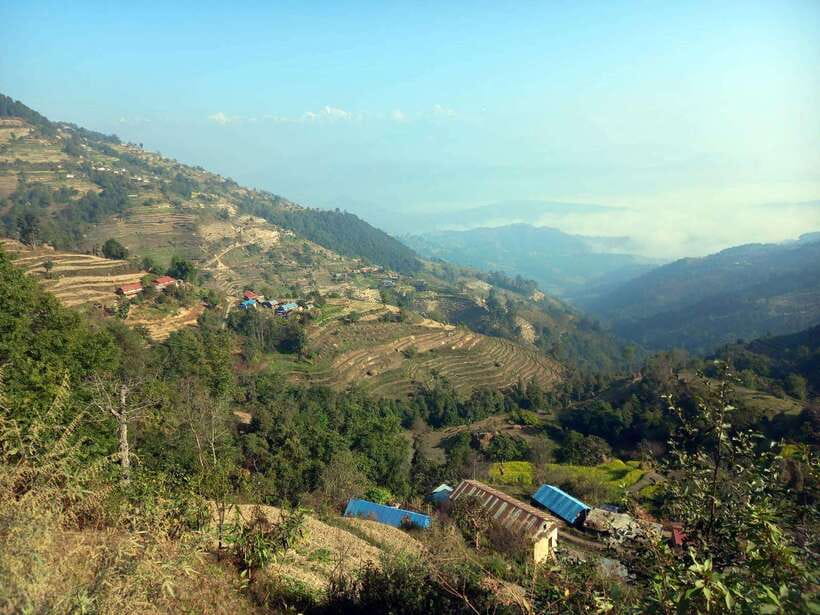
The most important practical point is that the Himalayan views are weather-dependent. A clear winter morning may offer a very different experience from a dry April day when smog from the surrounding cities gathers above the valley.
One traveler cut the trek short after reaching Chisapani and continuing for about four hours on a hot, dusty road with little shade. The mountain views had not appeared, and the prospect of several more hours before Nagarkot made the route feel poor value that day. That is useful information, not a minor complaint.
I would ask about visibility before setting out, especially in April. The guide and operator may not control the air, but they should help you understand what to expect. If the forecast is hazy, book this because you want the villages, forest, and heritage sites too.
The guide can make a big difference when conditions are ordinary rather than perfect. Rameshwar handled arrangements for one father and son before arrival, while guide Raj was praised for being personable and helpful throughout the three days. Another guide, Prakash, was also singled out for good service, even though the mountain views did not cooperate.
Those details suggest that the human side of the trip is a strength. Still, a friendly guide cannot manufacture a clear Himalayan horizon. Keep that distinction in mind.
Day two: Chisapani to Nagarkot by villages and fields
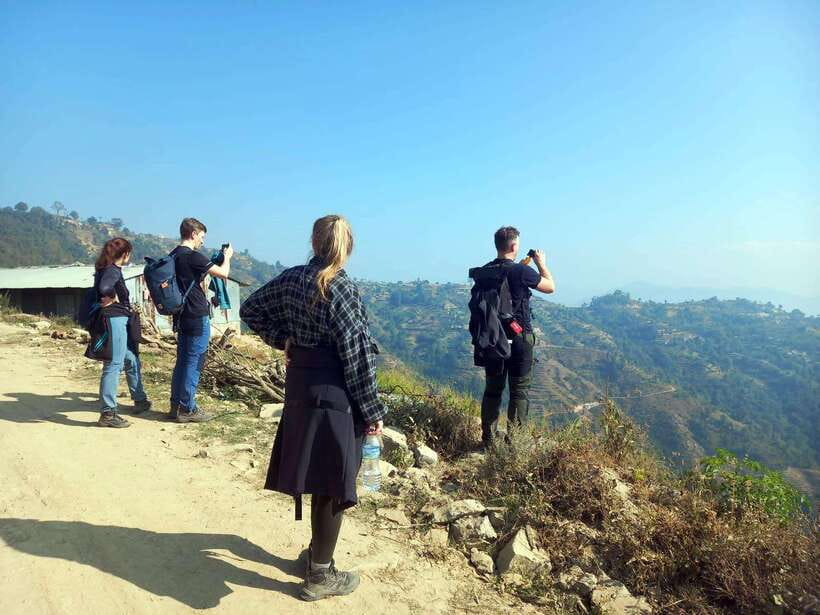
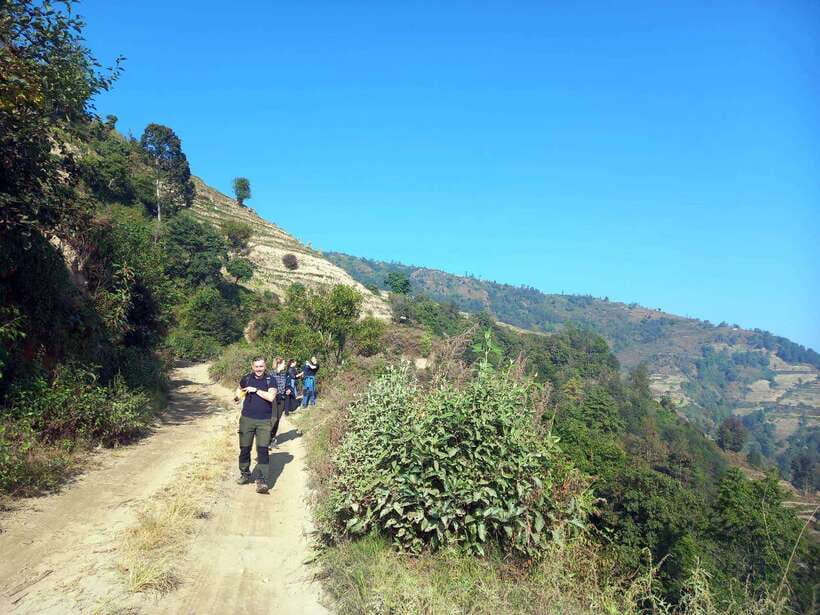
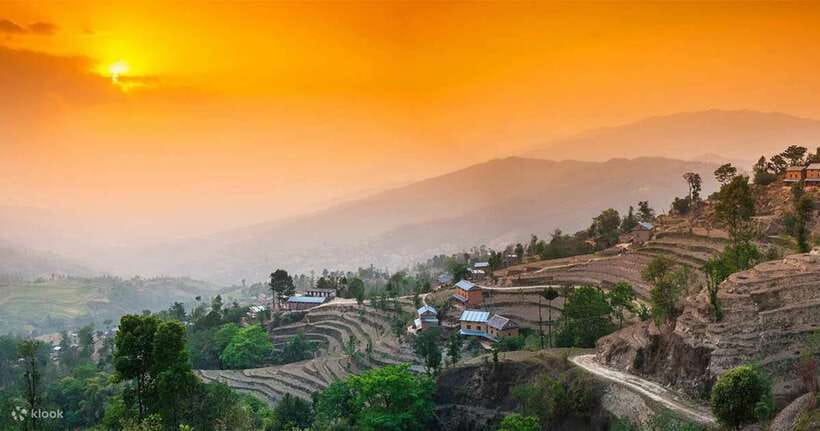
After breakfast, you leave Chisapani through lush forest. The route then descends toward Jhule and Chauki Bhanjyang, crossing villages and terraced fields before reaching Kattike Bhanjyang.
This day has a different rhythm from day one. You are not simply climbing into the hills. You gain and lose height, pass through settled areas, and then make the final ascent to Nagarkot from Kattike Bhanjyang.
The stated itinerary does not give a precise walking time for this section. That matters because the route can feel long if the weather is hot or the surface is dusty. You should ask the guide for the day’s expected walking hours and current trail condition before leaving Chisapani.
Nagarkot is at 2,175 meters, slightly higher than Chisapani. Its appeal is less about a single village atmosphere and more about the open ridge, sunrise, and broad mountain views. On a clear morning, this is the place to watch the first light reach the Himalayas.
The route to Nagarkot is not all forest. Some sections use dirt roads and exposed paths, with limited shade. Bring water and sun protection, even though the supplied information lists only comfortable shoes and clothes as required items.
You stay in a three-star hotel in Nagarkot, with breakfast included. That is a step up from the Chisapani guesthouse and gives you a more comfortable base for the early wake-up. The early start on day three is worthwhile only if you are willing to get up before breakfast and stand outside for the sunrise.
More time in Bhaktapur:
- Day Trip to Bhaktapur and Panauti from Kathmandu
★ 5.0 · 184 reviews - Bhaktapur & Patan Durbar Square Day Tours
★ 5.0 · 122 reviews - Nagarkot Sunrise & Bhaktapur UNESCO Heritage Private Tour
★ 5.0 · 66 reviews - Kathmandu: Private Patan and Bhaktapur Sightseeing Tour
★ 4.7 · 64 reviews
Day three: sunrise, Changu Narayan, and Bhaktapur
Your final morning begins with an early wake-up for the Himalayan sunrise from Nagarkot. This is one of the trip’s strongest moments when the air is clear. The sunrise can work as a satisfying alternative to the previous evening’s view, since morning conditions may differ from sunset conditions.
After breakfast, you hike from Nagarkot toward Changu Narayan. The trail descends through Telkot, and the route provides a bird’s-eye view toward Bhaktapur and Kathmandu. Downhill walking is usually less tiring than the previous day’s ascent, but uneven surfaces can still bother anyone with mobility limitations.
Changu Narayan Temple is the first major cultural stop. It is described as the oldest temple on the route, and it gives the final day a strong architectural focus before you reach Bhaktapur. The temple visit also makes this more than a hill walk with a hotel at either end.
From Changu Narayan, a private vehicle takes you to Bhaktapur. This transfer is important because it lets you see both the hill route and the old city without adding a long road walk after the morning hike.
Bhaktapur is the cultural centerpiece of the last afternoon. The visit includes Bhaktapur Durbar Square, the Fifty Five Window Palace, the Golden Gate, Nyatapola Temple, and Pottery Square. Each stop offers a different angle on Newari culture and traditional urban design.
The square is not a quick photo stop if you want to take in the details. Give yourself time to look at the carved timber, temple forms, palace frontage, and pottery work. Monument fees are not included, so carry money for the required entry charges.
After Bhaktapur, you drive back to Kathmandu and return to your hotel. The schedule is full, but it makes good use of the final day. You get a walk, a temple, an old city, and arranged transport back to the capital.
Is $176 good value?
The $176 per-person price is reasonable if you value convenience and a private or small-group setup. It includes Kathmandu hotel pickup and drop-off, private ground transfers by air-conditioned car, two nights of accommodation, breakfast, the Shivapuri Nagarjun National Park permit, and a licensed guide.
That package removes several chores. You do not need to arrange the Sundarijal transfer, find a Chisapani lodge, organize the Nagarkot hotel, or work out how to connect Changu Narayan with Bhaktapur. For a short visit, that time saving has real value.
The exclusions can add to the final cost:
- Lunch and dinner
- Monument entry fees
- Gratuities
- Porter service, listed at $50
The porter charge is optional rather than a surprise compulsory fee, but it may make sense if you do not want to carry your bag over two days of hill walking. Oversize luggage is not allowed, so pack light even if you do not hire a porter.
Breakfast is included at both overnight stops. You should still plan for meals beyond breakfast, since there is no food allowance built into the price.
A private car and a private or small-group arrangement also help with flexibility. One father and son needed an early flight, and their schedule was adjusted so they could see what mattered to them. That kind of flexibility can be worth more than a small price difference, especially when your Kathmandu stay is short.
Who will enjoy this trip most?
I would recommend it to you if you want a sampler of Nepal rather than a long mountain expedition. It suits people who want guided walking, village scenery, two sunrise and sunset opportunities, and major cultural sights in one compact itinerary.
It is particularly useful for a first visit with limited time. You see a national park, rural settlements, hill towns, a temple, and Bhaktapur without changing hotels every night or arranging separate day trips.
You should think twice if you have mobility impairments. The activity is not suitable for people with mobility limitations, and the trail includes sustained climbs, descents, forest paths, village tracks, and dirt roads.
You should also reconsider if you will be deeply disappointed by missing mountain views. Chisapani and Nagarkot are promoted for their Himalayan outlook, including Everest, but the April experience shows how quickly smog can erase that feature.
The guide quality appears to be a strong point. Rameshwar’s communication before arrival and the positive descriptions of Raj and Prakash suggest that the operator can provide a supportive experience. I would still ask direct questions about air quality, walking time, and the road sections before confirming.
Practical advice before you leave Kathmandu
Keep your luggage small. Oversize bags are not allowed, and a compact bag is easier to manage in guesthouses, vehicles, and on the trail.
Wear shoes that are comfortable for several hours of walking. You do not need expedition gear based on the information provided, but ordinary city shoes may not be a good match for uphill and downhill sections.
Carry your passport, since it is specifically listed among the items to bring. Comfortable clothes are also required, and I would choose layers so you can adjust between Kathmandu, forest trails, and early-morning Nagarkot.
Plan extra money for food, monument fees, and gratuities. If you prefer not to carry your own bag, ask about the $50 porter option before departure.
The pickup is from your hotel lobby, and you should wait there five minutes before the scheduled time. The driver or guide will hold a sign with your name.
English-language guiding is available. You can choose a private trip or a small-group format, depending on the booking option.
Cancellation is flexible, with a full refund available when you cancel at least 24 hours in advance. You can also reserve now and pay later, which helps if your Kathmandu plans are still shifting.
Should you book the Chisapani and Nagarkot trek?
Book it if you want an efficient three-day combination of walking and culture, and you can accept that mountain views depend on the weather. The route is well suited to a short Kathmandu stay, especially when private transfers and a guide save you valuable planning time.
I would choose the trip in a season or weather window with a fair chance of clear air. I would not pay for it solely to see Everest, since April conditions may bring smog, dust, and no visible peaks at all.
For the best value, confirm the expected visibility, ask how long the day two walk will take, pack light, and budget for meals and monument fees. If those points work for you, this is a practical introduction to Nepal’s hills and heritage sites, with enough variety to justify the three days.
FAQ
How long is the tour?
The experience lasts three days.
Where does the hike begin?
The hike begins at Sundarijal, about a one-hour drive from Kathmandu.
What altitude is Sundarijal?
Sundarijal is at approximately 1,460 meters.
What altitude is Chisapani?
Chisapani is at approximately 2,165 meters.
What altitude is Nagarkot?
Nagarkot is at approximately 2,175 meters.
Is breakfast included?
Yes. Breakfast is included at the Chisapani guesthouse and the three-star hotel in Nagarkot.
Are lunch and dinner included?
No. Lunch and dinner are not included in the tour price.
Are monument entrance fees included?
No. Monument fees are paid separately.
Is a porter included?
No. Porter service is not included. The stated porter charge is $50.
What language does the guide speak?
The live tour guide speaks English.
Is hotel pickup included?
Yes. Pickup and drop-off at your Kathmandu hotel are included by private vehicle.
Can I book a private trip?
Yes. Private and small-group options are available.
What should I bring?
Bring your passport, comfortable shoes, and comfortable clothes.
Is the trek suitable for people with mobility impairments?
No. The experience is not suitable for people with mobility impairments.
Can I cancel for a refund?
Yes. You can cancel up to 24 hours in advance for a full refund.
New in the Kathmandu listings
- Traditional Momo Making Class★ 5.0 · 10 reviews
- Kathmandu: Ancient City Kirtipur & Pharping Monastery Tour★ 5.0 · 2 reviews
- Kathmandu to Pokhara Premium sofa bus ticket★ 4.0 · 17 reviews
- Women Empowerment Project(Nepali cooking class & jewelry workshop★ 5.0 · 15 reviews
- 7-Day Langtang Valley Trek from Kathmandu★ 5.0 · 1 review
- Kathmandu 2 Nights 3 Days Chitwan Jungle Safari Tour★ 5.0 · 9 reviews
- Yoga Experience Day Trip with Private Transfer From Kathmandu★ 4.0 · 2 reviews
- Wildlife Adventure in Chitwan Nepal★ 4.0 · 4 reviews
Nagarkot Tours, compared.
Nagarkot Sunrise View and Day Hiking from Kathmandu
Read our review →
Nagarkot Sunrise and Hike Tour to Changu Narayan
Read our review →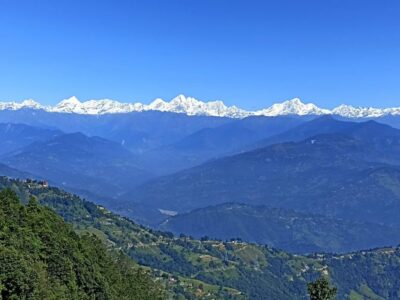
Nagarkot Sunrise & Hike to Changu Narayan Day Tour from Kathmandu
Read our review →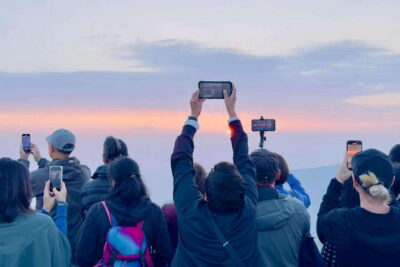
Nagarkot Sunrise & Hike with Lunch -Private/Group
Read our review →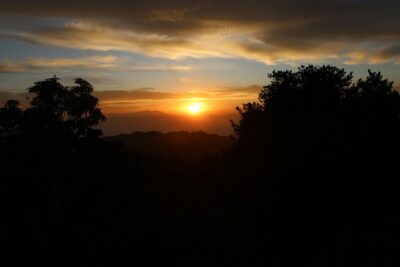
Nagarkot Sunrise Trip & Day Hike with Lunch from Kathmandu
Read our review →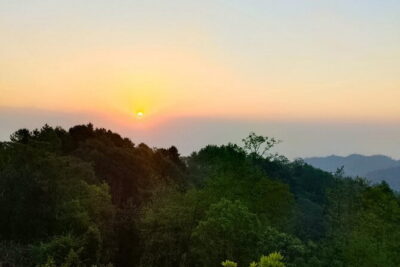
Nagarkot Sunrise View & Day Hiking with Lunch – Private/Group
Read our review →Browse the lists this tour appears in