REVIEW · HALF-DAY
Pokhara: Private Half-Day Tour and Tibetan Culture Tour
Pokhara packs nature and culture into a short ride. This private tour links the International Mountain Museum, Devi’s Falls, Gupteshwor Mahadev Cave, and a Tibetan refugee community in one compact outing. I like the mix of natural sights and local culture, and the private vehicle means you can move at your own pace rather than follow a large group.
I also like the convenient pickup and drop-off in Pokhara, plus the chance to visit a Tibetan monastery and handicraft center. Guides such as Prakash, Rajkumar Lamichhane, and Kiran have received warm praise for being kind, flexible, careful drivers, and helpful with photographs. The main concern is the short schedule and extra admission fees, which can make the $24 price less of a bargain than it first appears.
In This Review
- Key Things to Know Before You Go
- What This Pokhara Tour Actually Covers
- International Mountain Museum: Start With the Himalayas
- Devi’s Falls: A Quick Look at Pokhara’s Water Power
- Gupteshwor Mahadev Cave: Sacred, Dark, and Uneven Underfoot
- Tibetan Refugee Camp: The Cultural Heart of the Route
- The Guide Can Make or Break the Experience
- Is $24 a Good Value?
- Timing, Pickup, and Practical Details
- Who Should Book This Tour?
- Should You Book the Pokhara Private Half-Day Tour?
- FAQ
- How long does the Pokhara private tour last?
- Where can pickup and drop-off take place?
- Which attractions are included in the route?
- Is the World Peace Pagoda included?
- Are entrance fees included in the $24 price?
- What languages does the guide speak?
- Is transportation included?
- What should I bring?
Key Things to Know Before You Go
- Four distinct stops in about three hours: You get a museum, waterfall, sacred cave, and Tibetan cultural visit without spending a full day on the road.
- Private transport and hotel pickup: Pickup is available from Pokhara or Lakeside, with return service within Pokhara city limits.
- Entrance fees are extra: The advertised price covers transport, a guide, and bottled water, but not admission to the attractions.
- The cave is directly across from Devi’s Falls: The short walk between these two stops saves driving time and makes this pair easy to combine.
- Guide quality can shape the experience: Some guides offer history, cultural context, and photo help, while others may function mainly as drivers.
- A good rainy-day addition to a Pokhara stay: The museum and cave give you indoor options when mountain views are hidden.
What This Pokhara Tour Actually Covers
The tour begins with pickup in Pokhara or the Lakeside area. You travel in a private air-conditioned vehicle, with bottled water provided and an English- or Hindi-speaking guide accompanying you.
The route is sensible. The International Mountain Museum comes first, followed by Devi’s Falls and Gupteshwor Mahadev Cave, which sit close together. The final stop is the Tibetan Refugee Camp, where you have time to look around, visit a monastery, and browse handicrafts.
On paper, the schedule totals about three hours:
- International Mountain Museum: about one hour
- Devi’s Falls: about 30 minutes
- Walk to Gupteshwor Cave: about 10 minutes
- Gupteshwor Cave: about one hour
- Tibetan Refugee Camp: about 45 minutes
That is a brisk plan. It leaves little room for traffic, long ticket lines, extended shopping, or a relaxed conversation with your guide. Some bookings have reportedly finished in about two hours, so I would confirm the expected start and end times before setting aside the rest of your day.
The private format is useful if you have limited time or want to ask questions without holding up a busload of people. It is also a practical option for families or couples who prefer direct hotel transport. Just remember that private does not automatically mean highly guided. The person assigned to you may be an excellent cultural guide, or may focus mainly on driving and arranging entry.
A short list of alternatives around Pokhara
- ZipFlyer Nepal – The World’s Steepest Zip-line
★ 5.0 · 608 reviews - Bungee Pokhara by HighGround Adventures
★ 5.0 · 366 reviews - From Pokhara: Sarangkot Sunrise Himalayas Tour
★ 4.7 · 218 reviews
International Mountain Museum: Start With the Himalayas
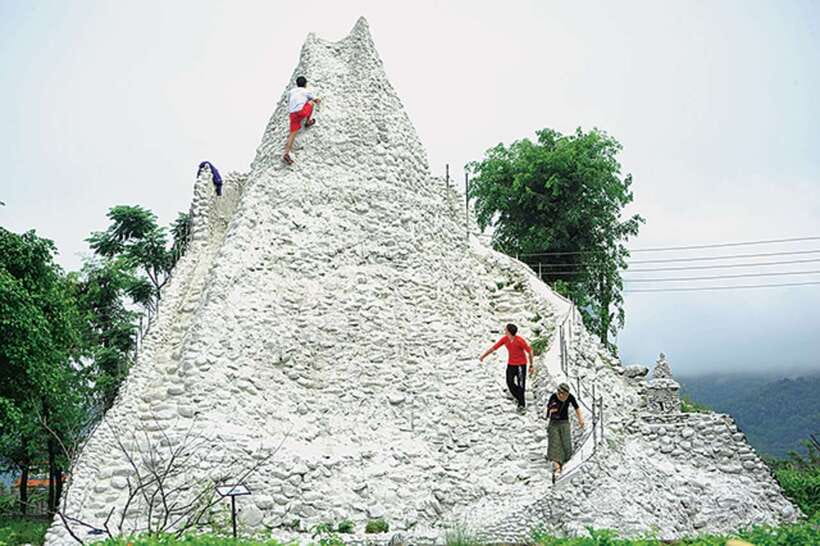
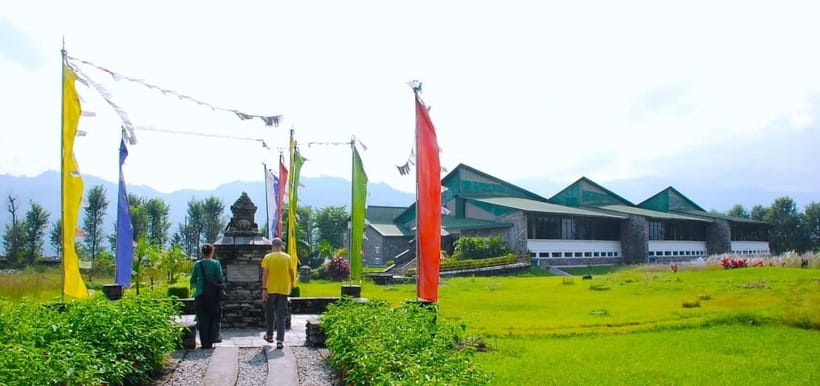
The International Mountain Museum gives the tour a useful foundation. Instead of seeing Pokhara only as a pretty lakeside town, you get background on the Himalayan mountains, mountaineering, mountain communities, and the cultures connected with the region.
Allow about an hour here. That is enough to see the main exhibits without turning the visit into a lengthy museum day. The museum works especially well at the beginning because it gives you context before the cave and Tibetan community stops.
I would pay close attention to how the displays connect high mountain life with human endurance. The appeal is not simply a collection of climbing stories. The museum also helps explain why the Himalayas matter to Nepal’s identity and economy.
The quality of this stop depends partly on your guide. A guide who explains the exhibits can turn a quick museum visit into a useful introduction to Nepal. If your guide provides little commentary, you can still look around independently, but the tour loses some of its educational value.
Admission is not included, so carry money for the ticket. The exact fee is not provided with the tour information, and it is wise to ask your operator for the current total cost before departure.
Devi’s Falls: A Quick Look at Pokhara’s Water Power
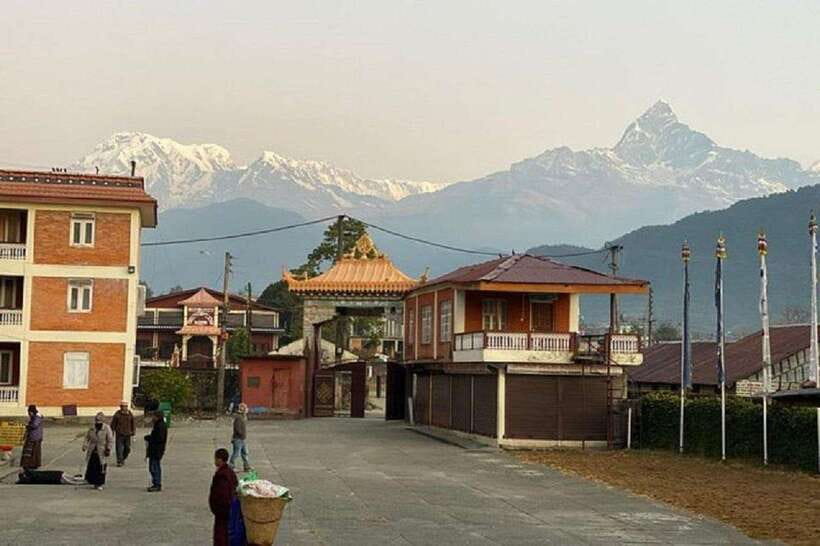
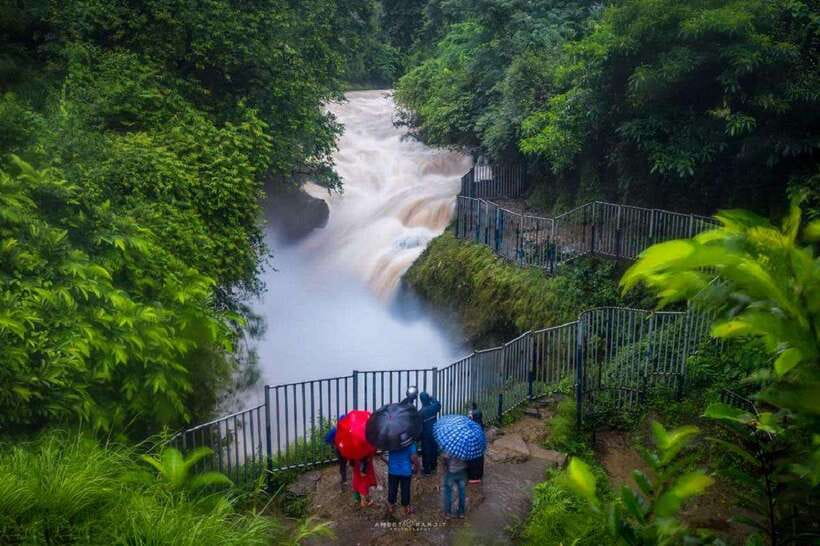
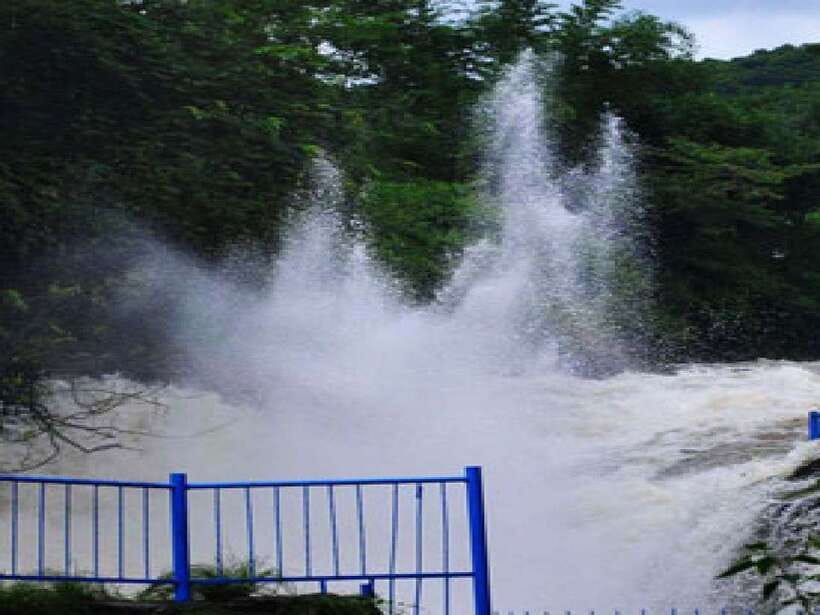
From the museum, the vehicle continues to Devi’s Falls. This is a short sightseeing stop, planned for roughly 30 minutes, with time for photographs and a guided visit.
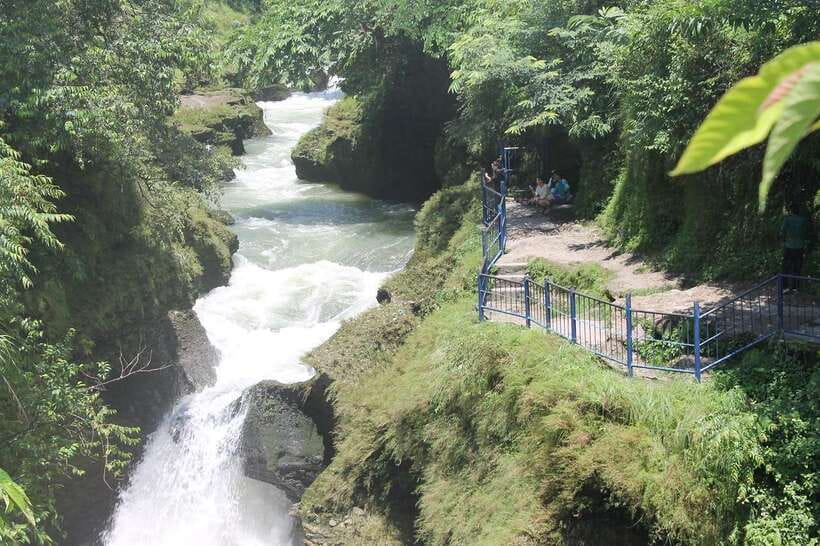
The waterfall is notable for its underground flow. Water disappears below ground rather than simply spreading across an open riverbed, giving the site its distinctive character. This is a good place to pause for pictures, but it is not designed as a long nature walk on this itinerary.
Your experience can change with the season and water levels. The supplied information does not promise a particular flow, so keep expectations sensible. You are making a focused stop at a well-known Pokhara attraction, not spending several hours beside a remote waterfall.
The short visit makes sense because Gupteshwor Mahadev Cave is directly opposite. Once you finish at the falls, you walk for about 10 minutes rather than return to the vehicle. That small detail improves the route and keeps the middle of the tour from feeling like repeated loading and unloading.
Again, entry is extra. Since all four attractions require separate spending according to the tour terms, the advertised $24 is not the final sightseeing cost.
Gupteshwor Mahadev Cave: Sacred, Dark, and Uneven Underfoot
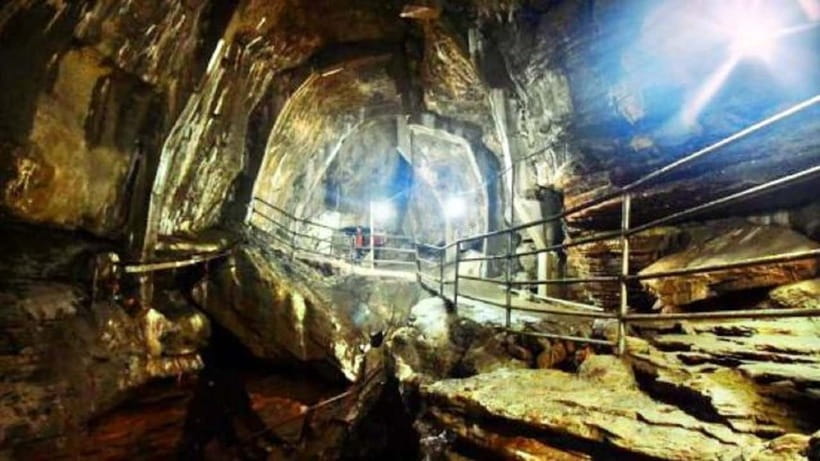
Gupteshwor Mahadev Cave is the most unusual stop on the route. Located opposite Devi’s Falls, this sacred cave has rock formations and a shrine dedicated to Lord Shiva.
The schedule allows about an hour, which is generous compared with the waterfall stop. You can expect a visit focused on the cave’s natural shapes and its religious importance. The shrine gives the place a distinctly spiritual character, so treat it as more than a simple underground photo stop.
Bring your passport or ID card, as requested for the activity, and wear sensible footwear. The supplied information does not describe the exact walking conditions, but caves commonly involve uneven surfaces and dim areas. I would also keep your phone or camera secure and avoid rushing while taking pictures.
The cave is one of the stronger reasons to choose this tour over a simple vehicle ride around Pokhara. You get a location that feels different from the city streets, and the guide has a chance to explain the connection between the cave, Shiva worship, and local religious practice.
That last point matters. A guide who only points toward the shrine and waits outside provides basic transport, not much cultural understanding. If the operator can confirm that your guide gives proper explanations inside the cave, the stop becomes far more worthwhile.
A completely different way to spend the day:
- ATV Adventure Tour in Pokhara, Nepal
★ 5.0 · 194 reviews - Full-Day Tibetan Cultural Tour to Tibetan Settlements Pokhara
★ 5.0 · 184 reviews - Pokhara: Full-Day Sharing Bus Tour on 7 Iconic Destination
★ 4.1 · 179 reviews - Poon hill Trek 3 days
★ 5.0 · 176 reviews
Tibetan Refugee Camp: The Cultural Heart of the Route
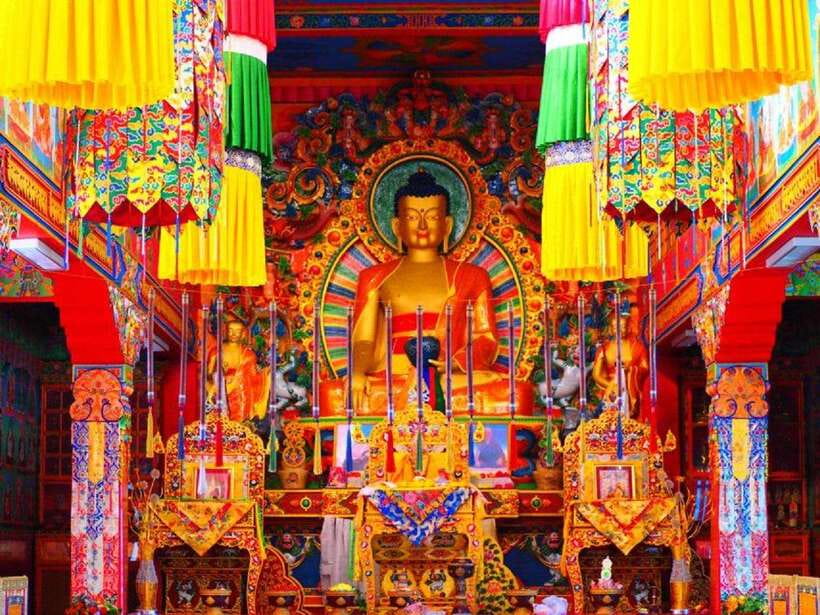
The final stop is the Tibetan Refugee Camp in Pokhara. The visit lasts around 45 minutes and includes a look at the local Tibetan community, a monastery, and a handicraft center.
This is not a staged cultural show. The value comes from seeing a community setting, learning about Tibetan customs and history, and having time to browse local goods. The handicraft center also gives you a chance to buy Tibetan artifacts and souvenirs.
Shopping is part of the visit, but you should not feel obliged to purchase anything. Take your time, ask what an item represents, and decide if it is something you genuinely want. A souvenir has more meaning when you know where it comes from and what it is used for.
This stop can be especially useful if your Pokhara plans focus mainly on mountain views and outdoor activities. It adds a human and cultural side to the city. I would ask the guide to explain the monastery and the community rather than letting the stop become only a shop visit.
The short time limit is the main weakness. Forty-five minutes is enough for a quick visit and some browsing, but not for a slow conversation or an extended look at every part of the center. If Tibetan culture is your main reason for booking, ask in advance how much time will be spent at the monastery and how much at the handicraft center.
The Guide Can Make or Break the Experience
The strongest praise for this tour centers on individual guides. Prakash is described as a careful and considerate driver who knew the history of the places visited and took excellent photographs. Another Prakash, identified as Prakash Ghimire, was praised for adapting to the group’s pace and explaining local culture.
Rajkumar Lamichhane also received warm approval for showing less obvious sides of Pokhara, allowing time for photographs, and making the cave, museum, and Tibetan visit enjoyable. Kiran was praised as a good guide who helped visitors learn about Nepal.
These details give you a useful booking tip: ask for the guide’s name and confirm that the person accompanying you will provide commentary at each stop. The difference between a real guide and a driver who handles tickets is substantial.
There is also a clear warning. One booking was described as having a driver who bought tickets but offered little explanation. Another report pointed to difficult English communication and vague answers about local customs and history. The listed guide languages are English and Hindi, but fluency and guiding style may vary.
If you care about history and culture, send a short message before booking. Ask whether the guide will accompany you inside the museum and cave, explain the Tibetan community, and help with questions. That simple check may prevent disappointment.
Is $24 a Good Value?
At $24 per person, the tour looks affordable for a private vehicle, hotel pickup and drop-off, a guide, and bottled water. It is particularly convenient if you do not want to arrange separate taxis between the museum, waterfall, cave, and Tibetan community.
The value becomes less clear once you add admission fees. Meals, snacks, drinks beyond the supplied water, souvenirs, and all attraction tickets are excluded. You should treat $24 as the transport and guiding price, not the complete cost of the outing.
One particularly important complaint concerned an additional charge to add the World Peace Pagoda after the main route finished. The extra request was reportedly $30, despite the site being relatively close. The tour does not include the pagoda, so you should not assume it can be added at no cost. If you want that attraction, arrange the price before the vehicle leaves.
You may find it cheaper to use local taxis or scooters for four attractions that are close together. On the other hand, self-guided transport means arranging each ride, buying tickets yourself, and managing the route. The private tour is paying for convenience and coordination. Its value rises when the guide adds useful explanations and falls when the service is only a car and ticket assistance.
Timing, Pickup, and Practical Details
Pickup and drop-off are available within Pokhara city limits, including Lakeside. The private group format lets you travel with your own party, and the air-conditioned vehicle is a welcome feature during a warm part of the day.
The advertised duration is three hours. Because the route includes four stops, the timing is tight, especially if you want photographs or a proper conversation at the Tibetan community. Keep your schedule flexible after the tour rather than booking an important appointment immediately afterward.
Bring a passport or ID card. Bottled water is included, but food and snacks are not, so eat before departure or carry something with you. Admission money and a little extra for personal purchases are also sensible.
Free cancellation is available up to 24 hours in advance for a full refund, and you can reserve now and pay later. Those terms are useful if your Pokhara plans depend on weather or changing transport arrangements.
The overall rating is 3.8 from 14 reviews, which fits the mixed picture. The best experiences depend heavily on the assigned guide, while the main complaints concern short operating time, extra fees, and limited commentary.
Who Should Book This Tour?
I would consider this tour if you have only a morning or afternoon in Pokhara and want to combine several major sights without arranging transport yourself. It suits couples, families, and private groups who value hotel pickup and a flexible pace.
It is also a good fit if you want more than waterfalls and mountain photographs. The museum gives you Himalayan context, the cave adds a religious and geological stop, and the Tibetan community offers a look at local culture and handicrafts.
I would be more cautious if you expect a full four-hour cultural program, extensive historical explanations, or every admission fee included. The tour is short, and the guiding standard may vary.
Should You Book the Pokhara Private Half-Day Tour?
Book it for convenience, a private vehicle, and a well-planned route through four very different Pokhara sights. Before paying, confirm the exact duration, the guide’s role, the entrance fees, and the total price with every planned stop included.
If the company assigns you a guide like Prakash, Rajkumar Lamichhane, or Kiran, the experience may be friendly, flexible, and genuinely informative. If you receive someone who mainly drives and buys tickets, you may find a taxi-and-admissions arrangement better value.
My advice is simple: choose this tour when time is short and private transport matters, but do not book it expecting a long, deeply guided cultural day. The route is worthwhile. The service depends on who is behind the wheel.
FAQ
How long does the Pokhara private tour last?
The stated duration is three hours. The planned visits total about three hours, though one reported experience finished in about two hours.
Where can pickup and drop-off take place?
Pickup is available from Pokhara or Pokhara Lakeside. Drop-off is available in Pokhara, including Pokhara Lakeside, within the stated city limits.
Which attractions are included in the route?
The route visits the International Mountain Museum, Devi’s Falls, Gupteshwor Mahadev Cave, and the Tibetan Refugee Camp in Pokhara.
Is the World Peace Pagoda included?
No. The World Peace Pagoda is not part of the stated route. Any request to add it should be discussed and priced separately before the tour.
Are entrance fees included in the $24 price?
No. Admission fees for the attractions are excluded and must be paid separately.
What languages does the guide speak?
The tour provides guides in English and Hindi.
Is transportation included?
Yes. Private air-conditioned transportation is provided throughout the tour, along with hotel pickup and drop-off within Pokhara city limits.
What should I bring?
You should bring a passport or ID card. Bottled water is included, but meals, snacks, personal drinks, souvenirs, and attraction admission fees are not.
New in the Pokhara listings
- Pokhara: Pokhara Highlights Tour by Bus★ 3.6 · 10 reviews
- Discover Pokhara in Style: Private Vehicle Service with Driver★ 5.0 · 5 reviews
- Multi-Day Tour from Pokhara, Poon Hill and Mulde Trek★ 5.0 · 1 review
- Pokhara in 5 Hours: Lake, Museum, Cave, Falls & Pagoda Hill★ 4.5 · 16 reviews
- Private 4 Day Poon Hill Trek from Pokhara★ 5.0 · 16 reviews
- 4 Day Mardi Himal Base Camp Trek from Pokhara★ 5.0 · 18 reviews
- From Pokhara Full Day Entire Pokhara Tour with Guide★ 5.0 · 1 review
- Ultralight Flight: Into The Heart Of The Mountains (90 min)★ 5.0 · 1 review
Half-Day, compared.
Private Half-Day Chandragiri Cable Car Tour in Kathmandu
Read our review →
Namo Buddha and Thrangu Tashi Yangtse Monastery Half-Day Tour
Read our review →
Bhaktapur Old City and Durbar Square Half-Day Tour
Read our review →
Private Half-Day Tour of Kathmandu Durbar Square and Swayambhunath Temple
Read our review →