
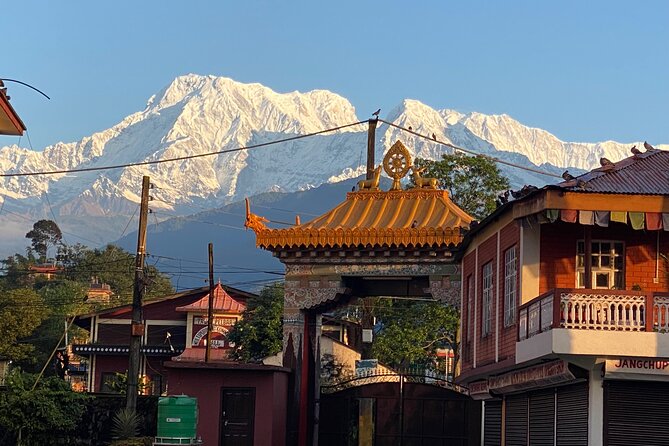
REVIEW · HISTORICAL TOURS
Afternoon Tibetan Cultural Tour to Tibetan Settlements Pokhara
Stories make a place come alive. This four-hour afternoon tour gives you a personal look at Tibetan religion, family life, food, and refugee experience in Pokhara, led by Tibetan guide Mr. Thupten Gyatso. I like the small-group format and the chance to enter a Tibetan family home, rather than seeing the settlements only from a vehicle or monastery doorway.
I also like that hotel pickup and drop-off are included, along with tea, snacks, bottled water, and a traditional food tasting. The main consideration is timing: the tour runs from about 2 to 6 pm, so it is a focused introduction rather than a full day of cultural study, and lunch is not included.
In This Review
- What makes this Pokhara tour worth your afternoon
- A four-hour look at Tibetan life in Pokhara
- Meeting Mr. Thupten Gyatso
- Pema Ts’al Sakya Monastic Institute
- Prayer sounds at Jangchub Choeling Tibetan Monastery
- Tashi Palkhel and a Tibetan family meal
- What you really get for $60
- How the small-group setup affects your visit
- Transport, timing, and what to plan
- Who should book this experience?
- Booking tips for food and flexibility
- Should you book the Tibetan Cultural Tour?
- FAQ
- How long does the Tibetan Cultural Tour last?
- Where does the tour take place?
- Is hotel pickup and drop-off included?
- Who leads the tour?
- Is food included?
- Are vegetarian and gluten-free options available?
- How many people can join the tour?
- Can I cancel for a full refund?
What makes this Pokhara tour worth your afternoon
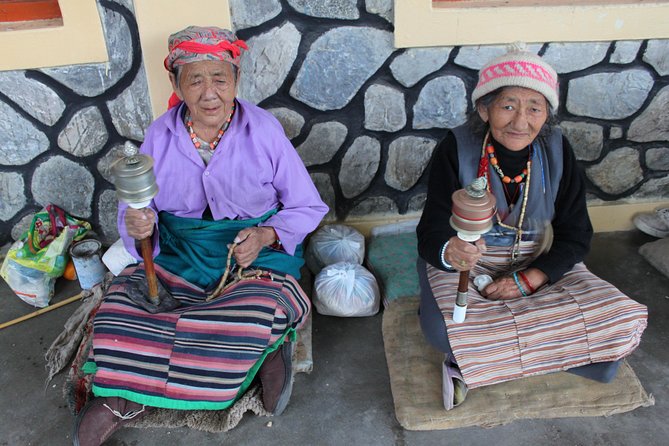
- Hear Tibetan history from a Tibetan guide: Mr. Thupten shares personal knowledge of Tibetan culture, Buddhism, and refugee life in Nepal.
- Attend afternoon prayer chanting: At Jangchub Choeling Tibetan Monastery, you can hear monks use horns, drums, and conch shells during the ceremony.
- Enter a family home: The visit to a home in Tashi Palkhel Tibetan Settlement adds an everyday human side to the tour.
- Try Tibetan food and butter tea: You may taste Tibetan bread, butter tea, and other traditional food prepared in a family setting.
- Keep the group manageable: The maximum group size is 15, and smaller bookings may feel almost private.
- Get door-to-door transport: Hotel transfers make the 2 pm start simple, especially if you are still finding your way around Pokhara.
A four-hour look at Tibetan life in Pokhara
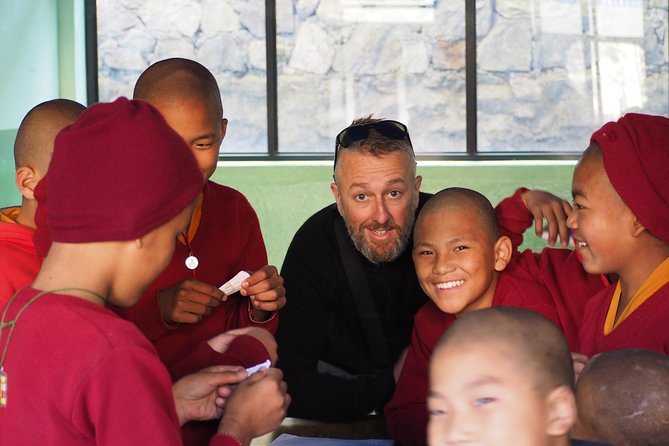
This is not a quick stop at a monastery followed by a few photographs. The route links Buddhist institutions with a Tibetan settlement and a family kitchen. That combination matters because it lets you see both the public and private sides of community life.
You begin at 2 pm and return around 6 pm. The afternoon schedule suits you if you want to keep your morning open for Pokhara’s other sights, or if you prefer a cultural activity after an early lunch. It also gives the visit a natural rhythm: monastery learning first, prayer and sound next, then food and conversation in a family home.
The tour is operated by The Tibetan Encounter Day Tours P. Ltd. A professional guide and driver are included. The group can have up to 15 people, though a small booking may feel much more personal. One person described joining alone and finding the experience almost like a private tour, with plenty of attention from the guide.
More history tours in Pokhara:
- Full-Day Tibetan Cultural Tour to Tibetan Settlements Pokhara
★ 5.0 · 184 reviews - Morning Tibetan cultural tour to Tibetan settlements Pokhara
★ 5.0 · 66 reviews - Afternoon Tibetan cultural tour
★ 5.0 · 41 reviews
Meeting Mr. Thupten Gyatso
The guide is central to the experience. Mr. Thupten Gyatso is Tibetan and speaks very good English, according to the supplied feedback. His role is not limited to pointing out buildings. He explains religion, culture, community life, and the history of Tibetans who became refugees in Nepal.
That personal link gives the subject more weight. You are not only hearing general facts about Buddhism. You are also being introduced to the way Tibetan identity continues through monasteries, food, family customs, and daily life in Nepal.
I would choose this tour partly for that reason. A guide with a Tibetan background can help you understand details that may be easy to miss on an independent visit. You can ask questions, clarify religious practices, and get a better sense of how a settlement functions as a living community.
At the same time, keep your expectations sensible. The four-hour format cannot cover every part of Tibetan history or every political issue connected with exile. You get a personal introduction, not a university lecture or a full museum program.
Pema Ts’al Sakya Monastic Institute
The first stop is Pema Ts’al Sakya Monastic Institute, where you spend about an hour. Admission is included, and the visit forms the educational base of the afternoon.
This is where Mr. Thupten explains Tibetan Buddhism, religious practice, and the place of monasteries within the wider community. The setting gives the discussion a clear focus. Instead of hearing about Tibetan religion in an abstract way, you are learning in a working Buddhist institution.
You should allow yourself time to listen closely here. The most useful part may not be a single sight, but the explanation of how religion connects with education, community, and identity. The institute also gives you a chance to ask questions before the later prayer session.
The drawback is simply that one hour passes quickly. If you already have a strong background in Tibetan Buddhism, you may want more time for detailed discussion. For most first-time visitors, though, this opening stop provides useful context for the rest of the tour.
Prayer sounds at Jangchub Choeling Tibetan Monastery
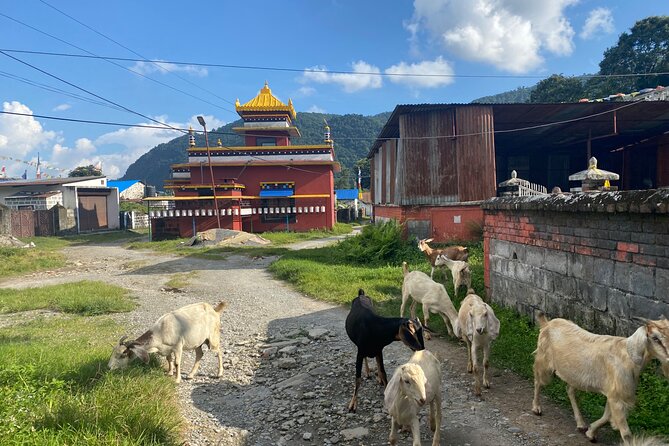
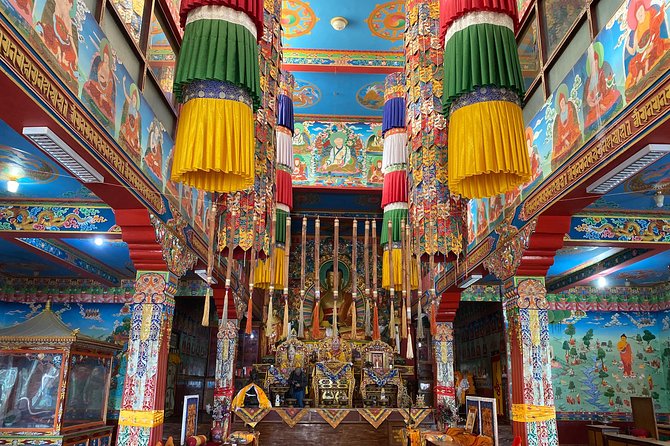
The second stop lasts about an hour at Jangchub Choeling Tibetan Monastery, located inside the Tibetan village. Here you attend afternoon prayer chanting with the monks.
The sound is a major part of the experience. You may hear horns, drums, and conch shells during the ceremony. These are not background effects added for tourists. They are part of the religious setting, and the guide can help you understand what you are seeing and hearing.
This stop may be the most memorable for you if you enjoy visiting active religious sites. The emphasis is on observation and respect. You are there to witness a prayer period, not to watch a staged performance.
A little practical care goes a long way. Follow the guide’s instructions about where to stand and how to behave inside the monastery. The schedule depends on the afternoon prayer period, so the tour’s timing is useful here. You arrive during a set part of the day rather than hoping to catch a ceremony by chance.
A short list of alternatives around Pokhara
- ZipFlyer Nepal – The World’s Steepest Zip-line
★ 5.0 · 608 reviews - Bungee Pokhara by HighGround Adventures
★ 5.0 · 366 reviews - From Pokhara: Sarangkot Sunrise Himalayas Tour
★ 4.7 · 218 reviews - ATV Adventure Tour in Pokhara, Nepal
★ 5.0 · 194 reviews
Tashi Palkhel and a Tibetan family meal
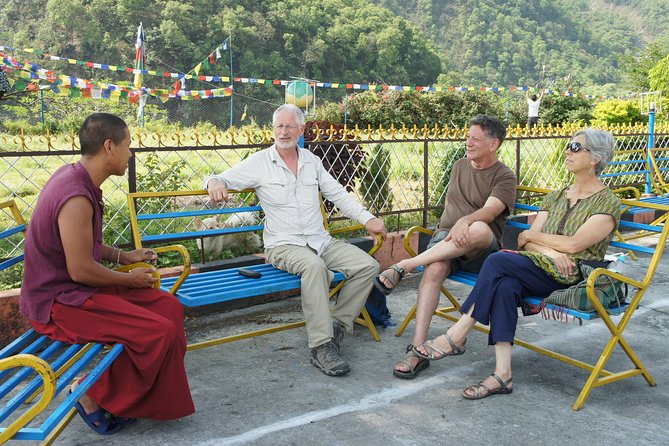
The third stop takes you to Tashi Palkhel Tibetan Settlement. This is where the tour shifts from institutions to home life.
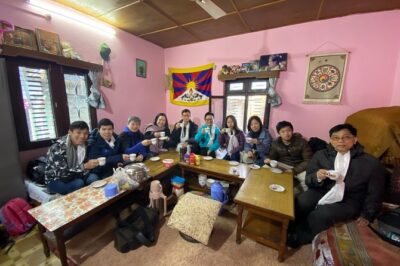
You visit a Tibetan family’s home and share traditional food. The supplied details specifically mention butter tea and Tibetan bread, with the guide explaining the background of Tibetan food and its place in daily life. You also receive snacks, afternoon tea, and coffee or tea as part of the tour.
This is the part I find most valuable for understanding ordinary life. Monasteries tell you about public faith and community institutions. A family home gives you a more direct look at hospitality, food, and daily routines.
Do not think of this as a full restaurant meal. Lunch is not included, and the food visit is better understood as a traditional tasting and family experience. Eat beforehand if you normally need a substantial meal in the afternoon.
Vegetarian food is available if you request it at booking. Gluten-free food is also offered, including plain rice with vegetable or non-vegetable curries. You should state your needs in advance, since the information does not promise that every dish will suit every diet.
What you really get for $60
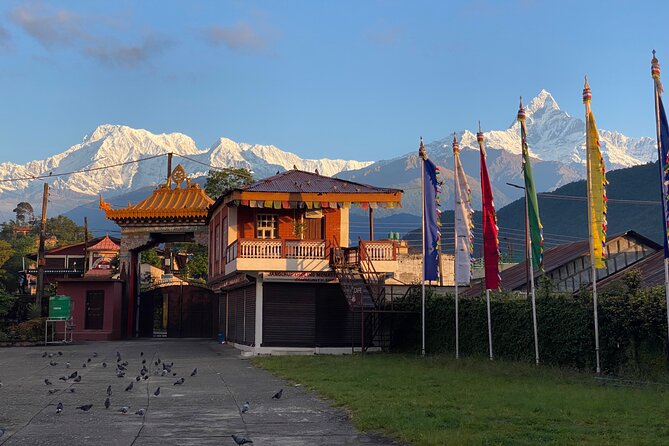
The price is $60 per person. Whether that feels worthwhile depends on what you want from Pokhara.
If you only want to see a monastery from the outside, you can find cheaper ways to do that. This tour includes much more than admission. You are paying for hotel transport, a driver, a professional guide, interpretation at two Buddhist monasteries, and access to a family food experience.
The strongest value comes from the guide and the personal setting. Mr. Thupten’s explanations are repeatedly praised for covering religion, culture, history, and the Tibetan community in clear English. One participant said the tour increased their interest in Tibetan history, culture, and Buddhism. That is a good sign if you want context rather than a photo stop.
The food and drinks add practical value, though they should not be treated as lunch. Bottled water, snacks, afternoon tea, and coffee or tea are included. Admission at the listed stops is also free, so the cost is mainly tied to transport, guiding, organization, and the access arranged for you.
For a half-day cultural experience with hotel transfers and a group cap of 15, I consider the price reasonable, especially if you are traveling alone or in a pair. A larger group may get less individual conversation, though the maximum is still moderate.
How the small-group setup affects your visit
The tour accepts a maximum of 15 people. That is not a private tour by definition, but it avoids the scale of a large bus excursion.
A small group helps in several ways. You can hear the guide more easily, ask questions, and spend less time waiting for people to move between sites. At a family home, a smaller group also feels more appropriate than a crowd.
If you book alone and the date has very few participants, you may receive unusually direct attention. The experience has been described as feeling almost private for a solo participant. That is a useful point for independent visitors who worry about joining a group activity by themselves.
You should still expect a group structure, not complete control over the pace. The tour lasts about four hours and follows a set route. If you prefer to spend half an hour longer at one monastery, the schedule may not allow it.
Transport, timing, and what to plan
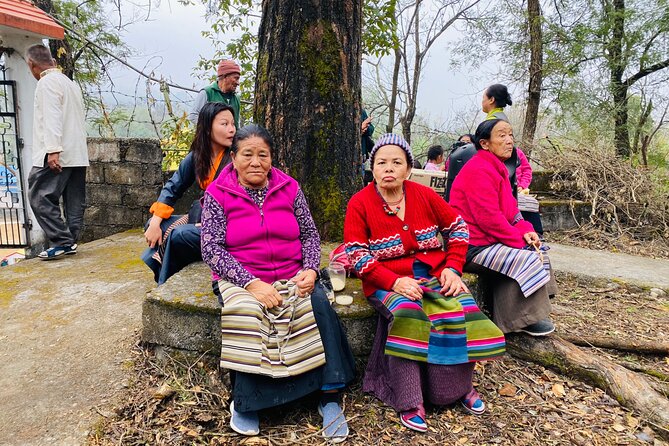
Hotel pickup and drop-off are included, which removes one of the more annoying parts of a short afternoon outing. You do not need to arrange separate transport to the settlements, and the driver is part of the service.
The stated departure time is 2 pm, with a return around 6 pm. Plan to be ready before the pickup window and keep the late afternoon free. Since exact pickup details can depend on your hotel, confirm the arrangements when booking.
The tour is described as a small-group walking tour, but it also includes a driver and hotel transfers. Expect some walking around the monasteries and settlement, even though the exact distances are not provided. Wear comfortable shoes and bring a light layer if you prefer to stay comfortable through the afternoon.
Most people can participate. The supplied details do not give a specific accessibility description, so you should ask the operator about walking requirements if you have mobility concerns.
Who should book this experience?
I would recommend it most strongly to you if you have a real interest in Tibetan Buddhism, refugee history, community life, or food traditions. It also suits first-time visitors who want a guided introduction rather than trying to piece together the settlements alone.
Solo visitors are a good match because the small-group format and personal guiding can make joining easy. Couples and families who want a quieter cultural afternoon should also find the structure appealing.
You may want to skip it if your priority is mountain scenery, adventure sports, or a long unstructured lunch. This is an educational and cultural outing. The focus is on listening, observing, asking questions, and meeting people.
You should also approach the refugee subject with respect. The tour presents Tibetan life in Nepal through culture, religion, history, and personal stories. It is worth giving the topic your attention rather than treating the visit as a quick entertainment stop.
Booking tips for food and flexibility
Confirmation is provided when you book. Tell the operator in advance if you need vegetarian food or gluten-free options. Plain rice with vegetable or non-vegetable curries is available for gluten-free meals.
The tour offers free cancellation if you cancel at least 24 hours before the 2 pm start time. Cancellations made less than 24 hours in advance are not refunded, and changes within that period are not accepted. The cut-off follows local time in Nepal.
If you are deciding between this and a longer cultural tour, remember that the four-hour schedule is its strength and its limit. You can fit it neatly into a Pokhara day, but you will receive an introduction rather than an exhaustive study.
Should you book the Tibetan Cultural Tour?
Book it if you want a human-scale look at Tibetan life in Pokhara. The combination of a Tibetan guide, monastery visits, afternoon prayer chanting, and food in a family home gives the tour more substance than a standard sightseeing loop.
I especially like the access to ordinary family life and the chance to hear Tibetan history explained by Mr. Thupten Gyatso. The $60 price makes sense when you count the hotel transfers, guide, driver, drinks, snacks, and organized visits.
Skip it if you want a meal-sized lunch, a long free afternoon, or a sightseeing tour built around scenery. Otherwise, this is a thoughtful four-hour choice for learning about Tibetan culture and the continuing life of Tibetan settlements in Nepal.
FAQ
How long does the Tibetan Cultural Tour last?
The tour lasts approximately four hours. It departs at 2 pm and returns around 6 pm.
Where does the tour take place?
The experience takes place in Pokhara, Nepal, and visits Pema Ts’al Sakya Monastic Institute, Jangchub Choeling Tibetan Monastery, and Tashi Palkhel Tibetan Settlement.
Is hotel pickup and drop-off included?
Yes. Hotel pickup and drop-off are included, along with a driver and guide.
Who leads the tour?
The tour is led by Tibetan guide Mr. Thupten Gyatso. He shares information about Tibetan culture, religion, history, and refugee life in Nepal.
Is food included?
Yes. The tour includes snacks, afternoon tea, bottled water, and coffee or tea. At Tashi Palkhel Tibetan Settlement, you visit a Tibetan family and try traditional food such as Tibetan bread and butter tea. Lunch is not included.
Are vegetarian and gluten-free options available?
Yes. A vegetarian option is available if you advise the operator at booking. Gluten-free food is also offered, including plain rice with vegetable or non-vegetable curries.
How many people can join the tour?
The maximum group size is 15 people.
Can I cancel for a full refund?
Yes. You can receive a full refund by cancelling at least 24 hours before the experience start time. Cancellations made less than 24 hours before the start are not refunded.
New in the Pokhara listings
- Pokhara: Pokhara Highlights Tour by Bus★ 3.6 · 10 reviews
- Discover Pokhara in Style: Private Vehicle Service with Driver★ 5.0 · 5 reviews
- Multi-Day Tour from Pokhara, Poon Hill and Mulde Trek★ 5.0 · 1 review
- Pokhara in 5 Hours: Lake, Museum, Cave, Falls & Pagoda Hill★ 4.5 · 16 reviews
- Private 4 Day Poon Hill Trek from Pokhara★ 5.0 · 16 reviews
- 4 Day Mardi Himal Base Camp Trek from Pokhara★ 5.0 · 18 reviews
- From Pokhara Full Day Entire Pokhara Tour with Guide★ 5.0 · 1 review
- Ultralight Flight: Into The Heart Of The Mountains (90 min)★ 5.0 · 1 review
Historical Tours, compared.
Private Kathmandu Sightseeing Tour | UNESCO World Heritage sites
Read our review →
Full-Day Tibetan Cultural Tour to Tibetan Settlements Pokhara
Read our review →
Kathmandu Private Sightseeing Tour | UNESCO World Heritage Sites
Read our review →
Full Day Private Top 4 UNESCO Heritage Tour W/Lunch.
Read our review →
Nagarkot Sunrise & Bhaktapur UNESCO Heritage Private Tour
Read our review →
Morning Tibetan cultural tour to Tibetan settlements Pokhara
Read our review →Browse the lists this tour appears in