
REVIEW · UNESCO WORLD HERITAGE TOURS
Private Kathmandu Sightseeing Tour | UNESCO World Heritage sites
Kathmandu rewards a little help. This private day tour gives you a practical way to see the city’s major Hindu and Buddhist landmarks without wrestling with directions, traffic, or a meeting point. You can choose a shorter visit to two UNESCO sites, a balanced four-site plan, or a full seven-site circuit across the Kathmandu Valley.
I like the hotel pickup and drop-off, especially in a city where finding the right street can take longer than expected. I also like having a private guide who can adjust the pace, explain rituals, and leave room for questions. The main drawback is time in the car. The seven-site option is a big day, and even the four-site route includes plenty of driving through Kathmandu traffic.
In This Review
- Key points to know before booking
- Why this tour works well on a first day
- Choosing between two, four, and seven UNESCO sites
- Swayambhunath, the Monkey Temple
- Boudhanath Stupa and the value of slowing down
- Pashupatinath and respectful temple viewing
- Patan Durbar Square and the Patan Museum
- Changu Narayan and Bhaktapur’s longer visit
- Kathmandu Durbar Square and the city’s royal center
- What the private car and guide add
- Price, entry fees, and overall value
- Timing, pace, and practical limits
- Should you book this Kathmandu tour?
- FAQ
- How much does the private Kathmandu sightseeing tour cost?
- How long does the tour last?
- Which UNESCO sites can I visit?
- Are hotel pickup and drop-off included?
- Are entrance fees included?
- Can I enter the inner areas of the Hindu temples?
- Can I stop for lunch?
Key points to know before booking
- Choose your pace: Two sites suit a short introduction, four offer the best balance, and seven create a long, ambitious day.
- Expect excellent local guidance: Guides such as Dipesh, Deepak, Bidhya, Shankar, Prasant, Mukesh, and Kabin are praised for clear explanations and a friendly approach.
- The sites cover two major faiths: You will see important Hindu temples, Buddhist stupas, royal squares, courtyards, and museums.
- Private transport keeps the day simple: An air-conditioned vehicle, driver, and hotel transfers remove much of the city’s logistical hassle.
- Entry fees are extra: Budget NPR 1,400 for two sites, NPR 2,600 for four, and approximately NPR 5,800 to NPR 6,000 for seven.
- The four-site option is the sweet spot: You get a strong cultural introduction without trying to cram every major monument into one exhausting circuit.
Why this tour works well on a first day
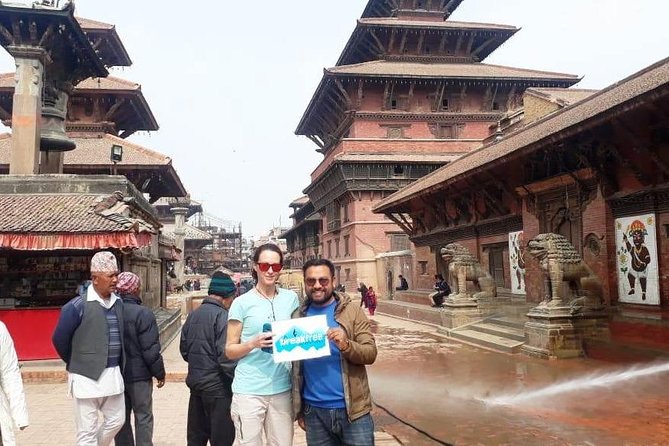
Kathmandu can feel confusing at first. Roads twist through dense neighborhoods, famous sites sit in different parts of the valley, and traffic can turn a short distance into a slow ride. A private car and local guide help you get your bearings quickly.
I see this as an orientation tour rather than a slow, scholarly study of one monument. You will visit several important places, hear the basic story of Kathmandu’s religious and royal past, and gain a clearer sense of how the city fits together.
The guide is the key part. A good guide does more than point at a temple. Guides on this experience explain Hindu and Buddhist customs, describe the meaning of statues and symbols, and provide context before you walk around. Shankar, for example, is praised for explaining religion, history, and culture before allowing time to explore. Dipesh is frequently singled out for patience, flexibility, and clear explanations.
The private format also matters. You are not locked into a fixed group pace. You can ask for more time at a stupa, move faster through a square, stop for lunch, or make a small adjustment when the schedule allows. One solo visitor interested in monasteries was even able to add a monastery visit, while another guest fitted in shopping during a short stay.
More UNESCO World Heritage Tours in Kathmandu:
- Kathmandu: Full Day 7 UNESCO Tour with Lunch – Private/Group
★ 5.0 · 415 reviews - Kathmandu: Full Day Top 4 UNESCO Tour with Lunch – Private/Group
★ 5.0 · 269 reviews - UNESCO Seven World Heritage Tour in Kathmandu
★ 5.0 · 253 reviews
Choosing between two, four, and seven UNESCO sites
The tour is sold in several versions, with the exact sightseeing list depending on the option you select. The two-site choice is best if you have limited time, low energy, or a flight later in the day. It gives you a taste of Kathmandu without turning the day into a race.
The four-site version is the most sensible choice for many people. It gives you enough variety to understand Kathmandu’s religious and artistic character while leaving some breathing room. You still cover a lot of ground, but you are less likely to remember the day as a blur of temple roofs and car rides.
The seven-site plan is for an ambitious first look. It can include Swayambhunath, Boudhanath, Pashupatinath, Patan Durbar Square, Patan Museum, Changu Narayan, Bhaktapur Durbar Square, and Kathmandu Durbar Square, depending on how the route is arranged. The supplied schedule lists more than seven stops because some places are grouped or repeated, so confirm the exact sites included in your chosen option before paying.
The full route can be rewarding. One guest visited all seven sites with Deepak and described the day as especially memorable, with explanations of both religions and local customs. But the same route demands stamina. If you like lingering, taking photographs, and sitting quietly at a stupa, four sites will probably serve you better.
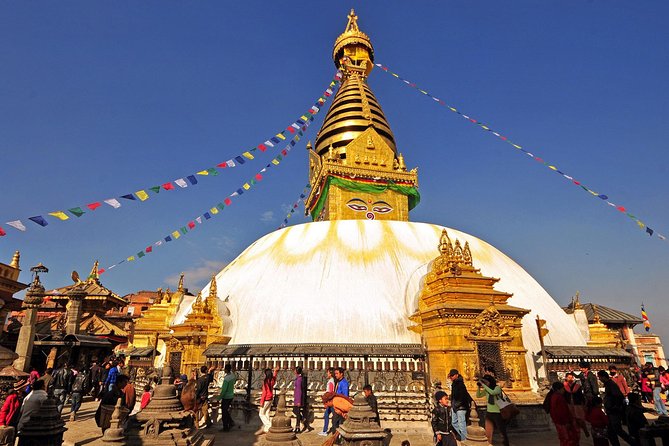
Swayambhunath, the Monkey Temple
Swayambhunath is one of the best starting points for Kathmandu’s Buddhist side. The stupa sits close to the city and is widely known as the Monkey Temple. The planned visit may be as short as 30 minutes in one version of the schedule, or about an hour in another.
That difference matters. Thirty minutes allows for a quick look and a few photographs. An hour gives your guide time to explain the stupa, the Buddhist symbols, and the traditions taking place around it. You may also want a little unhurried time simply to watch people make their rounds.
The site is useful early in the day because it introduces themes that return at Boudhanath: prayer, ritual movement, sacred images, and the living connection between worship and daily life. I would ask your guide at the start how much time is planned here. If you are especially interested in Buddhism, say so early.
Admission is not included in the tour price. The tour provides transport and guiding, but you pay monument fees separately in Nepali rupees.
Boudhanath Stupa and the value of slowing down
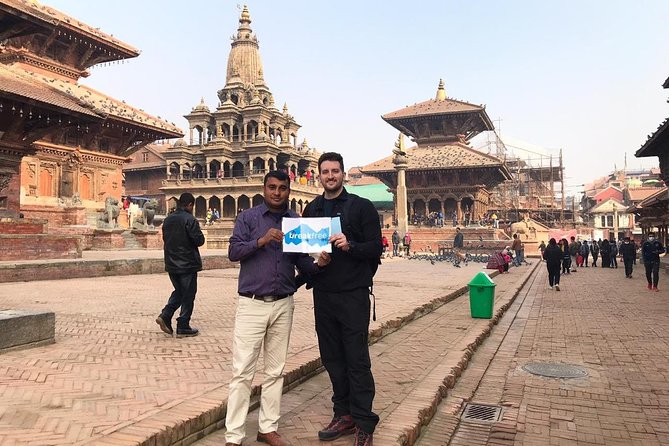
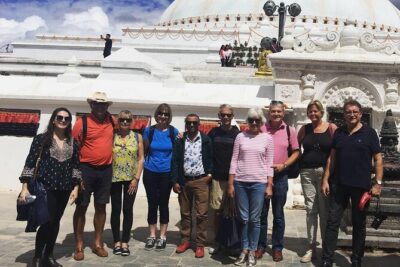
Boudhanath is scheduled for about an hour, and that is a reasonable minimum. Its enormous white dome and painted eyes create a powerful visual focus, but the real pleasure comes from the activity around it.
You can walk around the stupa while your guide explains Buddhist practice and the meaning of the site. Ask for time to look beyond the central monument. The surrounding area includes shops, restaurants, and rooftop places, and one guest ended the visit with lunch at a rooftop café overlooking the stupa.
That lunch stop is not formally included, but the tour allows you to take a break and ask the guide for restaurant suggestions. This is a useful feature on a long day. You pay for your own food and drinks, yet the guide can help you avoid wasting time deciding where to eat.
Boudhanath can also work well later in the day. One solo visitor specifically enjoyed the stupa in the evening. If your selected route and traffic conditions permit, ask if the order can be adjusted. Do not assume it can, since a seven-site day has tight timing.
More history tours in Kathmandu:
- Kathmandu Private Sightseeing Tour | UNESCO World Heritage Sites
★ 5.0 · 109 reviews - Kathmandu: Full Day Private Top 4 UNESCO Heritage Tour W/Lunch.
★ 5.0 · 86 reviews - Kathmandu World Heritage Tour
★ 5.0 · 74 reviews - Nagarkot Sunrise & Bhaktapur UNESCO Heritage Private Tour
★ 5.0 · 66 reviews
Pashupatinath and respectful temple viewing
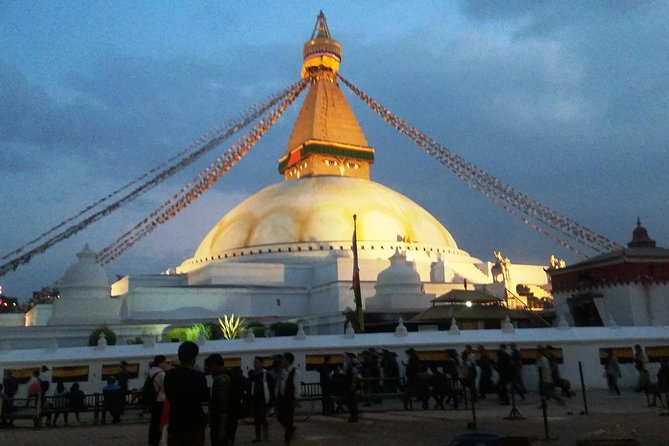
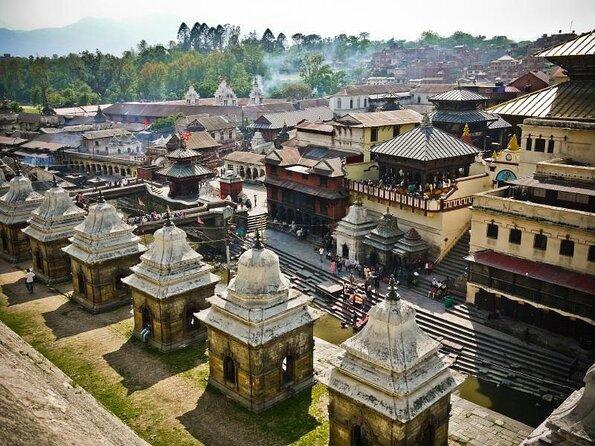
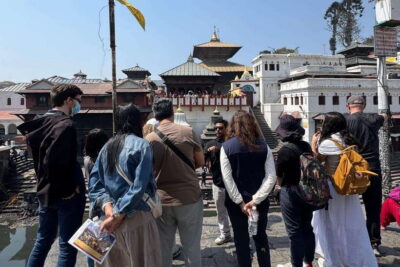
Pashupatinath is Kathmandu’s major Hindu temple complex and one of the most important stops on the route. The planned visit is about an hour, though the schedule lists the stop twice, so the exact arrangement depends on your package and guide.
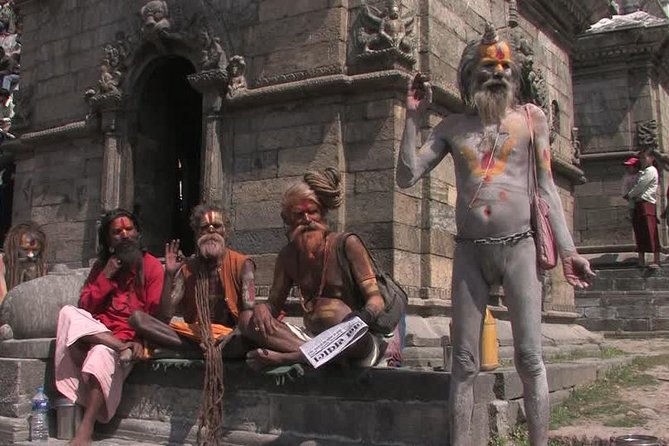
The access rules are important. Only Nepali and Indian nationals of the Hindu faith may enter the inner premises of Hindu temples during the tour. Other visitors can still see the wider complex and learn about its importance, but you should not expect to go inside the most restricted areas.
Pashupatinath is also associated with cremation ceremonies along the river. One guest happened to be present when a cremation was about to take place, and the guide patiently allowed time to witness it. This is not a promised part of the tour, and it should be approached quietly and respectfully. Your guide can explain what you are seeing and help you understand where you may stand.
This is a place where a good guide makes a real difference. The architecture is only part of the experience. Religious practice, family ceremony, and death rituals are visible here in ways that can feel intense to visitors. Listen first, photograph carefully, and follow your guide’s advice.
Patan Durbar Square and the Patan Museum
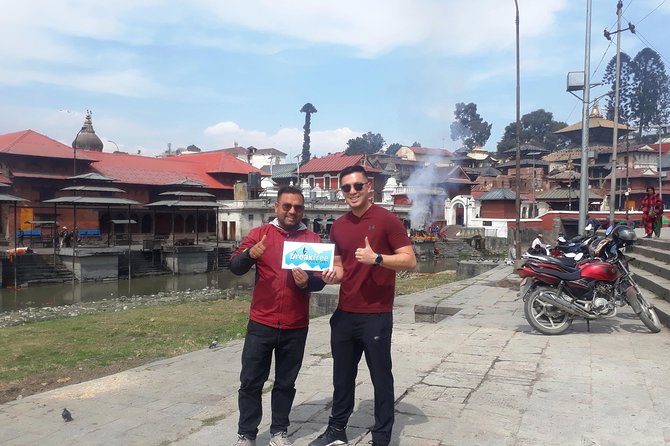
Patan, also known as Lalitpur, gives the tour a strong architectural and artistic center. Patan Durbar Square is planned for about an hour, followed by roughly 30 minutes at Patan Museum in the longer route.
The square brings together old palaces, temple courtyards, carved details, and the formal spaces of the former royal city. You will want your guide to point out what you might otherwise miss. Kathmandu Valley architecture can look busy at first glance, but the value lies in the small details: carved wood, metalwork, courtyards, and the relationship between palace buildings and temples.
Patan Museum adds a quieter indoor stretch. It is housed among old palace courtyards and includes areas such as Sundari Chowk. After several outdoor sites, a museum visit can help organize what you have seen. It is also a useful break if the sun is strong or the streets feel crowded.
The tour schedule mentions Patan Gate as an entrance to the city. Treat that as part of the route rather than a separate major sightseeing stop. The same applies to references to Thamel and Kathmandu itself. They describe areas covered during pickup, drop-off, or the drive, not necessarily formal monument visits.
Changu Narayan and Bhaktapur’s longer visit
Changu Narayan Temple is listed as a 30-minute stop. It is a UNESCO site outside the denser center of Kathmandu, so reaching it adds road time. The short visit works for a quick look, but you will not have the same freedom to wander that you get at Bhaktapur or Patan.
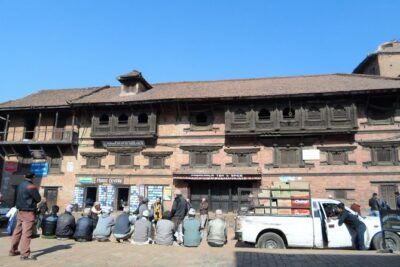
Bhaktapur Durbar Square receives about two hours in the schedule, making it one of the day’s main stops. This former royal city has a strong sense of place, with historic buildings, temples, courtyards, and lanes that invite a slower walk.
Two hours sounds generous, but it can pass quickly. You can use the time for a guided introduction followed by independent wandering, a balance that several guests value. Ask your guide to identify a meeting point and return time before you separate, especially if you want to browse or take photographs.
Bhaktapur also helps explain why the tour is not just a checklist of UNESCO labels. Each major square has a different feel. The guide can compare the cities, explain how royal power and religious life shaped them, and help you see connections between the sites.
Kathmandu Durbar Square and the city’s royal center
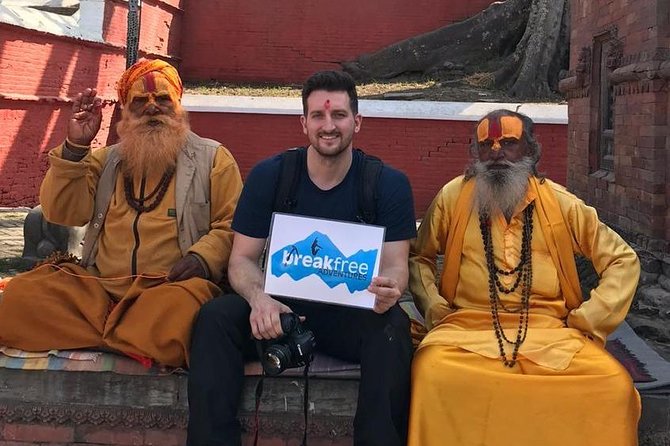
Kathmandu Durbar Square is listed as a 30-minute stop. That is enough for an overview, but not enough for every building and courtyard. If this is your main interest, ask whether your selected tour option allows more time here.
The square provides a useful final piece of the city’s story. After seeing Buddhist stupas, Hindu temples, Patan’s palace courtyards, and Bhaktapur’s old city, you can compare the architecture and religious traditions across the valley.
The Kathmandu portion of the route may also include time around Thamel, the city’s central tourist area, though Thamel is not presented as a formal monument stop. It is useful for hotels, restaurants, pubs, shops, and onward plans. If you are staying in central Kathmandu, pickup and drop-off are included. Hotels outside the city center may incur an additional charge.
What the private car and guide add
The private vehicle is air-conditioned, and hotel transport is included for central Kathmandu hotels. That sounds basic, but it has real value here. You do not need to arrange separate taxis between widely spaced sites, negotiate every ride, or keep checking a map while traffic closes in.
The driver also matters. Several guests praise drivers for calm, safe handling of Kathmandu’s difficult traffic. That is not a small point. You will spend part of the day on the road, and a steady driver makes the transfers less tiring.
The guide and driver work as a team. Guides named Dipesh, Deepak, Bidhya, Shankar, Prasant, Mukesh, Kabin, Razz, and others receive particularly warm praise for friendliness, patience, and strong command of local history and religion. Your assigned guide may be different, but the pattern is clear: the guiding is the main reason to book a private tour instead of arranging taxis alone.
Water may be supplied, but meals and drinks are not included. You can request a lunch break and ask for restaurant advice. Build that break into the day rather than trying to visit seven sites without stopping.
Price, entry fees, and overall value
The advertised price is $17 per person, which is unusually low for a private vehicle, driver, guide, and hotel transfers. The value is strongest if two or more people share the booking, since the listed price is per person and group discounts may be available.
You still need to add monument admission. The stated amounts are NPR 1,400 for two UNESCO sites, NPR 2,600 for four, and NPR 6,000 for seven. Another part of the supplied information gives NPR 5,800 for seven, so confirm the current fee at booking or at the entrance. Fees may be lower for SAARC nationals.
The seven-site option costs much more in entry fees and requires more time in the car. That does not make it poor value, but it makes the four-site package easier to recommend. You get a strong spread of sites, a private guide, and room to understand what you are seeing instead of collecting entrance stamps.
The price does not include meals, drinks, tips, or guides in languages other than English. A non-English-speaking guide can be arranged for an extra cost.
Timing, pace, and practical limits
The stated duration is about four to ten hours. That wide range reflects the different site options and the amount of time you spend at each place. A two-site tour can be relatively compact, while seven sites create a full day.
Traffic is the unavoidable wild card. The route crosses Kathmandu Valley, and one guest felt the four-site version involved a lot of driving. That is fair. This tour covers spread-out landmarks, so the car is part of the experience, not a flaw that can be completely removed.
I would choose four sites if you want time for lunch, photographs, and questions. Choose seven only if seeing the largest possible number of UNESCO locations matters more than a relaxed pace. Since this is a private activity, your group alone participates, giving you more control than a standard coach tour.
The experience is suitable for most people, but temple access restrictions apply, and the day includes walking around historic squares and religious sites. Wear practical shoes, carry water, and keep some flexibility in your schedule.
Should you book this Kathmandu tour?
Book it if you want a well-organized first look at Kathmandu with a private guide, private car, and hotel transfers. It suits solo visitors, couples, families, and small groups who want cultural context without arranging every taxi and entrance stop themselves.
For most people, I would choose the four-site option. It offers the best mix of Swayambhunath or Boudhanath, Pashupatinath, Patan or Bhaktapur, and another major landmark, depending on the package. You will still see plenty, but you are less likely to spend the entire day rushing.
Choose seven if your visit is short and your priority is coverage. Skip this format if you prefer spending half a day at one square, museum, or temple. The tour’s strongest feature is the guide’s ability to explain what you are seeing, so allow enough time to listen. At $17 per person before entry fees, it is a practical and good-value introduction to Kathmandu, especially when you want the city to make sense from the start.
Free cancellation is available up to 24 hours before the scheduled start time. Changes or cancellations inside that window are not accepted for a refund.
FAQ
How much does the private Kathmandu sightseeing tour cost?
The advertised price is $17 per person. Monument entrance fees, meals, drinks, tips, and any additional charge for a non-English-speaking guide are not included.
How long does the tour last?
The tour lasts approximately four to ten hours. The length depends on whether you choose the two, four, or seven UNESCO-site option and how much time you spend at each stop.
Which UNESCO sites can I visit?
The route can include Swayambhunath, Boudhanath Stupa, Pashupatinath Temple, Patan Durbar Square, Patan Museum, Changu Narayan Temple, Bhaktapur Durbar Square, and Kathmandu Durbar Square. The exact sites depend on the option you book.
Are hotel pickup and drop-off included?
Yes. Complimentary pickup and drop-off are provided for hotels in central Kathmandu. Additional charges may apply for locations outside the city center.
Are entrance fees included?
No. The listed entrance costs are NPR 1,400 for two UNESCO sites, NPR 2,600 for four sites, and approximately NPR 5,800 to NPR 6,000 for seven sites. SAARC nationals may pay lower fees.
Can I enter the inner areas of the Hindu temples?
Only Nepali and Indian nationals of the Hindu faith are permitted to enter the inner premises of Hindu temples during the tour. Other visitors can see the wider areas and receive explanations from the guide.
Can I stop for lunch?
Yes. You can take a lunch break during the tour and ask your guide for restaurant recommendations. Food and drinks are at your own expense.
New in the Kathmandu listings
- Traditional Momo Making Class★ 5.0 · 10 reviews
- Kathmandu: Ancient City Kirtipur & Pharping Monastery Tour★ 5.0 · 2 reviews
- Kathmandu to Pokhara Premium sofa bus ticket★ 4.0 · 17 reviews
- Women Empowerment Project(Nepali cooking class & jewelry workshop★ 5.0 · 15 reviews
- 7-Day Langtang Valley Trek from Kathmandu★ 5.0 · 1 review
- Kathmandu 2 Nights 3 Days Chitwan Jungle Safari Tour★ 5.0 · 9 reviews
- Yoga Experience Day Trip with Private Transfer From Kathmandu★ 4.0 · 2 reviews
- Wildlife Adventure in Chitwan Nepal★ 4.0 · 4 reviews
UNESCO World Heritage Tours, compared.
Full Day 7 UNESCO Tour with Lunch – Private/Group
Read our review →
Full Day Top 4 UNESCO Tour with Lunch – Private/Group
Read our review →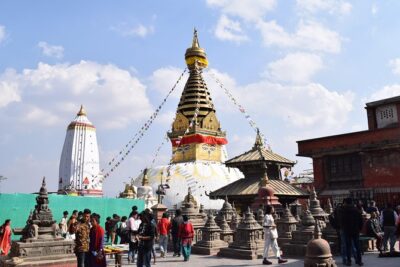
Full-Day 7 UNESCO Tour with Lunch – Private/Group
Read our review →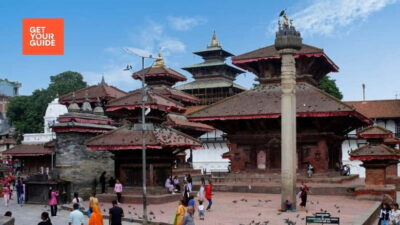
Kathmandu Private Sightseeing Tour | UNESCO World Heritage Sites
Read our review →Browse the lists this tour appears in