
REVIEW · PRIVATE CAR WITH DRIVER
Kathmandu 2 days tour private car and guide, cover major highlights
Kathmandu packs centuries into a surprisingly small area. This private two-day tour links the city’s grandest squares, Buddhist shrines, Hindu temples, and sacred river sites with a private car and guide, making a complicated city easier to handle. I like the flexible start time and the chance to shape the day after booking. I also like the mix of famous sights and living religious places, from the Kumari’s courtyard to Pashupatinath’s open-air cremation ghats.
The price is $95 per person, including hotel pickup, transport, and a private guide. That is solid value if your group wants convenience and context. The catch is that monument entry fees and food are extra, and two days can feel full if you prefer slow visits.
In This Review
- Key points to know before booking
- A smart two-day introduction to Kathmandu
- Kathmandu Durbar Square and the living goddess
- Swayambhunath, the Monkey Temple on the hill
- Pashupatinath and the Bagmati River
- Boudhanath, the city’s Little Tibet
- Patan Durbar Square and the art of the valley
- Bhaktapur and the quieter medieval mood
- What the $95 price really covers
- Guides, transport, and the personal touch
- Who should book this Kathmandu tour?
- Should you book it?
- FAQ
- Where does the Kathmandu two-day tour take place?
- How long does the tour last?
- What time does the tour start?
- Is hotel pickup included?
- Is this a private tour?
- What type of transport is provided?
- Are monument entry fees included?
- Can children join the tour?
- What is the cancellation policy?
Key points to know before booking
- Four major sites on the first day: Kathmandu Durbar Square, Swayambhunath, Pashupatinath, and Boudhanath create a full introduction to the city.
- A private format keeps the plan flexible: You can arrange the pickup time by phone after confirmation, with the listed start time at 9:45 am.
- The second day shifts beyond central Kathmandu: Patan and Bhaktapur bring medieval palace squares, temples, and village scenery.
- The guide is a major part of the value: Paras received especially warm praise for his clear stories and relaxed manner, while Gyan was noted for sharing details beyond a standard guidebook.
- Budget for entrance fees: Transport, hotel pickup, and the private guide are included, but food, drinks, and monument tickets are not.
- The tour suits small groups best: Only your party takes part, and group discounts may be available.
A smart two-day introduction to Kathmandu
Kathmandu is not a city you understand from a car window. Its best moments happen in courtyards, temple lanes, monastery squares, and along the Bagmati River. At the same time, traffic can make independent sightseeing slow and tiring. This tour solves much of that problem by giving you a private vehicle, hotel pickup, and a guide who can explain what you are seeing.
The route covers four UNESCO-listed cultural areas on the first day, then adds Patan and Bhaktapur on the second. You get Buddhist, Hindu, royal, artistic, and village settings in a short span. That range is the tour’s main strength.
I would treat the schedule as a strong framework rather than a rigid program. The timing can be arranged after booking, and the stated start time is 9:45 am. A five to seven hour second day is easier on the legs, while the first day is planned as a fuller outing of roughly five hours, depending on traffic and how long you spend at each site.
The private setup matters. You can ask the guide to slow down at a place that interests you, skip a stop that does not, or arrange the order around your energy and schedule. That freedom is harder to get on a large group excursion.
More cars with a driver in Kathmandu:
- Airport Pickup By Private Car.
★ 4.5 · 25 reviews - Nagarkot Sunrise By Private Car
★ 5.0 · 21 reviews - Private Car Service from Kathmandu to Pokhara
★ 5.0 · 10 reviews
Kathmandu Durbar Square and the living goddess
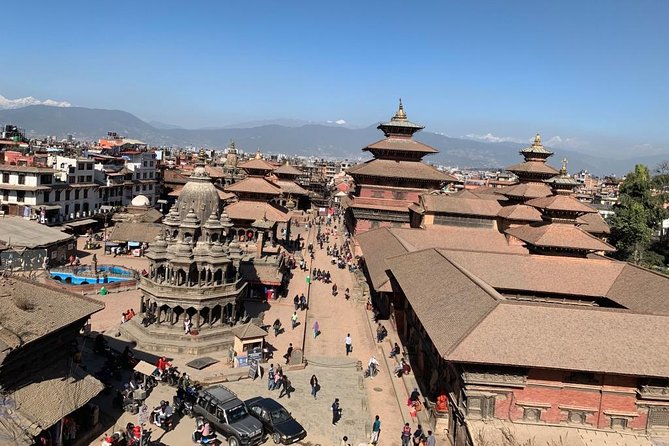
Begin in Kathmandu Durbar Square, the old royal center. Give yourself time here. The area is not just a collection of photogenic temples. It is a working historic quarter where courtyards, shrines, palace buildings, sculptures, and daily religious activity share the same space.
One of the most distinctive stops is Kumari Baha, the home of the Kumari, Nepal’s living goddess. The word Kumari refers to a virgin girl, while Baha means monastery in the local language. The courtyard offers a glimpse into a tradition that still carries real religious weight, rather than existing only as a museum display.
The palace complex also includes artistic courtyards, old wings, carved details, and monuments linked with Nepal’s royal rulers and Gurkha history. A gallery presents memorials connected with the Shah Dynasty. A guide is useful here because the layout can seem confusing at first, and individual buildings often carry more meaning than their appearance suggests.
Plan on about an hour in the square area according to the suggested schedule, though the broader first-day visit is listed at about five hours. That difference tells you something important: the exact pace depends on traffic, your chosen order, and how much time you spend at the other sites.
The main drawback is that this is an active city center, not a quiet archaeological park. You may need patience around traffic and busy streets. The reward is a real sense of Kathmandu as a living capital, not a frozen collection of monuments.
Swayambhunath, the Monkey Temple on the hill
From Durbar Square, the tour continues to Swayambhunath, widely called the Monkey Temple. The listed drive is about 30 minutes. The name gives you a practical hint: monkeys are part of the scene, and you should keep belongings secure and avoid feeding them.
Swayambhunath adds a hilltop Buddhist setting to the royal architecture of Durbar Square. It is a useful contrast in the day’s design. Instead of moving from one palace square to another, you shift into a religious complex with a different atmosphere and visual language.
The site is especially valuable with a guide who can explain the symbolism of the stupa and the place’s role in local worship. One guide praised for this tour, Paras, was described as relaxed, clear, and strong at turning the city’s art and religious customs into stories that made sense. That kind of explanation helps you see more than the famous painted eyes and prayer features.
Swayambhunath can be one of the more physically demanding stops because it is associated with a hilltop setting. The supplied information does not specify how many steps you will climb or how much walking your visit requires, so ask the operator about the current route if mobility is a concern. The general participation note says most people can take part, but children must be accompanied by an adult.
Pashupatinath and the Bagmati River
Pashupatinath is one of the most important Hindu temple areas in the Kathmandu Valley. Its name is linked with Pashupati, often understood as lord of animals or god of animal lives. The complex sits beside the Bagmati River, a sacred waterway that flows toward the Ganges.
This is the most sensitive stop on the route. Public cremations take place along the river, and you may see funeral rites being performed at the open cremation ghats. Holy men, sometimes called sadhus, may also be present with painted faces, dreadlocked hair, and ash on their bodies.
I would approach this visit with respect and restraint. It is not a theatrical performance. Families are carrying out solemn religious duties, so your guide’s instructions matter. Watch quietly, keep a suitable distance, and be careful with photography. The supplied information confirms that the tour includes the cremation sites, but it does not promise access to every part of the temple complex. Non-Hindu visitors may face restrictions at certain inner areas.
The suggested visit lasts about an hour, with a drive of roughly 30 to 40 minutes from the earlier stop depending on the route and traffic. Another itinerary estimate lists 30 minutes for this stop, so treat the timing as flexible rather than guaranteed.
Pashupatinath may be the tour’s most powerful experience, but it is not comfortable in the usual sightseeing sense. If you want only grand architecture and easy photo stops, this part may feel intense. If you want to understand how faith, death, family, and public ritual meet in Kathmandu, it is essential.
A short list of alternatives around Kathmandu
- Everest Base Camp Trek – 14 Days
★ 5.0 · 1,499 reviews - Private Kathmandu Sightseeing Tour | UNESCO World Heritage sites
★ 5.0 · 756 reviews - Everest Base Camp Helicopter Tour landing at Everest View Hotel
★ 5.0 · 668 reviews - Half day cooking class in Thamel kathmandu
★ 5.0 · 607 reviews
Boudhanath, the city’s Little Tibet
After Pashupatinath, you make a short drive to Boudhanath Stupa, often called Little Tibet. The change in mood is welcome. Boudhanath is a major Buddhist center, with the stupa at its heart and monasteries, shops, and devotional activity around it.
Walk around the stupa in the customary direction and pay attention to the movement of worshippers, the prayer wheels, and the steady rhythm of the square. Your guide can help explain the meaning behind the architecture and local customs. This is also a good place to pause, gather your thoughts, and compare Tibetan Buddhist traditions with the Hindu practices seen earlier at Pashupatinath.
The route then returns to your hotel, ending the first day. Since the order can be adjusted, you may want to discuss the sequence with the guide at the start. The best order depends on your hotel location, traffic, and how much time you want at the more emotionally demanding sites.
The drawback is the amount of ground covered. Four major areas in one day means you will get a strong overview, but not unlimited time in each courtyard or shrine. I see this as an orientation day, especially useful if you are new to Kathmandu or have only a short stay.
Patan Durbar Square and the art of the valley
The second day turns toward Patan, also known as Lalitpur, and Bhaktapur. The total outing is listed at about five to seven hours. Compared with the first day, this route gives you more room to focus on medieval palace architecture and the cultural character of the Kathmandu Valley.
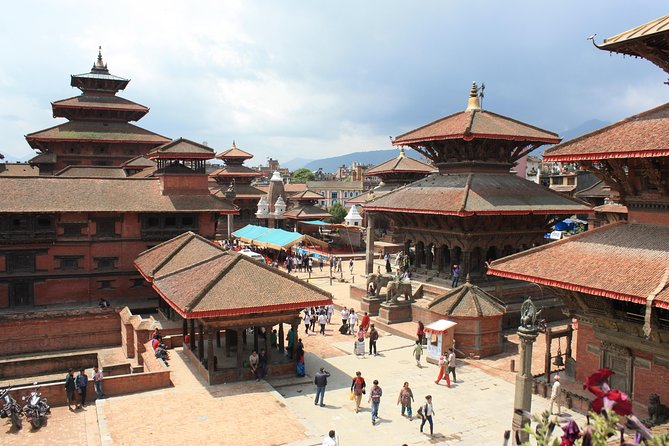
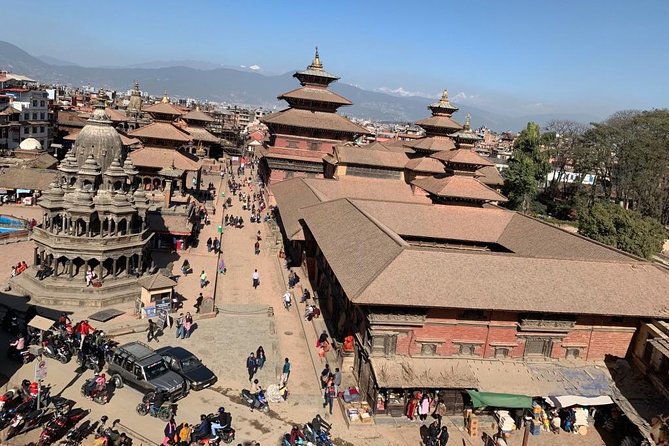
Patan Durbar Square is known for its temples, royal buildings, courtyards, and fine carved details. The square gives you another look at the valley’s old kingdoms, but it should not feel like a repeat of Kathmandu Durbar Square. Each former royal center has its own layout and artistic character.
This is where a guide who can point out details becomes especially valuable. Without context, you may see rows of similar windows, shrines, and rooflines. With explanation, you can begin to notice the craftsmanship, religious associations, and links between palace life and public worship.
The tour description presents Patan and Bhaktapur as a combination of medieval palaces, temples, and villages. That wording matters. You are not spending the entire day inside formal monuments. The journey between sites gives you a sense of the valley beyond the central tourist districts.
Bhaktapur and the quieter medieval mood
Bhaktapur offers another former royal setting, with temples and palace architecture arranged through an old urban center. It is often the most rewarding stop for people who enjoy historic streets and traditional building styles, but the supplied information does not promise specific monuments or a fixed amount of time at each one.
That makes the guide’s role important. Ask which courtyards and temples will be included on your day, and confirm how much time you will have before moving on. The private format gives you a better chance to linger at the places that catch your eye.
The second day is shorter than a packed full-day excursion, which I consider a plus. Five to seven hours is enough for Patan and Bhaktapur without forcing you into a dawn-to-dusk schedule. Still, both areas involve walking over historic streets and stopping at multiple sites, so comfortable shoes are a sensible choice.
If your priority is ancient architecture rather than a long list of stops, this second day may become your favorite. The route feels more focused, and the inclusion of village areas gives the experience a broader sense of place.
What the $95 price really covers
At $95 per person, the tour offers good practical value for a private two-day Kathmandu visit. The price includes a local private guide, a car, van, or bus for your group, and hotel pickup and drop-off. For a small party, that can be simpler and more comfortable than arranging several separate rides.
The price does not include food, drinks, or monument entry fees. This is the main budget detail to remember. Kathmandu’s heritage sites may charge separate admission, and the total cost will depend on the exact fees in effect during your visit.
Group discounts are offered, but the supplied information does not give the discount amount. Ask for the current group price before booking if you are traveling with several people. Since this is a private activity, only your group participates, which gives the $95 price more value than a comparable large-bus tour if you care about flexibility.
The tour is booked, on average, 87 days ahead. That suggests planning early can be sensible, especially if you need a particular guide or date. Confirmation is received at booking, and the experience offers a mobile ticket.
Guides, transport, and the personal touch
The guide can determine whether this is a quick photo circuit or a meaningful introduction to Kathmandu. Paras received particularly strong praise for his calm manner, useful stories, and ability to make the day educational without making it heavy. Gyan, a Japanese guide, was also singled out for sharing details not found in a standard guidebook and helping uncover a local experience the visitor would otherwise have missed.
Those specific names are useful, but guide assignment is not guaranteed in the information provided. If you want Paras or Gyan, contact Himalaya Holiday Service after booking and ask whether either is available.
The private car or van removes much of the transport guesswork. Pickup and drop-off at your hotel are included, and the schedule can be discussed by phone after confirmation. Kathmandu traffic can affect drive times, so do not plan a tight flight, train, or appointment immediately after the tour.
The owner, Buddhi Bhatta, is listed as a contact through WhatsApp at +977 9851214548. That direct line may be useful for confirming pickup time, guide availability, and the day’s order.
Who should book this Kathmandu tour?
I would recommend this experience if you want the main cultural sights covered efficiently without joining a large group. It suits first-time visitors, couples, families with an adult accompanying each child, and small groups that value hotel pickup and a private vehicle.
It is also a good choice if you want both famous highlights and serious religious sites. Pashupatinath is not just another temple stop, and Boudhanath is more than a quick photograph. The guide adds needed context at both.
I would hesitate if you dislike busy schedules, have no interest in religious heritage, or want long, unstructured time at one monument. The first day covers a lot, and entry fees are extra. Ask about the walking demands and current admission costs before you commit.
Free cancellation is available if you cancel at least 24 hours before the local start time. Cancellations or changes made within that final 24-hour period are not refunded or accepted.
Should you book it?
Book this tour if you have two days in Kathmandu and want a well-rounded first look with private transport and human explanation. The strongest reasons are the broad route, flexible planning, hotel pickup, and guides such as Paras and Gyan who have been praised for making the history and customs easier to understand.
Before booking, confirm the exact start time, which guide is assigned, the vehicle type, the order of stops, and the current monument fees. If you do that, the $95 price is a sensible way to cover Kathmandu’s major sacred and royal sites without wasting your limited time on transport planning.
FAQ
Where does the Kathmandu two-day tour take place?
The tour takes place in Kathmandu and the surrounding Kathmandu Valley, including Kathmandu Durbar Square, Swayambhunath, Pashupatinath, Boudhanath, Patan Durbar Square, and Bhaktapur Square.
How long does the tour last?
The experience lasts approximately two days. The second day is listed as taking about five to seven hours, while the first day is described as roughly five hours depending on the schedule.
What time does the tour start?
The listed start time is 9:45 am. The pickup time can also be arranged by phone after your booking confirmation.
Is hotel pickup included?
Yes. Hotel pickup and drop-off are included in the tour.
Is this a private tour?
Yes. It is a private activity, and only your group participates.
What type of transport is provided?
Transport is provided by a private car, van, or bus, depending on the group and arrangement.
Are monument entry fees included?
No. Monument entry fees are not included in the price. Food and drinks are also excluded.
Can children join the tour?
Yes. Most people can participate, but children must be accompanied by an adult.
What is the cancellation policy?
You can cancel for a full refund up to 24 hours before the experience start time. Cancellations or changes made less than 24 hours before the start time are not refunded or accepted.
New in the Kathmandu listings
- Traditional Momo Making Class★ 5.0 · 10 reviews
- Kathmandu: Ancient City Kirtipur & Pharping Monastery Tour★ 5.0 · 2 reviews
- Kathmandu to Pokhara Premium sofa bus ticket★ 4.0 · 17 reviews
- Women Empowerment Project(Nepali cooking class & jewelry workshop★ 5.0 · 15 reviews
- 7-Day Langtang Valley Trek from Kathmandu★ 5.0 · 1 review
- Kathmandu 2 Nights 3 Days Chitwan Jungle Safari Tour★ 5.0 · 9 reviews
- Yoga Experience Day Trip with Private Transfer From Kathmandu★ 4.0 · 2 reviews
- Wildlife Adventure in Chitwan Nepal★ 4.0 · 4 reviews
Private Car with Driver, compared.
Chandragiri Hills cable car day trip, private car with driver from Kathmandu
Read our review →
Discover Pokhara in Style: Private Vehicle Service with Driver
Read our review →
Private Car Drive from Pokhara to Kathmandu and V.V
Read our review →
Browse the lists this tour appears in