
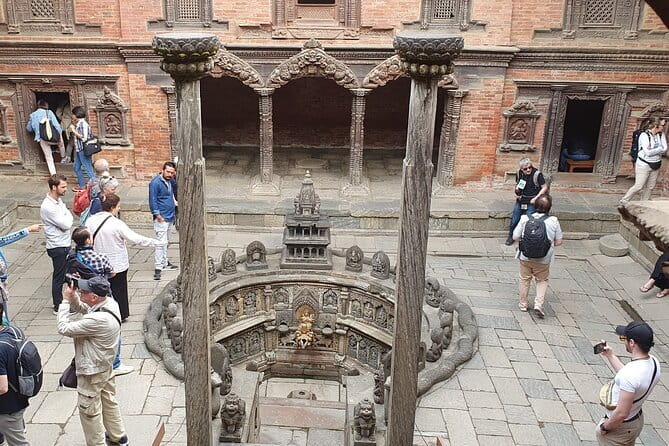
REVIEW · PATAN TOURS
Kathmandu and Patan Heritage and Living Goddess Experience Tour
Kathmandu reveals itself one shrine at a time. This compact walking tour links a Buddhist shrine, local market, and Kathmandu Durbar Square, then brings you to the residence of Kumari, Nepal’s Living Goddess. I like the mix of major sights and ordinary city life, and I like that guides such as Badri and Sovit are praised for being kind, informative, and helpful beyond the formal tour.
The main thing to consider is the tight schedule. Two and a half hours is enough for a useful first look, but not enough for a slow visit to every temple, museum, market stall, and courtyard. Also, the tour information says the Durbar Square entrance fee is included, while individual stop details say admission is not included, so confirm this before booking.
In This Review
- What makes this short Kathmandu walk worthwhile
- A short route with a lot packed into it
- From Ason Tanna Decor to Shree Gha
- The local market and the food stops
- Kathmandu Durbar Square and Basantapur
- Meeting Kumari, Nepal’s Living Goddess
- Kalvairabh and the museum visit
- What the guides add to the experience
- Is $50 good value for two and a half hours?
- Who should book this experience?
- Timing, pickup, and what to clarify
- Should you book the Kathmandu and Patan heritage tour?
- FAQ
- How long does the tour last?
- Is hotel pickup available?
- Is the tour private?
- Is the Durbar Square entrance fee included?
- Will I see the Living Goddess Kumari?
- What is the cancellation policy?
What makes this short Kathmandu walk worthwhile
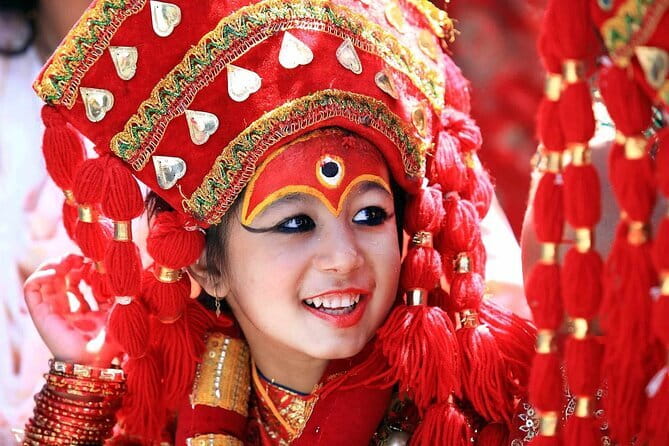
- Kumari’s residence: See the home of the Living Goddess, an important figure in Newari culture and Hindu religious life.
- Ason to Durbar Square on foot: Walk through everyday Kathmandu rather than going straight from hotel to monument.
- Shree Gha Buddhist shrine: Add a quiet spiritual stop before the noise and activity of the market.
- Malla and Shah architecture: Study buildings linked to Nepal’s royal past, with dates ranging from the 12th to the 19th centuries.
- Local food along the way: Guides have added momos, chai, beaten rice, and sweet snacks for some groups, though these should not be assumed as a fixed inclusion.
- Private guiding: Only your group takes part, allowing the pace and questions to remain more personal than on a large group outing.
A short route with a lot packed into it
The experience lasts about two hours and thirty minutes. Pickup is offered, and the tour is private, so your group does not share the guide with strangers. That makes the short time more useful, especially if you want to ask about religious customs, architecture, or local food as you walk.
The route begins after meeting at your hotel or arranged pickup point. You then set off on foot, with the first part taking roughly thirty minutes. This is not just a transfer between sights. The walk is part of the experience, giving you a chance to see local streets and daily activity before arriving at the grand ceremonial spaces of Basantapur.
I would treat this as an orientation tour rather than a full archaeological visit. You will see several important places, but the schedule leaves little room for lingering. If you want detailed museum time or long photography stops, you may need to explore more on your own after the guided portion.
More time in Patan:
- Bhaktapur & Patan Durbar Square Day Tours
★ 5.0 · 122 reviews - Kathmandu: Private Patan and Bhaktapur Sightseeing Tour
★ 4.7 · 64 reviews - Patan and Bhaktapur City Full Day Tour
★ 5.0 · 24 reviews
From Ason Tanna Decor to Shree Gha
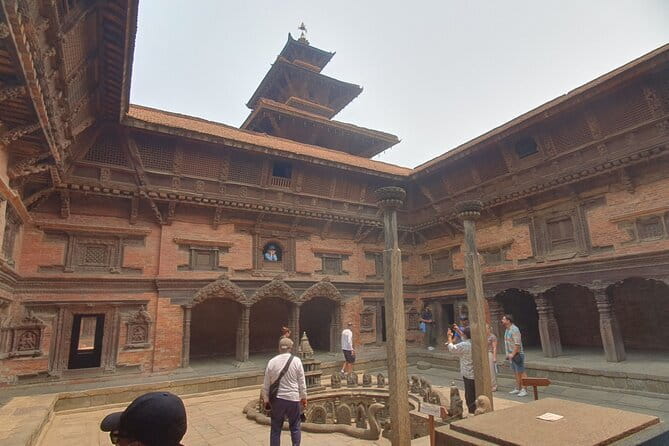
The first section begins around Ason Tanna Decor and leads toward Kathmandu Durbar Square. The route passes through Shree Gha, described as a peaceful Buddhist shrine. This stop gives the walk a useful change of mood. Kathmandu is often loud and crowded, but a shrine can offer a few calmer minutes and a chance to notice the religious life woven into the city.
Your guide is especially important here. A shrine can look like a brief photo stop if no one explains its role. With an informed local guide, you can ask about the difference between Buddhist and Hindu practices, the meaning of the site, and how worship fits into city life.
The walk then continues through a local market. This is one of the strongest parts of the tour for anyone who wants more than polished monuments. You may see ordinary goods, food, and neighborhood activity, with a closer sense of how Kathmandu works day to day.
The market portion also adds a practical benefit. It helps you connect the formal heritage sites with the living city around them. The grand squares are not isolated museum pieces. They sit within streets where people shop, eat, work, and move through their routines.
The local market and the food stops
Food is not listed as a guaranteed part of the tour, but several guide-led outings have included local tasting. The suggestions include momos, chai, beaten rice, and sweet snacks. That gives you a useful idea of what to ask about when you meet your guide.
I would not book this experience expecting a full food tour. Instead, think of food as a possible bonus if timing allows and if your guide offers it. You should also clarify whether any tasting costs extra.
Momos and chai can make a walking tour more enjoyable, especially after a trek or a long day of sightseeing. One guide, Sovit, has been praised for treating the walk like an outing with a local friend, including time for food and tea. That kind of relaxed contact can be more valuable than racing through one more monument.
Still, the food element is informal. The main purpose is heritage and cultural guiding, not a planned series of restaurant visits. If local cuisine is your priority, choose a dedicated food tour instead.
Kathmandu Durbar Square and Basantapur
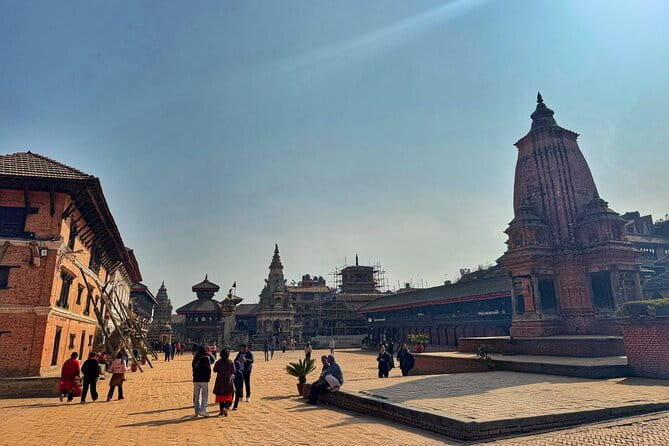
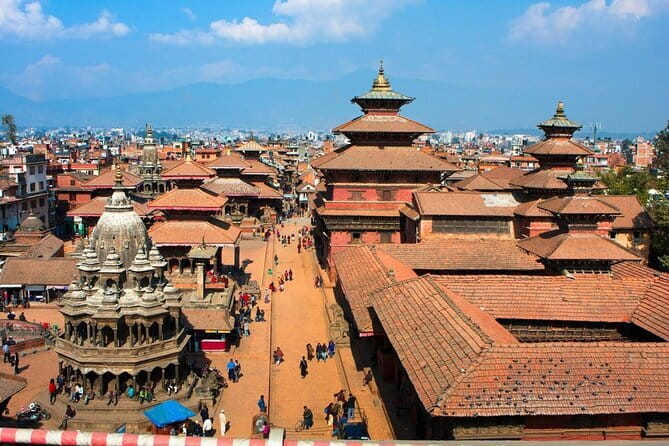
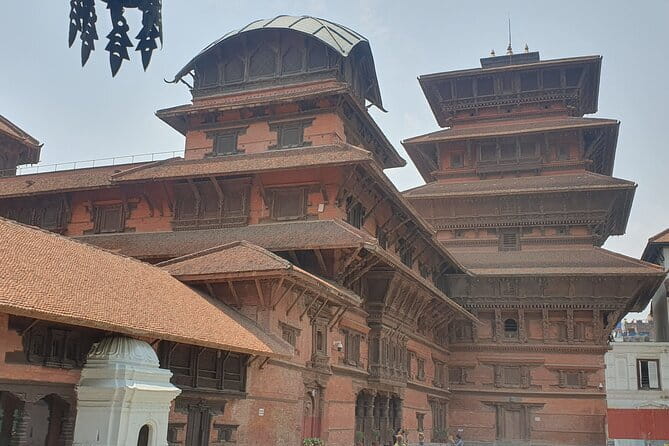
The centerpiece is Kathmandu Durbar Square, also called Basantapur Durbar Square. This UNESCO-listed site brings together temples, courtyards, museums, and royal architecture connected with the Malla and Shah dynasties.
The buildings span a long period, from the 12th through the 19th centuries. That range matters because you are not looking at one single style or one short chapter of Nepalese history. Your guide can help you notice how the square developed over time and why the buildings matter to both royal and religious life.
The tour includes time around temples and the local museum. The museum offers context that the buildings alone cannot provide. Without explanation, carved wood, stone figures, and palace courtyards can blur together. With a guide, you have a better chance of understanding what you are seeing and where it fits.
The schedule allows about one hour for this second portion. That is enough for a focused introduction, but you should keep your expectations reasonable. You may see the key areas and receive useful explanations, but you are unlikely to examine every structure at length.
More history tours in Kathmandu:
- Private Kathmandu Sightseeing Tour | UNESCO World Heritage sites
★ 5.0 · 756 reviews - UNESCO Seven World Heritage Tour in Kathmandu
★ 5.0 · 253 reviews - Kathmandu Private Sightseeing Tour | UNESCO World Heritage Sites
★ 5.0 · 109 reviews - Kathmandu: Full Day Private Top 4 UNESCO Heritage Tour W/Lunch.
★ 5.0 · 86 reviews
Meeting Kumari, Nepal’s Living Goddess
The most unusual feature is the visit to Kumari’s residence. Kumari is regarded as a living deity and holds a special place in Newari culture and Hindu religious practice. For many people, this is the detail that separates the tour from a standard Kathmandu walking route.
The experience is about visiting the residence and learning about Kumari’s role. You should approach it with respect rather than treating it as a performance staged for tourists. Religious customs can be sensitive, and the guide’s explanation helps you understand the meaning behind what you see.
The visit may be brief. The tour description does not promise a guaranteed personal appearance by Kumari, so you should not assume that you will see her directly. The meaningful part is learning about the institution, the residence, and the tradition within the setting where it continues.
This is also an area where good guiding matters most. A short explanation of Kumari’s place in Newari and Hindu life can turn a quick stop into one of the most memorable parts of your Kathmandu visit.
Kalvairabh and the museum visit
Another notable sight is the 17th-century stone sculpture of Kalvairabh, a form of the god Bhairav. The sculpture has both historical and religious importance, and it adds a more intense note to the visit than the graceful temple architecture nearby.
Your guide can explain why the figure matters and how religious images function in the square. As with the other monuments, context is the key benefit of booking a guide. You can take a picture on your own, but you may not know what details to look for or why the image has such power in local worship.
The museum portion should appeal to anyone who wants more than a walk through courtyards. It gives you a chance to connect the physical site with the political and cultural changes that shaped Basantapur over the centuries.
Because the total visit is short, museum time may be limited. If you are strongly interested in Nepalese art or royal history, ask the guide at the beginning how much time can be devoted to the museum.
What the guides add to the experience
The strongest praise goes to the guides rather than to any single monument. Badri is described as kind and well informed, while Sovit is repeatedly praised for clear explanations, good local advice, and a friendly manner. One account specifically notes that Sovit’s explanations felt accurate and that he helped with broader Nepal travel advice.
That is useful because the tour is not only about looking at buildings. You are walking through a city where religion, food, trade, and daily life overlap. A guide who can explain those links gives the tour far more value than a guide who only recites dates.
The guides have also helped with practical questions about the rest of Nepal. If you are using Kathmandu as a base before or after a trek, the walk can be a handy chance to ask about food, transport, temples, and other places to visit.
The experience is private, which should make it easier to shape the conversation around your interests. You can ask for more architecture, more religion, more food, or more local life. The tradeoff is that the tour’s quality depends heavily on the individual guide assigned to your group.
Is $50 good value for two and a half hours?
At $50 per person, the tour is not the cheapest way to see Kathmandu’s central sights. Its value comes from the private guide, hotel pickup option, cultural explanation, and the route through both ordinary streets and major heritage sites.
For a first visit, I think the price can make sense if you want a structured introduction and prefer not to work out the route yourself. The guide may help you understand sights that would otherwise appear as a series of attractive but confusing monuments.
The value is less clear if you are comfortable exploring independently. Kathmandu Durbar Square and the surrounding streets can be visited without a private walking tour, and you may prefer to spend more time at your own pace.
Group discounts may reduce the per-person cost. If you are traveling with friends or family, compare the group price with the cost of hiring a guide independently. Since the experience is private, it is particularly suited to a small group that wants direct attention.
One pricing detail needs checking before payment. The included features state that the UNESCO Durbar Square entrance fee is included, but both itinerary sections say admission tickets are not included. Ask the provider, Bold Himalaya Treks and Travels Pvt Ltd, exactly what the $50 covers.
Who should book this experience?
I would recommend it most strongly to first-time visitors with limited time in Kathmandu. It gives you a clear route, a local guide, a major UNESCO site, a market walk, and an introduction to Kumari in one compact outing.
It also suits anyone who has just finished a trek and wants an easy cultural activity. The walk is short enough to fit into a free afternoon, while the guide can offer useful advice for the rest of your stay.
Families and small groups may appreciate the private format. You can ask questions without holding up a large group, and you may be able to request a slower pace or extra attention at a particular site.
I would be more cautious if you want a long museum visit, extensive shopping time, or a dedicated food experience. The route includes several elements, but the short duration means each receives only a limited share of the afternoon.
The activity allows service animals, is near public transportation, and is suitable for most participants. It is a walking tour, so you should be comfortable covering the route on foot. The supplied details do not give a precise accessibility description for every street or shrine, so ask the provider if you have specific mobility needs.
Timing, pickup, and what to clarify
Pickup is offered before the tour begins, and hotel drop-off may be available afterward. You can also choose to remain in the area and continue exploring the streets and markets after the guided portion.
That flexibility is useful. Basantapur is a good place to end a short city walk because you can either return to your hotel or keep exploring independently. If you have a fixed dinner booking or another activity, confirm the exact pickup and finish time.
The advertised duration is approximately two hours and thirty minutes. The route description divides that into about one hour and thirty minutes for the walk through Shree Gha, the market, and toward Durbar Square, followed by about one hour around Basantapur.
Tips for the guide are not included. The tour offers free cancellation if you cancel at least 24 hours before the start time. Cancellations made within 24 hours are not refunded, and late changes are not accepted.
Should you book the Kathmandu and Patan heritage tour?
Book it if you want a short, private introduction to Kathmandu with strong local explanation. The combination of Shree Gha, the market, Basantapur, Kalvairabh, the museum, and Kumari’s residence gives you more variety than a simple monument walk.
The best reason to choose it is the guide. Badri and Sovit are praised for kindness, clear information, food suggestions, and practical advice for the rest of Nepal. That personal help can be especially useful after a trek or at the start of your trip.
Skip it if you want to explore slowly or focus mainly on food and shopping. Before confirming, ask about the entrance fee, the exact pickup point, and whether any food tasting is included. With those details settled, this is a sensible first look at Kathmandu’s sacred sites, royal past, and everyday streets.
FAQ
How long does the tour last?
The experience lasts approximately two hours and thirty minutes.
Is hotel pickup available?
Yes. Pickup is offered before the tour begins, and hotel drop-off may be available afterward.
Is the tour private?
Yes. Only your group participates in the activity.
Is the Durbar Square entrance fee included?
The tour details state that the UNESCO Durbar Square entrance fee is included, but the individual itinerary sections say admission tickets are not included. Confirm the current entrance policy with the provider before booking.
Will I see the Living Goddess Kumari?
The tour includes a visit to Kumari’s residence and an explanation of her cultural and religious role. The information does not guarantee that Kumari herself will appear during your visit.
What is the cancellation policy?
You can cancel at least 24 hours before the start time for a full refund. Cancellations or changes made within 24 hours are not accepted and are not refunded.
New in the Kathmandu listings
- Traditional Momo Making Class★ 5.0 · 10 reviews
- Kathmandu: Ancient City Kirtipur & Pharping Monastery Tour★ 5.0 · 2 reviews
- Kathmandu to Pokhara Premium sofa bus ticket★ 4.0 · 17 reviews
- Women Empowerment Project(Nepali cooking class & jewelry workshop★ 5.0 · 15 reviews
- 7-Day Langtang Valley Trek from Kathmandu★ 5.0 · 1 review
- Kathmandu 2 Nights 3 Days Chitwan Jungle Safari Tour★ 5.0 · 9 reviews
- Yoga Experience Day Trip with Private Transfer From Kathmandu★ 4.0 · 2 reviews
- Wildlife Adventure in Chitwan Nepal★ 4.0 · 4 reviews
Patan Tours, compared.
Patan & Bhaktapur Durbar Square Tour with Lunch – Private/Group
Read our review →
Nagarkot Sunrise, Bhaktapur and Patan Durbar Square Tour in Kathmandu
Read our review →
Bhaktapur darbar, Patan Darbar square & Changu Narayan in 1 day
Read our review →Browse the lists this tour appears in