
REVIEW · BUDDHIST MONASTERY TOURS
Kathmandu: Pharping Monastery & Asura Cave Meditation Tour
Silence begins just beyond Kathmandu’s traffic. This half-day outing pairs Pharping Samye Ling Monastery with the sacred Asura Cave, where Guru Padmasambhava is believed to have meditated in the eighth century. I like the peaceful setting among green hills and the chance to sit quietly rather than rush from one sight to the next. I also like that guides such as Shankar Bhattarai, Dipesh, Deepak, and Keshar Jung Thapa are praised for explaining Nepal’s religious traditions in a warm, personal way.
The main drawback is the road time. Pharping is about 45 minutes from central Kathmandu, and traffic can stretch the five to six-hour schedule. The cave and monastery are religious sites, not polished tourist attractions, so you should come for quiet reflection and cultural context, not a packed program of entertainment.
In This Review
- Key points to know before you go
- Leaving Kathmandu for Pharping
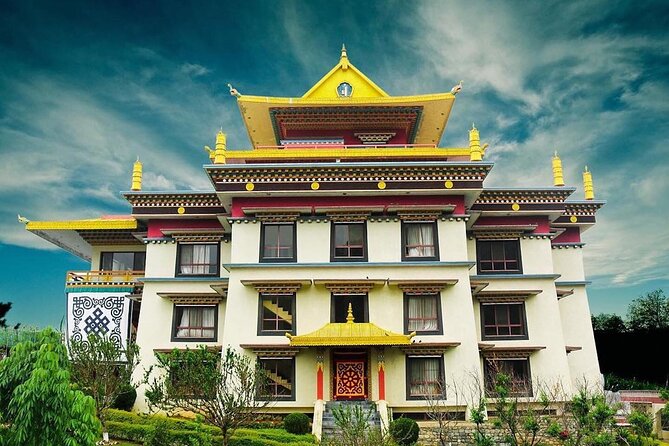
- Pharping Samye Ling Monastery and its hillside setting
- Entering Padmasambhava Yangleshö Cave
- Meditation without pressure or performance
- What the guides add to the day
- Is $60 a fair price?
- Who will enjoy this Pharping tour most?
- Practical details that affect your decision
- Should you book the Asura Cave and Pharping visit?
- FAQ
- How long does the Pharping Monastery and Asura Cave tour last?
- Is hotel pickup included?
- Is this a private tour?
- What does the $60 price include?
- Can I meditate at Asura Cave?
- What is the cancellation policy?
Key points to know before you go
- Asura Cave is the spiritual heart of the visit: Guru Padmasambhava is believed to have meditated here, making it especially important to Tibetan Buddhists.
- Pharping offers more than one sacred stop: Expect monastery architecture, prayer wheels, murals, hillside views, and time to pause.
- The tour is private: Your group travels by air-conditioned vehicle with hotel pickup and drop-off.
- The best guides shape the day: Shankar, Dipesh, Deepak, and Keshar Jung Thapa have been praised for timing their explanations well and allowing quiet moments.
- The $60 price includes the essentials: Transport, an English-speaking guide, taxes, and hotel transfers are covered, while meals, drinks, donations, and tips are extra.
- Allow a flexible morning or afternoon: The advertised duration is five to six hours, but Kathmandu traffic can affect the return time.
Leaving Kathmandu for Pharping
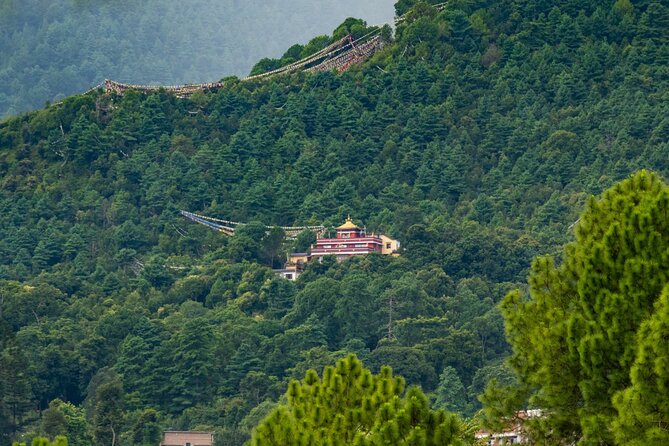
Pharping sits on the southern edge of Kathmandu Valley, away from the city center’s horns, vendors, and constant movement. The drive takes about 45 minutes in normal conditions, though the exact time depends on traffic. That short transfer matters because the change in mood is part of the experience: the city gradually gives way to hills, monastery compounds, and quieter roads.
Your private vehicle collects you at your hotel. Air conditioning is included, and one past visitor specifically appreciated receiving a bottle of water at pickup. The driver is not just a minor part of the outing. Sujan and Lok were praised for calm, confident driving, a useful quality on Kathmandu’s crowded roads.
The private arrangement is a real advantage. You do not have to match the pace of a large group, and your guide can spend more time on questions or allow extra silence at the cave. The tour also accepts group discounts, so the $60 per-person cost becomes more attractive when shared with companions.
The schedule is described as five to six hours overall. The sightseeing portion gives roughly three hours to the Kathmandu and Pharping area, with about one hour listed for the Padmasambhava Yangleshö Cave area. The balance is road time and movement between sites. I would keep the rest of your day fairly open rather than booking a tight evening plan.
More trips down to Pharping:
- Kathmandu: Pharping, Dakshinkali and Chobhar Tour with Lunch
★ 4.4 · 7 reviews - Escorted Full Day Pharping, Dakshinkali and Kirtipur Day Trip with Newari Lunch
★ 4.5 · 5 reviews - Pharping Asura Cave Meditation Tour
★ 5.0 · 4 reviews
Pharping Samye Ling Monastery and its hillside setting
Pharping Monastery is a place of active religious practice, not simply an old building placed on a sightseeing route. Its Tibetan Buddhist setting comes through in the prayer wheels, colorful murals, sacred imagery, and quiet courtyards. You may find monks, worshippers, and other visitors moving through the compound, so respectful behavior matters.
I like that the tour gives you time to notice small details. Turn the prayer wheels gently in the proper direction, look at the painted walls, and watch how the site is arranged for prayer and contemplation. A guide can explain the symbols and customs, which makes the architecture more meaningful than a quick photo stop.
The monastery is surrounded by hills and offers views across the valley. The scenery is not the only reason to come, but it helps explain why this location has served as a place for religious retreat. The combination of open views and enclosed sacred spaces gives the visit a pleasing rhythm.
The site can feel more rewarding early in the day, when the surroundings are likely to be calmer. That timing advice comes from the nature of the place rather than a promise of empty courtyards. Pharping remains a working religious center, and quiet can never be guaranteed.
Guides have received especially strong praise for making the monastery visit approachable. Shankar is repeatedly singled out for his clear explanations and for knowing when to speak and when to let the setting do the work. Deepak is described as personable and well informed, while Keshar Jung Thapa is praised for adjusting the day to include an additional insightful visit.
That flexibility is important. A guide who simply recites facts can make a sacred site feel flat. A guide who responds to your interest can help you understand the difference between Buddhist art, devotional practice, meditation, and local custom.
Entering Padmasambhava Yangleshö Cave
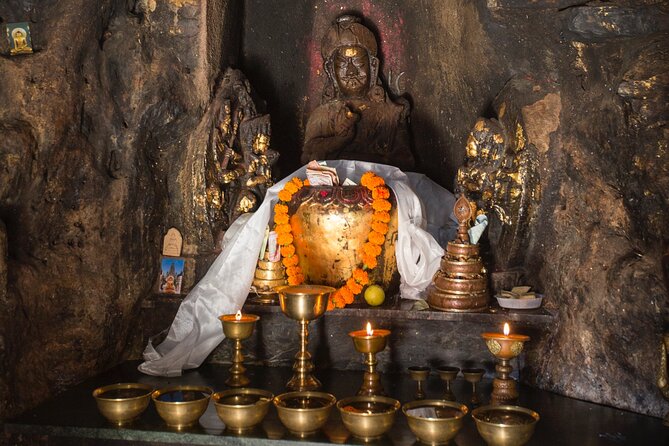
The Asura Cave, also called Padmasambhava Yangleshö Cave, is the most concentrated spiritual stop. Guru Padmasambhava, also known as Guru Rinpoche, is believed to have meditated here in the eighth century. For Tibetan Buddhists, that association gives the cave far more weight than its physical size might suggest.
You should expect a simple and reverent setting rather than a dramatic showpiece. The value comes from the belief attached to the place, the atmosphere, and the chance to sit quietly. The tour specifically allows time for self-meditation, so you are not required to treat the cave as a quick checkpoint.
This is where a good guide matters most. Shankar has been praised for offering background at suitable moments and leaving enough space for personal reflection. That balance suits the site. You can ask about Guru Padmasambhava, the role of sacred caves, and Tibetan Buddhist practice, then take a few minutes without a running commentary.
I would not approach the cave expecting a guaranteed mystical feeling. Some people find the setting powerful; others appreciate it mainly as a place of cultural and religious importance. Both responses are reasonable. The tour works best if you are willing to sit quietly and accept the site on its own terms.
The cave visit is also a good reason to dress and behave modestly. The supplied information does not list a formal clothing rule, but this is a sacred place, and basic respect is appropriate. Keep your voice low, follow your guide’s directions, and avoid treating the cave like a studio for staged photographs.
Meditation without pressure or performance
The meditation element is deliberately simple. You are given the opportunity for self-meditation at a place associated with Guru Padmasambhava, rather than being promised a formal retreat, a long teaching session, or a particular spiritual result.
That distinction helps set fair expectations. If you already practice Buddhism, the cave may have special meaning and offer a chance to connect with a tradition you know. If you are new to meditation, you can simply sit, breathe, observe the surroundings, and allow the guide to explain the setting.
One family completed the visit with a nine-year-old daughter, and the guide was praised for sharing information at suitable times. That suggests the experience can work for families who are comfortable with religious sites and quiet pauses. Children must be accompanied by an adult, and you should be ready for a day that values patience over constant activity.
I appreciate this low-pressure approach. You do not need to describe yourself as spiritual to benefit from the visit. An interest in Nepalese culture, Tibetan Buddhism, sacred art, or local history is enough.
More monastery visits in Kathmandu:
- From Kathmandu: 2 Stupas and Kopan Monastery Spiritual Tour
★ 4.8 · 115 reviews - Lunch with Nuns – Monastery
★ 5.0 · 75 reviews - Kathmandu: Dhulikhel to NamoBuddha Day Hike with Lunch
★ 4.8 · 62 reviews - Dhulikhel, Namobuddha & Panauti: A Scenic Day Tour from Kathmandu
★ 5.0 · 36 reviews
What the guides add to the day
The strongest part of this experience is the human guidance. Shankar Bhattarai receives repeated praise for his explanations and his ability to create a calm, meaningful visit. Dipesh is described as an excellent guide for the peaceful Pharping outing, and Deepak is praised for his knowledge and personable manner.
Keshar Jung Thapa is noted for adapting a private tour to include an additional insightful stop. That detail shows why a private guide can offer more than a fixed route. If you have a particular interest in Buddhist practice, architecture, Nepalese religion, or meditation, tell your guide at the beginning.
You may also be assigned another guide. The exact person is not guaranteed, so it is sensible to request a preferred guide when booking, but not to treat that request as certain. The company has also supplied a WhatsApp contact number, +977 9851014557, which may help with communication before the tour.
The driver deserves credit, too. Kathmandu traffic can be tiring, and a confident driver makes the road sections less stressful. Private transport also means hotel pickup and drop-off, which saves you from arranging a separate taxi to a distant meeting point.
Is $60 a fair price?
At $60 per person, the tour is not the cheapest way to reach Pharping. It is a fair price if you value private transportation, a dedicated English-speaking guide, hotel transfers, air conditioning, and the ability to keep the visit focused on your own group.
The value improves when two or more people share the vehicle and qualify for a group discount. For a solo participant, the price is harder to call a bargain, but it still covers several useful services in one package. You are paying for ease and interpretation, not just admission to a cave.
Taxes are included. Meals, drinks, monastery donations, personal expenses, and gratuities are not. Carry money for food or drinks and a possible donation, and budget separately if you plan to thank the guide or driver.
I would compare this cost with the likely alternative: arranging transport yourself, finding the sites, and trying to understand their religious meaning without a guide. If you are confident doing that, a self-arranged visit may cost less. If you want context and a smoother day, the private format earns its price.
Who will enjoy this Pharping tour most?
I would recommend the experience to:
- People interested in Tibetan Buddhism and Nepalese religious culture
- Anyone who wants a quiet break from central Kathmandu
- Visitors who value a private guide and flexible pacing
- First-time visitors who want help understanding sacred art and customs
- Families with children who can manage a calm, respectful visit
- Meditation practitioners seeking a meaningful place for personal practice
It is less suitable if you want a full-day sightseeing schedule with many major monuments, a formal meditation class, or a food-focused outing. The sites are spiritually important, but the program is modest and reflective.
The tour can also suit history enthusiasts, although the emphasis is on living religious tradition rather than a long museum-style presentation. You will learn through the monastery, the cave, the guide’s explanations, and the setting itself.
Practical details that affect your decision
Hotel pickup and drop-off are included, and the experience is private for your group. Confirmation is provided at booking, and the area is near public transportation, though the included private vehicle is the more convenient choice.
Most people can participate, according to the tour information. Children must have an adult with them. The supplied details do not specify accessibility features, walking distances, or exact ground conditions, so ask the operator if those points matter for your party.
Free cancellation is available when you cancel at least 24 hours before the start time. Cancellations made within 24 hours are not refunded, and changes inside that period are not accepted. Cut-off times follow local time in Nepal.
The tour provider is Breakfree Adventures Pvt. Ltd. Since the visit includes a sacred cave and monastery, I would confirm the pickup time, expected clothing, photography etiquette, and whether your preferred guide is available before departure.
Should you book the Asura Cave and Pharping visit?
Book it if you want a calm, culturally focused half-day outside Kathmandu and value having someone explain what you are seeing. The monastery’s murals and prayer wheels, the valley views, the cave’s connection with Guru Padmasambhava, and the chance for quiet meditation make this more than a simple drive to the outskirts.
I would especially choose it for a private group, a Buddhist practitioner, or anyone tired of crowded city sightseeing. I would skip it if you need a tightly timed itinerary, dislike religious sites, or expect a formal guided meditation course. For the right visitor, the best souvenir is not a long checklist of sights, but a clearer sense of why Pharping matters.
FAQ
How long does the Pharping Monastery and Asura Cave tour last?
The tour lasts approximately five to six hours. Pharping is about a 45-minute drive from central Kathmandu, although traffic can affect the timing.
Is hotel pickup included?
Yes. Hotel pickup and drop-off are included in a private, air-conditioned vehicle.
Is this a private tour?
Yes. Only your group participates, and the tour includes private transportation.
What does the $60 price include?
The price includes hotel transfers, private air-conditioned transportation, an English-speaking guide, and all taxes. Meals, drinks, personal expenses, monastery donations, and gratuities are not included.
Can I meditate at Asura Cave?
Yes. The experience includes time for self-meditation at the sacred cave associated with Guru Padmasambhava.
What is the cancellation policy?
You receive a full refund if you cancel at least 24 hours before the experience begins. Cancellations or changes made within 24 hours are not accepted for a refund.
More Yoga and Meditation Retreats in Kathmandu
- 200 Hours Yoga Teacher Training at Nepal Yoga Home (starts on 1st of everymonth)
★ 5.0 · 125 reviews - 3 night 4 Day Yoga & Ayurveda Retreat to Detox the Body & Mind, Nepal
★ 5.0 · 37 reviews - 10 Days Ayurveda & Yoga Retreat in Kathmandu, Nepal
★ 5.0 · 24 reviews - 21 Day Ayurveda & Yoga Retreat in the Himalayan country, Nepal
★ 5.0 · 19 reviews
New in the Kathmandu listings
- Traditional Momo Making Class★ 5.0 · 10 reviews
- Kathmandu: Ancient City Kirtipur & Pharping Monastery Tour★ 5.0 · 2 reviews
- Kathmandu to Pokhara Premium sofa bus ticket★ 4.0 · 17 reviews
- Women Empowerment Project(Nepali cooking class & jewelry workshop★ 5.0 · 15 reviews
- Yoga Experience Day Trip with Private Transfer From Kathmandu★ 4.0 · 2 reviews
- 7-Day Langtang Valley Trek from Kathmandu★ 5.0 · 1 review
- Kathmandu 2 Nights 3 Days Chitwan Jungle Safari Tour★ 5.0 · 9 reviews
- Wildlife Adventure in Chitwan Nepal★ 4.0 · 4 reviews
Buddhist Monastery Tours, compared.
Dhulikhel, Namobuddha & Panauti: A Scenic Day Tour from Kathmandu
Read our review →
Namo Buddha and Thrangu Tashi Yangtse Monastery Half-Day Tour
Read our review →
Namobuddha Monastery Hiking Day Tour via Panauti from Kathmandu
Read our review →Browse the lists this tour appears in