
REVIEW · LUMBINI TOURS
Lumbini: Buddhists Spiritual Exploration
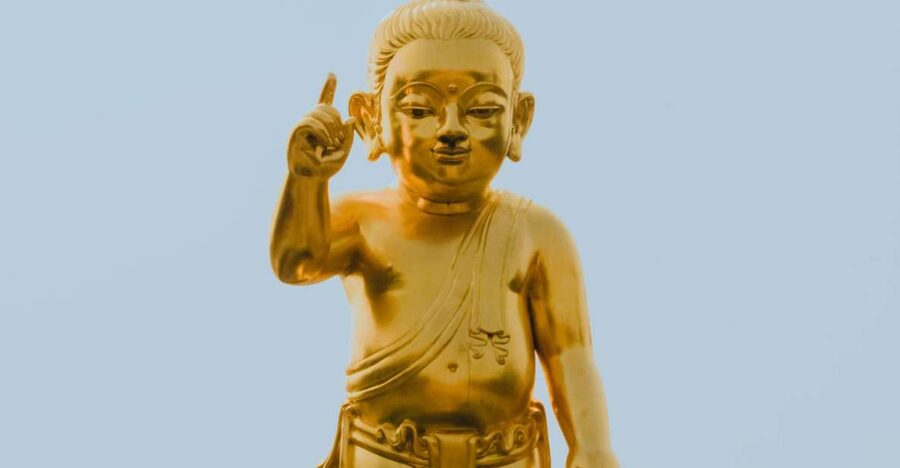
Some sacred places speak softly. Lumbini does this through the Maya Devi Temple, quiet gardens, international monasteries, and spaces made for reflection. This seven-hour private tour gives you a practical way to see the main sites with an English or Hindi-speaking guide rather than trying to make sense of the large religious zone alone.
I especially like the private format, which gives you more room for questions and a slower pace at the temple and gardens. I also like the chance to compare monasteries from different Buddhist traditions in one day. The main concern is value: the listed price is $49 per person, but one May 2024 booking was charged $78 and described the cost as high for what was delivered.
In This Review
- Key points to know before booking
- Why Lumbini feels different from an ordinary sightseeing stop
- The early morning hotel pickup
- At the Maya Devi Temple and sacred marker stone
- Time for gardens, meditation, and quiet thought
- Lunch and the practical cost of eating
- Comparing Buddhist traditions at the monasteries
- The Lumbini Museum, with one important warning
- Meeting local people outside the development zone
- What the $49 price really offers
- Who should book this experience
- Booking tips that can save you trouble
- Should you book Lumbini Buddhist Spiritual Exploration?
- FAQ
- How long does the Lumbini Buddhist Spiritual Exploration last?
- Is hotel pickup included?
- Is the tour private or shared?
- Which languages does the guide speak?
- Is the experience wheelchair accessible?
- Is lunch included?
- Are entrance fees included?
- What should I bring?
- Is the Lumbini Museum always open during the tour?
- Can I cancel for a full refund?
Key points to know before booking
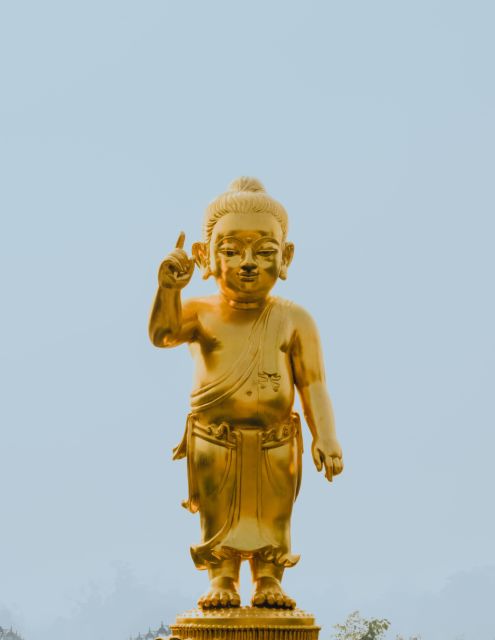
- Maya Devi Temple marks Buddha’s birthplace, with a sacred marker stone and Queen Maya Devi’s bathing pond within the complex.
- The private seven-hour schedule includes hotel pickup and drop-off from any hotel in Lumbini.
- The monasteries show different Buddhist traditions, with varied architecture and religious styles from around the world.
- The Lumbini Museum may affect your plans, since it was reported closed for remodeling in May 2024 despite appearing in the day’s program.
- Lunch, entrance fees, and drinks are extra, so the $49 price is not the full cost of the day.
- The tour suits reflective visitors, culture-focused sightseers, and anyone who wants guidance without joining a large group.
Why Lumbini feels different from an ordinary sightseeing stop
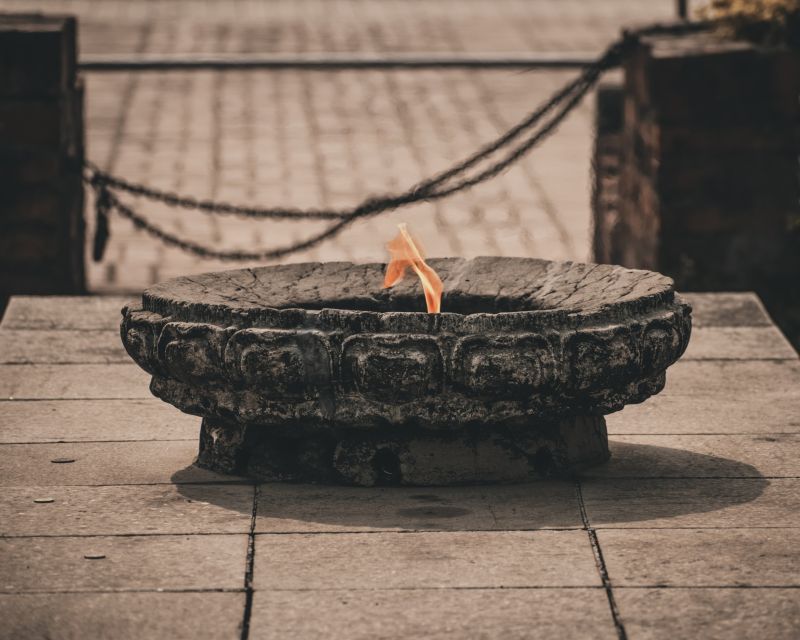
Lumbini is not simply a place to check off before moving on. It is a pilgrimage site, a historical center, a park for quiet thought, and a meeting point for Buddhist communities from many countries.
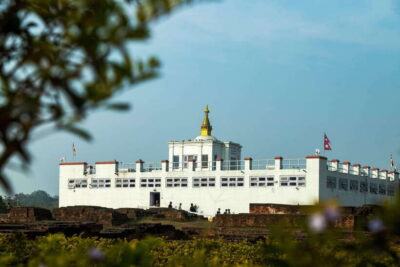
The heart of the visit is the Maya Devi Temple. This is the place associated with the birth of Siddhartha Gautama, who later became known as the Buddha. The importance of the site is religious rather than theatrical. You should expect a calm and respectful visit, not a grand monument designed mainly for photographs.
I like that the day gives equal weight to sacred sites and peaceful open space. After seeing the temple, you have time to sit, walk, and take in the gardens. That pause matters. Lumbini makes more sense when you are not rushing from one building to the next.
The tour is based in Nepal’s Terai region, south of Butwal, in the Western Region. Pickup is available from any hotel in Lumbini, and the guide returns you to your hotel at the end of the day. Since the program lasts about seven hours, you get a full day without needing to arrange separate transport between the main places.
More trips to Lumbini:
- Lumbini Tour Package From Kathmandu or Pokhara: 2 Night 3 Days
★ 4.5 · 14 reviews - Full day Lumbini Tour with Guide
★ 5.0 · 11 reviews - Lumbini Pilgrimage Tour by Flight- 2 Days
★ 5.0 · 7 reviews
The early morning hotel pickup
Your day begins with a hotel pickup in the morning. You are asked to wait in the hotel lobby 10 minutes before the scheduled time, a small but useful detail in a place where local timing may not always feel exact.
The guide speaks English or Hindi, and the group is private. That combination is valuable at a site with religious meaning. You can ask why a particular building matters, clarify Buddhist terms, or request a little more time for quiet reflection without having to keep pace with a large crowd.
The exact transport arrangement is not specified, so you should confirm practical details when booking if you have luggage, mobility concerns, or a strong preference about the vehicle. The experience is listed as wheelchair accessible, which is helpful, though you may still want to ask how easily every part of the sacred zone can be reached.
One past booking raised a concern about information not being passed clearly between the agency and the visitor. I would confirm the pickup time, museum status, entrance costs, and final price before the day begins. Five minutes of checking can prevent a long day of confusion.
At the Maya Devi Temple and sacred marker stone
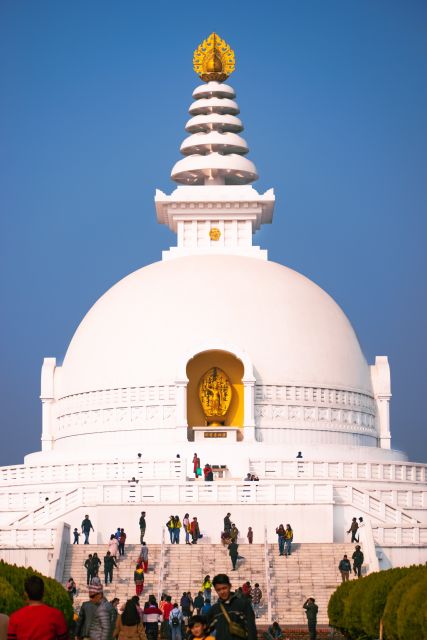
The Maya Devi Temple is the emotional center of the experience. Inside the complex, you visit the place identified as Buddha’s birthplace and see the sacred marker stone connected with that tradition.
The setting also includes Queen Maya Devi’s bathing pond. These details give the visit a physical shape. Instead of hearing only a broad account of Buddhism, you are shown the specific places tied to the birth story.
Your guide’s role is important here. Without context, you might spend a few minutes looking at the temple and move on. With good explanations, the marker stone, pond, and surrounding monuments become part of a larger story about pilgrimage and Buddhist memory.
Keep your expectations measured. The temple complex is sacred, and the experience is more about presence and meaning than about a long list of objects. You may find that the best moments come between the explanations, when you have a chance to stand quietly or watch people paying their respects.
Dress and behave with the same care you would use at any major religious site. The supplied information does not list a specific dress code, but modest, respectful clothing is a sensible choice for a temple visit.
Time for gardens, meditation, and quiet thought
After the temple, the schedule allows time in Lumbini’s gardens. This is one of the strongest parts of the day for anyone who wants more than a quick cultural stop.
The gardens offer a change in pace. You can walk, sit, meditate, or simply let the morning settle. I like this built-in pause because many guided tours treat silence as wasted time. Here, quiet is part of the experience.
You should not expect a formal meditation class. The program describes time for meditation and self-reflection, not instruction from a meditation teacher. Bring your own approach. You might sit for a few minutes, walk slowly, or use the gardens to process what you have seen at the temple.
This section also gives the guide a chance to adjust the rhythm of the day. If you have already had an intense morning, the open space helps. If you want more historical explanation, you can use the time to ask questions before the afternoon monastery visits.
A completely different way to spend the day:
- Everest Base Camp Trek – 14 Days
★ 5.0 · 1,499 reviews - Private Kathmandu Sightseeing Tour | UNESCO World Heritage sites
★ 5.0 · 756 reviews - Everest Base Camp Helicopter Tour landing at Everest View Hotel
★ 5.0 · 668 reviews - ZipFlyer Nepal – The World’s Steepest Zip-line
★ 5.0 · 608 reviews
Lunch and the practical cost of eating
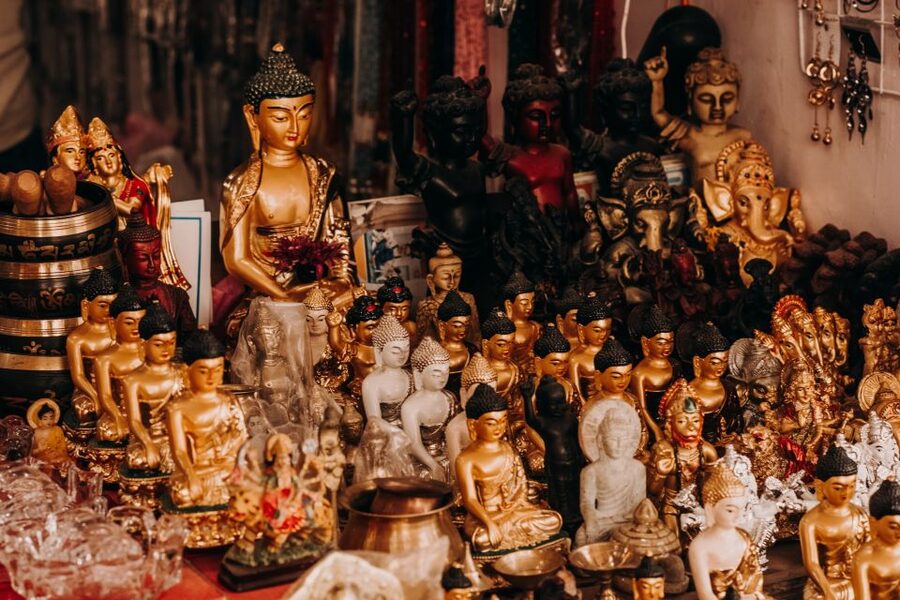
The itinerary includes a traditional Nepali lunch at a local restaurant, but the meal is not included in the tour price. Food and drinks are listed among the extra costs.
That arrangement gives you some choice, but it means the advertised price is not your complete spending figure. You should budget separately for lunch, bottled or boiled water beyond the included bottle, and entrance fees.
A local meal can be one of the more personal parts of the day. The program presents it as a chance to enjoy Nepali cuisine and take part in cultural exchange. Still, the exact restaurant and menu are not specified, so do not book this expecting a fixed tasting menu or a restaurant of a particular standard.
The tour includes one bottle of water. If you know you need more during a seven-hour outing, plan for that cost. Personal expenses such as phone calls, laundry, bar bills, battery charging, showers, and extra porters are also excluded, though some of these may not apply to most visitors on this particular day.
Comparing Buddhist traditions at the monasteries
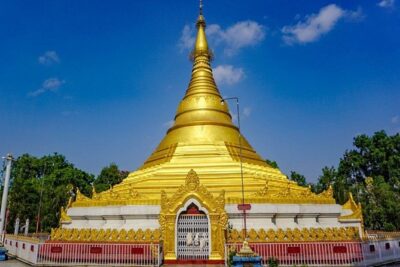
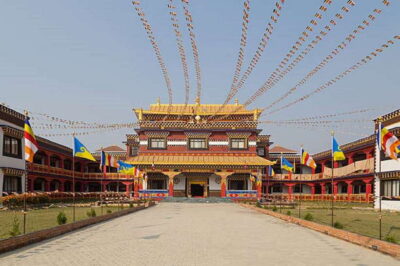
The afternoon moves to Lumbini’s monasteries. This is where the tour becomes especially useful for visitors who want to understand Buddhism as a collection of living traditions rather than a single uniform practice.
The monasteries reflect Buddhist communities from different parts of the world. Their architecture varies, and the buildings give you a visual way to compare religious customs and artistic choices. You may find that one monastery feels formal and grand while another feels more restrained, but the supplied program does not identify specific countries or buildings, so the guide’s explanation will shape how much detail you receive.
This is also the part of the day where a private guide can add real value. Ask about the traditions represented, the purpose of the buildings, and how the monasteries fit into Lumbini’s wider religious role. A guide who simply points at the structures will leave much of the experience unexplained.
The program says you will visit the temples and the entire Lumbini area. That is a broad promise, and the zone is extensive enough that time management matters. Seven hours is a useful amount of time, but it is not unlimited. If you want a slow visit inside every monastery, ask the guide which sites are priorities.
The Lumbini Museum, with one important warning
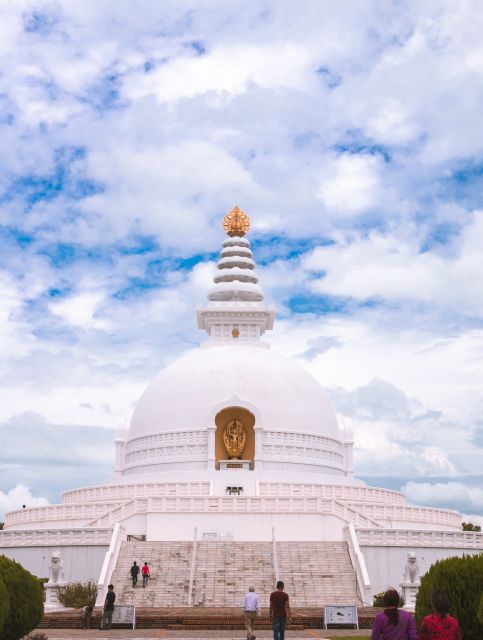
The Lumbini Museum is intended to add historical context through Buddhist artifacts and material connected with the religion’s development. In theory, it helps connect the sacred places you have seen with the wider story of Buddhism.
There is an important catch. A May 2024 booking reported that the museum was closed for remodeling, even though it remained part of the described program. That means you should confirm its current operating status before booking or at least before setting your expectations.
If the museum is open, it can give the afternoon a helpful change of focus. You move from temples and gardens to objects, displays, and historical interpretation. If it is closed, the monasteries and gardens still form the core of the day, but part of the promised educational program will be missing.
This is also the clearest example of why communication matters with this experience. Ask directly if the museum is open on your date. If it is not, ask how the guide will use that time instead.
Meeting local people outside the development zone
Later in the day, you can take a leisurely walk outside the Lumbini Development Zone. The program presents this as a chance to interact with local people, try Nepali food, and experience a less formal side of the area.
This portion may appeal to you if you want some contact with daily life after visiting temples and monuments. It is not described as a structured village visit or a formal market tour, so keep the expectation simple: a walk, local interaction, and an opportunity to eat or sample Nepali cuisine at your own expense.
I like this shift because Lumbini should not be treated as a sealed religious park with no connection to the people living nearby. At the same time, the activity is flexible rather than tightly defined. Your experience will depend on the guide’s choices, the timing, and what is open that day.
You should also keep personal spending in mind here. Food and drinks are not included, and the program does not specify which local dishes or establishments you will visit.
What the $49 price really offers
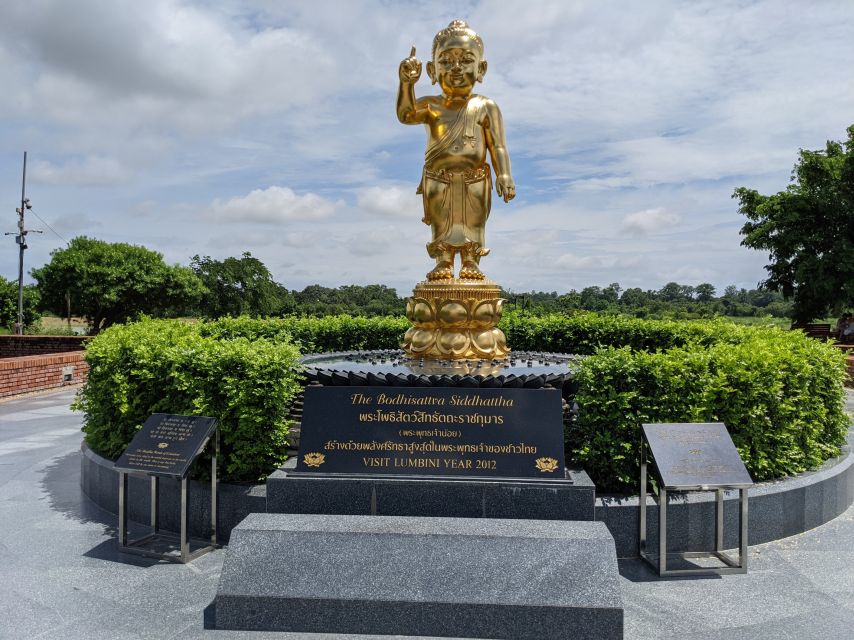
At $49 per person, the experience can be a fair buy if you value private transport, a guide, and a full day built around Lumbini’s main religious sites. Hotel pickup and drop-off are included from any hotel in Lumbini, as are the English or Hindi-speaking guide and one bottle of water.
The price becomes less attractive once you add entrance fees, lunch, and drinks. One booking in May 2024 paid $78 and judged that amount high compared with what a local guide might charge. That does not automatically make the tour poor value, but it shows why you should check the actual checkout price rather than relying on a headline figure.
The strongest value comes from the guide. Lumbini’s significance is not always obvious from its buildings alone. If your guide explains the Maya Devi Temple, marker stone, monasteries, and Buddhist traditions clearly, the day gains meaning. If the commentary is thin or the museum is closed without warning, the price feels harder to justify.
I would compare the final cost with the price of arranging a local guide and transport yourself. The private format may still be worth paying for if you want convenience and a fixed plan. It is less compelling if you are comfortable arranging local transport and exploring slowly on your own.
Who should book this experience
I would recommend this tour to you if:
- You are visiting Lumbini for the first time.
- You want a private day rather than a shared group.
- You value explanations at religious and historical sites.
- You want time for meditation and quiet walking.
- You prefer hotel pickup and drop-off.
- You want to see temples, monasteries, gardens, and the museum in one organized day.
It may be less suitable if your main goal is a low-cost visit. It may also disappoint you if you expect a formal meditation retreat, a fixed food tour, or guaranteed museum entry.
The tour is also a good fit for visitors who want to combine cultural learning with personal reflection. It does not force the day into a race. The best use of it is to let the guide handle the practical movement while you pay attention to the places themselves.
Booking tips that can save you trouble
Confirm the final price before paying. The advertised cost is $49 per person, but a past booking paid $78, so check for date-based or booking-related changes.
Ask if the Lumbini Museum is open on your date. Its closure for remodeling in May 2024 created a gap between the advertised plan and the actual experience.
Confirm exactly what entrance fees apply. These are excluded, and the amount is not provided here.
Bring your passport or another ID card, as requested. Wear comfortable clothing for a day that includes temple visits, gardens, monastery stops, and walking outside the development zone.
Wait in your hotel lobby 10 minutes before pickup. If your hotel has several entrances or reception areas, make sure the guide knows where to find you.
Free cancellation is available up to 24 hours before the scheduled start for a full refund. You can also reserve now and pay later, which helps if your Nepal plans are still shifting.
Should you book Lumbini Buddhist Spiritual Exploration?
Book it if you want private guidance, hotel convenience, and a reflective full-day visit to Lumbini’s key sites. The Maya Devi Temple, sacred marker stone, monasteries, gardens, and local encounters give the day a solid shape, and the English or Hindi guide can make the religious details easier to understand.
Before committing, verify three things: the actual price, the museum’s status, and the entrance fees. If the final charge is close to $49 and the museum is open, the tour offers a sensible introduction to Lumbini. If the cost rises much higher, or the museum remains closed, you should weigh the convenience of a private tour against arranging local services yourself.
FAQ
How long does the Lumbini Buddhist Spiritual Exploration last?
The experience lasts seven hours, beginning with morning hotel pickup and ending with return to your hotel.
Is hotel pickup included?
Yes. Pickup and drop-off are included from any hotel in Lumbini. You should wait in the hotel lobby 10 minutes before the scheduled pickup time.
Is the tour private or shared?
It is a private group experience.
Which languages does the guide speak?
The live guide is available in English or Hindi.
Is the experience wheelchair accessible?
Yes, the activity is listed as wheelchair accessible.
Is lunch included?
No. A traditional Nepali lunch is planned at a local restaurant, but food and drinks are not included in the price.
Are entrance fees included?
No. Entrance fees are listed as an additional cost.
What should I bring?
Bring your passport or an ID card.
Is the Lumbini Museum always open during the tour?
The museum was reported closed for remodeling in May 2024, so you should confirm its current status before booking or visiting.
Can I cancel for a full refund?
Yes. You can cancel up to 24 hours in advance for a full refund. You can also reserve now and pay later.
New in the Nepal listings
- Traditional Momo Making Class★ 5.0 · 10 reviews
- Kathmandu: Ancient City Kirtipur & Pharping Monastery Tour★ 5.0 · 2 reviews
- Pokhara: Pokhara Highlights Tour by Bus★ 3.6 · 10 reviews
- Day Walk(8-10h.) inside Chitwan National Park.★ 5.0 · 1 review
- One Day Tour inside Chitwan National Park★ 5.0 · 2 reviews
- Private Jeep Safari (8-10 hrs.)inside Chitwan National Park.★ 5.0 · 3 reviews
- Jungle Towernight Stay: 4-Day Tour in Chitwan National Park★ 5.0 · 4 reviews
- Night Stay in Chitwan National Park, 2 Nights 3 Days Package★ 5.0 · 1 review
Lumbini Tours, compared.
Lumbini Tour Package From Kathmandu or Pokhara: 2 Night 3 Days
Read our review →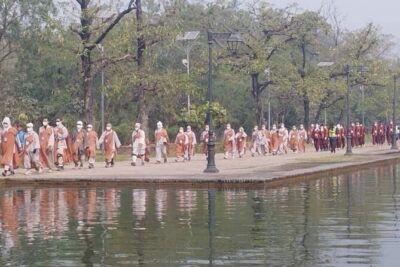

5-Day Chitwan Wildlife & Lumbini Pilgrimage Tour
Read our review →
Kathmandu to Lumbini Tourist Bus (VIP Sofa Seater) or Back
Read our review →Browse the lists this tour appears in