
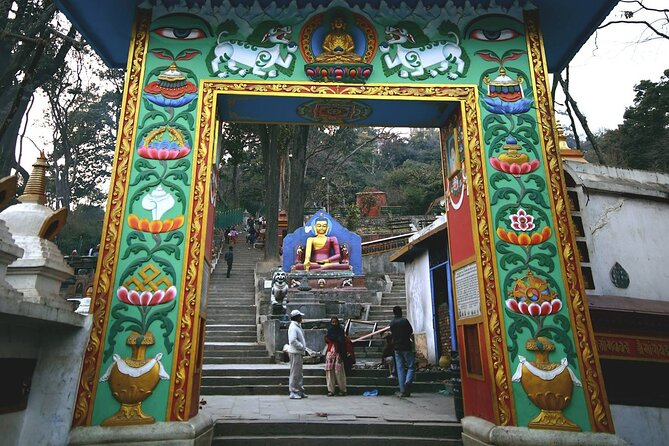
REVIEW · SWAYAMBHUNATH MONKEY TEMPLE TOURS
Monkey Temple – Swayambhunath Tour – Private/Small Group
Kathmandu reveals itself one footstep at a time. This three-hour walking tour links Thamel with Swayambhunath, the famous Monkey Temple, while a local guide explains the myths behind the stupa, the Kathmandu Valley, and the Hindu and Buddhist shrines along the way. I especially like the small maximum of five people and the route through ordinary neighborhoods rather than a quick ride straight to the hilltop. I also like that the guide, including the highly praised Santosh, takes time with questions and explains religious customs when ceremonies are taking place.
The main consideration is physical effort. You walk from Thamel to Bhagwan Pau, climb the 365 steps toward Swayambhunath, and then continue around the hill and back. The $15 price is fair for a three-hour guided walk, but you should carry water, wear sensible shoes, and add the separate 200-rupee entrance fee in cash.
In This Review
- Key points at a glance
- From Pumpernickel Bakery to the edge of Thamel
- Indrayani and Bijeshwori: two early religious stops
- Bhagwan Pau and the 365-step climb
- Swayambhunath, the main reason to book
- Harati Ajima and the story of Mother Harati
- World Peace Pond and Manjushree Temple
- Amideva Buddha Park and three giant figures
- Shova Bhagawati and the walk back to Thamel
- What the $15 price really gives you
- Who will enjoy this walk most
- Practical details before you go
- Should you book the Swayambhunath tour?
- FAQ
- How long does the Swayambhunath tour last?
- Where does the tour begin?
- Where does the tour end?
- How many people can join the tour?
- Is the Swayambhunath entrance fee included?
- What is included in the tour price?
- Are food and drinks included?
- Is the tour suitable for someone with knee problems?
- Can I cancel the tour for a full refund?
Key points at a glance
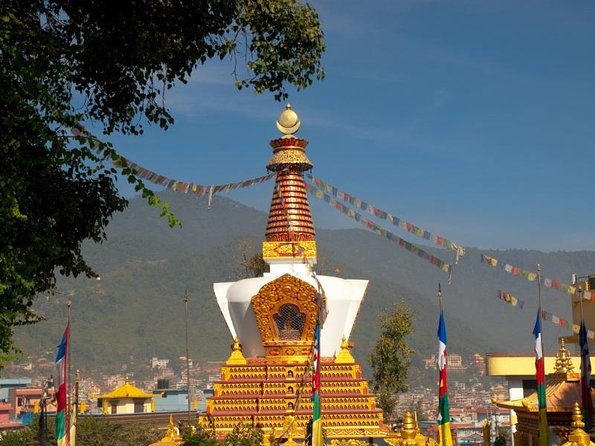
- A maximum of five people: The small group size makes it easier to hear the guide and ask questions.
- A neighborhood walk from Thamel: You see Indrayani Temple, Bijeshwori Temple, and local streets before reaching the main shrine.
- The 365-step approach: Bhagwan Pau marks the start of the traditional climb to Swayambhunath.
- Stories of a former lake: The tour explains the legend of Manjushree and how the Kathmandu Valley became a settled city.
- Hindu and Buddhist sites together: Harati Ajima, Manjushree Temple, and Amideva Buddha Park show the area’s shared religious life.
- Good for a short visit: In three hours, you get a hilltop view, major shrines, local history, and a guided walk without giving up half a day.
From Pumpernickel Bakery to the edge of Thamel
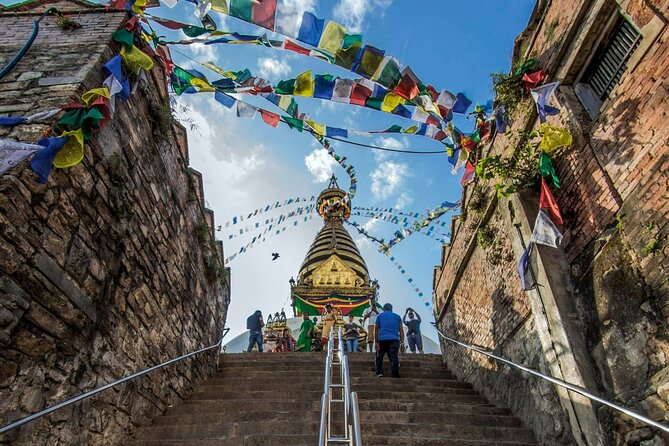
The tour begins at Pumpernickel Bakery on Paryatan Marg, a practical meeting point in the heart of Thamel. From here, the walk toward Swayambhu takes about 30 minutes before reaching Bhagwan Pau. That first stretch matters because it gives you time to adjust to Kathmandu’s streets and see how the busy visitor district gives way to local neighborhoods.
I like this start more than a simple taxi transfer. A vehicle can deliver you to Swayambhunath, but it cannot explain the city as you move through it. The guide uses the route to introduce Kathmandu’s past and present, so the walk works as an orientation to the city as much as a visit to one temple.
You should not expect a flat, polished promenade. This is a walking tour through Kathmandu, and the route requires a moderate level of fitness. If your knees are weak or you have severe asthma, the operator advises against joining. Comfortable footwear and water are sensible choices, especially because the walk continues after the first climb.
More visits to Swayambhunath:
- Kathmandu: Chandragiri Cable Car and Monkey Temple Tour
★ 4.8 · 139 reviews - Chandragiri Cable Car & Monkey Temple Tour- Private/Group
★ 5.0 · 32 reviews - Private Chandragiri Cable Car and The Monkey Temple Tour
★ 5.0 · 30 reviews
Indrayani and Bijeshwori: two early religious stops
Before reaching the main hill, the route passes Indrayani Temple, also called Luti Ajima. The temple is connected to the eight Matrikas established when Licchavi King Gunakamdev created Kathmandu city in the 13th century. That detail gives you a useful sense of how old the city’s sacred layout is. Kathmandu is not simply a collection of separate temples. Its religious sites are tied to the city’s founding stories and protective deities.
The next stop is Bijeshwori Temple. It matters because both Hindu and Buddhist worshippers consider it sacred, and Tibetan Buddhists regard it as an important pilgrimage place. This is one of the tour’s strongest features: you are not shown religion as two sealed categories. The guide helps you see how Hindu and Buddhist practice share space in Kathmandu.
These stops are brief, so do not expect long periods of quiet sightseeing at each temple. Their value comes from the explanation and the connection between them. Without a guide, you might walk past the buildings and notice only the pagoda roofs, carvings, or prayer activity. With context, the early part of the route becomes a lesson in how Kathmandu organizes its spiritual life.
Bhagwan Pau and the 365-step climb
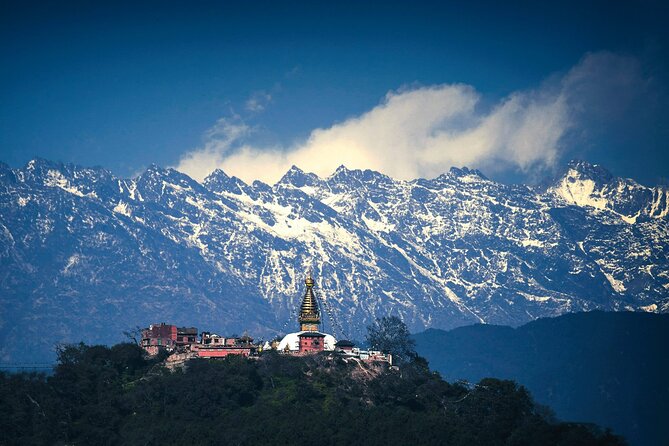
Bhagwan Pau sits at the foot of Swayambhunath Hill. Its name refers to the feet of Lord Buddha, and it marks the beginning of the main entrance route, a climb of 365 steps. The tour pauses here for about 20 minutes, giving you time to rest, drink water, and prepare for the stairs.
This pause is useful, especially if you are not used to Kathmandu’s elevation or to walking uphill. The tour does not pretend that the climb is effortless. The steps are part of the experience, but they are also the point where the outing becomes physically demanding.
I would treat the climb as a steady walk rather than a race. You are going to get more from the temple if you arrive ready to look around, listen, and enjoy the view. The guide can explain the religious meaning of the approach, while you take the stairs at a manageable pace.
Swayambhunath, the main reason to book
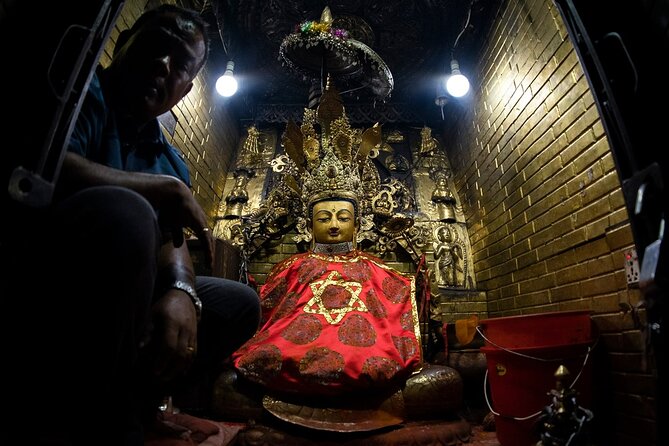
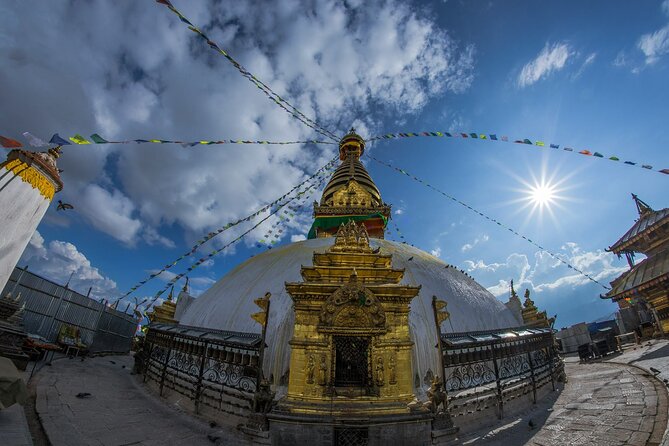
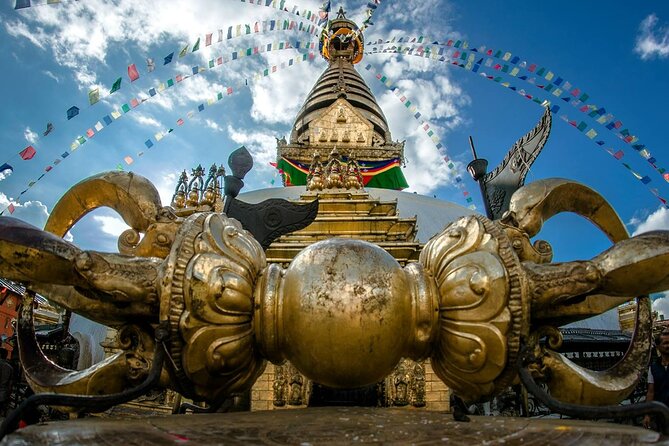
Swayambhunath is one of Nepal’s holiest Buddhist stupas, set on a hill in central Kathmandu. The temple is also known as the Monkey Temple, and it is the main focus of the tour. You spend about 40 minutes exploring the stupa and its surrounding neighborhood while hearing stories about the origin of Swayambhunath and the Kathmandu Valley.
The name Swayambhu means self-originated, which connects directly to the local creation story. The guide explains the myths and legends that describe how the valley began and why this hill has such importance. This storytelling is a major part of the value. You are not just looking at an old religious monument. You are learning how people have explained the beginning of their city and its sacred places.
The guide also helps when ceremonies are taking place. That is important because religious activity can be difficult to interpret from the outside. You will have a better idea of what you are seeing and how to behave respectfully.
The hilltop setting gives you broad views over Kathmandu. The tour is especially appealing if you have only a short time in the city and want one visit that combines architecture, belief, history, and a high viewpoint. The 40-minute allocation is enough for an introduction, but it is not a slow, private study of every building and detail. If you want extended photography time or lengthy meditation at the stupa, you may feel the schedule is brisk.
The Swayambhunath entrance fee is not included. You pay 200 Nepali rupees, about $1.50, directly to the temple authorities in cash. That is a small extra cost, but it is worth knowing before you leave Thamel.
A short list of alternatives around Kathmandu
- Everest Base Camp Trek – 14 Days
★ 5.0 · 1,499 reviews - Private Kathmandu Sightseeing Tour | UNESCO World Heritage sites
★ 5.0 · 756 reviews - Everest Base Camp Helicopter Tour landing at Everest View Hotel
★ 5.0 · 668 reviews - Half day cooking class in Thamel kathmandu
★ 5.0 · 607 reviews
Harati Ajima and the story of Mother Harati
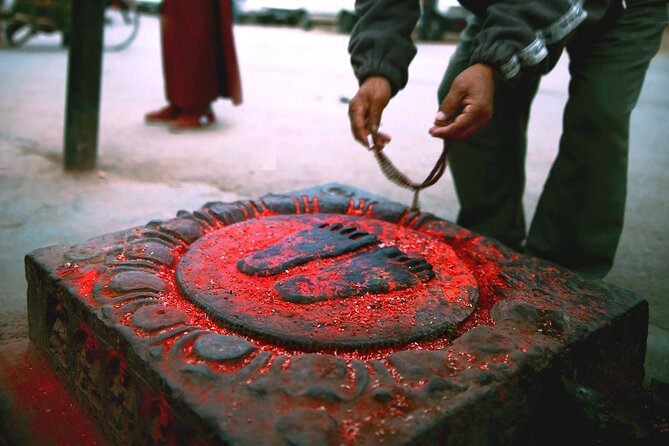
After the main stupa, the route continues to Harati Ajima Temple. This is a short five-minute stop, but the story behind it gives the tour another memorable layer. The guide explains how a demon named Harati became Mother Harati and why people throughout the valley worship her.
The temple uses traditional Nepalese pagoda-style architecture. The stop is short, so the attraction is less about a long architectural inspection and more about the transformation in the story. Legends here often show how a frightening or harmful figure can become a protective one. That change helps explain why certain deities remain important in daily worship.
This is also a good example of why a guided visit helps. A brief stop can feel minor if you do not know its story. With an explanation, you have a reason to pause and notice the temple.
World Peace Pond and Manjushree Temple
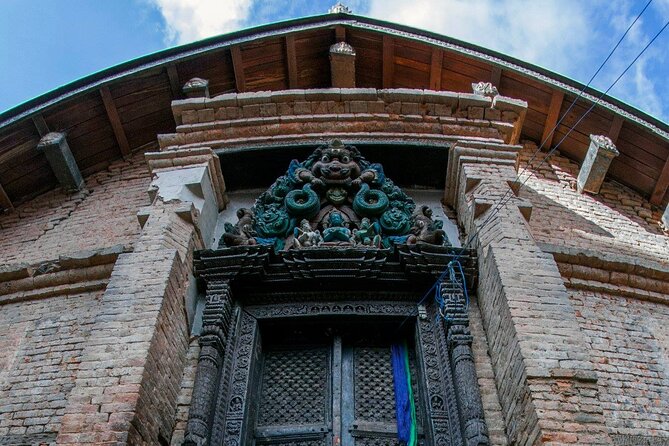
On the western side of Swayambhunath is World Peace Pond, with a brass Buddha standing on a lotus in the middle. Words on the surrounding wall are written in English. The pond gives you a quieter visual pause after the central stupa and its busy religious activity.
The tour then reaches Manjushree Temple, a small shrine dedicated to Maha Manjushree. Here the guide returns to the story of the Kathmandu Valley as a great lake that was turned into a city. You also get a panoramic view toward the western side of the valley.
I like the way these two stops widen the visit. Swayambhunath is not treated as one isolated monument. The surrounding hill contains smaller religious places, statues, ponds, and viewpoints, each adding another piece to the area’s meaning. Manjushree’s story also gives you a memorable way to understand the valley’s origin legend.
The stop at Manjushree Temple lasts about 15 minutes. That should be enough for the story and a look around, but again, the tour is designed as a moving walk. Keep your camera ready, but listen closely because the explanations are the part you cannot easily recover later.
Amideva Buddha Park and three giant figures
Amideva Buddha Park offers one of the route’s most visual stops. It contains three huge statues: a 67-foot Amitabha Buddha in the center, with Chenrezig and Padmasambhava, each 64 feet tall, on either side.
You spend about 20 minutes walking around the park and hearing the story of Siddhartha Buddha. The scale of the statues gives the stop a different feeling from the older temple buildings on the hill. It is a modern park setting with large figures that are easy to appreciate even if you are new to Buddhist art.
This stop also gives the guide a chance to connect the monument to wider Buddhist ideas. The tour’s pattern becomes clear by this point: you see a place, hear its story, and then move on before the experience becomes repetitive.
Shova Bhagawati and the walk back to Thamel
The route includes Shova Bhagawati, a holy shrine dedicated to the goddess Bhagwati on the bank of the Bishnumati River. It is one of four major Bhagwati temples in Kathmandu. This stop adds another Hindu shrine to a walk that has already introduced you to Buddhist and shared Hindu-Buddhist sites.
The tour ends by walking back from Bhagwan Pau toward the Kathmandu Eco Hotel and the original meeting point in Thamel. The return takes about 30 minutes. If you want to spend extra time around Swayambhu, you can explore independently and walk back to the meeting point on your own.
That flexibility is helpful. You are not forced to remain with the guide after the main portion, although the stated activity ends back at the meeting point. Confirm the arrangement with your guide if you plan to separate, and keep track of the route back.
What the $15 price really gives you
At $15 per person, this is an inexpensive way to add structure and meaning to a visit to Swayambhunath. The entrance charge adds about $1.50, and coffee or tea is not included, but the total remains modest for a three-hour guided walk.
The strongest value comes from the route and the interpretation. You could pay the temple entrance fee and visit the stupa independently, but you would miss the connections between Indrayani, Bijeshwori, Harati Ajima, Manjushree, Amideva Buddha Park, and Shova Bhagawati. You would also have to piece together the stories of the Kathmandu Valley yourself.
The maximum group size of five is another reason the price works well. A small group makes it easier to hear on city streets, ask about religious practice, and keep a comfortable walking pace. Group discounts are available, though the exact discount is not specified.
The youth price is intended for students with a student card. Bring that card if you are booking at the youth rate.
Who will enjoy this walk most
I would recommend this experience to a first-time visitor who wants a clear introduction to Swayambhunath without committing to a full-day city tour. It also suits solo visitors, including solo women, because the walk is guided and the group is kept small. One guide, Santosh, is praised for his historical explanations and for making solo participants feel safe and included.
It is a good fit if you enjoy walking, stories about Hinduism and Buddhism, and views over Kathmandu. It is also useful if you have limited time. The route covers a surprising amount in three hours.
I would be more cautious if you have knee problems, severe asthma, or difficulty with stairs. The 365-step climb is not a minor detail. This is not a vehicle-based sightseeing trip with short walks between stops.
You should also choose another experience if your main goal is to spend a long time photographing every corner of Swayambhunath. The tour covers several locations, so the time at the main stupa is limited to roughly 40 minutes.
Practical details before you go
The tour includes an English-speaking guide. Confirmation arrives when you book, and service animals are allowed. The starting point is Pumpernickel Bakery on Paryatan Marg, and the activity returns to the meeting point.
Public transportation is nearby, which makes the start easy to reach from elsewhere in Kathmandu. The route itself is on foot, and the walking time includes about 30 minutes from Thamel to Bhagwan Pau and another 30 minutes on the way back.
Bring cash for the 200-rupee Swayambhunath entrance fee. Water is sensible because the tour includes the hill climb, and tea or coffee would be your own expense.
Free cancellation is available if you cancel at least 24 hours before the local start time. Changes or cancellations inside that window are not accepted for a refund.
Should you book the Swayambhunath tour?
Book it if you want a compact, story-led introduction to Kathmandu rather than a quick temple visit. The small group, strong guiding, neighborhood route, and mix of Hindu and Buddhist sites give the tour real value for $15.
Skip it if stairs are a serious problem or if you want a slow, unstructured afternoon at Swayambhunath. For most reasonably fit visitors with three hours to spare, it is a smart way to see the Monkey Temple and understand why the hill matters.
FAQ
How long does the Swayambhunath tour last?
The tour lasts approximately three hours.
Where does the tour begin?
It begins at Pumpernickel Bakery on Paryatan Marg in Thamel, Kathmandu.
Where does the tour end?
The activity ends back at the meeting point in Thamel.
How many people can join the tour?
The tour has a maximum of five participants.
Is the Swayambhunath entrance fee included?
No. The entrance fee is 200 Nepali rupees, about $1.50, paid in cash directly to the temple authorities.
What is included in the tour price?
An English-speaking guide is included.
Are food and drinks included?
No. Coffee and tea are not included.
Is the tour suitable for someone with knee problems?
The operator does not advise the tour for people with severe asthma or knee problems. The route includes a climb of 365 steps.
Can I cancel the tour for a full refund?
Yes. You can receive a full refund if you cancel at least 24 hours before the experience start time.
New in the Kathmandu listings
- Traditional Momo Making Class★ 5.0 · 10 reviews
- Kathmandu: Ancient City Kirtipur & Pharping Monastery Tour★ 5.0 · 2 reviews
- Kathmandu to Pokhara Premium sofa bus ticket★ 4.0 · 17 reviews
- Women Empowerment Project(Nepali cooking class & jewelry workshop★ 5.0 · 15 reviews
- Yoga Experience Day Trip with Private Transfer From Kathmandu★ 4.0 · 2 reviews
- 7-Day Langtang Valley Trek from Kathmandu★ 5.0 · 1 review
- Kathmandu 2 Nights 3 Days Chitwan Jungle Safari Tour★ 5.0 · 9 reviews
- Wildlife Adventure in Chitwan Nepal★ 4.0 · 4 reviews
Swayambhunath Monkey Temple Tours, compared.
Chandragiri Cable Car & Monkey Temple Tour- Private/Group
Read our review →
Private Chandragiri Cable Car and The Monkey Temple Tour
Read our review →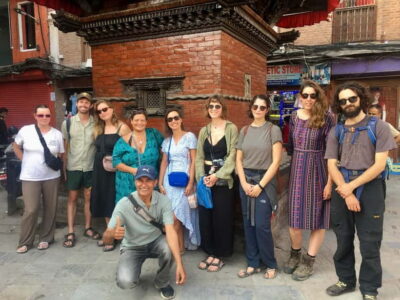
Kathmandu Chandrigiri Hill Cable Car & Monkey Temple UNESCO Tour
Read our review →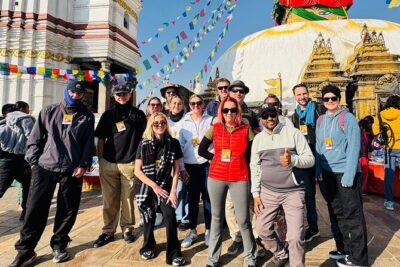
Chandragiri Cable Car Ride & Monkey Temple Tour – Private/Group
Read our review →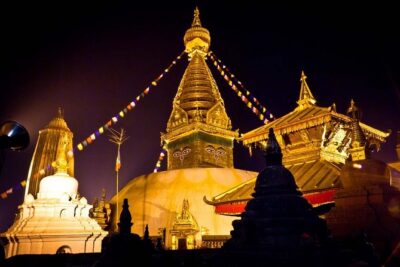
Private Half-Day Tour of Kathmandu Durbar Square and Swayambhunath Temple
Read our review →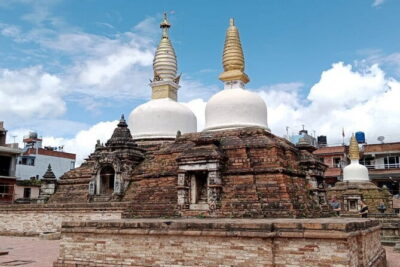
Kirtipur & Swayambhu Trip from Kathmandu: Local Eats and Drinks
Read our review →Browse the lists this tour appears in