
REVIEW · UNESCO WORLD HERITAGE TOURS
Kathmandu: Full Day 7 UNESCO Tour with Lunch – Private/Group
Seven sites, one very long day. This Kathmandu tour packs Swayambhunath, three Durbar Squares, Changu Narayan, Pashupatinath, and Boudhanath into roughly eight to nine hours. I like the hotel pickup and drop-off, and I like having a guide explain the religious customs and royal stories that are easy to miss on your own. The tradeoff is simple: the schedule is busy, and some stops can feel short.
I also like the flexibility of choosing a private, group, or ticket-inclusive option. Guides such as Sumit, Anon, Sajina, Suresh, and Asmita have been praised for clear explanations and friendly service. Bring comfortable walking shoes, cash for entrance fees, and enough energy for a full day in Kathmandu traffic.
In This Review
- Key points to know before you book
- What this Kathmandu day tour is really trying to do
- Starting at Swayambhunath, the Monkey Temple
- Kathmandu Durbar Square and the old royal center
- Patan Durbar Square and Newari artistry
- Bhaktapur Durbar Square, the medieval showpiece
- Changu Narayan, a quieter hilltop temple
- Pashupatinath and the Bagmati River
- Boudhanath, the Buddhist closing stop
- The guide can make or break the long schedule
- Transport, traffic, and the real length of the day
- Lunch is useful, but keep your expectations modest
- Who will get the most from this tour?
- Cost, cash, and cancellation details
- Should you book the seven-site day?
- FAQ
- How long does the Kathmandu UNESCO tour last?
- Which sites are included?
- Is hotel pickup included?
- Is transportation air-conditioned?
- Is lunch included?
- Are entrance fees included?
- How much cash should I bring for entrance fees?
- Can I choose a private tour?
- Can I skip a site I have already visited?
- What is the cancellation policy?
Key points to know before you book
- Seven UNESCO sites in one day: You visit Kathmandu Valley’s major heritage areas in a single organized circuit.
- A practical choice for a short stay: Hotel pickup, private vehicle transport, and a guide save you from arranging several separate visits.
- Entrance fees need attention: Standard private and group options do not include admission, with the listed cost at $44 per person, or about 6,000 Nepalese rupees according to tour information.
- Lunch is functional, not fancy: The box includes water, juice, fruit, a muffin, donut, banana, and similar snack items.
- The pace depends on traffic: The day can last nine to eleven hours from door to door, especially when Kathmandu’s roads are slow.
- Guides receive strong praise: Sumit is especially noted for calm storytelling, clear facts, patience, and helpful adjustments during the day.
What this Kathmandu day tour is really trying to do
Kathmandu Valley’s major heritage sites are spread across several urban areas. Seeing all seven independently in one day would mean working out taxis, routes, opening arrangements, and local context at every stop. This tour removes much of that friction.
The route gives you a fast but useful introduction to Nepal’s religious life, royal past, architecture, and living traditions. You move between Buddhist stupas, Hindu temples, old royal squares, and one of the country’s oldest temple sites.
I would think of the tour as a first pass rather than a slow study visit. You will see the important places, hear the main stories, and learn which sites deserve a longer return visit. If you have only one free day in Kathmandu, that is a fair bargain.
The advertised price is $10 per person, but you need to read the options carefully. Entrance fees are not included with the standard private and group choices, and the stated admission cost is $44 per person. The all-inclusive option includes food, soft drinks, entrance fees, and a khana set or other dishes, but its final price is not provided here.
That makes the cheap headline price less useful than the total cost. Add the entrance charge before comparing this tour with a private taxi, a guide arranged through your hotel, or a two-day sightseeing plan.
More UNESCO World Heritage Tours in Kathmandu:
- Private Kathmandu Sightseeing Tour | UNESCO World Heritage sites
★ 5.0 · 756 reviews - Kathmandu: Full Day Top 4 UNESCO Tour with Lunch – Private/Group
★ 5.0 · 269 reviews - UNESCO Seven World Heritage Tour in Kathmandu
★ 5.0 · 253 reviews
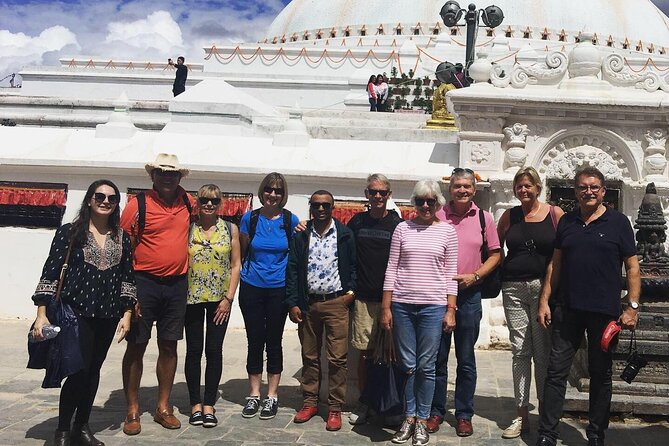
Starting at Swayambhunath, the Monkey Temple
Swayambhunath is usually a strong opening stop because the stupa sits on a hill above Kathmandu Valley. The site is also called the Monkey Temple, and the tour allows about 40 minutes here.
You can expect a mix of religious structures, hilltop views, and monkeys around the complex. The guide can help explain why the stupa matters and how Buddhist practice fits into daily life in Nepal.
Forty minutes is enough to get a first look, walk around the main area, and take photographs. It is not enough for a slow exploration of every shrine or a long pause over the valley view. If you have already visited Swayambhunath, a private group may be able to adjust the route. One couple specifically arranged to skip it and use the time elsewhere.
Admission is not included in the standard option. Keep this in mind from the first stop, since the tour may collect or request payment at several sites. The practical advice is to carry Nepalese rupees rather than relying on a card.
Kathmandu Durbar Square and the old royal center
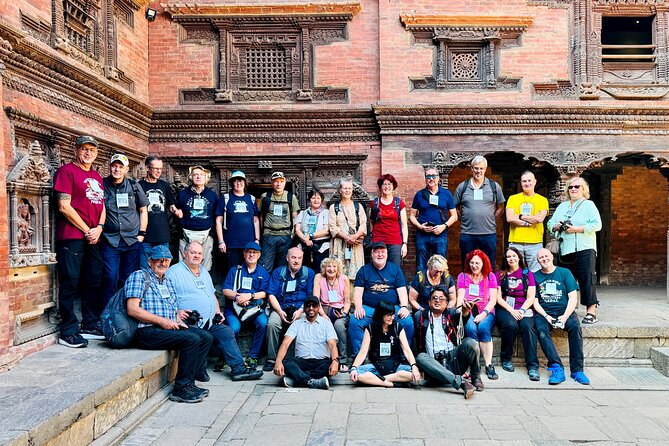
Kathmandu Durbar Square receives about an hour. Located in the old city, this was the royal complex of the Malla and Shah kings of Kathmandu.
This stop gives you a strong sense of how power, religion, and city life once met in the same space. The old palace buildings, courtyards, shrines, and carved details make the square more than a quick photo stop. Your guide can connect the buildings to Nepal’s royal and religious traditions.
The main limit is time. You might want to linger inside museums, study woodcarving, or simply watch local life unfold. An hour gives you an orientation, not a full museum visit.
This is one of the places where a guide adds real value. Without context, the square can look like a collection of beautiful old buildings. With clear narration, you begin to understand how the palace complex functioned and why each shrine or courtyard matters.
Patan Durbar Square and Newari artistry
The tour then takes you to Patan Durbar Square in Lalitpur for about an hour. Patan is known for Newari architecture, traditional craft, religious buildings, and the former palace of the Malla kings.
I would pay close attention here to the architectural details. Patan is especially rewarding if you enjoy carved windows, temple roofs, metalwork, and the careful balance of palace courtyards. The site also helps you see that Kathmandu Valley’s heritage is not all the same. Each former kingdom has its own character.
Again, one hour goes quickly. You can see the central areas and hear the main explanation, but you may not have time to examine every museum room or side shrine. If architecture interests you, mark Patan as a place to revisit on a quieter day.
The guide’s role matters because the square combines Hindu and Buddhist elements. A good explanation helps you notice that shared religious life instead of treating the site as only a royal ruin.
A short list of alternatives around Kathmandu
- Kathmandu: Full-Day 7 UNESCO Tour with Lunch – Private/Group
★ 4.9 · 247 reviews - Kathmandu: Nagarkot Sunrise View & Morning Hike with Lunch
★ 4.9 · 188 reviews - Kathmandu: Top 4 UNESCO Tour with Lunch – Private/Group
★ 4.9 · 181 reviews - Kathmandu: Nagarkot Sunrise & Hike with Lunch -Private/Group
★ 4.9 · 122 reviews
Bhaktapur Durbar Square, the medieval showpiece
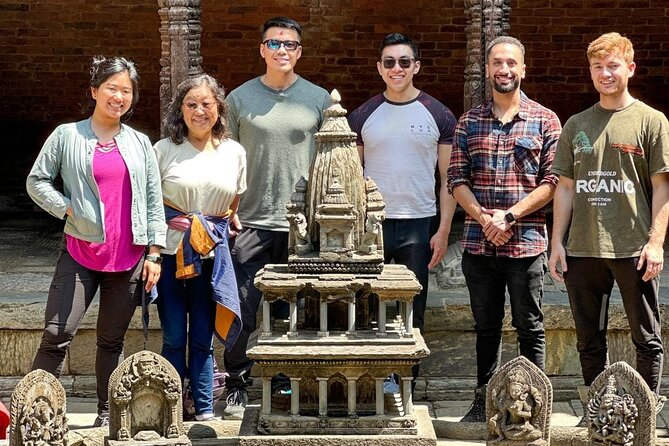
Bhaktapur Durbar Square also receives about an hour. The medieval city is known for its palace area, temples, craftsmanship, and old urban design.
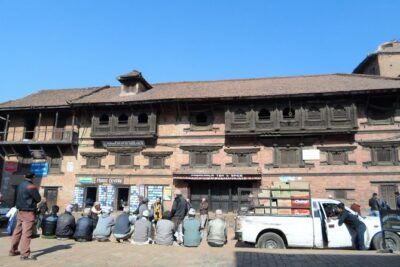
This stop often feels different from Kathmandu and Patan because the city has a more contained historic center. The buildings and public spaces give you a clearer impression of a former royal city. You can walk through the main square, listen to the guide’s stories, and take in the scale of the old complex.
The drawback is the same one that affects the full route: you may leave just as you begin to feel oriented. Many parts of Bhaktapur deserve more than a quick circuit, especially if you want to look closely at architecture or visit museums.
The tour works best if you accept that you are collecting a broad picture. You are not trying to master Bhaktapur in one hour. You are learning enough to decide if it deserves a dedicated return visit.
Changu Narayan, a quieter hilltop temple
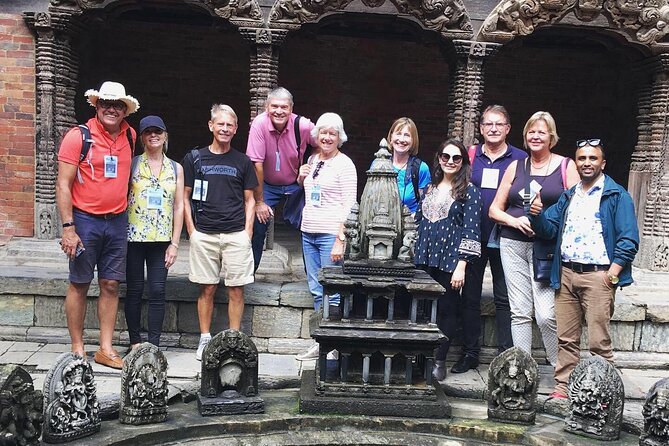
Changu Narayan is allotted about 30 minutes. The temple sits on a hill northeast of Bhaktapur and is regarded as Nepal’s oldest Hindu temple, with origins dating to the fourth century. It is dedicated to Lord Vishnu and is part of the UNESCO site network.
This is a useful change of pace after the larger palace squares. The setting is quieter, and the temple gives you another view of Nepal’s Hindu traditions and early religious architecture.
Thirty minutes is a short visit, but it can be enough to see the main temple area and hear its background. The site may appeal most to people who want a sense of age and continuity, rather than another large square filled with buildings.
Because Changu Narayan is reached after several urban stops, traffic and road conditions can affect how much time remains. Your guide and driver have to keep the day moving if the final two stops are to fit.
Pashupatinath and the Bagmati River
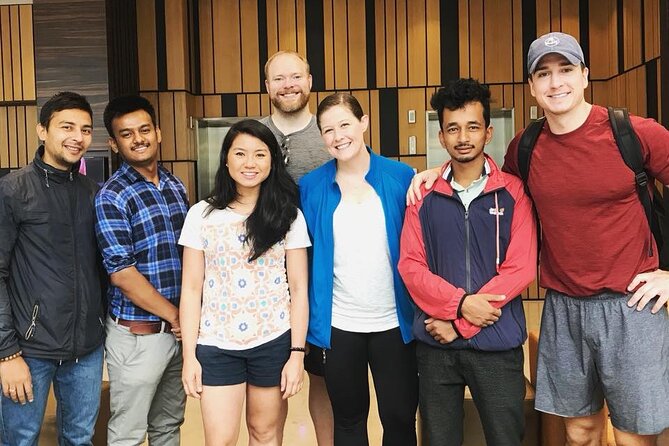
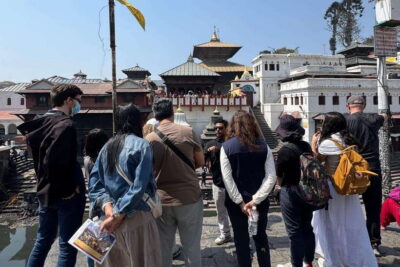
Pashupatinath receives about an hour. This is Nepal’s most important Hindu temple complex and a major pilgrimage site dedicated to Lord Shiva. It sits beside the sacred Bagmati River.
The visit offers one of the clearest windows into Nepal’s spiritual life. You can expect a large religious complex, riverbank activity, shrines, and traditions that are still part of everyday worship. Your guide can explain customs and respectful behavior, which is important at a living religious site.
You should also understand that this is not simply an old monument. Pashupatinath remains an active place of worship. Dress and behavior should be respectful, and you should follow your guide’s instructions about where you may go and what you may photograph.
An hour provides an introduction, but not a full look at the entire complex. The riverbank is also a place where the atmosphere may feel more serious than at a palace square. That contrast is part of the tour’s value. You are seeing Nepal as a living culture, not only as a collection of historic buildings.
Boudhanath, the Buddhist closing stop
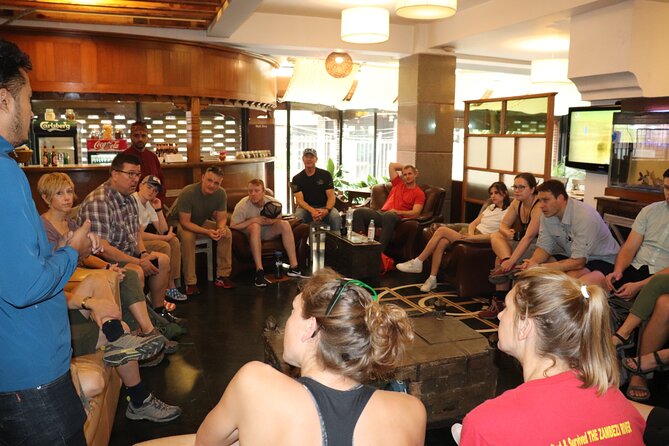
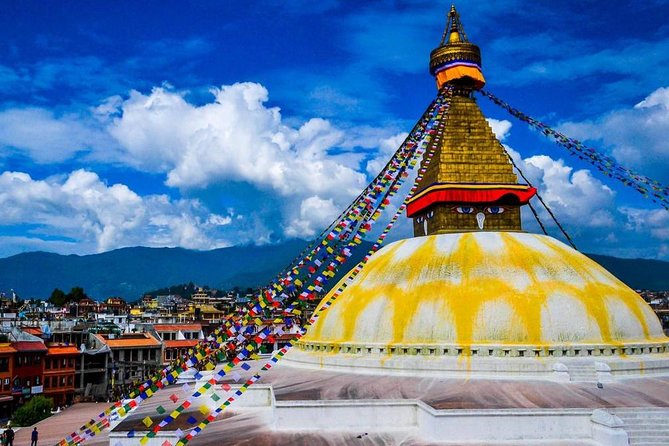
Boudhanath is scheduled for about 30 minutes. The huge white stupa is one of the world’s largest spherical stupas and the center of Kathmandu’s Tibetan Buddhist community.
This is a memorable place to finish because the structure is easy to understand at a glance, yet its religious meaning rewards explanation. You can walk around the stupa, observe prayer customs, and see how the surrounding neighborhood functions as a Buddhist center.
Half an hour is enough for the basic circuit and a guide’s introduction. It is not long enough for a leisurely visit to surrounding shops, cafés, or religious spaces. If you enjoy the atmosphere, plan to return independently.
Boudhanath also gives the day a useful religious balance. Swayambhunath introduces Buddhist practice from a hilltop setting, Pashupatinath shows active Hindu worship, and Boudhanath brings you back to Tibetan Buddhist tradition.
The guide can make or break the long schedule
The strongest part of this experience is the guiding. Sumit receives repeated praise for his calm manner, clear communication, and ability to explain Nepal’s history, culture, religion, and customs without burying you in too many facts.
Anon is also praised for keeping the information focused and maintaining the momentum. Sajina is described as friendly and well informed, while Suresh is noted for his kindness and strong historical explanations. Asmita is remembered for a warm, helpful approach.
Guide assignments can change, so you should not assume a particular person is guaranteed unless the provider confirms it. Still, the range of positive comments suggests that the experience depends on a solid local team rather than only on the route.
A private booking gives you more room to ask questions, adjust the order, or skip a site you have already seen. One private group skipped Swayambhunath by request. Group travel may cost less, but it usually gives you less control over timing.
Transport, traffic, and the real length of the day
Private air-conditioned transportation is included, along with hotel pickup and drop-off. That is important in Kathmandu, where moving between distant sites can take patience.
The advertised duration is eight to nine hours, but you should allow more room in your plans. Some days finish in about nine hours, while others reach ten or eleven hours door to door. Traffic, pickup timing, site crowds, and the number of questions you ask can all affect the finish.
Several accounts praise the drivers for safe, patient work on crowded roads. That is not a minor detail. A skilled driver reduces stress during a day when you are repeatedly getting in and out of the vehicle.
I would not book this on the same day as a flight or an important connection. The schedule may run longer than planned, and you will probably feel ready for a quiet evening afterward.
Lunch is useful, but keep your expectations modest
The included lunch box is designed for speed. It includes a 500 milliliter bottle of water, juice, banana, seasonal fruit, muffin, donut, and similar baked items.
This is not a sit-down Nepali meal. It is closer to a portable snack box that lets you keep moving between sites. That can be a real advantage when you do not want to lose another hour at a restaurant.
If you want a more substantial meal, the all-inclusive option includes a khana set or a choice of dishes. The tour information does not give enough detail to judge the exact menu or portions, so check the option carefully when booking.
I would still carry extra water and snacks. The day is long, and the provided box may not be enough if you have a large appetite or prefer savory food.
Who will get the most from this tour?
I would recommend it most strongly if you have one or two days in Kathmandu and want a broad first look at the valley’s major heritage sites. It is also a good fit if you are traveling alone and want transport, company, and cultural explanation without arranging every stop yourself.
The tour suits people who value coverage over a slow pace. You will see all seven sites, but you will not have unlimited time in museums, courtyards, or temple areas.
I would choose a two-day plan if you have extra time, want to take photographs carefully, or dislike being on a schedule. One three-star rating described the day as exhausting and too rushed, while several five-star accounts called the long schedule worthwhile. Both views make sense.
Cost, cash, and cancellation details
At $10 per person, the advertised starting price looks unusually low for hotel pickup, a private vehicle, a guide, and lunch. The important detail is the admission charge. Standard private and group choices exclude entrance fees, listed at $44 per person, and the practical advice is to carry around 6,000 Nepalese rupees in cash.
The ticket-inclusive option is easier if you prefer one payment, though you should compare its final price with the standard choices. Personal expenses and tips are not included.
You receive confirmation when booking, and free cancellation is available up to 24 hours before the start time. Changes or cancellations inside that window are not refunded. The minimum number of participants also matters for some departures, with another date or a full refund offered if the provider cancels for that reason.
Should you book the seven-site day?
Book it if your Kathmandu schedule is tight and you want the major cultural sites handled in one organized day. The guide, driver, hotel pickup, and broad mix of Buddhist, Hindu, royal, and historic places give you a lot for the time.
Skip it, or split it across two days, if you want long museum visits, unhurried meals, or time to sit quietly at each site. Before booking, confirm the total price including admission fees, carry Nepalese rupees, request an early start if possible, and wear shoes made for steady walking.
For a fast cultural introduction, this is a sensible buy. For a slow look at Kathmandu, it is simply too much ground to cover in one day.
FAQ
How long does the Kathmandu UNESCO tour last?
The tour is scheduled for approximately eight to nine hours, though the day can last around ten or eleven hours from hotel pickup to drop-off because of traffic and timing.
Which sites are included?
The route includes Swayambhunath, Kathmandu Durbar Square, Patan Durbar Square, Bhaktapur Durbar Square, Changu Narayan Temple, Pashupatinath Temple, and Boudhanath Stupa.
Is hotel pickup included?
Yes. Pickup and drop-off from your hotel are included.
Is transportation air-conditioned?
Yes. The tour includes air-conditioned private transportation.
Is lunch included?
Yes. The standard lunch box includes bottled water, juice, banana, seasonal fruit, muffin, donut, and similar items.
Are entrance fees included?
Entrance fees are not included with the standard group and private options. The listed cost is $44 per person. A ticket-inclusive option is available.
How much cash should I bring for entrance fees?
The tour information lists admission at $44 per person. Several practical details place the combined cost at about 6,000 Nepalese rupees, so carrying Nepalese cash is recommended.
Can I choose a private tour?
Yes. The experience offers private and group choices, as well as a ticket-inclusive option. A private booking may allow more flexibility with the route.
Can I skip a site I have already visited?
A private group was able to request skipping Swayambhunath, so you can ask about adjustments when booking. Changes depend on the day’s route and timing.
What is the cancellation policy?
You can cancel up to 24 hours before the start time for a full refund. Cancellations or changes made less than 24 hours before the start are not refunded.
New in the Kathmandu listings
- Traditional Momo Making Class★ 5.0 · 10 reviews
- Kathmandu: Ancient City Kirtipur & Pharping Monastery Tour★ 5.0 · 2 reviews
- Kathmandu to Pokhara Premium sofa bus ticket★ 4.0 · 17 reviews
- Women Empowerment Project(Nepali cooking class & jewelry workshop★ 5.0 · 15 reviews
- 7-Day Langtang Valley Trek from Kathmandu★ 5.0 · 1 review
- Kathmandu 2 Nights 3 Days Chitwan Jungle Safari Tour★ 5.0 · 9 reviews
- Yoga Experience Day Trip with Private Transfer From Kathmandu★ 4.0 · 2 reviews
- Wildlife Adventure in Chitwan Nepal★ 4.0 · 4 reviews
UNESCO World Heritage Tours, compared.
Private Kathmandu Sightseeing Tour | UNESCO World Heritage sites
Read our review →
Full Day Top 4 UNESCO Tour with Lunch – Private/Group
Read our review →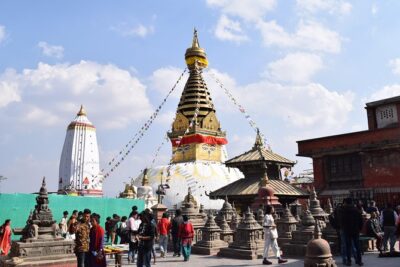
Full-Day 7 UNESCO Tour with Lunch – Private/Group
Read our review →
Kathmandu Private Sightseeing Tour | UNESCO World Heritage Sites
Read our review →Browse the lists this tour appears in