
REVIEW · ANNAPURNA BASE CAMP TREKS
7-Day Trek to Annapurna Base Camp from Pokhara
Annapurna rewards steady feet. This 7-day private trek takes you from Pokhara through Gurung and Magar villages, rhododendron forest, river valleys, and the high sanctuary beneath Annapurna. I like the route’s direct shape: you reach Base Camp on Day 4, then spend three days walking back toward Pokhara. I also like that the package includes a guide, permits, accommodation, transfers, and a trekking pole.
The main caution is the physical demand. Several days involve about six to seven hours of walking, with steep climbs and descents. Food and drinks cost extra, a porter costs $25 per day for one porter shared by two people, and the published meeting time of 2:15 pm does not quite match the stated morning pickup for Day 1. Confirm that timing before you set out.
In This Review
- Key Points
- Why This Annapurna Route Works Well in Seven Days
- Day 1: Pokhara to Siwai, Then Ghandruk
- Day 2: Ghandruk to Upper Sinuwa
- Day 3: Upper Sinuwa to Deurali
- Day 4: Machhapuchhre Base Camp to Annapurna Base Camp
- Day 5: The Long Descent to Bamboo
- Day 6: Bamboo to Jhinu Danda
- Day 7: Jhinu Danda to Pokhara Lakeside
- What the $345 Price Really Covers
- Guides, Comfort, and the Human Side of the Trek
- Who Should Book This Trek?
- Should You Book the Annapurna Base Camp Trek?
- FAQ
- How long does the Annapurna Base Camp trek take?
- What is the price per person?
- Is hotel pickup included?
- Is this a private trek?
- Are meals and drinks included?
- Is a porter included?
- Where does the trek reach its highest main point?
- What transportation is included?
- Can I cancel for a full refund?
Key Points
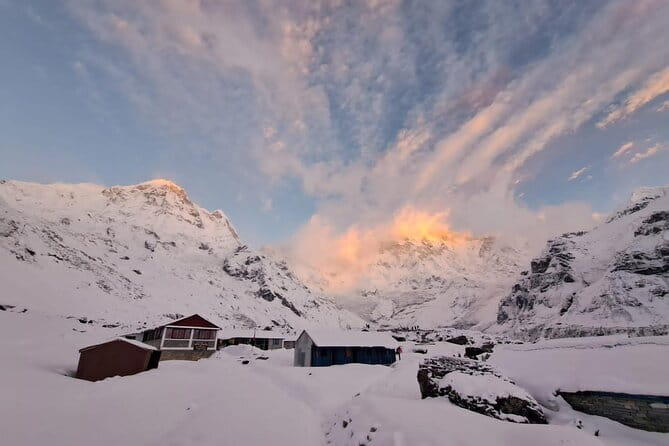
- Base Camp on Day 4: Reach Annapurna Base Camp after climbing from Machhapuchhre Base Camp at about 3,900 meters.
- A private group experience: Only your own group takes part, with an English-speaking guide.
- Village-to-mountain route: Walk through Ghandruk, Upper Sinuwa, Deurali, Bamboo, and Jhinu Danda.
- Transport is partly covered: Shared jeep or bus transfers connect Pokhara with Siwai and Samrung Khola.
- Guide support is a major strength: Biru, Amrit, and Shiva are praised by name for their care, organization, and mountain knowledge.
- Good value at $345: The price includes permits, lodging, transfers, guide service, and basic equipment, but not meals or a porter.
Why This Annapurna Route Works Well in Seven Days
This trek gives you the classic Annapurna Base Camp experience without adding extra acclimatization days or side trips. That keeps the cost and total time manageable, but it also means the schedule is fairly tight.
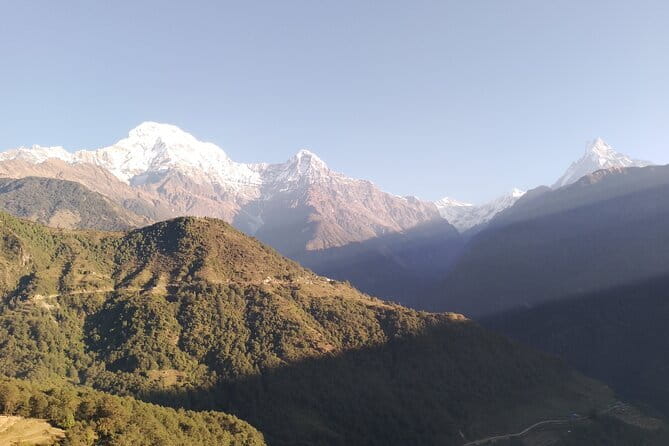
You start near Pokhara and walk into the Modi River valley, passing from settled hill villages into higher, colder country. The scenery changes day by day. Early sections focus on farms, homes, forest, and river crossings. Later sections bring cooler air, rocky trails, waterfalls, and close views of the Annapurna massif.
I like the fact that the route is not simply a march to a viewpoint. Ghandruk brings village life and Gurung culture into the trip, while the trail also passes through areas connected with Magar communities. You can expect local food and guesthouse stays to be part of the experience, though meals are purchased separately.
The trek is private, but that does not mean luxurious. You stay in guesthouses, travel on shared road transport for the approach and return, and walk for most of each day. This is a practical mountain trip built around access and scenery rather than comfort.
More Annapurna Base Camp treks:
- Kathmandu/Pokhara: 5-Day Annapurna Base Camp (ABC) Trek
★ 4.9 · 72 reviews - Private 7 – Day Annapurna Base Camp Trekking
★ 5.0 · 50 reviews - Annapurna Base Camp Trek (8 days)
★ 5.0 · 45 reviews
Day 1: Pokhara to Siwai, Then Ghandruk
The first day begins with hotel pickup in Pokhara’s Lakeside area, followed by a road transfer to Siwai. From there, you begin walking toward Ghandruk.
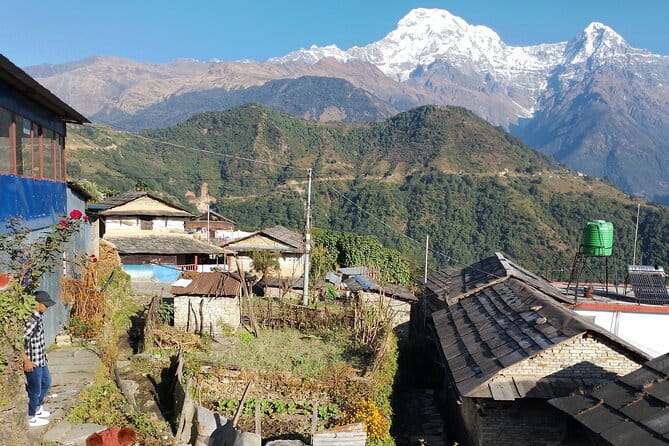
The trail passes near the Modi River and through local villages, with hills rising around the Annapurna valley. Ghandruk is an excellent first overnight stop because it feels like a real mountain settlement rather than just a trail camp. The village gives you an early look at the communities that support trekking in this region.
The day is listed at about seven hours, including the transfer and walk. That is a long opening day, especially after a road journey. You should be ready for the possibility that the exact walking time changes with road conditions, trail pace, and rest stops.
The published meeting time is 2:15 pm, while the first-day plan says pickup takes place in the morning. I would ask CAN Travels to confirm the exact departure time before booking flights, hotel rooms, or other activities in Pokhara.
Day 2: Ghandruk to Upper Sinuwa
After breakfast in Ghandruk, the route continues toward Upper Sinuwa. This is another roughly seven-hour day, and the description makes clear that the trail rises and falls rather than climbing in one smooth line.
That repeated up-and-down walking can be harder than the distance suggests. You may feel strong on the first climb, then discover that the next descent and rise require just as much effort. Good shoes, a steady pace, and regular water breaks matter here.
Upper Sinuwa is listed as the Sinuwa Hilltop Lodge and Restaurant. The overnight stop gives you a useful transition from village country into the higher trail. You will still have access to a guesthouse setting, but the focus shifts more toward walking, weather, and preparation for the sanctuary ahead.
Lunch is not included, so budget for food along the way. Since the package excludes all meals and drinks, you will pay for breakfast, lunch, dinner, snacks, and bottled or other available drinks as you go.
Day 3: Upper Sinuwa to Deurali
From Upper Sinuwa, the path turns toward Deurali. The day is listed at about six hours, with the trail continuing uphill as the air grows cooler.
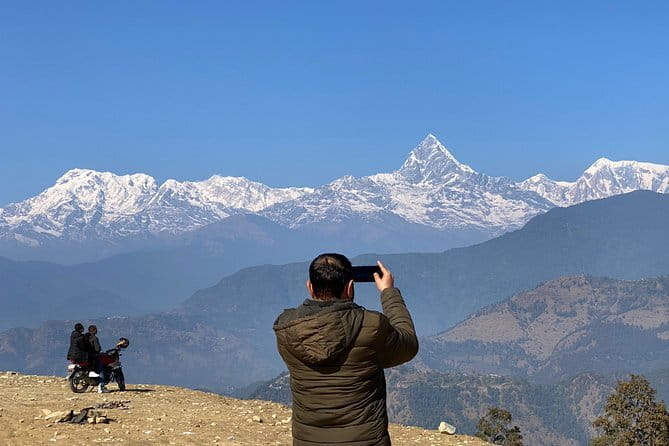
This is where the route begins to feel more alpine. The walk follows a winding mountain path toward the Annapurna Sanctuary, with forest, mountain views, and the sound of water shaping the day. The route description also points to waterfalls and river scenery along the wider trek.
Deurali is an important overnight stop because it places you close to the high section reached on Day 4. The shorter walking time compared with the first two days may help, but the rising altitude still makes this a serious day. You should not judge difficulty only by hours. The uphill sections and thinner air can slow your pace.
Your guide becomes particularly useful here. The strongest praise for the trip focuses on guides such as Biru and Amrit, with Shiva also receiving warm attention. Their value is not only route finding. A good guide helps keep the group moving at a sensible pace, explains the surroundings, and watches how everyone is handling the climb.
More walking in the hills of Pokhara:
- Poon hill Trek 3 days
★ 5.0 · 176 reviews - Trekking in Annapurna/Langtang/Everest/Upper Mustang regions
★ 5.0 · 161 reviews - Pokhara: 4-Day Ghorepani, Poonhill & Ghandruk Mountain Trek
★ 5.0 · 132 reviews - Ghorepani – Poon Hill Trek 3N-4D
★ 5.0 · 125 reviews
Day 4: Machhapuchhre Base Camp to Annapurna Base Camp
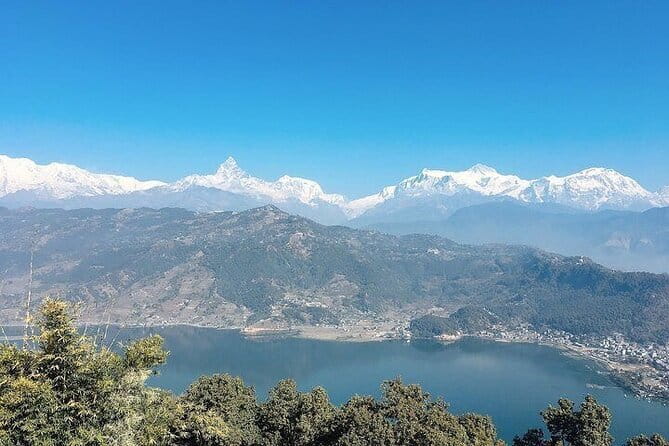
This is the centerpiece of the trek. After breakfast, you climb toward Machhapuchhre Base Camp, which is listed at about 3,900 meters. From there, the route continues upward to Annapurna Base Camp, with a stated climb of roughly 730 meters.
The day takes about seven hours. At this height, the walk may feel demanding even if the trail itself is clear. The colder air and large mountain walls make the setting feel very different from the lower villages.
Annapurna Base Camp is the reward for the previous three days of walking. You are surrounded by the Annapurna massif in a high mountain sanctuary, with the scale of the peaks providing the main spectacle. The appeal is not just a single photo stop. You have reached a place where the valley, ridges, and surrounding summits close in around you.
The package includes the admission ticket for this stop, while the other itinerary entries are marked as free admission. More important, the included guide and permit arrangements remove some of the paperwork that can distract from the trek.
You should keep your expectations practical. This is not a hotel-based mountain excursion. Accommodation is in guesthouses, and weather or trail conditions can affect the day’s rhythm. Still, reaching Base Camp on the fourth day gives the route a strong sense of purpose.
Day 5: The Long Descent to Bamboo
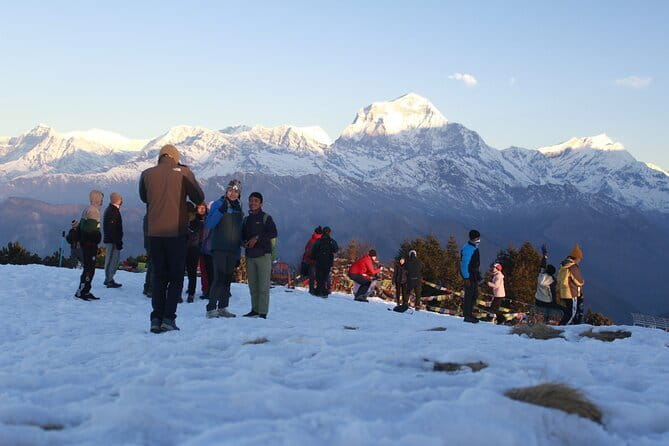
After your time at Annapurna Base Camp, you retrace the route downhill toward Bamboo. The planned walking time is about six hours.
Descending can look easy on paper, but it places steady pressure on your knees and ankles. The trail passes through Deurali, Himalaya, Dovan, and then Bamboo. You should walk carefully, especially on uneven or wet sections.
This day offers a different way to enjoy the route. Going down lets you notice details that may have escaped you while climbing, including forest, water, and village scenery. It also gives your lungs a break from the higher altitude, though fatigue from the Base Camp push may remain.
Bamboo is a practical overnight stop. You are still on the main route, and its position breaks up the return journey. I would not plan extra sightseeing here. The real task is to eat, rest, and prepare for another full day on foot.
Day 6: Bamboo to Jhinu Danda
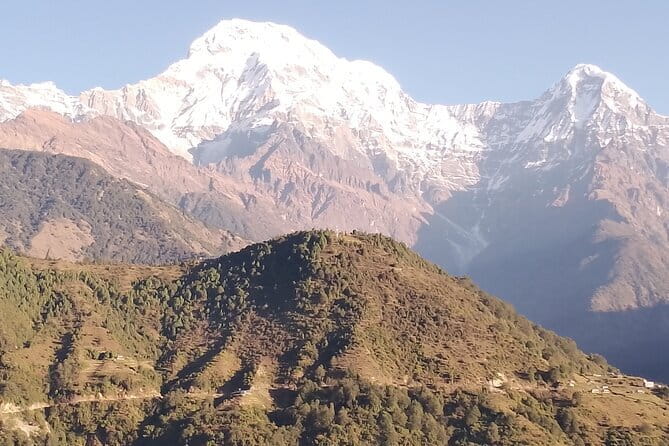
The trail from Bamboo to Jhinu Danda includes a short steep climb to Khuldi Ghar, followed by a descent through forest. You then reach the Sinuwa-Danda area, descend to Chomrong Khola, cross the river, and climb toward Chomrong village.
The day is listed at about six hours, but the route profile makes it clear that you should expect repeated changes in grade. The bridge and river crossing add variety, while Chomrong brings you back into a more settled part of the mountain route.
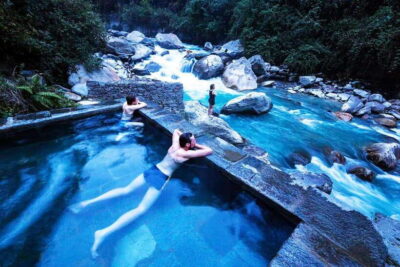
Jhinu Danda is the overnight destination. The information provided does not promise a specific activity there, so I would treat it as a pleasant stopping point rather than assume a hot-spring visit or other extra. Ask your guide what time is available after arrival and what local options are operating during your trek.
This is also a day when a porter could make a real difference. Porter service is optional at $25 per day for one porter shared by two people. If you are carrying a full pack, the repeated climbs and descents may justify the extra cost. If you pack lightly and have strong fitness, you may prefer to carry your own things.
Day 7: Jhinu Danda to Pokhara Lakeside
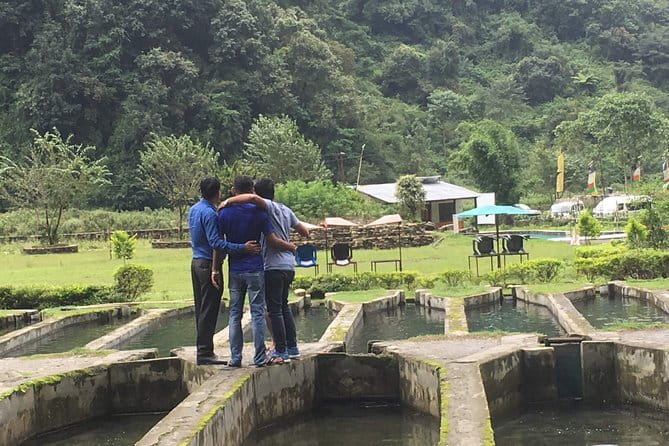
The final walking day includes a short downhill section and a long suspension bridge crossing to Samrung Khola. At Samrung Khola, you take a local jeep back to Pokhara.
The walk is listed at about six hours, followed by the road transfer. That makes this a proper final trekking day, not simply a morning stroll before a quick drive. The suspension bridge gives the return a memorable ending, while the jeep removes the need to walk all the way back to Pokhara.
The package covers the Samrung Khola to Pokhara transfer by shared jeep or bus. Shared road transport keeps the price down, but it can be less predictable than a private car. I would leave flexibility in your Pokhara plans after arrival rather than book a tight onward connection.
Hotel drop-off is included within the Lakeside area. If your accommodation is elsewhere in Pokhara, confirm whether you need to arrange your own final transfer.
What the $345 Price Really Covers
At $345 per person, the trek offers solid value for a seven-day private route. The price includes hotel pickup and drop-off within Lakeside, an English-speaking trekking guide, trekking permits and official documents, guesthouse accommodation, road transfers at both ends, a trekking pole, and a basic first-aid kit carried by the guide.
The private format is especially useful for couples, families, or friends who want their own pace. You do not share the walking group with unrelated participants. Group discounts are also available, though the exact saving is not stated.
The price does not include food or drinks. This is the largest extra expense you need to plan for day by day. Personal purchases and gratuities are also separate.
A porter is optional rather than included. At $25 per day for one porter shared by two people, the total can be reasonable for a pair. Ask in advance how much luggage the porter will carry and what bags you should keep with you.
The package also includes a trekking pole for each person. That is a useful touch on a route with steep climbs, long descents, and uneven trail sections. You still need suitable footwear and clothing, which are not supplied.
Guides, Comfort, and the Human Side of the Trek
The clearest strength of this experience is the guide service. Biru and Amrit receive repeated praise for being friendly, attentive, and careful with group welfare. Shiva is also described as informative and helpful.
Those names matter because a guide can shape the entire trek. You want someone who explains the route, keeps the day organized, and notices when a steep section or altitude is taking a toll. The available feedback points strongly in that direction, though you should confirm which guide will lead your particular departure.
Accommodation is in guesthouses, not private mountain lodges with resort comforts. The information does not specify room types, bathrooms, heating, or Wi-Fi, so ask CAN Travels if those details matter to you.
The cultural side is another reason to choose this route. Ghandruk and the villages along the trail connect the mountain scenery with Gurung and Magar communities. Their traditions, local food, and everyday hospitality help you understand that this is a lived-in region, not simply a route designed for sightseeing.
Who Should Book This Trek?
I would recommend this trek to someone with strong physical fitness who is comfortable walking six to seven hours on mountain trails. You should be ready for steep uphill sections, long descents, changing weather, and a high point around Annapurna Base Camp.
It suits couples, families with fit older children, and friends who want a private guide rather than a large group. The direct itinerary also works well if you have one week available from Pokhara and want the main Base Camp experience.
It is less suitable if you want slow acclimatization, short walking days, or high comfort. The seven-day schedule is efficient, but it leaves little spare time. If you are new to trekking, speak honestly with the operator about your fitness and ask how the daily pace can be adjusted.
Book with extra care if your plans depend on a precise departure time. The stated 2:15 pm start conflicts with the morning pickup described for Day 1. That may be a simple scheduling error, but it is worth resolving before payment.
Free cancellation is available if you cancel at least 24 hours before the local start time. Cancellations within 24 hours are not refunded, and last-minute changes are not accepted.
Should You Book the Annapurna Base Camp Trek?
I would book this trek if you want a focused, private Annapurna route with a guide and the major practical pieces already arranged. The $345 price is attractive because it covers permits, guesthouses, transfers, guide service, and a trekking pole, while the route reaches Base Camp on Day 4 and returns you to Pokhara on Day 7.
I would pause if you dislike long walking days or need a slower altitude plan. Before committing, confirm the pickup time, expected meal costs, guesthouse standards, porter arrangements, and the name of your guide.
For a fit walker who values mountain scenery, village contact, and straightforward organization, this is a strong-value way to reach Annapurna Base Camp from Pokhara.
FAQ
How long does the Annapurna Base Camp trek take?
The trek lasts approximately seven days, beginning and ending in Pokhara.
What is the price per person?
The listed price is $345 per person. Group discounts are available, though the discount amount is not specified.
Is hotel pickup included?
Yes. Hotel pickup and drop-off are included for accommodations within the Lakeside area of Pokhara.
Is this a private trek?
Yes. Only your group participates in the activity.
Are meals and drinks included?
No. Food and drinks are not included and can be purchased during the trek.
Is a porter included?
No. A porter is optional and costs $25 per day for one porter shared by two people.
Where does the trek reach its highest main point?
The route reaches Annapurna Base Camp after passing Machhapuchhre Base Camp, listed at about 3,900 meters above sea level.
What transportation is included?
Transport from Pokhara to Siwai and from Samrung Khola back to Pokhara is included by shared jeep or bus.
Can I cancel for a full refund?
Yes, if you cancel at least 24 hours before the experience start time. Cancellations made within 24 hours are not refunded.
New in the Pokhara listings
- Pokhara: Pokhara Highlights Tour by Bus★ 3.6 · 10 reviews
- Discover Pokhara in Style: Private Vehicle Service with Driver★ 5.0 · 5 reviews
- Multi-Day Tour from Pokhara, Poon Hill and Mulde Trek★ 5.0 · 1 review
- Pokhara in 5 Hours: Lake, Museum, Cave, Falls & Pagoda Hill★ 4.5 · 16 reviews
- Private 4 Day Poon Hill Trek from Pokhara★ 5.0 · 16 reviews
- 4 Day Mardi Himal Base Camp Trek from Pokhara★ 5.0 · 18 reviews
- From Pokhara Full Day Entire Pokhara Tour with Guide★ 5.0 · 1 review
- Ultralight Flight: Into The Heart Of The Mountains (90 min)★ 5.0 · 1 review
Annapurna Base Camp Treks, compared.
Kathmandu to Annapurna Base Camp (ABC) 5-Day Trek
Read our review →
Kathmandu/Pokhara: 5-Day Annapurna Base Camp (ABC) Trek
Read our review →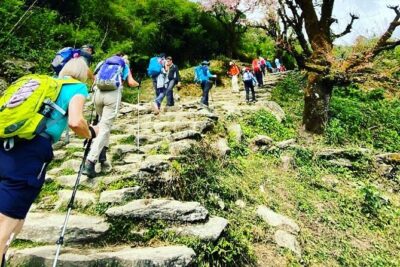
11-Day Hike Tour to Annapurna Base Camp Bliss in Kathmandu
Read our review →Browse the lists this tour appears in