
REVIEW · PHOTOGRAPHY SESSIONS
Evening Photography Tour of Kathmandu
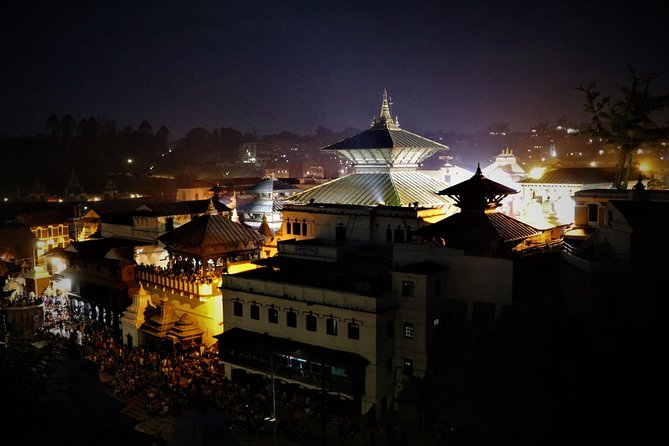
Kathmandu reveals a different face after sunset. This private evening tour takes you to Boudhanath Stupa and Pashupatinath Temple, two major religious sites where lamps, prayer, chanting, and fire rituals give your camera plenty to work with. I like the way the tour joins photography with cultural explanation, and I like that private transport and a guide are included for a half-day outing.
The main thing to consider is that this is a focused two-stop experience, not a broad nighttime tour of Kathmandu. The photography can be rewarding, but low light, crowds, and active religious ceremonies mean you will need patience and respect, not just a fast camera. At $102 per person, the value is strongest for visitors who want help finding the right places and understanding what they are seeing.
In This Review
- Key points to know before booking
- Why this evening tour works for photographers
- Boudhanath Stupa, prayer wheels, and butter lamps
- Pashupatinath and the evening aarti ceremony
- What the private guide adds
- Timing, transport, and the three to four-hour schedule
- Is $102 a fair price?
- What to bring and how to photograph respectfully
- Who should book this Kathmandu evening outing?
- Should you book the Evening Photography Tour of Kathmandu?
- FAQ
- How long does the Evening Photography Tour of Kathmandu last?
- Which places does the tour visit?
- Is transportation included?
- Is this a private tour?
- What happens at Boudhanath Stupa?
- What happens at Pashupatinath Temple?
- Are meals and drinks included?
- What is the cancellation policy?
Key points to know before booking
- Boudhanath after dark: Photograph butter lamps, monks, and devotees walking around the illuminated white stupa.
- Pashupatinath’s evening aarti: See chanting, singing, flames, and devotional movement beside the sacred Bagmati River.
- Private setting: Only your group takes part, giving you more room to ask questions and adjust the pace.
- Practical transport: Private transportation from central Kathmandu is included, which matters when visiting two sites in one evening.
- Strong guide reports: Bikash is praised for his command of Kathmandu and its heritage sites, while Deepa is described as a helpful source of cultural context.
- Short but concentrated: Plan on about three to four hours, with roughly one hour at each main stop plus driving time.
Why this evening tour works for photographers
Many people visit Boudhanath and Pashupatinath during daylight, then miss what happens when the lamps are lit and ceremonies begin. This outing is built around that change in mood. You are not simply checking two famous sites off a list. You are arriving at a time when religious practice becomes the subject.
I like the practical promise here: your guide knows where to take you and how to explain the scene. That can save you from wandering around with a camera while the best moments pass. The tour also gives you a private vehicle, so you are not trying to connect two busy sites by public transport during a limited evening window.
The photography itself will not be effortless. At Boudhanath, the stupa is beautifully lit, but night photography brings contrast between bright lamps and dark corners. At Pashupatinath, the aarti ceremony includes fire and movement, which can produce striking images but also requires careful exposure and steady timing.
You should also treat the setting as a place of worship first and a photo opportunity second. Ask your guide when photography is appropriate. Avoid blocking worshippers, and be ready to lower the camera when the moment calls for quiet attention.
More photo sessions in Kathmandu:
- Kathmandu: A Photographer’s Pilgrimage Tour to Swayambhunath
★ 5.0 · 1 review - Pokhara: Adventure Paragliding Trip with Photos and Videos
★ 4.6 · 50 reviews - Pokhara: Paragliding Adventure with Photos and Video
★ 4.7 · 44 reviews
Boudhanath Stupa, prayer wheels, and butter lamps
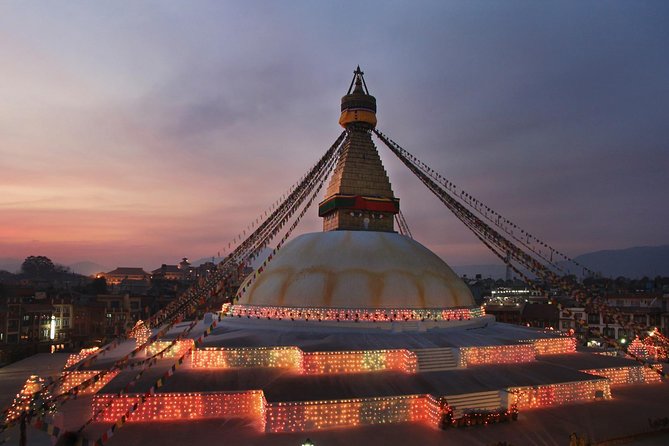
The first stop is Boudhanath, one of Kathmandu’s key pilgrimage centers for Tibetan Buddhism. Its large white dome, decorated structure, and evening lighting give you a clear visual subject even before the religious activity begins.
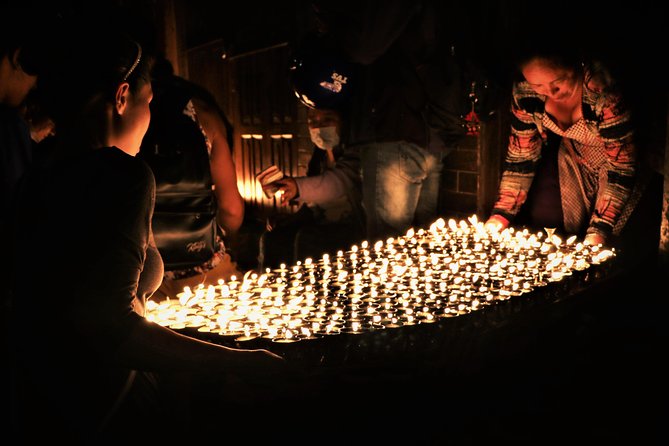
The central action is the parikrama, or circumambulation, as devotees walk around the stupa in prayer. You may see monks and other worshippers moving through the circuit while butter lamps flicker nearby. These details create several kinds of photographs: wider views of the illuminated stupa, portraits of people in motion, and close shots of flame and hands at prayer.
The tour allows about one hour here, with admission included. That is enough for an introduction and a concentrated photography session, though it is not a full evening of exploration. Your guide’s role matters because the scene can look confusing at first. With context, you can understand that the movement around the stupa is not random foot traffic. It is part of a devotional practice connected with prayers for the well-being of all sentient beings and world peace.
For photography, I would think in layers. Start with the whole stupa and the ring of people around it. Then look for smaller moments: a butter lamp being lit, a monk passing through the frame, or repeated movement around the white dome. The changing light may tempt you to keep adjusting settings, so give yourself time to check focus and exposure before the most interesting moments arrive.
Boudhanath can also test your patience. People will be moving, lamps will be bright, and the visual scene may be busy. That is part of the appeal, but it means you should not expect every image to be clean or perfectly posed. A private guide can help you find a better position, but the tour cannot remove the natural movement of a working pilgrimage site.
The one-hour stop is particularly useful for visitors who want a strong introduction without spending an entire night at one monument. If you have already seen Boudhanath in daylight, the evening lighting and butter-lamp rituals provide a different reason to return.
Pashupatinath and the evening aarti ceremony
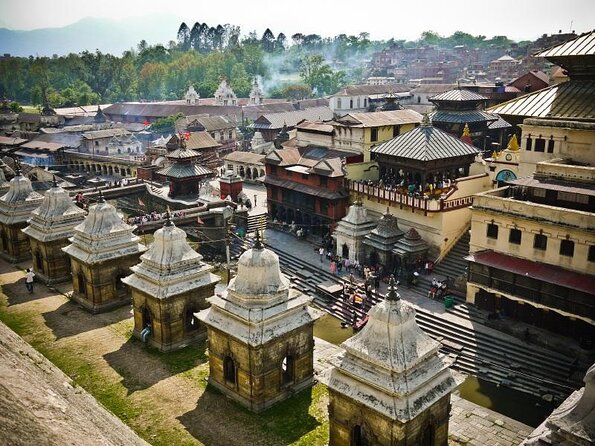
The second stop is Pashupatinath Temple, one of the most important Hindu shrines dedicated to Lord Shiva. The name Pashupatinath means protector of all living beings, and the evening visit centers on the aarti ceremony.
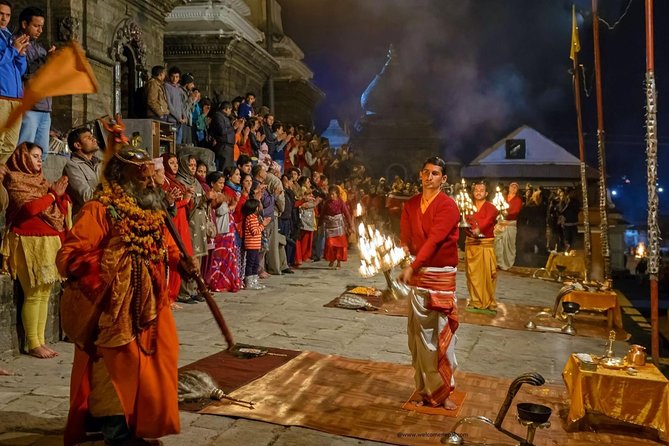
During aarti, priests offer light from flames to the gods. The ceremony includes chanting, singing, sacred Vedic verses, and fire rituals. The atmosphere can become highly expressive, with devotees dancing in a state of religious devotion. The setting beside the Bagmati River adds another layer to the photographs, especially as darkness gathers and the flames become the main source of light.
This is likely the emotional high point of the outing. One evening account described seeing a fire devotion to Shiva on the banks of the Bagmati River, an experience that would be easy to miss without someone who knew when and where to go. That is the real value of the guide here. You are not relying on luck to find the ceremony.
Expect a scene that changes quickly. Priests move, flames rise and fall, people react, and the light shifts from moment to moment. If you are using a phone or a basic camera, you may get better results by concentrating on the overall scene rather than trying to capture every face in sharp detail.
You should also remember that Pashupatinath is an active religious complex, not a staged performance. Keep your distance where required and follow your guide’s instructions. The information provided does not promise access to every part of the temple, so you should view this as an opportunity to witness the evening aarti and surrounding atmosphere rather than a full temple tour.
The stop lasts about one hour, and admission is included. That gives you enough time to watch the ceremony and take photographs, but the schedule remains tight. If the ritual begins late or transport takes longer than expected, the available photography time may feel short. A private tour is helpful because your group does not have to coordinate with other participants.
What the private guide adds
The guide is more than a driver who points out the monuments. The strongest praise for this experience focuses on the guides’ cultural understanding and professionalism. Bikash is singled out for his broad knowledge of Kathmandu and its heritage sights. Deepa is also praised for giving well-informed explanations and helping make the nighttime ceremony meaningful.
That matters because both locations carry religious meaning that is easy to miss through a camera viewfinder. Your guide can explain what people are doing, why lamps are being lit, and how the aarti fits into Hindu worship. On the drive between stops, you may also hear additional information about Kathmandu and Nepal.
I particularly like the fact that the tour is private. You can ask a question without holding up a busload of people, and you can spend more time on a scene that interests you. If you are traveling with a photography partner, you can also discuss where to stand and what kind of image you want without feeling rushed by strangers.
The guide’s photography help should be understood in practical terms. The tour promises knowledge of good settings and worthwhile moments, but it does not state that the guide is a professional photography instructor. If you want advanced lessons on manual exposure, lenses, or post-processing, ask about that before booking. The clear strength is local access and cultural interpretation.
A short list of alternatives around Kathmandu
- Everest Base Camp Trek – 14 Days
★ 5.0 · 1,499 reviews - Private Kathmandu Sightseeing Tour | UNESCO World Heritage sites
★ 5.0 · 756 reviews - Everest Base Camp Helicopter Tour landing at Everest View Hotel
★ 5.0 · 668 reviews - Half day cooking class in Thamel kathmandu
★ 5.0 · 607 reviews
Timing, transport, and the three to four-hour schedule
The experience lasts about three to four hours. The main visits are planned for about one hour each, with the rest of the time used for transportation and moving between sites.
Pickup is offered, and private transportation from central Kathmandu is included. This is a useful benefit in the evening, especially since the two religious landmarks are separate stops. You avoid arranging a taxi between them and can keep your camera equipment with you in one vehicle.
The tour is available as a private activity, so only your group participates. That makes it suitable for solo photographers, couples, families, or small groups with a shared interest in religious architecture and cultural photography. Group discounts are also offered, which may improve the per-person value for a larger party.
The schedule requires some flexibility. Religious ceremonies do not always feel like a museum timetable, and traffic can affect the drive. The experience requires good weather, and the operator may offer another date or a full refund if poor weather causes cancellation. Confirmation is provided at booking, and you can cancel for a full refund up to 24 hours before the start time.
Public transportation is nearby, and most people can participate. Still, the information does not describe detailed accessibility arrangements, so anyone with specific mobility needs should confirm the practical setup before paying.
Is $102 a fair price?
At $102 per person, this is not the cheapest way to visit Boudhanath and Pashupatinath. You are paying for more than entry tickets. The price includes private transportation, all fees and taxes, and an English-speaking licensed city guide.
That package can be good value if you want an organized evening and would otherwise need to arrange a vehicle, find the aarti ceremony yourself, and research the customs at both sites. The guide’s local knowledge is especially useful for photography, since the best part of the tour depends on timing and positioning rather than simply arriving at a landmark.
The value is less clear if you only want to see the buildings or already know Kathmandu well. You might be able to visit the sites independently for less, particularly if you do not need private transport or cultural explanation. The tour also does not include dinner, bottled water, or alcoholic drinks, so plan those separately.
For a group, the private format and group discounts may make the cost easier to justify. For a solo visitor with limited time, the convenience may be worth more than the savings from arranging each part alone.
What to bring and how to photograph respectfully
You only need to bring your camera, but a little preparation will help. Night scenes are demanding, so take a fully charged battery and enough storage. A small camera, phone, or interchangeable-lens model can work, provided you are comfortable using it in low light.
You should also bring water, since bottled water is not included. Dinner is not provided, so arrange a meal before or after the tour. Alcoholic drinks are also excluded.
At Boudhanath, try a mix of wide and close compositions. The lit stupa gives you a strong central subject, while the circular movement of worshippers adds action. At Pashupatinath, watch for the rhythm of the aarti rather than firing continuously. Flames, chanting, and raised arms can form a powerful sequence when photographed with restraint.
Respect should guide every shot. Do not interrupt prayer, push for a better angle, or treat worshippers as props. Your guide can help you understand where to stand and when it is better simply to observe.
One practical caution comes from the way the experience may appear in promotional images. If a photograph gives you the impression of a broad Kathmandu-by-night tour, check the details carefully. The actual focus is Boudhanath and Pashupatinath, with limited time at each.
Who should book this Kathmandu evening outing?
I would recommend it most strongly to photographers who want cultural subjects rather than only architecture. It also suits first-time visitors who want an informed introduction to two major religious sites without spending time sorting out transport and ceremony schedules.
It is a good choice for couples and small private groups, especially if you want to work at your own pace. The tour may also suit someone visiting Kathmandu for only a short stay, since it combines two major landmarks in one evening.
You may want to skip it if you prefer a slow, unstructured night walk, a food tour, or a city-wide photography itinerary. It is also not the best match if you expect extensive technical photography tuition. The experience is about access, timing, and cultural explanation.
The rating of 4.9 from nine reviews points to a very positive experience, with particular praise for the guides, the ceremony, and the information provided between stops. The small number of ratings means I would treat that score as encouraging rather than definitive, but the praise is consistent in the areas that matter most for this tour.
Should you book the Evening Photography Tour of Kathmandu?
Book it if you want to photograph Boudhanath’s butter lamps and evening prayer, then witness the fire and chanting of Pashupatinath’s aarti with a private guide. The combination offers a more meaningful night than simply photographing illuminated monuments from the outside.
The best reason to choose it is the guide’s role. Bikash and Deepa receive especially warm praise for their cultural explanations, professionalism, and ability to make the ceremonies easier to understand. At $102, the tour makes the most sense when you value that help, private transport, and the chance to reach the right scenes at the right time.
Skip it if you want dinner included, a longer city photography route, or a formal photography lesson. For everyone else, this is a compact and thoughtfully timed way to see Kathmandu’s religious life after dark.
FAQ
How long does the Evening Photography Tour of Kathmandu last?
The tour lasts approximately three to four hours.
Which places does the tour visit?
It visits Boudhanath Stupa and Pashupatinath Temple.
Is transportation included?
Yes. Private transportation from central Kathmandu is included.
Is this a private tour?
Yes. Only your group participates in the activity.
What happens at Boudhanath Stupa?
You can photograph devotees making a parikrama around the stupa, monks and worshippers lighting butter lamps, and the illuminated white dome.
What happens at Pashupatinath Temple?
You can witness the evening aarti, which includes chanting, singing, sacred verses, fire rituals, and devotional activity.
Are meals and drinks included?
No. Dinner, bottled water, and alcoholic beverages are not included.
What is the cancellation policy?
You can cancel up to 24 hours before the experience for a full refund. Cancellations or changes made less than 24 hours before the start time are not accepted for a refund.
New in the Kathmandu listings
- Traditional Momo Making Class★ 5.0 · 10 reviews
- Kathmandu: Ancient City Kirtipur & Pharping Monastery Tour★ 5.0 · 2 reviews
- Kathmandu to Pokhara Premium sofa bus ticket★ 4.0 · 17 reviews
- Women Empowerment Project(Nepali cooking class & jewelry workshop★ 5.0 · 15 reviews
- Yoga Experience Day Trip with Private Transfer From Kathmandu★ 4.0 · 2 reviews
- 7-Day Langtang Valley Trek from Kathmandu★ 5.0 · 1 review
- Kathmandu 2 Nights 3 Days Chitwan Jungle Safari Tour★ 5.0 · 9 reviews
- Wildlife Adventure in Chitwan Nepal★ 4.0 · 4 reviews
Photography Sessions, compared.
Paragliding Tandem Flight from Pokhara with Photos and Video
Read our review →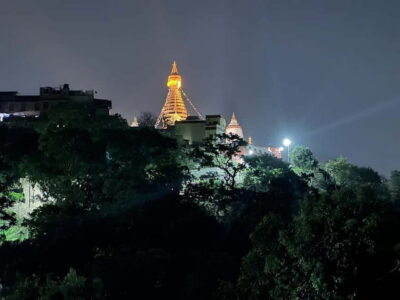
Browse the lists this tour appears in