
REVIEW · PATAN TOURS
Folklore and Everyday Life in Ancient Patan
Patan rewards the curious walker. This two-hour to two-and-a-half-hour tour leaves the grand palace complex aside and takes you into old courtyards, monastery spaces, shrines, and side streets where local traditions still shape daily life. I like the focus on ordinary Patan beyond the main square, and I like how the tour connects Newar Buddhist practice, Tantric Hinduism, art, and modern Nepali life rather than treating the town as a collection of pretty buildings.
The guide, Sandip, receives especially strong praise for his humor, clear explanations, and ability to reveal places you could easily pass without noticing. Pinhua is also associated with the experience. The main consideration is simple: Patan Durbar Square is not included, so you will need extra time and money if you want to visit the palace complex and museum afterward.
In This Review
- What makes this Patan walk different
- Why old Patan is best understood on foot
- Starting at Patan Dhoka at 10:00 am
- Pimbahal and the meaning of a traditional courtyard
- Nyakhachowk, resting platforms, and neighborhood shrines
- Nag Bahal and the surprising reach of Patan’s art
- The monastery visit and living religious traditions
- Finishing at Swotha Square
- What $65 buys you
- Who should book this experience?
- My verdict on Folklore and Everyday Life in Ancient Patan
- FAQ
- Where does the tour start?
- What time does the tour begin?
- How long does the walk last?
- Where does the tour finish?
- Is Patan Durbar Square included?
- Are tickets included for the listed stops?
- What is included in the price?
- Is transportation provided?
- How large is the group?
What makes this Patan walk different
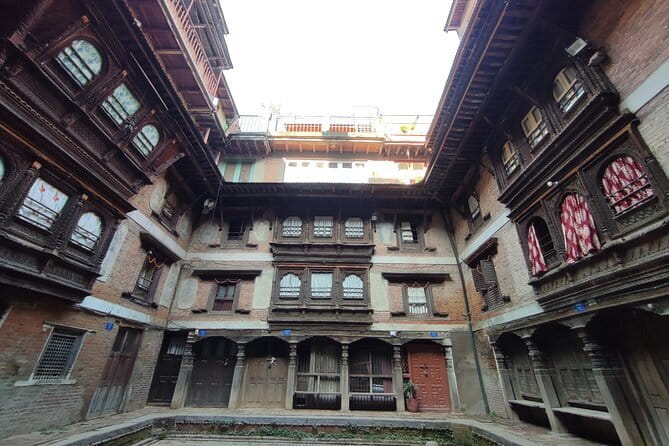
- Pimbahal introduces courtyard life, spiritual practice, and old Newar settlement design in one of the first stops.
- Nyakhachowk brings architecture close, with falchaa resting places, ancestral shrines, and vernacular houses.
- Nag Bahal links local art to distant cultures, including Greek and Hellenistic influence in religious images.
- Swotha Square makes a useful finish, with temples, shrines, tea shops, and a short walk to Patan Durbar Square.
- Newar Buddhism and Tantric Hinduism receive real attention, with a focus on how faith affects life today.
- A maximum of 10 people keeps the walk smaller than a standard city group.
Why old Patan is best understood on foot
Patan, also called Lalitpur, is often presented through its famous Durbar Square. That palace courtyard deserves a visit, but it tells only part of the story. The old town spreads around it through narrow lanes and enclosed courtyards, where monasteries, shrines, resting platforms, homes, and small gathering places sit close together.
This tour uses those spaces as its classroom. You are not simply stopping for photographs. You are being shown how a traditional Newar town worked, how religious buildings fit into neighborhood life, and how older customs continue while younger Nepalis take on modern values.
That approach gives the walk a useful purpose. You begin to see Patan as a living town rather than an open-air collection of monuments. A carved detail may relate to a religious practice. A courtyard may be both a sacred place and a social one. A small shrine may carry meaning that is not obvious from the street.
The guide matters here. Sandip is described as easygoing, attentive, funny, and able to explain local customs without making the walk feel stiff. That is a good match for a subject that can quickly become technical. Hindu and Buddhist traditions in the Kathmandu Valley overlap in ways that are not always easy to explain in a short visit, so a guide who can connect the ideas to visible places is valuable.
More time in Patan:
- Bhaktapur & Patan Durbar Square Day Tours
★ 5.0 · 122 reviews - Kathmandu: Private Patan and Bhaktapur Sightseeing Tour
★ 4.7 · 64 reviews - Patan and Bhaktapur City Full Day Tour
★ 5.0 · 24 reviews
Starting at Patan Dhoka at 10:00 am

The meeting point is at Patan Dhoka, on Patandhoka Road in Lalitpur. The scheduled start is 10:00 am, and the tour ends at Swotha Square. Pick-up and drop-off are not included, so you will need to make your own way to the starting gate.
The route lasts about two to two-and-a-half hours. That is long enough to build a clear picture of old Patan without turning into an all-day walking commitment. You should still expect uneven streets, narrow passages, and a fair amount of standing while the guide explains a place.
The group limit is 10 people. That is one of the strongest practical features of the experience. In tight courtyards, a smaller group makes it easier to hear, ask questions, and look closely at architectural details. It also suits a tour built around conversation rather than a fast march between headline sights.
Pimbahal and the meaning of a traditional courtyard
The first major stop is Pimbahal, where the tour begins its discussion of traditional courtyard settlements. These courtyards show how Newar urban design brought homes, religious spaces, and community life into a compact arrangement.
Pimbahal is also connected with a Newar Buddhist monastery. Here, the guide explains how old settlements reflect spiritual practice and local knowledge. That phrase has practical meaning: the layout of the town is not random. The relationship between a courtyard, a monastery, a shrine, and nearby houses tells you something about how the neighborhood was organized.
This is a good opening stop because it sets up the main idea of the tour. You are encouraged to look beyond large temples and ask how people used these spaces. The emphasis is less on a single famous object and more on the way a whole neighborhood functioned.
Admission is free at this stop. Still, free does not mean unimportant. In fact, Pimbahal illustrates why this walk can add something to an independent visit. Without context, you might see a pleasant courtyard and continue on. With explanation, the same place becomes a key to understanding Patan’s social and religious structure.
Nyakhachowk, resting platforms, and neighborhood shrines
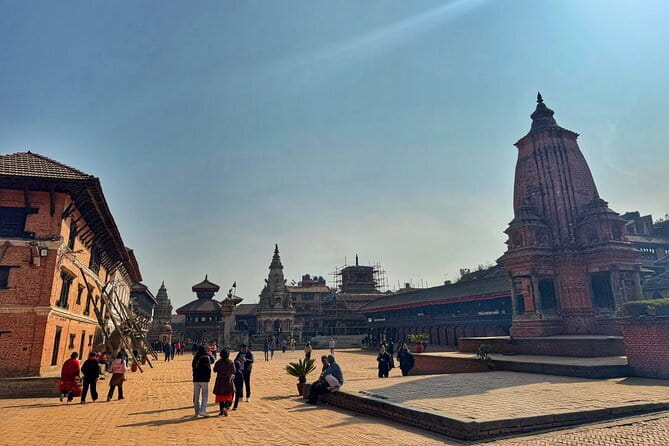
From Pimbahal, the route follows a smaller path toward Nyakhachowk. Along the way, you may see traditional architectural features such as falchaa, resting areas built into the streets, as well as ancestral shrines and older vernacular houses.
These details are easy to miss if you are focused only on grand temples. A falchaa, for example, reflects the practical side of city life. It gives people a place to pause and meet, and it helps explain how public life once unfolded in spaces that were neither private homes nor formal monuments.
Nyakhachowk contains one of the area’s important Buddhist monasteries. The setting gives the guide a chance to discuss Newar Buddhist practice and the way religious buildings remain part of a functioning town.
This stop will appeal to you if you prefer small details to a checklist of major sights. It is also where the tour’s emphasis on everyday life becomes clearest. You are looking at houses, courtyards, shrines, and paths that belong to a neighborhood, not just to a heritage display.
The drawback is that the experience depends on the guide’s explanation. The itinerary does not promise entry to every space or a long formal visit at each building. If you want extended time inside a museum or a detailed architectural lecture, this will feel lighter and more conversational.
A short list of alternatives around Kathmandu
- Everest Base Camp Trek – 14 Days
★ 5.0 · 1,499 reviews - Private Kathmandu Sightseeing Tour | UNESCO World Heritage sites
★ 5.0 · 756 reviews - Everest Base Camp Helicopter Tour landing at Everest View Hotel
★ 5.0 · 668 reviews - Half day cooking class in Thamel kathmandu
★ 5.0 · 607 reviews
Nag Bahal and the surprising reach of Patan’s art
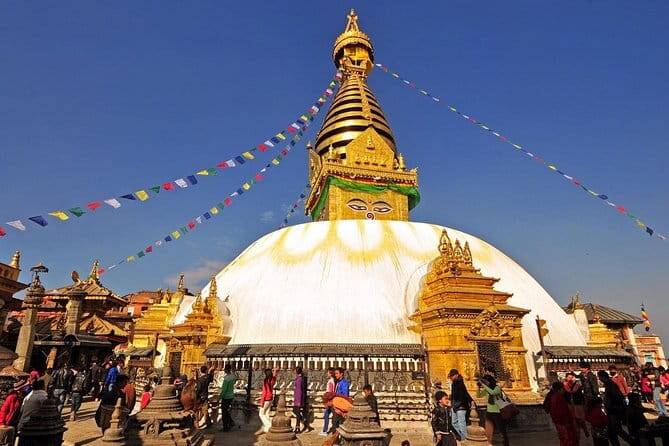
Nag Bahal, also written Nagbahaa, is one of the largest courtyards in old Patan. The tour uses this space to discuss how global contact shaped local art, including Greek influence and Hellenistic impressions in Buddhist and Hindu imagery.
That is a valuable subject because religious art in the Kathmandu Valley did not develop in isolation. The images you see in temples and shrines can carry traces of artistic exchange over long distances. A guide can help you notice forms and details that might otherwise look simply decorative.
Nag Bahal also reinforces the tour’s wider message: Patan’s traditions have changed over time. They are not frozen relics from an earlier age. Ideas, artistic styles, religious practices, and social habits have moved through the town and been adapted locally.
The planned time here is about 15 minutes. That is enough for an introduction, but not enough for a long, detailed study of every image. If art history is your main interest, you may want to ask questions as you walk and allow extra time for Patan Durbar Square’s museum later.
The monastery visit and living religious traditions

One part of the route includes a highly respected and richly decorated Buddhist monastery in the Patan area. It is described as having more than 4,000 ordained monks connected with its monastic order, making it an important religious institution rather than a minor roadside shrine.
The focus here is on intricate woodwork, metalwork, and the role of the monastery in Buddhist life. You may find that the visual details make more sense after the earlier conversations about courtyards and Newar settlement patterns.
The tour also addresses Tantric Hinduism alongside Newar Buddhism. That pairing matters in Patan, where religious life can cross boundaries that may seem strict from an outside perspective. The purpose is not to reduce either tradition to a list of symbols. Instead, the guide helps connect belief, ritual, art, and daily behavior.
You should approach religious sites with care. The description supports a cultural and educational visit, not a private ceremony arranged for the group. Dress and behavior should be respectful, and your guide is the right person to ask about any restrictions on photography or access.
Finishing at Swotha Square
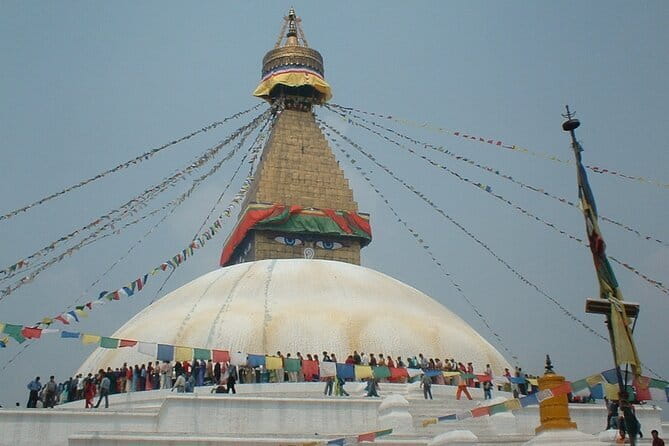
The walk ends at Swotha Square, a pleasant stopping point with temples, shrines, and tea shops. After two hours or more of courtyards and side streets, this is a useful place to pause and collect your thoughts.
Swotha Square also gives the tour a practical ending. Patan Durbar Square is only a few minutes away, so you can continue independently if you still have energy. The main palace complex is ticketed and is not part of the $65 tour price. The museum inside the old palace is specifically recommended and may be worth adding to your plans.
This separation is intentional. The walking experience concentrates on the old town around the main square, while you can visit the major palace area at your own pace. That can work well if you dislike being rushed through a museum. It can also be inconvenient if you expected one combined ticket and a single guided route.
Plan for the extra admission fee and additional time. If you have only a short visit to Patan, booking the tour in the morning and visiting the square afterward creates a sensible half-day plan.
What $65 buys you
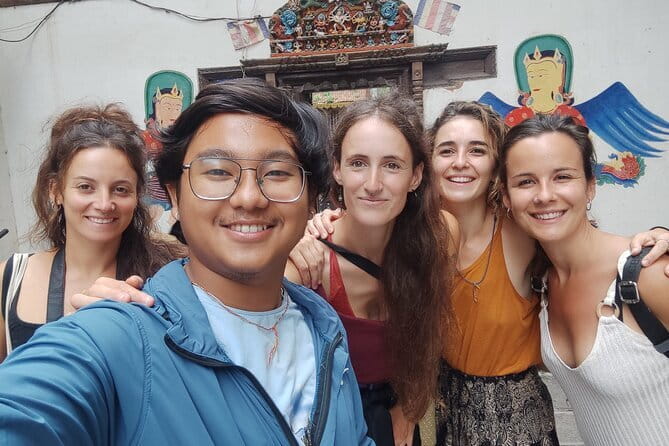
At $65, this is not the cheapest way to walk around Patan. You can enter some public areas independently for little or no cost. The value comes from the explanation, route, and access to places you might not identify on your own.
I would consider the price reasonable if you want help interpreting Newar culture and religious life. Sandip’s reported strengths are particularly important here. His humor and easy manner can make complex material easier to follow, while his eye for lesser-known courtyards keeps the walk from becoming a standard palace-square circuit.
The group cap of 10 also supports the price. A small group is better suited to narrow lanes and intimate courtyards than a large coach-style outing. You are paying for a local guide’s time, not for admissions, transport, or a palace ticket.
The value is weaker if your priority is simply seeing Patan Durbar Square. That area is excluded, and you will need to pay separately to enter it. In that case, an independent visit to the square may be enough, though you will miss the local context this route provides.
Who should book this experience?
I would choose this walk if you want:
- A closer look at local life around Patan’s main monuments
- An introduction to Newar Buddhism and Tantric Hinduism
- Stories about folklore, myths, art, and neighborhood traditions
- A small group rather than a large organized outing
- A guide who can connect old customs with present-day Nepali society
- A morning activity that finishes near Patan Durbar Square
It is especially well suited to curious first-time visitors who want more than photographs. It also works for repeat visitors who have already seen the palace square and now want to understand the surrounding town.
You may want a different plan if you have difficulty walking on narrow streets or standing for explanations. The experience is open to most people, and service animals are allowed, but the supplied details do not promise a step-free route or special mobility support.
The tour requires good weather. If rain or other poor conditions force a cancellation, you are offered another date or a full refund. You can cancel for a full refund up to 24 hours before the start time, but changes or cancellations inside that window are not accepted.
My verdict on Folklore and Everyday Life in Ancient Patan
I like this experience because it gives Patan room to be a real town. Pimbahal, Nyakhachowk, Nag Bahal, and Swotha Square form a route built around courtyards and community spaces rather than only headline monuments.
The strongest reason to book is the guide. Sandip is praised for bringing humor, care, and a large store of local stories to places you might otherwise walk past. The tour’s small group limit helps that personal approach work.
The main caution is scope. This is not a guided visit to Patan Durbar Square, and it does not include admissions or transport. If you understand that from the start, the $65 price can be good value for a thoughtful introduction to Patan’s living culture. Book it if you want context and local stories. Skip it if your only goal is the palace complex.
FAQ
Where does the tour start?
The tour starts at the entrance gate of the old town of Patan at Patan Dhoka, Patandhoka Road, Lalitpur 44600, Nepal.
What time does the tour begin?
The scheduled start time is 10:00 am.
How long does the walk last?
The experience lasts approximately two hours to two-and-a-half hours.
Where does the tour finish?
The tour ends at Swotha Square, which is a few minutes’ walk from Patan Durbar Square.
Is Patan Durbar Square included?
No. Patan Durbar Square is not included. You can visit it independently after the tour, but it requires a separate admission fee.
Are tickets included for the listed stops?
The listed stops, including Pimbahal, Nyakhachowk, Nag Bahal, and Swotha Square, have no admission ticket included or required according to the tour details.
What is included in the price?
An experienced local guide is included.
Is transportation provided?
No. Pick-up and drop-off are not included. The meeting point is near public transportation.
How large is the group?
The tour has a maximum of 10 participants.
New in the Kathmandu listings
- Traditional Momo Making Class★ 5.0 · 10 reviews
- Kathmandu: Ancient City Kirtipur & Pharping Monastery Tour★ 5.0 · 2 reviews
- Kathmandu to Pokhara Premium sofa bus ticket★ 4.0 · 17 reviews
- Women Empowerment Project(Nepali cooking class & jewelry workshop★ 5.0 · 15 reviews
- 7-Day Langtang Valley Trek from Kathmandu★ 5.0 · 1 review
- Kathmandu 2 Nights 3 Days Chitwan Jungle Safari Tour★ 5.0 · 9 reviews
- Yoga Experience Day Trip with Private Transfer From Kathmandu★ 4.0 · 2 reviews
- Wildlife Adventure in Chitwan Nepal★ 4.0 · 4 reviews
Patan Tours, compared.
Kathmandu and Patan Heritage and Living Goddess Experience Tour
Read our review →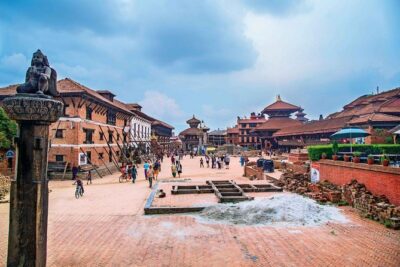
Patan & Bhaktapur Durbar Square Tour with Lunch – Private/Group
Read our review →
Nagarkot Sunrise, Bhaktapur and Patan Durbar Square Tour in Kathmandu
Read our review →Browse the lists this tour appears in