
REVIEW · MARDI HIMAL TREKS
From Pokhara: 5-Day Mardi Himal Base Camp Trek
The mountains arrive one ridge at a time. This five-day trek from Pokhara earns its appeal through rhododendron forests and quiet villages, followed by close views of Mardi Himal and Machapuchre. I like the private format, the included permits and guide costs, and the chance to reach a high viewpoint without committing to a much longer Himalayan route.
I also like the careful pacing on the return day, with time to enjoy sunrise at Base Camp before walking back to Low Camp. The main consideration is physical effort: the first two days can feel demanding, the higher camps are cold, and the meal arrangement needs checking because the package details offer different options.
In This Review
- Key points at a glance
- Why the Mardi Himal route is worth your time
- Day one: Kande, Australian Camp, Pothana, and Pitam Deurali
- Day two: rhododendron woods and Mardi Himal Low Camp
- Day three: the climb to High Camp
- Day four: sunrise at Mardi Himal Base Camp
- Day five: Sidding, Lumre, and the ride back to Pokhara
- Tea houses, meals, and what $181 really covers
- Guides, pace, and the private-group advantage
- What to pack for changing mountain weather
- Who should book this five-day trek?
- Should you book the Mardi Himal Base Camp trek?
- FAQ
- How long is the Mardi Himal Base Camp trek?
- Where can pickup take place?
- Where can I be dropped off after the trek?
- Is this a private trek?
- What languages does the guide speak?
- Are permits and TIMS fees included?
- Where do I sleep during the trek?
- Are meals included?
- Can I hire a porter?
- What documents and safety requirements do I need?
Key points at a glance
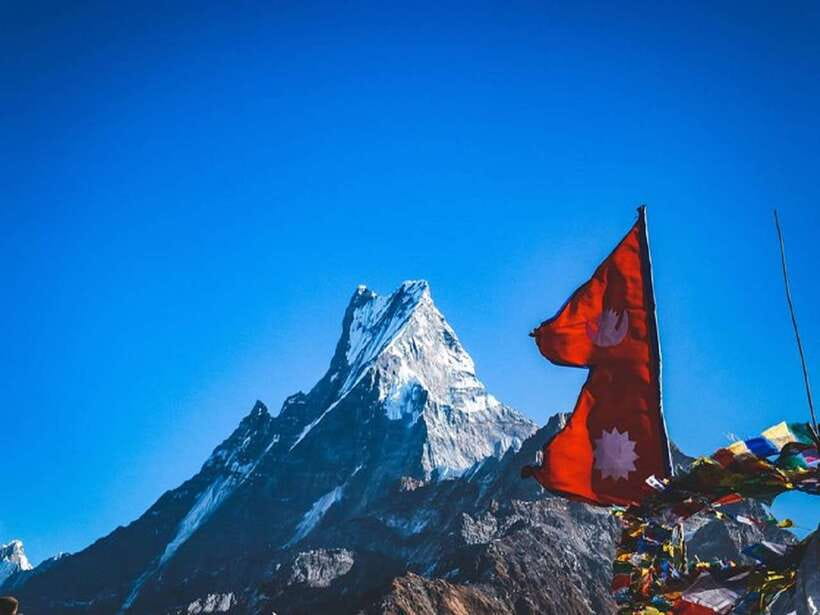
- Mardi Himal and Machapuchre views: The trail brings you unusually close to two of Nepal’s most striking peaks.
- Five days from Pokhara: Transport, permits, tea-house lodging, guide services, and basic trekking gear are arranged in one package.
- Private group format: You can walk at a pace suited to your own group, rather than keeping up with a large mixed party.
- Best praised guides: Santosh received repeated praise for his kindness, English, trail support, and good humor. Sun-Bahadur Nepali and Niva Nepali were also praised for patient guiding and porter help.
- A demanding but manageable route: The opening days require steady uphill walking, while the final two days allow more time to rest.
- Bring cash and warm layers: Food purchases, tea, snacks, and personal costs are not fully covered in every booking option, and temperatures drop sharply higher up.
Why the Mardi Himal route is worth your time
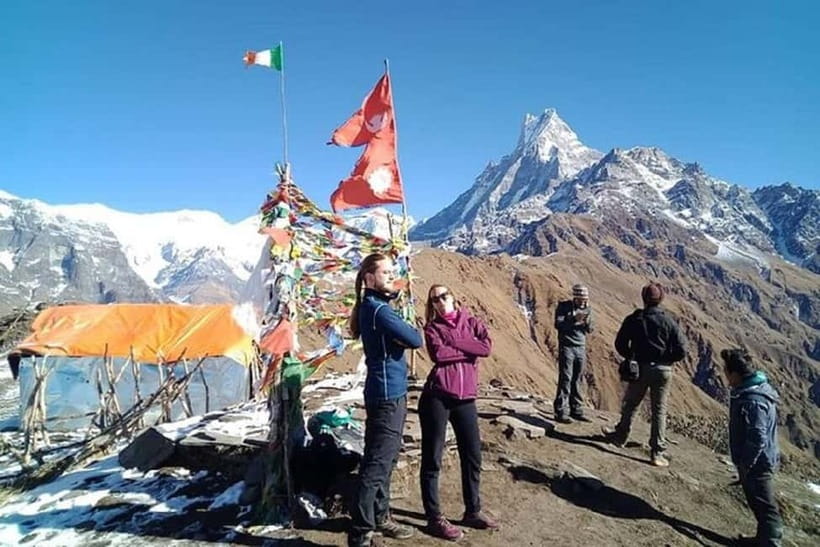
Mardi Himal offers a strong mountain experience in a short window. From Pokhara, you leave the city by vehicle, then walk through wooded paths, small settlements, and high open ground toward the base camp. The route gives you a mix of forest shade and broad Himalayan views rather than only one type of scenery.
I like that the trip is not built around rushing from Pokhara to the highest point and straight back. You sleep at Pitam Deurali, Low Camp, and High Camp, which breaks the climb into useful stages. That matters because the trail becomes harder as you gain height, and a night at each stop gives your body time to adjust.
The route is also a good match for you if Annapurna views appeal to you but you prefer a shorter trek. You still need a reasonable level of fitness, but the schedule is not an all-day race. One person with a knee problem completed the route and described the difficulty as manageable, though hiking poles and careful pacing are sensible choices.
The trail is called off the beaten path in the tour description, but you should not mistake that for easy or empty. You will spend several hours walking on mountain paths, with uphill and downhill sections, cold conditions, and simple accommodation. The reward is a quieter feeling than you get on Nepal’s most famous trekking routes.
More Mardi Himal treks:
- Pokhara: 4-Day Mardi Himal Trek
★ 4.9 · 59 reviews - Private Mardi Himal Trek
★ 5.0 · 42 reviews - From Pokhara: 4-Day Mardi Himal Base Camp Trek
★ 4.9 · 31 reviews
Day one: Kande, Australian Camp, Pothana, and Pitam Deurali
Your day starts with breakfast and a vehicle ride from Pokhara, your hotel, or one of the stated pickup points. You can arrange collection from Pokhara Lakeside, Pokhara International Airport, or Lakeside Road 6. The vehicle takes you to Kande, where the walking begins.
The first day includes Australian Camp and Pothana before continuing to Pitam Deurali. The stated hiking time is about four hours, though your actual day can vary with pace, stops, and trail conditions. The forest sections are especially appealing, with rhododendrons adding color and shade.
Pothana is a useful early stop for lunch and a chance to enjoy the surrounding mountain country. This is not a day of instant summit drama. Instead, you get a gradual introduction to village life and forest paths before the route begins to feel more remote.
The first two days are often the more tiring part of this trip. You should arrive with shoes that already feel comfortable, not brand-new footwear that still needs breaking in. A walking stick or trekking poles can also help on uneven sections and later on the downhill stretches.
Pitam Deurali provides your first overnight stop in a basic tea house or lodge. Expect simple mountain accommodation rather than hotel comforts. The value here comes from being on the route, eating and sleeping near the trail, and avoiding a long return to Pokhara each evening.
Day two: rhododendron woods and Mardi Himal Low Camp
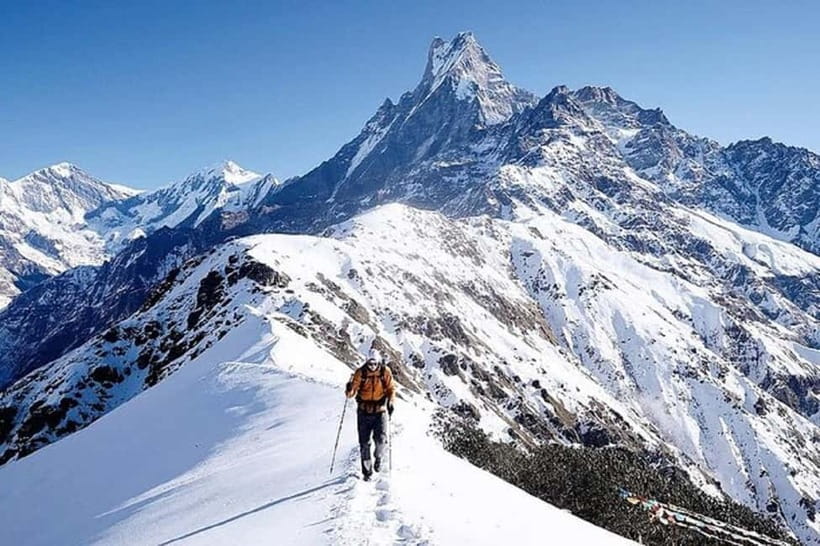
After breakfast, you continue through settlements and rhododendron forest toward Low Camp. This is the longest stated walking day, at about six hours, so I would treat it as the day that tests your legs most.
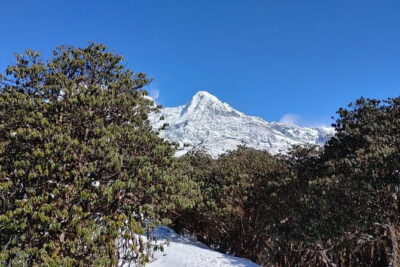
The forest gives the route a pleasant rhythm. You walk under trees for part of the way, pass local communities, and then reach clearer sections where the views begin to open. The change from village and woodland to higher mountain terrain is one of the most satisfying parts of this trek.
A lunch stop breaks up the climb. Food is available along the route, but you need to understand exactly what your booking covers. One package option includes meals, while the general details also say meals can be purchased separately. Ask before departure so you know how much cash to carry and whether the price includes breakfast, lunch, and dinner.
Low Camp is a major point on the route because the trees begin to thin and the views become more open. You sleep there overnight, with enough time to rest after the longer walking day. Some people may find the accommodation basic, but that is part of the practical tradeoff for staying high on the trail.
One useful money tip comes from a past trekker who estimated that buying meals separately could save money, with food costing roughly £16 per day. That figure is not a guaranteed current price, so use it only as a rough guide. Even if meals are covered, you may still want cash for tea, snacks, and personal expenses.
Day three: the climb to High Camp
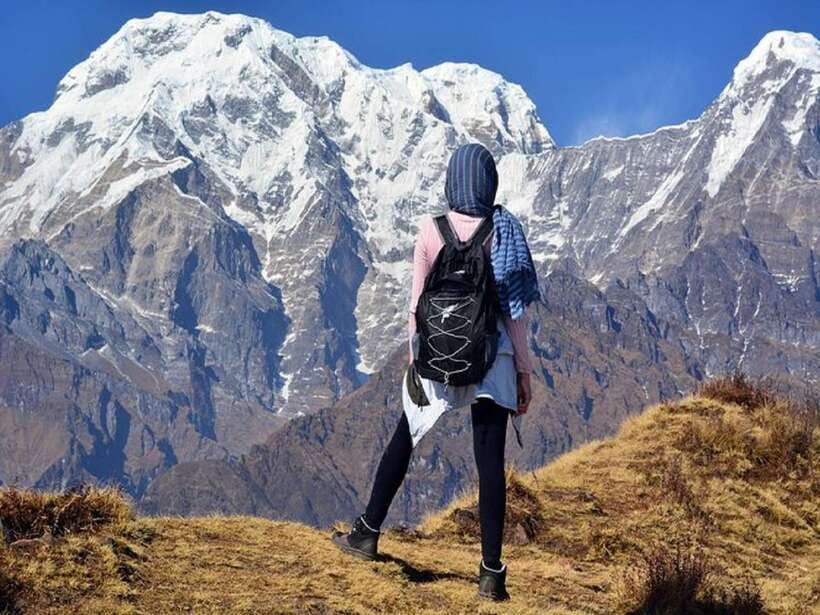
Day three covers about four hours of hiking to High Camp. The distance is shorter than the previous day, but the increasing altitude can make the walk feel harder. Slow and steady is the right approach here.
You continue upward through higher ground with increasingly broad views of the Annapurna range. The trail has a more exposed feel than the lower forest sections, so a jacket, hat, and sun protection are important even when the morning begins pleasantly.
High Camp is the final settlement area on this route. That detail matters: after this point, you should expect a more stripped-back mountain setting and fewer places to buy anything. Pack your day bag with water, warm clothing, personal medication, and anything you may need before returning to Low Camp.
The overnight stay gives you a useful position for the next morning’s Base Camp walk. It also means you do not need to climb from a much lower village before sunrise. That arrangement makes the early start more practical, though cold temperatures may make getting out of bed the hardest part of the day.
Guides are especially useful here. Santosh was repeatedly praised for his friendly manner, clear English, and practical help. A good guide can manage the pace, point out trail options, and make sure you do not treat the high section like a casual stroll.
More walking in the hills of Pokhara:
- Poon hill Trek 3 days
★ 5.0 · 176 reviews - Trekking in Annapurna/Langtang/Everest/Upper Mustang regions
★ 5.0 · 161 reviews - Pokhara: 4-Day Ghorepani, Poonhill & Ghandruk Mountain Trek
★ 5.0 · 132 reviews - Ghorepani – Poon Hill Trek 3N-4D
★ 5.0 · 125 reviews
Day four: sunrise at Mardi Himal Base Camp
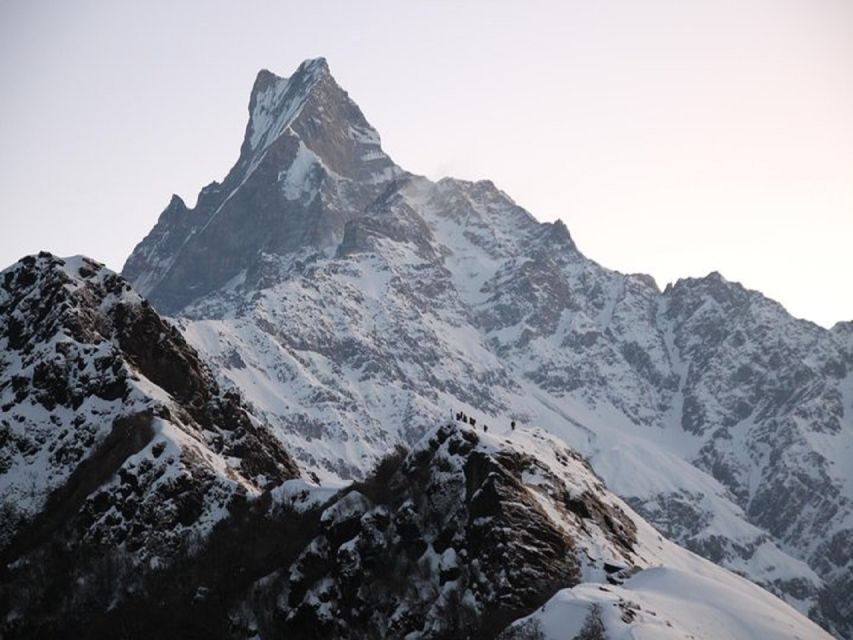
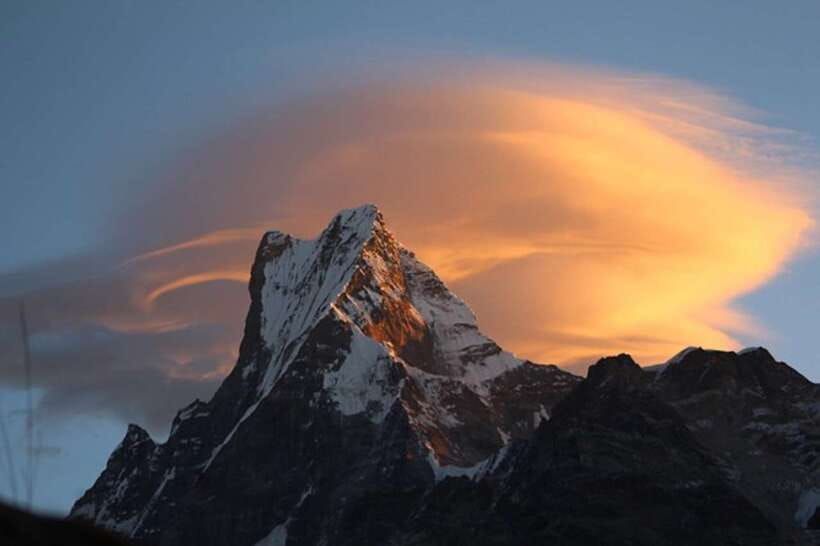
Day four is the visual high point. After breakfast, you walk toward Mardi Himal Base Camp, with about three hours of hiking listed for the day. The trip description places sunrise among the key experiences, so expect an early start if you want the best morning light.
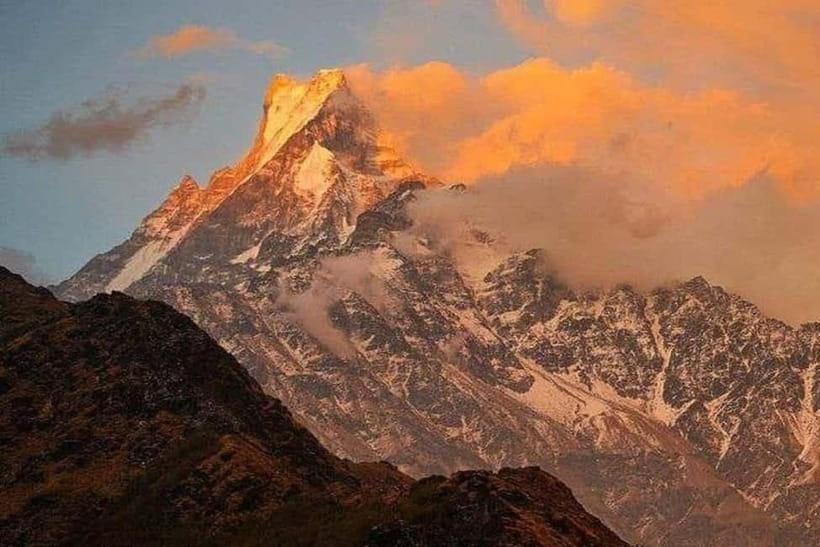
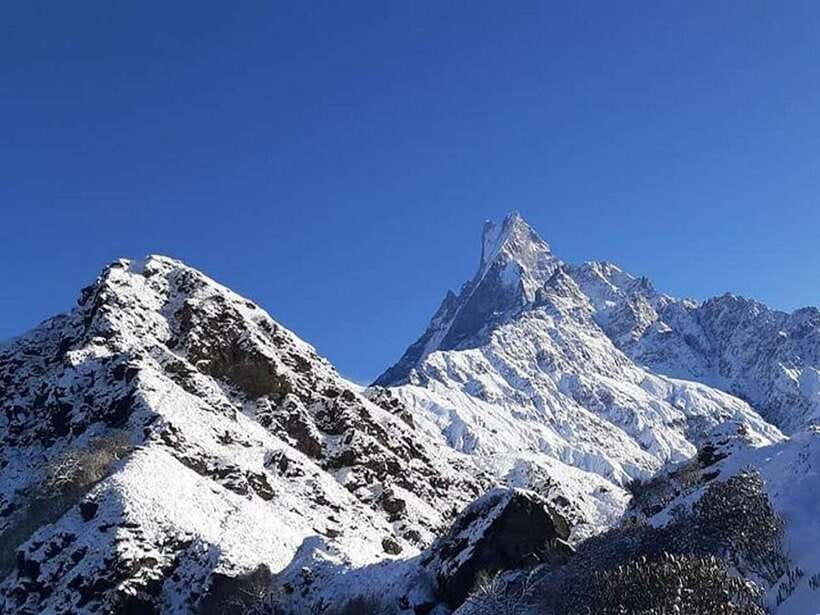
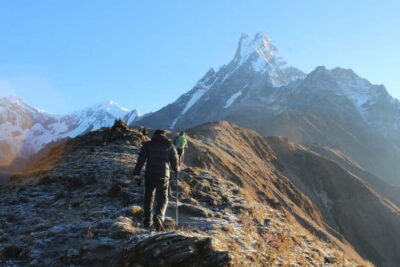
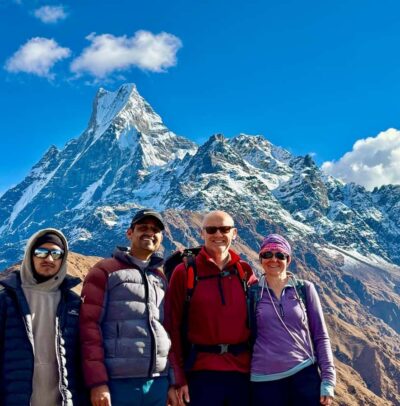
From the high section, you get broad views toward the Annapurna range and a close look at Mardi Himal and Machapuchre. Machapuchre is often called Fishtail because of its distinctive double-peaked shape, and the views of that mountain were singled out as especially impressive.
The important point is that Base Camp is not simply a finish line for a photograph. You are given time to look around before returning to Low Camp. That pause makes the day feel less rushed and gives you room to appreciate the scale of the peaks.
The return to Low Camp takes about four hours. This is where knees and ankles can complain, especially after the morning climb. Hiking poles are worth considering, and anyone with a knee issue should discuss the route with the guide and plan a conservative pace.
You spend the night at Low Camp again. The repeated stay is practical because it avoids adding another high-altitude overnight and gives you a familiar place to rest after the Base Camp outing. The final day then becomes a long descent toward the road rather than another major climb.
Day five: Sidding, Lumre, and the ride back to Pokhara
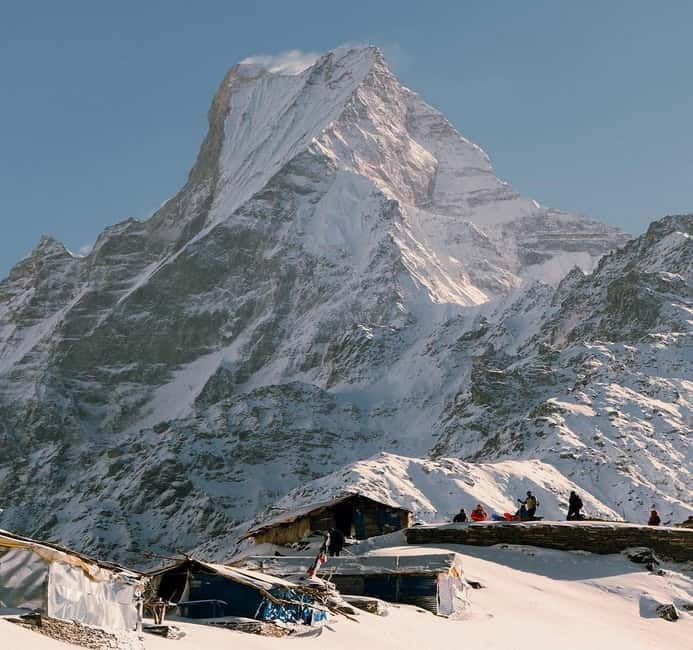
The final day takes you downhill after breakfast. You walk toward Sidding, stop for lunch, and then continue to Lumre. The listed walking time is about five hours, so do not assume the return is effortless simply because you are losing altitude.
Downhill walking can be tougher than climbing for some people. Your knees may take more strain, particularly after several days on the trail. This is another reason to carry a stick, use trekking poles if you have them, and keep your day pack light.
The route ends near Lumre and the Lwang Ghalel area, where your vehicle waits for the ride back to Pokhara. One useful piece of advice is to expect a bumpy road near the end of the day. A jeep is worth considering if that option is available, especially after a tiring descent.
The vehicle returns you to Pokhara Lakeside, Lakeside Road 6, or Pokhara International Airport. Airport drop-off is useful if you are connecting to another part of Nepal, but confirm the timing before booking a flight on the same day. The supplied information does not promise a fixed return hour.
One memorable possibility came from an extra afternoon arranged by guide Santosh, who took a group to Lwang village to watch a volleyball tournament and barbecue with local people. That is not presented as a guaranteed part of the route, so treat it as an example of how a private group and a flexible guide may add local contact when time allows.
Tea houses, meals, and what $181 really covers
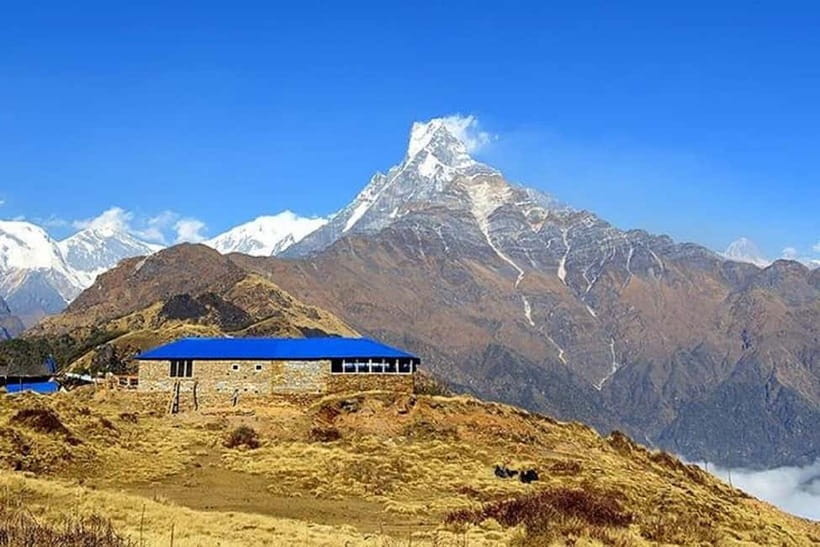
At $181 per person, this trek can offer good value if you want a guided private trip with the main administrative work handled for you. The price includes round-trip transport, permits, TIMS fees, required paperwork, tea-house or lodge accommodation, government and local taxes, a first-aid kit, and the guide’s salary, food, lodging, insurance, transport, and equipment.
It also includes luggage storage in Pokhara. That is useful because you can leave nonessential belongings behind and carry only what you need on the trail. Trekking sticks and a sleeping bag are available as needed, which may save you from renting every item separately.
The weak point is the meal wording. One part of the package says meals are included depending on the option selected, while another says meals are not included and can be purchased along the route. Do not guess. Confirm the exact meal plan before you pay, then budget for tea, snacks, drinks, and personal items either way.
A porter can be hired for an additional $20 per day. That may be worthwhile if you have a heavy bag, a knee concern, or limited experience with multi-day walking. The guide can carry a day pack in some situations, as happened on a downhill section for one group, but you should not assume that all porter services are included.
Guides, pace, and the private-group advantage
The guide is one of the strongest parts of this experience. Santosh received repeated praise for his care, English, humor, and ability to help first-time trekkers. He even shared fruit during one trek and later invited a group to his home for dal bhat, an example of the personal connection that can grow during five days on the trail.
Sun-Bahadur Nepali and Niva Nepali were also praised for helping with food, backpacks, trail choices, and slow walking speeds. Their support included porter work, so ask in advance who will guide your group and whether a porter is included or must be added.
A private group gives you more control than a large scheduled party. You can stop for photographs, take a slower pace, or ask questions about local culture and natural features. The guide’s role is not only to lead the way. It is also to help you judge how hard to push when the trail gets steep or the weather changes.
The listed guide languages are English, Hindi, and Nepali. English ability was specifically praised for Santosh, which is useful if you want more than basic directions. Still, guide assignment can vary, so confirm your guide’s name and language before departure.
What to pack for changing mountain weather
Temperatures can shift sharply between Pokhara and the higher camps. Bring a jacket and clothing for both warm and cold conditions, with extra attention to the overnight stays at High Camp and Low Camp.
Comfortable shoes are essential. Add a hat, comfortable clothes, trekking gear, a camera, cash, and a hair tie if you have long hair. A trekking stick or sleeping bag may be available through the operator, but ask before relying on that option.
You must submit a copy of your passport at least one day before the trek so the permits can be arranged with the Government of Nepal. Travel insurance is mandatory, and emergency rescue services are available if required. Insurance should be taken seriously because the route reaches high, cold terrain and can be physically demanding.
Who should book this five-day trek?
I would recommend it to you if you want Himalayan views, a private guide, and a structured five-day plan from Pokhara. It suits people who are comfortable walking for four to six hours a day and who accept simple tea-house accommodation.
It is also a good first multi-day trek for someone who wants support with permits, transport, route decisions, and luggage. The positive experiences of first-time trekkers suggest the route is achievable for many people, but you still need to be honest about your fitness and any knee or joint problems.
I would hesitate if you want a luxury trip, dislike cold nights, or expect every meal and extra drink to be covered without checking the fine print. The route is not a sightseeing bus tour with a little walking. It asks for real effort, particularly on days two and five.
The 5.0 rating from 10 published ratings is encouraging, and the praise focuses on the things that matter most here: helpful guides, striking views, good support, and a manageable but genuine challenge. Still, mountain weather can change, and no guide can guarantee sunrise or clear peaks.
Should you book the Mardi Himal Base Camp trek?
Book this trek if you want a well-supported route with strong mountain views and a good chance to connect with your guide and local communities. At $181, the package is attractive when the permit, transport, lodging, guide expenses, storage, and basic gear are useful to you.
Before booking, confirm three details: the exact meal option, whether you need a porter, and the pickup and return timing. Then bring cash, warm layers, good shoes, and travel insurance. If you can handle the uphill work and simple lodging, Mardi Himal offers a compact Himalayan experience with views that feel much bigger than the five-day schedule.
FAQ
How long is the Mardi Himal Base Camp trek?
The experience lasts five days, including transport from Pokhara, overnight stays along the trail, the Base Camp walk, and the return drive to Pokhara.
Where can pickup take place?
Pickup is available from Pokhara Lakeside, Pokhara International Airport, and Lakeside Road 6. Hotel-lobby pickup can also be arranged before the scheduled collection time.
Where can I be dropped off after the trek?
Drop-off is available at Pokhara Lakeside, Pokhara International Airport, and Lakeside Road 6.
Is this a private trek?
Yes. The activity is offered for a private group.
What languages does the guide speak?
The listed guide languages are English, Hindi, and Nepali.
Are permits and TIMS fees included?
Yes. The package includes required trekking permits, necessary paperwork, and TIMS fees.
Where do I sleep during the trek?
Accommodation is provided in simple tea houses or lodges along the route. Overnight stops include Pitam Deurali, Low Camp, and High Camp, with another night at Low Camp after the Base Camp walk.
Are meals included?
Meals depend on the option selected. The booking details also state that meals may be purchased during the trek, so confirm the exact meal arrangement before booking and carry cash for food or snacks.
Can I hire a porter?
Yes. A porter is available as an optional extra for $20 per day.
What documents and safety requirements do I need?
You must provide a copy of your passport at least one day before the trek so permits can be arranged. Travel insurance is mandatory, and emergency rescue services are available if needed.
New in the Pokhara listings
- Pokhara: Pokhara Highlights Tour by Bus★ 3.6 · 10 reviews
- Discover Pokhara in Style: Private Vehicle Service with Driver★ 5.0 · 5 reviews
- Multi-Day Tour from Pokhara, Poon Hill and Mulde Trek★ 5.0 · 1 review
- Pokhara in 5 Hours: Lake, Museum, Cave, Falls & Pagoda Hill★ 4.5 · 16 reviews
- Private 4 Day Poon Hill Trek from Pokhara★ 5.0 · 16 reviews
- 4 Day Mardi Himal Base Camp Trek from Pokhara★ 5.0 · 18 reviews
- From Pokhara Full Day Entire Pokhara Tour with Guide★ 5.0 · 1 review
- Ultralight Flight: Into The Heart Of The Mountains (90 min)★ 5.0 · 1 review
Mardi Himal Treks, compared.

Browse the lists this tour appears in