
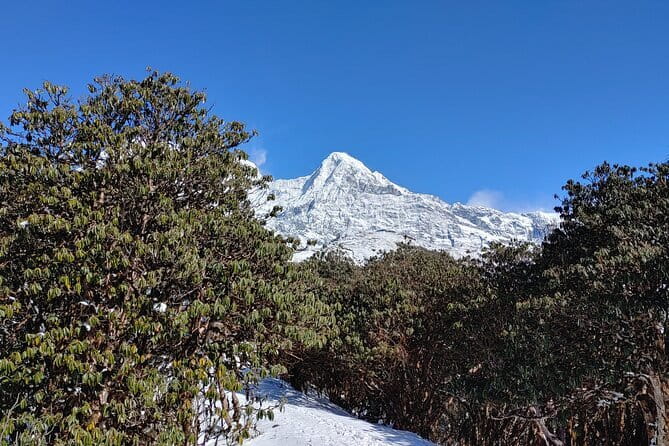
REVIEW · MARDI HIMAL TREKS
Mardi Himal Trek
Mardi Himal packs big mountain views into a manageable trek. This 11-day trip links Kathmandu, Pokhara, forest trails, mountain lodges, and Mardi Base Camp, making it a good first Himalayan walk. I especially like the private-group format and the mix of rhododendron woods, small villages, and high ridgelines. The main caution is altitude: the route reaches about 4,500 meters at Mardi Base Camp, so “beginner-friendly” does not mean effortless.
I also like that the price includes domestic flights, permits, a licensed guide, porter support, lodging, and most meals. Guides such as Birendra have earned warm praise for patient pacing, practical help, and taking good photos. You should still expect cold nights, basic mountain accommodation, long walking days, and possible weather changes.
In This Review
- Mardi Himal Trek at a glance
- Why Mardi Himal works for first-time trekkers
- Day 1: Kathmandu and a simple start
- Day 2: Kathmandu to Pokhara, then Kande to Deurali
- Day 3: Deurali to Forest Camp through rhododendron woods
- Day 4: Forest Camp to Low Camp and the 3,000-meter mark
- Day 5: High Camp and a slower altitude day
- Day 6: The main goal, Mardi Base Camp
- Day 7: Descending from High Camp to Sidding
- Day 8: Sidding to Lwangghale through village country
- Day 9: Lwangghale tea gardens and return to Pokhara
- Day 10: Pokhara sights and a recovery day
- Day 11: Kathmandu city sights and trip finish
- What the $1,058 price really covers
- Who should book this trek?
- Booking details and cancellation terms
- FAQ
- How long does the Mardi Himal Trek take?
- What is included in the price?
- How high is Mardi Himal Base Camp?
- Is this trek suitable for beginners?
- Are meals in Kathmandu and Pokhara included?
- Can I cancel for a full refund?
- Should you book the Mardi Himal Trek?
Mardi Himal Trek at a glance
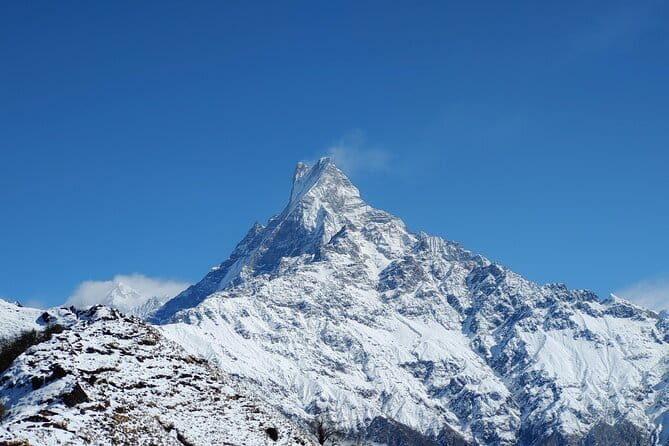
- Mardi Base Camp reaches about 4,500 meters, making the final climb the trip’s biggest physical test.
- The route starts near Pokhara, then passes Deurali, Forest Camp, Low Camp, High Camp, Sidding, and Lwangghale.
- Rhododendron and pine forests make the lower and middle sections especially attractive in spring.
- Domestic flights between Kathmandu and Pokhara are included, along with private ground transfers.
- A licensed guide and porter are provided, with meals, lodging, salary, and insurance covered for the trekking staff.
- The trip is private, so your group can walk at a more suitable pace than on a large fixed group departure.
Why Mardi Himal works for first-time trekkers
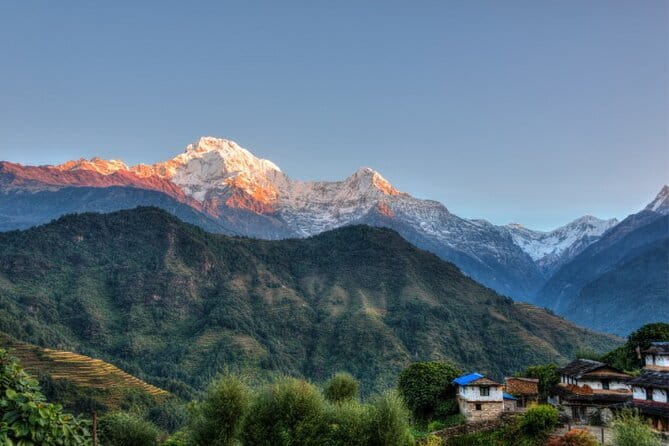
Mardi Himal is a useful introduction to Nepal’s mountain routes because it gives you a clear sense of progression. You begin with city hotels and road transfers, move into villages and woodland, then reach open high-country views near High Camp and Base Camp.
The trail is described as relatively easy compared with longer or more demanding Himalayan routes, but you should read that carefully. Days run from about five to seven hours, and the altitude changes quickly. The approach to Base Camp can be tiring, particularly after several days of walking.
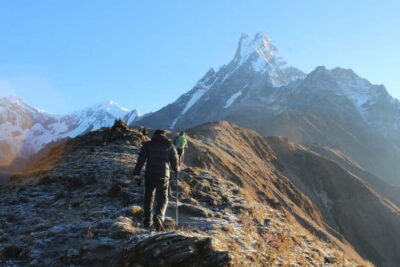
The reward is a close view of the Annapurna Massif, Mount Machhapuchhre, and Mardi Himal. The scenery changes often enough to keep the walk interesting. Lower sections feel rural and wooded, while the upper route is more exposed and dominated by mountain views.
I like this variety. You are not simply walking through one unchanging forest for a week. Each day has a different feel, and the final approach gives you a clear goal.
More Mardi Himal treks:
- Mardi Himal Trek Nepal
★ 5.0 · 29 reviews - 7 Days Mardi Himal Trek
★ 5.0 · 1 review - Pokhara: 4-Day Mardi Himal Trek
★ 4.9 · 59 reviews
Day 1: Kathmandu and a simple start
You arrive at Kathmandu airport, complete your entry formalities, and meet a company employee or tour leader. A private vehicle then takes you to Thamel, where you check into a three-star hotel.
The first day is intentionally light, with roughly 30 minutes of scheduled activity. That is sensible after an international flight. You can rest, sort your bags, and meet the trekking team without being pushed straight onto a trail.
Thamel is a practical base for the beginning and end of the trip. The inclusion of airport and city transfers also removes one common Nepal headache: arranging a vehicle after a long flight.
Meals in Kathmandu are not generally included, apart from the breakfasts covered by the package. Plan for extra spending on lunches, dinners, drinks, WiFi, hot showers, tips, and personal purchases.
Day 2: Kathmandu to Pokhara, then Kande to Deurali
The trip uses an early flight from Kathmandu to Pokhara. From Pokhara, a vehicle takes you to Kande, the trailhead area for the first walking section.
The day includes about five hours of walking. The route begins gently and heads toward Deurali, with the trail becoming more interesting as you leave the road and enter the hills.
Deurali is an important first night because it gives you your first true mountain-lodge experience. You can expect a simple stay rather than hotel comfort, along with a hot mountain meal and the chance to settle into the rhythm of early breakfasts, walking, and basic rooms.
The early flight saves a long road journey and gives you more time on foot. It also means an early start, so keep your airport transfer and walking clothes ready the night before.
Day 3: Deurali to Forest Camp through rhododendron woods
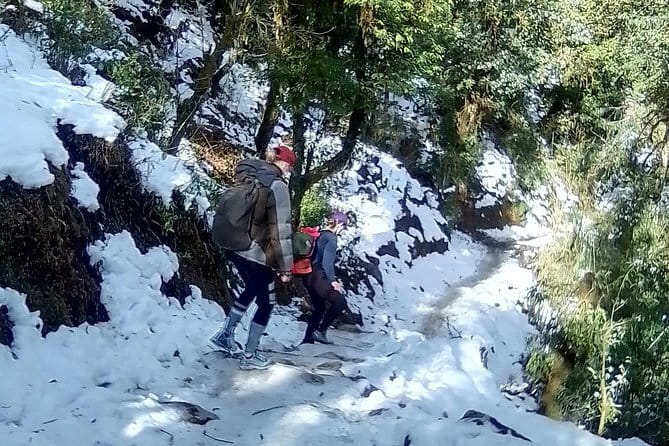
After breakfast in Deurali, you walk for around six hours toward Forest Camp. The path begins fairly level, then climbs through woodland.
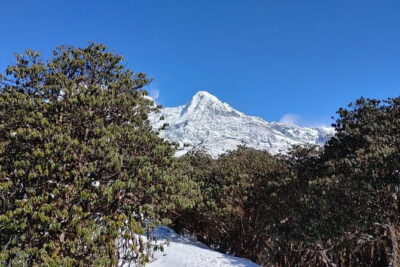
This is one of the route’s most pleasant sections. Rhododendron trees add color in spring, while pine and mixed forest provide shade at other times of year. The trail feels more enclosed here than it will at High Camp, which makes the later open views feel even more dramatic.
Forest Camp is not about entertainment. Its value is its setting and its position on the route. You are higher, closer to the main ridgeline, and beginning to feel the change in temperature and walking conditions.
The day is long enough to test your legs, but the supplied itinerary presents it as a steady progression rather than a race. Let your guide set the pace. If Birendra is leading your departure, his calm support and willingness to adjust the route have been praised by past clients, though guide assignment should be confirmed before booking.
More walking in the hills of Kathmandu:
- Everest Base Camp Trek – 14 Days
★ 5.0 · 1,499 reviews - Everest Base Camp Trekking
★ 5.0 · 485 reviews - Nagarkot Sunrise View and Day Hiking from Kathmandu
★ 5.0 · 471 reviews - Annapurna Circuit Trek with Tilicho Lake
★ 5.0 · 368 reviews
Day 4: Forest Camp to Low Camp and the 3,000-meter mark
The fourth day covers about five hours and continues through mixed woodland. Since the route is now above 3,000 meters, the walking distance is kept shorter.
That reduction matters. At altitude, a modest schedule is often more useful than trying to cover maximum ground every day. You will have time to walk carefully, drink water, eat lunch at Low Camp, and notice how your body responds.
The route continues toward the higher camps, with forest gradually giving way to more open mountain country. The exact feel of the trail depends on weather and pace, but you should expect more effort as the route rises.
Bring warm layers where you can reach them easily. Do not bury your jacket at the bottom of your duffel. Cold conditions become a real concern higher up, and one past group specifically emphasized carrying enough winter clothing.
Day 5: High Camp and a slower altitude day
The next five-hour walking day is designed around acclimatization. You remain above 3,000 meters, and the shorter schedule gives your body more time to adjust before the Base Camp push.
Hydration is treated as a serious part of the plan. Drink regularly, even when you are not thirsty. You should also tell your guide promptly if you feel unwell, unusually tired, or affected by the altitude.
High Camp is the key overnight point before Mardi Base Camp. It is also where the trip becomes more physically demanding and less forgiving. Facilities are basic, and temperatures can drop sharply, so a sleeping bag and down jacket are useful inclusions rather than decorative extras.
A practical food tip comes from the mountain stops: carry small snacks, but do not assume you need to pack every meal from Kathmandu. Food is available at the lodges, and one memorable recommendation is the pizza at High Camp. It may not be the meal you expect in the Himalayas, but it can be welcome before or after a hard walking day.
Day 6: The main goal, Mardi Base Camp
The Base Camp day takes about seven hours and is the most demanding part of the trek. After breakfast, you follow the high route toward Mardi Base Camp, with a major viewpoint along the way.
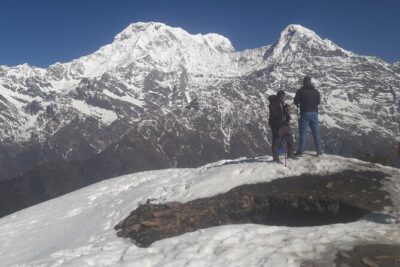
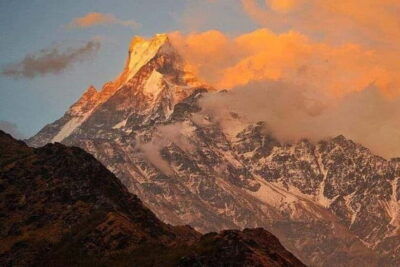
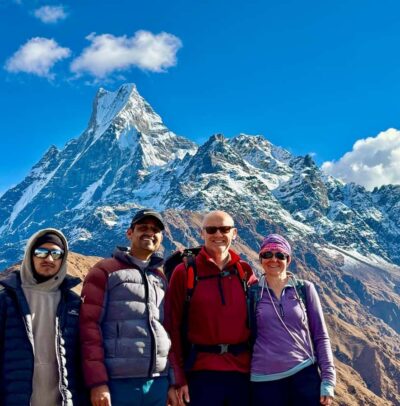
This is where the trip earns its price and effort. From the viewpoint and Base Camp area, you can see the Annapurna Massif, Mount Machhapuchhre, and Mardi Himal. The mountain views are the clearest reason to choose this route.
The final climb can be exhausting. The altitude, cold, and length of the day all add up, and you should not judge your fitness only by how comfortable you felt in the forest. The guide’s role matters here. A careful leader can adjust the pace, watch the group, and decide how far is sensible in changing conditions.
Reaching Base Camp is the emotional high point for many people. The route is short enough to feel achievable, but serious enough to make the arrival meaningful. Allow time for photographs, but do not rush the descent or treat the viewpoint as a quick photo stop.
Day 7: Descending from High Camp to Sidding
The route turns downhill toward Sidding, with about six hours of walking. The first part passes through rhododendron and pine forest, then continues toward lower ground.
Descending is easier for breathing, but it can be hard on the knees. One group noted that the final days were tiring for their knees, so trekking poles or careful downhill pacing may be useful. The provided information does not promise poles, so ask the operator if you need them.
Depending on timing, lunch is taken around Low Camp. The descent gives you a different view of the same forest route, and the return to lower altitude usually feels welcome after the cold upper camps.
Sidding marks a shift away from the high mountain section. You are still on a trekking route, but the village setting feels more settled and local than the exposed camps above.
Day 8: Sidding to Lwangghale through village country
This six-hour day is often the most relaxed in character. The route is described as mostly flat and leads toward Lwangghale, a village with old family houses and a more traditional rural feel.
I like this section because it balances the famous mountain views with ordinary village life. The trek is not only about standing beneath giant peaks. It is also about walking between homes, seeing how the route connects communities, and spending time in places that are quieter than Pokhara or Kathmandu.
The village accommodation is basic, but that is part of the point. You are trading hotel facilities for a closer look at mountain life. Keep some patience for uneven schedules, limited hot water, and simple WiFi access, since personal connectivity and hot showers are not included.
Day 9: Lwangghale tea gardens and return to Pokhara
An early morning walk through the tea gardens around Lwangghale is planned before breakfast. Sunrise adds a special quality to this section, with the hills and fields changing color as the day begins.
After breakfast, the journey continues back toward Pokhara, with around five hours of activity. The shift from a remote village to a lakeside city is noticeable. Pokhara offers a softer landing after the trek, with more food choices, comfortable accommodation, and time to rest.
The package includes a three-star hotel in Pokhara with breakfast. Other meals are your responsibility unless specifically listed, so budget for them separately.
Day 10: Pokhara sights and a recovery day
After breakfast at a lakeside restaurant, you have a guided city tour. Listed stops include Davis Waterfall and Gupteswor Mahadev Cave, along with other Pokhara attractions.
This is a useful recovery day because you are sightseeing rather than climbing. You can enjoy the city at a gentler pace, though the five-hour schedule still gives the day structure.
Pokhara is also a good place to think about the contrast between the trek and the city. A few days earlier, you were sleeping above 3,000 meters and worrying about cold layers. Now you can enjoy a lakeside meal and ordinary transport. That contrast is one of Nepal’s pleasures.
Day 11: Kathmandu city sights and trip finish
The final day returns you to Kathmandu. A town guide takes you around major cultural sites, giving you a final look at the capital before the activity ends back at the Thamel meeting point.
The listed city portion lasts about five hours. It is a worthwhile way to use the final day, though it may feel full after the early domestic flight and the preceding trek.
The itinerary combines nature with city culture rather than treating the trek as an isolated mountain holiday. That makes the 11-day format useful if you want more than a quick walk near Pokhara.
What the $1,058 price really covers
At $1,058 per person, the package is not simply a hiking guide and a bed. It includes:
- Kathmandu to Pokhara and return flights, including the guide’s ticket
- Private airport, city, sightseeing, and ground transfers
- Kathmandu and Pokhara hotel stays with breakfast
- ACAP and TIMS permits
- A government-licensed trekking guide
- A porter, with food, lodging, salary, and insurance covered
- Mountain lodging in twin-share rooms
- Breakfast for 10 days, eight lunches, and eight dinners
- Government taxes, local fees, GST, and company charges
- A sleeping bag, down jacket, and duffel bag on request
That list gives the price solid value, especially because domestic flights and staff costs can add up quickly in Nepal. The porter is also more than a convenience. Proper porter support lets you walk with a lighter daypack and helps keep the trekking economy local.
The main extras are international airfare, a Nepal visa, travel and rescue insurance, meals in Kathmandu and Pokhara except where specified, drinks, WiFi, hot showers, personal expenses, and tips.
The private format is another value point. Only your group participates, so you are not assigned to a large mixed party. Ask about the maximum group size before booking if privacy and pace are especially important to you.
Who should book this trek?
I would recommend Mardi Himal to a reasonably fit first-time trekker who wants strong mountain scenery without signing up for a much longer route. It also suits experienced hikers who prefer a shorter route with village stays, forest walking, and a clear summit-style objective at Base Camp.
You should be comfortable walking five to seven hours a day and sleeping in basic lodges. You do not need to be an expert mountaineer, but you do need patience with altitude, cold, uneven trails, and changing weather.
This trip is less suitable if you want luxury, guaranteed clear skies, short walking days, or complete independence from a guide and porter. It is also not a good match if you plan to carry only city clothes. Bring proper warm layers, and keep snacks handy for the longer days.
The company allows service animals and describes the activity as suitable for people with moderate physical fitness. Still, the high altitude and mountain trails mean you should discuss your own needs with the operator before paying.
Booking details and cancellation terms
The meeting point is Mission Himalaya Treks and Expeditions on Thamel Marg in Kathmandu. Pickup is offered, and the activity ends back at that meeting point after the Kathmandu portion.
Booking confirmation is provided at the time of reservation. The stated operating period runs from February 28, 2024, through November 25, 2026, with availability listed every day.
You can cancel up to 24 hours before the local start time for a full refund. Cancellations or changes made inside 24 hours are not accepted for a refund, and costs are not returned if you leave the trek early.
FAQ
How long does the Mardi Himal Trek take?
The trip lasts approximately 11 days, including Kathmandu and Pokhara stays, domestic flights, city sightseeing, and the trek itself.
What is included in the price?
The price includes private ground transfers, Kathmandu to Pokhara and return flights, three-star hotel stays in Kathmandu and Pokhara with breakfast, trekking permits, mountain lodging, a licensed guide, a porter, listed meals, taxes, and trekking equipment available on request.
How high is Mardi Himal Base Camp?
Mardi Himal Base Camp is listed at about 4,500 meters in the tour information and trip details.
Is this trek suitable for beginners?
The route is considered relatively easy compared with many Himalayan treks, and it is suitable for people with moderate physical fitness. You should still prepare for five to seven-hour walking days, cold conditions, and altitude above 3,000 meters.
Are meals in Kathmandu and Pokhara included?
Breakfast is included at the Kathmandu and Pokhara hotels. Other meals in those cities are not included unless specifically stated.
Can I cancel for a full refund?
Yes. You can cancel at least 24 hours before the experience start time for a full refund. Cancellations or changes made less than 24 hours before the start time are not refunded.
Should you book the Mardi Himal Trek?
Book it if you want a well-supported first Himalayan trek with impressive Annapurna views, a private group, domestic flights, and porter assistance included. The best parts are the changing scenery, the climb to Mardi Base Camp, the rhododendron forests, and the chance to spend time in villages such as Sidding and Lwangghale.
Before booking, confirm the guide assignment, group size, equipment request, and exact accommodation plan. Pack for real cold at High Camp, protect your knees on the descent, and leave room in your budget for city meals, drinks, WiFi, hot showers, insurance, and tips.
For the right hiker, this is a strong-value route: challenging enough to feel like a true Himalayan achievement, but compact enough to fit into an 11-day Nepal holiday.
New in the Kathmandu listings
- Traditional Momo Making Class★ 5.0 · 10 reviews
- Kathmandu: Ancient City Kirtipur & Pharping Monastery Tour★ 5.0 · 2 reviews
- Kathmandu to Pokhara Premium sofa bus ticket★ 4.0 · 17 reviews
- Women Empowerment Project(Nepali cooking class & jewelry workshop★ 5.0 · 15 reviews
- 7-Day Langtang Valley Trek from Kathmandu★ 5.0 · 1 review
- Kathmandu 2 Nights 3 Days Chitwan Jungle Safari Tour★ 5.0 · 9 reviews
- Yoga Experience Day Trip with Private Transfer From Kathmandu★ 4.0 · 2 reviews
- Wildlife Adventure in Chitwan Nepal★ 4.0 · 4 reviews
Mardi Himal Treks, compared.

Browse the lists this tour appears in