
REVIEW · PATAN TOURS
Kathmandu: Patan Buddhist Circuit Tour with Pickup
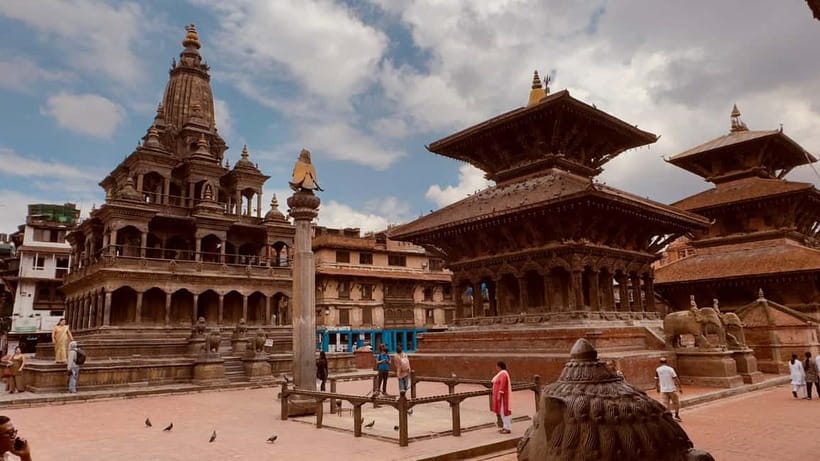
Patan’s quiet courtyards tell the best stories. This four-hour private tour takes you from Kathmandu to the Golden Temple, Mahabouddha Temple, Tibetan monasteries, and lesser-known bahals, with a local English-speaking guide to explain what you are seeing. I like the hotel pickup and drop-off, especially when Kathmandu traffic and unfamiliar streets could eat into a short visit. I also like the focus on Vajrayana Buddhism and Newari culture rather than a quick parade of photo stops.
The main consideration is that entrance fees are not included in the $60 price. The tour also describes a traditional Newari or Tibetan lunch, but lunch is not listed among the included services, so I would confirm that detail before booking. Still, the private format and guide-led explanations give this outing real value, particularly if you have already seen Patan’s major monuments but missed the meaning behind them.
In This Review
- Key points to know before you book
- Why this four-hour tour makes sense from Kathmandu
- Golden Temple: a strong first stop
- Mahabouddha Temple and its terracotta detail
- Bahals: Patan’s courtyards away from the main route
- Tibetan monasteries and visible Buddhist practice
- The guide is the main reason to choose this tour
- Lunch, timing, and the points that need checking
- Who will enjoy this Patan Buddhist circuit?
- Should you book this $60 Patan tour?
- FAQ
- Where does the tour begin?
- How long does the Patan Buddhist Circuit Tour last?
- What language does the guide speak?
- Is this a private tour?
- Which Buddhist sites are included?
- Are entrance fees included in the price?
- Is hotel transportation provided?
- What should I wear and bring?
Key points to know before you book
- The Golden Temple opens the tour with daily Buddhist-Newar rituals, golden decoration, and a close look at monastic customs.
- Mahabouddha Temple is a terracotta work of art, modeled on the famous temple at Bodhgaya in India.
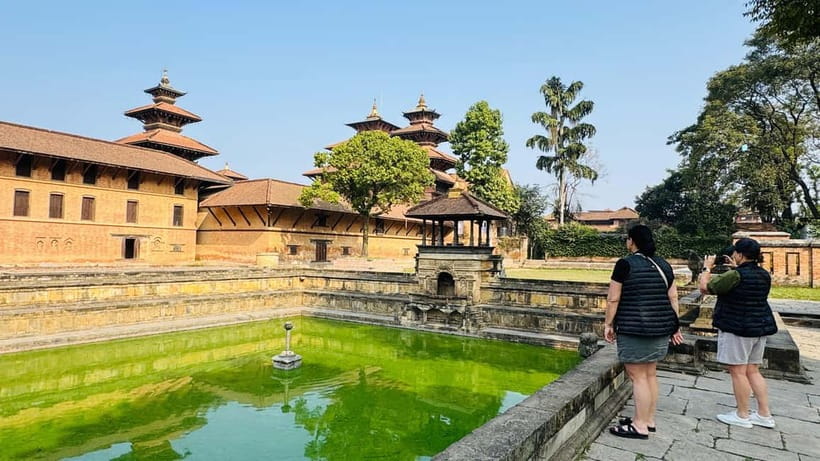
- Patan’s bahals reveal a quieter side of the city, with old monastic courtyards tucked behind narrow lanes.
- Tibetan monasteries add a living spiritual element, including prayer wheels, rituals, and colorful thangkas.
- Guides Hemant and Sumit have been praised for their explanations, especially when visitors had first seen temples alone and understood little of what they were seeing.
- The $60 fee covers private guiding and transport, but you should budget separately for entrance fees and confirm the lunch arrangement.
Why this four-hour tour makes sense from Kathmandu
Patan, also called Lalitpur, sits close to Kathmandu but feels like a separate cultural world. You will leave from your hotel in Kathmandu, travel to Patan, spend most of the time walking among temples and courtyards, and return to your hotel at the end.
That arrangement matters. You do not need to work out local transport, find the right lanes, or keep checking a map while trying to understand a religious site. Your guide can lead you through a compact part of Patan that is easy to miss when you explore alone.
The tour is listed as a private group experience, which should make it easier to ask questions and adjust the pace within the available four hours. It is not a full-day sightseeing program. You get a focused introduction to Patan’s Buddhist places, not every major monument in the city.
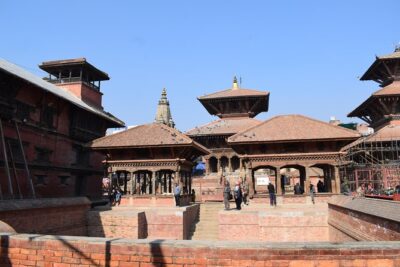
The schedule gives about one and a half hours around Patan Durbar Square, followed by about one hour in Lalitpur for further walking and temple visits. The remaining time allows for pickup, transport, transitions, and the final return to Kathmandu. That makes the tour a good fit if you have a half-day free rather than a full day to spare.
More time in Patan:
- Bhaktapur & Patan Durbar Square Day Tours
★ 5.0 · 122 reviews - Kathmandu: Private Patan and Bhaktapur Sightseeing Tour
★ 4.7 · 64 reviews - Patan and Bhaktapur City Full Day Tour
★ 5.0 · 24 reviews
Golden Temple: a strong first stop
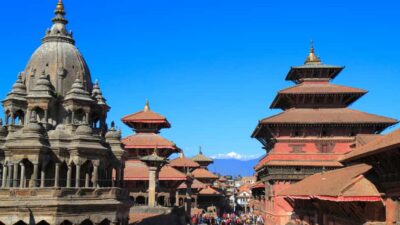
The Golden Temple, formally known as Hiranya Varna Mahavihar, is one of Patan’s best-known Buddhist temples. Its decorated golden surfaces make an immediate impression, but the real value comes from learning how the temple functions as a living religious place.
Your guide explains the daily rituals of the monks and the Newar Buddhist traditions connected with the temple. This is important because the building can look like a beautiful monument if you only walk in, take photographs, and leave. With context, the details become easier to read: the images, offerings, ritual activity, and relationship between the temple and its community.
The tour description emphasizes Buddhist-Newar traditions, a useful distinction for anyone who assumes that all Buddhist temples follow the same customs. Newar Buddhism has its own local practices, architecture, and ritual life. An English-speaking guide can help you see those differences without turning the visit into a classroom lecture.
Allow yourself time to look carefully. The Golden Temple is not simply a golden facade. Its value lies in the way art, worship, and monastic life share the same compact setting. You should dress modestly and wear clothing suitable for a religious site. Shorts are not allowed, and comfortable shoes will help on the walking sections.
Mahabouddha Temple and its terracotta detail
The next major stop is Mahabouddha Temple, a very different sight from the Golden Temple. Its surface is made from terracotta, with intricate carvings covering the structure. The design was inspired by Bodhgaya in India, the place associated with the Buddha’s awakening.
This is a stop where a guide adds practical value. From a distance, you may mainly notice the unusual shape and dense decoration. Up close, the carvings and repeated Buddhist imagery invite closer attention, but it can be hard to understand the symbolism without help.
Ask your guide to point out the features that connect the temple to Bodhgaya and to explain how the design expresses Buddhist ideas. The supplied tour information promises instruction in Vajrayana Buddhist practices, so this is a useful place to ask how symbolism and ritual work together.
Mahabouddha is also a good reminder that Patan’s sacred architecture does not use one visual language. The Golden Temple gives you shining metal and Newar monastic tradition. Mahabouddha gives you baked clay, repeated images, and a close-up view of devotional art.
Because the visit is part of a walking tour, bring shoes that are comfortable for uneven streets and repeated stops. The pace includes sightseeing, photographs, and free time, so you should not expect a rushed museum-style visit.
Bahals: Patan’s courtyards away from the main route
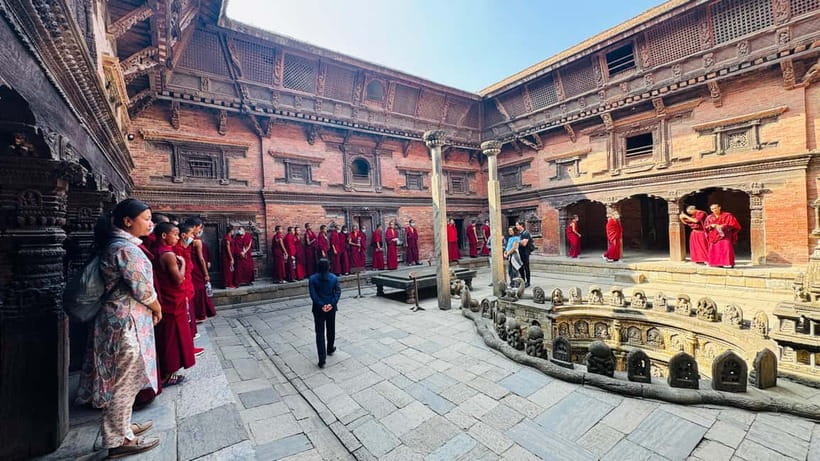
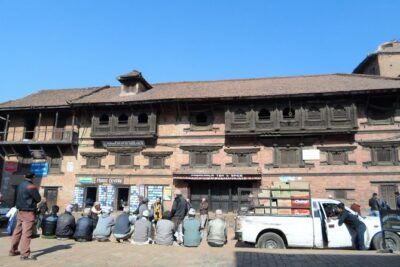
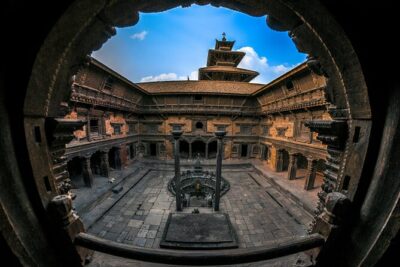
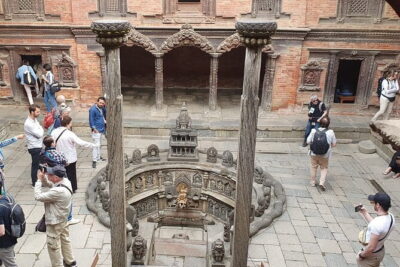
One of the most appealing parts of the experience is the walk through Patan’s bahals. These are monastic courtyards reached through the city’s older alleys. They are easy to overlook if you stick to the most famous squares and temples.
A bahal can feel simple at first: an entrance, a courtyard, shrines, and surrounding buildings. The guide helps connect these spaces to Vajrayana Buddhism and Newari culture. That explanation gives the courtyards a purpose beyond their appearance. You begin to see them as places shaped by religious practice, neighborhood life, and local tradition.
I like this part of the tour because it changes the rhythm. After the major temples, the smaller courtyards offer a quieter walk and a chance to notice Patan’s layout. You are not only moving from one famous building to another. You are seeing how sacred places fit into the older city.
The alleys and courtyards also require respect. Keep your voice low, follow your guide’s instructions, and ask before photographing people or active rituals. The tour is designed around Buddhist sites, so modest clothing is not a minor suggestion. It is part of being a considerate visitor.
A short list of alternatives around Kathmandu
- Everest Base Camp Trek – 14 Days
★ 5.0 · 1,499 reviews - Private Kathmandu Sightseeing Tour | UNESCO World Heritage sites
★ 5.0 · 756 reviews - Everest Base Camp Helicopter Tour landing at Everest View Hotel
★ 5.0 · 668 reviews - Half day cooking class in Thamel kathmandu
★ 5.0 · 607 reviews
Tibetan monasteries and visible Buddhist practice
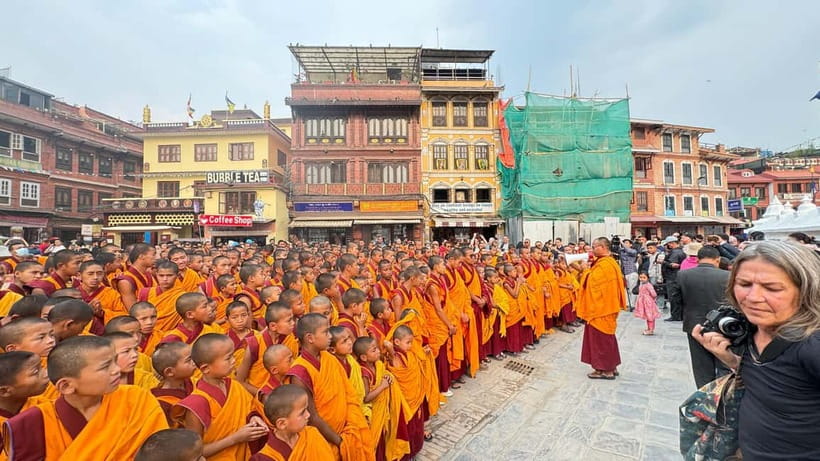
The Tibetan monastery portion brings another Buddhist tradition into the afternoon. Here, you may observe prayer rituals, spin prayer wheels, and see colorful thangkas. These details give the visit a more immediate sense of religious practice than a simple architectural tour.
Prayer wheels are not just decorative objects. Your guide can explain how they are used and how they fit into Buddhist devotional practice. Thangkas also deserve a closer look. Their colors and imagery are meant to communicate religious ideas, not merely brighten a wall.
This is where the private format can work especially well. If you do not understand something, you can stop and ask. One visitor specifically appreciated having a guide explain the sites after visiting temples alone and finding the rituals difficult to understand. That is a useful warning: Patan’s Buddhist places are rewarding, but they do not always explain themselves in English.
Guide quality matters greatly here. Hemant has been praised for answering questions and explaining Newar Buddhism in a clear way. Sumit has also been praised for adding useful background and even arranging a visit with the living Goddess Kumari, who gave a blessing. That Kumari visit is not promised as a standard stop, so you should treat it as a possible extra arrangement, not a guaranteed part of the program.
The guide is the main reason to choose this tour
The temples are worth seeing on their own, but the guide determines how much you take away. Patan has layers of Buddhist and Newar meaning that are not always obvious from the street. A guide who can explain Vajrayana practice, local customs, and the purpose of a courtyard turns a pleasant walk into a more useful cultural visit.
The experience is offered in English with a live guide. The private group format should suit you if you prefer conversation over a fixed group lecture. It also helps if you have specific interests, such as Buddhist ritual, Newar architecture, monastery life, or the connection between Tibetan and Newar traditions.
I would tell you to ask questions early. You might ask how Vajrayana Buddhism differs from other Buddhist traditions, why certain images appear on a temple, or how local people use the courtyards today. The more specific your questions, the more useful the guiding is likely to be.
The two named guides associated with the experience, Hemant and Sumit, received strong praise for their ability to explain rather than simply point. That is the quality I would value most here. You can see beautiful temples without help. Understanding why they look and function as they do is the real benefit of booking a guide.
Lunch, timing, and the points that need checking
The tour description includes a traditional Newari or Tibetan lunch at a local restaurant before returning to Kathmandu. That could be a pleasant finish, especially after several hours of walking and standing.
However, lunch does not appear in the stated inclusions. The listed inclusions cover hotel pickup and drop-off, a guided tour, an English-speaking guide, bottled water, and taxes and service charges. Since the price is $60 per person, I would ask whether lunch is included, optional, or simply suggested as part of the route.
The same applies to entrance fees. They are explicitly excluded, so carry extra money for admission costs. Personal expenses are also excluded.
The $60 cost makes the most sense if you value private transport and detailed interpretation. If you only want to see the outside of a few temples, you may find the price harder to justify. If you want help with rituals, local customs, and the smaller bahals, the fee covers the parts that are difficult to arrange alone.
You can cancel up to 24 hours before the start for a full refund, and the reserve-now, pay-later option gives you some flexibility. Starting times vary, so check availability when choosing a date.
Who will enjoy this Patan Buddhist circuit?
I would recommend this tour to first-time visitors who want a focused introduction to Patan’s Buddhist side. It also suits people who have already visited Patan Durbar Square but want more context and smaller sites beyond the most obvious monuments.
It is a good choice for:
- Visitors interested in Vajrayana Buddhism and Newar culture
- People who prefer a private guide to a large group
- Anyone who wants hotel transport from Kathmandu
- Photographers who enjoy detailed temple decoration and courtyards
- Curious walkers comfortable with several hours on foot
It is less suitable for young children under six, wheelchair users, and people with visual impairments, according to the activity guidance. The tour involves walking through old alleys and courtyards, so comfortable shoes and practical clothing matter.
You should also avoid shorts and dress modestly for both temples and monasteries. Alcohol and drugs are not allowed. These rules are simple, but following them helps keep the focus on the places you came to see.
Should you book this $60 Patan tour?
Book it if you want meaning, not just monuments. The Golden Temple and Mahabouddha Temple provide the visual highlights, while the bahals and Tibetan monasteries add quieter, more personal stops. Hotel pickup, a private group, bottled water, and an English-speaking guide make the half-day format easy to manage from Kathmandu.
I would be especially inclined to book if you are new to Buddhist architecture or have tried visiting temples alone and found the customs hard to understand. Hemant and Sumit have both been praised for giving clear answers and useful background, which is exactly what this kind of tour needs.
Before paying, confirm the lunch arrangement and ask how entrance fees will be handled. If those details are clear, the tour offers a practical and culturally focused way to see Patan beyond its famous square. It is compact, thoughtful, and best for you if a guide’s explanation matters as much as the photographs.
FAQ
Where does the tour begin?
The tour begins with pickup from your hotel in Kathmandu.
How long does the Patan Buddhist Circuit Tour last?
The experience lasts four hours, including the journey from Kathmandu to Patan and the return to your hotel.
What language does the guide speak?
The live tour guide speaks English.
Is this a private tour?
Yes. The group type is listed as a private group.
Which Buddhist sites are included?
The tour includes the Golden Temple, Mahabouddha Temple, Tibetan Buddhist monasteries, and Patan’s monastic courtyards, known as bahals.
Are entrance fees included in the price?
No. Entrance fees are not included.
Is hotel transportation provided?
Yes. Hotel pickup and drop-off in Kathmandu are included.
What should I wear and bring?
Wear modest, comfortable clothing and comfortable shoes. Shorts are not allowed at the temples and monasteries.
New in the Kathmandu listings
- Traditional Momo Making Class★ 5.0 · 10 reviews
- Kathmandu: Ancient City Kirtipur & Pharping Monastery Tour★ 5.0 · 2 reviews
- Kathmandu to Pokhara Premium sofa bus ticket★ 4.0 · 17 reviews
- Women Empowerment Project(Nepali cooking class & jewelry workshop★ 5.0 · 15 reviews
- 7-Day Langtang Valley Trek from Kathmandu★ 5.0 · 1 review
- Kathmandu 2 Nights 3 Days Chitwan Jungle Safari Tour★ 5.0 · 9 reviews
- Yoga Experience Day Trip with Private Transfer From Kathmandu★ 4.0 · 2 reviews
- Wildlife Adventure in Chitwan Nepal★ 4.0 · 4 reviews
Patan Tours, compared.
Kathmandu and Patan Heritage and Living Goddess Experience Tour
Read our review →
Patan & Bhaktapur Durbar Square Tour with Lunch – Private/Group
Read our review →
Nagarkot Sunrise, Bhaktapur and Patan Durbar Square Tour in Kathmandu
Read our review →Browse the lists this tour appears in