
REVIEW · CITY TOURS
Pokhara: Day City Tour by Sharing Bus
Pokhara packs a lot into one day. This shared bus tour links temples, caves, waterfalls, lakes, and mountain viewpoints for less than ten dollars, making it a useful introduction if your time is short. I like the low price and the chance to see several parts of the Pokhara Valley without arranging separate taxis.
I also like the small maximum group of 20 people and pickup from the Lakeside area. The main concern is reliability: the schedule includes many stops, and one piece of feedback describes an overbooked bus and a missed visit to Begnas Lake. You should confirm the day’s route before setting out, especially if Begnas Lake matters to you.
In This Review
- Key points before you book
- What this Pokhara bus tour is really for
- Bindhyabasini Temple and the first mountain views
- Mahendra Cave: a short underground stop
- Seti River Gorge and Pokhara’s raw edge
- Devi’s Fall and the extra cost of popular sights
- Gupteswar Gupha beside the waterfall area
- Pumdikot and the Lord Shiva statue
- Phewa Lake and the walk back to Lakeside
- Begnas Lake, the tour’s main question mark
- Shared transport, group size, and comfort
- What the $9.77 price does and does not cover
- Who should book this experience?
- Should you book the Pokhara shared bus tour?
- FAQ
- What time does the Pokhara city tour start?
- How long does the tour last?
- Is hotel pickup available?
- What is included in the price?
- Are entrance fees included?
- How many people can join the tour?
Key points before you book
- Seven listed stops: The route includes Bindhyabasini Temple, Mahendra Cave, Seti River Gorge, Devi’s Fall, Gupteswar Gupha, Phewa Lake, and Pumdikot.
- A very low starting price: The fare is $9.77 per person, but entrance fees of about $10 are extra.
- Lakeside pickup: Pickup and drop-off are offered within Pokhara’s Lakeside area.
- A shared mini bus: You ride in a normal sharing bus with a maximum group size of 20.
- A full morning-to-afternoon outing: The start time is 9:45 am, and the total duration is about 6 to 7 hours.
- The route needs checking: Begnas Lake appears in the general tour description but not in the detailed stop list, so do not assume it is included that day.
What this Pokhara bus tour is really for
This is a practical orientation tour, not a slow private sightseeing day. You move from one major Pokhara attraction to another, with short visits at each stop and limited time to linger.
That format works well if you have only one free day or want to see the city’s main sights before choosing where to return independently. At $9.77, the tour can also cost less than hiring a private vehicle, especially for one person or a couple.
The tradeoff is comfort and control. A shared mini bus follows a group schedule. You cannot easily skip a place you have already visited, stay longer at a cave, or change the order to suit the weather. The listed stops also add up to a busy day, so you should expect a brisk pace.
The tour begins at 9:45 am. Pickup is available within Lakeside, but the supplied information does not give a hotel-by-hotel pickup timetable. Ask for the exact pickup point and time after booking. A mobile ticket is available, and confirmation is provided at booking.
A short list of alternatives around Pokhara
- ZipFlyer Nepal – The World’s Steepest Zip-line
★ 5.0 · 608 reviews - Bungee Pokhara by HighGround Adventures
★ 5.0 · 366 reviews - From Pokhara: Sarangkot Sunrise Himalayas Tour
★ 4.7 · 218 reviews
Bindhyabasini Temple and the first mountain views
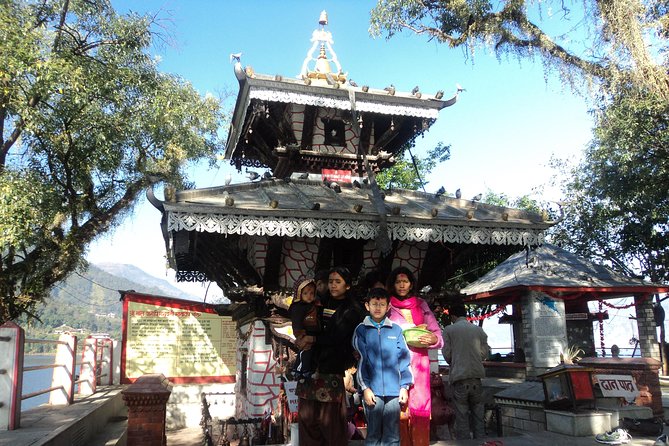
The first stop is Shree Bindhyabasini Temple, reached after pickup. The visit lasts about 35 minutes, and admission is free.
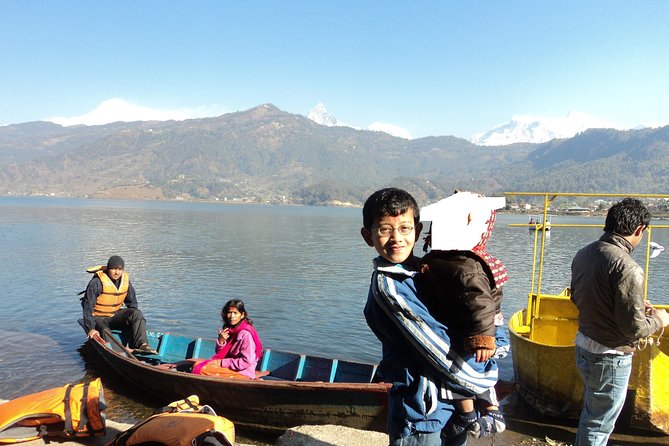
This Hindu temple gives the day a cultural beginning rather than sending you straight to the more familiar tourist sights. It is also placed at a high point, where you can look over Pokhara Valley and, when conditions allow, see the Annapurna mountain range.
Thirty-five minutes is enough for a short visit and some photographs, but not for an unhurried exploration. Dress and behave respectfully at the temple, and follow any local instructions. The guide is described as a local guide, but basic information may not be offered automatically. If you want an explanation of the temple, its rituals, or the view, ask directly.
The mountain view depends on visibility. A cloudy morning can hide the Annapurna range, so treat the view as a welcome possibility rather than a promise. The temple itself still gives the opening stop a clear sense of place.
Mahendra Cave: a short underground stop
The bus then heads to Mahendra Cave for about 30 minutes. Entrance is not included.
Mahendra Cave is one of Pokhara’s best-known natural attractions, but the short stop tells you how to approach it. You are getting a taste of the cave, not an extended underground visit. Keep the admission charge in mind and carry some local currency if possible, since the tour price does not cover sightseeing tickets.
A cave visit can be awkward in a tightly timed group. You may need to move at the group’s pace, and the available time includes entering, looking around, and returning to the bus. Wear shoes suitable for uneven ground and take care near damp surfaces. Those are sensible precautions rather than special requirements stated by the operator.
The cave adds variety to the morning. After the open view from Bindhyabasini Temple, you are shifted into a darker, more confined setting before heading back outdoors to the river gorge.
Seti River Gorge and Pokhara’s raw edge
The Seti River Gorge receives about 20 minutes. Admission is listed as not included.
This is one of the shortest stops, so keep your expectations sensible. You will have time to see the gorge and take in the unusual contrast between Pokhara’s built-up areas and the deep cut made by the Seti River. It is a quick visual stop, not a long riverside walk.
The 20-minute limit makes punctuality important. At every stop, note where the bus is parked and return promptly. In a shared vehicle, one late return can affect the entire group.
This stop also shows why the tour is useful as a first look. You are not seeing only temples and postcard views. The route includes natural features that help explain the character of the valley.
A completely different way to spend the day:
- ATV Adventure Tour in Pokhara, Nepal
★ 5.0 · 194 reviews - Full-Day Tibetan Cultural Tour to Tibetan Settlements Pokhara
★ 5.0 · 184 reviews - Pokhara: Full-Day Sharing Bus Tour on 7 Iconic Destination
★ 4.1 · 179 reviews - Poon hill Trek 3 days
★ 5.0 · 176 reviews
Devi’s Fall and the extra cost of popular sights
The itinerary allows about 30 minutes at Devi’s Fall, with admission charged separately.
The waterfall is a compact stop, but it is one of the places many people expect to see in Pokhara. The water drops into a deep channel, giving the site a more dramatic feel than a simple roadside cascade. Thirty minutes should allow a look and photographs, but you will not have much spare time if the area is crowded.
The supplied schedule says, After Begnas Lake, we will drive to Devi’s Water Fall, yet Begnas Lake does not appear as a numbered stop in the detailed itinerary. One piece of feedback describes Begnas being left out and the person needing to hire another van for 2,000 Nepalese rupees. That is the most important practical warning attached to this tour.
If Begnas Lake is a priority, ask the operator before departure, not once you are already on the road. Confirm whether it is part of your specific day’s route and how much time is allocated there. Do not assume that its mention in the general description guarantees a visit.
Gupteswar Gupha beside the waterfall area
The next listed stop is Gupteswar Gupha, also called Gupteshwor Cave. The planned visit lasts about 40 minutes, and admission is not included.
This cave is a natural companion to Devi’s Fall. The two attractions are close enough in the day’s design to make the pairing efficient, though the tour information does not promise a particular walking route between them. The cave gives you another underground setting, with religious importance added to the natural surroundings.
Forty minutes is longer than the time at Mahendra Cave. That gives you more room to look around, but entrance fees still add to the low advertised fare. The tour estimates total entrance costs at around $10, though the exact amount can change by attraction.
Ask the guide when and where to meet the bus before entering. The local guide is included, but you may need to request basic explanations. If you want to understand the religious meaning of Gupteswar Gupha rather than simply pass through it, make that request clearly.
Pumdikot and the Lord Shiva statue
Dream City Pumdikot is listed as a 25-minute stop, with admission included. It is described as a village area with a large statue of Lord Shiva and a panoramic view toward the Annapurna range.
This is one of the more scenic parts of the route. The statue provides a clear focal point, while the high position opens the view across Pokhara and toward the mountains. Again, visibility controls how much of the Annapurna range you will see.
The 25-minute visit is short, so this is a viewpoint stop rather than a village visit in depth. You can take photographs and look around, but do not expect a long walk or a meal break here. The included admission is a small advantage because it keeps one cost out of the extra-fee pile.
The order of Pumdikot is slightly unclear in the supplied schedule. The numbered itinerary places it last, while the written description places Devi’s Fall after Begnas Lake and then lists other stops. Treat the exact order as flexible and confirm it with the guide at the start.
Phewa Lake and the walk back to Lakeside
The final listed stop is Phewa Tal, or Phewa Lake. The tour allows about 30 minutes, and admission is not included. From the lakeside area, you can walk back to your hotel.
This is a sensible finish because Phewa Lake is central to the Lakeside part of Pokhara. The tour does not describe a boat ride, so do not assume boating is part of the experience. The stop is best understood as time beside the lake before the organized portion ends.
The drop-off arrangement is practical but limited. You receive pickup and drop-off within Lakeside, yet the detailed description says you can walk back to your hotel from the lake area. If your accommodation is outside Lakeside, ask whether the return transfer reaches your location.
A half hour is enough to pause after the busy circuit. It may feel brief if you hoped for a relaxed lakeside afternoon, but you can use the end of the tour to continue on your own.
Begnas Lake, the tour’s main question mark
Begnas Lake deserves its own warning because it appears in the tour’s overall list but not in the detailed seven-stop schedule.
The general description says the tour includes Devi’s Fall, Mahadev Cave, Mahendra Cave, Seti River Gorge, Gorkha Museum, Fewa Lake, and Begnas Lake. The detailed itinerary instead names Bindhyabasini Temple, Mahendra Cave, Seti River Gorge, Devi’s Fall, Gupteswar Gupha, Phewa Tal, and Pumdikot. Mahadev Cave and Gorkha Museum are not listed as detailed stops either.
That mismatch matters. A six to seven hour route cannot necessarily include every named attraction with generous time. If you have your heart set on Begnas Lake, Gorkha Museum, or Mahadev Cave, confirm the exact route in writing before booking or before the bus leaves.
This is not a minor detail. One poor experience involved an overbooked bus, an itinerary change, and an extra 2,000 rupees paid for another vehicle to reach Begnas Lake. The low fare loses some of its value if you must arrange a replacement trip.
Shared transport, group size, and comfort
The tour uses a normal shared mini bus and accepts up to 20 people. The vehicle keeps the price low, but seating is the key issue to clarify.
One account describes the bus as overbooked and says a proper seat was not available. That does not prove every departure has the same problem, but it is enough reason to ask how seats are assigned and what happens if the group is full. If you need a guaranteed comfortable seat, a private car may be the safer choice.
A shared bus also affects the day’s rhythm. You will wait for other people at caves, viewpoints, and the waterfall. Keep your belongings close, remember the vehicle’s appearance, and note the meeting point at each stop.
The guide is included, but the information specifically says to ask if you need basic information. That suggests this may be more of a transport-led sightseeing service than a lecture-heavy cultural tour. I would prepare a few questions in advance, especially about Bindhyabasini Temple, Gupteswar Gupha, and the local geography.
What the $9.77 price does and does not cover
At $9.77 per person, the fare is attractive. It covers a seat in the shared mini bus, pickup and drop-off within Lakeside, and a local guide. For a solo visitor, this can be a useful way to spread transport costs across a group.
The advertised fare does not include meals, drinks, or entrance fees. Food and drinks are available for purchase, but no meal stop is specified. Bring money for refreshments and expect to buy lunch separately if you need it.
Entrance fees are estimated at around $10 in total. That means the realistic sightseeing cost may be close to twice the advertised bus price, before food and drinks. It is still reasonable for a full day of transport, but compare the complete cost rather than focusing only on the headline fare.
Group discounts are offered, though no discount amount is provided. Ask for the current group rate if you are booking with friends or family.
Who should book this experience?
I would consider this tour for a first visit to Pokhara, especially if you have one free day and want a broad look at the city and valley. It suits people who prefer a low upfront price, do not mind shared transport, and are happy with short visits.
Families and small groups may also like the simple arrangement, provided everyone is comfortable with a busy schedule. The tour is described as suitable for most people, and it has a maximum of 20 participants.
I would be more cautious if you want a peaceful day, guaranteed seating, long time at each attraction, or a fixed visit to Begnas Lake. In that case, ask detailed questions before paying, or consider arranging transport privately.
The cancellation terms are reasonable: you can cancel for a full refund up to 24 hours before the start time. Changes made less than 24 hours before departure are not accepted, and a late cancellation is not refunded. The tour also requires a minimum number of participants, so if that minimum is not reached, you are offered another date or experience, or a full refund.
Should you book the Pokhara shared bus tour?
Book it if your priority is coverage and price. For under $10 before admission fees, you get transport through a long list of Pokhara sights, Lakeside pickup, and a local guide. The temple, cave, gorge, waterfall, lake, and Pumdikot combination gives you a useful first picture of the area.
Do not book without checking the route if Begnas Lake is essential. Ask about seating, the final stop list, the extra entrance costs, and the return point. With those details confirmed, this can be a good-value introduction to Pokhara. Without them, the low fare may come with too many surprises.
FAQ
What time does the Pokhara city tour start?
The tour starts at 9:45 am.
How long does the tour last?
The expected duration is approximately 6 to 7 hours.
Is hotel pickup available?
Pickup and drop-off are offered within the Lakeside area of Pokhara.
What is included in the price?
The price includes a seat in a shared normal mini bus, pickup and drop-off within Lakeside, and a local guide.
Are entrance fees included?
No. Entrance fees are extra and are estimated at around $10 in total. Admission to Pumdikot is listed as included, while the other stated sightseeing stops generally charge separately.
How many people can join the tour?
The activity has a maximum group size of 20 people.
New in the Pokhara listings
- Pokhara: Pokhara Highlights Tour by Bus★ 3.6 · 10 reviews
- Discover Pokhara in Style: Private Vehicle Service with Driver★ 5.0 · 5 reviews
- Multi-Day Tour from Pokhara, Poon Hill and Mulde Trek★ 5.0 · 1 review
- Pokhara in 5 Hours: Lake, Museum, Cave, Falls & Pagoda Hill★ 4.5 · 16 reviews
- Private 4 Day Poon Hill Trek from Pokhara★ 5.0 · 16 reviews
- 4 Day Mardi Himal Base Camp Trek from Pokhara★ 5.0 · 18 reviews
- From Pokhara Full Day Entire Pokhara Tour with Guide★ 5.0 · 1 review
- Ultralight Flight: Into The Heart Of The Mountains (90 min)★ 5.0 · 1 review
City Tours, compared.
Sarangkot Sunrise with Half or Full-Day City Tour
Read our review →
Full Day Kathmandu City Sightseeing Tour of UNESCO Heritage Sites
Read our review →
Browse the lists this tour appears in