
REVIEW · CITY TOURS
Kathmandu Valley City Day Tour
Kathmandu’s sacred heart fits into one busy day. I like the way this private tour connects four major cultural sites without making you arrange transport between them, and I like the chance to learn about both Hindu and Buddhist traditions from a local guide. The main drawback is cost: at $60 per person, you still pay separately for every entrance ticket, lunch, and drinks.
You can expect roughly five to seven hours in a private vehicle, with a driver, guide, fuel, and parking included. I would treat this as a strong first-day introduction rather than a slow, thoughtful visit to each monument. The schedule gives you about an hour at each stop, so you will see a lot, but some sites may feel rushed.
In This Review
- Key points to know before booking
- Why this makes a useful first day in Kathmandu
- Kathmandu Durbar Square: palaces, temples, and earthquake reminders
- Swayambhunath: a hilltop stupa with a city view
- Pashupatinath: Nepal’s most important Hindu temple area
- Boudhanath: walking the great circle
- What the $60 price really covers
- The five to seven hour rhythm
- Guides, drivers, and the personal side
- Who should book this Kathmandu day tour?
- Practical advice for a better visit
- Should you book it?
- FAQ
- How long does the Kathmandu Valley City Day Tour last?
- What sites are included?
- Is transportation private?
- Are entrance fees included in the price?
- Is lunch included?
- Where does the tour start and finish?
- Can children join the tour?
- What happens if bad weather cancels the tour?
Key points to know before booking
- Four major Kathmandu sights in one day: Visit Kathmandu Durbar Square, Swayambhunath, Pashupatinath, and Boudhanath.
- Private transport matters: Your group travels by private vehicle, with parking and fuel included.
- The guide is part of the value: Past praise has singled out guides such as Padam, Rita, and Manoj for cultural explanations and personal care.
- Budget extra money for admission: Sightseeing entrance fees are not included in the $60 price.
- The route mixes faiths: You see important Hindu and Buddhist centers, not just palaces and monuments.
- The schedule is compact: Plan on five to seven hours, with about one hour at each principal stop.
Why this makes a useful first day in Kathmandu
Kathmandu can feel confusing at first. Streets twist, traffic is heavy, and the valley’s religious sites are spread across different parts of the city. This tour gives you a fixed route and a private vehicle, so you can spend your energy looking around instead of figuring out taxis.
I like the cultural range. Kathmandu Durbar Square introduces the old royal center and Newar architecture. Swayambhunath adds a hilltop Buddhist stupa and broad city views. Pashupatinath brings you into one of the most important Hindu temple areas in Nepal, while Boudhanath shows Buddhist devotion on a much larger circular scale.
The guide can make a major difference here. Names connected with the operator include Padam, Rita, and Manoj. Specific praise has focused on explanations of Hinduism, Buddhism, Nepali culture, food, and daily life. That matters because these places are not simple museum stops. A guide can explain why people circle a stupa, how temple spaces are used, and which areas are open to different faiths.
Still, you should keep your expectations realistic. The tour gives you access to the main sites, but not unlimited time. An hour at each location may be enough for a first look, a few photographs, and an explanation from your guide. It may not be enough if you want detailed architecture study, long periods of quiet, or extensive shopping around the monuments.
A short list of alternatives around Kathmandu
- Everest Base Camp Trek – 14 Days
★ 5.0 · 1,499 reviews - Private Kathmandu Sightseeing Tour | UNESCO World Heritage sites
★ 5.0 · 756 reviews - Everest Base Camp Helicopter Tour landing at Everest View Hotel
★ 5.0 · 668 reviews
Kathmandu Durbar Square: palaces, temples, and earthquake reminders
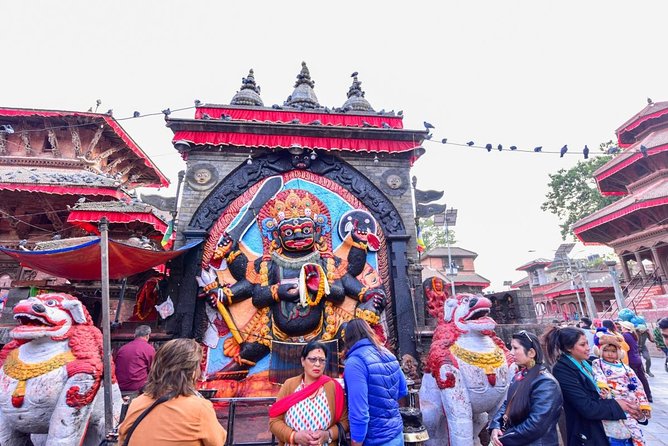
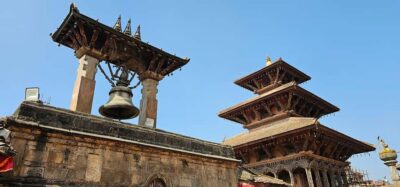
The day begins at Kathmandu Durbar Square, with about one hour planned for the visit. This was the old royal center, and it brings together palace courtyards, temples, carved woodwork, and the distinctive building traditions of the Kathmandu Valley.
I would make this your orientation stop. Look closely at the windows, doorways, roof supports, and brickwork. Newar craftsmanship is often easiest to appreciate in small details rather than from a single grand viewpoint. Your guide can help explain the role of the square and point out which buildings served royal, religious, or civic purposes.
The square also carries visible reminders of the 2015 earthquake. Restoration and rebuilding are part of what you see, so the visit is not only about old monuments. It also shows how Nepal is caring for damaged cultural sites while daily life continues around them.
One hour passes quickly here. If you enjoy taking photographs or reading every plaque, you may want more time than the schedule allows. The tour is better suited to a broad introduction than to a specialist visit.
Admission is not included. Set aside extra cash for the sightseeing fee, and remember that this is only the first of four paid attractions. The separate entrance costs can change the final price enough to matter, especially for a family or larger private group.
Swayambhunath: a hilltop stupa with a city view
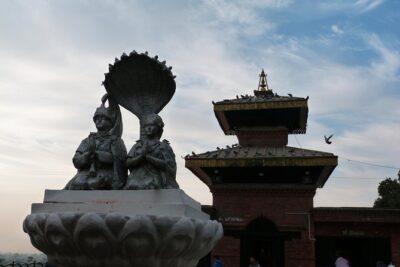
The second stop is Swayambhunath, also called the Monkey Temple, with around one hour allotted. The site is built on a hill, and the stupa is one of Kathmandu’s most recognizable religious landmarks.
The climb and setting are part of the experience. You come to a sacred complex above the city, where prayer flags, shrines, and Buddhist symbols create a different mood from the royal square below. The name Monkey Temple comes from the monkeys found around the site, though you should avoid feeding them or leaving food exposed.
I like this stop because it gives the day a change of pace. You move from palace courtyards to a hilltop religious complex, and the view helps you understand the size of Kathmandu Valley. If the air is clear, you might get a wide look across the city. The tour information does not promise mountain views, so I would not book it for a Himalayan panorama.
The hill location may be tiring for some people, but the additional information says most participants can take part. Children must be accompanied by an adult. If you have concerns about hills or stairs, ask the operator about the route before booking, since the tour description does not provide detailed accessibility information.
Again, admission is extra. Keep your ticket budget in mind rather than assuming the $60 covers every major cost.
Pashupatinath: Nepal’s most important Hindu temple area
Pashupatinath comes next, with about one hour to explore. This sacred Hindu temple complex sits beside the Bagmati River and is one of the central religious places in Kathmandu.
This is the stop where a guide’s cultural knowledge matters most. Hindu worship can be difficult to understand from the outside, and some parts of the complex have rules about who may enter. Your guide can explain what you are seeing and help you behave respectfully around active religious ceremonies.
You should dress modestly and follow instructions about photography. The tour description does not set out a detailed dress code, but respectful clothing is the sensible choice at any active temple complex. Do not treat the site as a stage set. People come here to pray, perform rituals, and mark important moments in life.
The Bagmati River adds another layer to the visit. Pashupatinath is not simply a beautiful old temple. It is a living religious center, and the relationship between the temple grounds, the river, and local practice is central to what makes it important.
An hour gives you a useful introduction, but it can feel brief. If you want to watch ceremonies, study the shrines, and ask many questions, you will need to use your time well. The private format helps because your guide can focus on your group instead of following a fixed large-group script.
Pashupatinath also has an entrance fee that is not included. Ask your guide how payment works on the day, and carry some local currency if advised.
A completely different way to spend the day:
- Half day cooking class in Thamel kathmandu
★ 5.0 · 607 reviews - Everest Base Camp Trekking
★ 5.0 · 485 reviews - Nagarkot Sunrise View and Day Hiking from Kathmandu
★ 5.0 · 471 reviews - Kathmandu: Full Day 7 UNESCO Tour with Lunch – Private/Group
★ 5.0 · 415 reviews
Boudhanath: walking the great circle
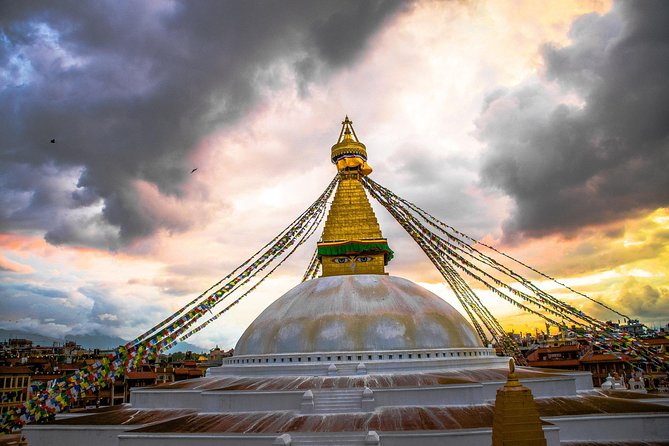
The final main stop is Boudhanath Stupa, described as the biggest Boudha stupa in the route plan. You receive about one hour here.
Boudhanath is best understood by walking around it. The large white dome and central structure dominate the square, while prayer wheels, monasteries, shops, and devotional activity surround the circuit. Follow the local flow around the stupa in the customary direction, and give worshippers space.
This is one of the strongest stops for seeing Buddhist practice in public. You can watch people spin prayer wheels, light lamps, make offerings, and complete their circuit. The site feels grand, but the experience is made up of repeated small actions.
The hour is enough to circle the stupa and hear the main explanation. It is less generous if you want to enter nearby monasteries or browse shops. You may also find the area crowded at certain times, though the supplied information does not promise a specific level of activity or a quiet visit.
Boudhanath makes a fitting last stop because it leaves you with a clear picture of Kathmandu’s Tibetan Buddhist influence. After the Hindu temple complex at Pashupatinath, it also completes the tour’s comparison between Nepal’s major religious traditions.
Admission is not included here either. Four separate sightseeing fees can add up, so include them in your day’s budget.
What the $60 price really covers
At $60 per person, this is not a bargain basement sightseeing trip. The value comes from the private vehicle, driver, fuel surcharge, parking fees, and guide. You are paying for a planned route through four important sites without having to negotiate several taxi rides in Kathmandu traffic.
A private tour is especially useful if your group has limited time or if you want to ask questions as you go. You can usually keep the conversation focused on your interests, such as religion, architecture, food, or local life. Past praise for Padam, Rita, and Manoj points to the human side of the service, with special attention to friendly explanations and keeping people comfortable.
The price is less attractive if you only want transport. Since entrance fees, lunch, and drinks are not included, your final spend will be higher. You also do not receive a meal, so plan to eat before or after the tour unless you arrange lunch directly with the operator.
For a solo visitor, $60 may feel reasonable if you value a guide and private transport. For two or more people, the private format can make better financial sense than paying separate taxi fares and hiring help at each location. The tour is not described as a shared group outing. Only your party takes part.
The five to seven hour rhythm
The planned stop time is roughly one hour at each site, plus driving between them and the initial meeting point. The total duration is listed as approximately five to seven hours, so you should keep the rest of your day flexible.
The start point is A1 Business Complex in Kathmandu, postal code 44600. The activity returns to that same meeting point at the end. Do not assume hotel drop-off unless you confirm it directly, because the stated ending point is the original meeting location.
Traffic can shape the day. The tour description does not give exact departure times, and Kathmandu’s roads can affect the gap between stops. A private vehicle gives you more control than public transport, but it cannot remove traffic from the city.
I would avoid booking an important flight, long-distance bus, or tightly timed dinner immediately afterward. The five to seven hour estimate is useful, but it is not a promise of an exact finish time.
Guides, drivers, and the personal side
The tour includes both a driver and a guide. That division is useful in Kathmandu, where roads demand attention and a guide can concentrate on your questions.
The strongest praise connected with the operator focuses on friendly service and cultural explanation. Padam was praised for teaching about Hinduism and Buddhism. Rita was described as warm and attentive, while Manoj received praise for making sure arrangements were in order and helping a visitor feel comfortable. These comments do not guarantee a particular guide on your date, but they show the type of service you should hope to receive.
The company has also arranged wider Nepal trips, including routes involving Kathmandu, Pokhara, Chitwan, and Bandipur. That broader experience may help if you are using this day as the first part of a longer Nepal itinerary, though this specific activity covers Kathmandu’s city sights only.
Ask questions. The best use of a guide is not just hearing dates and names. Ask how a site is used today, what behavior is respectful, which areas are restricted, and what details you would miss alone.
Who should book this Kathmandu day tour?
I would recommend it to a first-time visitor who wants a clear introduction to Kathmandu and prefers private transport. It is also a good fit if you have only one free day and want to cover the valley’s main religious and royal landmarks.
Families may appreciate the private setting, although children must be accompanied by an adult. The format also suits couples, friends, and small groups who want the schedule to remain within their own party.
You should think twice if you prefer slow travel. Four major sites in five to seven hours means movement, short visits, and plenty of visual information. Someone who wants to spend half a day at one temple or square may be happier arranging a custom itinerary.
It is also not the right choice if your top priority is saving every dollar. The entrance fees are extra, and lunch and drinks are not supplied. The price makes more sense when you value the guide, private vehicle, and simple planning.
Practical advice for a better visit
Wear comfortable shoes. The route includes a hilltop complex at Swayambhunath and walking around large religious sites. Modest clothing is a sensible choice for Pashupatinath and other sacred places.
Carry money for admission fees and personal drinks. Alcoholic drinks are not included, though they are available to purchase, and ordinary drinks are also excluded.
Keep your camera ready, but use it with care. At active religious sites, ask before photographing people or ceremonies, and follow your guide’s advice about restricted areas.
The tour requires reasonably good weather. If poor weather forces cancellation, you are offered another date or a full refund. You can cancel for a full refund up to 24 hours before the start time, but cancellations or changes made less than 24 hours before departure are not accepted for a refund.
Confirmation is provided at booking. The tour is near public transportation, though the actual experience uses private transport. Most people can participate according to the supplied information, but detailed accessibility arrangements are not provided.
Should you book it?
Book this tour if you want to see Kathmandu’s essential cultural sites in one organized day, with a private vehicle and a guide who can explain the religious meaning behind what you see. The route is well chosen, and the private format is worth more when you are short on time or traveling with a small group.
Skip it if you want a relaxed schedule, included meals, or one all-inclusive price. Before paying, ask for the current entrance costs and confirm the pickup and return arrangements. For a first look at Kathmandu, though, this is a practical and culturally focused choice.
FAQ
How long does the Kathmandu Valley City Day Tour last?
The tour lasts approximately five to seven hours.
What sites are included?
The route includes Kathmandu Durbar Square, Swayambhunath, Pashupatinath Temple, and Boudhanath Stupa.
Is transportation private?
Yes. Transport is provided in a private vehicle, and only your group participates in the activity.
Are entrance fees included in the price?
No. Entrance fees for the sightseeing sites are not included.
Is lunch included?
No. Lunch is not included in the tour price.
Where does the tour start and finish?
The tour starts at A1 Business Complex, Kathmandu 44600, Nepal, and ends back at the meeting point.
Can children join the tour?
Yes. Children must be accompanied by an adult. The child rate applies only when sharing with two paying adults.
What happens if bad weather cancels the tour?
If poor weather causes cancellation, you will be offered a different date or a full refund.
New in the Kathmandu listings
- Traditional Momo Making Class★ 5.0 · 10 reviews
- Kathmandu: Ancient City Kirtipur & Pharping Monastery Tour★ 5.0 · 2 reviews
- Kathmandu to Pokhara Premium sofa bus ticket★ 4.0 · 17 reviews
- Women Empowerment Project(Nepali cooking class & jewelry workshop★ 5.0 · 15 reviews
- 7-Day Langtang Valley Trek from Kathmandu★ 5.0 · 1 review
- Kathmandu 2 Nights 3 Days Chitwan Jungle Safari Tour★ 5.0 · 9 reviews
- Yoga Experience Day Trip with Private Transfer From Kathmandu★ 4.0 · 2 reviews
- Wildlife Adventure in Chitwan Nepal★ 4.0 · 4 reviews
City Tours, compared.
Sarangkot Sunrise with Half or Full-Day City Tour
Read our review →
Full Day Kathmandu City Sightseeing Tour of UNESCO Heritage Sites
Read our review →
Browse the lists this tour appears in