
REVIEW · CITY TOURS
Pokhara: Full Day Pokhara City Sightseeing with Guide
Pokhara gives you mountains, water, temples, and caves in one tidy day. I like this tour for its private car and guide, which make it easier to move between far-flung sights, and for the mix of nature, faith, local life, and mountaineering. The World Peace Pagoda and Phewa Lake also offer the best chances for big Annapurna views.
The main drawback is time. Six hours is enough for a useful introduction, but not enough for a slow visit at every stop. You will also pay about $10 per person for entrance fees, and meals are not included, so the $82 price is not the final cost.
In This Review
- Key points at a glance
- Why this six-hour Pokhara tour works
- Phewa Lake and the Annapurna reflection
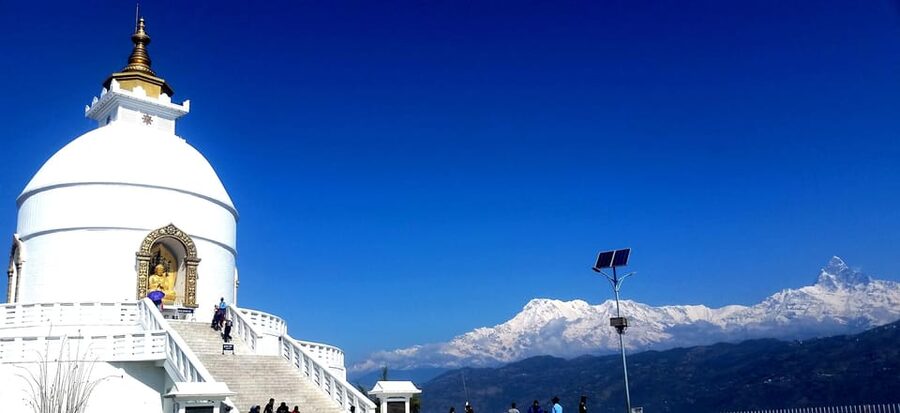
- The World Peace Pagoda above the valley
- Gupteshwor Cave and the force of Devi’s Fall
- Bindhyabasini Temple and Pokhara’s religious life
- Old Bazaar, where the city feels less polished
- The International Mountain Museum puts the peaks in context
- What the private car and guide add
- Price, added costs, and overall value
- Who should book this Pokhara sightseeing day?
- My recommendation
- FAQ
- How long is the Pokhara city sightseeing tour?
- What places are included?
- Is hotel pickup included?
- Is transportation private?
- What languages does the guide speak?
- Are entrance fees included in the price?
- Are meals included?
- Is a bottle of water provided?
- Can I cancel for a full refund?
- Are drones and pets allowed?
Key points at a glance
- Phewa Lake opens the day with mountain views: On a clear day, you may see the Annapurna Range reflected on the water.
- The World Peace Pagoda gives you a wide view of Pokhara: This is one of the strongest photo stops, but weather controls what you can see.
- Gupteshwor Cave and Devi’s Fall connect underground water with a powerful gorge: The two attractions are a natural pair.
- Bindhyabasini Temple and Old Bazaar add local character: These stops bring religious life and traditional shops into the day.
- The International Mountain Museum gives the tour useful context: It explains the people, climbs, and mountain culture behind the region.
- Private transport is the practical advantage: Pickup and drop-off are included within Pokhara’s Lakeside area.
Why this six-hour Pokhara tour works
Pokhara is easy to enjoy but spread across several areas. Phewa Lake sits beside the main Lakeside district, while the Peace Pagoda, Gupteshwor Cave, Devi’s Fall, Bindhyabasini Temple, Old Bazaar, and the International Mountain Museum all require separate stops and road transfers.
That is where this tour earns its keep. You get a private car, an English or Hindi-speaking guide, hotel pickup, and hotel drop-off. You do not have to arrange several taxis, negotiate each ride, or work out the order of sights yourself.
I also like the range of the day. This is not only a mountain-view outing. You move from the lake to a hilltop shrine, then underground, beside a waterfall, into a Hindu temple, through an older commercial quarter, and finally into a museum about mountaineering.
The pace will be purposeful rather than leisurely. Six hours sounds generous, but it must cover transportation and six main areas. If you prefer long museum visits, extended photography, or quiet time at a temple, you may find the schedule brisk.
A short list of alternatives around Pokhara
- ZipFlyer Nepal – The World’s Steepest Zip-line
★ 5.0 · 608 reviews - Bungee Pokhara by HighGround Adventures
★ 5.0 · 366 reviews - From Pokhara: Sarangkot Sunrise Himalayas Tour
★ 4.7 · 218 reviews
Phewa Lake and the Annapurna reflection
Phewa Lake is the natural starting point for understanding Pokhara. The water provides an open foreground, while the Annapurna Range forms the dramatic backdrop when conditions cooperate.
The promised reflection is weather dependent. Clouds, haze, and light can soften or hide the mountains, so keep your expectations sensible. Even without a perfect mirror image, the lake gives you an immediate sense of why Pokhara is such a popular base for mountain trips.
Your guide can help put the view into context, but the value here is also simple: you begin the day in an open, calm setting before moving into the city’s more crowded and enclosed sights. Bring your camera, but do not let photography turn the stop into a race.
Phewa Lake is also a useful orientation point. You will soon understand how the Lakeside area relates to the wider city. Since pickup is offered from hotels within Lakeside, this part of Pokhara is the practical center for joining the tour.
The World Peace Pagoda above the valley
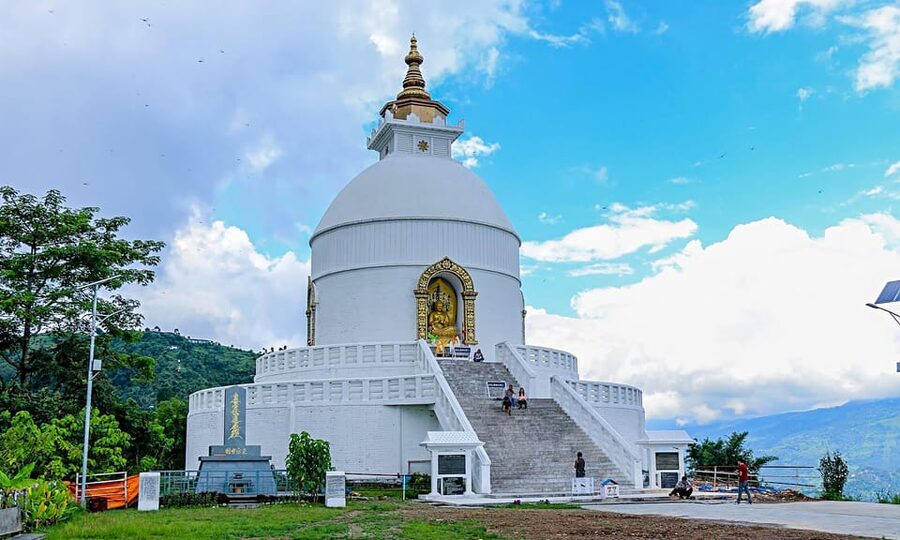
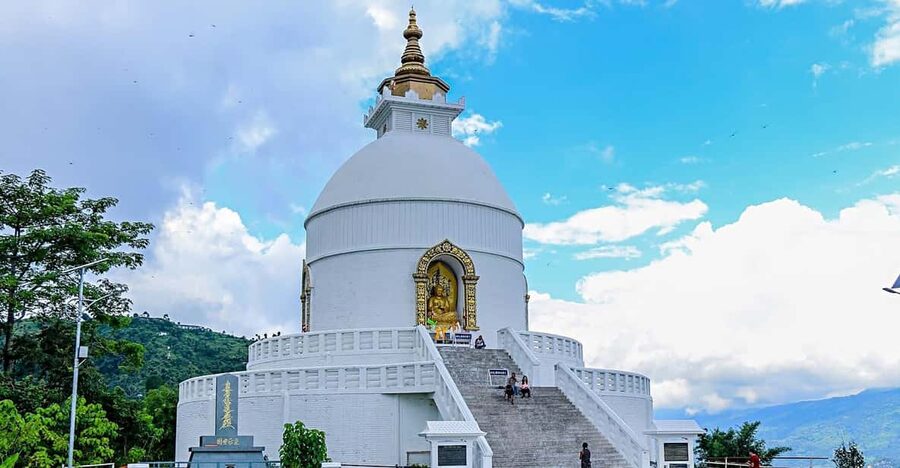
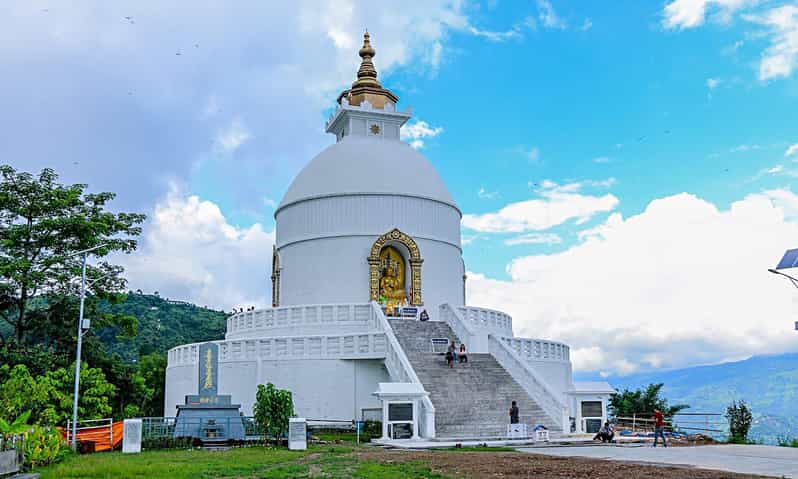
The World Peace Pagoda is the tour’s main panoramic stop. From its hilltop setting, you can look across Pokhara, Phewa Lake, and toward the surrounding mountains.
I like this stop because it gives you a broad view rather than a close-up attraction. The lake, city, and Himalayan peaks can be read together from one place. If the sky is clear, this may be the strongest overall viewpoint of the day.
The pagoda is also a religious site, so treat it with respect. Wear practical clothing and comfortable shoes, both recommended for this tour. The information provided does not specify the exact walking distance or slope, so anyone concerned about exertion should ask the operator for current details before booking.
The weather matters here more than at the museum or Old Bazaar. A cloudy day will not make the visit pointless, but it can reduce the mountain views that make the stop special. Your guide may help you get the best sense of the valley even when the peaks are hidden.
Gupteshwor Cave and the force of Devi’s Fall
Gupteshwor Cave brings a change of mood. Instead of wide views and open sky, you move into underground passages associated with sacred shrines.
The cave is interesting because it combines natural features with religious meaning. You are not simply looking at rock formations. You are also entering a place used for worship, so quiet and respectful behavior are appropriate.
Comfortable shoes matter here. The ground in and around a cave can be uneven, and the tour specifically advises you to dress for comfort. The supplied details do not state the cave’s accessibility or the amount of walking required, so you should ask for clarification if you have mobility concerns.
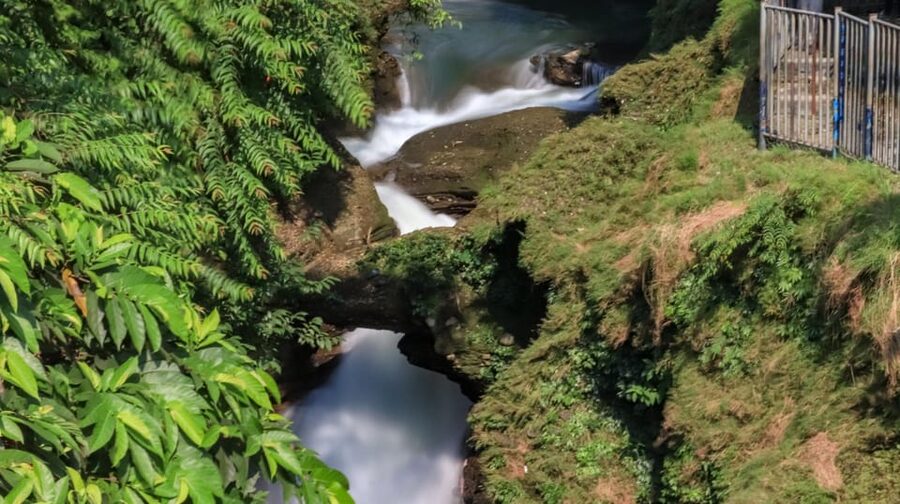
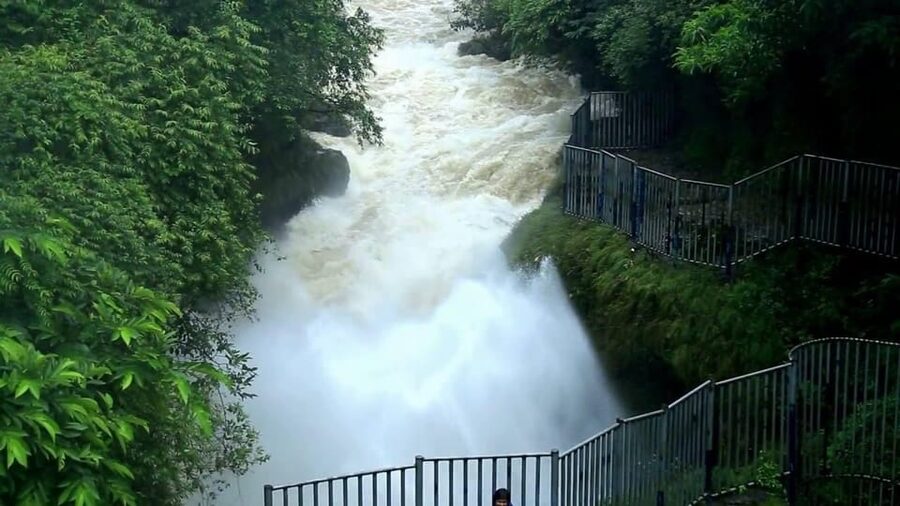
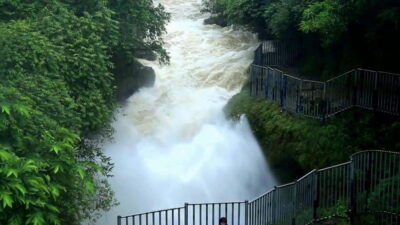
Devi’s Fall adds the sound and motion of rushing water. The Pardi Khola river drops into a narrow gorge, creating one of Pokhara’s most striking natural sights. The experience is less about a wide waterfall and more about water forcing its way into a tight channel.
These two stops work well together. Gupteshwor Cave gives you an underground view of the area’s water system and sacred traditions, while Devi’s Fall lets you see the river’s power in the open air. The combination also breaks up the day nicely.
Take care near wet areas and keep your camera secure. A bottle of water is supplied for each person, but sunscreen and extra water are still sensible items to carry, particularly if you dislike relying on a single bottle during a six-hour outing.
A completely different way to spend the day:
- ATV Adventure Tour in Pokhara, Nepal
★ 5.0 · 194 reviews - Full-Day Tibetan Cultural Tour to Tibetan Settlements Pokhara
★ 5.0 · 184 reviews - Pokhara: Full-Day Sharing Bus Tour on 7 Iconic Destination
★ 4.1 · 179 reviews - Poon hill Trek 3 days
★ 5.0 · 176 reviews
Bindhyabasini Temple and Pokhara’s religious life
Bindhyabasini Temple gives the tour a stronger connection to daily Hindu worship. The site is sacred, and its importance comes from living religious practice rather than from being only a historic monument.
A guide is especially useful here. Customs at religious sites are not always obvious, and a local guide can help you understand where to stand, what to photograph, and how to behave respectfully. The tour is offered in English or Hindi, which may help you ask questions as you go.
The temple also adds a human side to the day. After the scenic stops, you see how faith remains part of ordinary city life. I value this kind of stop because it keeps the tour from becoming a string of viewpoints and photo opportunities.
Entrance fees are not included. The total admission cost is listed at about $10 per person for the tour’s attractions, though the exact amount may vary. Carry some extra money so the added cost does not surprise you.
Old Bazaar, where the city feels less polished
Old Bazaar offers a different view of Pokhara from Lakeside. Here you can encounter traditional shops and local activity in an older part of the city.
The stop is not presented as a formal museum or single monument. Its appeal is the chance to see a more ordinary side of Pokhara, with shops and streets that connect to local commerce. That makes it a useful counterpoint to the carefully framed mountain views.
Do not expect a long shopping session within the six-hour schedule. The tour has several stops to cover, so your time may be limited. If you want to browse at length, buy gifts, or stop for a relaxed snack, you will need to ask the guide how much time is available.
This is also a good place to keep your attention on small details. Look at shopfronts, street activity, and the way the older quarter differs from the hotel zone. The point is not to check off another attraction. It is to get a better feel for the city between its famous sights.
The International Mountain Museum puts the peaks in context
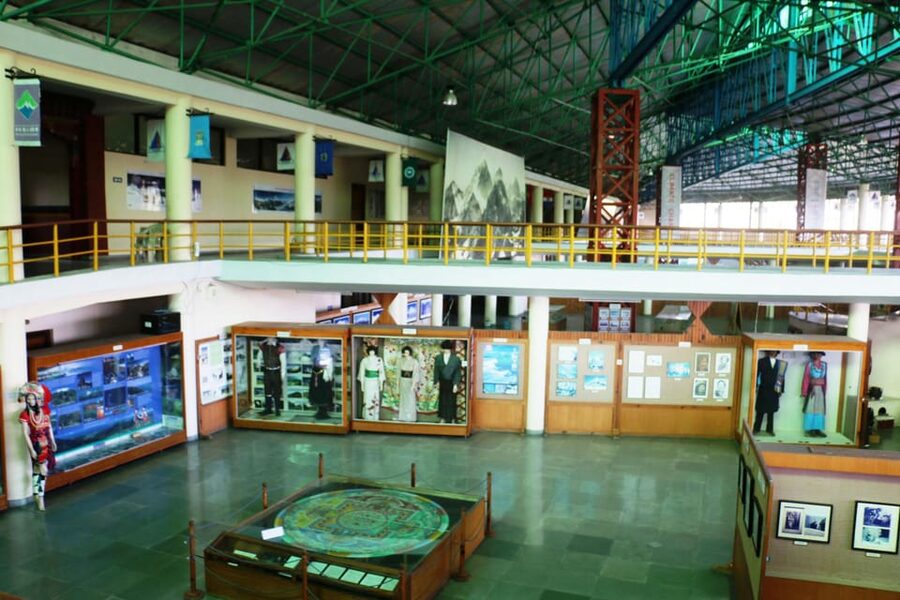
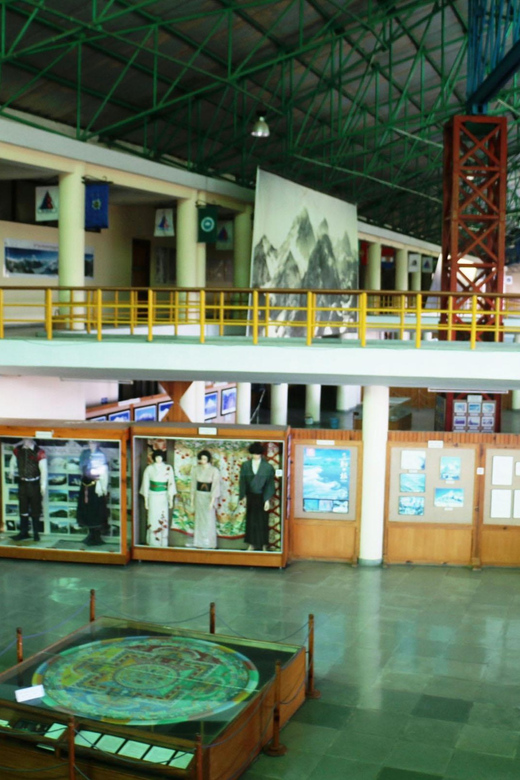
The International Mountain Museum gives the final part of the tour a clear theme. It covers the history of mountaineering in the region, helping you understand the people and expeditions connected to the Himalayas.
This visit is valuable even if you are not planning a trek. Mountain scenery can seem like a postcard until you learn about the effort, risk, and cultural importance behind it. The museum gives the peaks you have seen from the lake and pagoda a human story.
It also makes a sensible final stop. After a day of outdoor sights, a museum offers a quieter place to gather what you have seen. You can connect the Annapurna views, Pokhara’s role as a mountain base, and the region’s climbing culture.
The available details do not give a precise museum visit length. With six hours for the whole tour, your guide will need to manage the timing. If museums are your main interest, say so at the start and ask whether the schedule allows extra time there.
What the private car and guide add
The private format is the strongest practical feature. You travel with your own group rather than joining a large shared coach, and the car takes you between stops. That gives you more control than a public bus or a self-organized day using separate taxis.
Pickup and drop-off are included for hotels within the Lakeside area of Pokhara. If your hotel is outside that area, do not assume the same service applies. Confirm the meeting point before the day begins.
An English or Hindi-speaking guide accompanies you. The guide’s role matters most at Gupteshwor Cave, Bindhyabasini Temple, and the Mountain Museum, where background and local customs add meaning. At the lake and pagoda, the guide can also help you understand the views and keep the schedule moving.
The tour is described as a private trip, but no exact vehicle size is given. It is best suited to a couple, family, or small private group that values convenience and a planned route. You should not book it expecting a large social group or a flexible hop-on, hop-off format.
Price, added costs, and overall value
The listed price is $82 per person. That includes private round-trip transport, a guide, hotel pickup and drop-off within Lakeside, and a bottle of water for each person.
Entrance fees are extra, at approximately $10 per person. Meals are also excluded but are available for purchase, and gratuity is optional. In practical terms, you should budget at least the tour price plus the stated admission estimate, with food and any tip added according to your choices.
The value depends on how you would otherwise move around Pokhara. If you would need several taxi rides, a private car and guide can make the price reasonable. You are paying not only for transport, but also for a planned route that links sights on different sides of the city.
It is less compelling if you want to spend most of the day at Phewa Lake or the World Peace Pagoda. The tour covers many attractions, so you trade slow exploration for variety.
I would also compare the price based on group size. At $82 per person, the cost may feel high for one person, but a private trip can become more reasonable when shared by several people. Since the exact maximum group size is not provided, ask the operator how the price applies to your party.
Who should book this Pokhara sightseeing day?
I would recommend this tour if you have only one day in Pokhara and want to see several major sights without arranging transport yourself. It is also a good fit if you want a guide to explain religious places and mountaineering rather than simply being driven from stop to stop.
The tour suits people who enjoy variety:
- Mountain views at Phewa Lake and the Peace Pagoda
- Natural sights at Gupteshwor Cave and Devi’s Fall
- Religious culture at Bindhyabasini Temple
- City life around Old Bazaar
- Museum context at the International Mountain Museum
You should think twice if you have a medical condition that makes a full sightseeing day difficult. The activity is specifically not suitable for people with pre-existing medical conditions, and the exact walking requirements at each stop are not stated.
Pack comfortable shoes, comfortable clothes, sunscreen, a camera, and water. Drones are not allowed, though assistance dogs are allowed. Pets are otherwise not permitted.
Free cancellation is available up to 24 hours before the tour for a full refund. You can also reserve now and pay later, which is useful if your Nepal plans are still changing.
My recommendation
Book this tour if you want an efficient first look at Pokhara and value private transport over a slow, unplanned day. The best parts are the combination of the Peace Pagoda, Devi’s Fall, Bindhyabasini Temple, and the Mountain Museum, with the guide helping connect scenery, faith, city life, and climbing.
Skip it if you already know Pokhara well, want long stops, or prefer to build your own day around one or two places. For most first-time visitors with limited time, the route offers solid coverage, as long as you accept the extra entrance fees and a fairly brisk six-hour pace.
FAQ
How long is the Pokhara city sightseeing tour?
The tour lasts 6 hours.
What places are included?
The route includes Phewa Lake, the World Peace Pagoda, Gupteshwor Cave, Devi’s Fall, Bindhyabasini Temple, Old Bazaar, and the International Mountain Museum.
Is hotel pickup included?
Yes. Pickup and drop-off are included for hotels within the Lakeside area of Pokhara.
Is transportation private?
Yes. Round-trip transfer by private car is included, and the activity is described as a private trip.
What languages does the guide speak?
The live guide is available in English or Hindi.
Are entrance fees included in the price?
No. Entrance fees are not included and are estimated at approximately $10 per person.
Are meals included?
No. Meals are not included, but they are available for purchase.
Is a bottle of water provided?
Yes. One bottle of water is provided for each person.
Can I cancel for a full refund?
Yes. You can cancel up to 24 hours in advance for a full refund.
Are drones and pets allowed?
Drones are not allowed. Pets are not permitted, but assistance dogs are allowed.
New in the Pokhara listings
- Pokhara: Pokhara Highlights Tour by Bus★ 3.6 · 10 reviews
- Discover Pokhara in Style: Private Vehicle Service with Driver★ 5.0 · 5 reviews
- Multi-Day Tour from Pokhara, Poon Hill and Mulde Trek★ 5.0 · 1 review
- Pokhara in 5 Hours: Lake, Museum, Cave, Falls & Pagoda Hill★ 4.5 · 16 reviews
- Private 4 Day Poon Hill Trek from Pokhara★ 5.0 · 16 reviews
- 4 Day Mardi Himal Base Camp Trek from Pokhara★ 5.0 · 18 reviews
- From Pokhara Full Day Entire Pokhara Tour with Guide★ 5.0 · 1 review
- Ultralight Flight: Into The Heart Of The Mountains (90 min)★ 5.0 · 1 review
City Tours, compared.
Sarangkot Sunrise with Half or Full-Day City Tour
Read our review →
Full Day Kathmandu City Sightseeing Tour of UNESCO Heritage Sites
Read our review →
Browse the lists this tour appears in