
REVIEW · MUSTANG AND MUKTINATH TOURS
Upper Mustang Trekking
Mustang rewards patience with unforgettable scenery. This 18-day private trek takes you from Kathmandu through Jomsom, Kagbeni, and the stark valleys of Upper Mustang to the walled city of Lo Manthang. I like the quiet trails and old Tibetan Buddhist culture, and I also like that the route includes time to explore Lo Manthang rather than rushing through it. The main drawback is the cost, plus the need for strong fitness and a costly restricted-area permit.
The trip is not a high-altitude summit adventure. Much of the route stays below 4,000 meters, but the walking is still demanding, with steep climbs, long descents, dusty paths, and strong afternoon winds near the Kali Gandaki River. You also spend several days in basic lodge or tea-house accommodation, so this suits you best if you value place, culture, and scenery more than comfort.
In This Review
- Key points to know before booking
- Why Upper Mustang feels different
- Days 1 and 2: Kathmandu preparation and permits
- Day 3: The long road toward Pokhara
- Day 4: Flying to Jomsom and walking to Kagbeni
- Days 5 and 6: Entering Upper Mustang through Chhusang
- Days 7 and 8: High views, Ghiling, and Tsarang
- Days 9 and 10: Reaching Lo Manthang
- Days 11 and 12: Returning through Dhakmar and Ghami
- Days 13 and 14: A major descent to Kagbeni
- Days 15 to 18: Jomsom, Pokhara, and Kathmandu
- What the USD 2,400 price covers
- Comfort, fitness, and group style
- Who should book this trek?
- Final call: is Upper Mustang worth it?
- FAQ
- How long is the Upper Mustang Trek?
- What is the price per person?
- Is the Upper Mustang special permit included?
- What accommodation is included?
- Are meals included?
- What transport is included?
- Is this a private tour?
- How fit do I need to be?
Key points to know before booking
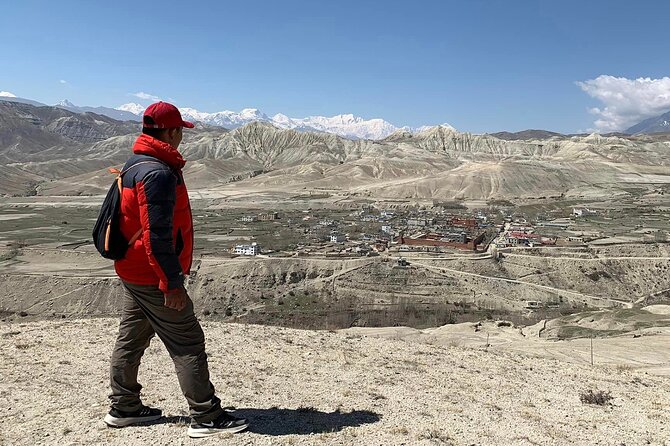
- Lo Manthang is the cultural high point: You get a full day to visit its monasteries, palace, and old streets.
- The USD 500 special permit is included: The permit covers 10 days in Upper Mustang and requires your original passport and Nepal visa.
- The route is private: Only your group takes part, with a government-licensed guide and one porter for every two people.
- Expect dusty, windy trails: The route through the Kali Gandaki valley can become especially windy after midday.
- Transport is a major part of the package: The price includes Kathmandu and Pokhara tourist buses, domestic flights between Pokhara and Jomsom, and airport transfers.
- The strongest appeal is authenticity: Ancient villages, working farms, monasteries, apple gardens, and local hospitality give the trek a lived-in feel.
Why Upper Mustang feels different
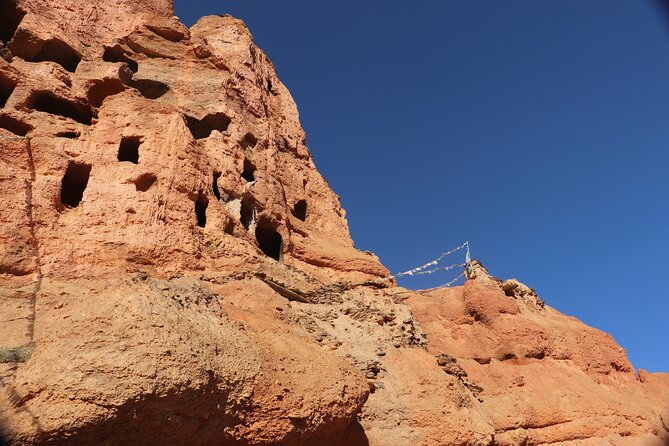
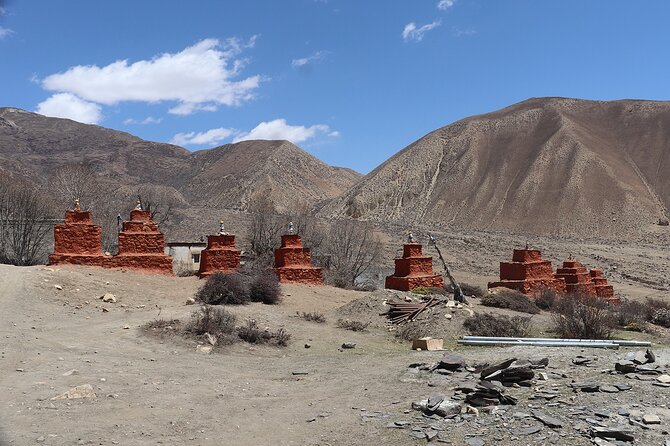
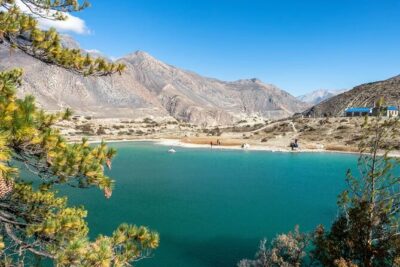
Upper Mustang is often described as another world, and that is a fair way to picture it. The terrain changes from the lower Mustang valleys around Jomsom to dry, wide-open hills, cliffside paths, old villages, and high Himalayan views. The route also passes through places where Tibetan Buddhist customs remain part of daily life.
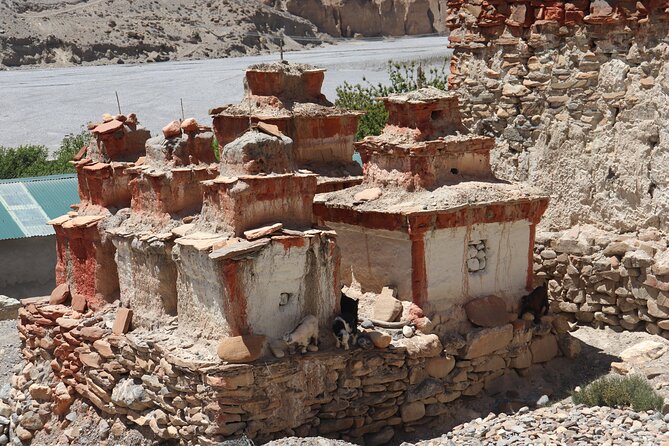
You are not simply walking from one viewpoint to the next. Villages such as Kagbeni, Chhusang, Ghiling, Tsarang, Ghami, and Lo Manthang give the route its character. Monasteries, old walls, farms, apple gardens, and stone-built homes make the days feel connected to local life.
The scenery is often stark rather than green. Dust is part of the bargain, especially on exposed trails and near the Kali Gandaki River. A good pair of sunglasses, a buff or light scarf, and protection for your camera or phone will make the walking more pleasant.
The experience also has a useful altitude profile. The supplied information notes that the route rarely exceeds 4,000 meters, and that can make it more approachable than some higher Himalayan treks. Still, you should not confuse lower altitude with easy walking. The route includes repeated climbs, a major descent toward the river, and several days of five to six hours on foot.
More trips up to Mustang and Muktinath:
- 6 Days Muktinath Tour Package in Nepal
★ 5.0 · 20 reviews - Jeep Trip to Upper Mustang
★ 5.0 · 10 reviews - 12 Days Overland Tour to Upper Mustang
★ 5.0 · 4 reviews
Days 1 and 2: Kathmandu preparation and permits
Your arrival day is straightforward. A representative from Everest Trekking Routes meets you at Tribhuvan International Airport and transfers you to a Kathmandu hotel. Three nights of three-star accommodation in Kathmandu with breakfast are included, giving you time to settle in before heading west.
Day two is useful for practical preparation. If you are interested, you can visit sightseeing points in the Kathmandu Valley, while the agency arranges the Upper Mustang special permit. You must provide your original passport and a Nepal visa, so keep both available.
The permit is not a minor paperwork detail. Upper Mustang is a restricted area, and the special permit costs USD 500 per person for 10 days. It is included in the package price, which helps explain why the total cost is higher than many standard Nepal treks.
Day 3: The long road toward Pokhara
The itinerary uses a tourist bus between Kathmandu and Pokhara. On the outbound journey, you walk about 10 minutes from the hotel to the tourist bus station for a 7:00 AM departure.
This is a practical choice, not a luxurious one. The bus gives you a ground-level look at the journey through Nepal, but it also makes the day dependent on road conditions and traffic. The return trip from Pokhara to Kathmandu is listed as about seven hours, so you should expect the outbound transfer to take a meaningful part of the day as well.
Two nights in Pokhara are included. That gives you a useful base before and after the mountain section, though the schedule leaves little room for a long independent stay unless you add extra hotel nights.
Day 4: Flying to Jomsom and walking to Kagbeni
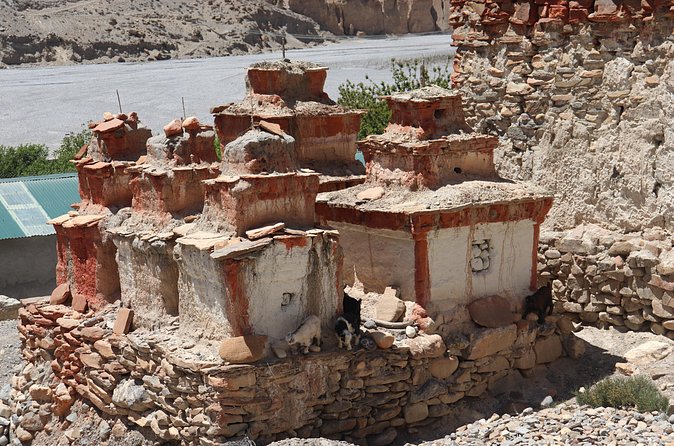
After breakfast, you transfer to the domestic airport for the flight to Jomsom, at an altitude of 2,715 meters. From Jomsom, you trek four to five hours to Kagbeni.
This is an excellent introduction to Mustang. You begin with broad Himalayan views and the scenery of the lower Mustang and Jomsom to Muktinath route. Kagbeni is more than an overnight stop. It is the main entry point for the restricted Upper Mustang region, so the permit check takes place here.
You should expect a change in pace at this point. The airport transfer and flight get you into the mountains quickly, but the walk to Kagbeni gives your body its first real adjustment to altitude and trekking conditions.
More walking in the hills of Kathmandu:
- Everest Base Camp Trek – 14 Days
★ 5.0 · 1,499 reviews - Everest Base Camp Trekking
★ 5.0 · 485 reviews - Nagarkot Sunrise View and Day Hiking from Kathmandu
★ 5.0 · 471 reviews - Annapurna Circuit Trek with Tilicho Lake
★ 5.0 · 368 reviews
Days 5 and 6: Entering Upper Mustang through Chhusang
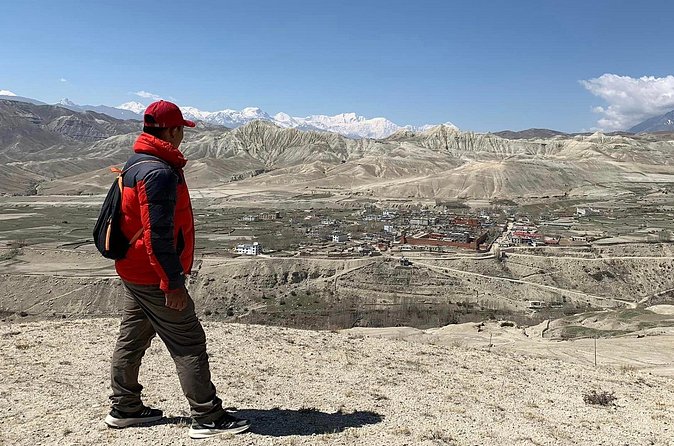
The walk from Kagbeni to Chhusang marks the official entry into Upper Mustang. Permit checks take place around Kagbeni, and the special permit covers 10 days in the restricted area.
The route toward Chhusang takes you through a dry valley setting, with the Kali Gandaki region close at hand. This is where you begin to see why the area feels so distinct from more crowded Nepal routes. The villages are small, the trails are exposed, and the surroundings have a weathered, almost otherworldly quality.
From Chhusang toward Samar, the trail starts relatively flat before the larger climb beyond Chele. The day takes about five to six hours and includes a substantial ascent toward Syangboche. You pass an apple garden and views toward the surrounding hills, details that soften the otherwise dry terrain.
This is an important point for fitness. Even when the path is solid and fairly direct, the combination of sun, dust, altitude, and climbing can make the day tiring. Walk steadily rather than trying to race the guide or other members of your group.
Days 7 and 8: High views, Ghiling, and Tsarang
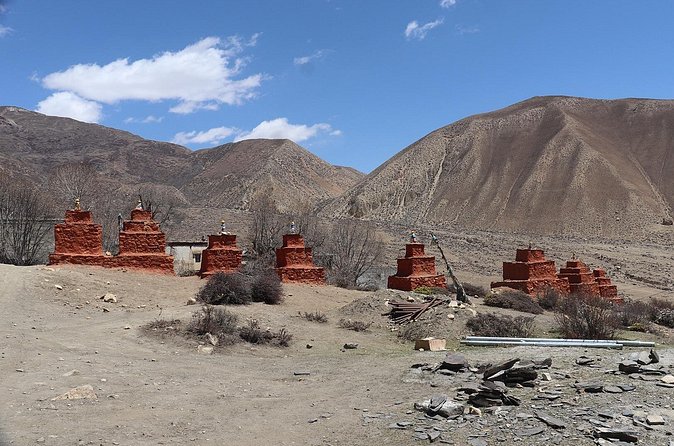
The next day begins with another climb toward Syamboche. After reaching the area, you stop for lunch and rest before continuing through Upper Mustang. The views can open toward major Himalayan peaks, including Dhaulagiri at 8,167 meters and Annapurna I at 8,097 meters.
These distant peaks are part of the reward. You are walking through a dry, rugged region, yet the snowy Himalayan range remains a powerful backdrop. Clear weather matters, so do not expect every mountain view to appear on schedule.
On day eight, the route passes farms and Ghiling village, where old monasteries add cultural interest. You continue toward Tsarang, described as one of the largest villages on the route. This is one of the better days for seeing how agriculture and religious buildings fit into the Mustang setting.
The walking remains active, but the cultural details help break up the physical effort. I would treat this stretch as a chance to slow down, look closely at village construction, and give yourself time to appreciate the monasteries rather than viewing them as quick photo stops.
Days 9 and 10: Reaching Lo Manthang
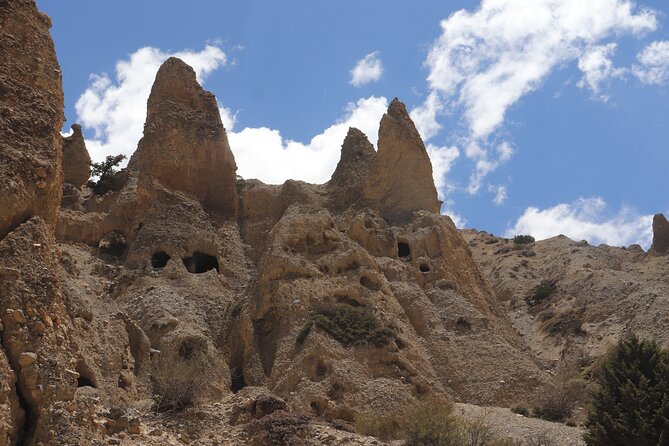
The walk to Lo Manthang takes about five to six hours. You cross rivers and bridges, pass through dry open country, and finally approach the walled city that gives the trek its central focus.
Lo Manthang is often called the Himalayan kingdom of Nepal. Its old walls, colorful village details, monasteries, and palace create a strong sense of place. The city is not merely a finish line. It is where the route’s cultural and historical themes come together.
Day 10 is reserved for exploring Lo Manthang. You visit monasteries and the King’s Palace, with time to see the old city at a slower pace. This rest day is one of the smartest parts of the schedule because it gives you a full day for sightseeing after several consecutive walking days.
You should remember that this is a working town, not a museum set up for visitors. That means the experience can feel more genuine, but it also means the pace and available facilities may be simple. Bring patience and curiosity. The rewards come from observing, not rushing.
Days 11 and 12: Returning through Dhakmar and Ghami
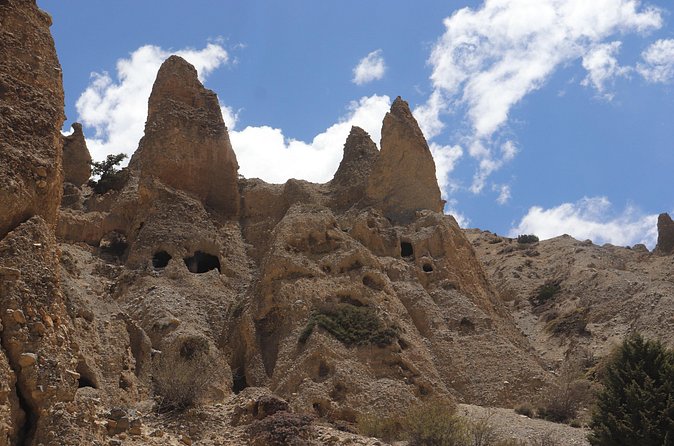
After Lo Manthang, the route turns back through the Upper Mustang valleys. The walk toward Dhakmar begins uphill near a gompa, or monastery. This section is especially appealing if you enjoy combining mountain walking with religious and architectural sites.
From Dhakmar, you continue toward Ghami. Ghami is one of the larger villages on the route and has its own monastery. The area also includes farm products and apple gardens, adding a practical, local side to the cultural experience.
These days are not simply a repeat of the outward route. The direction changes your views, and the return path lets you notice details missed during the first pass. Still, anyone hoping for a completely different circuit should understand that the trek uses a return section through familiar villages.
Days 13 and 14: A major descent to Kagbeni
The walk from Syangboche to Chhusang is a big downhill day. You pass through Samar, Bhena, and Chele while descending about 1,000 meters toward the Kali Gandaki River.
Downhill walking can be harder on knees than uphill walking is on lungs. Trekking poles would be sensible, although the package details do not state that they are supplied. Take your time, especially on loose or dusty sections.
The route from Chhusang to Kagbeni starts early for a practical reason. After noon, strong winds often affect the Kagbeni area. An early breakfast and early departure give you a better chance of reaching the village before the wind becomes a problem.
This is one of the most useful pieces of advice in the schedule: start early when the route is exposed. The plan is not only about covering distance. It responds to the daily rhythm of the valley.
Days 15 to 18: Jomsom, Pokhara, and Kathmandu
The trek from Kagbeni to Jomsom is described as an easy, short hike. Once in Jomsom, you check the flight schedule for the next day and have time to look around the town.
The itinerary specifically mentions local apple brandy and other apple products. These make distinctive souvenirs, but personal purchases are not included in the tour price. You may also want to keep some spending money for personal items during the trek.
Day 16 involves the flight from Jomsom to Pokhara. The flight itself is listed as about 25 minutes, followed by a transfer to your Pokhara hotel. Depending on the flight schedule, you may have breakfast in Jomsom or leave early for the airport.
The return to Pokhara marks a sharp shift from remote trekking to a larger city setting. Two nights in Pokhara are included, but the schedule does not promise a full free day for sightseeing, so ask about the exact timing if Pokhara matters to you.
On day 17, you take the tourist bus from Pokhara to Kathmandu. The journey is listed as about seven hours. On the final day, private transport takes you to Tribhuvan International Airport for your departure.
What the USD 2,400 price covers
At USD 2,400 per person, this is a substantial purchase, but the package includes several costly elements:
- Three nights in a three-star Kathmandu hotel with breakfast
- Two nights in a Pokhara hotel with breakfast
- Kathmandu to Pokhara and Pokhara to Kathmandu tourist buses
- Domestic flights between Pokhara and Jomsom
- Airport, hotel, and airport transfers
- Annapurna Conservation Area permit
- The USD 500 Upper Mustang permit for 10 days
- Lodge or tea-house accommodation during the trek
- A government-licensed trekking guide
- One porter for every two people
- Government taxes and service charges
- Seventeen breakfasts and 16 lunches and dinners
That inclusion list gives the price real value, especially because the Upper Mustang permit alone is expensive. The package also removes much of the planning work from a route involving restricted-area paperwork, domestic flights, buses, guides, porters, and multiple hotels.
Read the meal wording carefully before paying. The package specifies 17 breakfasts and 16 lunches and dinners, but it does not explain every meal day in detail. Personal expenses, tips, and extra hotel nights in Kathmandu or Pokhara are not included.
Comfort, fitness, and group style
This is a private activity, so only your own group takes part. That is useful if you want a flexible pace or prefer not to walk with a large mixed group. The guide and porter structure also keeps you from carrying the full load yourself.
The accommodation during the trek is in lodges and tea houses. You should expect practical mountain lodging rather than hotel comfort. The provided information does not specify room arrangements or bathroom facilities, so ask the operator for those details if they matter to you.
A strong level of physical fitness is required. The daily walking figures include four to six hours on several days, with climbs near Chele and Syangboche and a major descent toward Chhusang. Dust, wind, and altitude add effort even when the trail is not technically difficult.
The best preparation is simple: build walking endurance, use broken-in footwear, carry sun protection, and keep your daypack light. You will appreciate having a porter, but you still need to carry your personal essentials.
Who should book this trek?
I would recommend Upper Mustang to you if you want a quieter Himalayan route with old villages, monasteries, striking dry-country scenery, and a strong Tibetan Buddhist influence. It is especially suitable if you prefer cultural discovery and open mountain views over crowded trails or technical climbing.
The trek also suits people who want a private arrangement. The guide, porter, transport, and permits are organized together, and the published feedback gives particular praise to the staff’s kindness, patience, helpfulness, and discreet manner. The agency has also adapted arrangements to individual requests in the past.
I would hesitate to recommend it if you want soft beds, short walking days, or a low-cost Nepal holiday. The USD 500 permit, domestic flights, long bus rides, basic trekking accommodation, and fitness requirement all deserve serious thought.
The cancellation terms are worth noting before you commit. You receive a full refund if you cancel at least six full days before the start time. A cancellation two to six days ahead receives 50 percent, while cancellations less than two days before the start time are nonrefundable.
Final call: is Upper Mustang worth it?
Book it if you want culture, solitude, and unusual scenery in one well-supported trip. The full day in Lo Manthang, the ancient villages, the monastery visits, and the route’s low crowd levels are the main reasons to choose it.
The best value comes from the combination of permits, flights, hotels, guide, porter, meals, and ground transfers. Just go in prepared for dust, wind, basic lodges, and long walking days. If those tradeoffs sound fair, Upper Mustang offers a rare chance to see a part of Nepal where daily life and old traditions remain central to the journey.
FAQ
How long is the Upper Mustang Trek?
The experience lasts approximately 18 days, including time in Kathmandu and Pokhara, transport between cities, domestic flights, and the trekking days.
What is the price per person?
The listed price is USD 2,400 per person.
Is the Upper Mustang special permit included?
Yes. The USD 500 per person special permit for 10 days is included. You need to provide your original passport and Nepal visa when the permit is arranged.
What accommodation is included?
The package includes three nights in a three-star hotel in Kathmandu, two nights in a hotel in Pokhara, and lodge or tea-house accommodation during the trek.
Are meals included?
Yes. The package includes 17 breakfasts and 16 lunches and dinners. Personal expenses are not included.
What transport is included?
Airport, hotel, and airport transfers are included, along with tourist buses between Kathmandu and Pokhara and domestic flights between Pokhara and Jomsom.
Is this a private tour?
Yes. Only your group participates in the activity. A government-licensed guide and one porter for every two people are included.
How fit do I need to be?
You should have a strong physical fitness level. The trek includes walking days of about four to six hours, uphill sections, a descent of approximately 1,000 meters, dusty trails, and windy conditions near the Kali Gandaki River.
New in the Kathmandu listings
- Traditional Momo Making Class★ 5.0 · 10 reviews
- Kathmandu: Ancient City Kirtipur & Pharping Monastery Tour★ 5.0 · 2 reviews
- Kathmandu to Pokhara Premium sofa bus ticket★ 4.0 · 17 reviews
- Women Empowerment Project(Nepali cooking class & jewelry workshop★ 5.0 · 15 reviews
- 7-Day Langtang Valley Trek from Kathmandu★ 5.0 · 1 review
- Kathmandu 2 Nights 3 Days Chitwan Jungle Safari Tour★ 5.0 · 9 reviews
- Yoga Experience Day Trip with Private Transfer From Kathmandu★ 4.0 · 2 reviews
- Wildlife Adventure in Chitwan Nepal★ 4.0 · 4 reviews
Mustang and Muktinath Tours, compared.
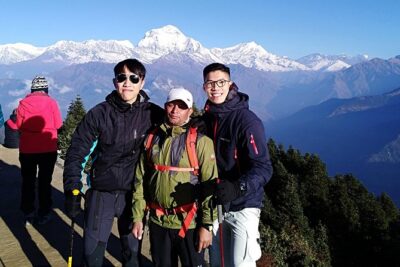
Trekking in Annapurna/Langtang/Everest/Upper Mustang regions
Read our review →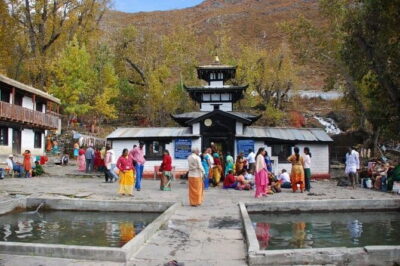
2-Day Scenic Mustang Tour: Pokhara to Jomsom, Kagbeni & Muktinath
Read our review →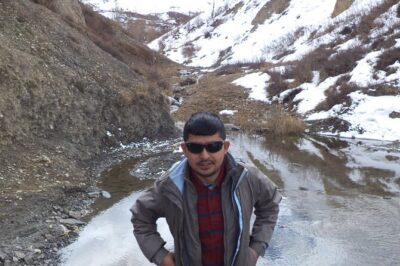
3 Day Lower Mustang Tour with 4WD Jeep from Pokhara
Read our review →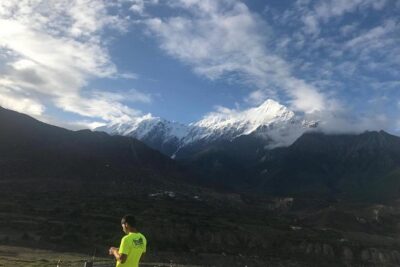
5 Days Adventures Lower Mustang Trip by 4WD Jeep
Read our review →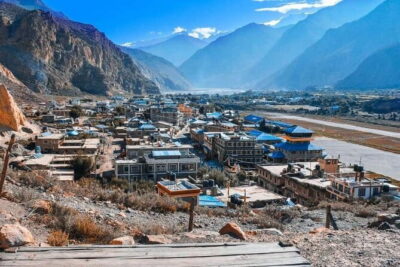
“Exclusive Round-Trip Transfer: Pokhara to Jomsom & Muktinath”
Read our review →
6 Day Upper Mustang Tour by 4WD Jeep from Pokhara
Read our review →Browse the lists this tour appears in