
REVIEW · ANNAPURNA CIRCUIT TREKS
Annapurna Circuit Trek with Tilicho Lake
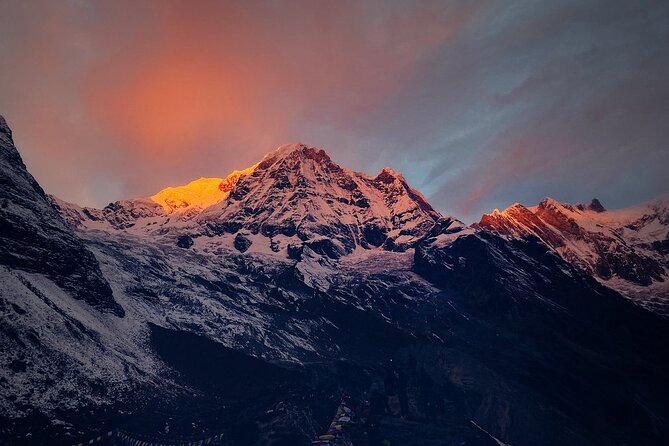
Big views come with big walking days. This 16-day Annapurna Circuit trek from Kathmandu adds a demanding side trip to Tilicho Lake, then crosses Thorong La before finishing with hot springs and the famous Poon Hill sunrise. I like the way the package handles the awkward parts: permits, meals, lodges, guides, porters, and local transport are included. I also like the route’s variety, from river valleys and pine forests to dry high mountain country and Tibetan-style villages.
The main caution is simple: this is not a gentle sightseeing holiday. You will walk at altitude for many days, face steep climbs, and start around 3 a.m. for the Thorong La crossing. The $1,093 price offers good value for a supported trek, but you need to be fit, flexible, and ready for basic tea-house accommodation.
In This Review
- Key points at a glance
- What the $1,093 package really covers
- Days 1 to 4: From Kathmandu to the Annapurna foothills
- Days 5 and 6: Pisang views and acclimatizing in Manang
- Days 7 to 9: The hard reward of Tilicho Lake
- Days 10 to 12: Khangsar, Thorong Phedi, and the pass
- Days 13 to 15: Muktinath, hot springs, forests, and Poon Hill
- Day 16: Returning to Kathmandu
- Guides, porters, and group size
- Meals, lodging, and the physical challenge
- Booking details and who should choose it
- Should you book the Annapurna Circuit with Tilicho Lake?
- FAQ
- How long does the Annapurna Circuit with Tilicho Lake take?
- What is included in the tour price?
- Is Tilicho Lake included in the route?
- Is Thorong La included?
- What transport is provided?
- Are meals included during the trek?
- How large is the group?
- Can the booking be canceled for a refund?
Key points at a glance
- Tilicho Lake detour: A strenuous side trip leads to one of the trek’s most memorable high-altitude sights.
- Thorong La crossing: The highest and hardest day comes late in the route, after your body has had time to adjust.
- Guides and porters included: Discovery World Trekking provides a licensed guide, porters, and support for permits, meals, lodging, and transport.
- A changing route: You move from subtropical river valleys and forests to dry mountain country, then down toward hot springs and rhododendron woods.
- Poon Hill finale: The early climb to 3,210 meters gives you a final sunrise view of Annapurna, Dhaulagiri, Machhapuchhre, and Manaslu.
- Small-group format: The maximum group size is 15, large enough for company but still manageable on a mountain trail.
What the $1,093 package really covers
At first glance, $1,093 is a serious price for a Nepal trek. Look closer, though, and much of the costly planning is already bundled in. The package includes the Annapurna Conservation Area Permit, the TIMS card, tea-house or lodge accommodation, three meals each day during the trek, a licensed guide, porters, local transport, and government and local taxes.
You also get transportation from Kathmandu to Syange, public transport from Muktinath to Tatopani, a tourist bus from Pokhara to Kathmandu, one night in a selected Pokhara hotel with breakfast, a farewell dinner, and a completion certificate. Guide and porter wages, food, insurance, lodging, and transport are covered too.
That matters because a trek of this length has many small costs. Permits, meals, road transfers, and guide support can be a nuisance to arrange separately. Here, you pay once and focus on walking. The package also includes help arranging a rescue operation in a serious health situation, which is valuable on a remote high-altitude route.
The weak point is that anything not listed as included counts as extra. The information does not specify every personal expense, so you should ask before booking about items such as drinks, snacks, equipment rental, charging, tips, and personal insurance. A flight from Pokhara to Kathmandu is not included either. The listed alternative is a 225-minute flight, while the tourist bus is included.
More Annapurna Circuit treks:
- Annapurna Circuit Trek
★ 5.0 · 94 reviews - Annapurna Circuit Trek
★ 5.0 · 35 reviews - Annapurna Circuit Trek
★ 5.0 · 34 reviews
Days 1 to 4: From Kathmandu to the Annapurna foothills
The trip starts with a long drive from Kathmandu toward Besishar and Syange. The journey takes roughly six to seven hours and covers about 190 kilometers, though mountain roads are not famous for keeping city schedules. Along the way, you see villages, farms, rivers, and early views of the mountains.
This first day is less about hiking than getting into the country. The long drive can be tiring, but it saves you from arranging a separate transfer and places you at the start of the walking route. The itinerary also lists Sandup Choeding Gompa as a stop, adding a cultural note to an otherwise transport-heavy day.
On day two, the trail crosses a suspension bridge and climbs toward Tal, the first village in the Manang region. Waterfalls drop into the river, and sandy river beaches give the valley a softer, more open feel. The climb is steep in places, so do not treat this as a warm-up stroll.
Day three follows a river through pine, fir, oak, and maple forest toward Chame, the administrative center of Manang District. The tree cover gives welcome shade, while views open toward Lamjung and the Annapurna range. This is a good reminder that the circuit is not only about giant peaks. Forest, river, village, and mountain all share the route.
On day four, the trail enters a steep, narrow valley and reaches the first major rock feature, Paungda Danda. This curved rock face rises about 1,500 meters from the river and gives the route a sense of scale. Annapurna II and Pisang Peak begin to dominate the view, and the trek starts to feel properly alpine.
Days 5 and 6: Pisang views and acclimatizing in Manang
Day five takes the upper route through Upper Pisang and Geru toward Manang. This is the scenic choice, with broad views toward Annapurna II, Annapurna III, Annapurna IV, Gangapurna, Tilicho, and Pisang Peak. The higher you go, the air becomes colder, drier, and harsher.
The upper trail is more demanding than simply following the lower route, but it gives you the mountain views that make the extra effort worthwhile. If you are carrying a daypack, keep it light and pace yourself. The guide and porters handle the main loads, but you still need to manage your own water, layers, and personal items.
Day six is set aside for acclimatization around Manang. This is one of the most important parts of the schedule, not wasted time. You hike toward Gangapurna Lake and Base Camp, look across at Annapurna III, Tilicho, Pisang, and Chulu peaks, and explore Manang village and a monastery.
A rest day at altitude works best when you keep moving gently rather than staying in bed all day. This planned pause gives your body more time before the Tilicho side trip and the Thorong La crossing. It also gives you a better chance to see Manang as a living mountain community rather than just a sleeping stop.
Days 7 to 9: The hard reward of Tilicho Lake
Day seven is described as a somewhat easier walking day. The upper route drops toward a river, crosses conifer forests, and reaches the Tibetan settlement of Khangsar after about three hours. The trail continues toward Tilicho Base Camp.
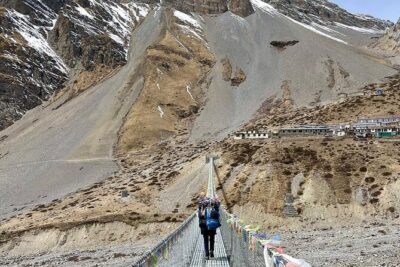
The route is not effortless. It passes through landslide areas, where rock formations and exposed slopes replace the forest. This section can feel rough and stark, but that is part of the appeal. You are moving into a drier, higher world, and the changing terrain is one of the circuit’s great strengths.
On day eight, the trail follows an easier path through the landslide zone and climbs to Tilicho Base Camp. You get views of Tilicho Peak and other snow-covered mountains. Accommodation here is at a tea house or lodge, and the setting is functional rather than luxurious. Expect basic mountain lodging, not a resort.
Day nine begins early to avoid the stronger afternoon winds. A steep, steady two to three hour climb leads to Tilicho Lake. The itinerary describes it as the highest lake in the world and calls it the Great Ice Lake, a name linked to a French expedition leader. The lake itself is the reward for a short but tough ascent, surrounded by high peaks and cold, open country.
This is the day when pacing matters most. The climb may look short on paper, but altitude makes every step harder. Carry only what you need, follow your guide’s advice, and do not rush the ascent. The trip returns from the lake rather than adding an overnight high above base camp, which keeps the side trip within the larger circuit plan.
More walking in the hills of Kathmandu:
- Everest Base Camp Trek – 14 Days
★ 5.0 · 1,499 reviews - Everest Base Camp Trekking
★ 5.0 · 485 reviews - Nagarkot Sunrise View and Day Hiking from Kathmandu
★ 5.0 · 471 reviews - Everest Base Camp Trekking – 13 Day
★ 5.0 · 365 reviews
Days 10 to 12: Khangsar, Thorong Phedi, and the pass
After Tilicho Lake, the route descends toward Khangsar, passes Tare Gompa, and follows a rock wall out of the village. You cross a bridge over the Thorong Khola and climb toward Yak Kharka. This is a quieter part of the trek, with fewer signs of settlement and a stronger sense of remoteness.
Day eleven continues uphill to Thorong Phedi, a small and busy mountain stop. The approach gives views of Mount Gundang, Mount Syagang, Thorung Peak, and Mount Khatungkan. This overnight stop is strategically important. It puts you close enough to the pass for the early start, but the altitude means you should keep the evening calm and organized.
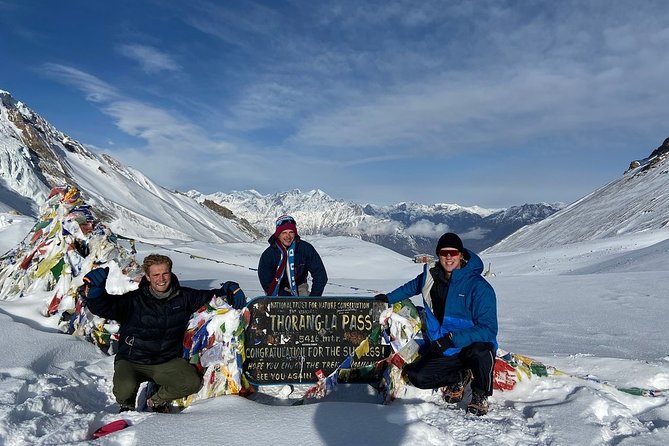
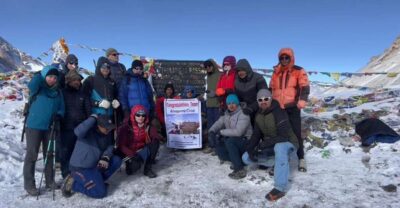
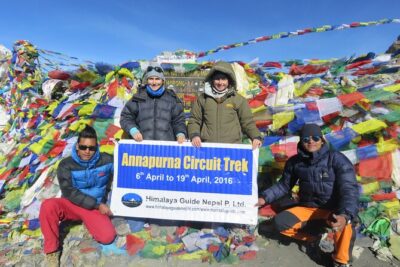
Day twelve is the trip’s biggest test. You wake around 3 a.m. and begin the climb toward Thorong La, one of the world’s highest mountain passes and the highest point on this trek. The early departure is designed to get you over the pass before conditions worsen later in the day.
You should expect a long, exposed, physically demanding day. The route requires steady effort, not speed. Weather, altitude, cold, and fatigue can all affect how the crossing feels. This is where an experienced guide matters most, both for route decisions and for keeping the group together.
The reward is the sense of crossing from the Manang side toward Muktinath and Mustang. The terrain changes again, and the pass becomes a clear dividing line between two very different mountain regions. After the crossing, the descent to Muktinath can feel just as tiring as the climb, so save energy for the full day.
Days 13 to 15: Muktinath, hot springs, forests, and Poon Hill
Day thirteen starts with a visit to Muktinath Temple before a vehicle transfer to Tatopani. Muktinath is an important pilgrimage site, and the stop adds a spiritual and cultural layer to a route otherwise shaped by walking and mountain views.
Tatopani means hot water, and the village is known for natural hot springs. After the hardest days of the trek, soaking here is more than a pleasant extra. It gives tired legs a welcome break before the final climbs.
Day fourteen heads uphill toward Ghorepani through Sikha and Chitre, villages associated with the Thakali people. The route passes terraced farmland and then enters forests of rhododendron, birch, and magnolia. After the dry, high country near Tilicho and Thorong La, this greener section feels like a different trek.
The climb to Ghorepani is still substantial. Do not assume the hardest walking ends at the pass. The route loses altitude, gains it again, and finishes with another early morning start.
On day fifteen, you climb to Poon Hill at 3,210 meters for sunrise. The viewpoint looks toward the Annapurna and Dhaulagiri massifs, Machhapuchhre, Manaslu, and surrounding rice terraces. It is a popular photography spot, but the broad view earns its popularity.
The final morning is a fitting change of pace: a short, dark climb followed by a wide mountain panorama. Bring warm layers for the wait before sunrise, though the package details do not specify equipment or clothing. After Poon Hill, you return for breakfast and continue toward Pokhara.
Day 16: Returning to Kathmandu
The package ends with breakfast and a tourist bus from Pokhara to Kathmandu. The bus is included, while the optional flight takes about 225 minutes and costs extra.
This final transfer may feel long after two weeks on foot, but it keeps the price down. If you value time over cost, ask about the flight before departure. If you choose the bus, treat the day as part of the trip rather than a quick airport connection.
Guides, porters, and group size
Discovery World Trekking supplies a government-licensed guide and porters, with a maximum group size of 15. The strongest praise attached to this experience focuses on the human side of the operation.
Guides named in the feedback include Hari Gurung, Suresh, Dev, Kersing, and others. Porters such as Damar, Sangkar, Bikesh, Asis, Monis, Rupesh, and Surya were singled out for kindness, support, and hard work. One particularly memorable touch was a porter preparing fruit platters in the evening.
The practical lesson is that the quality of the guide and porter team can shape the whole trek. Guides were valued for explaining the mountains, villages, and local culture, as well as for giving useful advice during the walk. Some people also described the group bond as a major part of the experience.
A group of up to 15 is not intimate in the same way as a private trek for two, but it is still small enough for a guide to manage. Ask how porter loads are handled and what personal baggage limit applies, since those details are not specified here.
Meals, lodging, and the physical challenge
Breakfast, lunch, and dinner are included for the trek. That removes the need to negotiate every meal and gives you a predictable daily structure. The package also says extra dietary requirements can be catered for, but you should communicate those needs before setting out.
Tea houses and lodges are included rather than higher-end hotels. Facilities become simpler as you gain altitude, and shared or basic arrangements may be part of the experience. The one selected hotel night in Pokhara gives you a more comfortable reset, but the accommodation category during the trek remains practical.
The tour is listed for people with moderate physical fitness, yet I would read that as a minimum, not a promise of ease. You face steep climbs, long walking days, high altitude, landslide areas, an early start for Tilicho Lake, and a 3 a.m. start for Thorong La.
This route suits you if you already enjoy long uphill walks and can handle several active days in a row. It is a poor match if you want short walks, flexible mornings, or hotel comfort every night. The operator can assist with a rescue operation in a complicated health situation, but you should still arrange suitable personal travel insurance.
Booking details and who should choose it
The experience costs $1,093, lasts about 16 days, offers pickup, and uses a mobile ticket. Confirmation is due within 48 hours, subject to availability. The tour requires good weather and a minimum number of people. If poor weather or insufficient numbers force cancellation, you are offered another date or experience, or a full refund.
Your own cancellation terms are strict: the experience is non-refundable and cannot be changed for any reason after booking. That makes it wise to confirm your dates, fitness, insurance, and equipment before paying.
Should you book the Annapurna Circuit with Tilicho Lake?
I would choose this trek if you want the full Annapurna experience in one organized package. The route gives you forests, villages, high peaks, Tilicho Lake, Thorong La, Muktinath, hot springs, and Poon Hill. Few shorter Nepal trips offer that much variety.
The best reasons to book are the included logistics and the repeated praise for the guides and porters. The biggest reasons to hesitate are the demanding altitude, early starts, basic lodging, long road transfers, and strict cancellation policy.
If your idea of a good holiday includes sore legs, cold mornings, simple rooms, and views that make the effort worthwhile, this is a strong choice. If you want an easy mountain break, choose a shorter and lower route instead.
FAQ
How long does the Annapurna Circuit with Tilicho Lake take?
The experience lasts approximately 16 days, beginning and ending in Kathmandu.
What is included in the tour price?
The price includes accommodation, breakfast, lunch, dinner, permits, a licensed guide, porters, local transport, government and local taxes, one night in a selected Pokhara hotel with breakfast, a farewell dinner, and assistance arranging a rescue operation in a complicated health situation.
Is Tilicho Lake included in the route?
Yes. The itinerary includes a side trip to Tilicho Lake, with an overnight stay at Tilicho Base Camp before the early climb to the lake.
Is Thorong La included?
Yes. The route crosses Thorong La on day twelve. It is described as the highest point of the trek and requires an early morning start around 3 a.m.
What transport is provided?
Transport is provided from Kathmandu to Syange, from Muktinath to Tatopani by public transportation, and from Pokhara to Kathmandu by tourist bus. A flight from Pokhara to Kathmandu is available as an option but is not included.
Are meals included during the trek?
Yes. Breakfast, lunch, and dinner are included during the trek. The package also says extra dietary requirements can be catered for.
How large is the group?
The maximum group size is 15 people.
Can the booking be canceled for a refund?
The experience is non-refundable and cannot be changed for any reason. If the operator cancels because of poor weather or because the minimum number of people is not met, you are offered a different date or experience, or a full refund.
New in the Kathmandu listings
- Traditional Momo Making Class★ 5.0 · 10 reviews
- Kathmandu: Ancient City Kirtipur & Pharping Monastery Tour★ 5.0 · 2 reviews
- Kathmandu to Pokhara Premium sofa bus ticket★ 4.0 · 17 reviews
- Women Empowerment Project(Nepali cooking class & jewelry workshop★ 5.0 · 15 reviews
- 7-Day Langtang Valley Trek from Kathmandu★ 5.0 · 1 review
- Kathmandu 2 Nights 3 Days Chitwan Jungle Safari Tour★ 5.0 · 9 reviews
- Yoga Experience Day Trip with Private Transfer From Kathmandu★ 4.0 · 2 reviews
- Wildlife Adventure in Chitwan Nepal★ 4.0 · 4 reviews
Annapurna Circuit Treks, compared.
15-Day Private Annapurna Circuit Trek from Kathmandu
Read our review →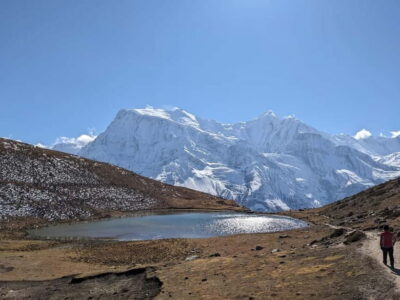
Annapurna Circuit Trek with Tilicho Lake (16 Days)
Read our review →Browse the lists this tour appears in