
REVIEW · EVEREST BASE CAMP TREKS
Everest Base Camp Trekking
Everest is only part of the story. This 14-day trek from Kathmandu gives you a carefully planned route through the Khumbu, with a guide, teahouse lodging, meals, local transport, and a small group of no more than 10 people. You walk through pine forests, Buddhist villages, glacier country, and famous mountain viewpoints while someone else handles the daily route and logistics.
I like the small-group format, which should give you more personal help than a large tour. I also like the built-in acclimatization day at Namche Bazaar and the early morning trip to Kala Patthar. Those details matter at altitude. The main drawback is simple: this is a demanding trek for active, moderately fit people, and mountain weather can disrupt plans or make the route much harder.
The price is $1,350 per person. That is a useful value if the listed teahouse accommodation, meals, local transportation, guide support, and airport pickup cover what you need. You should still confirm exactly what is included in the price, especially the domestic flights and any permits or personal expenses, before paying.
In This Review
- Key things to know before you book
- Kathmandu arrival and the flight to Lukla
- Day 3: Pine forests, the Dudh Koshi, and Sagarmatha National Park
- Day 4: Namche Bazaar and the acclimatization walk
- Day 5: The high trail to Phorse
- Day 6: Pangboche, monasteries, and Dingboche
- Day 7: Duglha, the Khumbu Khola, and expedition history
- Day 8: Moraine walking and memorial stones
- Day 9: Everest Base Camp
- Day 10: Kala Patthar at sunrise
- Days 11 and 12: Returning through Pheriche and Pangboche
- Day 13: Lukla to Kathmandu and a city evening
- Day 14: Kathmandu before departure
- What the $1,350 price is worth
- Guide support and the human side of the trek
- Who should book this Everest Base Camp trek?
- Should you book it?
- FAQ
- Where does the Everest Base Camp trek begin?
- How long does the experience last?
- How many people can join the group?
- Is airport pickup included?
- What is included in the package?
- How fit do I need to be?
- Can I cancel for a full refund?
Key things to know before you book
- The group is limited to 10 people, a practical size for a narrow mountain trail and personal attention from the guide.
- Namche Bazaar is used for acclimatization, with a short viewpoint walk rather than a full day of doing nothing.
- You fly between Kathmandu and Lukla, where the mountain route begins and ends.
- The route reaches Everest Base Camp and Kala Patthar, with Kala Patthar timed for a sunrise view.
- Teahouse lodging, meals, and local transport are included, which reduces the amount of planning you must do.
- Guides and porters receive especially warm praise, with Biru, Amabar, Ramesh, and Kanchar named in personal accounts.
Kathmandu arrival and the flight to Lukla
Your first day begins at Tribhuvan International Airport in Kathmandu. An airport representative meets you there and takes you to your hotel in a private tourist vehicle. You can rest after your flight or visit the company office to hear the trek details.
That first day is more useful than it may sound. Kathmandu can be noisy, crowded, and tiring after an international journey. Having a planned pickup means you do not need to negotiate a taxi while carrying trekking bags and trying to find your hotel. Use the spare time to check your gear, charge your phone, and ask practical questions about the route.
On Day 2, you leave early for the domestic airport after breakfast. The flight to Lukla is part of the drama of the trip, with sunrise views over snow-covered peaks. The short airstrip at Tenzing-Hillary Airport places you directly in the Khumbu region, far from the traffic and noise of Kathmandu.
The flight is also one of the trip’s uncertainties. The tour operates in all weather conditions, but mountain weather can affect flying and walking. Build patience into your expectations. A delayed flight can shift the timing of the trek, and a snowstorm can change the route or the pace. The trip is well organized, but no operator controls Himalayan weather.
More Everest Base Camp treks:
- Everest Base Camp Trek – 14 Days
★ 5.0 · 1,499 reviews - Everest Base Camp Trekking – 13 Day
★ 5.0 · 365 reviews - Everest Base Camp Trek -14 Days
★ 5.0 · 321 reviews
Day 3: Pine forests, the Dudh Koshi, and Sagarmatha National Park
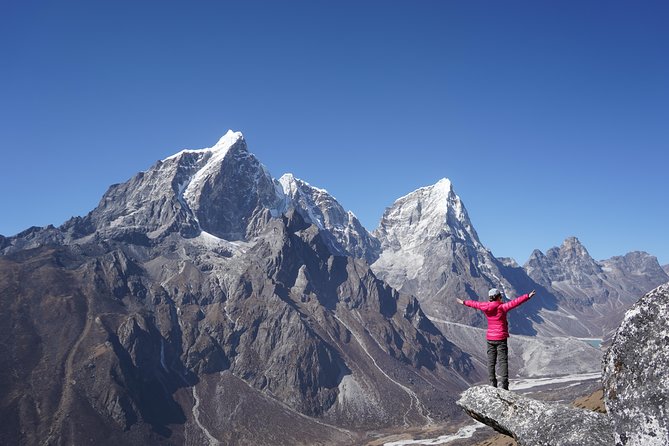
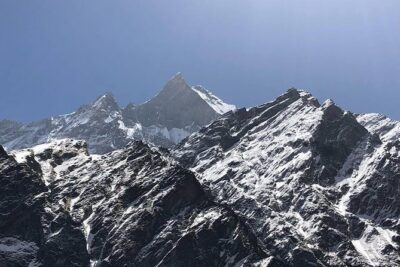
The first substantial walk follows the Dudh Koshi River through pine forest. You also get views of Mount Thamserku, one of the striking peaks in this part of the Khumbu.
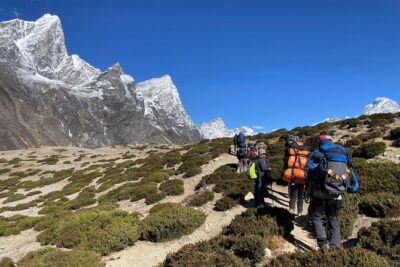
The route passes small settlements before reaching the entry check post for Sagarmatha National Park. This is a good opening day because you are not thrown straight into the highest part of the route. You start with forest, river crossings, villages, and mountain views, then gradually adjust to the walking rhythm.
A guide is particularly useful here. The trail passes through settlements and branching paths, and you can concentrate on your footing and the scenery instead of constantly checking the route. The practical benefit is not just avoiding a wrong turn. It is having someone nearby who understands the pace of the group and can help you manage the early signs of fatigue.
Day 4: Namche Bazaar and the acclimatization walk
Namche Bazaar is the largest settlement in the Khumbu region and one of the most memorable stops on the route. You can find ATMs, internet cafes, restaurants, and bakeries here, giving the village a useful break from the simpler conditions ahead.
This is an acclimatization day, but it is not a complete rest day. The plan includes a short hike to a nearby viewpoint, including the area around Tenzing Norgay Memorial. That gentle climb helps your body adjust while giving you a wider view of the surrounding peaks.
I like this structure. At altitude, racing upward is a poor plan, even if your legs feel strong. A short outing keeps you moving without spending the whole day on the trail. It also gives you a chance to learn how your body reacts before the route becomes more remote.
Namche is one of the last places where you have a broad choice of services. Take advantage of the bakery, internet access, and ATMs if needed. Conditions become more basic as you continue. The tradeoff is that Namche can feel busy compared with the quieter villages farther along the route.
Day 5: The high trail to Phorse
From Namche, the trek heads toward Phorse. The route includes Mugla Pass and views of Ama Dablam, Mount Khumbu, and Thamserku. Ama Dablam is one of the most recognizable peaks in the region, with a sharp profile that makes it easy to pick out among the surrounding mountains.
The walk then descends toward the Dudh Koshi and crosses the river. That rise and fall is a reminder that Himalayan trekking is not simply a steady climb. You may lose elevation only to regain it later, so conserve energy and do not judge the day by distance alone.
Phorse offers a quieter setting than Namche. You should expect fewer conveniences, but that is part of the appeal. The route is moving away from commercial services and into communities where daily life is closely tied to the mountains, livestock, and trekking traffic.
More walking in the hills of Kathmandu:
- Nagarkot Sunrise View and Day Hiking from Kathmandu
★ 5.0 · 471 reviews - Annapurna Circuit Trek with Tilicho Lake
★ 5.0 · 368 reviews - Annapurna base camp trek 5 Days
★ 5.0 · 252 reviews - Everest Base Camp Trekking – 2025/2026
★ 5.0 · 199 reviews
Day 6: Pangboche, monasteries, and Dingboche
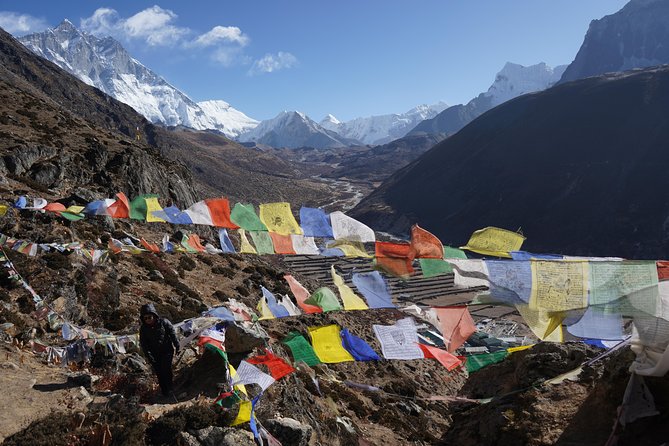
The route from Phorse to Dingboche passes through alpine forest and visits the largest Buddhist monastery in the region. It continues through Pangboche and other villages, including Shomare, before reaching Dingboche.
This day adds cultural interest to the mountain views. A monastery is not just another photo stop. It gives you a chance to see how Buddhist practice is part of life in the high valleys. Your guide can help explain the setting and local customs, though the exact amount of interpretation will depend on the individual guide.
The villages also show how the built environment changes as you gain height. Services are fewer, the walking feels more exposed, and the cold becomes a larger part of the day. Dingboche is an important point on the route because the following stages take you into more demanding glacier country.
Day 7: Duglha, the Khumbu Khola, and expedition history
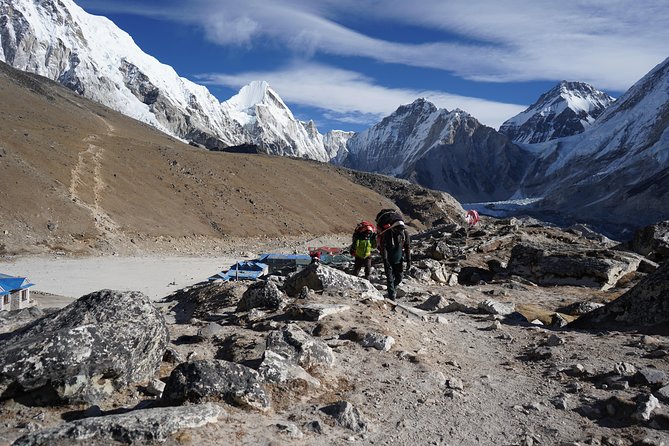
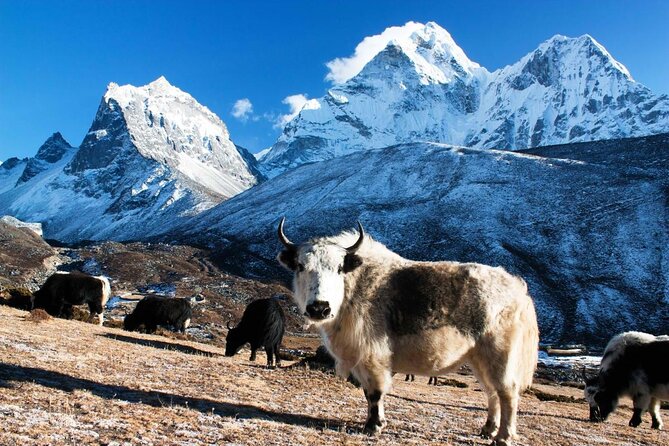
From Duglha, you climb through the Khumbu Khola valley. The route passes Dusa, associated with yak herders, and Phulong Karp, described as the camp of the first successful Everest expedition in 1953.
These details give the trek a useful sense of time. You are not walking through an empty wilderness. The valley has long supported local communities, and it also carries the memory of the expeditions that made Everest famous around the world.
The day is physically serious. The itinerary refers to a climb from Duglha and high valley walking, so you should expect a slower pace and less comfort than in the lower settlements. A strong fitness level is required, and you need to be comfortable walking for several hours over uneven ground.
The description also refers to Chola Lake, though the exact placement of that stop should be confirmed with the operator. Route descriptions can vary by season and by the condition of the trail.
Day 8: Moraine walking and memorial stones
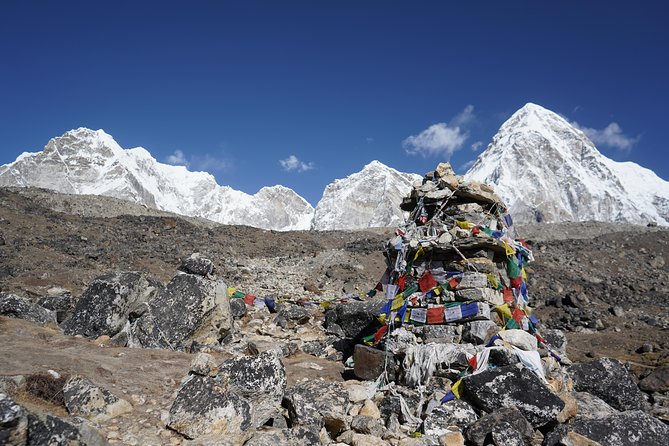
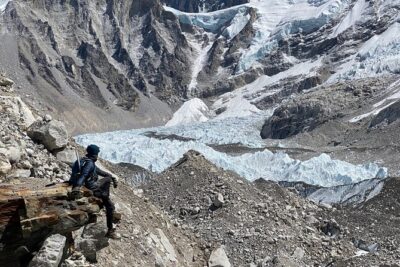
After walking along the Khumbu glacier area, the route climbs the steep terminal moraine toward Chupki Lhara. The trail includes slopes covered with boulders and a collection of stones decorated with prayer flags.
This is one of the more emotional parts of the walk. The prayer flags and memorial stones reflect the danger of climbing in the Everest region. They also change the mood of the trek. The mountains are beautiful, but they are not tame, and the route asks you to respect that fact.
The moraine terrain needs care. Loose rocks and uneven footing can make a short distance feel slow. Walk at the guide’s pace, keep your balance, and do not spend the whole time looking upward at the peaks. The ground deserves attention here.
Day 9: Everest Base Camp
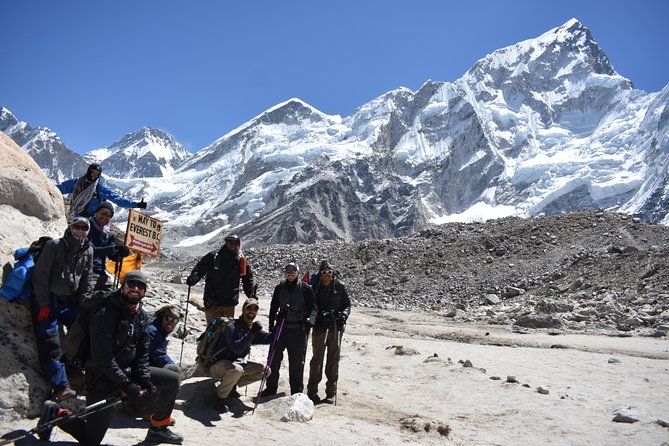
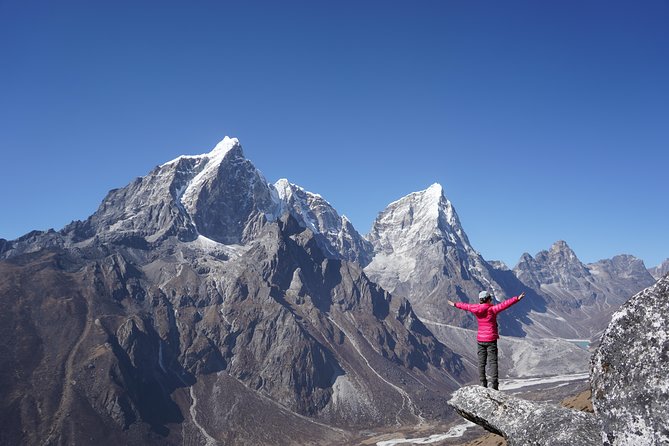
Day 9 is the main objective: reaching Everest Base Camp. The route includes a viewpoint at Thangma Riju, where you can take in a 360-degree view of snow-covered mountains. Mount Everest itself is not visible from that viewpoint, which is an important detail to understand before you go.
The trail then continues toward Base Camp. Reaching the site gives the trek its headline moment, but the walk there is the real achievement. You cross rough ground near the glacier and move through a high-altitude setting where pace, weather, and energy all matter.
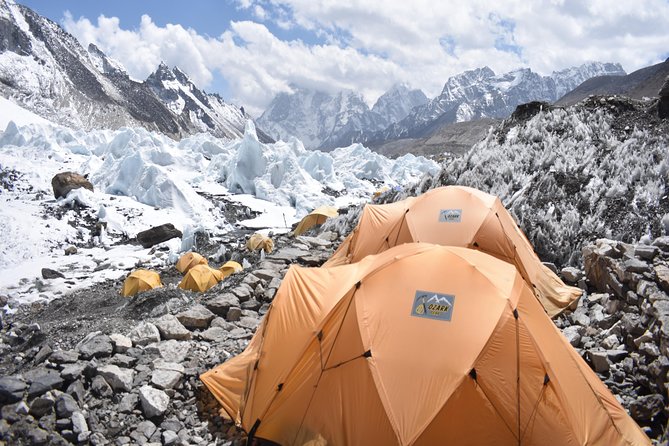
Everest Base Camp is not a permanent city or a polished attraction. Its appearance can change with the climbing season, and the experience depends heavily on conditions. You get the satisfaction of reaching the famous starting point for Everest expeditions, along with views of the glacier and surrounding peaks.
The route description allows about 30 minutes at the Base Camp stop. That is enough for photographs and a pause, but it is not a long sightseeing visit. Keep your expectations focused on the setting and the accomplishment rather than on a large collection of facilities.
Day 10: Kala Patthar at sunrise
The next morning begins very early. The goal is to reach Kala Patthar in time to watch the light spread across the mountains, with views that include Mount Everest and nearby peaks such as Pumori and Lingtr… The supplied route information cuts off the full peak name, but it is clear that this morning is planned around the best light.
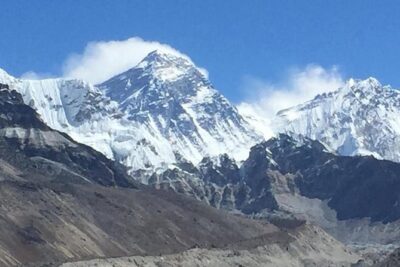
Kala Patthar is often the visual high point of the trek. Unlike the Base Camp viewpoint described on Day 9, this is where you are specifically positioned for a view of Everest. Sunrise also gives the peaks changing color and sharp shadows, though early morning means cold conditions and a hard start after the previous day.
Do not treat this as an optional photo stop if mountain views are your main reason for booking. The timing is demanding, but the payoff is the clearest Everest panorama of the trip. Carry warm clothing and protect your phone or camera battery from the cold.
After the morning viewpoint, the route begins its return. The descent is welcome for your lungs, but it still puts strain on knees and ankles. Downhill walking is not free recovery.
Days 11 and 12: Returning through Pheriche and Pangboche
The return route passes Duglha, Pheriche, Orsho, Shomare, and Pangboche. You follow the familiar trail in reverse, but it will look different with less pressure to keep climbing and more time to notice villages, bridges, and mountain details you may have missed.
Pangboche offers another opportunity to explore an old monastery. The stop adds cultural depth to a trek that could otherwise become a simple out-and-back hike. You are seeing both the natural setting and the communities that have shaped life in the Khumbu.
Day 12 continues downhill toward the Dudh Koshi. The trail is steep and rocky in places, so the advice to walk slowly and stay balanced is worth taking seriously. Trekking poles, if you use them, can be helpful, but the supplied information does not state whether they are provided. Ask before departure.
You cross a suspension bridge over the river and pass through lower settlements. The air should feel easier as you descend, but tired legs can make this stage deceptively tough. Keep your footwear secure and leave enough time for careful steps.
Day 13: Lukla to Kathmandu and a city evening
The final trekking stage returns you to Lukla. From there, you take the mountain flight back to Kathmandu and have time for shopping or walking around the city. The evening is set aside to celebrate completing the trek.
This city return gives the trip a sensible change of pace. After simple mountain accommodation and long walking days, Kathmandu offers more choice and a chance to replace anything you used up or lost. It also gives you a buffer before the international departure on Day 14.
Again, weather is the key concern. Flights from Lukla can be affected by conditions, so keep your international travel plans in mind. The itinerary allows a final day in Nepal, which is useful, but you should still confirm how the operator handles flight disruption.
Day 14: Kathmandu before departure
Your last day allows time for shopping and sightseeing around Kathmandu Valley before your scheduled flight from Tribhuvan International Airport. This is not a full sightseeing tour of the valley, so plan your expectations accordingly.
If you want gifts, local crafts, or a final walk through Kathmandu, this free time is useful. Keep your passport, flight details, and luggage organized. The trek may be finished, but airport transfers and departure timing still matter.
What the $1,350 price is worth
At $1,350 per person, this trip offers good value for someone who wants the classic Everest Base Camp route without arranging every piece alone. The listed package includes teahouse accommodation, meals, local transportation, an airport pickup, and guided support. A maximum group of 10 also helps keep the experience more personal.
The value comes from coordination. You are not just paying for a walk. You are paying for a route through changing conditions, mountain transport, accommodation in remote settlements, and a guide who can help with pacing and orientation.
Still, read the inclusions carefully before booking. The details provided do not spell out every expense. Ask specifically about the Kathmandu to Lukla flights, return flight, permits, drinks, internet use, tips, porter arrangements, and personal gear. Do not assume that every cost is covered because meals and lodging are included.
Group discounts may improve the price if you are booking with friends. The mobile ticket is convenient, and confirmation is provided at booking. A valid passport is required on the day of the trek, and you must submit each participant’s passport name, number, expiry date, and country when booking.
Guide support and the human side of the trek
The strongest praise for this experience centers on the guides and porters. Biru is singled out for kindness, company, and route guidance. Amabar and porter Kanchar are described as going out of their way to help and keep a trekker feeling safe. Ramesh is praised as a Sherpa guide who made a solo trek feel supported.
Those details matter more here than they would on an ordinary day tour. At altitude, a calm guide can help you recognize when to slow down, adjust plans, or ask for help. One account describes a trekker who became unwell before a high pass and changed plans with the guide instead of forcing the original route. That kind of flexibility is exactly what you want in the mountains.
The company owners, Arjun and Raj, are also praised for responding to questions and handling coordination before and during the trip. That is useful if you are booking from abroad and need clear answers about flights, equipment, arrival details, or changes.
The route can still be physically and mentally hard. Good support does not remove steep trails, cold mornings, rough rock, or altitude. It simply means you are not handling those challenges alone.
Who should book this Everest Base Camp trek?
You should consider it if you are active, moderately fit, and comfortable with a 14-day trip built around walking. You should also enjoy simple accommodation and accept that the weather may control the schedule.
This is a good choice for:
- Solo trekkers who want company and local support
- Couples who prefer a planned route
- Small groups seeking a private-feeling experience
- First-time Himalayan trekkers who do not want to manage every detail
- Anyone who values mountain views, villages, Buddhist sites, and expedition history
It is less suitable if you want a relaxed holiday, dependable flight times, luxury lodging, or an easy sightseeing schedule. The tour description specifically requires strong physical fitness, and the steep moraine and rocky descents are not minor details.
Free cancellation is available up to 24 hours before the start time for a full refund. Changes or cancellations made inside that 24-hour window are not accepted or refunded, based on the stated policy. Check the local start time carefully.
Should you book it?
I would book this trek if I wanted the classic Everest Base Camp route with a small group and strong day-to-day support. The careful acclimatization stop at Namche, the Base Camp goal, the Kala Patthar sunrise, and the repeated praise for guides such as Biru, Amabar, and Ramesh make the package appealing.
I would first confirm the full cost and flight arrangements, then assess my fitness honestly. If you are ready for steep trails, basic teahouses, cold weather, and possible schedule changes, $1,350 is a reasonable starting price for a guided Himalayan trek. If your priority is comfort or flexibility, choose a less demanding Nepal trip instead.
FAQ
Where does the Everest Base Camp trek begin?
The experience begins with pickup at Tribhuvan International Airport in Kathmandu, Nepal. The trek itself starts after the domestic flight to Lukla.
How long does the experience last?
The planned duration is approximately 14 days, including arrival in Kathmandu, the trek, the return flight from Lukla, and departure from Nepal.
How many people can join the group?
The group has a maximum of 10 participants.
Is airport pickup included?
Yes. An airport representative meets you at Tribhuvan International Airport and arranges transport to your hotel in a private tourist vehicle.
What is included in the package?
Teahouse accommodation, meals, and local transportation are included. Confirm the exact treatment of domestic flights, permits, personal expenses, and other items before booking.
How fit do I need to be?
The experience is intended for active and moderately fit people, and the additional information says a strong physical fitness level is required.
Can I cancel for a full refund?
Yes. You can cancel at least 24 hours before the experience starts for a full refund. Cancellations or changes made less than 24 hours before the start time are not accepted under the stated policy.
New in the Kathmandu listings
- Traditional Momo Making Class★ 5.0 · 10 reviews
- Kathmandu: Ancient City Kirtipur & Pharping Monastery Tour★ 5.0 · 2 reviews
- Kathmandu to Pokhara Premium sofa bus ticket★ 4.0 · 17 reviews
- Women Empowerment Project(Nepali cooking class & jewelry workshop★ 5.0 · 15 reviews
- 7-Day Langtang Valley Trek from Kathmandu★ 5.0 · 1 review
- Kathmandu 2 Nights 3 Days Chitwan Jungle Safari Tour★ 5.0 · 9 reviews
- Yoga Experience Day Trip with Private Transfer From Kathmandu★ 4.0 · 2 reviews
- Wildlife Adventure in Chitwan Nepal★ 4.0 · 4 reviews
Everest Base Camp Treks, compared.
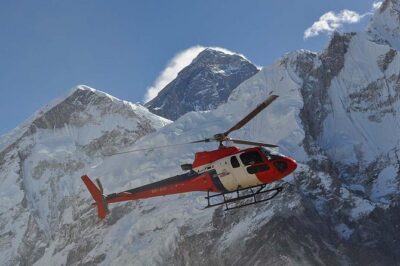
Everest Base Camp Trek with Helicopter Return from Gorakshep to Lukla
Read our review →
Browse the lists this tour appears in