
REVIEW · MARDI HIMAL TREKS
7 Day Mardi Himal Trek with Chitwan Jungle Safari Tour
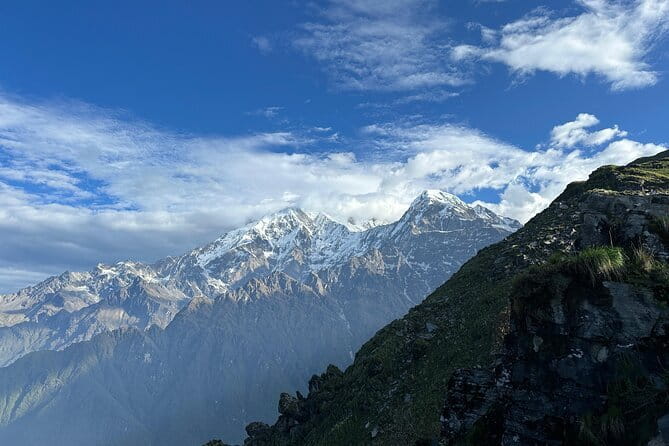
Mountains first, jungle next. This seven-day trip pairs the quieter Mardi Himal route with a Chitwan safari, giving you snowy peaks, rhododendron forest, village life, and wildlife in one compact Nepal journey. I like the close views of Machhapuchhre, also called Fishtail, and I like that the trek uses a private guide and a small personal group rather than placing you in a large tour. The main consideration is the pace: two long trekking days, followed by several hours on buses and jeeps, make this a full-on holiday rather than a gentle break.
I also like the balance of comfort and adventure. You sleep in teahouses during the trek, then return to a hotel in Pokhara before heading to a jungle lodge in Chitwan. Guide Biru received special praise for his patience, insights, and ability to make the walking more enjoyable, though guide assignments can change. At $450 per person, the price is appealing for the permits, transfers, accommodation, guide, safari activities, and meals listed, but you should read the inclusions carefully because food and drinks outside the stated Chitwan meals are not covered.
In This Review
- Five things to know before you book
- Why the mountain and jungle pairing works
- Day 1: Kande to Forest Camp through rhododendron forest
- Day 2: Forest Camp to High Camp and the first big mountain views
- Day 3: Mardi Himal Base Camp and the South Face of Fishtail
- Day 4: Siding Village, a shared jeep, and a return to Pokhara
- Day 5: Pokhara to Chitwan and a first look at Tharu culture
- Day 6: Canoe, forest walk, and jeep safari in Chitwan
- Day 7: Chitwan to Kathmandu by road
- What the $450 includes, and where costs can appear
- Who will enjoy this seven-day Nepal route?
- Should you book the Mardi Himal and Chitwan tour?
- FAQ
- How long is the tour?
- Where does the tour begin?
- Is this a private tour?
- What fitness level is required?
- Which mountain route does the trek follow?
- Is Mardi Himal Base Camp included?
- What wildlife activities are included in Chitwan?
- Are meals included?
- Is accommodation included?
- Can I cancel for a full refund?
Five things to know before you book
- Mardi Himal reaches a high viewpoint without the crowds of Nepal’s famous routes: You walk through forest, meadow, and ridge country toward Mardi Himal Base Camp and Machhapuchhre views.
- The trek includes two demanding seven-hour days: The climb from Forest Camp to High Camp and the early walk to Base Camp require moderate fitness.
- Chitwan adds a completely different setting: Canoeing, a forest walk, a jeep safari, and a Tharu cultural visit follow the mountain section.
- Transfers are part of the experience: The route includes private and shared jeeps, tourist buses, and a private car, with journeys of about five to six hours on some days.
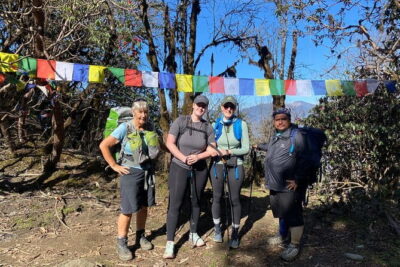
- The private format gives your group flexibility: Only your party participates, with an English-speaking trekking guide during the mountain section.
- The $450 price covers a lot, but not everything: Gratuities and unspecified food or drinks are extra, while Chitwan meals and listed activities are included.
Why the mountain and jungle pairing works
Nepal trips often make you choose between high peaks and lowland wildlife. This one gives you both. The first four days focus on the Annapurna region around Pokhara, while the final three move south to Chitwan National Park and then north to Kathmandu.
That change is not just a convenient add-on. It alters the whole rhythm of the trip. In the mountains, your day is shaped by walking, altitude, weather, and views. In Chitwan, you move by canoe and jeep, watch for animals, and learn about Tharu culture. The contrast helps keep a short itinerary interesting.
The price is also worth considering in context. At $450, you receive a private tour, trekking permit and entrance fees, a guide, mountain accommodation, transport from Pokhara to Chitwan and onward to Kathmandu, a Pokhara hotel stay with breakfast, and several Chitwan activities with meals. You still need to budget for food and drinks not specifically included, tips, and any personal purchases.
The tradeoff is time. This is not seven slow days in one place. You spend much of Day 5 and Day 7 in transit, and the trek packs a lot of walking into three days. If you want a relaxed holiday, the schedule may feel tight. If you want a concentrated taste of Nepal, it makes good use of a week.
More Mardi Himal treks:
- Pokhara: 4-Day Mardi Himal Trek
★ 4.9 · 59 reviews - Private Mardi Himal Trek
★ 5.0 · 42 reviews - From Pokhara: 4-Day Mardi Himal Base Camp Trek
★ 4.9 · 31 reviews
Day 1: Kande to Forest Camp through rhododendron forest
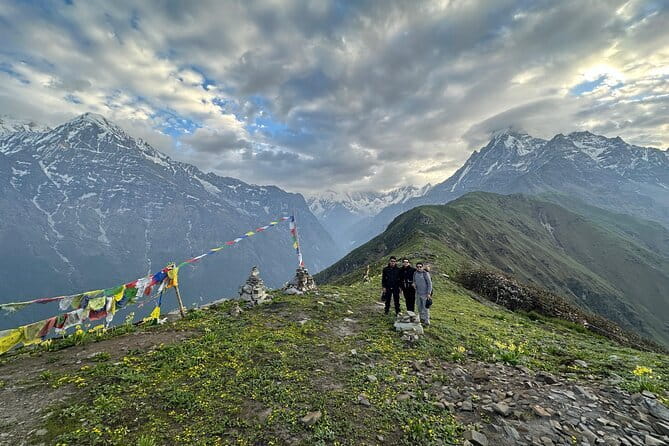
The trip begins with a private car from Pokhara to Kande, taking about an hour and a half. From Kande, you walk uphill through forest toward Australian Camp and Pothana, then continue through Pitam Deurali to Forest Camp.
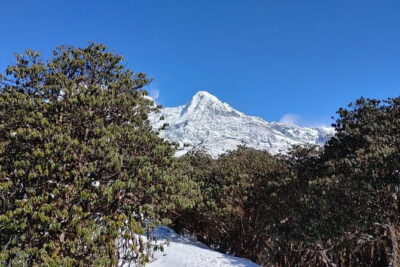
This first day gives you a useful introduction to the Mardi Himal route. Australian Camp and Pothana provide broad views toward the Annapurna range, while the trail toward Forest Camp becomes quieter and more wooded. Rhododendron trees are a defining feature here, and the change from open viewpoints to dense forest gives the walk a pleasing sense of progress.
The schedule allows about six hours of trekking. That is a serious first day, especially if you have just arrived in Pokhara or are not used to uphill walking. You spend the night in a teahouse at Forest Camp, where a warm meal and a simple room provide the essentials after the trail.
The accommodation is described as guest-house or teahouse lodging, not luxury accommodation. You should expect the practical mountain style of travel: a place to sleep, meals, and a chance to rest before the next climb. The reward is staying on the route rather than returning to town each evening.
Day 2: Forest Camp to High Camp and the first big mountain views
Day 2 is the hardest climb for many people. The trail rises from Forest Camp through oak, maple, hemlock, and rhododendron forest. You pass Low Camp, where the trees begin to thin and the first clear views of Machhapuchhre and Mardi Himal appear.
The route takes about seven hours. The uphill sections are the point of the day, so a moderate level of fitness is important. The information for this trip does not give an altitude profile or a detailed acclimatization plan, so you should discuss the pace with your guide and pay attention to how you feel.
High Camp changes the mood. The enclosed forest gives way to more open mountain scenery, and the peaks become the main subject rather than a glimpse between branches. Dinner with views of the Annapurna range is one of the memorable moments built into the schedule.
High Camp accommodation is still simple. The appeal is its position, not hotel-style comfort. You are there to wake near the ridge and set off early for Base Camp. Bring patience for basic facilities and keep your expectations focused on the setting.
Day 3: Mardi Himal Base Camp and the South Face of Fishtail
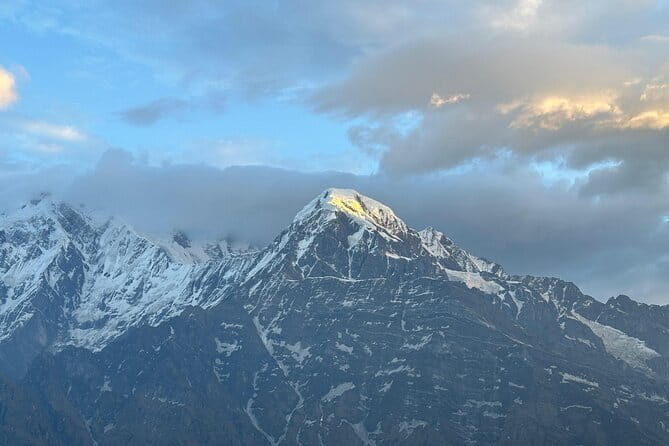
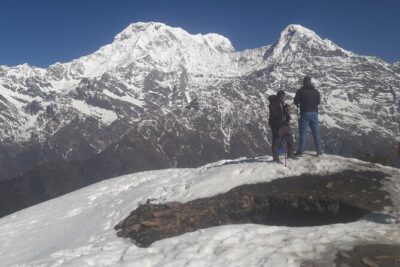
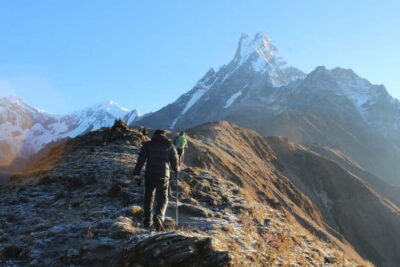
The third day starts early with a walk to Mardi Himal Base Camp. The trail follows a ridge, with views toward Annapurna South, Hiunchuli, and Machhapuchhre. This is the dramatic center of the trek.
The route is described as challenging and takes about seven hours in total. You walk to Base Camp, spend time taking in the peaks, return to High Camp for a short rest and lunch, then continue down to Low Camp for the night.
That out-and-back pattern matters. You reach the best high point without carrying your overnight gear all the way to Base Camp, but you still need to manage a long day and a substantial descent. The ridge can feel exposed compared with the forest trail, although the exact trail conditions depend on the season.
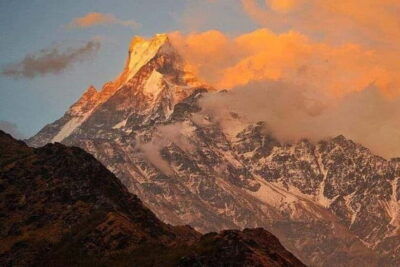
For many people, the Fishtail view is the main reason to choose Mardi Himal. Machhapuchhre has a distinctive twin-peaked profile, and the route offers a closer look than you get from Pokhara. You also see Annapurna South and Hiunchuli, giving the day a wide sweep of Himalayan scenery rather than one single peak.
After the early start and the ridge walk, Low Camp is a welcome stopping point. Plan on an early night. This is not the day to schedule a late dinner or ambitious evening activity in Pokhara.
More jungle safaris in Chitwan:
- From Kathmandu/Pokhara: Private 3-Day Chitwan Safari Tour
★ 4.7 · 34 reviews - 2 Night 3 Day Chitwan Jungle Safari Tour from Pokhara
★ 5.0 · 6 reviews - 3-Day Chitwan Jungle Safari Adventure From Kathmandu/Pokhara
★ 5.0 · 6 reviews - Pokhara: 1 Night 2 Day Chitwan Safari Tour
★ 4.9 · 6 reviews
Day 4: Siding Village, a shared jeep, and a return to Pokhara
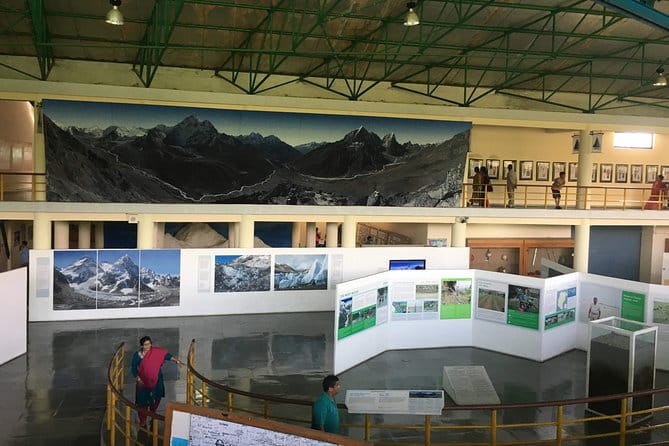
After breakfast, you descend from Low Camp to Siding Village. The path passes terraced fields and small villages, offering a closer view of daily rural life than the higher forest sections.
The walk takes about six hours. It is mostly a descent, but downhill walking can still be hard on your knees, especially after the Base Camp day. Good footwear and walking poles can be useful, although the tour information does not state that poles are supplied.
At Siding, a shared jeep takes you back to Pokhara. The vehicle is a practical part of the route, not a private luxury transfer. Road conditions and the shared format can affect comfort and timing, so keep the rest of the day flexible.
You return to a two-star hotel in Pokhara with breakfast included. The afternoon and evening are free, which gives you time to rest beside the lake, sort your luggage, and wash mountain clothes before the Chitwan section. This overnight pause is important. Without it, the transition from trekking to safari would feel rushed.
Day 5: Pokhara to Chitwan and a first look at Tharu culture
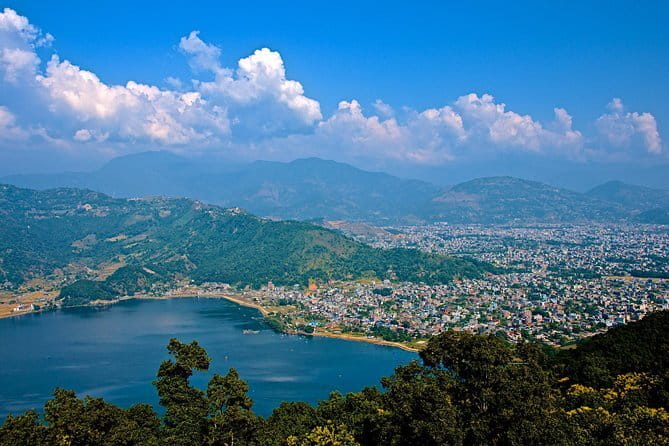
The journey from Pokhara to Chitwan takes about five to six hours by luxury tourist bus. That is a long ride, but it connects the two major parts of the trip without requiring a separate booking.
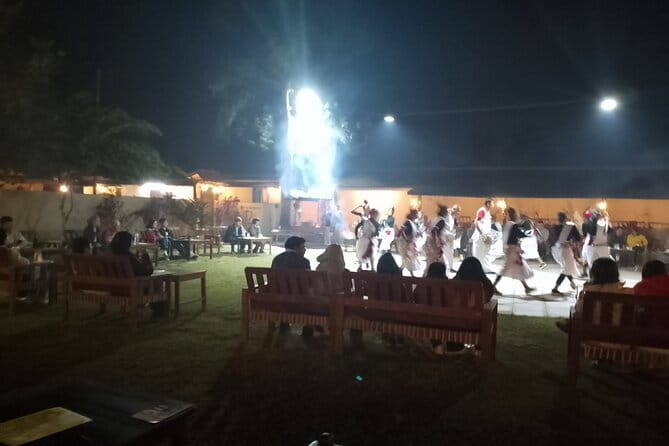
After checking into the jungle lodge, you receive a welcome drink and a briefing about the activities. The afternoon village walk leads to a Tharu village, where you learn about local culture and traditions. In the evening, a Tharu cultural dance performance adds a community and cultural element to the wildlife program.
This day is less about covering ground on foot and more about changing places and getting oriented. You should not expect a full safari day immediately after arriving in Chitwan. The schedule gives you a lighter introduction before the early activity of Day 6.
Lunch and dinner are included during the Chitwan portion, along with breakfast. The inclusion list is slightly repetitive, but it clearly identifies two lunches, two dinners, and three breakfasts. Food and drinks beyond those stated meals are not included, so ask your operator what is covered if you have particular dietary needs.
Day 6: Canoe, forest walk, and jeep safari in Chitwan
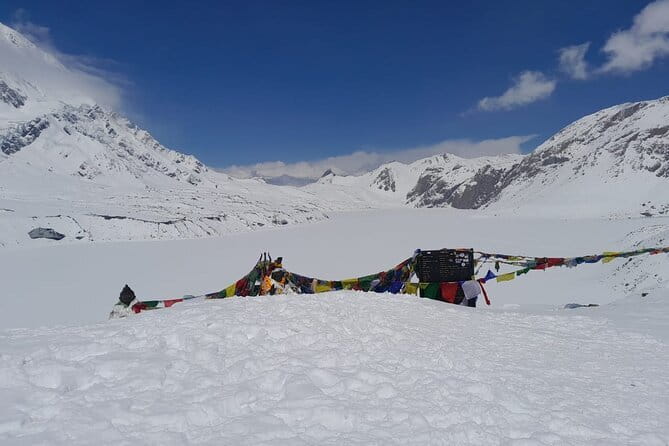
Day 6 is the busiest wildlife day, with about eight hours of activity. After breakfast, you take a canoe ride on the Rapti River. The slow pace gives you a chance to look for crocodiles, water birds, and other river wildlife.
The canoe trip is followed by a short forest walk. Walking in the forest gives you a different view from a vehicle, but it also requires you to follow the guide’s instructions closely. The trip information describes opportunities to see plants and animals, not guaranteed sightings. Wildlife is unpredictable, and no honest safari can promise a tiger.
After lunch at the lodge, you go out by jeep in Chitwan National Park. The park is known on this itinerary for possible sightings of one-horned rhinos, Bengal tigers, elephants, and other wildlife. Rhinos may be a more realistic hope than tigers, but the value of the outing is also in seeing the park’s habitats and learning how the guide reads the area.
The combination of canoe, walking, and jeep makes the day feel varied. You are not simply sitting in a vehicle for hours. Still, eight hours of activity can be tiring after the mountain trek, so take the morning at a sensible pace and use the midday break well.
Day 7: Chitwan to Kathmandu by road
After breakfast, you travel to Kathmandu by tourist bus or private vehicle. The journey takes about five to six hours, with arrival in the afternoon.
This final transfer is practical rather than scenic sightseeing. The itinerary leaves the rest of the day free after check-in, which gives you time to rest or explore Kathmandu. Since the tour ends in the capital, it can work well if you are continuing with other Nepal plans or flying out later.
The schedule does not list Kathmandu sightseeing, airport transfer, or a Kathmandu hotel as a specific inclusion. Confirm your final accommodation and onward transport before booking if you need those arrangements.
What the $450 includes, and where costs can appear
The strongest value comes from the number of moving parts handled for you. The package includes:
- Private car from Pokhara to Kande
- Shared jeep from Siding to Pokhara
- English-speaking trekking guide
- ACAP trekking permit and entrance fees
- Teahouse or guest-house accommodation during the trek
- Emergency first aid kit with the guide
- Pokhara hotel accommodation after trekking, with breakfast
- Tourist bus transport from Pokhara to Chitwan and Chitwan to Kathmandu
- Chitwan jeep safari, canoe ride, short forest walk, and cultural activities
- Listed Chitwan breakfasts, lunches, and dinners
- Hotel pickup and drop-off
The private-tour format is another advantage. Only your group participates, which can make it easier to discuss walking speed, rest stops, and questions about local culture. The trip is not described as a large group departure.
There are limits. Food and drinks listed as available for purchase are not included, and gratuities are optional. The package also does not promise a particular room standard beyond the stated teahouse and two-star hotel categories. If comfort matters greatly, ask for current lodging details before you pay.
Who will enjoy this seven-day Nepal route?
I would choose this trip if you want a concentrated mix of mountain walking and wildlife without arranging several separate bookings. It suits people with moderate fitness who can handle six to seven hours of trekking on consecutive days and are comfortable with basic mountain lodging.
It is also a good fit if you care about more than scenery. The Tharu village visit and cultural dance show add local context, while the guide’s role can make the mountain section more meaningful. Biru was praised for patience and useful insight, a particularly valuable quality on steep days, though you should confirm who will guide your group.
I would hesitate if you want a slow trek with lots of acclimatization time, private luxury rooms, or guaranteed animal sightings. The route is short and active. The roads between Pokhara, Chitwan, and Kathmandu also take up much of three days.
Pickup is offered, group discounts are available, and a mobile ticket makes the booking practical. Free cancellation is available if you cancel at least 24 hours before the local start time. Within 24 hours, refunds and changes are not accepted.
Should you book the Mardi Himal and Chitwan tour?
Book it if you want variety, value, and a private mountain-to-jungle itinerary in one week. The best parts are the quieter Mardi Himal trail, the close Fishtail views, and the well-mixed Chitwan day with canoeing, walking, and a jeep safari.
Skip it if your priority is a leisurely schedule or high-end accommodation. At $450, this is a strong package for an active visitor who accepts long road transfers and simple teahouses. Before booking, confirm the guide, exact lodging, meals outside Chitwan, and the vehicle arrangements for the Siding transfer. Those small checks will help you know exactly what kind of Nepal adventure you are buying.
FAQ
How long is the tour?
The tour lasts approximately seven days.
Where does the tour begin?
The tour is based in Pokhara, Nepal, with pickup offered.
Is this a private tour?
Yes. Only your group participates in the activity.
What fitness level is required?
A moderate physical fitness level is required. The trek includes walking days of about six to seven hours, with an eight-hour activity day in Chitwan.
Which mountain route does the trek follow?
The trek follows the Mardi Himal route, beginning at Kande and continuing through Forest Camp, High Camp, Mardi Himal Base Camp, Low Camp, and Siding Village.
Is Mardi Himal Base Camp included?
Yes. Day 3 includes a trek to Mardi Himal Base Camp, followed by a return to High Camp and a descent to Low Camp.
What wildlife activities are included in Chitwan?
The Chitwan section includes a jeep safari, canoe ride, short forest walk, village walk, and Tharu cultural dance performance.
Are meals included?
Meals are included during the Chitwan tour, including listed breakfasts, lunches, and dinners. Food and drinks outside the stated inclusions are not covered.
Is accommodation included?
Yes. The trek includes guest-house or teahouse accommodation, followed by two-star hotel accommodation in Pokhara with breakfast. A jungle lodge is included in Chitwan.
Can I cancel for a full refund?
Yes, if you cancel at least 24 hours before the experience start time. Cancellations made less than 24 hours before the start are not refunded, and late changes are not accepted.
New in the Pokhara listings
- Pokhara: Pokhara Highlights Tour by Bus★ 3.6 · 10 reviews
- Discover Pokhara in Style: Private Vehicle Service with Driver★ 5.0 · 5 reviews
- Multi-Day Tour from Pokhara, Poon Hill and Mulde Trek★ 5.0 · 1 review
- Pokhara in 5 Hours: Lake, Museum, Cave, Falls & Pagoda Hill★ 4.5 · 16 reviews
- Private 4 Day Poon Hill Trek from Pokhara★ 5.0 · 16 reviews
- 4 Day Mardi Himal Base Camp Trek from Pokhara★ 5.0 · 18 reviews
- From Pokhara Full Day Entire Pokhara Tour with Guide★ 5.0 · 1 review
- Ultralight Flight: Into The Heart Of The Mountains (90 min)★ 5.0 · 1 review
Mardi Himal Treks, compared.

Browse the lists this tour appears in