
REVIEW · ANNAPURNA BASE CAMP TREKS
Annapurna Base Camp Trek (8 days)
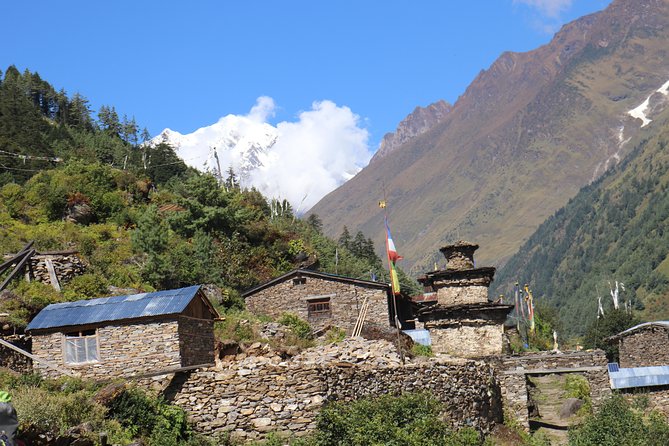
The mountains here earn their reputation. This 8-day Annapurna Base Camp trek leads from Pokhara through forest paths, mountain villages, and tea houses into the Annapurna Sanctuary, with sunrise views near Annapurna Base Camp. I like the personal touch of a private trip and the fact that permits, lodging, meals, and transport are arranged. I also like the chance to learn about Gurung food, culture, and daily life from a local guide such as Madu, also known as Madhav Khanal.
The main caution is that eight days may be longer than some people need for this route. One December trek booked for eight days finished in five, with no price adjustment, so you should confirm the planned walking schedule before you set off. Cold weather, basic tea house lodging, and the need to bring your own trekking gear also deserve attention.
In This Review
- Key points to know before booking
- What the $650 price really covers
- Leaving Pokhara for the Annapurna trails
- Tea houses, Gurung culture, and simple mountain comfort
- The approach to Machapuchare, Nepal’s Fishtail peak
- Reaching Annapurna Base Camp at sunrise
- An eight-day plan that may be changed
- How the private format changes the experience
- What is praised most about the guiding
- Who should book this trek
- Booking, weather, and cancellation details
- FAQ
- How long is the Annapurna Base Camp Trek?
- How much does the trek cost?
- Is pickup available?
- Are permits included?
- Are meals and lodging included?
- Is this a private trek?
- Do I need a certain fitness level?
- Is trekking gear provided?
- Can I cancel for a full refund?
- Should you book the Annapurna Base Camp Trek?
Key points to know before booking
- Sunrise at Annapurna Base Camp: The high point is the early view over Annapurna South, Machapuchare, and other peaks in the range.
- Private guiding from Pokhara: Your group travels alone, with Madu or another assigned guide handling permits and daily logistics.
- Tea house nights and local meals: Lodging and all meals are included, giving you a practical way to experience mountain life.
- Machapuchare on the route: The famous Fishtail peak is one of the key mountain sights along the journey.
- A flexible route: The trek can be shortened, extended, or combined with Poon Hill, the Annapurna Circuit, or Mardi Himal.
- Bring your own equipment: Trekking gear and porter service cost extra, so the advertised price is not the full cost for every type of trekker.
What the $650 price really covers
At $650 per person, this trek offers good value if you want a private arrangement with the main trail costs handled for you. The package includes private transportation, the TIMS permit, the Annapurna Conservation Area Project permit, tea house lodging, and all meals during the trek.
Those inclusions matter in Nepal. Permits are not just paperwork you can ignore, and finding a room and arranging food each day can take time when you are tired from walking. Having a guide manage these details lets you focus on pacing yourself and enjoying the mountains.
Still, look closely at the exclusions. All fees and taxes, personal expenses, trekking gear, and porter services are not included. If you need a porter, the operator can help you find one, but you should ask about the extra cost before departure.
The trip is best value for someone who already owns suitable gear or can borrow it. If you need boots, warm layers, a sleeping bag, poles, and other equipment, your final budget will rise. The price also stays the same if you complete the trek early, based on one five-day completion of an eight-day booking.
More Annapurna Base Camp treks:
- Kathmandu/Pokhara: 5-Day Annapurna Base Camp (ABC) Trek
★ 4.9 · 72 reviews - Private 7 – Day Annapurna Base Camp Trekking
★ 5.0 · 50 reviews - Pokhara: 7 Day Annapurna Base Camp Trek
★ 4.9 · 38 reviews
Leaving Pokhara for the Annapurna trails
The journey begins in Pokhara, with pickup offered and private transportation included. That is useful if you are carrying a full pack or staying somewhere outside the immediate starting area. The exact pickup details should be confirmed when you book.
The first part of the route takes you into the Annapurna region through forest and mountain trails. The description does not provide a fixed day-by-day schedule, so you should not assume the same village stops or walking hours as another ABC trip. Ask for the intended overnight points, daily distances, and return plan.
What you can count on is a gradual change from lower forest paths toward higher mountain terrain. The forest section gives the trek variety. You are not simply walking on an exposed ridge for eight straight days. You move through wooded areas, pass local communities, and spend nights in tea houses rather than standardized hotels.
That variety is one of the best reasons to choose this route. The Annapurna Sanctuary is not only about reaching a sign at base camp. The approach lets you see how the scenery and village life change as you walk higher.
Tea houses, Gurung culture, and simple mountain comfort
Tea house lodging is included, but you should picture basic, practical accommodation rather than hotel comfort. The value is in the setting and the social side of the trip. You sleep along the route, eat where you are staying, and meet other people making their way through the mountains.
All meals during the trek are included. The operator also places weight on local food and Gurung culture, so this is more than a walking package with a mountain view attached. You can learn about the food, lifestyle, and traditions of the Gurung people directly from a local guide.
Madu, whose full name is Madhav Khanal, is presented as a Pokhara-based guide with more than ten years of trekking and guiding experience. His strongest quality, based on the supplied feedback, is personal care. People describe him as friendly, encouraging, and attentive to comfort without pushing them too hard.
That approach matters on a mountain trek. A guide who pays attention to your condition can make the difference between a hard but enjoyable day and a miserable one. One account of trekking with Madu praised his habit of giving people time to enjoy the moment instead of rushing them toward the destination.
You should still ask who will guide your specific departure. Madu is the main named guide, but Shreedhar is also mentioned as a guide on one ABC trip. The operator should confirm the guide’s name, experience, and language before you travel.
The approach to Machapuchare, Nepal’s Fishtail peak
Machapuchare, often called Fishtail, is one of the defining sights of this trek. It is included as a named stop, and the mountain is part of the visual build-up toward the sanctuary.
The appeal of Machapuchare is its shape. Even when clouds soften the wider range, Fishtail can give the route a strong focal point. The exact visibility is never guaranteed. A spring trek described in the supplied material had fog that blocked some views, although clearer moments appeared later.
That is a useful warning. Mountain weather can change quickly, and a trek in the Himalayas is not a sightseeing bus tour with a guaranteed view at every stop. You may get crisp peaks, partial views, or cloud cover. The experience still includes forests, villages, food, and the walk itself, but you should keep your expectations flexible.
December can bring bright, sunny weather and very cold conditions at higher points. One December departure had clear sunshine but cold mountain temperatures. Pack for warmth, not just for the daytime forecast in Pokhara.
More walking in the hills of Pokhara:
- Poon hill Trek 3 days
★ 5.0 · 176 reviews - Trekking in Annapurna/Langtang/Everest/Upper Mustang regions
★ 5.0 · 161 reviews - Pokhara: 4-Day Ghorepani, Poonhill & Ghandruk Mountain Trek
★ 5.0 · 132 reviews - Ghorepani – Poon Hill Trek 3N-4D
★ 5.0 · 125 reviews
Reaching Annapurna Base Camp at sunrise
The emotional center of the trek is Annapurna Base Camp. The reward is the setting inside the Annapurna Sanctuary, surrounded by major peaks including Annapurna South and Machapuchare.
The experience is designed around seeing sunrise crest over the Himalayan mountains. That usually means an early start or an early wait at the viewpoint, so you should be ready for cold, darkness, and a demanding final part of the route. The exact timing depends on the season, weather, and the guide’s plan.
This is where the private format helps. Your guide can adjust the pace to your group rather than forcing you to match a large tour. If you need more time, a private guide can focus on your condition and comfort. If your group is fast, you can discuss a different rhythm.
Do not treat base camp as a finish line that justifies ignoring your body. The package requires a moderate physical fitness level. You should be comfortable with repeated days of walking on mountain trails and with changes in elevation. The supplied information does not give an altitude profile or daily distances, so request those details before booking.
An eight-day plan that may be changed
The advertised duration is approximately eight days, but the route is fully customizable. You can discuss a shorter or longer trek, or add Poon Hill, the Annapurna Circuit, or Mardi Himal.
This flexibility is useful if your time in Nepal is not fixed. It also means you need to get the plan in writing. Ask how many nights are expected at each point, how much walking is planned each day, and what happens if weather or fitness changes the schedule.
One person booked eight days and finished in five. That does not mean every group will complete the route that quickly, but it does show why duration needs clarification. There was no compensation for finishing early, so the price should be understood as the cost of the arranged private service, not a daily fee.
The route can suit different levels of ambition, but customization may change the price or included services. Adding Poon Hill, the Annapurna Circuit, or Mardi Himal could require more nights, meals, permits, and transport. Ask for a revised quote before agreeing to an expanded plan.
How the private format changes the experience
This is a private activity, meaning only your group participates. That is a strong choice for friends, couples, or families who want to walk at their own pace and talk openly with a guide about comfort, food, and route changes.
A private trip can also feel more personal than a large group departure. The supplied feedback repeatedly praises Madu’s friendliness and reliability. People describe him as someone who takes care of bus rides, lodging, meals, and other arrangements, and who tries to make the trek feel stress-free.
The trade-off is cost. A private group may cost more per person than joining a shared departure, especially for a solo trekker. The $650 price looks more attractive for two or more people sharing a private arrangement, though the stated price is still per person.
You also need to remember that a private guide is not the same as a porter. Porter service is excluded. Carrying your own equipment can make the trek harder, especially if you are not used to walking several days with a pack.
What is praised most about the guiding
The most consistent strength is the human side of the service. Madu is praised for being helpful, friendly, encouraging, and careful about comfort. That praise appears across several kinds of treks, not only ABC, so it points to a guiding style rather than one lucky day.
The best detail is his relaxed approach. He does not appear to push people simply to reach a camp as quickly as possible. For an itinerary with changing weather and demanding trails, that patience is worth real money.
Past trips have also included guides named Shreedhar and Madhav. One ABC experience with Shreedhar was described as helpful, while another trek with Madhav emphasized his attention to well-being. Confirm the exact guide for your booking, since the quality of the personal connection will shape the trip.
The service also has a strong local family feel. The operator’s material refers to Madu’s wife Pramila and a wider team on other custom journeys. That does not guarantee who will join your trek, but it suggests a small local operation rather than a large anonymous company.
Who should book this trek
I would consider this trek a good fit for you if you want:
- A private walk rather than a fixed large-group departure
- A local guide from Pokhara
- Tea house nights and included meals
- A route featuring forests, Gurung communities, Machapuchare, and Annapurna Base Camp
- Help with permits and transportation
- The ability to adjust the route or add another Nepal trek
You should think twice if you want luxury lodging, a guaranteed mountain view, or a precise eight-day schedule with no changes. The trek is also less suitable if you do not have moderate fitness or if you do not want to arrange your own gear.
Bring your own trekking equipment, or ask for help before arrival. Service animals are allowed, though the mountain trail conditions may still make the practical side of bringing one difficult. The supplied information does not explain trail access or animal arrangements, so discuss this directly with the operator.
Booking, weather, and cancellation details
Confirmation is provided at the time of booking. Pickup is offered, and the activity is private. The trek requires good weather, so poor conditions can lead to a new date or a full refund.
You can cancel for a full refund up to 24 hours before the experience start time. Cancellations or changes made less than 24 hours before the start are not accepted for a refund. Cut-off times follow local time in Nepal.
The trip receives a 5 rating from 45 reviews, with 100 percent recommending it. That is a strong record, especially for a personal guiding service, but it does not remove the practical issues around gear, cold, fitness, and the flexible duration.
FAQ
How long is the Annapurna Base Camp Trek?
The advertised duration is approximately eight days. The route is customizable, and one trek was completed in five days, so confirm the planned schedule before booking.
How much does the trek cost?
The price is $650 per person. All fees and taxes, personal expenses, trekking gear, and porter services are not included.
Is pickup available?
Yes. Pickup is offered, and private transportation is included.
Are permits included?
Yes. The package includes the TIMS permit and the Annapurna Conservation Area Project permit.
Are meals and lodging included?
Yes. Tea house lodging and all meals during the trek are included.
Is this a private trek?
Yes. Only your group participates in this private activity.
Do I need a certain fitness level?
Yes. Trekkers should have a moderate physical fitness level.
Is trekking gear provided?
No. You should bring your own trekking gear. Porter services are also not included, though the operator can help you find a porter.
Can I cancel for a full refund?
Yes, if you cancel at least 24 hours before the experience start time. Poor weather can also lead to a different date or a full refund.
Should you book the Annapurna Base Camp Trek?
Book it if you want a personal, locally guided route with permits, meals, tea house lodging, and transport arranged in advance. The strongest reason to choose it is the guiding style associated with Madu and the chance to experience the Annapurna Sanctuary at a human pace.
Before paying, confirm four things: your guide’s name, the exact eight-day schedule, the extra cost of fees and taxes, and whether you need a porter. If you are prepared for cold conditions, basic lodging, mountain walking, and a flexible finish date, this trek offers a solid way to reach Annapurna Base Camp without giving up local contact or private attention.
New in the Pokhara listings
- Pokhara: Pokhara Highlights Tour by Bus★ 3.6 · 10 reviews
- Discover Pokhara in Style: Private Vehicle Service with Driver★ 5.0 · 5 reviews
- Multi-Day Tour from Pokhara, Poon Hill and Mulde Trek★ 5.0 · 1 review
- Pokhara in 5 Hours: Lake, Museum, Cave, Falls & Pagoda Hill★ 4.5 · 16 reviews
- Private 4 Day Poon Hill Trek from Pokhara★ 5.0 · 16 reviews
- 4 Day Mardi Himal Base Camp Trek from Pokhara★ 5.0 · 18 reviews
- From Pokhara Full Day Entire Pokhara Tour with Guide★ 5.0 · 1 review
- Ultralight Flight: Into The Heart Of The Mountains (90 min)★ 5.0 · 1 review
Annapurna Base Camp Treks, compared.
Kathmandu to Annapurna Base Camp (ABC) 5-Day Trek
Read our review →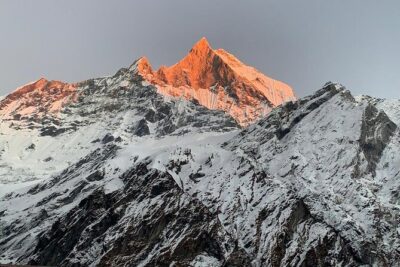
Kathmandu/Pokhara: 5-Day Annapurna Base Camp (ABC) Trek
Read our review →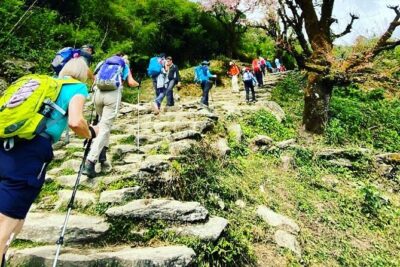
11-Day Hike Tour to Annapurna Base Camp Bliss in Kathmandu
Read our review →Browse the lists this tour appears in