
REVIEW · ANNAPURNA BASE CAMP TREKS
Annapurna Base Camp Trek
The mountains begin before the trail. This 14-day Annapurna Base Camp trek combines Poon Hill sunrise views, traditional teahouse stays, and a guided route through villages, forests, rivers, and high Himalayan country. With a maximum of 10 people, the trip is small enough for personal attention but organized enough to remove much of the stress.
I like that the $925 price includes accommodation, a professional guide, most meals, airport pickup, and shared transfers. I also like the route itself, which adds Ghorepani and Poon Hill before reaching Annapurna Base Camp. The main caution is simple: this is a moderate high-altitude trek, with daily walking times of roughly four to seven hours. You need decent fitness and a willingness to handle long climbs, stone steps, and basic lodging.
In This Review
- Five Things to Know Before You Book
- Airport Pickup and Your First Evening in Thamel
- The Six-Hour Road to Pokhara
- Nayapool to Ghorepani: Villages, Rivers, and Rhododendrons
- Poon Hill at 3,210 Meters
- Tadapani and Chhomrong: A Change in the Trail
- Stone Steps, Bamboo, and a Quiet Forest
- Deurali to Machhapuchhre Base Camp
- Sunrise at Annapurna Base Camp
- Chhomrong, Jhinu Danda, and the Hot Springs
- The Return Through Malekhu and Pashupatinath
- What the $925 Price Really Covers
- Guide Support and Small-Group Care
- Who Should Book This Trek?
- Should You Book the Annapurna Base Camp Trek?
- FAQ
- How long is the Annapurna Base Camp trek?
- How much does the trek cost?
- Where does the experience begin?
- What is the maximum group size?
- Are meals included?
- What type of accommodation is provided?
- How physically demanding is the trek?
- Is Poon Hill part of the route?
- What happens if bad weather cancels the trip?
Five Things to Know Before You Book
- Poon Hill adds an excellent early reward: The 45-minute climb to 3,210 meters gives you a major mountain viewpoint before the main push toward base camp.
- A group of no more than 10 keeps the trek personal: You should have a better chance to ask questions, adjust your pace, and get direct help from the guide.
- Most practical costs are covered: Teahouse accommodation, hotels in Kathmandu and Pokhara, 10 dinners, 13 breakfasts, 10 lunches, taxes, and transfers are included.
- The route mixes comfort with simplicity: Kathmandu and Pokhara use hotels, while the mountain sections use teahouses.
- The final approach is the physical high point: The climb from Deurali to Machhapuchhre Base Camp and onward to ABC requires patience, especially after days on foot.
- Guide support is a major part of the value: Past trips have featured guides including Suvi, Anil, Tulsi, and Krishna, with strong praise for organization, communication, and care.
Airport Pickup and Your First Evening in Thamel
Your trip begins at Tribhuvan International Airport in Kathmandu. An airport representative meets you and takes you to your hotel in Thamel by private tourist vehicle. That small service matters after an international flight, when Kathmandu traffic, unfamiliar streets, and airport arrangements can feel like a lot to manage at once.
The first day allows time to rest or visit the company office for a detailed briefing. Use that chance well. Ask about the walking schedule, what is included in the meal plan, and how luggage will be handled. One useful strength of this arrangement is flexibility within the support system. One past trekker felt unwell after arriving and was able to request a porter shortly before departure.
Thamel is a practical base for the start of a Nepal trip. The program does not promise a full sightseeing day here, so you should view Day 1 as an arrival and preparation day rather than a major cultural tour.
More Annapurna Base Camp treks:
- Annapurna base camp trek 5 Days
★ 5.0 · 252 reviews - Annapurna Base Camp Trek
★ 5.0 · 111 reviews - Kathmandu to Annapurna Base Camp (ABC) 5-Day Trek
★ 5.0 · 102 reviews
The Six-Hour Road to Pokhara
After breakfast on Day 2, you travel about 200 kilometers from Kathmandu to Pokhara by tourist bus. The journey takes roughly six hours, with lunch along the way, and you spend the night at a guesthouse in Pokhara.
This road transfer is not glamorous, but it connects the capital with the main gateway for the trek. I would treat the day as part of the adventure rather than wasted time. You get an early look at life beyond Kathmandu, though the long ride may feel tiring after an international arrival and a busy first day.
Lunch during the drive is included in the overall arrangement, but lunch and dinner in Kathmandu and Pokhara are not included as a general rule. Plan a little extra money for those city meals. The trek package covers 10 lunches and 10 dinners on the mountain route, along with 13 breakfasts.
Nayapool to Ghorepani: Villages, Rivers, and Rhododendrons
On Day 3, the drive from Pokhara to Nayapool takes about an hour. From there, the walking begins. The route follows the Modi River and reaches Birethani, where small teahouses appear along the trail.
This opening section gives you a gentle introduction to the rhythm of the route. You pass through villages and walk beside the river, with places to stop along the way. The presence of teahouses means the route is supported, but do not mistake that for a city-style hiking path. Conditions remain basic, and you should expect a physical day rather than a casual stroll.
The next section climbs from Ulleri through rhododendron and oak forests toward Banthanti and then Ghorepani. The ascent is described as gentle after Ulleri, but the route has already given you a useful taste of uphill walking. Ghorepani is especially important because it is the base for the Poon Hill outing.
Poon Hill at 3,210 Meters
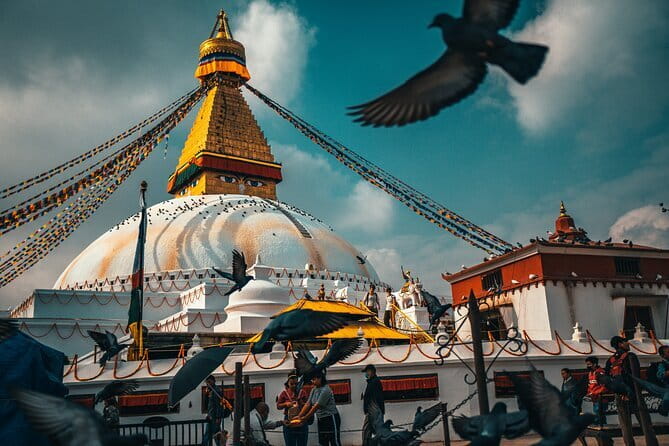
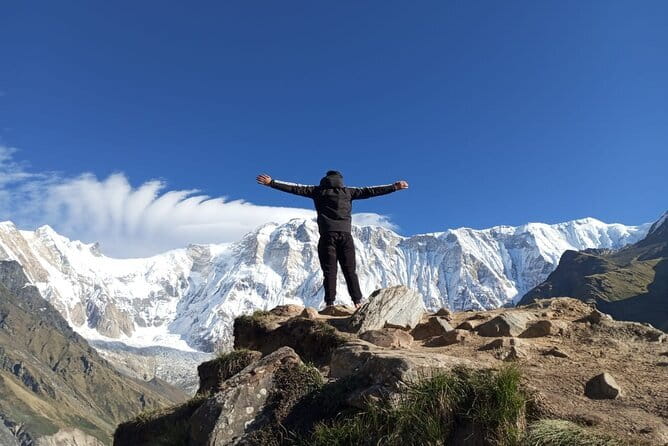
Day 5 begins with an early hike to Poon Hill. The walk to the viewpoint takes about 45 minutes, and the summit reaches 3,210 meters. This is one of the most appealing features of the route because you receive a memorable mountain viewpoint before reaching Annapurna Base Camp itself.
Poon Hill is a photographer’s favorite for good reason. It gives you a broad setting for the peaks, including views associated with Dhaulagiri, Machhapuchhre, and the Annapurna range. The exact visibility depends on weather, so bring patience as well as your camera.
The early start can be hard after several days of walking. Still, the short climb offers a strong return for the effort. If you are trying to decide between a route that goes straight toward ABC and this version with Ghorepani and Poon Hill, I think the extra viewpoint makes this itinerary more satisfying.
More walking in the hills of Kathmandu:
- Everest Base Camp Trek – 14 Days
★ 5.0 · 1,499 reviews - Everest Base Camp Trekking
★ 5.0 · 485 reviews - Nagarkot Sunrise View and Day Hiking from Kathmandu
★ 5.0 · 471 reviews - Annapurna Circuit Trek with Tilicho Lake
★ 5.0 · 368 reviews
Tadapani and Chhomrong: A Change in the Trail

After Tadapani, the path descends gradually through rhododendron forest, crosses the Kimsung River, and climbs toward the Gurung village of Gurjung. From there, a direct climb takes you to Chhomrong.
Chhomrong is spread along a hillside and has striking views toward the Annapurna peaks and Machhapuchhre. It also marks a clear change in the journey. You are no longer simply approaching the mountains through lower villages. The trail is becoming steeper and more focused on the high valley ahead.
The repeated climbs and descents can surprise people who expect a steady uphill route. You may walk down to a river and then have to regain that height. This is normal for the trek, but it makes pacing important. Keep your first days controlled instead of treating every clear view as a reason to rush.
Stone Steps, Bamboo, and a Quiet Forest
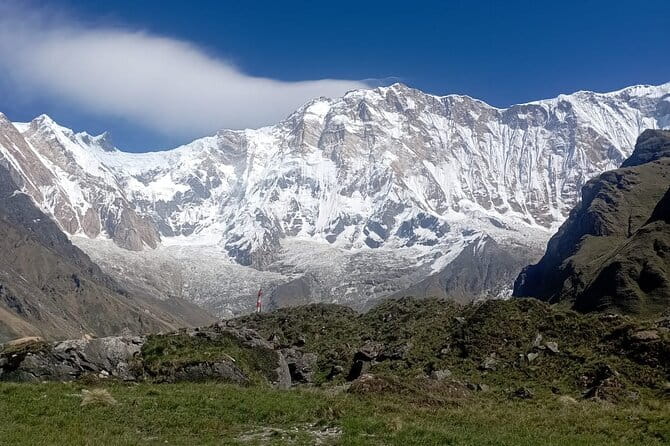
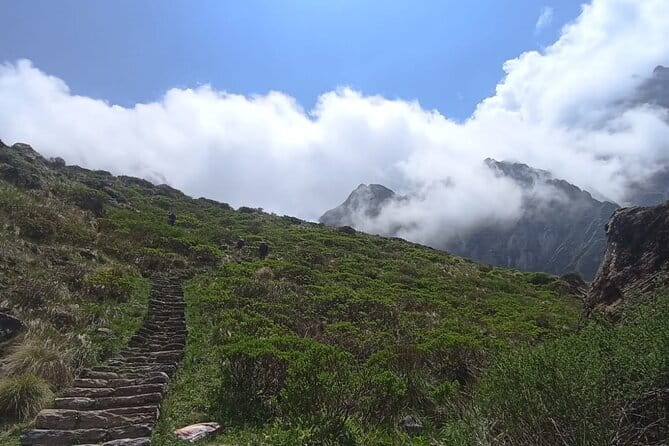
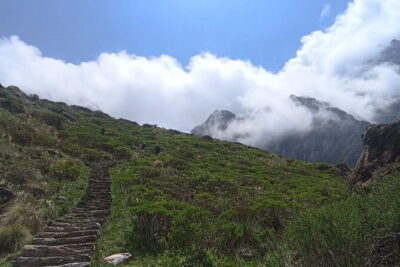
From Chhomrong, stone steps drop to Chhomrong Khola. After crossing a suspension bridge, you climb steeply to Sinuwa. The path then runs through jungle, includes an easier downhill stretch, and reaches Bamboo.
This section shows why the trek is classed as moderate rather than easy. Stone steps are demanding on tired legs, and the pattern of descending before climbing again can test your knees. At the same time, the forest provides shade and a different mood from the open mountain viewpoints.
From Dovan toward Himalaya, the trail becomes notably quiet. Loud noise is discouraged because of a temple along the route. The path moves through bamboo and then rhododendron forest, with waterfalls along the way. This is a good place to slow down and pay attention to the setting rather than measuring every step by distance.
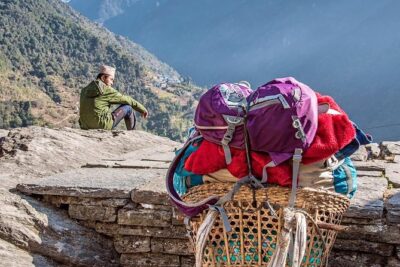
The accommodations here are teahouses. They are included, practical, and part of the character of the route, but they are not hotel rooms. You should be comfortable with simple mountain lodging and shared facilities where applicable. The package helps by arranging the stays in advance, so you do not need to spend each evening searching for a room.
Deurali to Machhapuchhre Base Camp
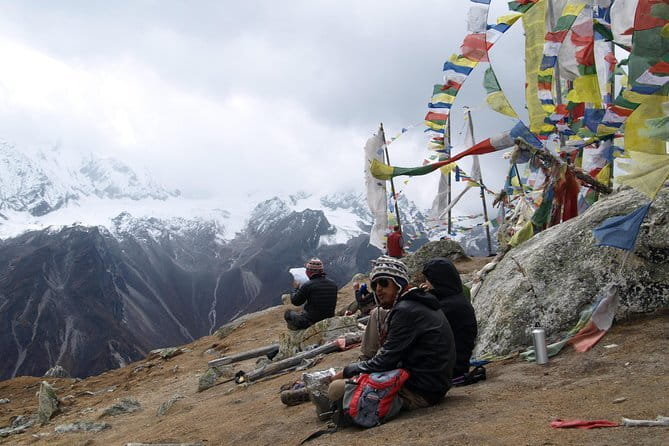
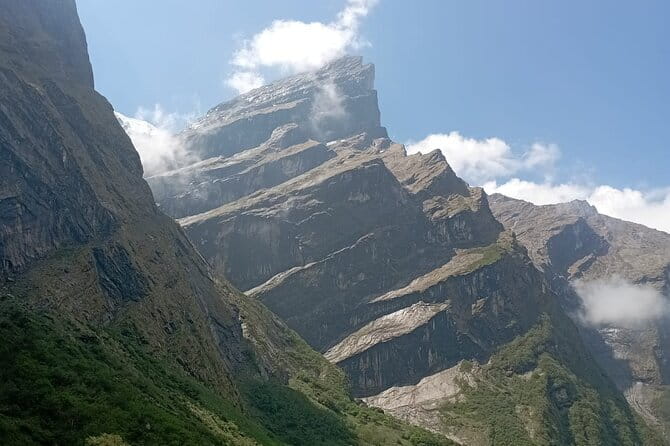
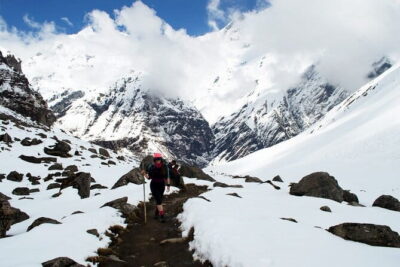
From Deurali, the trail follows a riverbed before a tiring climb to Machhapuchhre Base Camp. Here, the mountains close around you. The views include Annapurna, Machhapuchhre, Gangapurna, and Himchuli.
This is one of the days when a guide adds real value. The terrain, altitude, and accumulated fatigue all make it useful to have someone setting a sensible pace and helping you stay on route. The route is not presented as a technical mountaineering expedition, but you should still take the high-altitude setting seriously.
Machhapuchhre Base Camp is also a visual turning point. The forests have fallen away, and the surrounding peaks become the main event. I would keep this day steady and save energy for the final approach to ABC rather than trying to win the trail.
Sunrise at Annapurna Base Camp
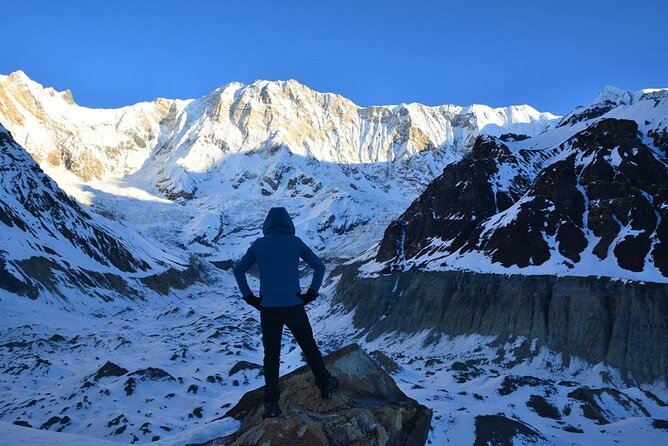
The next major goal is Annapurna Base Camp. Surrounded by high peaks, the base camp provides the defining mountain scene of the trip. The program allows time to enjoy sunrise there before beginning the return walk.
Sunrise is the right reward for the effort. The light changes quickly across the surrounding mountains, so this is a moment to be present rather than simply collect photographs. Weather remains the great variable. Clear skies can reveal the full scale of the peaks, while cloud can reduce the views considerably.
The itinerary takes you back along the same general trail through Machhapuchhre Base Camp, Deurali, Himalaya, and Bamboo, continuing to Sinuwa. Much of this day is downhill and is described as easier than the ascent. I would not call it effortless. Long descents can be hard on knees, especially after the climb to base camp, so trekking poles may be worth considering, although they are not listed as included.
Chhomrong, Jhinu Danda, and the Hot Springs
Day 11 returns you to Chhomrong for lunch. The village hillside again provides views of the Annapurnas and Machhapuchhre, and the stop gives you a chance to recognize how far you have come since the earlier ascent.
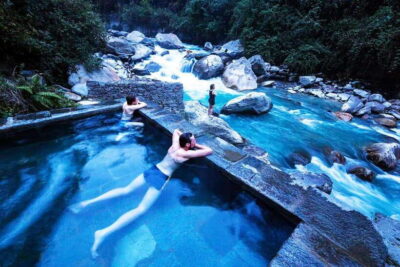
The following day includes Jhinu Danda and its natural hot springs beside the Modi River. The pools are about a 20-minute walk from the hotel in Jhinu Danda, with time set aside for a bath.
This is a smart ending to the walking section. A hot spring does not erase tired legs, but it gives the trip a pleasant change of pace after the high route. Bring suitable swimwear and a small towel if you plan to use the pools. Those items are not listed among the inclusions, so do not assume they will be supplied.
The Return Through Malekhu and Pashupatinath
Day 13 includes a lunch stop in Malekhu, known for fish and fish products. The stop lasts about 30 minutes, making it more of a practical road break than a major attraction.
On Day 14, the journey returns toward Kathmandu, with a brief stop at Pashupatinath Temple for photographs. The stop is listed as about five minutes, and admission is not included. That timing means you should not expect a full temple visit. It is a short final glimpse before the trip ends.
The program finishes where it began, in Kathmandu. Airport pickup is included at the start, but the supplied details do not promise a departure transfer at the end, so confirm that point before booking a flight.
What the $925 Price Really Covers
At $925 per person, this is not simply a walking package. The price includes airport pickup, shared round-trip transfers, accommodation, a professional guide, taxes, and handling charges. On the trek, you receive 10 dinners, 13 breakfasts, and 10 lunches. Hotels in Kathmandu and Pokhara and teahouses along the mountain route are also included.
That level of coverage makes the price easier to understand. You are paying for planning, route support, transport between major points, food on most trekking days, and accommodation that has already been arranged. If you booked each part separately, you would still need to coordinate the airport arrival, Kathmandu to Pokhara transport, Pokhara to Nayapool, mountain lodging, and the return journey.
The omissions are clear but manageable. Lunch and dinner in Kathmandu and Pokhara are not included, and Pashupatinath admission is not included. You should also confirm any porter arrangement, since a porter is not listed among the standard inclusions. One useful sign is that a porter could be added when a trekker requested one, but you should not treat that as automatic.
Guide Support and Small-Group Care
The maximum group size is 10, which is a good middle ground. A solo trip can feel isolating, while a large group may force you to walk at someone else’s speed. With 10 or fewer people, you have a better chance of receiving direct attention without losing the social side of a guided trek.
The strongest praise around this experience centers on organization, communication, and personal care. Guides named in past trips include Suvi, Anil, Tulsi, and Krishna. Arjun has also been praised for explaining the itinerary and answering questions before departure. That kind of preparation is especially valuable if this is your first long trek or your first trip to Asia.
You should still ask who your actual guide will be and whether porter support is included for your departure date. The program promises a professional guide, but it does not provide a detailed guide-to-client ratio or a porter package.
Who Should Book This Trek?
I would recommend this trip to an active person who wants a supported Himalayan route without managing every detail alone. It suits you if walking four to seven hours a day sounds demanding but realistic, and if you are comfortable staying in simple teahouses.
It is also a strong choice if you want more than a single mountain objective. Poon Hill, Gurung villages, rhododendron and oak forests, suspension bridges, river crossings, Machhapuchhre Base Camp, ABC, and Jhinu Danda give the journey variety.
I would think twice if you want luxury lodging, short walking days, or a tightly controlled sightseeing schedule. This is a physical trip with long road transfers, basic mountain accommodation, changing weather, and repeated climbs. Children must be accompanied by an adult, and all participants should have a moderate level of physical fitness.
The cancellation terms are friendly if your plans change early. You can receive a full refund when canceling at least 24 hours before the start time. Changes or cancellations inside that window are not accepted for a refund, and poor weather may lead to a different date or a full refund.
Should You Book the Annapurna Base Camp Trek?
Book it if you want the main Annapurna experience with the logistics handled. The combination of Poon Hill and ABC gives you strong mountain views, while the guide, small group, included meals, and prearranged lodging reduce the work on your shoulders.
Before paying, confirm the exact hotel names, teahouse standards, porter availability, final airport transfer, and what happens if weather changes the road schedule. If you are fit, flexible, and happy with simple accommodation, $925 is a solid value for a 14-day guided route. If you prefer comfort over scenery or dislike long uphill days, choose a shorter and lower-altitude Nepal trip instead.
FAQ
How long is the Annapurna Base Camp trek?
The full experience lasts approximately 14 days, including arrival in Kathmandu, the transfer to Pokhara, the mountain trek, the return journey, and the short stop at Pashupatinath Temple.
How much does the trek cost?
The listed price is $925 per person.
Where does the experience begin?
The trip begins at Tribhuvan International Airport in Kathmandu, Nepal. An airport representative meets you there and arranges a private tourist vehicle to your hotel.
What is the maximum group size?
The trek has a maximum of 10 participants.
Are meals included?
Breakfast is included for 13 days, lunch for 10 days, and dinner for 10 days. Lunch and dinner in Kathmandu and Pokhara are not included.
What type of accommodation is provided?
Accommodation is provided in hotels in Kathmandu and Pokhara and in teahouses during the trekking sections.
How physically demanding is the trek?
The experience is intended for people with a moderate level of physical fitness. Walking generally lasts about four to seven hours each day, and the route includes steep climbs, stone steps, river crossings, and high-altitude sections.
Is Poon Hill part of the route?
Yes. The itinerary includes a hike to Poon Hill from Ghorepani. The walk takes about 45 minutes, and the viewpoint is at 3,210 meters.
What happens if bad weather cancels the trip?
If poor weather causes cancellation, you will be offered a different date or a full refund. For ordinary cancellations, you must cancel at least 24 hours before the start time to receive a full refund.
New in the Kathmandu listings
- Traditional Momo Making Class★ 5.0 · 10 reviews
- Kathmandu: Ancient City Kirtipur & Pharping Monastery Tour★ 5.0 · 2 reviews
- Kathmandu to Pokhara Premium sofa bus ticket★ 4.0 · 17 reviews
- Women Empowerment Project(Nepali cooking class & jewelry workshop★ 5.0 · 15 reviews
- 7-Day Langtang Valley Trek from Kathmandu★ 5.0 · 1 review
- Kathmandu 2 Nights 3 Days Chitwan Jungle Safari Tour★ 5.0 · 9 reviews
- Yoga Experience Day Trip with Private Transfer From Kathmandu★ 4.0 · 2 reviews
- Wildlife Adventure in Chitwan Nepal★ 4.0 · 4 reviews
Annapurna Base Camp Treks, compared.
Kathmandu to Annapurna Base Camp (ABC) 5-Day Trek
Read our review →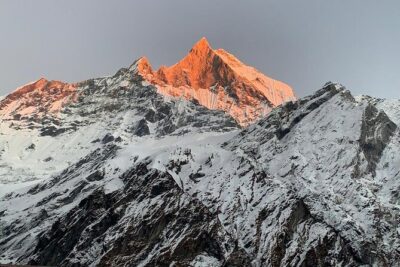
Kathmandu/Pokhara: 5-Day Annapurna Base Camp (ABC) Trek
Read our review →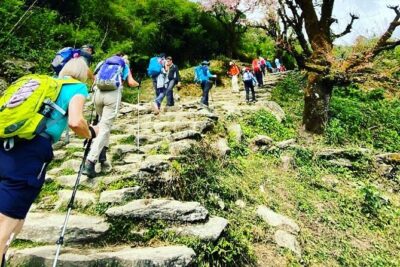
11-Day Hike Tour to Annapurna Base Camp Bliss in Kathmandu
Read our review →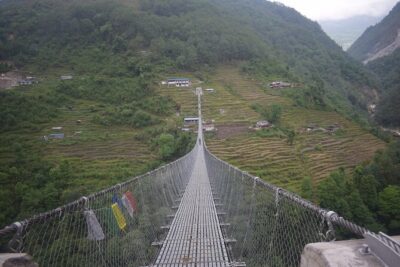
Browse the lists this tour appears in