
REVIEW · ANNAPURNA BASE CAMP TREKS
Private 7 – Day Annapurna Base Camp Trekking
The Himalayas reward steady steps. This private seven-day trek takes you from Pokhara to Annapurna Base Camp with a guide, porter, permits, meals, tea-house lodging, and road transfers arranged for your group. I like the private format, which lets you walk at a pace that suits your party, and I like the mix of mountain scenery, village life, forests, stone stairways, and hot springs.
The main consideration is the physical effort. You should expect long days, repeated uphill and downhill sections, and thousands of stone steps. The route requires moderate fitness, and the high-altitude section can be tiring even when the walking hours look manageable.
In This Review
- Key points before you book
- What this seven-day trek is really like
- Day 1: Pokhara to Chhomrong by jeep
- Day 2: Chhomrong, Sinuwa, and Bamboo
- Day 3: Bamboo to Deurali through forest and the Weeping Wall
- Day 4: Deurali to Annapurna Base Camp
- Day 5: Base camp views and the long return
- Day 6: Bamboo, Sinuwa, Chhomrong, and Jhinu Danda hot spring
- Day 7: Jhinu Danda to Pokhara
- Why the private format matters
- Food, lodging, permits, and practical support
- Fitness, weather, and the parts that may wear you down
- Who should book this Annapurna trek?
- Should you book it?
- FAQ
- Where does the trek start?
- What time does the trek start?
- Where does the trek end?
- Is this a private trek?
- Are a guide and porter included?
- Are meals included?
- Is accommodation included?
- Is travel insurance included?
- Can I cancel for a full refund?
Key points before you book
- Private group only: You trek with your own party rather than joining a large mixed group.
- Annapurna Base Camp goal: The route reaches the famous mountain amphitheater and its 360-degree views.
- Good value at $625: Guides, porters, permits, tea-house lodging, transport, and most meals are included.
- Stone stairs are part of the deal: The Chhomrong and Sinuwa sections bring serious climbs and descents.
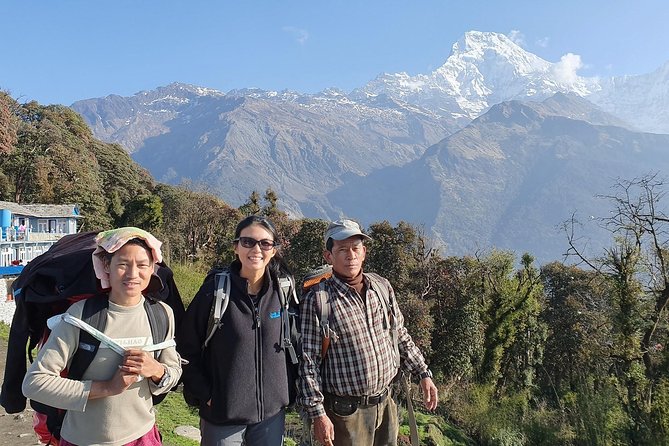
- Local support is a major strength: Guides including Sanjay, Amar, Laxman, Andrea, Kumar, and others have helped travelers manage changing plans and difficult days.
- Plan for insurance: Travel insurance is not included, and emergency rescue assistance is listed only as support, not as a replacement for your own policy.
What this seven-day trek is really like
This is a focused route into the Annapurna region, beginning and ending in Pokhara. You travel by jeep to the trailhead, walk through villages and forest, reach Annapurna Base Camp, then return by foot and road.
The schedule is brisk. You are not spending extra rest days in the mountains, so the trek suits you if you want to reach base camp in a week and have a limited amount of time in Nepal. The private setup gives you more say over the pace and daily rhythm, though it does not remove the steep trail or the altitude.
You sleep in lodges, often called tea houses, along the route. Meals and accommodation are covered during the trek, while hotel stays in Pokhara and Kathmandu are not included. That split matters when you calculate the full cost of your Nepal trip.
The price is $625 per person. For a private trek, that is a useful package because it includes the government registered guide, porters and their expenses, permits, transport described in the route, lodge accommodation, a trekking map, oxygen saturation checks, water purification, a duffle bag, meals, government taxes, service charges, and public liability insurance.
You still need to budget for travel insurance and tips. I would treat the insurance as essential, particularly because the route enters a high-altitude area and the company only provides assistance with emergency rescue evacuation.
More Annapurna Base Camp treks:
- Kathmandu/Pokhara: 5-Day Annapurna Base Camp (ABC) Trek
★ 4.9 · 72 reviews - Annapurna Base Camp Trek (8 days)
★ 5.0 · 45 reviews - Pokhara: 7 Day Annapurna Base Camp Trek
★ 4.9 · 38 reviews
Day 1: Pokhara to Chhomrong by jeep
Your morning begins at 8:15 a.m. from the Pokhara Lakeside meeting point. The first listed walking section is about three hours, but the day also includes a roughly two-and-a-half-hour jeep ride toward Chhomrong.
Chhomrong is a strong opening point because the village gives you a first clear taste of the Annapurna range. Breakfast is described with views toward Annapurna I, at 8,091 meters, and Machhapuchhre, at 6,997 meters. Machhapuchhre is also known as Fishtail, a distinctive peak that is closely linked with the Pokhara area.
The jeep transfer saves your legs for the trail ahead, but mountain roads can be slow and rough. Do not think of this as a relaxed sightseeing drive. It is practical transport that places you deeper in the hills.
The first day is also a useful chance to meet your guide and porter, organize your bags, and settle into the rhythm of the trek. The private arrangement should help you ask for a slower start or small changes when needed, although the exact flexibility depends on trail conditions and the time available.
Day 2: Chhomrong, Sinuwa, and Bamboo
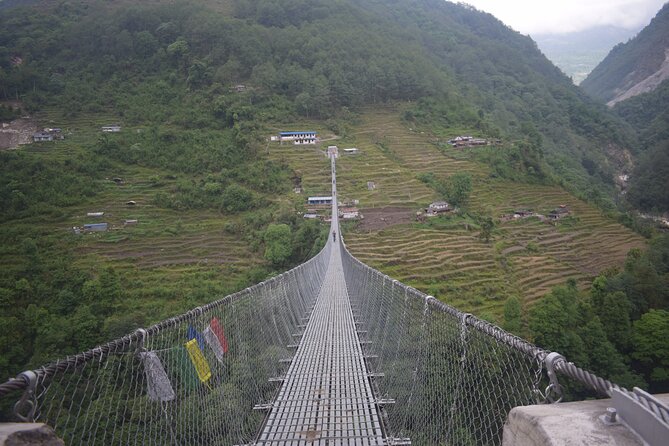
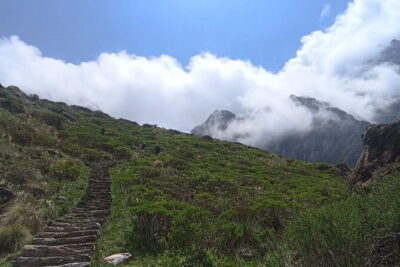
Day two brings one of the route’s most memorable physical tests. You descend about 2,500 stone steps, cross a bridge above the Chhomrong Khola, and then climb again toward Sinuwa.
This is classic Annapurna trail work: down first, up later. It can feel unfair when your legs are fresh, but the pattern is part of the route. Take your time on the steps, use trekking poles if you have them, and keep water within easy reach.
Lunch is planned at Sinuwa before you continue to Bamboo. The total walking time is about six hours. Bamboo is surrounded by forest, and the overnight stop gives you a quieter mountain setting after the busy effort of the stair section.
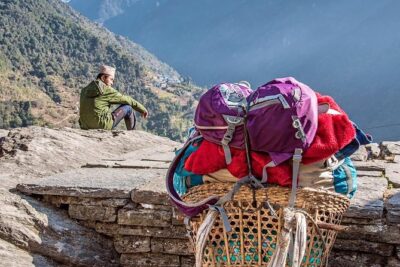
The guide and porter matter here. A porter carries the main load, while you keep a smaller day bag with items such as water, rain gear, and warm clothing. The included duffle bag is a practical touch, but confirm how your luggage will be handled before departure so you know what you should carry each day.
Day 3: Bamboo to Deurali through forest and the Weeping Wall
After breakfast, the trail rises from Bamboo toward the Himalaya Hotel area. You pass Dovan, follow the river corridor, and climb beside the feature known as the Weeping Wall.
The name is a good warning. Water runs down the rock face, and the trail can feel damp or slippery. The route also passes a local shrine, adding a small cultural detail to what might otherwise feel like a day focused only on distance and altitude.
The walking time is about five hours, but hours alone do not tell the full story. You are gaining height, and the air becomes cooler as the path moves toward the upper part of the valley. The forest begins to thin, and the scenery shifts from thick greenery to more open mountain surroundings.
Deurali is an important overnight stop because it places you close to base camp. This is the point where pacing becomes especially important. A strong first few days can catch up with you here, so I would avoid racing the guide or porter. The private format is most useful when you need to take short pauses without worrying about a larger group.
More walking in the hills of Pokhara:
- Poon hill Trek 3 days
★ 5.0 · 176 reviews - Trekking in Annapurna/Langtang/Everest/Upper Mustang regions
★ 5.0 · 161 reviews - Pokhara: 4-Day Ghorepani, Poonhill & Ghandruk Mountain Trek
★ 5.0 · 132 reviews - Ghorepani – Poon Hill Trek 3N-4D
★ 5.0 · 125 reviews
Day 4: Deurali to Annapurna Base Camp
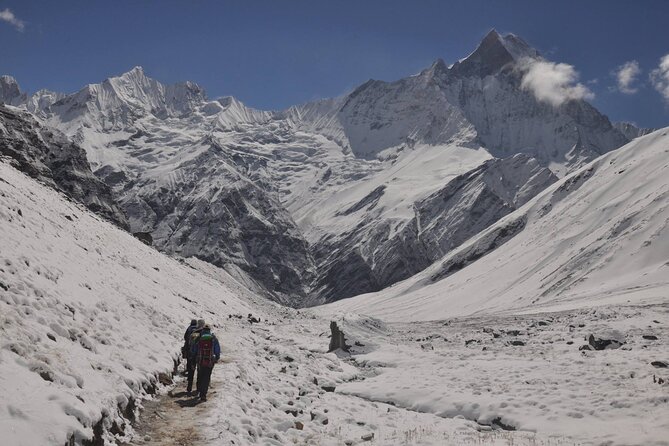
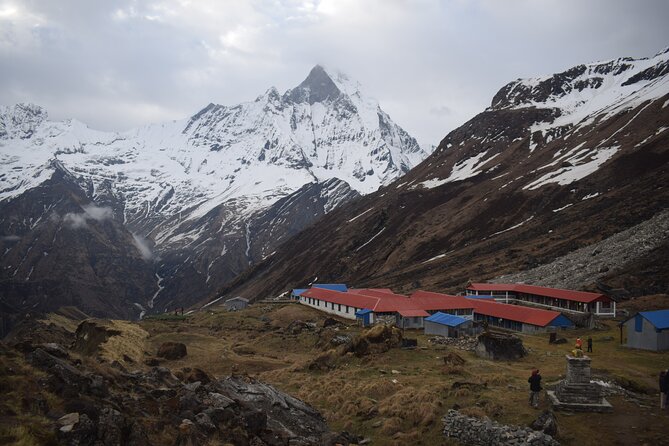
Day four is the emotional high point of the trip. From Deurali, you follow the Modi River and continue through alpine terrain toward Machhapuchhre Base Camp and then Annapurna Base Camp, as the route description indicates.
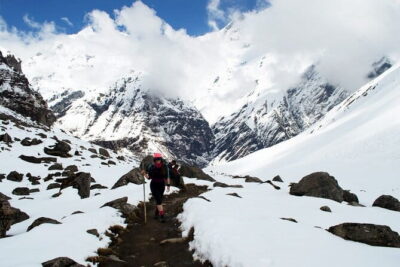
The trail passes stacked rocks, an icy cave, and increasingly open mountain views. These details give the walk texture. It is not just a long uphill line to a signpost. The river, rock formations, shrines, and changing vegetation make the approach feel like a gradual entrance into a high mountain bowl.
The walking time is about five hours, but this is one of the days where altitude can make the distance feel harder. Your guide is listed as carrying an oxygen saturation monitor, which can help the team keep an eye on how you are responding. That is useful, but it does not replace careful pacing or medical advice.
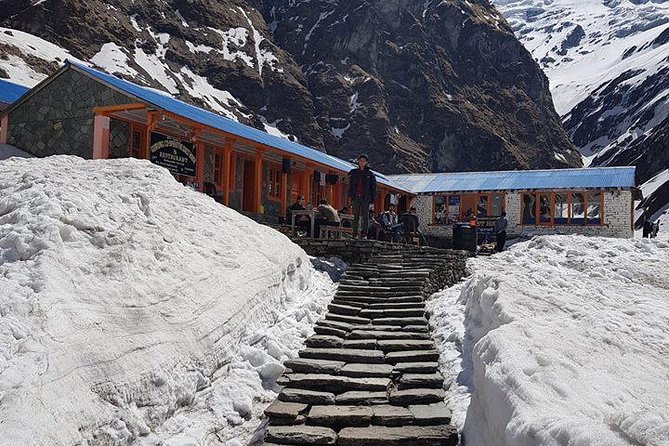
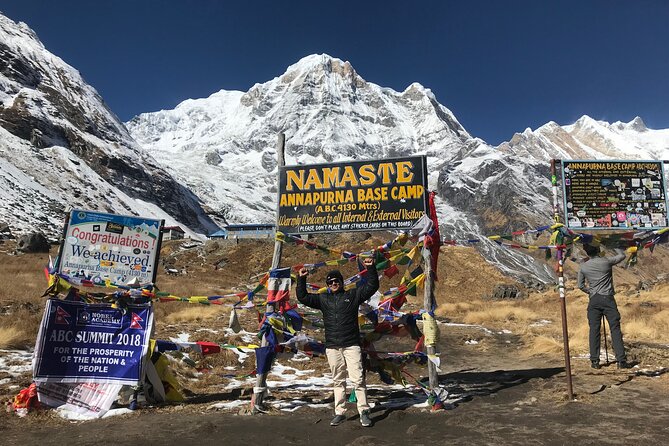
At Annapurna Base Camp, the reward is the huge mountain setting around you. The next morning includes time to explore the area, so you are not simply arriving late and turning around immediately. Bring warm layers, since the high-altitude overnight stop can be markedly colder than the lower villages.
Day 5: Base camp views and the long return
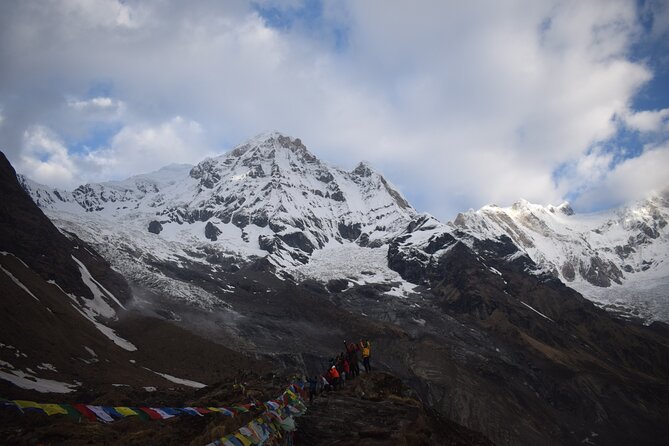
The fifth day begins with time to explore Annapurna Base Camp. The route description highlights a panoramic 360-degree view of the Annapurna massif and surrounding peaks, including Annapurna I and Machhapuchhre.
This is the day to slow down and look around. Base camp is not only a destination for a photograph. The scale of the mountains is the point, and the open view gives you a better sense of the route you have traveled through the forested valley.
The listed walking time is about eight hours, making this the longest day on the schedule. The description places the day within the Annapurna region and then points toward the return route. Because the exact overnight arrangement is not fully detailed in the supplied schedule, you should confirm with the operator where you sleep on the fifth night and how much of the descent is planned.
That is not a reason to reject the trip. It is simply a detail worth clearing up before you pay. A private itinerary can often be adjusted, but the guide still has to work within lodge availability, weather, trail conditions, and the fixed seven-day return to Pokhara.
Day 6: Bamboo, Sinuwa, Chhomrong, and Jhinu Danda hot spring
The sixth day heads back through Bamboo and toward Sinuwa, then continues down toward the Chhomrong River and Jhinu Danda. The route description gives about six hours of walking and identifies the hot spring as the main stop.
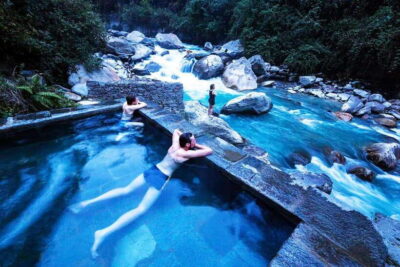
Jhinu Danda is a welcome change after several demanding days. The hot spring offers a chance to rest tired legs, though you should remember that reaching it still involves walking and usually a descent from the main trail. The return climb afterward can feel surprisingly hard.
The route wording mentions leaving Bamboo, climbing through bamboo forest, crossing a narrow ridge toward Sinuwa, and then descending toward the river. This section gives you a different view of the same valley. Paths often look entirely different when you walk them in the opposite direction, especially when your attention shifts from gaining height to getting back down safely.
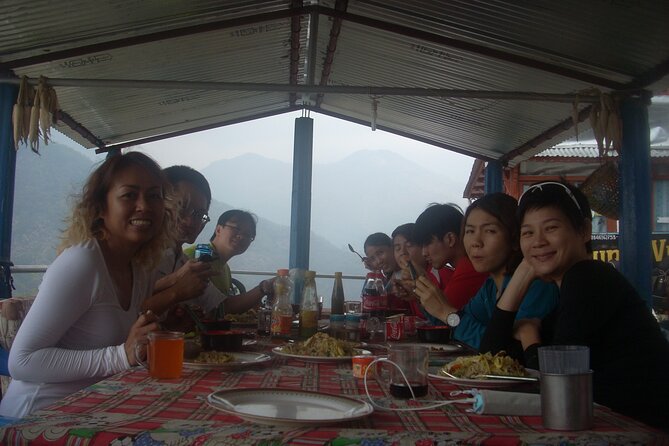
The final mountain nights can also be when small comforts matter most. A warm meal, dry socks, and a guide who pays attention to your pace may matter more than any grand view. The included meals cover breakfast, lunch, and dinner during the trek, but extra drinks and personal purchases should be treated as separate expenses.
Day 7: Jhinu Danda to Pokhara
The final morning begins with breakfast and another chance to look toward Annapurna I and Machhapuchhre. You then make a short walk to Samrung and take a private jeep along the Baglung route back to Pokhara.
The day is listed at about three hours, making it much easier than the high mountain days. The road transfer brings the trek to a clean finish at the original Lakeside meeting point.
Returning to Pokhara by private jeep is convenient, especially after a week on foot. Road travel in the hills can still take longer than expected, so keep your plans for the rest of the day flexible. The tour ends back at the starting point, but your Pokhara hotel is not included.
Why the private format matters
A private trek is not the same as a luxury trek. You still sleep in simple mountain lodges, walk steep paths, and deal with changing weather. The advantage is control.
You travel only with your own party and the assigned guide and porter team. That makes it easier to discuss food, walking speed, rest stops, and changes to the route. Several people who used this company’s guides, including Amar, Sanjay, Laxman, Andrea, Kumar, and Ram, praised the care, support, and willingness to accommodate changes.
One particularly useful detail is that a custom six-day plan was arranged for one group. That suggests the operator can discuss adjustments rather than forcing every party into one rigid schedule. Still, ask about changes before the trek, since last-minute alterations can be limited by the cancellation terms, weather, transport, and available lodges.
The private format also suits families, couples, and small friend groups who do not want to match the pace of strangers. It is less useful if you mainly want the lowest possible price, since joining a larger group may cost less.
Food, lodging, permits, and practical support
The package includes lodge accommodation along the route and seven breakfasts, six lunches, and six dinners. That covers the main food needs listed for the seven-day schedule.
Pokhara and Kathmandu hotels are excluded. You should arrange those separately and allow enough time in Pokhara before the 8:15 a.m. start. The meeting point is on Lakeside Road, near public transportation.
Permits for the Annapurna Conservation Area and other necessary permits are included. You also receive a map, water purification support, oxygen saturation checks, and a duffle bag. These are modest but useful details, particularly when you are trying to keep your daily pack light.
Emergency rescue evacuation assistance is included in the support package, but your travel insurance is not. Buy insurance that specifically covers trekking and emergency evacuation, then read the conditions carefully. Do not assume that public liability insurance covers your medical costs or personal losses.
Tips for the guide and porter are also not included. Carry enough local currency or ask the operator how tipping is normally handled, so you are not trying to solve it at the end of a tiring day.
Fitness, weather, and the parts that may wear you down
You need a moderate level of fitness for this trek. The route includes five to eight-hour walking days, steep climbs, long descents, narrow ridges, river crossings, and many stone steps.
The hardest feature may not be one dramatic climb. It is the repeated up and down, especially around Chhomrong, Sinuwa, and the river valley. One useful way to prepare is to practice long stair sessions and sustained walking before Nepal. Comfortable footwear and a light day pack will make a real difference.
Weather also matters. The experience requires good conditions, and a cancellation caused by poor weather leads to either another date or a full refund. You can cancel for a full refund if you do so at least 24 hours before the start time. Changes made within 24 hours are not accepted, and late cancellations are not refunded.
The overall rating is 4.8 from 50 ratings, with a 98 percent recommendation figure. The strongest praise centers on attentive guides, helpful porters, good organization, and flexibility. That matches the way this trip is structured: you are paying for a managed trek rather than trying to arrange every lodge, permit, meal, and vehicle yourself.
Who should book this Annapurna trek?
I would recommend it to you if you want to reach Annapurna Base Camp in seven days, prefer a private group, and value having the main logistics handled. It is also a good fit if you want village scenery and forest walking, not just a quick trip to a mountain viewpoint.
You should think twice if you dislike basic lodge accommodation, long stair sections, or changing road conditions. The seven-day schedule leaves little room for a slow detour or an extra recovery day.
The trek is a particularly good match for couples and small groups who want to set their own pace. The experience also suits first-time Nepal trekkers who want support from a guide and porter without joining a large group. I would ask in advance about the exact overnight stop after base camp, the porter load arrangement, and how the private jeep transfers work.
Should you book it?
At $625 per person, this is a solid value if you use the included services: guide, porter, permits, meals, tea-house lodging, transport, equipment support, and taxes. The private setup and reported flexibility add real value, especially for a group with different walking speeds.
Book it if Annapurna Base Camp is your main goal and you can handle a demanding week. Choose another plan if you need extra acclimatization time, a gentler walking schedule, or more certainty about every overnight detail before departure. For the right party, this is a practical way to reach one of Nepal’s great mountain destinations without turning the trip into a paperwork exercise.
FAQ
Where does the trek start?
It starts at Pokhara Lakeside, at 6X84+3JQ, Lakeside Road, Pokhara 33700, Nepal.
What time does the trek start?
The scheduled start time is 8:15 a.m.
Where does the trek end?
The activity ends back at the original meeting point in Pokhara.
Is this a private trek?
Yes. Only your party participates in the activity.
Are a guide and porter included?
Yes. The package includes one government registered trekking guide and porters, along with their listed expenses.
Are meals included?
Yes. The package includes seven breakfasts, six lunches, and six dinners.
Is accommodation included?
Lodge accommodation along the trek is included. Hotel accommodation in Kathmandu and Pokhara is not included.
Is travel insurance included?
No. You must arrange your own travel insurance. The package does include assistance for emergency rescue evacuation.
Can I cancel for a full refund?
Yes, if you cancel at least 24 hours before the experience start time. Poor weather cancellations are handled with a different date or a full refund.
New in the Pokhara listings
- Pokhara: Pokhara Highlights Tour by Bus★ 3.6 · 10 reviews
- Discover Pokhara in Style: Private Vehicle Service with Driver★ 5.0 · 5 reviews
- Multi-Day Tour from Pokhara, Poon Hill and Mulde Trek★ 5.0 · 1 review
- Pokhara in 5 Hours: Lake, Museum, Cave, Falls & Pagoda Hill★ 4.5 · 16 reviews
- Private 4 Day Poon Hill Trek from Pokhara★ 5.0 · 16 reviews
- 4 Day Mardi Himal Base Camp Trek from Pokhara★ 5.0 · 18 reviews
- From Pokhara Full Day Entire Pokhara Tour with Guide★ 5.0 · 1 review
- Things to do at Pokhara World Peace Stupa tour with Guide★ 5.0 · 2 reviews
Annapurna Base Camp Treks, compared.
Kathmandu to Annapurna Base Camp (ABC) 5-Day Trek
Read our review →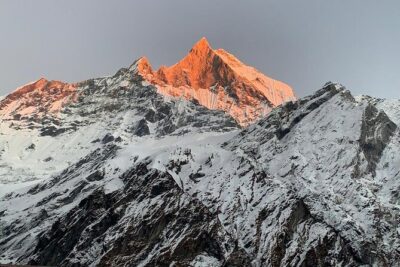
Kathmandu/Pokhara: 5-Day Annapurna Base Camp (ABC) Trek
Read our review →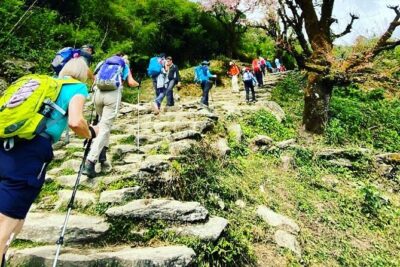
11-Day Hike Tour to Annapurna Base Camp Bliss in Kathmandu
Read our review →Browse the lists this tour appears in