
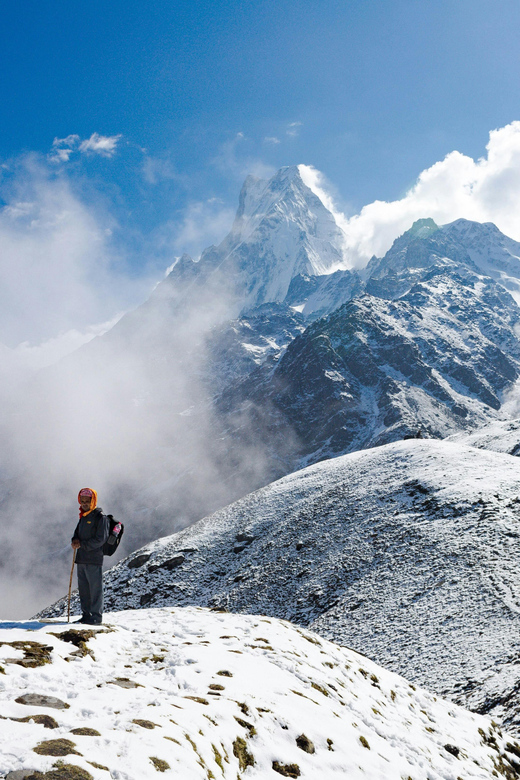
REVIEW · MARDI HIMAL TREKS
7 Days Mardi Himal Trek From Kathmandu
Mardi Himal rewards strong legs with big views. This seven-day route combines a comfortable bus journey, quiet mountain villages, forest trails, and a high point at Mardi Himal Base Camp, 4,500 meters. I especially like the clear progression from Pokhara to Pothana, Badal Danda, High Camp, and then down to Siding Village. I also like that the package includes permits, trekking accommodation, a certified guide, trekking poles, and a duffel bag if needed.
The main caution is altitude and effort. Reaching Base Camp means a long day above 3,500 meters, and the price does not include meals or a porter. The schedule is compact, so you need reasonable fitness and a willingness to handle basic teahouse accommodation.
In This Review
- Key points before you book
- Why the Mardi Himal route works in seven days
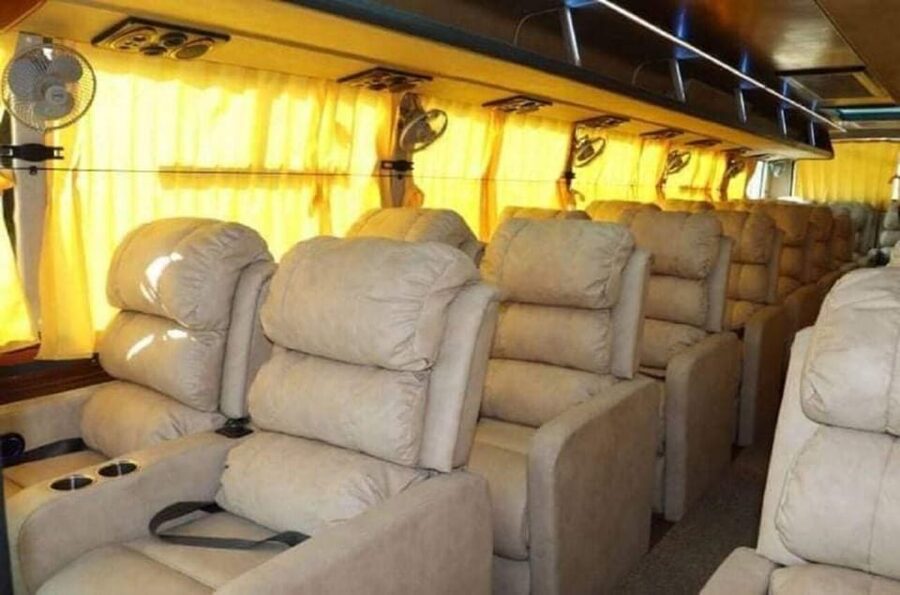
- Kathmandu to Pokhara by VIP sofa coach
- Kande to Pothana at 1,900 meters
- Pothana to Badal Danda at 3,210 meters
- Badal Danda to High Camp at 3,580 meters
- The 4,500-meter hike to Mardi Himal Base Camp
- Low Camp to Siding Village at 820 meters
- Returning to Kathmandu after the trek
- What the $330 price really covers
- Who should book this trek
- Practical preparation for the seven days
- Should you book the Mardi Himal Trek?
- FAQ
- How long is the Mardi Himal Trek from Kathmandu?
- What is the highest point on the trek?
- How long does the bus ride between Kathmandu and Pokhara take?
- Is food included in the $330 price?
- Is a porter included?
- What type of accommodation is provided?
- Is the trek suitable for everyone?
Key points before you book
- Base Camp reaches 4,500 meters: The highest point is a serious altitude gain for a one-week trip.
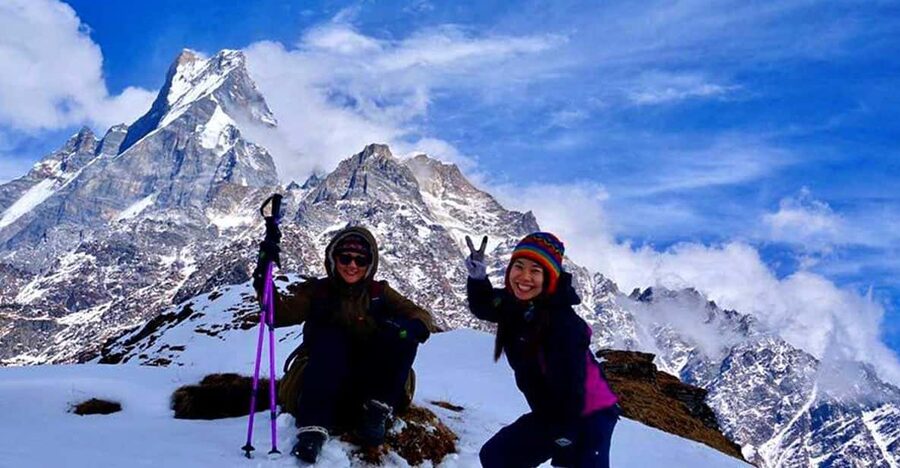
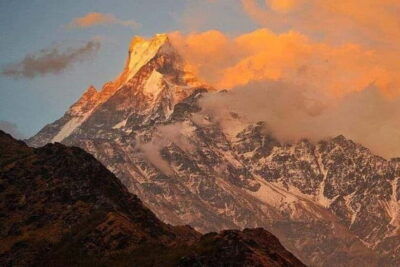
- Sunrise and sunset belong to Fishtail: Machapuchare is one of the major visual rewards along the high trail.
- The route uses two transport legs: A six to eight-hour bus ride connects Kathmandu and Pokhara at the start and finish.
- Badal Danda brings the first major mountain views: At 3,210 meters, it is an important overnight stop before High Camp.
- Siding adds a village finish: The descent leaves the high ridge and passes through forests and terraced fields.
- Guide care matters here: Guide Sandesh is praised for strong geography knowledge, careful pacing, safety, photography, and good humor.
Why the Mardi Himal route works in seven days
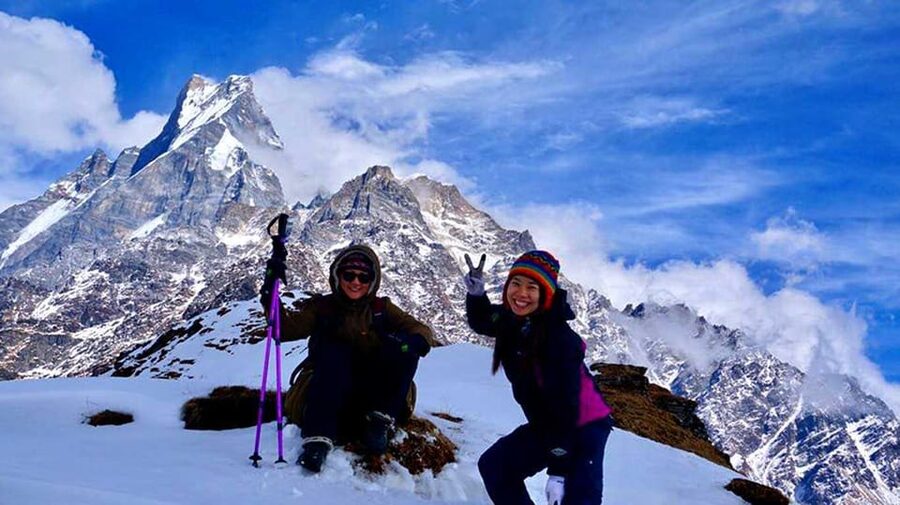
The Mardi Himal Trek is a short Himalayan trip with a real high-altitude finish. You do not spend a week on gentle foothill paths. After reaching Pokhara, the route climbs steadily from Kande through Pothana, Badal Danda, and High Camp before the early hike to Base Camp.
That compact plan is the appeal. You get forests, villages, ridge walking, mountain views, and a 4,500-meter objective without committing to a two-week trek. The trade-off is that the walking days are not casual. The Base Camp day alone takes about six hours, and the ascent from Pothana to Badal Danda and then High Camp demands steady effort.
I would view this as a good introduction to Nepal’s higher trekking routes for someone with decent fitness. It is less suitable if you want short walks, long breaks, or hotel comfort every night.
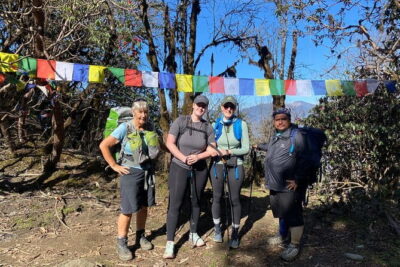
The group is private, with an English-speaking guide. That matters because a private arrangement allows the walking pace and daily rhythm to be adjusted. Sandesh is specifically praised for adapting the days to the group’s physical ability, checking on everyone, and helping the group bond through evening games. Those small touches can make a hard trek feel much more manageable.
More Mardi Himal treks:
- Pokhara: 4-Day Mardi Himal Trek
★ 4.9 · 59 reviews - Private Mardi Himal Trek
★ 5.0 · 42 reviews - From Pokhara: 4-Day Mardi Himal Base Camp Trek
★ 4.9 · 31 reviews
Kathmandu to Pokhara by VIP sofa coach
The first day is mostly about reaching Pokhara. You leave Kathmandu early and travel by shared VIP sofa tourist coach, with the drive taking roughly six to eight hours. The exact duration depends on road conditions, so keep your expectations practical. Nepal’s intercity journeys are scenic but not always quick.
A reported journey included comfortable seats and enough pauses, which is useful on a full-day road trip. Hotel pickup and drop-off by car are included, so you do not have to arrange the first transfer through Kathmandu on your own.
Pokhara is a welcome change of pace. After the road journey, you stay in a tourist-standard hotel for the night and have time to explore the Lakeside area and Fewa Lake. This pause is valuable because it separates the long transport day from the trek.
I like having this night in Pokhara rather than starting the trail immediately after arriving. You can rest, organize your pack, and enjoy a calmer evening. The package includes two nights in a tourist-standard hotel in Pokhara, one at the start and one after the trek.
Kande to Pothana at 1,900 meters
On Day 2, you drive from Pokhara to Kande and begin walking. The trek to Pothana takes about four to five hours and moves through forest, village paths, and foothills beneath the Annapurna range.
Pothana is a pleasant first overnight stop because it gives you an introduction to teahouse trekking without sending you straight into the highest sections. Traditional villages and forest cover make this part feel more local and grounded than the exposed ridge above.
The distance and ascent are not extreme compared with later days, but you are still adjusting to the rhythm of walking several hours with a pack. Use this day to notice how your body responds. Keep water and layers handy, and do not race ahead simply because the first section feels easy.
Accommodation during the trek is in tourist-standard lodges or teahouses. That means basic mountain lodging rather than full hotel service. The food and drinks are not included, so you buy them as you go. This keeps the headline price low, but you should budget separately for every meal and drink during the walking days.
Pothana to Badal Danda at 3,210 meters
Day 3 brings a larger climb. The route from Pothana to Badal Danda takes around five hours and reaches 3,210 meters. This is the point where the trek begins to feel like a genuine high-mountain walk rather than a forest outing.
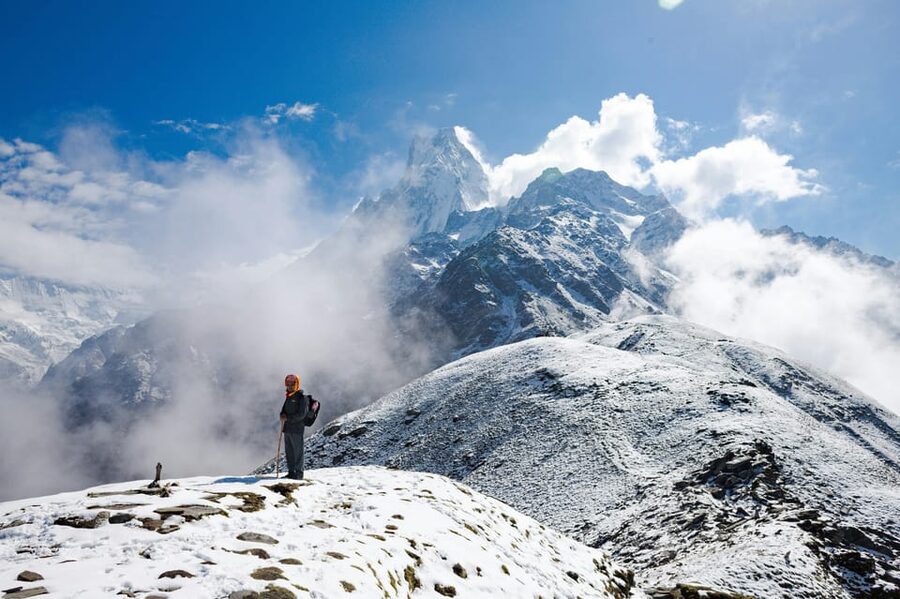
Badal Danda offers broad views across the surrounding peaks and valleys. Its name refers to clouds, and conditions can shift quickly at this height. On a clear evening or morning, the views are a major reward. On a cloudy day, the atmosphere is still impressive, but you may not get the wide mountain scene shown in photographs.
This overnight stop also helps break up the climb toward High Camp. You gain altitude in stages instead of trying to reach the highest lodging in one push. Even so, altitude affects people differently. Walk slowly, follow the guide’s advice, and tell the guide if you feel unwell.
The guide’s role becomes especially useful here. Sandesh is praised for his geographical knowledge and formal guide training, but the more practical point is his attention to group condition. A guide who adjusts the pace can make the difference between enjoying the ridge and merely surviving it.
More walking in the hills of Pokhara:
- Poon hill Trek 3 days
★ 5.0 · 176 reviews - Trekking in Annapurna/Langtang/Everest/Upper Mustang regions
★ 5.0 · 161 reviews - Pokhara: 4-Day Ghorepani, Poonhill & Ghandruk Mountain Trek
★ 5.0 · 132 reviews - Ghorepani – Poon Hill Trek 3N-4D
★ 5.0 · 125 reviews
Badal Danda to High Camp at 3,580 meters
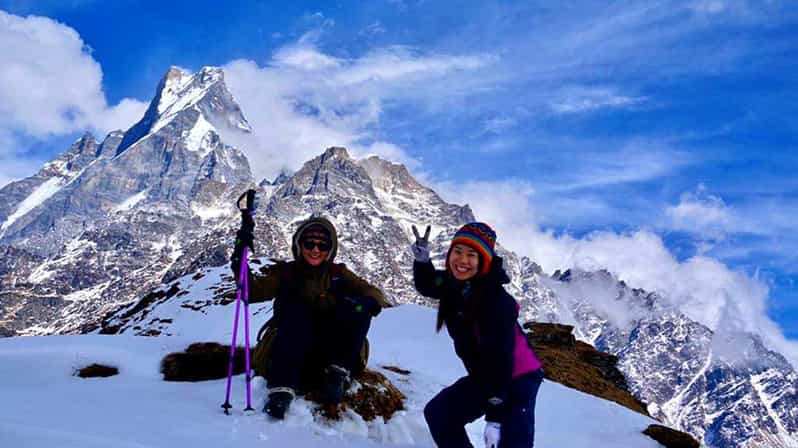
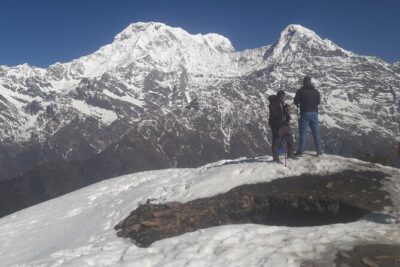
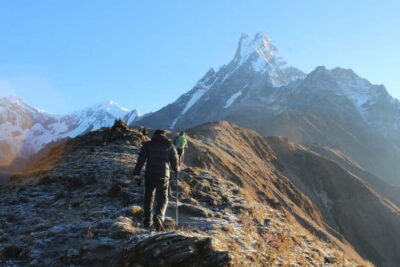
The next day takes you from Badal Danda to High Camp, at 3,580 meters. Allow about five to six hours. The trail continues upward and becomes more focused on mountain scenery, with views toward Annapurna and Machapuchare, the famous Fishtail peak.
High Camp is the emotional center of the trek for many people. You have climbed above the forest and reached a place where the mountains feel close. Fishtail is especially striking around sunrise and sunset, when changing light can turn the slopes and ridges different shades.
Do not assume the final approach will be easy just because the distance is not listed as extreme. At 3,580 meters, the air is thinner, and a steady pace matters more than speed. High Camp is also a basic overnight setting, so bring patience as well as warm clothing.
The attraction here is not luxury. It is position. You sleep close to the high ridge and set yourself up for the early walk to Base Camp. If your priority is a dramatic Himalayan setting with a shorter overall itinerary, this is exactly the sort of night that gives the trip its character.
The 4,500-meter hike to Mardi Himal Base Camp
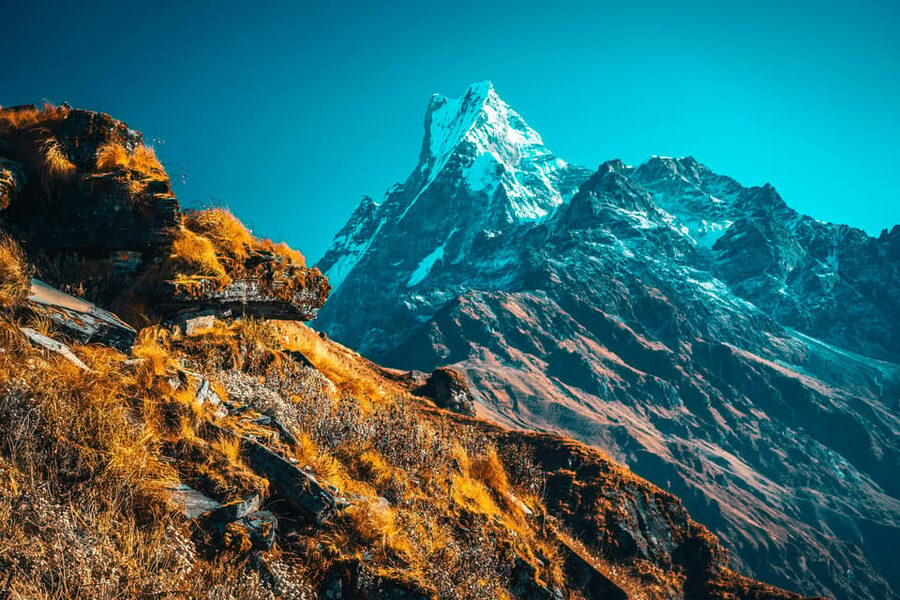
Day 5 is the hardest and most rewarding section. You leave early for Mardi Himal Base Camp, which sits at 4,500 meters, then return to Low Camp. The full walking day takes around six hours.
An early start improves your chance of seeing clear mountain views before clouds build. It also gives you more time to move carefully at altitude. The route provides wide views toward the high peaks, with Mardi Himal and Machapuchare forming the main visual focus.
Base Camp is not just another viewpoint on the route. It is the highest point of the experience and the reason the itinerary climbs so high. You can pause there, take in the Himalayan panorama, and then begin the descent to Low Camp.
The return matters as much as the ascent. Going back down to Low Camp gives your body a little relief from the highest elevation. Still, six hours of walking at this stage can be tiring. I would not plan an important evening commitment in Pokhara or Kathmandu immediately after this day.
This is where honest self-assessment helps. If you are comfortable with long uphill walks and have prepared for altitude, the Base Camp outing should feel like a strong achievement. If you have little walking experience, the height and return journey may be tougher than the short total duration suggests.
Low Camp to Siding Village at 820 meters
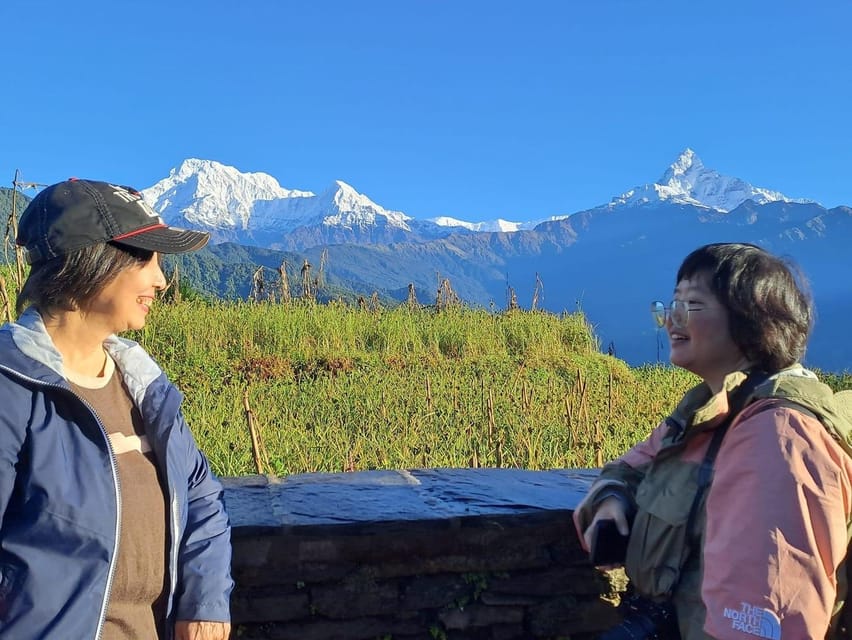
After the high point, Day 6 is a long descent from Low Camp to Siding Village. The walk takes roughly four to five hours and passes through forests and terraced fields before reaching Siding at about 820 meters.
Siding gives the route a welcome change of mood. The high ridge and open mountain views give way to a lower village setting, with cultivated hillsides and a more settled feel. It is a useful reminder that this trek is not only about peaks. The route also connects you with the rural communities that support life in the foothills.
From Siding, you drive back to Pokhara. The return road may feel especially welcome after several days on foot. You spend the night in Pokhara, with time to rest and celebrate the end of the trek.
The accommodation arrangement is flexible in a practical way. The trip includes teahouse stays, but a documented experience with Sandesh involved changing accommodation when hygiene did not meet expectations. That does not mean every lodge can be changed without limits, but it does show why a responsive guide is valuable on a route where standards can vary.
Returning to Kathmandu after the trek

Day 7 repeats the long bus journey from Pokhara to Kathmandu. Plan on six to eight hours, with arrival followed by hotel transfer and an evening in Kathmandu.
This final day is not a sightseeing day. It is a transfer day, so keep the schedule open. The included shared VIP sofa tourist coach helps control costs, but the long road journey means you should not count on reaching Kathmandu quickly.
Luggage storage in Pokhara is included, which is helpful if you want to leave larger items behind while trekking. You can carry only what you need on the trail and collect the rest after returning from Siding.
What the $330 price really covers
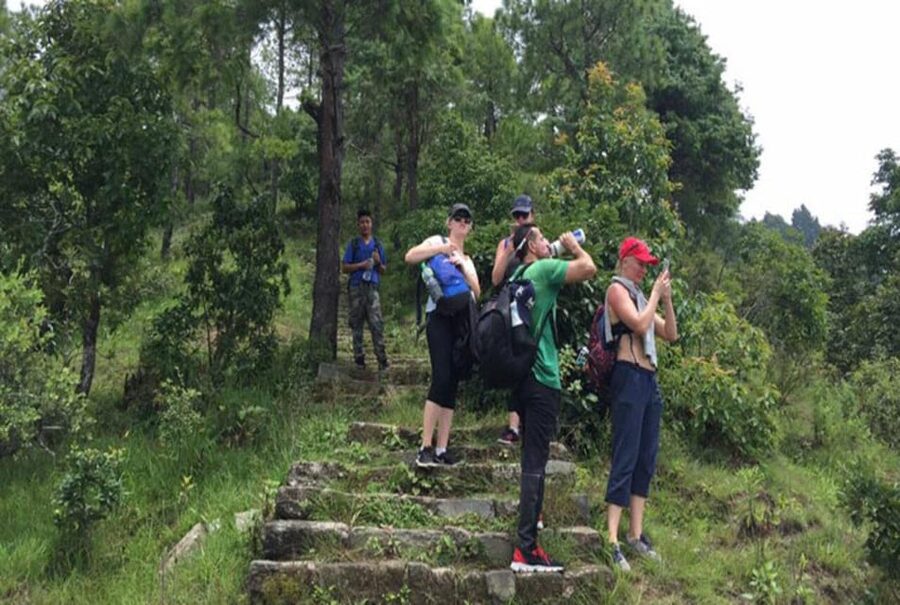
At $330 per person, this is an appealing price for a guided seven-day trip with transport from Kathmandu, accommodation, permits, and support equipment. The value is strongest if you need an organized route rather than wanting to arrange each part independently.
Included services cover:
- Hotel pickup and drop-off by car
- Shared roundtrip transport by VIP sofa tourist coach
- Annapurna Conservation Area Permit
- Government permits
- Two nights in a tourist-standard Pokhara hotel
- Tourist-standard lodge or teahouse accommodation during the trek
- An English-speaking, government-certified guide
- First aid kit
- Duffel bag and trekking poles when needed
- Luggage storage in Pokhara
The important omission is food. All meals and drinks are purchased separately, and a porter costs an additional $15 per day if you want one. That makes the advertised price straightforward, but not all-inclusive.
I see the value in the included gear and permits. A duffel bag, poles, first aid kit, and luggage storage are small details that save you from extra planning. The guide is the biggest part of the package’s value, especially when pacing, safety, lodging choices, and local information matter.
You should also understand the accommodation wording. Tourist-standard teahouses are practical mountain lodges, not upscale hotels. The experience with Sandesh suggests that hygiene concerns were taken seriously, but you should still expect basic facilities during the trek.
Who should book this trek
I would recommend this route to you if you want:
- A short Himalayan trek with a high summit-style objective
- Mountain views of Annapurna and Machapuchare
- Forests, villages, and terraced fields in one trip
- A private group with an English-speaking guide
- Transport and permits arranged from Kathmandu
- A more personal experience than a large group tour
- The chance to reach 4,500 meters within one week
I would be more cautious if you dislike long bus rides, basic teahouses, or buying meals separately. The trek is also not suitable for pregnant women, wheelchair users, or people over 95 years old according to the stated restrictions.
The route requires walking for four to six hours on several days. No technical climbing is described, but the altitude makes this more demanding than an ordinary countryside hike. You should be ready for steep uphill sections, a cold high camp, and a long day to Base Camp.
Practical preparation for the seven days
Keep your main trekking bag light. Since luggage storage in Pokhara is included, you can leave items that you will not need on the trail.
Trekking poles are available if needed, but you may prefer to bring familiar equipment. Poles are especially useful on the descent to Siding, where tired legs and uneven paths can make balance harder.
Plan your budget for food and drinks before departure. These costs are not included, and you purchase them during the trek. A porter is optional at $15 per day, which may be worthwhile if you prefer to walk with a lighter daypack.
Pack clothing for changing conditions. The lower sections pass through forests and warmer village areas, while Badal Danda and High Camp require warmer layers. The highest sections can feel cold even when Pokhara is mild.
The trip offers free cancellation up to 24 hours before departure and allows you to reserve now and pay later. Those policies make it easier to hold a place while you confirm flights, fitness, and time off.
Should you book the Mardi Himal Trek?
Book it if you want a compact, guided Nepal trek with a real high-altitude finish and strong mountain scenery. The combination of Fishtail views, Base Camp at 4,500 meters, private guiding, included permits, and arranged transport gives the trip good value at $330, provided you budget for food and possibly a porter.
I would book with particular interest if Sandesh is available as your guide. His reported strengths include careful pacing, safety awareness, geography knowledge, photography, and a lighthearted approach that helps people handle demanding days.
I would skip it if you want a relaxed holiday with short walks and hotel comfort throughout. The bus rides are long, the teahouses are basic, and the Base Camp day calls for real stamina. For an active visitor with one week in Nepal, though, this itinerary packs a lot of mountain experience into a manageable route.
FAQ
How long is the Mardi Himal Trek from Kathmandu?
The trek lasts seven days, including bus travel between Kathmandu and Pokhara at the beginning and end.
What is the highest point on the trek?
The highest point is Mardi Himal Base Camp, at 4,500 meters.
How long does the bus ride between Kathmandu and Pokhara take?
The bus journey takes approximately six to eight hours each way.
Is food included in the $330 price?
No. All food and drinks are purchased separately during the trip.
Is a porter included?
No. A porter is available to hire for $15 per day.
What type of accommodation is provided?
The package includes two nights in a tourist-standard hotel in Pokhara and tourist-standard lodges or teahouses during the trek.
Is the trek suitable for everyone?
The activity is not suitable for pregnant women, wheelchair users, or people over 95 years old. The six-hour hike to Base Camp and the altitude also require reasonable physical fitness.
New in the Pokhara listings
- Pokhara: Pokhara Highlights Tour by Bus★ 3.6 · 10 reviews
- Discover Pokhara in Style: Private Vehicle Service with Driver★ 5.0 · 5 reviews
- Multi-Day Tour from Pokhara, Poon Hill and Mulde Trek★ 5.0 · 1 review
- Pokhara in 5 Hours: Lake, Museum, Cave, Falls & Pagoda Hill★ 4.5 · 16 reviews
- Private 4 Day Poon Hill Trek from Pokhara★ 5.0 · 16 reviews
- 4 Day Mardi Himal Base Camp Trek from Pokhara★ 5.0 · 18 reviews
- From Pokhara Full Day Entire Pokhara Tour with Guide★ 5.0 · 1 review
- Ultralight Flight: Into The Heart Of The Mountains (90 min)★ 5.0 · 1 review
Mardi Himal Treks, compared.

Browse the lists this tour appears in