
REVIEW · ANNAPURNA BASE CAMP TREKS
Pokhara: 7 Day Annapurna Base Camp Trek
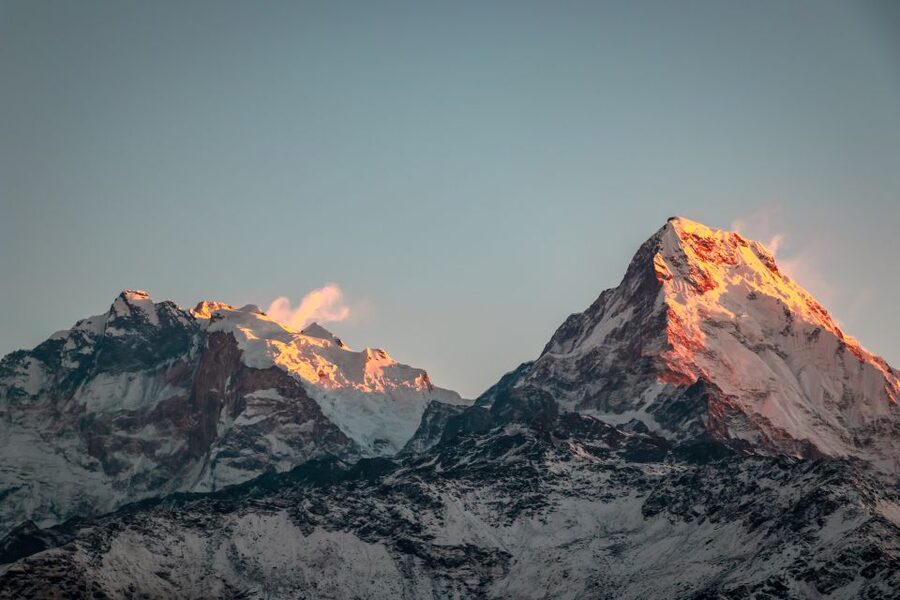
The Himalayas reward steady feet. This seven-day trek from Pokhara takes you from terraced farms and Gurung villages to the foot of Annapurna, with Machhapuchhre and Annapurna South appearing along the route. I like the changing scenery and the strong guide support, especially guides such as Pratikshya and Sandesh, who have helped trekkers adjust their pace and feel at ease. The main drawback is the demanding climb in the first few days, followed by a long downhill return that some people may find tiring.
I also like the finish at Jhinu Danda’s hot springs, a simple but welcome way to soothe tired legs. At $215 per person, the price is good for a private seven-day trip because transport, permits, accommodation, a certified guide, and basic trekking equipment are included. You still need to budget for meals, drinks, and possibly a porter.
In This Review
- What makes this trek worth your time
- What the $215 price really covers
- Day 1: Pokhara to Nayapool and the Gurung village of Ghandruk
- Day 2: Ghandruk to Lower Sinuwa through forest and suspension bridges
- Day 3: Sinuwa to Deurali and the narrowing Modi Khola gorge
- Day 4: Deurali to Annapurna Base Camp at 4,130 meters
- Day 5: Sunrise at base camp, then back to Sinuwa
- Day 6: Sinuwa to Jhinu Danda and its natural hot springs
- Day 7: The final walk to Nayapool and the return to Pokhara
- The guides are a major part of the value
- How hard is the seven-day schedule?
- Best seasons, weather, and what to pack
- Who should book this Annapurna trek?
- Should you book it?
- FAQ
- How high does the Annapurna Base Camp trek go?
- How long is the experience?
- What is included in the $215 price?
- Are food and drinks included?
- Can I hire a porter?
- What languages can the guide speak?
- Is this a private group trek?
- Can I cancel or pay later?
What makes this trek worth your time
- A full Annapurna Base Camp route in seven days: You reach 4,130 meters and return to Pokhara without stretching the trip into a longer holiday.
- A striking change in scenery: The trail moves from rice terraces and farms to rhododendron, bamboo, oak, and alpine terrain.
- Gurung village life: Ghandruk gives you an early look at traditional mountain communities and local culture.
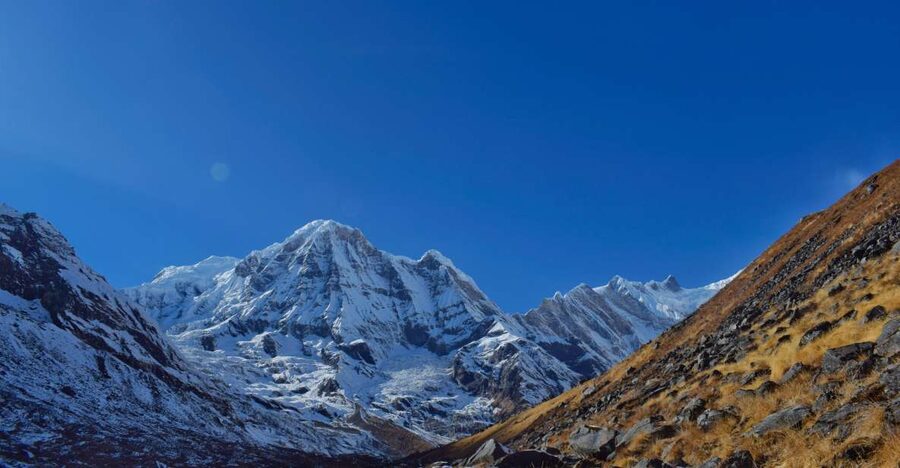
- Close views of major peaks: Annapurna South, Annapurna I, Machhapuchhre, and Hiunchuli shape the route.
- Private guiding and flexible pacing: Guides have slowed down for tired walkers, adjusted plans during illness, and helped arrange alternatives when needed.
- A hot-spring recovery stop: Jhinu Danda gives you a useful break before the final walk and drive back to Pokhara.
What the $215 price really covers
The price is strong for a private trek. Your hotel pickup in Pokhara, private roundtrip transport, government permits, the Annapurna Conservation Area permit, standard tourist lodge accommodation, a certified guide, a first aid kit, luggage storage in Pokhara, and a duffel bag and trekking poles if needed are included.
That list matters. Permits alone can complicate a Himalayan trip, and having the agency handle transport and paperwork keeps your attention on walking. A private group also means you are not tied to the speed or preferences of strangers. Guides including Deepak, Hari, Bidur, Krishna, Paras, and Sandesh have been praised for adapting the pace, explaining the mountains and villages, and helping with practical problems.
Food and drinks are extra, so the advertised price is not the full cost of the week. You can buy meals along the trail. A porter is also available for $15 per day, a useful choice if you want to keep your daypack light. One trekker specifically found a porter helpful on a first trek.
The operator also offers free cancellation up to 24 hours before departure and a reserve-now, pay-later option. Pickup is available from any hotel in Pokhara’s Lakeside area. The guide may speak English, Hindi, or Nepali, so confirm your preferred language when booking.
More Annapurna Base Camp treks:
- Kathmandu/Pokhara: 5-Day Annapurna Base Camp (ABC) Trek
★ 4.9 · 72 reviews - Private 7 – Day Annapurna Base Camp Trekking
★ 5.0 · 50 reviews - Annapurna Base Camp Trek (8 days)
★ 5.0 · 45 reviews
Day 1: Pokhara to Nayapool and the Gurung village of Ghandruk
Your first day begins with a drive from Pokhara to Nayapool. From there, you start on foot through villages, farmland, and terraced fields before reaching Ghandruk at 1,939 meters.
Ghandruk is more than a place to sleep. It is a traditional Gurung village, and the setting gives you an early sense of how mountain communities fit homes, farms, and footpaths into steep terrain. The views of Annapurna South and Machhapuchhre make this a rewarding first night.
The day combines transport with a real introduction to the trail. You do not begin at high altitude, but the route still includes uphill walking, so avoid treating Day 1 as a gentle warm-up. The first few days are repeatedly described as demanding, particularly for people who do not arrive with much hiking practice.
Day 2: Ghandruk to Lower Sinuwa through forest and suspension bridges
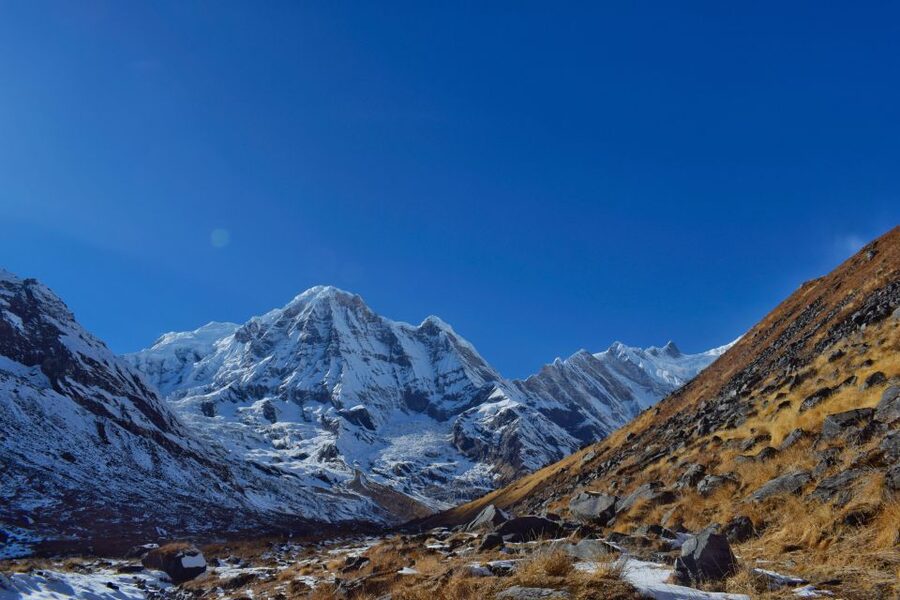
Day 2 takes you from Ghandruk to Lower Sinuwa at 2,249 meters. Expect a mixture of uphill and downhill sections, forest paths, small settlements, and suspension bridges crossing the Modi Khola.
The rhododendron forest gives this part of the trek a different feel from the open farmland around Ghandruk. You also begin to notice how much the route changes underfoot. A day may include stone steps, forest trails, village paths, and bridge crossings, so good footwear matters.
Lower Sinuwa is a useful stopping point because the route is already gaining height, but it is not yet at the high alpine section. Take your time here. Guides such as Deepak and Pratikshya have been praised for matching their walking speed to the person in front of them, which is important on a route with frequent climbs.
Day 3: Sinuwa to Deurali and the narrowing Modi Khola gorge
From Sinuwa, the route continues toward Deurali at 3,230 meters. You walk through bamboo and oak forest, pass Dovan and Himalaya, and follow the Modi Khola gorge toward steeper ground.
The river corridor gives the day a strong sense of movement. Forest, cliffs, waterfalls, and the sound of running water keep the trail interesting, but this is also where the effort becomes more serious. Deurali is high enough that you may begin to feel the effects of altitude, especially if you have pushed too hard on the previous days.
This is a good point to listen to your guide rather than chase a schedule. One trekker developed altitude sickness at Deurali and could not continue to base camp. The guide arranged jeep transport and helped change the plan so the trek could still include Poon Hill. That kind of flexibility is more valuable than simply having someone point out the trail.
More walking in the hills of Pokhara:
- Poon hill Trek 3 days
★ 5.0 · 176 reviews - Trekking in Annapurna/Langtang/Everest/Upper Mustang regions
★ 5.0 · 161 reviews - Pokhara: 4-Day Ghorepani, Poonhill & Ghandruk Mountain Trek
★ 5.0 · 132 reviews - Ghorepani – Poon Hill Trek 3N-4D
★ 5.0 · 125 reviews
Day 4: Deurali to Annapurna Base Camp at 4,130 meters
Day 4 is the main goal. You leave Deurali and climb through alpine meadows toward Machhapuchhre Base Camp, then continue to Annapurna Base Camp at 4,130 meters.
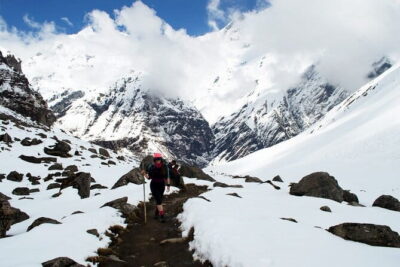
The change in scenery is dramatic. The dense lower forests give way to more open ground, with towering peaks taking over the view. Machhapuchhre, also called Fishtail, is a major visual marker, while the Annapurna range grows larger as you approach the base camp.
At Annapurna Base Camp, the mountains form a great bowl around you. The setting is the reward for the steep walking of the earlier days. You are at the foot of Annapurna, the world’s tenth-highest mountain, with Annapurna I, Annapurna South, Hiunchuli, and Machhapuchhre among the peaks that define the view.
Snow is possible as you approach and leave base camp. One couple experienced snowfall near the top and found it memorable, but snow and changing weather can also make the route harder. Bring clothing suited to the season, and ask the operator for a seasonal packing list before you go. A previous trekker specifically wished this had been provided in advance.
Do not underestimate the altitude. The success of this day depends less on speed than on steady pacing, rest, hydration, and honest communication with your guide. The guides praised most highly, including Hari, Narayan, Pratikshya, and Bidur, were described as patient and attentive when people felt unwell or needed a slower rhythm.
Day 5: Sunrise at base camp, then back to Sinuwa
If weather permits, sunrise at Annapurna Base Camp is the great payoff of Day 5. The first light over Annapurna I gives the surrounding peaks a new shape and color before you begin the long descent.
You retrace your route through the alpine section, past Machhapuchhre Base Camp, and back into bamboo and rhododendron forest. Returning to Sinuwa at 2,249 meters means losing a great deal of altitude in one day. That can feel easier on your breathing, but the downhill work can be hard on knees and ankles.
This is where trekking poles can earn their place in your pack. The tour can provide them if needed. Keep your pace controlled, even if the path seems easier after reaching the main goal. A fast descent can leave you more worn out than the climb.
Day 6: Sinuwa to Jhinu Danda and its natural hot springs
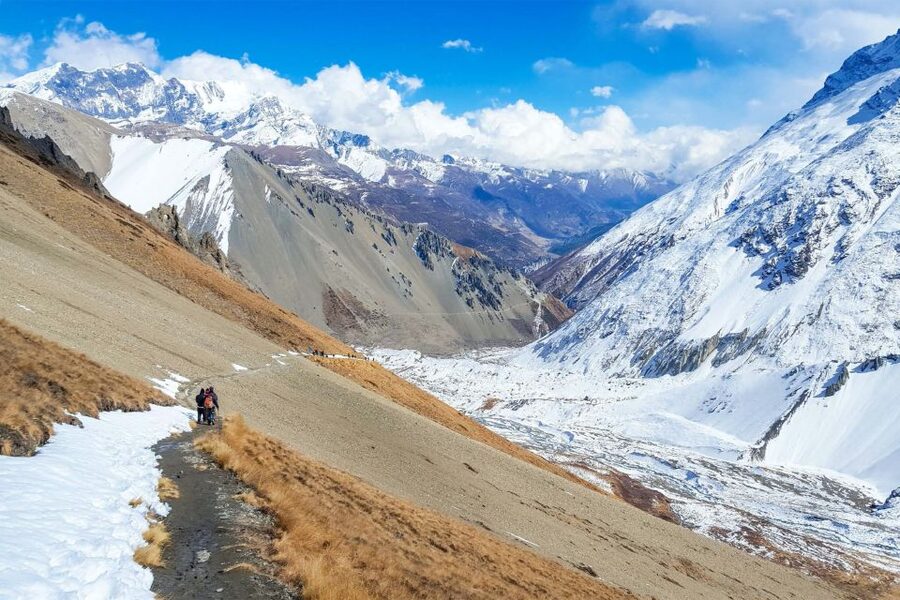
Day 6 drops to Jhinu Danda at 1,760 meters. The route passes through forest, farmland, and villages before reaching the hot springs beside the river.
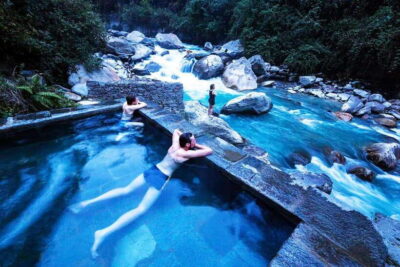
The springs are one of the smartest features of this schedule. After several days of climbing and descending, soaking your legs gives the trip a more human rhythm. Bring swimwear, since the pools are a practical highlight rather than a formal spa experience.
Jhinu also raises an itinerary question. Some people may prefer to finish the walking portion here, since the route after Jhinu includes a substantial amount of road. One trekker suggested ending the trek at Jhinu for exactly that reason. The included plan continues to Nayapool on Day 7, so you should discuss your preference with the agency before departure.
Day 7: The final walk to Nayapool and the return to Pokhara
The last day follows a gradual descent through farmland and villages to Nayapool. From there, private transport takes you back to Pokhara, where Lakeside gives you an easy place to rest and celebrate.
After the mountain scenery, the drive and road sections may feel less exciting. That is the trade-off for fitting Annapurna Base Camp into seven days. The schedule gives you a complete out-and-back experience, but it does not pretend that every final mile is as scenic as the high route.
Still, the return is useful. You finish near Pokhara rather than adding another mountain night, and the private vehicle avoids the uncertainty of finding your own transport. If you would rather spend more time in the mountains and less time on the road, ask about ending at Jhinu and arranging the return from there.
The guides are a major part of the value
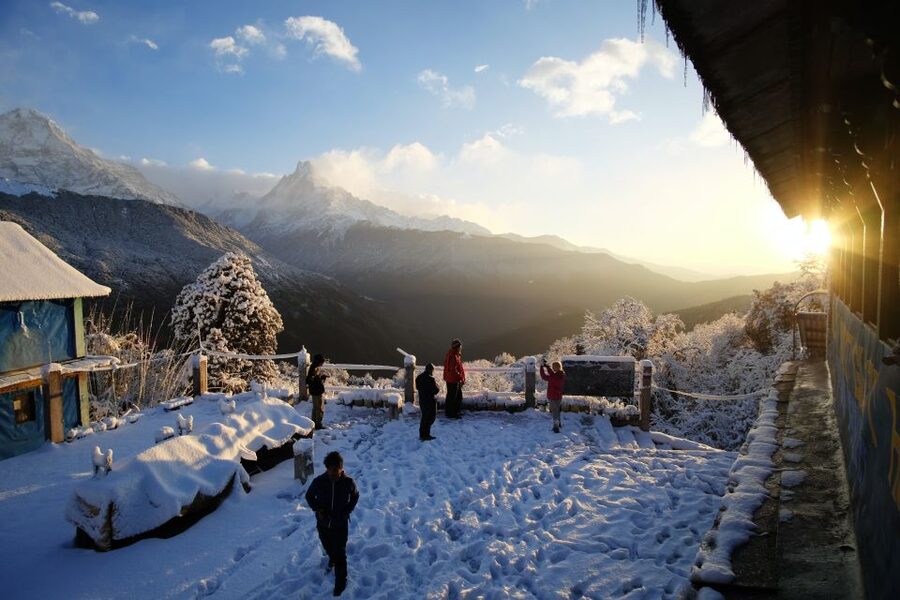
The guide can make or break a trek like this. The strongest part of this experience is not just route finding. It is the human support when the trail becomes tiring, the weather changes, or your body does not follow the plan.
Pratikshya received particular praise for patience, route knowledge, good lodge relationships, and allowing a comfortable balance between guidance and quiet time. Sandesh was praised for his patience, local insight, and even taking photos and videos to share after the trek. Hari was valued for his mountain knowledge, humor, and ability to make a solo trekker feel safe.
Other guides, including Krishna, Bidur, Paras, Deepchandra, Narayan, and Santosh, were described as friendly, flexible, and encouraging. That repeated pattern matters. You are not simply hiring a person to lead the way. You are getting help with pace, lodge arrangements, communication, and decisions when plans need to change.
The tour is private, but private does not mean luxurious. You stay in standard tourist lodges, and meals are purchased separately. The benefit is control and personal attention, not five-star comfort.
How hard is the seven-day schedule?
This is a serious mountain trek, even though it is shorter than many Annapurna Base Camp itineraries. The route includes repeated uphill and downhill walking, forest trails, suspension bridges, steep sections, and a high point of 4,130 meters.
You do not need to be an elite athlete, but you should be ready for sustained effort over several days. The early climb can be difficult, and Day 4 requires both physical stamina and careful pacing. The return descent is also demanding, especially after the excitement of base camp has passed.
I would choose the seven-day plan if you have limited time in Nepal and want the main ABC experience. If you prefer shorter walking days, more rest, or extra time to respond to altitude, ask about a slower schedule. The guides can adjust the pace, but the fixed seven-day outline leaves less room for delays.
Best seasons, weather, and what to pack
The experience changes with the season. In August, rain can be heavy, but the trail may feel quieter and more peaceful. In late autumn, winter, and spring, you may have clearer mountain views, though cold and snow can appear near base camp.
Pack your passport or ID card, which is the one required item specifically listed for the activity. You should also request a suggested packing list based on your travel month, since the equipment needed for monsoon rain is not the same as what you need for possible snow.
Trekking poles and a duffel bag are available if needed. A porter costs $15 per day. Since food and drinks are not included, you should also plan to buy meals and beverages along the way.
Who should book this Annapurna trek?
This trip suits you if you want a private, guided Himalayan trek with a clear goal and limited time. It works particularly well for people who value personal pacing, hotel pickup, handled permits, and an English, Hindi, or Nepali-speaking guide.
It is also a good choice for first-time high-altitude trekkers who want support rather than a fully independent route. Kai, on a first trek, found encouragement and a porter helpful. That said, a first trek still requires preparation. You should not confuse professional support with an easy walk.
You may want another plan if you dislike basic lodge accommodation, want every meal included, or prefer to avoid road sections near the end. You may also prefer more than seven days if altitude affects you slowly or you want extra rest days.
Should you book it?
I would book this trek if you want Annapurna Base Camp from Pokhara in a compact seven-day format and value a private guide more than luxury. The $215 price gives you a useful package of permits, transport, lodges, guiding, storage, and basic gear, while the guide team adds the flexibility that a high-altitude route needs.
Before paying, confirm the season-specific packing advice, food budget, porter arrangements, and your preference about continuing from Jhinu to Nayapool. If you are fit enough for several demanding walking days and understand that altitude and standard lodges are part of the deal, this is a strong-value way to reach one of Nepal’s great mountain viewpoints.
FAQ
How high does the Annapurna Base Camp trek go?
The trek reaches Annapurna Base Camp at 4,130 meters, or 13,550 feet.
How long is the experience?
The trek lasts seven days, including the drive from Pokhara to Nayapool, the walking route, and the return drive to Pokhara.
What is included in the $215 price?
The price includes hotel pickup and drop-off, private roundtrip transport, government permits, the Annapurna Conservation Area permit, standard tourist lodge accommodation, a certified guide, a first aid kit, luggage storage in Pokhara, and a duffel bag and trekking poles if needed.
Are food and drinks included?
No. Food and drinks are available to purchase along the route but are not included in the price.
Can I hire a porter?
Yes. A porter is available for $15 per day.
What languages can the guide speak?
Guides are available in English, Hindi, and Nepali.
Is this a private group trek?
Yes. The activity is organized as a private group experience.
Can I cancel or pay later?
You can cancel up to 24 hours before departure for a full refund. A reserve-now, pay-later option is also available.
New in the Pokhara listings
- Pokhara: Pokhara Highlights Tour by Bus★ 3.6 · 10 reviews
- Discover Pokhara in Style: Private Vehicle Service with Driver★ 5.0 · 5 reviews
- Multi-Day Tour from Pokhara, Poon Hill and Mulde Trek★ 5.0 · 1 review
- Pokhara in 5 Hours: Lake, Museum, Cave, Falls & Pagoda Hill★ 4.5 · 16 reviews
- Private 4 Day Poon Hill Trek from Pokhara★ 5.0 · 16 reviews
- 4 Day Mardi Himal Base Camp Trek from Pokhara★ 5.0 · 18 reviews
- From Pokhara Full Day Entire Pokhara Tour with Guide★ 5.0 · 1 review
- Ultralight Flight: Into The Heart Of The Mountains (90 min)★ 5.0 · 1 review
Annapurna Base Camp Treks, compared.
Kathmandu to Annapurna Base Camp (ABC) 5-Day Trek
Read our review →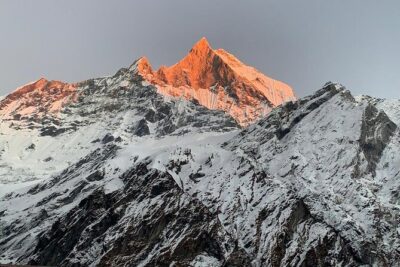
Kathmandu/Pokhara: 5-Day Annapurna Base Camp (ABC) Trek
Read our review →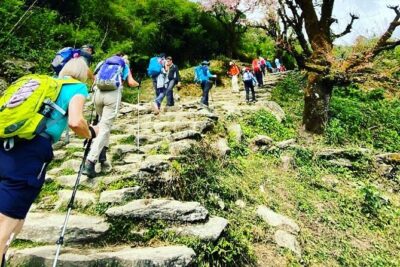
11-Day Hike Tour to Annapurna Base Camp Bliss in Kathmandu
Read our review →Browse the lists this tour appears in