
REVIEW · ANNAPURNA BASE CAMP TREKS
From Pokhara: 7-Day Annapurna Base Camp Trek
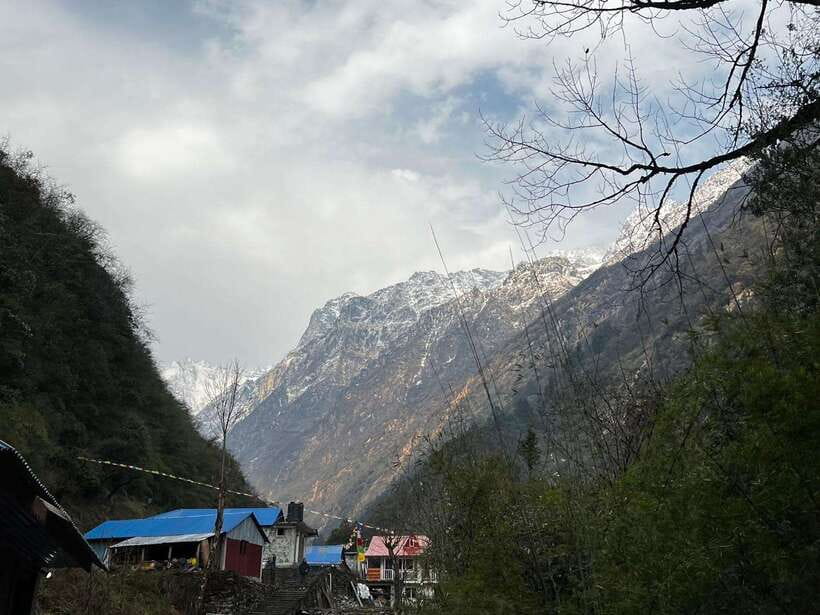
Mountain mornings start here. This seven-day trek links Pokhara with Annapurna Base Camp through forest trails, small villages, clear streams, and high mountain country. I especially like the private group format and the chance to sleep in local tea lodges rather than standard hotels. The hot springs at Jhinu Danda are another fine touch after several days on foot.
The main consideration is physical effort. You will climb, descend, and repeat the pattern over uneven ground, with one long downhill day from Annapurna Base Camp to Bamboo. Meals are not included in the $410 price, so you should budget for food along the way.
In This Review
- Key Points Before You Book
- What the $410 Price Really Covers
- Day One: From Pokhara to Jhinu Danda
- Day Two: Chhomrong and the Forest Trail
- Day Three: A Gentler Walk to Deurali
- Day Four: Machhapuchhre Base Camp and Annapurna Base Camp
- Day Five: The Knee-Test to Bamboo
- Day Six: Chhomrong, Jhinu Danda, and the Hot Springs
- Day Seven: Farmland, River Paths, and Pokhara
- Tea Lodges, Food, and Local Contact
- Packing for Seven Days on Foot
- Who Should Choose This Trek?
- My Dream Adventure and the Guiding Experience
- Should You Book the Annapurna Base Camp Trek?
- FAQ
- How long is the Annapurna Base Camp trek from Pokhara?
- Is hotel pickup and drop-off included?
- Is transportation included?
- Are trekking permits and TIMS included?
- Are meals included in the $410 price?
- Where do you sleep during the trek?
- Is the trek suitable for people with medical or mobility limitations?
Key Points Before You Book
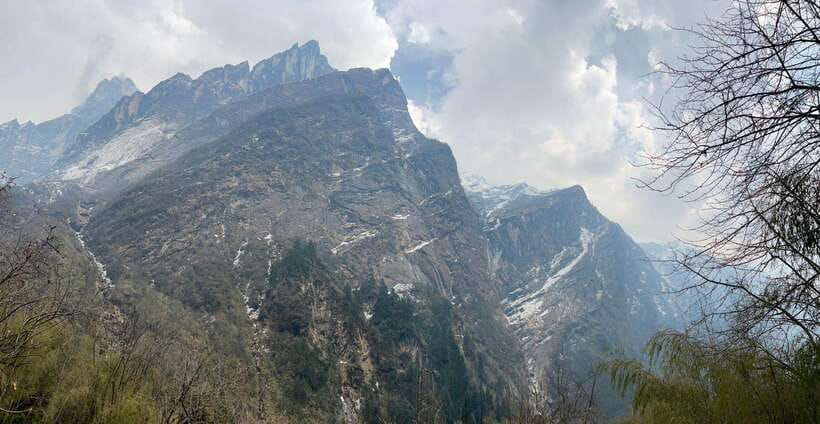
- Annapurna Base Camp in seven days: The route reaches the famous base camp, then returns through Bamboo, Chhomrong, and Jhinu Danda.
- Private English-speaking guide: Hotel pickup, permit checks, and trail support are included.
- Tea lodge accommodation: You sleep in simple guest houses during the trek, giving the trip a local feel.
- Hot springs at Jhinu Danda: Day six ends with time to rest in the village’s hot spring baths.
- Meals cost extra: Food is available for purchase, but you need to pay separately for every meal.
- A demanding return: The descent from Annapurna Base Camp drops about 1,600 meters to Bamboo, which can be tough on your knees.
What the $410 Price Really Covers
At $410 per person, this is a practical package for someone who wants the main arrangements handled. Hotel pickup and drop-off, shared jeep transport, trekking permits, TIMS, guest house accommodation, and an English-speaking guide are included.
That combination matters in Nepal. You do not need to arrange the transfer from Pokhara, sort out the trekking paperwork alone, or search for a place to sleep each night. The trip is also described as private, so your party does not share the guided trek with a large mixed group. The vehicle transfer itself is shared, however, which is an important distinction.
Meals are not included. You can buy food during the trek, but the final cost will be higher than the advertised price. You should also plan for gratuity, personal snacks, drinks, and any extra trekking gear you need.
The package offers free cancellation up to 24 hours before departure and a reserve-now, pay-later option. Those terms are useful if your plans around Pokhara are still changing. Starting times depend on availability, so check the schedule before committing to a date.
More Annapurna Base Camp treks:
- Kathmandu/Pokhara: 5-Day Annapurna Base Camp (ABC) Trek
★ 4.9 · 72 reviews - Private 7 – Day Annapurna Base Camp Trekking
★ 5.0 · 50 reviews - Annapurna Base Camp Trek (8 days)
★ 5.0 · 45 reviews
Day One: From Pokhara to Jhinu Danda
Your morning begins with pickup at your hotel. The operator says you will be met with a name card, which removes one small but annoying problem: finding the right vehicle in a busy hotel area.
A shared jeep takes you to Nayapul, the starting point for the trek. This transfer is part of the package, but shared transport means you should not expect a private vehicle reserved only for your party. At the trailhead, you get your gear ready and have your permits checked.
The walking begins beside the Modi Khola River. The route passes through small villages before crossing the river and continuing to Jhinu Danda. This first day introduces the character of the trip well: water, village life, and a steady transition from road access to foot travel.
Your overnight stay is in a tea lodge. These are simple mountain accommodations, not luxury hotels. That is part of the appeal, but you should pack with basic facilities in mind and bring warm clothes for the evening.
Jhinu Danda appears again later in the trek, when you can use its hot spring baths. On the first night, the village is mainly your resting point after the opening walk.
Day Two: Chhomrong and the Forest Trail
Day two takes you uphill to Chhomrong, one of the larger villages on the route. The climb gives you an early sense of the physical demand. Even if the distance looks manageable on paper, uphill walking at altitude can feel slower than expected.
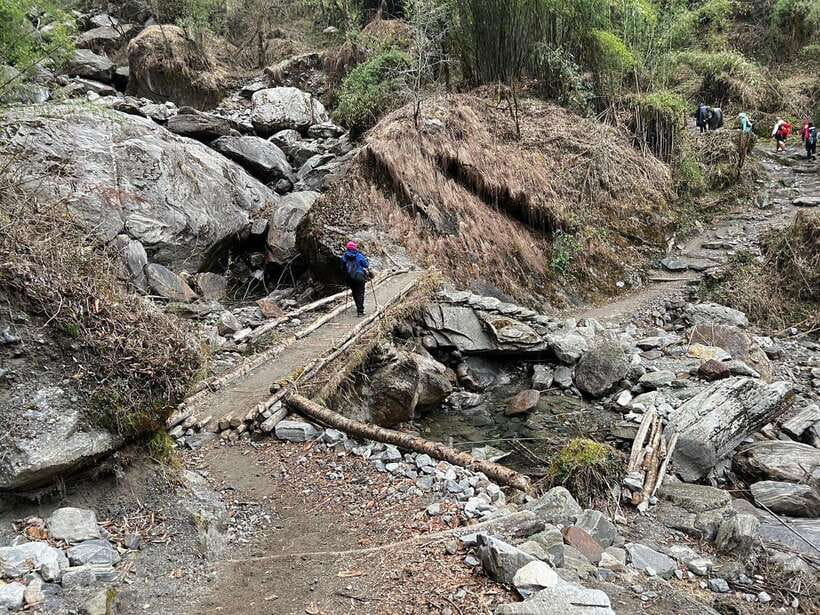
From Chhomrong, the trail continues through dense forest. This section provides shade and a change from open river views. You will walk among trees, cross natural terrain, and pass through the kind of mountain setting that makes the Annapurna route more varied than a simple high-altitude climb.
Chhomrong is also a useful cultural stop. The route passes through communities where local life is closely tied to trekking, farming, and mountain access. The package emphasizes traditional hospitality and local food, so you should take the opportunity to eat at the lodges and observe village routines respectfully.
The day ends at another guest house. Accommodation is included, but food is not, so ask your guide about meal options and costs as you go. Keeping your spending clear each day is easier than trying to calculate everything at the end.
Day Three: A Gentler Walk to Deurali
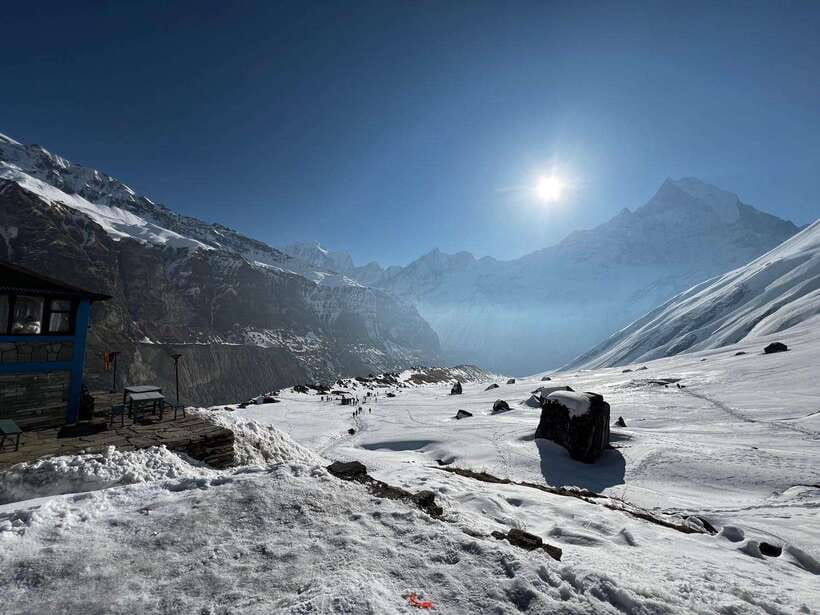
The third day is described as a more leisurely trek to Deurali. After the uphill work around Chhomrong, this can provide a useful change of pace, though you still need to treat it as a mountain walking day rather than a casual stroll.
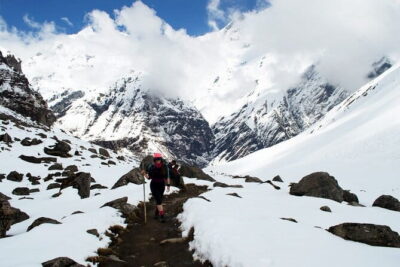
A lunch stop offers views of the Himalayas. The route continues through changing terrain, and the forest gradually gives way to more open mountain surroundings as you gain height. The mix of woodland, streams, and alpine scenery is one of the strongest reasons to choose this route.
You spend the night in Deurali. At this stage, the accommodation remains a tea lodge or guest house, with comfort based more on shelter and location than on polished service. Bring a sleeping bag if your own preparation requires one, although the supplied information does not specify exactly what bedding is provided.
The guide is especially useful here. An English-speaking guide can help with trail direction, permit matters, local customs, and communication at the lodges. A verified booking from April 2025 praised My Dream Adventure for smooth arrangements and friendly, capable guiding, which supports the value of having the operator handle the practical details.
More walking in the hills of Pokhara:
- Poon hill Trek 3 days
★ 5.0 · 176 reviews - Trekking in Annapurna/Langtang/Everest/Upper Mustang regions
★ 5.0 · 161 reviews - Pokhara: 4-Day Ghorepani, Poonhill & Ghandruk Mountain Trek
★ 5.0 · 132 reviews - Ghorepani – Poon Hill Trek 3N-4D
★ 5.0 · 125 reviews
Day Four: Machhapuchhre Base Camp and Annapurna Base Camp
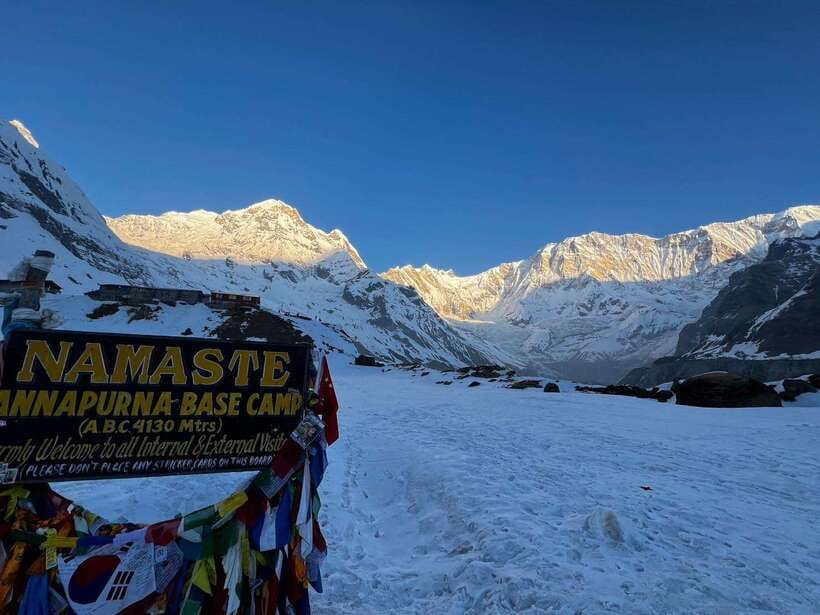
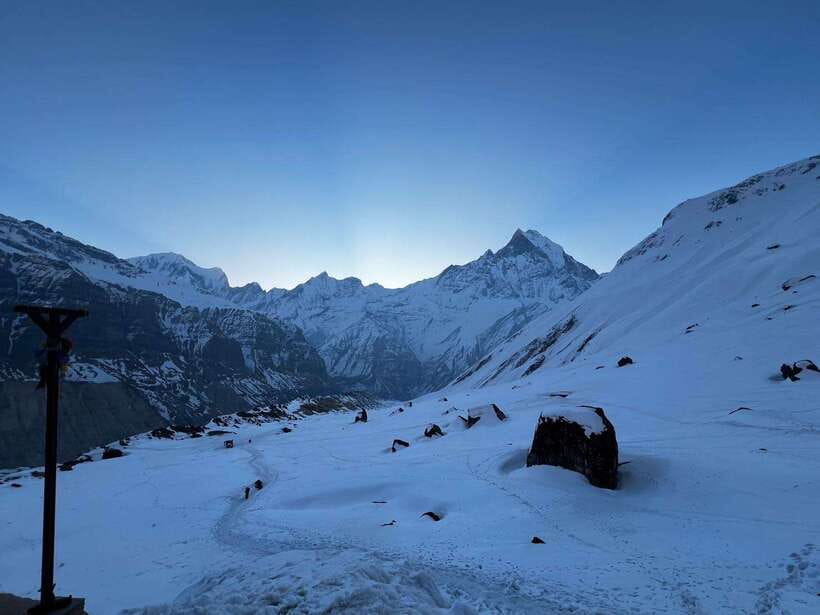
Day four is the high point of the trek, both literally and in terms of scenery. The trail follows streams toward Machhapuchhre Base Camp, then continues through Ablation Valley, described as a hollow corridor between the glacier and the mountain.
This is the day when the scale of the Annapurna region becomes most impressive. You walk among high peaks, with views of the Annapurna range and Machhapuchhre, also known as Fishtail. The setting changes from forest paths to a more exposed mountain environment, so warm clothing, sunglasses, sunscreen, and rain protection are essential.
The trail crosses hills before reaching Annapurna Base Camp. Overnighting at the base camp gives you more time in the high mountain setting than a quick viewpoint visit would. It also means you need to be serious about altitude, cold, fatigue, and changing weather.
The itinerary specifically advises proper acclimatization and physical fitness. It does not list the exact elevation schedule or medical support, so you should ask for those details before booking. If you develop symptoms of altitude sickness, tell your guide at once and follow their advice. Do not treat reaching base camp as more important than your health.
Day Five: The Knee-Test to Bamboo
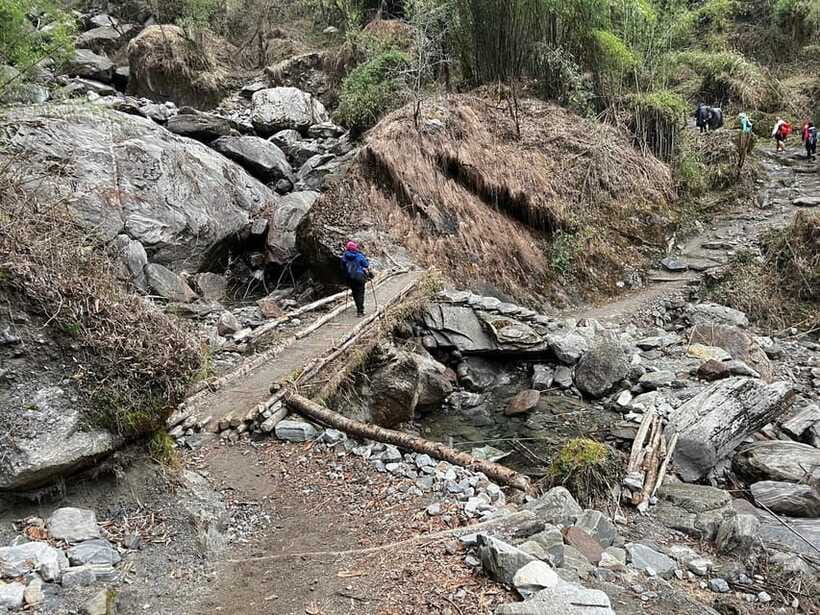
The return begins with a major descent from Annapurna Base Camp to Bamboo, about 1,600 meters lower. This is described as a challenging day for your knees, and that warning deserves attention.
Downhill walking can be harder than uphill walking for many people. Trekking poles, supportive hiking shoes, and controlled steps will help. You should avoid rushing simply because the trail is going downward. Wet stone, roots, and uneven ground can make a descent tiring and slippery.
The reward is a return to lower terrain and changing views. As you lose height, the environment shifts again, and the valley route brings back more forest and stream scenery. Bamboo is your overnight stop, giving you a chance to rest before the final push toward the road.
This day is one reason the trek suits people with a reasonable level of fitness rather than complete beginners who have not prepared. The route is not described as technical climbing, but it still demands several consecutive days of walking.
Day Six: Chhomrong, Jhinu Danda, and the Hot Springs
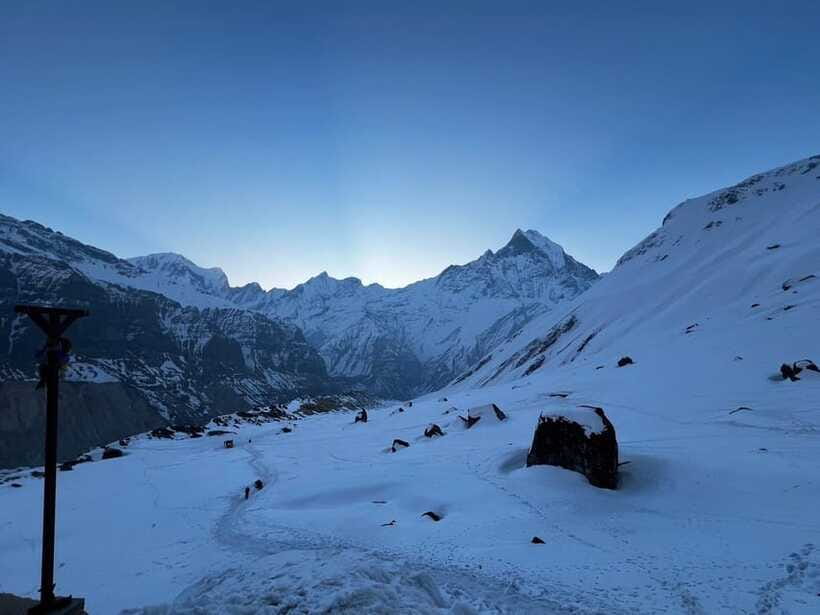
Day six continues down the valley, with broad views along the way. You descend to Chhomrong, then continue toward Jhinu Danda.
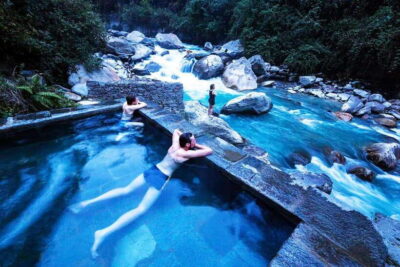
The hot spring bath is the day’s highlight. After the high-country route and the long descent, soaking in warm water offers a simple, welcome reward. It is also one of the more memorable details in the itinerary because it turns a standard return route into a proper recovery stop.
You should still treat the walk to Jhinu Danda as part of the day’s effort. Descending does not mean easy, especially after the previous day. Keep water and snacks handy, and use the rest stop for recovery rather than trying to squeeze in extra activity.
The hot springs are part of a local setting, so follow your guide’s advice and respect local customs. Pack swimwear or suitable clothing, but remember that the provided information does not specify changing facilities or exact spring conditions.
Day Seven: Farmland, River Paths, and Pokhara
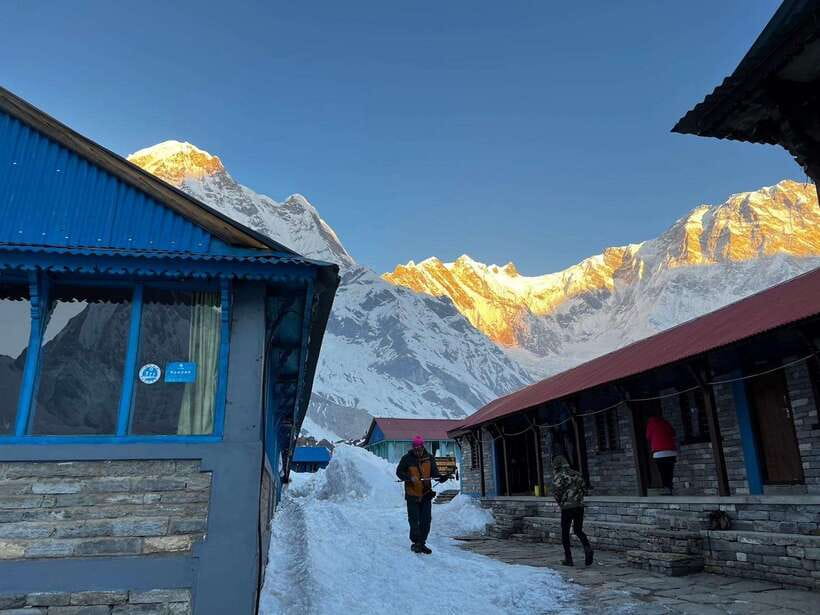
The final morning includes a short trek through farmland along the river. Compared with the high route, this section should feel like a gradual return to ordinary village life and road access.
You finish at Nayapul, where transport takes you back to Pokhara. Hotel drop-off is included, making the last day easier to manage after a week of walking. You do not need to arrange a separate taxi from the trailhead.
The final transfer also closes the loop neatly. The trip begins with pickup in Pokhara, reaches Annapurna Base Camp, and returns to the same city by the end of day seven.
Tea Lodges, Food, and Local Contact
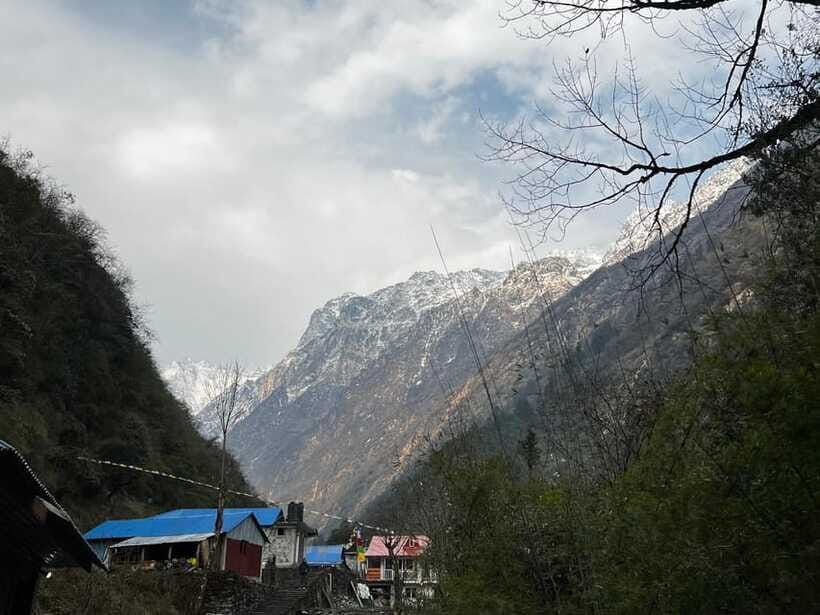
The accommodation is in guest houses during the trek. The supplied description calls them quaint tea lodges, which signals a simple, social, locally run style of lodging. You should not book this package expecting resort-level rooms or elaborate facilities.
Food is available for purchase, but all meals are extra. You can expect the trip to include authentic Himalayan cuisine as part of the local experience, though no specific dishes or menus are listed. Ask the guide about meal choices, prices, and suitable food for the day’s walking.
The cultural side of the route is strongest in the villages. You pass through small communities, receive traditional hospitality, and see how daily life continues in a high mountain setting. Be polite with photography, respect local customs, and avoid treating villages as scenery only.
Plastic bottles and littering are not allowed. Carry a reusable water container, pack your rubbish, and use the trek as a chance to reduce waste rather than add to it.
Packing for Seven Days on Foot
You need more than ordinary sightseeing clothes. The recommended packing list includes comfortable shoes, hiking shoes, hiking pants, warm clothing, rain gear, sun protection, water, snacks, a camera, and general trekking gear.
A sensible basic kit includes:
- Broken-in hiking shoes with good grip
- Warm layers for colder conditions
- Rain gear for sudden weather changes
- Sunglasses, a sun hat, and sunscreen
- Water and snacks for the trail
- Clothing suitable for both forest and high mountain conditions
The weather can change quickly. A sunny morning does not guarantee a dry afternoon, and mountain exposure can make cold conditions feel sharper than expected. Keep rain protection accessible rather than buried at the bottom of your bag.
The operator advises against plastic bottles. A reusable bottle or other refillable container is the practical choice, though the provided details do not specify water refill points or purification arrangements. Ask your guide what is available before setting out.
Who Should Choose This Trek?
This experience suits you if you want a guided route with transport, permits, accommodation, and hotel transfers arranged in advance. It is a good fit for hikers who enjoy village contact, basic tea lodge stays, changing scenery, and a clear goal at Annapurna Base Camp.
The private group format is useful if you want to travel with your own party and keep the experience more personal. The guide can help with local communication and trail decisions, while the operator manages the main logistics.
You should think carefully before booking if you have back or heart problems, are pregnant, or use a wheelchair, as the activity is specifically unsuitable in those cases. You also need to be physically fit for high-altitude trekking and ready for several demanding walking days.
This is not a good choice if you want a soft adventure with short walks and comfortable hotels. It is a proper trek, with steep sections, a major descent, basic lodging, and meals paid separately.
My Dream Adventure and the Guiding Experience
My Dream Adventure handles the trip with an English-speaking guide and includes permit and TIMS arrangements. Those details may sound routine, but they matter when you are tired, dealing with changing weather, or moving through unfamiliar villages.
Andrew, who booked the trip in April 2025, gave My Dream Adventure a five-star rating and specifically praised the smooth arrangements, friendly guiding, and guidance along the route. That is useful context for anyone deciding how much support they want. The available feedback is limited to one verified booking, so I would treat it as encouraging rather than final proof of every aspect of the service.
Before departure, ask the operator about the exact daily walking times, the elevation schedule, meal prices, bedding, water arrangements, and what gear is available locally. These questions can make a big difference to comfort, especially on the base camp night.
Should You Book the Annapurna Base Camp Trek?
Book it if you want a focused seven-day route from Pokhara that combines mountain scenery, village life, tea lodge stays, a private group, and a hot spring stop. At $410, the package offers solid value because transport, permits, guiding, and accommodation are included.
Do not book it without preparing for altitude, uneven trails, and the long descent to Bamboo. Add a realistic food budget, bring proper footwear and rain protection, and make sure you are comfortable with basic guest house accommodation.
For a fit hiker who wants the main logistics handled without losing the local feel of the Annapurna route, this is a sensible choice. The base camp goal is impressive, but the best parts may be the quieter ones: walking beside the Modi Khola, passing through villages, eating at tea lodges, and ending the hard days with a hot spring bath.
FAQ
How long is the Annapurna Base Camp trek from Pokhara?
The trek lasts seven days, including transport from Pokhara to Nayapul at the start and the return transfer from Nayapul to Pokhara at the end.
Is hotel pickup and drop-off included?
Yes. Pickup and drop-off from your hotel are included, and pickup is provided with a name card.
Is transportation included?
Yes. Round-trip transport by shared jeep is included. The trek starts at Nayapul and returns there on the final day.
Are trekking permits and TIMS included?
Yes. Trekking permits and TIMS are included in the package.
Are meals included in the $410 price?
No. Meals are available for purchase during the trek, but they are not included in the listed price.
Where do you sleep during the trek?
You stay in guest houses or tea lodges during the trek. The accommodation is simple and located along the route.
Is the trek suitable for people with medical or mobility limitations?
The activity is not suitable for pregnant women, people with back problems, people with heart problems, or wheelchair users. You also need to be physically fit for high-altitude trekking.
New in the Pokhara listings
- Pokhara: Pokhara Highlights Tour by Bus★ 3.6 · 10 reviews
- Discover Pokhara in Style: Private Vehicle Service with Driver★ 5.0 · 5 reviews
- Multi-Day Tour from Pokhara, Poon Hill and Mulde Trek★ 5.0 · 1 review
- Pokhara in 5 Hours: Lake, Museum, Cave, Falls & Pagoda Hill★ 4.5 · 16 reviews
- Private 4 Day Poon Hill Trek from Pokhara★ 5.0 · 16 reviews
- 4 Day Mardi Himal Base Camp Trek from Pokhara★ 5.0 · 18 reviews
- From Pokhara Full Day Entire Pokhara Tour with Guide★ 5.0 · 1 review
- Ultralight Flight: Into The Heart Of The Mountains (90 min)★ 5.0 · 1 review
Annapurna Base Camp Treks, compared.
Kathmandu to Annapurna Base Camp (ABC) 5-Day Trek
Read our review →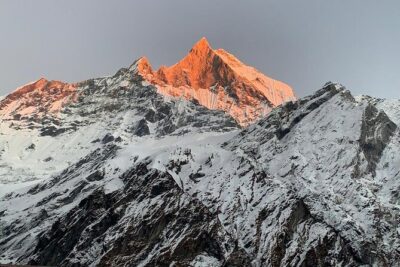
Kathmandu/Pokhara: 5-Day Annapurna Base Camp (ABC) Trek
Read our review →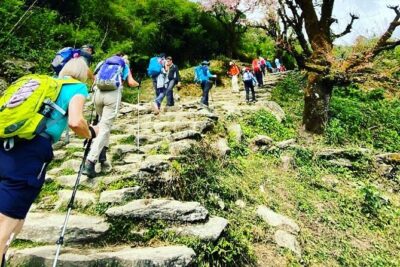
11-Day Hike Tour to Annapurna Base Camp Bliss in Kathmandu
Read our review →Browse the lists this tour appears in