
REVIEW · UNESCO WORLD HERITAGE TOURS
Kathmandu: Private/Group 7 UNESCO Heritage Sites Guided Tour
Seven UNESCO sites, one very full day. This Kathmandu tour brings together palaces, temples, stupas, a museum, and a hilltop shrine in about seven to eight hours. I like the private air-conditioned vehicle, which saves you from arranging several taxis, and I like having an English-speaking guide to explain the customs and stories behind the monuments. The main drawback is the pace: seven major sites in one day leaves little time for lingering.
The $40 price looks attractive at first, but monument fees add about $45 for many visitors, bringing the likely total close to $85 per person. You also need comfortable shoes, water, and a passport or copy of an ID. The schedule suits you best if this is your first Kathmandu visit and you want a broad introduction before returning to your favorite places on your own.
In This Review
- Seven strong reasons to consider this Kathmandu day tour
- Why this tour works for a first day in Kathmandu
- Kathmandu Durbar Square starts the royal story
- Swoyambhunath brings the best high view
- Patan Durbar Square shows Newari craftsmanship
- Pashupatinath requires respect and distance
- Bouddhanath offers a calmer Buddhist pause
- Bhaktapur Durbar Square is the grand afternoon stop
- Changunarayan ends the route above the valley
- What the $40 price really includes
- How to prepare for the seven-hour schedule
- Who should book this Kathmandu heritage circuit?
- Final verdict: broad coverage at a demanding pace
- FAQ
- How long does the tour last?
- Which sites are included?
- Is transportation included?
- Is a guide included?
- Are monument entrance fees included?
- Can non-Hindus enter Pashupatinath Temple?
- What food is included?
- Is the tour suitable for wheelchair users?
Seven strong reasons to consider this Kathmandu day tour
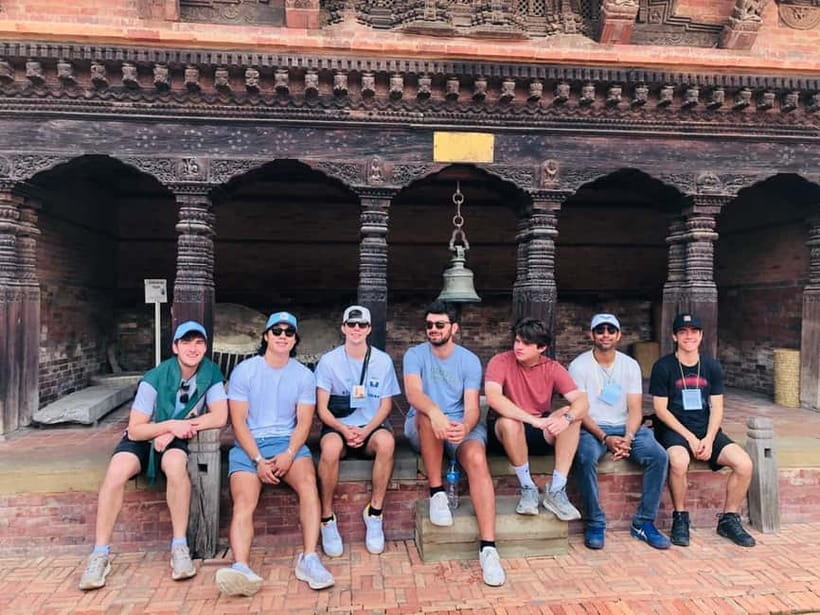
- Seven UNESCO sites in seven to eight hours: You cover Kathmandu Durbar Square, Swoyambhunath, Patan, Pashupatinath, Bouddhanath, Bhaktapur, and Changunarayan in one demanding circuit.
- Private vehicle and hotel transfers: Pickup and drop-off are included, along with air-conditioned transportation.
- A mix of sacred and royal sites: The route includes Hindu temples, Buddhist stupas, royal squares, a museum, and traditional Newari architecture.
- A hilltop view from Swoyambhunath: The Monkey Temple offers broad views across Kathmandu Valley.
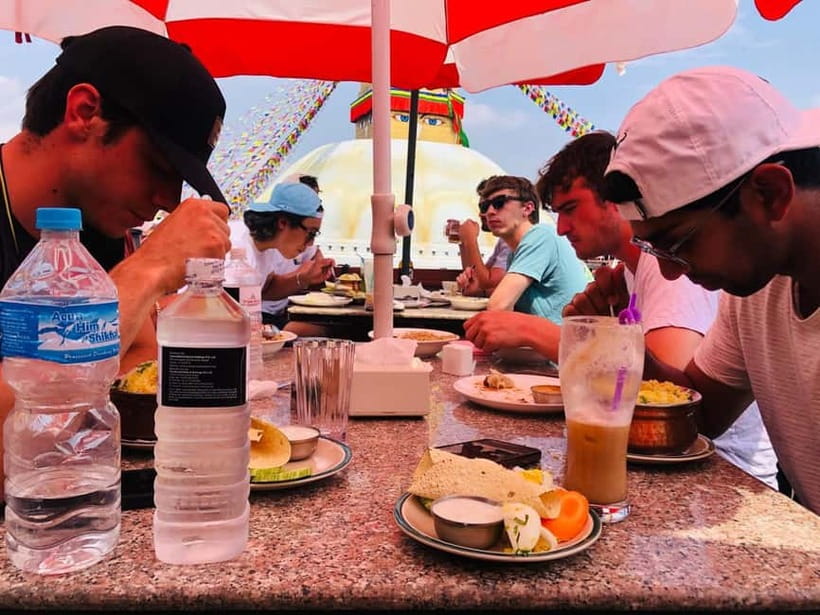
- Simple food supplied during the day: The lunch box includes bottled water, a muffin, donut, banana, seasonal fruit, and juice.
- Useful help with entrance tickets: Monument fees are paid on the spot, and the guide assists with the process.
Why this tour works for a first day in Kathmandu
Kathmandu Valley is not one single sight. It is a collection of old cities, pilgrimage centers, palace courtyards, and temple districts spread across a busy urban area. Seeing all seven UNESCO-listed places independently in one day would mean arranging transport, checking opening points, finding the right entrances, and keeping track of local customs.
This tour takes care of the basic movement between sites. That matters because the route crosses Kathmandu, Lalitpur, Bhaktapur, and the area around Changunarayan. A private air-conditioned vehicle also gives you a place to rest between stops, an important comfort when the schedule is tight.
The English-speaking guide adds value in places where a carved doorway or painted shrine may not explain itself. At Kathmandu Durbar Square, for example, you can look at the palace and temples on your own, but a guide can connect them to Nepal’s royal traditions and the Kumari, the living goddess. At Pashupatinath, guidance is especially useful because the main temple has rules for non-Hindu visitors.
This is not a slow photography tour. It is a well-packed introduction. You will see a great deal, but you should expect only limited free time at each stop.
More UNESCO World Heritage Tours in Kathmandu:
- Private Kathmandu Sightseeing Tour | UNESCO World Heritage sites
★ 5.0 · 756 reviews - Kathmandu: Full Day 7 UNESCO Tour with Lunch – Private/Group
★ 5.0 · 415 reviews - Kathmandu: Full Day Top 4 UNESCO Tour with Lunch – Private/Group
★ 5.0 · 269 reviews
Kathmandu Durbar Square starts the royal story
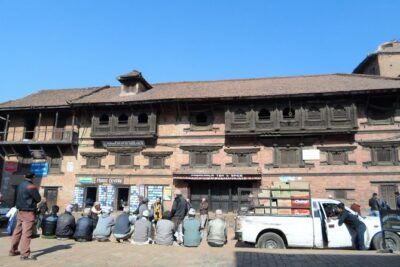
An early start takes you to Kathmandu Durbar Square, a historic palace area filled with temples, shrines, sculptures, and courtyards. Hanuman Dhoka Palace gives the square its royal focus, while Taleju Temple adds one of the most important religious buildings in the complex.
The Kumari is another major point of interest. She is known as the living goddess, and the guide can explain her place in Nepalese religious and cultural life. Sightings are not something you should treat as guaranteed, so keep your expectations sensible.
Kathmandu Durbar Square is also a useful first lesson in the valley’s architectural style. Look for carved wood, tiered temple roofs, stone images, and the way sacred and royal spaces sit beside one another. The square is best appreciated with context, since the details are easy to miss when you are simply moving from one building to the next.
Your first stop begins the day with a lot of visual information. Take a moment to notice the small carvings as well as the grand buildings. The tour’s early start helps, but the full schedule means you should not expect a long, unhurried visit.
Swoyambhunath brings the best high view
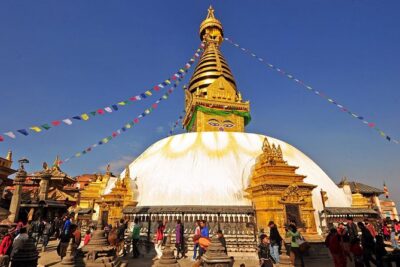
Swoyambhunath, often called the Monkey Temple, is one of Kathmandu Valley’s best-known Buddhist sites. Prayer flags surround the stupa, and the site has a calm, devotional feel even though it is also a major sightseeing stop.
The hilltop position is a major reason to come. From here, you can look across Kathmandu Valley and get a better sense of the city’s size and setting. The view gives you a welcome change after the enclosed courtyards of Durbar Square.
The stupa represents peace, wisdom, and harmony. You can take time to absorb the atmosphere, watch people move around the monument, and appreciate the prayer wheels and flags. The spiritual meaning is not separate from the architecture here. It is part of what gives the place its character.
Wear shoes that are comfortable for a day of walking. The tour does not suit wheelchair users, and the full route will be easier if you are prepared for uneven surfaces and repeated stops. Your guide can help explain appropriate behavior at the shrine.
Patan Durbar Square shows Newari craftsmanship
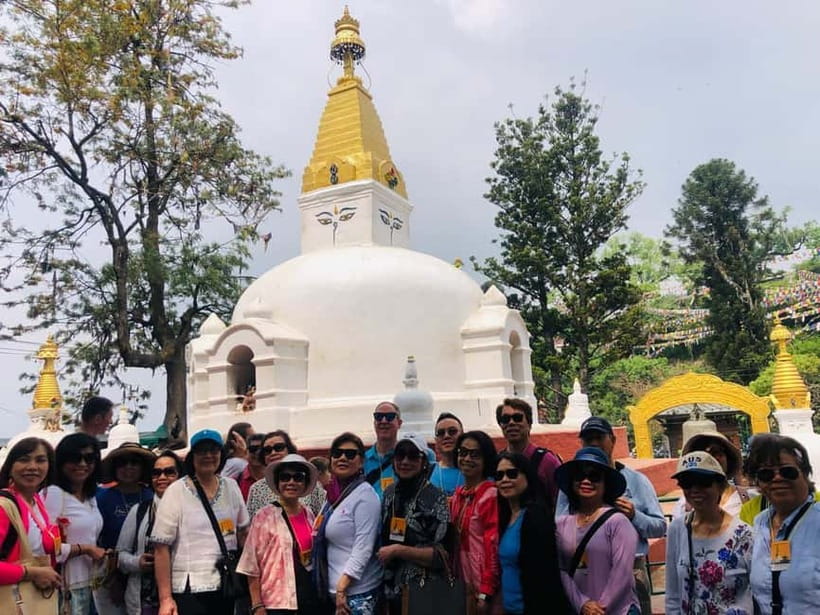
Patan Durbar Square lies in Lalitpur, a city known for its Newari artistic traditions. The square combines ancient palaces, temples, courtyards, and finely worked details. If you care about architecture, this may be one of the most rewarding stops of the day.
Krishna Mandir is a key sight, with a distinctive stone form that differs from the pagoda buildings nearby. Taleju Temple adds another important religious and royal element. The Patan Museum provides a chance to see Nepalese art and craftwork in a more organized setting than the open square.
I especially like the way Patan gives you a clearer look at the skill of Newar artisans. Pay attention to metal images, carved windows, temple roofs, and the pattern of the courtyards. These details are not just decoration. They show how religious art, royal power, and local craftsmanship developed together.
The tradeoff is time. A museum can easily use up the rest of your morning if you enjoy displays and labels. Since six more sites remain, ask your guide how long you have and decide whether you want a focused museum visit or a quicker look at the main galleries.
More history tours in Kathmandu:
- UNESCO Seven World Heritage Tour in Kathmandu
★ 5.0 · 253 reviews - Kathmandu Private Sightseeing Tour | UNESCO World Heritage Sites
★ 5.0 · 109 reviews - Kathmandu: Full Day Private Top 4 UNESCO Heritage Tour W/Lunch.
★ 5.0 · 86 reviews - Kathmandu World Heritage Tour
★ 5.0 · 74 reviews
Pashupatinath requires respect and distance
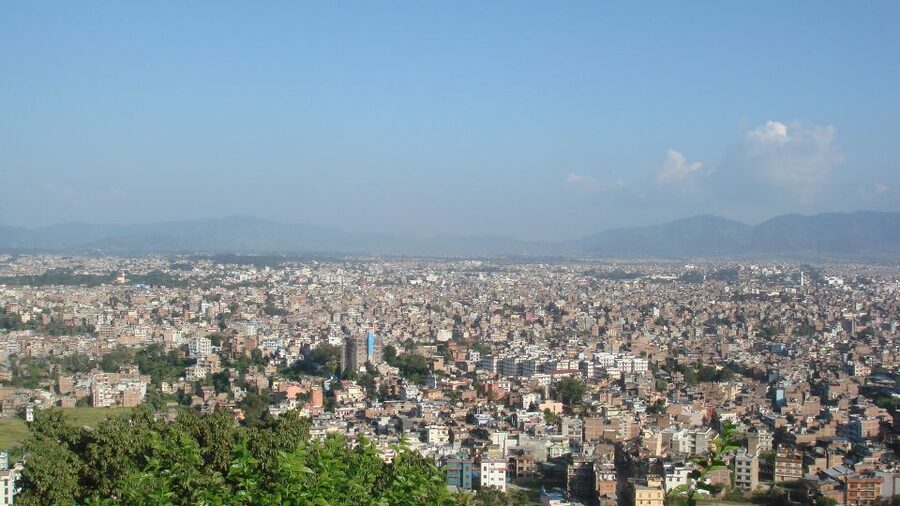
Pashupatinath Temple is one of the most important Hindu pilgrimage sites in the world. Its pagoda-style buildings, wood carvings, and stone sculptures make it an important architectural stop, but its religious role is even more significant.
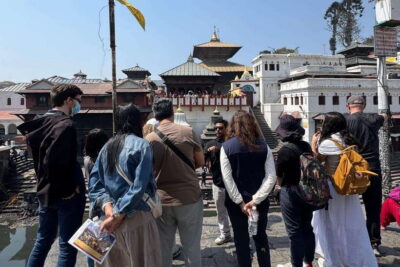
Non-Hindus cannot enter the main temple. You can still observe puja, Hindu rituals, and cremation ceremonies from a distance. This is a place where your attitude matters more than your camera. Follow the guide’s instructions, keep a respectful distance, and remember that ceremonies are taking place for religious and family reasons, not as a performance.
Pashupatinath may be one of the most meaningful stops, but it can also feel emotionally serious. The tour presents it as part of Nepal’s living culture, not just another old monument. That is valuable, though some people may prefer more time to process what they see.
The guide is particularly useful here. You need help understanding where you can go, what you can view, and how to behave around active worship and cremation areas. Do not expect the same casual sightseeing style you might use at a palace square.
Bouddhanath offers a calmer Buddhist pause
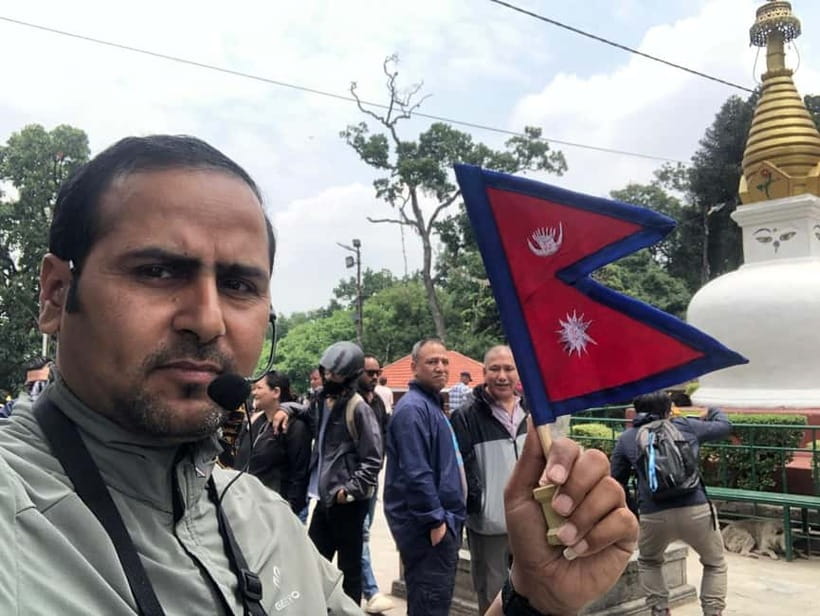
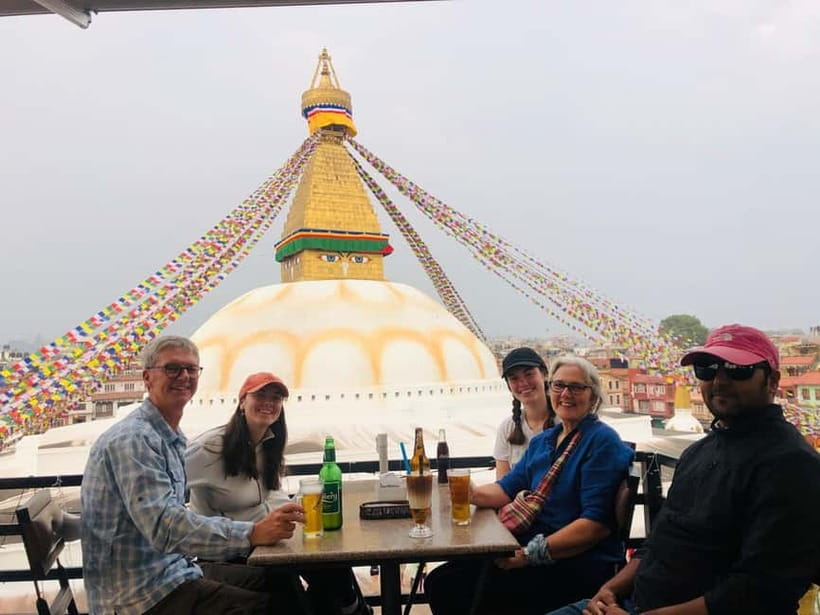
Bouddhanath Stupa is one of Nepal’s largest stupas and a major Buddhist pilgrimage site. Its broad circular form, prayer wheels, and surrounding devotional spaces create a strong sense of order and calm.
Walking around the stupa is the main activity. You can spin the prayer wheels and take in the peaceful setting while your guide explains the site’s connection with compassion, understanding, and wisdom. This stop balances the solemn Hindu setting of Pashupatinath with a different Buddhist atmosphere.
Bouddhanath is also a good place to slow your pace for a few minutes. The schedule is full, but the ritual of walking around the stupa naturally encourages a quieter visit. You will likely appreciate that pause before the afternoon portion of the tour.
Do not confuse a quick look with a complete visit. The stupa rewards observation, and you may wish you had more time to circle it, study the details, and sit in the surrounding area. Still, including it in a one-day route gives you an essential view of Kathmandu’s Buddhist traditions.
Bhaktapur Durbar Square is the grand afternoon stop
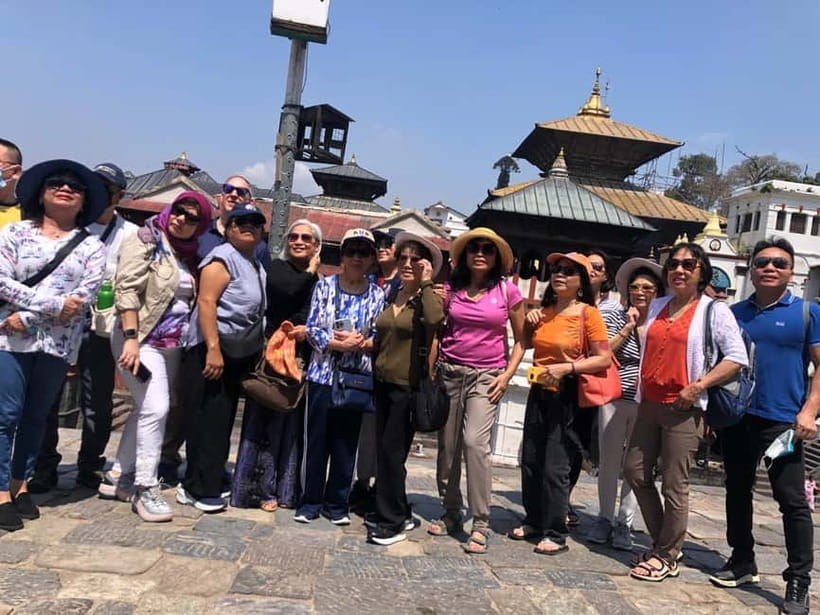
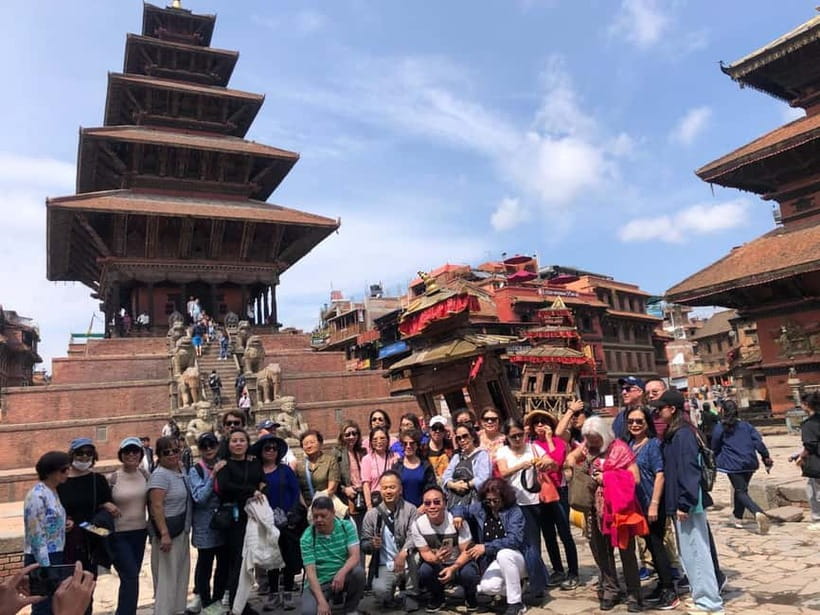
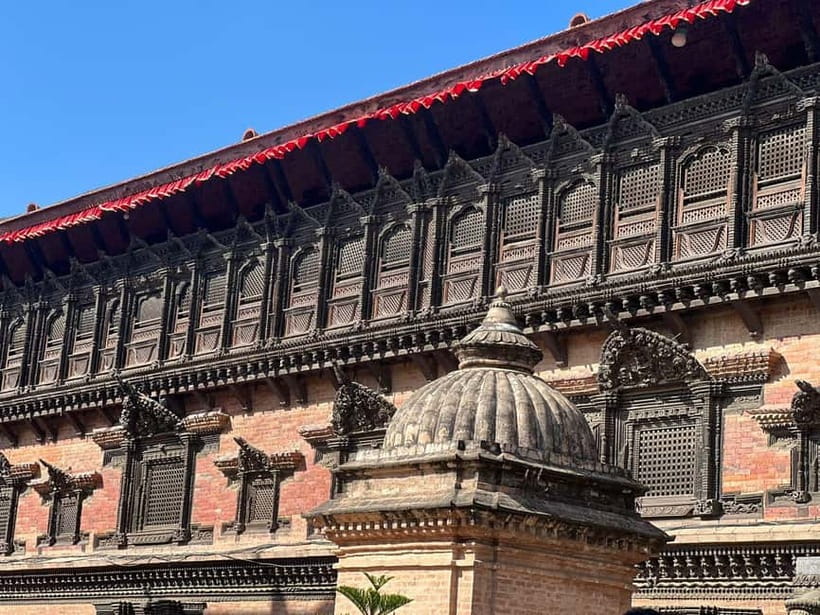
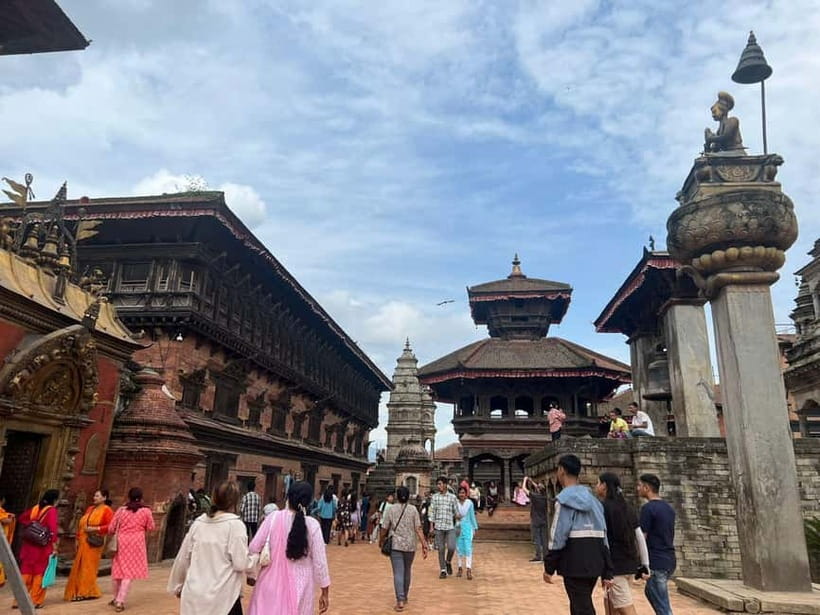
Bhaktapur is an ancient city with a palace square surrounded by temples, courtyards, sculptures, and carefully worked buildings. The square is known for Newari craftsmanship, and it often feels more focused on traditional architecture than the modern city around Kathmandu.
The 55-Window Palace is one of the headline sights. Vatsala Temple and Nyatapola Temple add different shapes and scales to the square, giving you plenty to examine as you walk. Nyatapola is especially memorable for its tall, tiered form.
Bhaktapur is the kind of place where a guide’s explanations help you see more than the main photo spots. Look at the carved windows, stone figures, temple steps, and courtyard layouts. The artistry appears in both the major buildings and the smaller details around them.
This is also where the day’s pace may become most noticeable. By this point, you will have visited several major monuments, and the final stop at Changunarayan is still ahead. Keep some energy in reserve. If you have enough time, choose a few details to study rather than trying to inspect every corner.
Changunarayan ends the route above the valley
The final stop is Changunarayan Temple, a Hindu temple dedicated to Lord Vishnu. It is known for wood carvings and stone sculptures, making it a fitting final look at Nepalese religious art.
Changunarayan also gives the tour a different setting. The route includes nearby villages and views of the surrounding area, so you finish away from the denser central city. After a full day of palace squares and major pilgrimage sites, this change can feel welcome.
The temple has important architectural and historical value, but it is not simply a final checkbox. Look closely at the carvings and stone work, and let the guide explain how the site connects to Nepal’s older traditions. The visit may feel shorter than you want because it comes after six other sites, but the setting helps give the day a clear ending.
What the $40 price really includes
The listed cost is $40 per person. That covers hotel pickup and drop-off, an experienced English-speaking guide, private air-conditioned transportation, government tax, VAT, service charges, and a lunch box.
The food is modest but practical: 500 milliliters of bottled water, a muffin, donut, banana, seasonal fruit, and juice. It is not a restaurant lunch, but it keeps the schedule moving and means you do not need to spend extra time finding a meal during a packed day.
Monument entrance fees are not included. The stated estimate is about $45 for seven sites, though prices differ for nationals of South Asian Association for Regional Cooperation countries and for Chinese nationals. Tickets are purchased at the monuments, and the guide assists you. Check the current amount at each counter before paying.
For many visitors, the realistic total is therefore about $85 per person, subject to the applicable entrance rates. That is fair if you value a private vehicle, hotel transfers, and a guide across seven major sites. It is less attractive if you only want to visit two or three places, since you are paying for a very broad route that you may not have time to enjoy slowly.
How to prepare for the seven-hour schedule
Start with comfortable shoes. You will visit several large complexes, move between courtyards and temples, and spend much of the day getting in and out of the vehicle.
Carry water even though a bottle is supplied. A face mask or protective covering is also listed among the recommended items. Bring your passport or an ID card, and a copy is accepted.
The tour is offered with flexible booking and allows cancellation up to 24 hours in advance for a full refund. The activity is not suitable for wheelchair users, so accessibility should be an early consideration rather than an afterthought.
The private vehicle is a major practical advantage. Kathmandu Valley’s sites are spread out, and having transportation arranged removes much of the day’s friction. The main concern is traffic and the number of stops, neither of which changes the fact that the schedule is ambitious.
Who should book this Kathmandu heritage circuit?
I would choose this tour if you have only one full day in Kathmandu, want historical and religious context, and prefer a guide to handle transport and ticket assistance. It is also a good fit if you want to compare Hindu and Buddhist sites in one outing.
You should think twice if you prefer long museum visits, quiet photography, or spontaneous wandering. Seven major UNESCO sites in seven to eight hours is a survey, not a slow cultural study.
Families with older children may appreciate the variety, while people with limited mobility should note the stated restriction. Anyone sensitive to heat, crowds, stairs, or a busy schedule should ask about the pace before booking.
Final verdict: broad coverage at a demanding pace
Book this tour if seeing all seven UNESCO sites matters more to you than spending a relaxed afternoon at one square. The combination of private transport, an English-speaking guide, hotel transfers, and a supplied lunch makes the $40 base price reasonable, even after adding monument fees.
Skip it if you already know Kathmandu well or want a slow, reflective visit. For a first introduction, though, this is an efficient way to understand the valley’s royal, Hindu, Buddhist, and Newari traditions in one organized day.
FAQ
How long does the tour last?
The tour lasts about seven to eight hours and covers all seven UNESCO heritage sites.
Which sites are included?
The route includes Kathmandu Durbar Square, Swoyambhunath Temple, Patan Durbar Square, Pashupatinath Temple, Bouddhanath Stupa, Bhaktapur Durbar Square, and Changunarayan Temple.
Is transportation included?
Yes. Hotel pickup and drop-off are included in a private, air-conditioned vehicle.
Is a guide included?
Yes. An experienced English-speaking tour guide is included.
Are monument entrance fees included?
No. Entrance tickets are purchased on the spot and cost approximately $45 for seven sites, though rates differ for SAARC nationals and Chinese nationals.
Can non-Hindus enter Pashupatinath Temple?
Non-Hindus cannot enter the main temple. You can observe puja, Hindu rituals, and cremation ceremonies from a distance.
What food is included?
The lunch box includes 500 milliliters of bottled water, a muffin, donut, banana, seasonal fruit, and juice.
Is the tour suitable for wheelchair users?
No. The tour is listed as not suitable for wheelchair users.
New in the Kathmandu listings
- Traditional Momo Making Class★ 5.0 · 10 reviews
- Kathmandu: Ancient City Kirtipur & Pharping Monastery Tour★ 5.0 · 2 reviews
- Kathmandu to Pokhara Premium sofa bus ticket★ 4.0 · 17 reviews
- Women Empowerment Project(Nepali cooking class & jewelry workshop★ 5.0 · 15 reviews
- 7-Day Langtang Valley Trek from Kathmandu★ 5.0 · 1 review
- Kathmandu 2 Nights 3 Days Chitwan Jungle Safari Tour★ 5.0 · 9 reviews
- Yoga Experience Day Trip with Private Transfer From Kathmandu★ 4.0 · 2 reviews
- Wildlife Adventure in Chitwan Nepal★ 4.0 · 4 reviews
UNESCO World Heritage Tours, compared.
Private Kathmandu Sightseeing Tour | UNESCO World Heritage sites
Read our review →
Full Day 7 UNESCO Tour with Lunch – Private/Group
Read our review →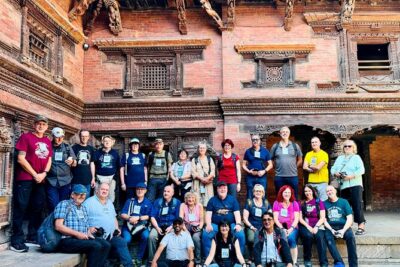
Full Day Top 4 UNESCO Tour with Lunch – Private/Group
Read our review →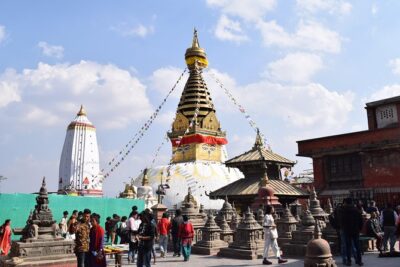
Full-Day 7 UNESCO Tour with Lunch – Private/Group
Read our review →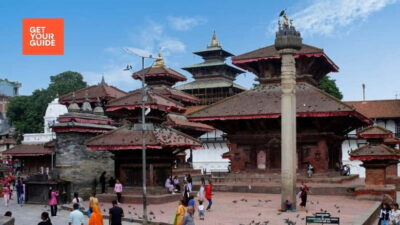
Browse the lists this tour appears in