
REVIEW · PASHUPATINATH TEMPLE TOURS
Kathmandu Spiritual Sites: Bodhnath & Pashupatinath Tour
Sacred Kathmandu comes alive after sunset. This four-hour tour links Boudhanath Stupa and Pashupatinath Temple, giving you a close look at Tibetan Buddhist prayer and Hindu ritual in one afternoon. I like the use of public transport, which adds a small slice of everyday Kathmandu, and I like the evening Aarati ceremony, when lamps and music draw crowds to the Bagmati River. The main drawback is the amount of walking and the large crowd at Pashupatinath, where it is easy to lose sight of your group.
The small maximum of 12 people keeps the outing personal, and guides such as Rita, Amit, Rozit, Subash, Bipin, and Ramhavi have been praised for patient explanations and practical help. Still, this is not a quiet temple visit. Cremations take place beside the river, and the subject requires respect and emotional readiness.
In This Review
- Key points to know before booking
- Why these two sites belong together
- Starting in Thamel at 3 p.m.
- Boudhanath Stupa and the rhythm of prayer
- The short walk toward Pashupatinath
- Pashupatinath: sadhus, Shiva, and the Bagmati River
- The evening Aarati beside the river
- What the guide adds to the experience
- Is $60.56 a fair price?
- Practical advice for a better visit
- Who should book this Kathmandu tour?
- Should you book it?
- FAQ
- How long does the Kathmandu Spiritual Sites tour last?
- What time does the tour start?
- Where does the tour begin?
- Which sites does the tour visit?
- Is admission included?
- Does the tour include transportation?
- Is the Aarati ceremony included?
- Are palm reading and sadhu photographs included?
- What is the cancellation policy?
Key points to know before booking
- Two UNESCO-listed religious sites in four hours: Boudhanath and Pashupatinath offer sharply different views of Nepal’s Buddhist and Hindu traditions.
- The Aarati is the emotional high point: At dusk, lamps are offered to Lord Pashupatinath as crowds gather beside the Bagmati River.
- Public transport is part of the experience: You travel like a local rather than spending the whole tour in a private vehicle.
- Expect about 2 kilometers of walking: The route includes a roughly 15-minute walk between the two main sites.
- Optional extras cost more: Palm reading, butter lamps, and paid interaction or photographs with sadhus are not included.
- The price buys interpretation, not just transport: At $60.56 per person, the value rests mainly in the guide’s cultural explanations and help with the busy rituals.
Why these two sites belong together
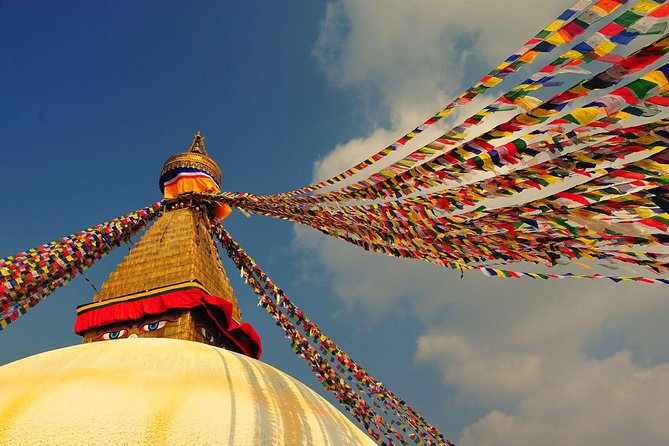
Kathmandu’s spiritual life is easier to understand when you see Buddhism and Hinduism side by side. Boudhanath is a major center of Tibetan Buddhism, built around a large white stupa where people pray, walk clockwise, turn prayer wheels, and light butter lamps.
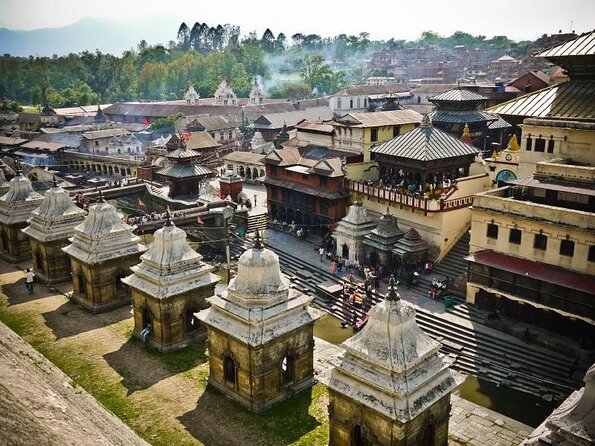
Pashupatinath, dedicated to Shiva, presents a different religious world. Here, you encounter sadhus, temple rituals, offerings, and cremation ceremonies along the Bagmati River. The contrast is the point. In one afternoon, you move from the steady circular rhythm of Buddhist prayer to the intense crowds and firelit ceremonies of a Hindu holy site.
I like that the tour does not treat these places as empty monuments. You see people praying, making offerings, consulting palm readers, and gathering for the evening ritual. That makes the experience more useful than simply ticking off two famous addresses.
More visits to Pashupatinath:
- Kathmandu: Pashupatinath Temple Evening Aarati Tour
★ 5.0 · 36 reviews - Kathmandu: Pashupatinath Temple Aarti Night Tour
★ 4.8 · 29 reviews - Pashupatinath Temple, Hindu Crematorium and Aarati in-depth Tour
★ 5.0 · 25 reviews
Starting in Thamel at 3 p.m.
The meeting point is Hotel Marshyangdi on Chaksibari Marg in Thamel. The tour begins at 3 p.m., giving you time to explore Kathmandu earlier in the day and still reach Pashupatinath for the evening Aarati.
The first transport leg uses public transportation. That matters because the ride is not merely a transfer between attractions. You get a glimpse of ordinary movement through Kathmandu, including the practical side of getting around the city. Some people will find this more authentic than sitting in a private car. Others may prefer a smoother ride, especially after a long day of sightseeing.
The tour ends back at the meeting point. Keep the start time clear and arrive early. One poor experience involved no guide appearing at the pickup point, although this appears to be an exception among otherwise strong feedback. Confirming the meeting details before setting out is sensible, particularly in busy Thamel.
Boudhanath Stupa and the rhythm of prayer
You spend about 1 hour and 25 minutes at Boudhanath, with admission included. This is enough time to walk around the stupa, turn prayer wheels with local worshippers, and light a traditional butter lamp if you choose.
The stupa’s design rewards slow attention. Rather than rushing from one object to another, you follow the movement of people circling the white dome. The prayer wheels give the visit a physical rhythm, while the butter lamps add a direct, personal act of devotion.
Your guide explains Buddhist customs as you go. This is where the small-group format earns its keep. You can ask why people walk in a certain direction, what the prayer wheels represent, or how the site functions as a living place of worship rather than a museum display.
Boudhanath can become especially active on religious holidays. That can make the visit visually striking, but it also means more bodies, more noise, and less room to pause. I would not expect solitude here. The reward is seeing the stupa used as intended, with local worshippers moving through their daily religious routine.
Butter lamps are an optional expense. The entrance fee is included, but the cost of offerings is not. You do not need to buy one to appreciate the site, so treat it as a personal choice rather than a required part of the tour.
The short walk toward Pashupatinath
After Boudhanath, the route includes a walk of about 15 minutes to Pashupatinath. The total walking distance is approximately 2 kilometers, so comfortable shoes will make the afternoon easier.
This is not a strenuous trek, but the walking is worth noting for anyone with limited mobility or a dislike of uneven city routes. The tour description says most people can participate, and children are welcome. Children under six may join free of charge.
The walk also helps connect the two visits. You are not simply being deposited at a second monument. The guide can continue explaining how the religious traditions differ as you move through the city.
More visits to Boudhanath:
- PashupatiNath and BoudhaNath – Private/Small Group
★ 5.0 · 18 reviews - Sacred Pashupatinath: Aarati,Cremation Rites & Boudha Stupa
★ 5.0 · 18 reviews - Kathmandu City in One Day with Bodhnath Stupa
★ 5.0 · 10 reviews - Private Half-Day Tour of Boudhanath and Pashupatinath Temples in Kathmandu
★ 4.5 · 9 reviews
Pashupatinath: sadhus, Shiva, and the Bagmati River
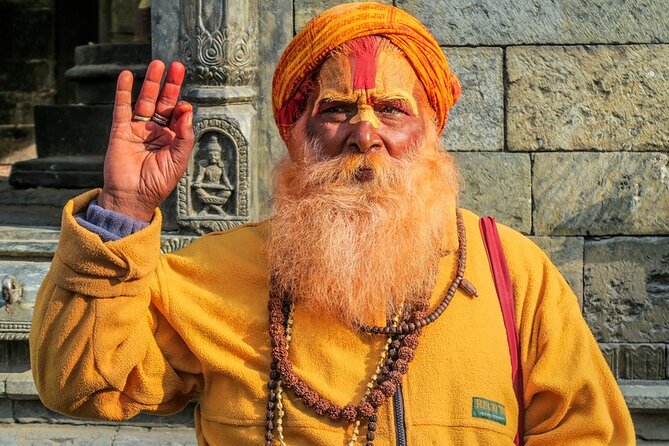
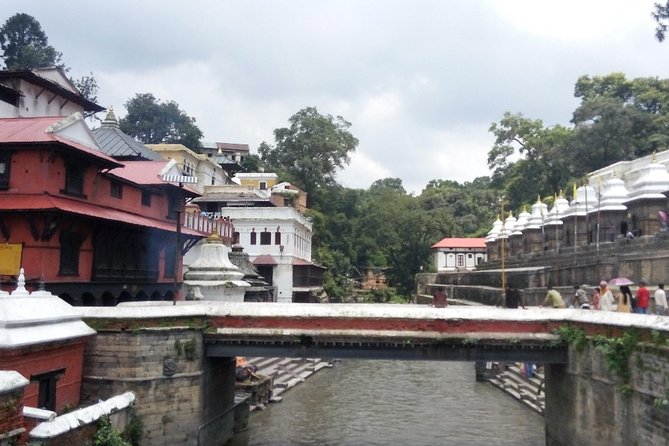
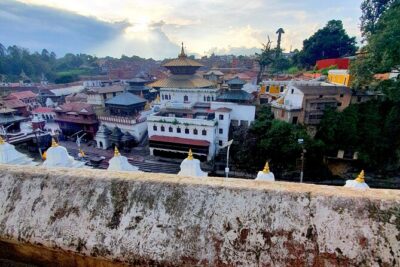
Pashupatinath receives about 2 hours and 20 minutes of the tour, making it the larger and more involved stop. It is one of Nepal’s most important Hindu shrines and a UNESCO World Heritage site.
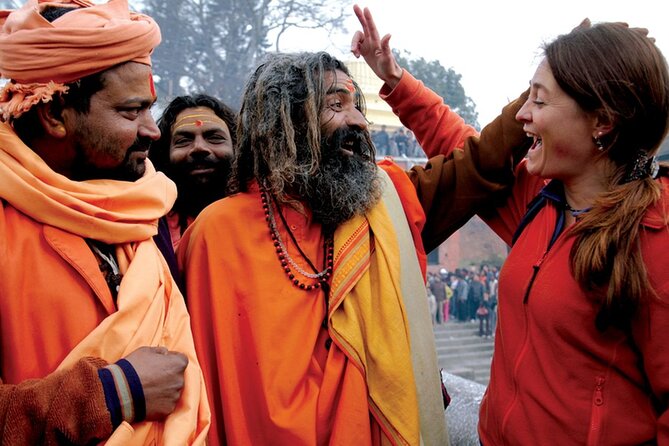
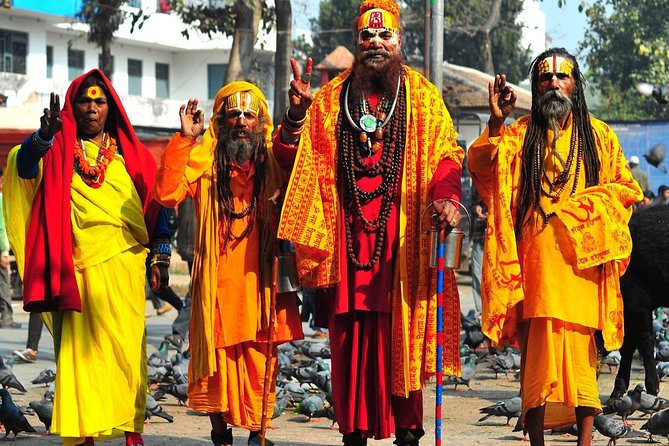
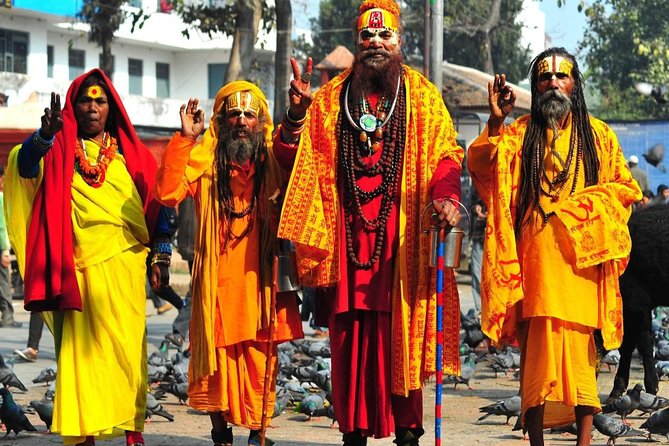
The guide introduces Hindu ideas about birth, death, and renewal, then points out the sadhus, or Hindu holy men. Their colorful clothing and painted faces attract attention, but the explanation behind their lifestyle matters more than the photo. Sadhus are associated with giving up material possessions as an expression of religious devotion.
You may be offered a photograph or interaction with a sadhu for a fee. The supplied information gives the cost as about $7.50, and the guide can help negotiate. Do not assume that every photograph is free. If you choose to pay, understand that the money supports local sadhus who otherwise have little access to tourist income.
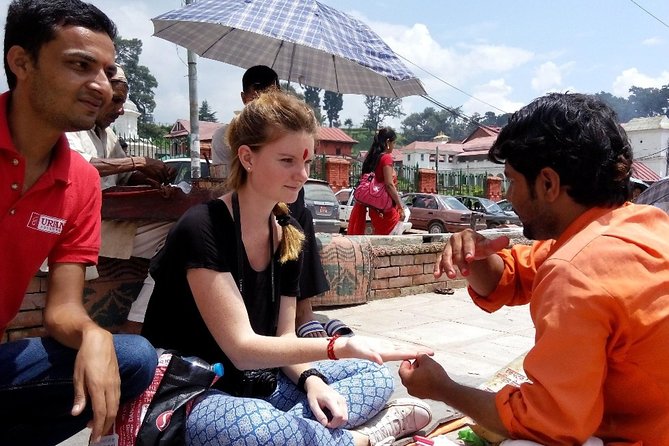
A palm reading is another optional stop. Fees vary from about $7.50 to $9 per person, and the guide can assist with arrangements and negotiation. It can be a fun cultural extra, but it is not part of the core tour and should not be confused with a necessary religious ritual.
The most serious part of the visit is the cremation area beside the Bagmati River. Cremations take place here, and you may see families mourning. This is not entertainment or a photo opportunity. The tour specifically asks you not to photograph or watch these ceremonies out of respect for the people involved.
That guidance is important. Pashupatinath can be visually powerful, but the riverbank also carries real grief. I would recommend approaching this section quietly, following the guide’s instructions, and keeping your camera away unless you are clearly told that photography is appropriate.
The evening Aarati beside the river
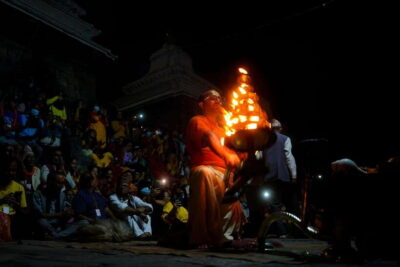
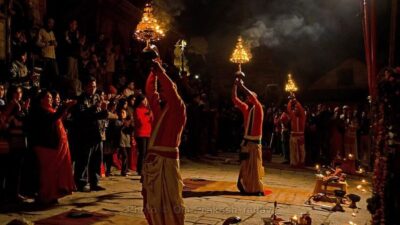
As daylight fades, people gather on the eastern side of Pashupatinath for the Aarati ceremony. This offering of lights to Lord Pashupatinath is the tour’s main event.
You can expect a large local crowd, music, movement, lamps, and strong religious feeling. The atmosphere is shared rather than staged for an audience. That is why the timing matters. A visit earlier in the day would show you the site, but the late afternoon schedule lets you see Pashupatinath during a major public ritual.
Stay close to your guide as the crowd thickens. The instructions specifically warn that it is easy to get separated. This is one of the moments when a guide is more useful than a map. The guide helps you keep up, find a sensible viewing position, and understand what is happening without treating the ceremony like a performance.
The Aarati may be the most memorable part of the experience, but it is not a quiet or private spiritual moment. If you prefer empty courtyards and peaceful contemplation, the crowd may feel overwhelming. If you want to see religious life as it is practiced by local people, the energy is a major benefit.
What the guide adds to the experience
The strongest feedback focuses on the guides. Rita was praised for adapting the visit to the group’s needs. Rozit was described as friendly and attentive, with the feel of a local companion rather than a distant lecturer. Amit received special praise for his time, cultural explanations, and help with phone photography.
Subash was singled out for clear English and detailed explanations. Bipin was appreciated for knowing the side streets and useful photo locations. Ramhavi was noted for keeping the group together in the crowd and explaining Hindu and Buddhist practices with care.
Those details point to the real value of this tour. The sites are worth visiting on their own, but religious customs can be hard to read from the outside. A good guide explains what you are seeing, answers questions without making the visit feel like a classroom, and helps you behave respectfully.
Guide quality can vary from one departure to another, of course. Still, the small group limit of 12 gives the guide a fair chance to speak with you directly. Some departures may be private or nearly private, which can make the cultural discussion even more flexible.
Is $60.56 a fair price?
At $60.56 per person, this is not the cheapest way to reach Boudhanath and Pashupatinath. You are paying for more than transportation, though. The price includes a local English-speaking Nepali guide, admission to both sites, public transport between the meeting point and Boudhanath, and transport from Pashupatinath to the endpoint.
The value is strongest if you want context. You receive explanations of both Hinduism and Buddhism, guidance through the Aarati, help staying together in crowds, and practical suggestions about what else to see, eat, and do in Kathmandu.
The value is weaker if you are happy to visit the sites without interpretation or if you already know the city well. Optional extras also add up. Butter lamps, palm reading, and alms or paid interactions with sadhus are separate expenses. Bring only the amount you are comfortable spending, and do not feel pressured to take part.
With a rating of 4.9 from 185 reviews and a 98 percent recommendation rate, the overall record is very strong. The isolated no-show complaint is still worth remembering, which is why I would confirm the pickup details and arrive with time to spare.
Practical advice for a better visit
Wear comfortable shoes and clothing suitable for religious sites. The walk is manageable, but the tour lasts about four hours and includes standing, public transport, and crowded areas.
Keep your belongings secure and stay close to the guide at Pashupatinath. The crowd around the Aarati can be thick, and losing the group would make the visit less enjoyable.
Bring some small cash if you want a butter lamp, palm reading, or interaction with a sadhu. These costs are not included, and the palm reading alone may run from $7.50 to $9 per person.
Use your phone camera thoughtfully. Amit’s photography advice was appreciated, but the cremation area is off-limits for casual photography. At religious ceremonies, watch first and take pictures only when it is clearly respectful.
The earthquake damage from April and May 2015 affected some sites in Kathmandu. The information provided says the sights visited on this tour have been renovated, but you may still notice repaired areas or newer construction beside older religious buildings.
The tour is child-friendly, with children under six admitted free. Even so, parents should consider how their children will respond to crowds, lengthy explanations, and the cremation area.
Free cancellation is available up to 24 hours before the 3 p.m. start time. Changes or cancellations made within 24 hours are not accepted for a refund.
Who should book this Kathmandu tour?
I would choose this tour if you have only a short time in Kathmandu and want two major spiritual sites explained in one afternoon. It is especially useful for first-time visitors who want a local guide, public transport, and a genuine look at religious practice rather than a quick photo stop.
It also suits solo visitors and small groups who prefer company in crowded places. The guides have been praised for patience, personal attention, photography tips, and keeping groups together during the Aarati.
I would think twice if you want a relaxed, private, or quiet outing. The route includes public transport, walking, crowds, and emotionally serious scenes beside the Bagmati River. You should also skip the optional palm reading and sadhu photographs unless you are comfortable paying extra and taking part respectfully.
Should you book it?
Book this tour if you want a compact, well-guided introduction to Kathmandu’s Hindu and Buddhist traditions. The Aarati ceremony and the chance to see Boudhanath used by local worshippers make it more meaningful than a standard temple circuit.
Skip it if your priority is privacy, minimal walking, or a purely architectural tour. For most first-time visitors, though, the $60.56 cost is reasonable because it combines transport, admission, cultural explanation, and careful guidance at two complex religious sites.
FAQ
How long does the Kathmandu Spiritual Sites tour last?
The tour lasts approximately four hours.
What time does the tour start?
It starts at 3 p.m.
Where does the tour begin?
The meeting point is Hotel Marshyangdi on Chaksibari Marg in Thamel, Kathmandu.
Which sites does the tour visit?
It visits Boudhanath Stupa and Pashupatinath Temple, both UNESCO World Heritage sites.
Is admission included?
Yes. Admission to Boudhanath Stupa and Pashupatinath Temple is included.
Does the tour include transportation?
Yes. Transportation costs from the meeting point to Boudhanath and from Pashupatinath Temple to the endpoint are included. Public transport is used for part of the route.
Is the Aarati ceremony included?
Yes. The tour includes the evening Aarati, an offering of lights to Lord Pashupatinath.
Are palm reading and sadhu photographs included?
No. Palm reader fees, alms, and paid interaction or photographs with sadhus are not included. Palm reading is listed at approximately $7.50 to $9 per person, while sadhu interaction or photographs may cost about $7.50.
What is the cancellation policy?
You can cancel at least 24 hours before the start time for a full refund. Cancellations or changes made less than 24 hours before the tour are not refunded or accepted.
New in the Kathmandu listings
- Traditional Momo Making Class★ 5.0 · 10 reviews
- Kathmandu: Ancient City Kirtipur & Pharping Monastery Tour★ 5.0 · 2 reviews
- Kathmandu to Pokhara Premium sofa bus ticket★ 4.0 · 17 reviews
- Women Empowerment Project(Nepali cooking class & jewelry workshop★ 5.0 · 15 reviews
- 7-Day Langtang Valley Trek from Kathmandu★ 5.0 · 1 review
- Kathmandu 2 Nights 3 Days Chitwan Jungle Safari Tour★ 5.0 · 9 reviews
- Yoga Experience Day Trip with Private Transfer From Kathmandu★ 4.0 · 2 reviews
- Wildlife Adventure in Chitwan Nepal★ 4.0 · 4 reviews
Pashupatinath Temple Tours, compared.
Pashupatinath Temple, Hindu Crematorium and Aarati in-depth Tour
Read our review →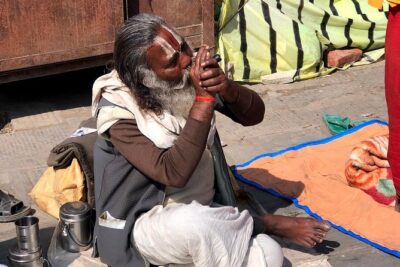
Pashupatinath Evening Aarati: Few Divinely Hours in Kathmandu
Read our review →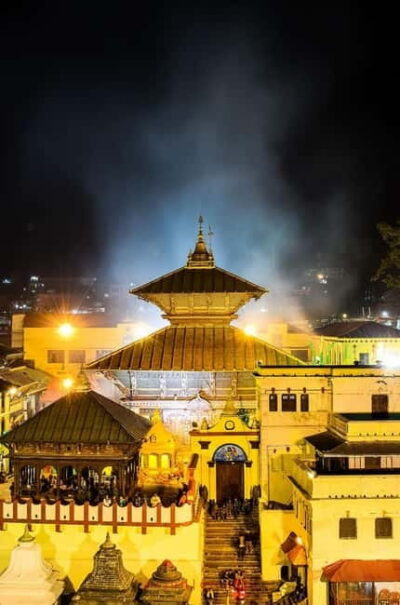
Sacred Pashupatinath: Aarati,Cremation Rites & Boudha Stupa
Read our review →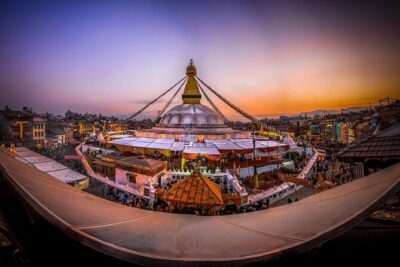
PashupatiNath and BoudhaNath – Private/Small Group
Read our review →
Private Half-Day Tour of Boudhanath and Pashupatinath Temples in Kathmandu
Read our review →Browse the lists this tour appears in