
REVIEW · PASHUPATINATH TEMPLE TOURS
PashupatiNath and BoudhaNath – Private/Small Group
Sacred places reveal how Kathmandu thinks. This three-hour tour links Pashupatinath Temple and Boudhanath Stupa, two of the city’s most important religious sites, while explaining the Hindu and Buddhist beliefs behind what you see. I like the small maximum of five people, which makes it easier to ask questions, and I like the route’s clear focus on religious practice rather than a quick photo stop.
The guide can also adjust the plan when timing matters, as happened for a visitor who wanted to see the evening aarati ceremony. The main drawback is cost clarity: the advertised price is $15 per person, but the two entrance fees add about $13 in cash, bringing the practical total closer to $28 before any other personal spending.
In This Review
- Key points to know before you go
- Why this Kathmandu pairing works
- Starting at Pashupatinath Temple
- Aryaghat and the human side of Hindu ritual
- Mrigasthali Deer Park and the Shiva story
- Gorakhnath and Guhyeshwari
- Arriving at Boudhanath Stupa
- Guru Lhakhang Monastery and Buddhist practice
- Thanka painting and healing bowls
- The guide makes the difference
- Price, group size, and practical value
- Who should book this experience
- Should you book the Pashupatinath and Boudhanath tour?
- FAQ
- How long does the tour last?
- How many people can join the tour?
- What is included in the price?
- Are entrance fees included?
- Where does the tour start?
- Where does the tour end?
- Can I cancel the tour for a full refund?
Key points to know before you go
- Two major faiths in one compact route: You move from Hindu rites at Pashupatinath to Vajrayana Buddhist teachings at Boudhanath.
- A group capped at five people: This is a useful size for questions, personal attention, and schedule adjustments.
- Santosh is a particularly strong guide choice: He is praised for explaining religion, archaeology, culture, food, and local customs in plain language.
- The cremation ghats require respectful attention: Aryaghat is an active religious site, not a staged attraction.
- You finish at Boudhanath Gate: You can continue exploring the stupa area or make your own way back.
- Budget about $28 per person with listed entrance fees: Pashupatinath is about $9 and Boudhanath about $4, both paid in cash.
Why this Kathmandu pairing works
Kathmandu has many temples, shrines, courtyards, and monasteries. Without help, it can be hard to tell which details matter, what a ceremony means, or why one shrine is important to one faith and not another.
This route gives you a useful framework. At Pashupatinath, you learn about Hindu worship, death rituals, and the 16 Samskaras, or rites of passage. At Boudhanath, the focus shifts to Buddhist ideas such as the Four Noble Truths, the Eightfold Path, prayer flags, the five elements, and the role of monasteries.
I especially like that the tour does not treat Hinduism and Buddhism as isolated subjects. The route includes both traditions as living parts of Nepali society, with shared cultural habits and food traditions. That makes the experience more useful than simply collecting photographs of famous monuments.
The tour lasts about three hours. That is enough time for a well-paced introduction, but not enough for long private contemplation at every stop. You should book it if you want a strong orientation to these sites, not a full-day religious study.
More visits to Pashupatinath:
- Kathmandu Spiritual Sites: Bodhnath & Pashupatinath Tour
★ 5.0 · 185 reviews - Kathmandu: Pashupatinath Temple Evening Aarati Tour
★ 5.0 · 36 reviews - Kathmandu: Pashupatinath Temple Aarti Night Tour
★ 4.8 · 29 reviews
Starting at Pashupatinath Temple
The meeting point is Gaushala Bus Stop on Ring Road. From there, the route begins around Pashupatinath, the oldest Hindu temple in Kathmandu Valley and one of the most important Hindu pilgrimage sites in the world.
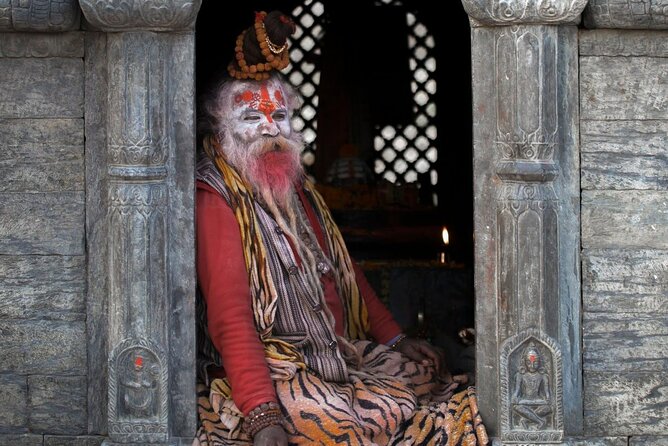
Only Hindus may enter the main temple building. For everyone else, the value comes from the surrounding complex, viewpoints, shrines, riverbank, and explanations from the guide. A good guide matters here because the site can feel confusing at first. There are layers of ritual, architecture, pilgrimage, and daily activity packed into a relatively small area.
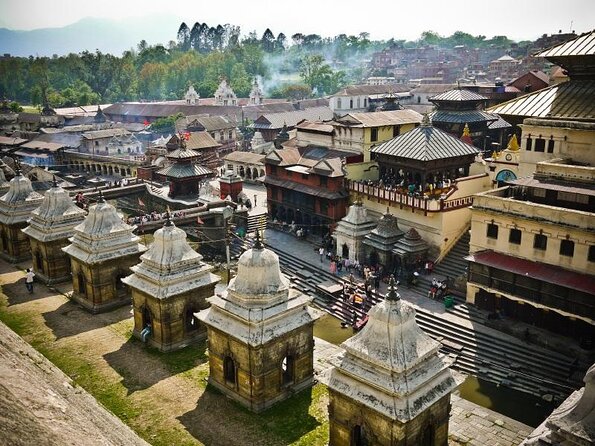
You will pass toward Aryaghat, the cremation area along the Bagmati River. This part of the visit is serious and should be treated with care. The purpose is not to watch strangers in a casual way. It is to understand how Hindu last rites are carried out and how death fits into the wider religious system.
The guide explains the Hindu idea of the Shodasha Samskaras, the 16 rites of passage connected with stages of life. This gives the cremation ceremonies a wider context. You are not only looking at a funeral ritual. You are learning how Hindu tradition connects birth, education, marriage, death, and other major life moments.
This stop may be difficult for some people. Cremation is visible, and the setting is an active religious place. If you prefer a purely architectural tour, this may feel confronting. If you want a direct explanation of Hindu practice, it is one of the most meaningful parts of the route.
Aryaghat and the human side of Hindu ritual
The crematoria stop lasts about 30 minutes, making it the longest section at Pashupatinath. That time allows the guide to explain the symbolism rather than rushing you through.
Your guide can also help you understand the difference between seeing a ceremony and understanding it. Without context, a visitor may notice smoke, mourners, priests, and river rituals but miss the beliefs linking them. The tour’s strength is turning those observations into a basic lesson in Hindu practice.
The setting also raises an important question about responsible sightseeing. Keep your attention on the guide’s explanation and follow local directions about photography and personal space. The supplied information does not promise special access or close views, so you should expect observation from appropriate public areas rather than a private ceremony.
Mrigasthali Deer Park and the Shiva story
The route then moves to Mrigasthali Deer Park for about 15 minutes. Here, the guide tells the story of Lord Shiva’s connection with the area and explains how the place received its name.
This is a shorter stop, but it breaks up the more intense cremation discussion. You get time to walk and look around while hearing how religious stories shape the identity of a place.
I would not book this tour expecting a long nature visit. The stop is mainly cultural and narrative. Its value comes from the story and the setting, not from an extended park visit.
More visits to Boudhanath:
- Sacred Pashupatinath: Aarati,Cremation Rites & Boudha Stupa
★ 5.0 · 18 reviews - Kathmandu City in One Day with Bodhnath Stupa
★ 5.0 · 10 reviews - Private Half-Day Tour of Boudhanath and Pashupatinath Temples in Kathmandu
★ 4.5 · 9 reviews - Bhaktapur Durbar Square and Boudhanath Stupa
★ 5.0 · 7 reviews
Gorakhnath and Guhyeshwari
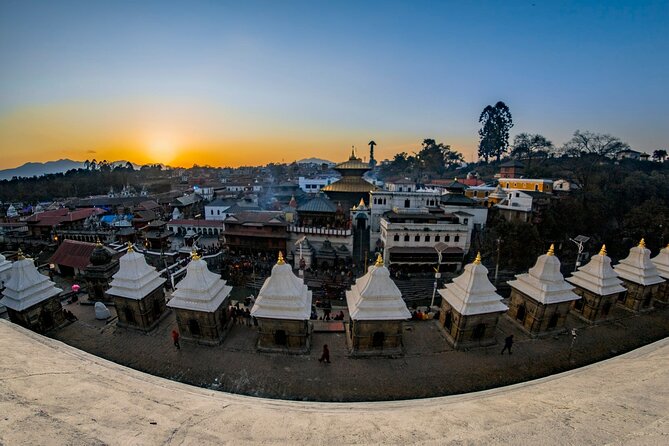
At Gorakhnath Mandir Temple, the group has time to rest and hear about Guru Gorakhnath. This 30-minute section also helps connect the Pashupatinath area with the road toward Boudhanath.
The route continues through Guhyeshwari Shaktipeeth Temple. The guide explains the story of Satidevi and the idea of a Shaktipeeth, a sacred place associated with the goddess tradition. The information provided describes about 20 minutes to reach Boudhanath from this area, so the transition is part of the tour rather than dead time.
These stops add depth for anyone interested in Hindu traditions beyond the main temple. They also make the tour feel less like two disconnected attractions. You are moving through a chain of sacred places, with stories that explain why each location matters.
The exact time at each point can depend on the guide and the pace of the group. That is one reason the five-person limit helps. A small group is more likely to pause for a question without slowing down a large crowd.
Arriving at Boudhanath Stupa
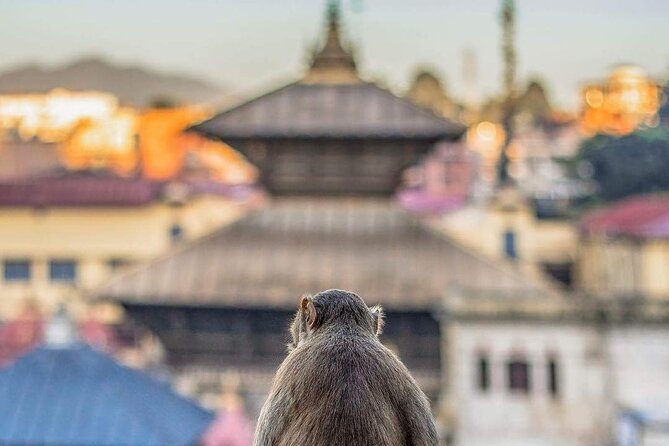
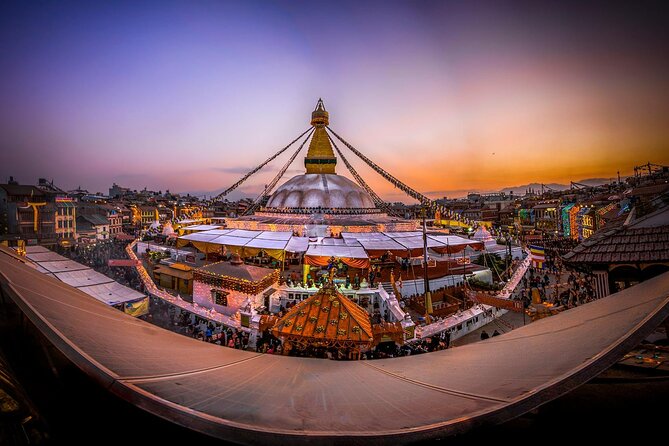
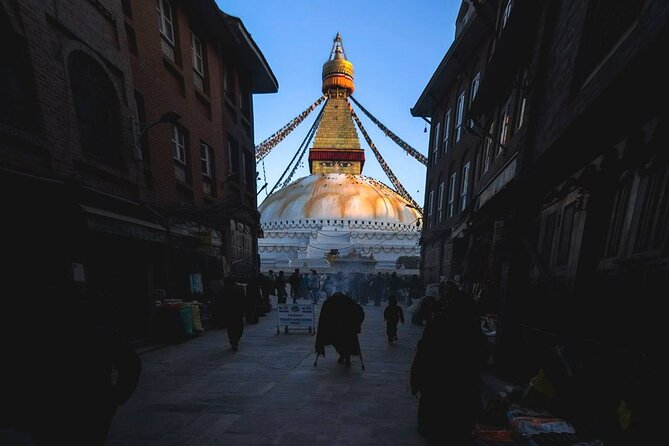
Boudhanath is the second major focus of the tour and receives about 45 minutes. It is famous for Tibetan Buddhism, especially Vajrayana Buddhism, and its huge white dome and surrounding prayer route create a very different feeling from Pashupatinath.
Here, the guide introduces the basics of Buddhist belief. Topics include prayer flags, the five elements, the Four Noble Truths, and the Eightfold Path. These ideas can sound abstract in a book, but the stupa gives you visible symbols to connect with the explanation.
The guide may point out how the stupa’s design relates to Buddhist ideas and how prayer practices fit into daily life. The provided details do not promise a formal meditation session or a special blessing, so expect interpretation and observation rather than a hands-on religious program.
Boudhanath is also the place where the tour ends, at the Boudhanath Gate. That is useful. You are not sent back across the city after the final explanation. You can stay in the area, continue looking around, or return to your accommodation on your own.
The main entrance fee is listed at about NRP 400, or roughly $4, payable in cash. Since fees can change, carry enough Nepalese currency and confirm the current amount at the entrance.
Guru Lhakhang Monastery and Buddhist practice
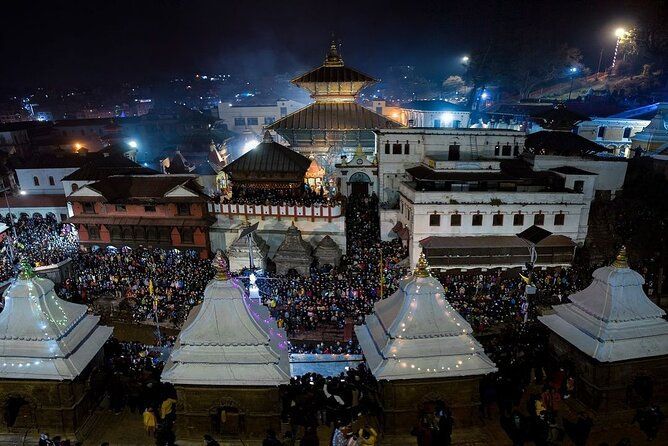
Guru Lhakhang Monastery receives about 10 minutes. This is a brief but worthwhile stop for seeing what a typical Buddhist monastery looks like.
The guide discusses Guru Padmasambhava and Dharma Chakra Pariwartana. The monastery visit adds a smaller, more intimate setting after the large scale of Boudhanath Stupa.
Ten minutes is not long enough for a detailed study of monastery art or ritual. Still, it gives you a visual reference for Buddhist religious life and helps explain the difference between a large public stupa and a working monastery setting.
Thanka painting and healing bowls
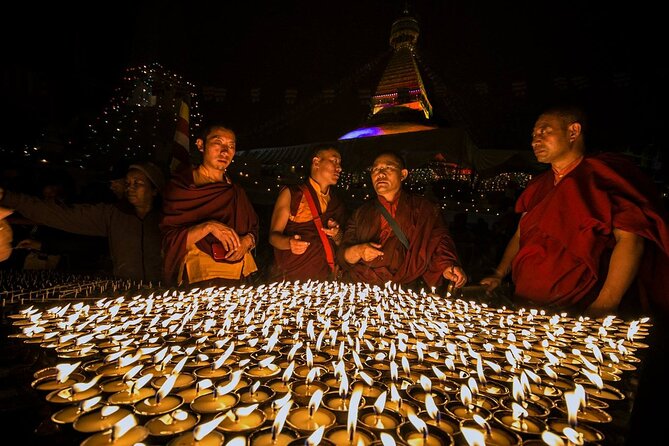
The final stop is the Boudha Stupa Thanka Center, where you spend about 15 minutes. You learn about Thanka painting, the mandala, and the basic use of healing bowls.
Thanka painting is a careful Buddhist art form filled with symbols and precise designs. The mandala is not just decoration. It represents an ordered spiritual world, and the guide can help you understand the basic ideas behind its patterns.
This stop may also have a shopping element, although the provided details only identify it as a school or center where you learn about the art. You should feel free to treat it as an educational visit and decide for yourself if you want to purchase anything.
The tour ends after this stop near Boudhanath Gate. That gives you a practical chance to explore the nearby area independently, but the tour does not include a return transfer.
The guide makes the difference
The strongest praise is directed at the guides, especially Santosh. He is described as well informed in religion and history, but his value goes beyond facts. He has studied culture, history, and archaeology, and he also explains local people, food, and everyday customs.
That wider knowledge matters because Hinduism and Buddhism in Nepal are not only subjects inside temples. They are part of daily life. Questions about ceremonies often lead naturally to questions about family traditions, festivals, meals, and community life.
Santosh is also described as patient with questions and flexible with timing. One person wanted to attend the aarati ceremony, and the schedule was adjusted to make that possible. Another visitor was not feeling well, and the guide adapted the pace.
You cannot assume every departure will have Santosh. The experience may also be led by Shreya or another guide. Shreya is praised for patience, cultural explanations, and taking personal interest in what the visitor wanted from the tour. When booking, you can ask which guide is scheduled if having a particular person matters to you.
The main lesson is simple: this tour is worth more because of the explanation than because of the walking route. You could visit both sites on your own, but you would miss much of the meaning.
Price, group size, and practical value
The listed price is $15 per person, which looks very low for a private or small-group experience. The maximum group is five, and an English-speaking guide is included.
You must add the stated entrance fees. Pashupatinath costs about NRP 1,000, or $9, and Boudhanath costs about NRP 400, or $4. Both are paid in cash at the entrance. That makes the realistic listed cost about $28 per person, not $15.
Even at that total, I think the value is good if religious context is important to you. A three-hour private or near-private explanation at two major sites can save you a great deal of guesswork. The value is weaker if you only want to see the buildings quickly or dislike guided discussion.
The tour is often booked around 18 days ahead, so reserve early if your dates are fixed. Confirmation arrives at booking, and free cancellation is available up to 24 hours before the start time. Changes or cancellations inside 24 hours are not refunded.
The route begins near public transportation at Gaushala Bus Stop. Most people can participate, and service animals are allowed. The supplied details do not describe the walking surface, step count, or vehicle arrangements, so ask the operator directly if you have specific mobility concerns.
Who should book this experience
I would recommend this tour to first-time visitors who want to understand Kathmandu’s religious life without committing to a full-day program. It also suits people who ask many questions, since the group is capped at five and the guides are praised for patient answers.
It is a good match for anyone interested in anthropology, ritual, art, archaeology, or the relationship between Hindu and Buddhist communities. Families with older children may also find the clear explanations useful, though the cremation area may not suit every child.
You may want another option if you prefer a quiet self-guided visit, need a guaranteed return transfer, or want long periods inside each temple and monastery. The schedule is compact, and several stops last only 10 to 20 minutes.
Should you book the Pashupatinath and Boudhanath tour?
Book it if you want meaning attached to what you see. The route covers Hindu worship, cremation rites, Shiva traditions, Shaktipeeth belief, Buddhist teachings, monastery life, Thanka art, and the shared religious culture of Nepal in only three hours.
Before paying, remember the extra $13 in entrance fees, carry cash, and ask who will guide your departure. If Santosh is available, his background in culture, history, and archaeology makes him a strong choice. If you want a flexible introduction with personal attention, this small-group tour offers very good value.
FAQ
How long does the tour last?
The tour lasts approximately three hours.
How many people can join the tour?
The tour has a maximum of five travelers.
What is included in the price?
An English-speaking guide is included.
Are entrance fees included?
No. Pashupatinath costs about NRP 1,000, or US$9, and Boudhanath costs about NRP 400, or US$4. These fees are paid in cash at the entrances.
Where does the tour start?
It starts at Gaushala Bus Stop, P84V+VR2, Ring Road, Kathmandu 44600, Nepal.
Where does the tour end?
The tour ends at Boudhanath Gate, near Buddha Stupa. You may continue exploring Boudhanath or return to your accommodation independently.
Can I cancel the tour for a full refund?
Yes. You can cancel at least 24 hours before the local start time for a full refund. Cancellations or changes made within 24 hours are not refunded or accepted.
New in the Kathmandu listings
- Traditional Momo Making Class★ 5.0 · 10 reviews
- Kathmandu: Ancient City Kirtipur & Pharping Monastery Tour★ 5.0 · 2 reviews
- Kathmandu to Pokhara Premium sofa bus ticket★ 4.0 · 17 reviews
- Women Empowerment Project(Nepali cooking class & jewelry workshop★ 5.0 · 15 reviews
- Yoga Experience Day Trip with Private Transfer From Kathmandu★ 4.0 · 2 reviews
- 7-Day Langtang Valley Trek from Kathmandu★ 5.0 · 1 review
- Kathmandu 2 Nights 3 Days Chitwan Jungle Safari Tour★ 5.0 · 9 reviews
- Wildlife Adventure in Chitwan Nepal★ 4.0 · 4 reviews
Pashupatinath Temple Tours, compared.
Kathmandu Spiritual Sites: Bodhnath & Pashupatinath Tour
Read our review →
Pashupatinath Temple, Hindu Crematorium and Aarati in-depth Tour
Read our review →
Pashupatinath Evening Aarati: Few Divinely Hours in Kathmandu
Read our review →
Sacred Pashupatinath: Aarati,Cremation Rites & Boudha Stupa
Read our review →
Private Half-Day Tour of Boudhanath and Pashupatinath Temples in Kathmandu
Read our review →Browse the lists this tour appears in