
REVIEW · UNESCO WORLD HERITAGE TOURS
Kathmandu Top 4 or 2 UNESCO World Heritage Sites Day Tour
Kathmandu’s sacred heart fits into one busy day. This private tour links Pashupatinath, Boudhanath, Swayambhunath, and Patan Durbar Square by car, with a professional guide to explain the religion, art, and architecture behind each stop. You also visit a thangka painting school and a singing bowl center, two useful additions that make the day feel broader than a standard temple circuit.
I like the hotel pickup and private vehicle, especially in a city where traffic and unfamiliar streets can eat up valuable time. I also like the chance to visit all four major UNESCO sites in roughly five to seven hours, with the freedom to ask questions and adjust the pace. The main drawback is simple: the day is full, and entrance fees are extra. If you want long, quiet visits at every monument, you will need more than one day.
The tour costs $40 per person, before admission fees, food, and tips. For four sites, the stated entrance cost is $20 per person, or $10 if you choose only two sites. That puts the full four-site outing at about $60 before meals and gratuities, which is fair for a private car, guide, bottled water, and a concentrated introduction to Kathmandu Valley.
In This Review
- Four details that shape the day
- Why a private car helps in Kathmandu
- Pashupatinath Temple and the Bagmati River
- Boudhanath Stupa and Tibetan Buddhist life
- Swayambhunath, the hilltop Monkey Temple
- Patan Durbar Square and Newari design
- Thangka painting and singing bowls
- The guide can make or break the experience
- What the $40 price really covers
- Who should book this Kathmandu tour?
- Should you book the two-site or four-site option?
- FAQ
- How long does the tour last?
- What sites can I visit on the four-site option?
- Can I visit only two UNESCO sites?
- Is hotel pickup included?
- Is transportation included?
- Is a guide included?
- Are entrance fees included in the price?
- Is food included?
- Is bottled water included?
- Is this a private tour?
- Is there a long climb?
- Can I cancel for a full refund?
Four details that shape the day
- Pashupatinath includes a close look at Hindu worship and open cremation along the Bagmati River.
- Boudhanath shifts the mood toward Tibetan Buddhist culture, with monasteries gathered around the great stupa.
- Swayambhunath requires a long hill climb, but rewards you with one of Kathmandu’s best viewpoints.
- Patan Durbar Square offers some of the finest Newari palace and temple architecture in the valley.
- Thangka painting and singing bowl visits add living craft traditions to the monument stops.
- Guide Prakash Aryal receives repeated praise for clear explanations, patience, and adapting the day to personal interests.
Why a private car helps in Kathmandu
Kathmandu’s main sights are spread across the valley. Pashupatinath lies in the eastern part of the city, Boudhanath is nearby, Swayambhunath sits on a hill, and Patan is across the Bagmati River. Trying to link them by public transport in one short day can be tiring and confusing, particularly if you do not know the city.
Here, the driver meets you at your hotel and returns you there after the tour. That saves you from arranging several taxis and deciding how long each ride should take. The vehicle also gives you somewhere to rest between sites, which matters after temple courtyards, traffic, heat, and the climb at Swayambhunath.
This is a private activity, so only your group takes part. That makes a real difference. You can ask why a shrine matters, pause for photographs, or spend more time at a site that catches your interest without waiting for a large group.
The timing is still ambitious. The planned visits total about six hours, while the overall experience is listed at five to seven hours. Traffic can affect the day, and the time estimates are best treated as a guide rather than a promise. You will see a lot, but you should expect a fast-moving cultural tour rather than a slow architectural study.
More UNESCO World Heritage Tours in Kathmandu:
- Private Kathmandu Sightseeing Tour | UNESCO World Heritage sites
★ 5.0 · 756 reviews - Kathmandu: Full Day 7 UNESCO Tour with Lunch – Private/Group
★ 5.0 · 415 reviews - Kathmandu: Full Day Top 4 UNESCO Tour with Lunch – Private/Group
★ 5.0 · 269 reviews
Pashupatinath Temple and the Bagmati River
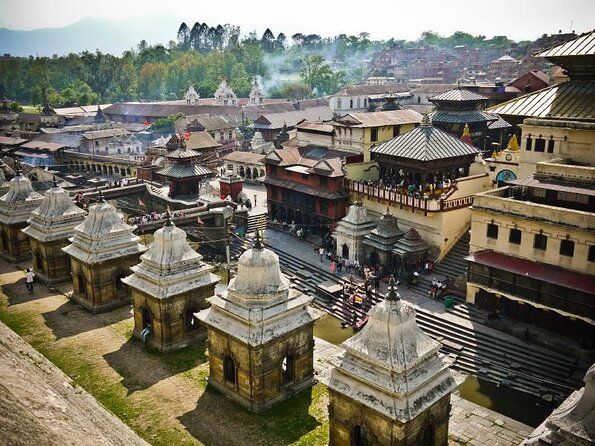
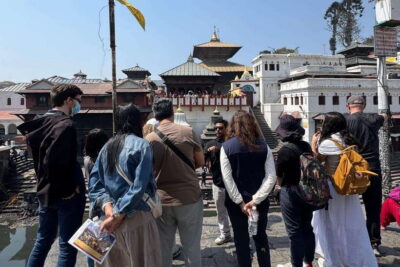
The day begins with Pashupatinath, one of Nepal’s most important Hindu temples. The complex sits beside the holy Bagmati River and is devoted to Lord Shiva. For many people, this is the most emotionally powerful stop because it is not simply an old monument. It remains an active religious center.
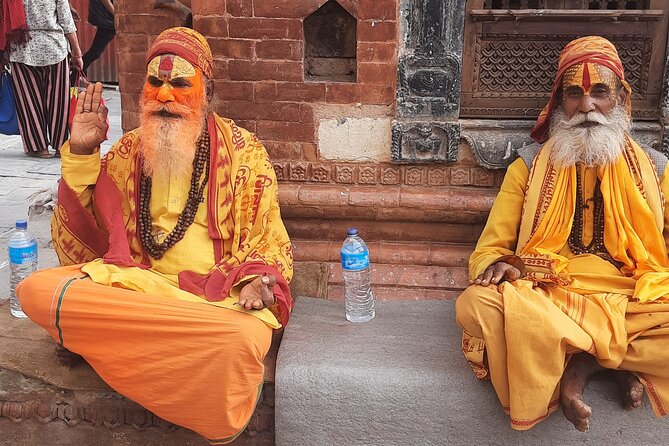
The riverside setting gives the visit a serious tone. You may see worship, offerings, temple activity, and open cremation ceremonies. The experience calls for care and respect. This is not a theatrical performance arranged for visitors, and photography around ceremonies should be handled with restraint. Your guide can help explain what you are seeing and where to direct your attention.
The scheduled visit is about two hours, the longest single stop. That makes sense. Pashupatinath is a large complex with many shrines and layers of religious meaning, and a quick walk through would miss much of its character.
The drawback is that the temple can be confronting. The cremation grounds are part of daily life here, not a museum display. Some people find the sight moving and meaningful, while others may feel uncomfortable. I would not choose this tour expecting only polished architecture and easy sightseeing.
Admission is not included. The tour information gives a four-site entrance cost of $20 per person, or $10 for two sites. Ask your guide how the payment works on the day, since the total depends on which option you select.
Boudhanath Stupa and Tibetan Buddhist life
Boudhanath brings a different religious tradition into the day. The great stupa is surrounded by monasteries and has a strong Tibetan cultural influence. After the Hindu setting of Pashupatinath, the atmosphere here feels distinct, even though both sites are part of the same valley.
The one-hour stop is enough to see the main stupa and understand its role, but it leaves little room for lingering. Look closely at the structure, the painted Buddha eyes, the prayer activity, and the monasteries around the circular complex. The value of a guide is clear here because the symbols can seem mysterious if you only walk around the monument.
Boudhanath is also one of the easier stops physically. You do not have to climb a long staircase, and the main area can be explored on foot at a steady pace. Still, the surface around the stupa may be uneven, and the day includes several hours of walking in total.
If Boudhanath interests you most, tell your guide. The private format gives you more control than a fixed group schedule. You might prefer to spend extra time here and shorten one of the craft visits, although any changes should fit within the overall tour time.
Swayambhunath, the hilltop Monkey Temple
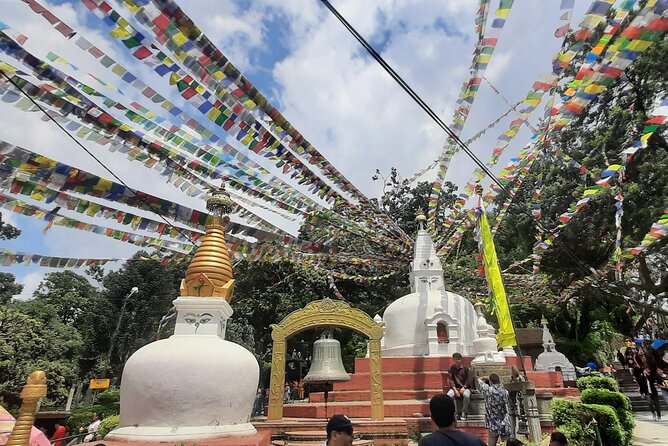
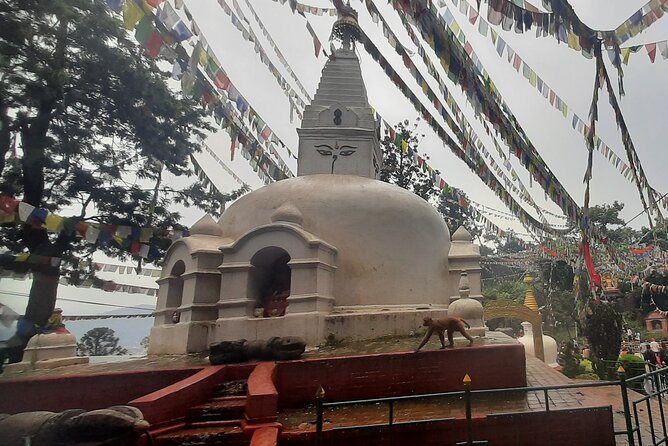
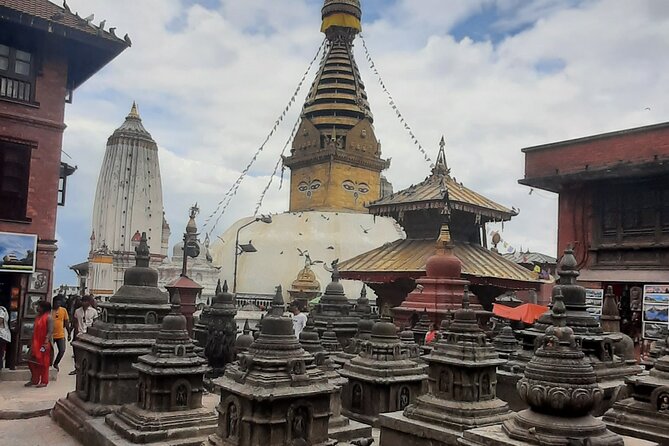
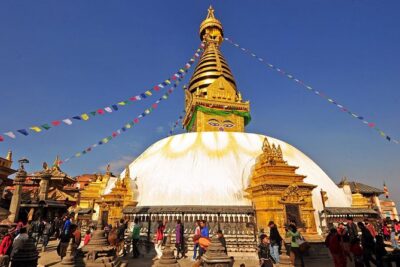
Swayambhunath is also called the Monkey Temple, and the name gives you a clue about the visit. The main stupa sits on a hill, reached by a long staircase. The climb is part of the experience, but it is also the clearest physical challenge of the day.
The tour allows about two hours here. Take your time on the stairs, particularly if you have just come from two major religious sites. The climb can be exciting, but it is not a small set of steps leading to a doorway. Anyone with limited energy should mention this to the guide before arriving.
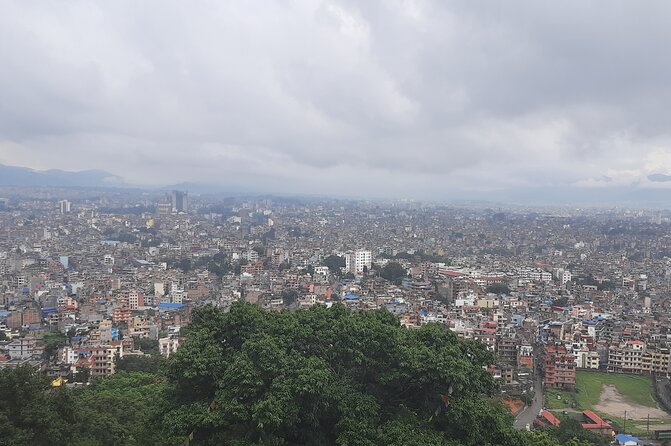
At the top, the stupa gives the visit a strong sense of place. You can look back across Kathmandu from the hill and see why this site has such a commanding position. The main reward is not only the monument itself, but the combination of sacred space, hilltop views, and the lively presence of monkeys.
Keep personal belongings secure around the animals, and follow your guide’s advice. The tour description specifically prepares you for a long climb, so sensible shoes and a realistic pace are important. You do not need to treat the stairs as a race.
Swayambhunath may be the best stop for people who want photographs and a broader view of the city. It may be the least comfortable for anyone who dislikes steep walking. That contrast is worth considering before you book the four-site version.
More history tours in Kathmandu:
- UNESCO Seven World Heritage Tour in Kathmandu
★ 5.0 · 253 reviews - Kathmandu Private Sightseeing Tour | UNESCO World Heritage Sites
★ 5.0 · 109 reviews - Kathmandu: Full Day Private Top 4 UNESCO Heritage Tour W/Lunch.
★ 5.0 · 86 reviews - Kathmandu World Heritage Tour
★ 5.0 · 74 reviews
Patan Durbar Square and Newari design
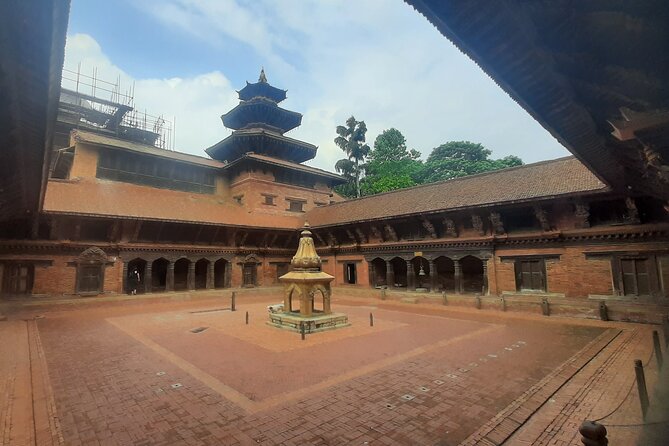
Patan Durbar Square is the architectural highlight. Patan, also known as Lalitpur, is celebrated for Newari design, which reached a high point under the Malla kings. The square brings palaces, temples, courtyards, carved details, and artistic traditions into one compact area.
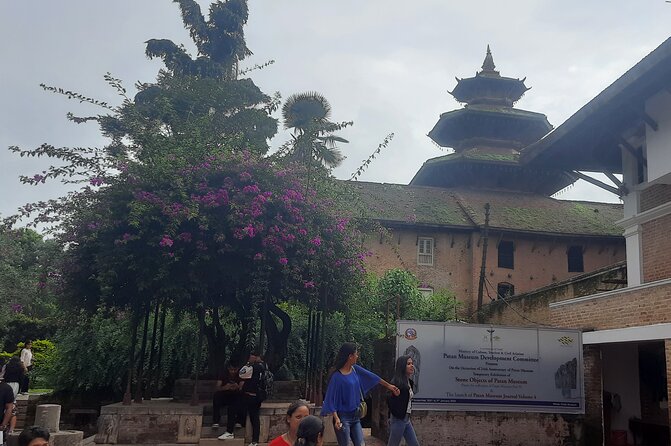
The scheduled visit is about one hour. That is enough for an introduction, but you will likely want longer if you care about sculpture, palace decoration, or earthquake-related changes to the historic buildings. The square rewards close looking. Notice the wood carving, the proportions of the temples, and the way the buildings frame the public spaces.
This is where the thangka painting school fits naturally into the day. Thangka painting is a traditional Buddhist art, and a visit to a school gives you a look at the skill and patience involved. The access is described as behind the scenes, which should make the craft portion more useful than a quick stop at a souvenir shop.
Still, keep your expectations clear. The tour includes a visit to the school, not a full painting class. You may have an opportunity to see artists at work and learn about the tradition, but the exact demonstration length is not specified.
Patan is also linked with handicraft shopping. One account of the experience describes time to look at craft shops and buy keepsakes from the heritage area. Shopping is not listed as a required part of the tour, so treat it as an optional possibility rather than the main reason to go. If you prefer monuments to shopping, say so.
Thangka painting and singing bowls
The craft visits are valuable because they connect the grand monuments with Nepal’s continuing artistic life. At the healing and singing bowl demonstration center, you can learn how the bowls are used and hear a demonstration. The inclusion of bottled water is modest but useful during a warm, active day.
These visits may appeal most to you if you want more than a checklist of temples. They add a practical, human side to the tour. Instead of seeing only stone, brick, metal, and wood, you get a look at traditions that are still practiced and sold today.
The trade-off is time. Kathmandu has more sights than any half-day or full-day circuit can cover. Every craft stop takes time away from one of the UNESCO locations, so the tour suits you best if you like a mix of monuments, religion, and art. If you want only ancient squares, ask about taking the two-site option.
Be aware that craft visits can sometimes lead to purchase opportunities. The supplied information does not say that buying anything is required, and it is not listed as an included benefit. You can enjoy the demonstration without treating it as a shopping obligation.
The guide can make or break the experience
The strongest praise centers on the guiding. Prakash Aryal is repeatedly singled out for explaining the history, religion, and culture of the sites, while also keeping the day comfortable and flexible. Several accounts describe him as accommodating and willing to tailor the tour to personal interests.
That matters in Kathmandu. The monuments are visually striking, but without context you may miss why a cremation site, Buddhist stupa, hilltop shrine, or royal square matters. A good guide also helps you behave properly at active religious sites, where customs are not always obvious.
One account also praises the driver, Niroj, for calm and professional transport between the sites. The driver’s role is easy to overlook, but Kathmandu traffic can make a composed driver a real advantage.
Because this is a private tour, tell your guide what you want early. You might ask for more time at Patan, a slower visit at Boudhanath, or extra explanation at Pashupatinath. The tour is designed to allow questions, and this is one of the main reasons to choose it over a larger group outing.
What the $40 price really covers
The advertised price is $40 per person. Included are transportation according to the planned route, a professional guide, bottled water, the thangka painting school, and the singing bowl demonstration center.
The four UNESCO site admissions cost an additional $20 per person, according to the supplied details. Choosing two sites reduces that stated fee to $10 per person. Food, tips for the guide and driver, and other personal spending are not included.
For a private tour, the price is reasonable if you value convenience and explanation. You are not paying only for transport. You are paying to have the route organized, a guide available for questions, and a driver moving you between widely separated parts of the valley.
The value is weaker if you want only two sites and are comfortable arranging local transport yourself. The two-site option may be better for a short stay, low energy, or a specific interest such as Buddhist monuments or Hindu temples.
Who should book this Kathmandu tour?
I would recommend this experience to a first-time visitor with one free day in Kathmandu. It gives you a useful overview of the valley’s major religious and architectural traditions without requiring you to solve the transport puzzle yourself.
It also suits solo visitors and small private groups who want direct conversation with a guide. The positive experiences linked with Prakash Aryal suggest that the guiding can be a major strength, particularly if you ask questions and explain your interests.
Families and mixed-age groups should think about the stairs at Swayambhunath. Most people can take part, but the climb may make the four-site day tiring. If needed, select two sites or ask about adjusting the pace.
This is less suitable for someone who wants a relaxed day at one monument, a long lunch, or extensive museum time. It is a carefully packed introduction, not a slow cultural retreat.
Should you book the two-site or four-site option?
Choose four sites if this is your first Kathmandu visit and you want the broadest possible introduction. You will see Hindu and Buddhist sacred places, a hilltop shrine, a former royal square, and two traditional art centers in one day.
Choose two sites if you dislike rushed sightseeing, have limited mobility, or already know which parts of Kathmandu interest you most. Pashupatinath plus Boudhanath gives you a strong religious contrast, while Swayambhunath plus Patan gives you hilltop views and Newari architecture.
The private format makes either choice more useful. You can ask for explanations, manage your walking pace, and focus on what matters to you. Just remember that admission fees are extra, the day may be affected by traffic, and the four-site plan asks you to keep moving.
For most first visits, I would book the four-site version, carry water beyond the included bottle, wear comfortable shoes, and approach Pashupatinath with respect. It packs a lot into one day, but it gives you a clear first understanding of Kathmandu Valley.
FAQ
How long does the tour last?
The tour lasts approximately five to seven hours.
What sites can I visit on the four-site option?
The four-site route includes Pashupatinath Temple, Boudhanath Stupa, Swayambhunath, and Patan Durbar Square.
Can I visit only two UNESCO sites?
Yes. The tour offers a two-site option, with the stated entrance fee listed as $10 per person.
Is hotel pickup included?
Yes. Pickup and drop-off at your hotel are included.
Is transportation included?
Yes. Transportation according to the planned route is included.
Is a guide included?
Yes. A professional guide is included.
Are entrance fees included in the price?
No. Entrance fees are separate. The stated cost is $20 per person for four sites or $10 per person for two sites.
Is food included?
No. Food is not included.
Is bottled water included?
Yes. One bottle of water per person is included.
Is this a private tour?
Yes. Only your group participates in the activity.
Is there a long climb?
Yes. Swayambhunath is on a hill and requires climbing a long staircase to reach the stupa.
Can I cancel for a full refund?
Yes, if you cancel at least 24 hours before the experience start time. Cancellations made less than 24 hours in advance are not refunded, and changes within that period are not accepted.
New in the Kathmandu listings
- Traditional Momo Making Class★ 5.0 · 10 reviews
- Kathmandu: Ancient City Kirtipur & Pharping Monastery Tour★ 5.0 · 2 reviews
- Kathmandu to Pokhara Premium sofa bus ticket★ 4.0 · 17 reviews
- Women Empowerment Project(Nepali cooking class & jewelry workshop★ 5.0 · 15 reviews
- Kathmandu 2 Nights 3 Days Chitwan Jungle Safari Tour★ 5.0 · 9 reviews
- Yoga Experience Day Trip with Private Transfer From Kathmandu★ 4.0 · 2 reviews
- 7-Day Langtang Valley Trek from Kathmandu★ 5.0 · 1 review
- Wildlife Adventure in Chitwan Nepal★ 4.0 · 4 reviews
UNESCO World Heritage Tours, compared.
Private Kathmandu Sightseeing Tour | UNESCO World Heritage sites
Read our review →
Full Day 7 UNESCO Tour with Lunch – Private/Group
Read our review →
Full Day Top 4 UNESCO Tour with Lunch – Private/Group
Read our review →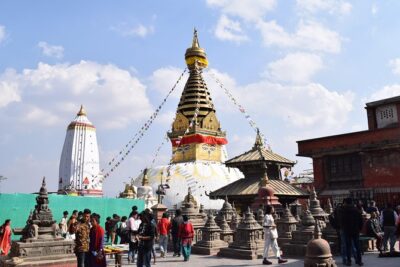
Full-Day 7 UNESCO Tour with Lunch – Private/Group
Read our review →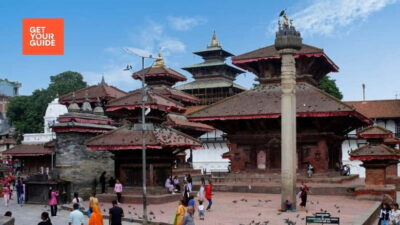
Browse the lists this tour appears in