
REVIEW · WALKING TOURS
Smells of Kathmandu Walking Day Tour
Kathmandu reveals itself one spice stall at a time. The Smells of Kathmandu Walking Day Tour takes you through Asan, Indrachowk, the bead bazaar, Bangemudha, and Nardevi, where daily shopping matters more than sightseeing polish. I like the focus on real markets and the small group size, capped at 10 people. The main consideration is that the lanes can be crowded, and two and a half hours gives you only a quick taste.
I also like that the tour begins and ends at the same central meeting point, with hotel pickup available by arrangement. Guides such as Sunil have been praised for taking visitors into lanes they would struggle to find alone, while Rajendra has provided the tour in fluent German. Food, drinks, and shopping cost extra, so bring some Nepalese rupees if you want to buy something.
In This Review
- Key points at a glance
- Why Kathmandu’s markets make a better introduction
- Entering Asan between Durbar Square and Thamel
- Indrachowk and the working city
- The bead bazaar, Bangemudha, and Nardevi
- What the guide adds to the walk
- What $28 buys you in practical terms
- How to prepare for the 2:45 pm start
- Who will get the most from this tour
- Should you book the Smells of Kathmandu walk?
- FAQ
- How long does the Smells of Kathmandu Walking Day Tour last?
- What time does the tour start?
- Where does the tour begin?
- Where does the tour finish?
- Is hotel pickup available?
- What places are included on the route?
- What is included in the price?
- Are food, drinks, and shopping included?
- How many people can join the tour?
Key points at a glance
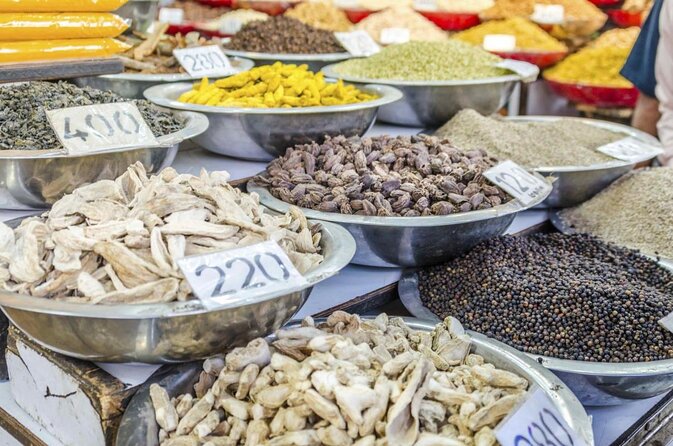
- Asan is the heart of the walk: Expect spices, produce, grains, pulses, fish, meat, and the practical goods locals buy every day.
- The route goes beyond the main tourist streets: Indrachowk, Bangemudha, Nardevi, and the bead bazaar add variety to the market visit.
- Small groups help in tight lanes: The maximum group size is 10, useful where scooters, pedestrians, and shopkeepers share narrow passages.
- Guiding is the real value: Sunil has been praised for his local insight, while Rajendra can guide in German when arranged.
- Plan for roughly 2.5 to 3 hours: The tour is advertised at about two and a half hours, though the detailed timing lists three hours.
- The price is modest: At $28 per person, you are paying mainly for access, orientation, and local explanation rather than entrance-heavy sightseeing.
Why Kathmandu’s markets make a better introduction
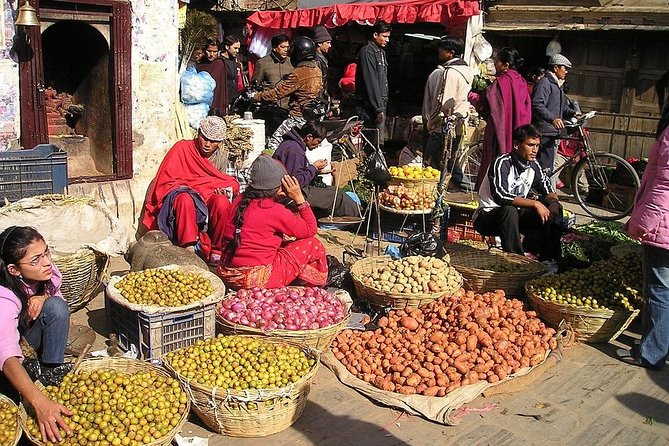
Kathmandu can feel confusing at first. Traffic, scooters, shrines, shop signs, temple courtyards, and pedestrians all compete for your attention. This walk gives you a useful first layer of order by placing you in the middle of the city’s everyday shopping network.
The focus is Asan, a market area between Durbar Square and Thamel. That location matters. If you are staying near either of those popular areas, Asan offers a clear change of pace without requiring a long ride across town.
You are not being led from one grand monument to another. Instead, you see the ingredients and supplies that keep local households running. Expect spices, fruit, vegetables, fish, meat, grains, pulses, and other practical goods. Your guide points out what you are looking at and explains how the market fits into local life.
That makes the experience especially useful early in a Kathmandu visit. You begin to recognize the foods, smells, and commercial rhythms you will encounter elsewhere in Nepal. A market becomes less of a wall of noise and color and more of a place with purpose.
I would not choose this tour if your main goal is a long lesson in palace architecture or temple art. The experience is about streets, shopping, and people going about their day. For cultural orientation, though, it offers more than a standard walk along the obvious sightseeing route.
More Walking Tours in Kathmandu
- Kathmandu Food and Drink Walking Tour
★ 5.0 · 266 reviews - Kathmandu: Food and Drink Walking Tour
★ 4.9 · 119 reviews - Walking Street Food Tour in Kathmandu
★ 5.0 · 111 reviews
Entering Asan between Durbar Square and Thamel
Asan is the main event. The route places you in one of old Kathmandu’s busiest commercial zones, where stalls and small shops sell goods needed by local residents. The setting is practical rather than staged, which is exactly why the visit works.
Your guide helps identify unfamiliar ingredients and explains their role. That service is more useful than it may sound. A pile of dried goods or a wall of spice containers can look like visual clutter when you are alone. With someone explaining what you see, the market becomes a lesson in cooking, trade, and daily routines.
You should expect a close, active street setting. Pedestrians and scooters share the lanes, and the route may require you to stay alert. Wear shoes that are comfortable for walking and keep your belongings secure. The tour is short enough for most people, but the crowded passages can make the walk feel more intense than the distance suggests.
The timing also shapes the experience. A 2:45 pm start gives you an afternoon outing, leaving the morning free for another part of Kathmandu. Since the market is the focus, the exact atmosphere may change with the day’s activity. The tour requires good weather, and poor conditions can lead to a new date or a full refund.
Indrachowk and the working city
Indrachowk adds another layer to the route. Along with Asan, it helps show how old Kathmandu functions as a living commercial district rather than simply a collection of historic sights.
The value here is the connection between places. You do not see one market in isolation, then return to your hotel. The walk links several old city areas, allowing you to notice how streets shift from one type of trade to another.
A guide is particularly helpful in this part of town. The route includes narrow lanes and busy pedestrian areas that can be hard to follow independently. One visitor described being taken through streets most tourists would miss because they might get lost. That is a fair description of the tour’s strongest feature: not access to a locked monument, but help making sense of an open city.
Indrachowk can also test your patience if you prefer quiet walks. This is not a gentle stroll through an empty historic quarter. You should expect movement, noise, and occasional congestion. If you enjoy watching daily life unfold, that energy is part of the appeal. If you want photographs without people or traffic, you may find the setting demanding.
The bead bazaar, Bangemudha, and Nardevi
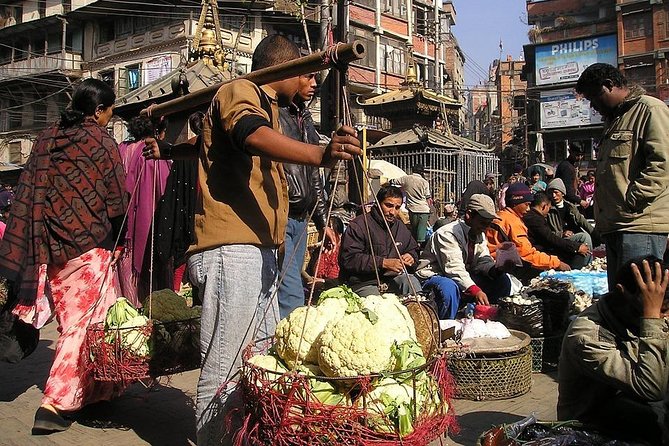
The route continues through the bead bazaar, Bangemudha, and Nardevi. These stops broaden the experience beyond food markets and show different sides of old Kathmandu commerce.
The bead bazaar is a good place to slow down and look closely. The tour information does not promise a shopping session, and shopping is not included, but you may find small items that catch your eye. If you want to buy something, ask your guide about the product and agree on a price before purchasing. The point is not to turn the walk into a shopping trip, but the market setting gives you a chance to see local trade up close.
Bangemudha and Nardevi help fill in the old city route. You may notice shrines, shopfronts, alley entrances, and ordinary businesses woven into the same streets. The tour does not present these areas as isolated attractions. Instead, you move through them as part of a connected urban district.
That approach suits me because Kathmandu’s character is often found between the famous places. A short lane can tell you as much about the city’s present life as a formal monument. You get a better feel for how people shop, move, work, and meet when you are not being rushed from one major sight to the next.
The tradeoff is limited depth at each location. With several areas included in one outing, you will not have unlimited time at every market. Think of the tour as a well-guided introduction, then return later to the places that interest you most.
A completely different way to spend the day:
- Everest Base Camp Trek – 14 Days
★ 5.0 · 1,499 reviews - Private Kathmandu Sightseeing Tour | UNESCO World Heritage sites
★ 5.0 · 756 reviews - Everest Base Camp Helicopter Tour landing at Everest View Hotel
★ 5.0 · 668 reviews - Half day cooking class in Thamel kathmandu
★ 5.0 · 607 reviews
What the guide adds to the walk
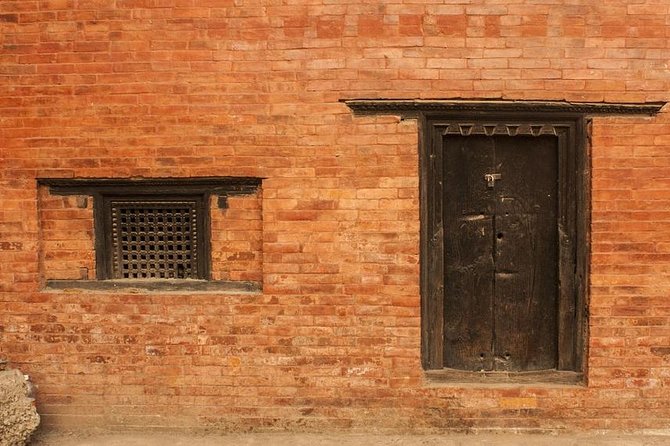
The guide is central to the experience. Without one, you could walk through Asan and see plenty, but you would miss much of the meaning behind the goods and places.
Sunil has been praised for his explanations and for leading visitors into narrow streets they would not have found alone. That is an important distinction. A guide who simply points out landmarks would add little here. The value comes from explaining local ingredients, market habits, and the character of each neighborhood.
Language support may also be available. Rajendra has guided in German and was described as speaking it fluently. If you need a German-speaking guide, arrange that before the tour rather than assuming it will happen automatically.
The experience includes an in-person guide and cultural information. The price does not include gratuities, food, drinks, or purchases. One account describes trying tea during the walk, but you should treat that as a possible part of an individual outing, not a guaranteed inclusion. If tea or snacks matter to you, ask before booking.
The group limit of 10 is another plus. A smaller group is easier to keep together in tight lanes, and it gives you a better chance to ask questions. It is not a private tour, so the pace and interests of other people still matter. Even so, 10 is a sensible maximum for this type of walk.
What $28 buys you in practical terms
The $28 price is reasonable if you want context rather than transport or major entrance tickets. You are paying for a guide, a planned route through several old city areas, and help navigating places that can be confusing on your own.
The value is strongest for a first visit. If you have only a day or two in Kathmandu, a guided market walk can help you get oriented quickly. It also lets you see a side of the city that a standard Durbar Square visit may not reveal.
The value is weaker if you already know Asan, Indrachowk, and the surrounding lanes. Independent walking is possible, and there is no large admission charge or special activity included. In that case, you are mainly paying for interpretation and convenience.
Hotel pickup can be arranged, but the published start and finish point is the Karmachari Sanchaya Kosh Building on Tridevi Sadak. The tour begins at 2:45 pm and returns to the same location. That makes onward planning easy. You do not have to guess where the walk will end, and you can continue toward Thamel or arrange transport from the starting point.
Confirmation is provided when you book. Most people can participate, but you should be ready for a walking route through busy urban lanes. The supplied details do not promise wheelchair access or a specific pace, so ask the provider if those points affect your plans.
How to prepare for the 2:45 pm start
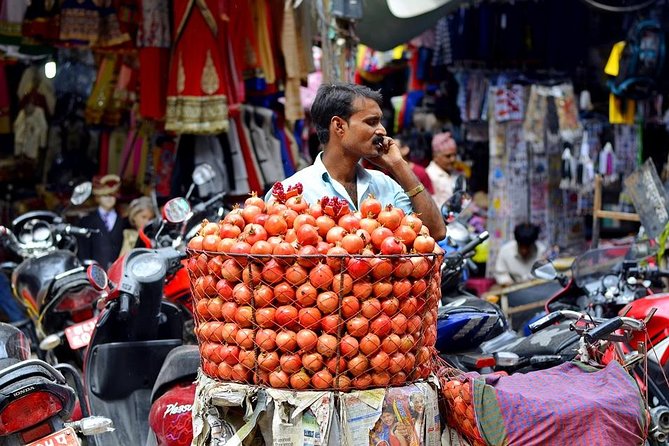
Keep your preparation simple. Wear comfortable walking shoes, carry water, and bring a small amount of cash if you may shop or buy a drink. Since food, drinks, and purchases are not included, do not expect the $28 fee to cover market treats.
A light bag is easier in crowded lanes. You will want your hands free for photographs, balance, and staying close to the group. Keep valuables secure, especially where pedestrians and scooters pass close together.
Arrive with realistic expectations. The tour is listed as about two and a half hours, while the detailed stop information gives three hours. Plan your afternoon around a walk lasting roughly that long, not a precise two-hour outing.
The route needs good weather. If conditions force cancellation, you can be offered another date or a full refund. Since the walk takes place outdoors and through open market streets, this policy is useful rather than a minor footnote.
Who will get the most from this tour
I would recommend this experience to you if you want to see how Kathmandu shops and works, not just its major monuments. It is a good match for first-time visitors, curious eaters, photographers who enjoy street scenes, and anyone who prefers a guide to wandering unfamiliar lanes alone.
It also suits people who want a short afternoon activity. At about 2.5 to 3 hours, the walk does not consume a full day. You can pair it with independent sightseeing before or after, though you should allow extra time if you plan to linger in the markets.
The tour may be less suitable if you dislike crowds, scooters, uneven urban movement, or strong market smells. You should also choose another experience if you want a formal food tour with included tastings. Here, food is part of what you see and learn about, not part of the advertised price.
Language needs deserve attention. English guiding appears to be available, and German guiding has been provided by Rajendra. Other language options are not stated, so ask before confirming if that is important.
Should you book the Smells of Kathmandu walk?
Book it if you want a friendly, low-cost introduction to old Kathmandu’s everyday side. The best reason to go is the route through Asan, Indrachowk, the bead bazaar, Bangemudha, and Nardevi, paired with a guide who can explain what you are seeing and lead you through lanes that are easy to miss.
I would especially choose it near the beginning of a Kathmandu stay. You will leave with better bearings, a sharper eye for local ingredients, and a clearer sense of the city beyond the main tourist paths.
Skip it if you want grand monuments, included meals, or a quiet walk. For everyone else, the $28 fee is a fair exchange for local orientation, a small group, and several hours in the working heart of old Kathmandu. The perfect outcome is not checking off every stop. It is learning enough to return later on your own.
FAQ
How long does the Smells of Kathmandu Walking Day Tour last?
The tour is described as lasting about 2 hours and 30 minutes. The detailed timing also lists three hours, so you should allow roughly 2.5 to 3 hours.
What time does the tour start?
The tour starts at 2:45 pm.
Where does the tour begin?
The meeting point is the Karmachari Sanchaya Kosh Building on Tridevi Sadak in Kathmandu.
Where does the tour finish?
The walk returns to the same Karmachari Sanchaya Kosh Building where it begins.
Is hotel pickup available?
Hotel pickup can be arranged. Confirm the details with Classic Escapades when booking.
What places are included on the route?
The route includes Asan, Indrachowk, the bead bazaar, Bangemudha, and Nardevi, along with surrounding old Kathmandu streets.
What is included in the price?
The price includes an in-person guide, expert information, and a cultural walking experience.
Are food, drinks, and shopping included?
No. Food, drinks, shopping, and gratuities are not included. An individual outing may include an opportunity to try tea, but this is not listed as a guaranteed inclusion.
How many people can join the tour?
The maximum group size is 10 people.
New in the Kathmandu listings
- Traditional Momo Making Class★ 5.0 · 10 reviews
- Kathmandu: Ancient City Kirtipur & Pharping Monastery Tour★ 5.0 · 2 reviews
- Kathmandu to Pokhara Premium sofa bus ticket★ 4.0 · 17 reviews
- Women Empowerment Project(Nepali cooking class & jewelry workshop★ 5.0 · 15 reviews
- 7-Day Langtang Valley Trek from Kathmandu★ 5.0 · 1 review
- Kathmandu 2 Nights 3 Days Chitwan Jungle Safari Tour★ 5.0 · 9 reviews
- Yoga Experience Day Trip with Private Transfer From Kathmandu★ 4.0 · 2 reviews
- Wildlife Adventure in Chitwan Nepal★ 4.0 · 4 reviews
Walking Tours, compared.


Walking Food Tour in Hidden Local Eateries of Kathmandu
Read our review →
Old Kathmandu Walking Tour, Historic World Heritage Durbar Square
Read our review →

Full-Day Safari Canoeing and Jungle Walk and Jeep
Read our review →Browse the lists this tour appears in