
REVIEW · UNESCO WORLD HERITAGE TOURS
Old Kathmandu Walking Tour, Historic World Heritage Durbar Square
Kathmandu reveals itself on foot. This four-to-five-hour tour links famous sights with quiet Newar courtyards, working markets, Buddhist shrines, and Hindu temples that are easy to miss on your own. I especially like the way it combines Kathmandu Durbar Square with places such as Itum Bahal and Asan, and I appreciate the relaxed tea or coffee with the guide at the end. The main consideration is that entrance fees are extra, and the walk may feel full for anyone unused to several hours on old city streets.
The route begins at 9:00 a.m. in Thamel, with pickup offered from hotels in the tourist area. It is a private tour, so your group can ask questions and set a comfortable pace more easily than on a large group outing. Guide names associated with the experience include Mahesh Shreshtha and Modo, though your assigned guide may differ.
In This Review
- Why this Old Kathmandu walk is worth your morning
- Starting near Thamel with a piece of old Kathmandu
- Asan market, where Kathmandu shops for ordinary life
- Janabaha Dyo and the many forms of compassion
- Itum Bahal and the old monastic courtyard
- Kathmandu Durbar Square, the royal center
- Kumari Chowk and Nepal’s living goddess
- Kathesimbu, a quieter Buddhist stop near the finish
- Finishing at Cafe Mitra with tea and questions
- What $28 buys you, and what it does not
- Who will enjoy this Kathmandu tour most
- Practical tips for getting more from the morning
- Should you book the Old Kathmandu Walking Tour?
- FAQ
- How long does the Old Kathmandu Walking Tour last?
- What time does the tour start?
- Where does the tour begin and end?
- Is the tour private?
- Are entrance fees included in the $28 price?
- Can I cancel for a full refund?
Why this Old Kathmandu walk is worth your morning
- Thamel’s name comes from Bikramshila Mahavihar, an old Buddhist monument many visitors pass without noticing.
- Asan market shows daily Kathmandu life, from vegetables and clothing to metal goods and religious objects.
- Itum Bahal reveals old Newar Buddhist design through courtyards and surviving monastic buildings.
- Kathmandu Durbar Square and Kumari Chowk bring Nepal’s royal and religious traditions together in one compact area.
- Kathesimbu offers a smaller Buddhist stupa complex on the route back toward Thamel.
- Tea or coffee with the guide gives the tour a useful finish, with time to discuss what you have seen.
Starting near Thamel with a piece of old Kathmandu
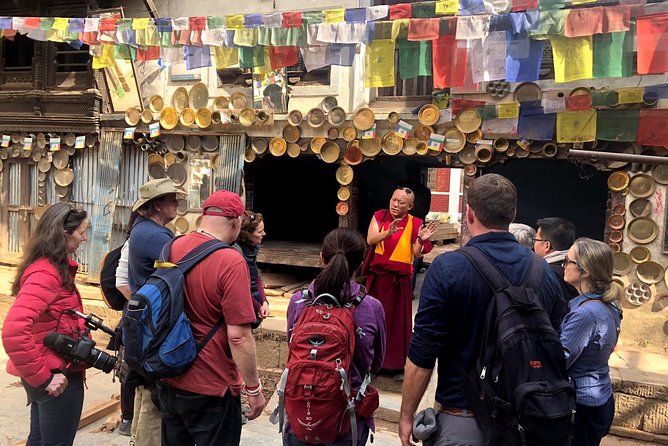
The meeting point is on Amrit Marg in Kathmandu, with a 9:00 a.m. start. If you stay in Thamel, the tour begins from your hotel lobby or nearby area. If you are outside the main tourist zone, private transportation takes you to the starting point, with the drive described as about 20 minutes.
That pickup option matters in Kathmandu, where reaching an unfamiliar neighborhood can take more effort than the map suggests. The tour can also drop participants at their hotels when those hotels are within the stated area. Confirm the pickup details when booking, since the listed start point remains Amrit Marg.
The first stop, Bikramshila Mahavihar, is also called Thambahil. It is an old Buddhist monument associated with the native Newar people, and it gives you a useful first lesson in how local identity is tied to courtyards, shrines, and place names. Thamel itself takes its name from this historic monument, an easy-to-miss detail that makes the stop feel more meaningful than a quick photo break.
You receive about 15 minutes here, with no admission charge listed. That is enough for an introduction, though not a long visit. I like this opening because it starts away from Kathmandu’s best-known royal square and places local Buddhist culture at the front of the story.
More Walking Tours in Kathmandu
- Kathmandu Food and Drink Walking Tour
★ 5.0 · 266 reviews - Kathmandu: Food and Drink Walking Tour
★ 4.9 · 119 reviews - Walking Street Food Tour in Kathmandu
★ 5.0 · 111 reviews
Asan market, where Kathmandu shops for ordinary life
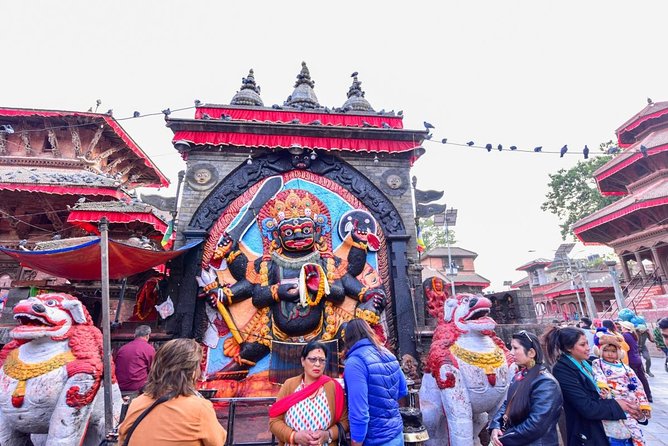
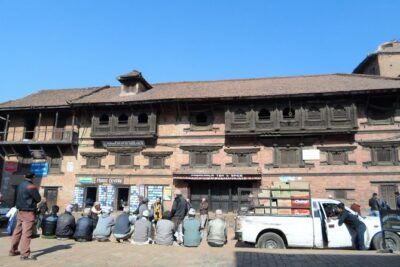
From Bikramshila Mahavihar, the walk continues to Asan, described as Kathmandu’s oldest living market. This is one of the strongest parts of the route for anyone who wants more than monuments.
Asan is a working market rather than a display arranged for visitors. You may find vegetables, clothes, metal items, and spiritual goods sold close together. The appeal is the mix of everyday errands and religious life. Kathmandu’s old center is not just a collection of temples. It remains part of the city’s daily routine.
The scheduled visit lasts about 15 minutes. That is brief, so do not expect an extended shopping stop or a slow browse through every lane. Instead, treat Asan as a focused look at the city’s commercial heart. Keep your attention on the details around you, and ask the guide what different goods are used for.
This is also a place where a local guide earns the fee. Without context, Asan can seem crowded and confusing. With help, the market becomes a readable part of Kathmandu rather than a noisy crossing between sights.
Janabaha Dyo and the many forms of compassion
The next stop is Janabaha Dyo, also known as the Seto MachhindraNath Temple. This native deity of Kathmandu is connected with Avalokitesvara, the Buddhist figure associated with compassion.
The shrine contains 108 engraved icons of Avalokitesvara, representing different forms. Local devotees visit the temple, and the stop gives you a chance to see how Buddhist and Hindu traditions share space in Kathmandu. The tour does not present the city as neatly divided into separate religious districts. Instead, it shows the overlap that shapes local worship.
The visit is planned for around 15 minutes. That makes the guide’s explanation especially important. You will want to ask about the meaning of the 108 figures and the ways local people relate to the shrine. The stop is short, but the subject is large enough to reward a few direct questions.
Itum Bahal and the old monastic courtyard
At Itum Bahal, the tour slows down to about 30 minutes. That extra time is welcome. This 11th-century Buddhist monastic complex was once one of the largest in ancient Kathmandu, and part of the original monastic building remains.
The complex includes courtyards connected with the goddess Tara. This is the kind of place that can disappear behind an ordinary entrance from the street. Once inside, the layout gives you a better sense of how old Kathmandu was organized around shared courtyards, religious buildings, and community spaces.
I consider Itum Bahal one of the tour’s best choices because it is not simply another grand landmark. It helps you see the city at a human scale. You are looking at a place built for religious and communal use, not just a royal monument designed to impress.
The tradeoff is that old courtyards and active religious sites do not always function like museums. Your visit may depend on what is open and how local activity is unfolding. Follow the guide’s lead and be respectful when people are praying or carrying out daily tasks.
More UNESCO World Heritage Tours in Kathmandu:
- Private Kathmandu Sightseeing Tour | UNESCO World Heritage sites
★ 5.0 · 756 reviews - Kathmandu: Full Day 7 UNESCO Tour with Lunch – Private/Group
★ 5.0 · 415 reviews - Kathmandu: Full Day Top 4 UNESCO Tour with Lunch – Private/Group
★ 5.0 · 269 reviews - UNESCO Seven World Heritage Tour in Kathmandu
★ 5.0 · 253 reviews
Kathmandu Durbar Square, the royal center
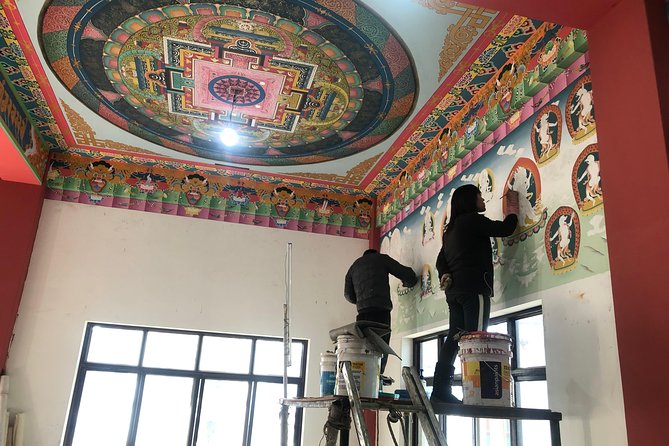
The route then reaches Kathmandu Durbar Square, the 17th-century palace area of Nepal’s kings. The square is surrounded by traditional temples and examples of Nepali art and architecture, making it the most concentrated sightseeing stop of the morning.
You have about 45 minutes here. That is enough to understand the layout and see key structures, but it is not a full day devoted to every building. The guide helps you focus on the details you might otherwise walk past, including carved woodwork, temple forms, and the relationship between the palace buildings and surrounding shrines.
The entrance fee is not included. The supplied details also list an entry fee for the Swayambhu Stupa, although the route specifically identifies Kathesimbu, a smaller Buddhist stupa complex, later in the walk. Ask the operator to confirm exactly which entrance charges apply on your date. Budgeting separately for admission is important because the $28 tour price does not cover the Kathmandu Durbar Square premises fee.
The square is also where the tour shifts from smaller local places to one of Kathmandu’s headline sights. I like that order. You first learn to notice modest courtyards and neighborhood shrines, then arrive at the royal center with a better sense of how the pieces fit together.
Kumari Chowk and Nepal’s living goddess
Within Durbar Square, Kumari Chowk is the essential stop for many people. The roughly 300-year-old courtyard building is known as the home of Kumari, the living goddess, and it is a fine example of traditional Nepali architecture.
The visit is scheduled for about 20 minutes. If you are fortunate, you may see Kumari at the window. That possibility should be treated with respect rather than as a guaranteed performance. The significance of the place comes from the tradition itself, the building, and the way religious belief remains part of public life.
This stop also benefits from a guide who can explain what you are seeing without turning the visit into a rushed photo opportunity. One particularly useful part of the experience is the chance to understand the living goddess tradition within the setting of Durbar Square, rather than hearing about it as an isolated fact.
Photography rules and access can vary at religious sites. Listen carefully to the guide and follow the instructions at Kumari Chowk. The 20-minute slot gives you time to look closely, but it does not allow for lingering if the courtyard is busy.
Kathesimbu, a quieter Buddhist stop near the finish
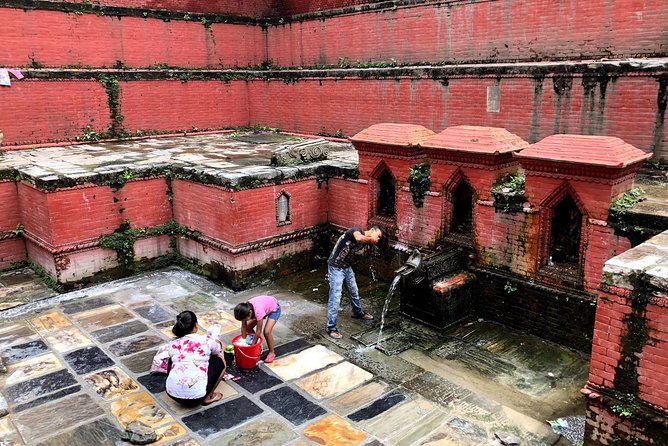
After Durbar Square, the walk heads through the old town toward Kathesimbu, also called Dharmakirti Vihara. This Buddhist stupa complex contains a replica of Swayambhu Stupa, one of Nepal’s major pilgrimage sites.
The supplied schedule does not give a precise time for this stop, but it is part of the walking route before the final café visit. Its smaller scale offers a useful contrast with Durbar Square. You see a Buddhist pilgrimage setting without leaving the old city, and you can consider how Kathmandu’s religious sites are woven into ordinary neighborhoods.
The admission information lists an entry fee for Swayambhu Stupa. Since the described stop is Kathesimbu, check with the guide about any fee required for the complex you actually enter. This is a small point, but it prevents confusion when you are carrying only the tour price in your budget.
Finishing at Cafe Mitra with tea and questions
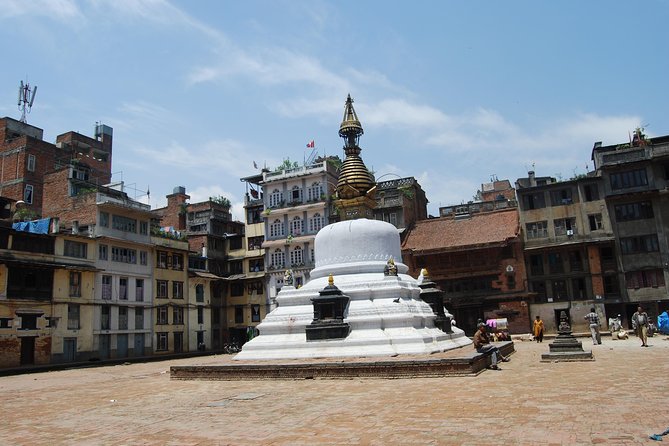
The tour ends at Cafe Mitra on Thamel Marg, with about 30 minutes set aside for coffee or tea. The drink is included, and the café provides a comfortable place to pause after the walk.
I like this ending more than a simple drop-off. Kathmandu can give you a lot to absorb in one morning: Newar Buddhist courtyards, market life, royal architecture, Hindu and Buddhist worship, and the Kumari tradition. Sitting with the guide gives you a chance to ask the questions that occur only after you have seen the places.
The conversation is described as casual, not a formal lecture. That suits the tour. You can ask about a shrine you passed, clarify a religious term, or talk through the links between the different parts of Kathmandu. It also gives the morning a natural stopping point before you continue sightseeing independently.
What $28 buys you, and what it does not
At $28 per person, the tour offers good value if you want a private introduction to central Kathmandu. The price covers private transportation and tea or coffee, along with the guiding and walking experience. A private format is useful here because the route includes small courtyards and working religious places where questions and timing matter.
You should add entrance fees to your budget. Admission to Kathmandu Durbar Square is not included, and the information also lists an entry fee connected with Swayambhu Stupa. The tour is therefore not a fully prepaid sightseeing package.
The value is strongest for a first visit or for anyone who has already walked around Thamel but wants help finding the older places just beyond its main streets. It is less suitable if you want a long, unhurried visit inside every monument. The schedule covers several stops in four to five hours, so the pace is purposeful.
The booking pattern, with reservations often made about 32 days ahead, suggests that planning early is sensible. The experience is private and has a minimum number of participants requirement, so confirm the date and pickup arrangements before setting other plans around it.
Who will enjoy this Kathmandu tour most
I would choose this tour if you want a clear introduction to Kathmandu’s old center without spending a full day at one major site. It suits couples, families, and small private groups who like to ask questions and mix famous sights with less obvious places.
It also works well for people who have limited time in the city. In one morning, you see Asan, Janabaha Dyo, Itum Bahal, Durbar Square, Kumari Chowk, and Kathesimbu. That range gives you a strong first impression of Kathmandu’s art, worship, trade, and royal past.
You should think twice if you dislike walking, crowded markets, or frequent transitions between sites. The route is built around old streets and courtyards, not a coach window. Anyone wanting only major monuments may find the smaller stops less compelling, while anyone interested in local life will likely value them most.
The tour is also a good choice for repeat visitors. Even if you have wandered through Thamel and Durbar Square before, the lesser-known monasteries, public courtyards, and small stupas can add a new layer to familiar streets.
Practical tips for getting more from the morning
Wear comfortable shoes and leave room in your schedule after the café stop. The tour lasts approximately four to five hours, and the combination of walking and short visits works best when you are not rushing to another appointment.
Bring cash or another way to pay entrance fees, since the main admissions are separate from the tour cost. Ask the guide early in the morning which fees will apply so you know what to expect.
Use the guide actively. Ask about the 108 Avalokitesvara images at Janabaha Dyo, the name Thamel receives from Bikramshila Mahavihar, and the role of Itum Bahal’s courtyards. These details turn a sequence of stops into a connected picture of Kathmandu.
Give religious sites your full attention. At Kumari Chowk especially, treat the possibility of seeing Kumari as a privilege, not a promised show. Follow local instructions about photography and behavior.
Should you book the Old Kathmandu Walking Tour?
Book it if you want a private, well-shaped morning that covers both Kathmandu’s essential sights and its quieter religious courtyards. The best parts are the mix of Asan and Itum Bahal with Durbar Square, the chance to see Kumari Chowk, and the relaxed tea or coffee discussion at Cafe Mitra.
Skip it if you want a slow architectural study of Durbar Square alone, or if extra entrance fees and several hours on foot do not suit your plans. For most visitors with limited time, though, the $28 price is reasonable, especially with private transportation and a guide who can help you notice what the old city does not explain on its own.
FAQ
How long does the Old Kathmandu Walking Tour last?
The tour lasts approximately four to five hours, including the walking route, sightseeing stops, transportation, and the final tea or coffee at Cafe Mitra.
What time does the tour start?
The scheduled start time is 9:00 a.m.
Where does the tour begin and end?
It begins at Amrit Marg in Kathmandu, with hotel pickup offered in the Thamel tourist area. It ends at Cafe Mitra on Thamel Marg. Hotel drop-off may be available when your hotel is within the stated area.
Is the tour private?
Yes. Only your group participates in the private tour or activity.
Are entrance fees included in the $28 price?
No. Entry to the Kathmandu Durbar Square premises is not included. The provided details also list an entry fee for Swayambhu Stupa. Private transportation and coffee or tea are included.
Can I cancel for a full refund?
Yes, if you cancel at least 24 hours before the experience start time. Cancellations or changes made less than 24 hours before the start are not refunded, and the tour may be rescheduled or fully refunded if its minimum number of participants is not met.
More History Tours in Kathmandu
- Kathmandu Private Sightseeing Tour | UNESCO World Heritage Sites
★ 5.0 · 109 reviews - Kathmandu: Full Day Private Top 4 UNESCO Heritage Tour W/Lunch.
★ 5.0 · 86 reviews - Kathmandu World Heritage Tour
★ 5.0 · 74 reviews - Nagarkot Sunrise & Bhaktapur UNESCO Heritage Private Tour
★ 5.0 · 66 reviews
New in the Kathmandu listings
- Traditional Momo Making Class★ 5.0 · 10 reviews
- Kathmandu: Ancient City Kirtipur & Pharping Monastery Tour★ 5.0 · 2 reviews
- Kathmandu to Pokhara Premium sofa bus ticket★ 4.0 · 17 reviews
- Women Empowerment Project(Nepali cooking class & jewelry workshop★ 5.0 · 15 reviews
- 7-Day Langtang Valley Trek from Kathmandu★ 5.0 · 1 review
- Kathmandu 2 Nights 3 Days Chitwan Jungle Safari Tour★ 5.0 · 9 reviews
- Yoga Experience Day Trip with Private Transfer From Kathmandu★ 4.0 · 2 reviews
- Wildlife Adventure in Chitwan Nepal★ 4.0 · 4 reviews
UNESCO World Heritage Tours, compared.
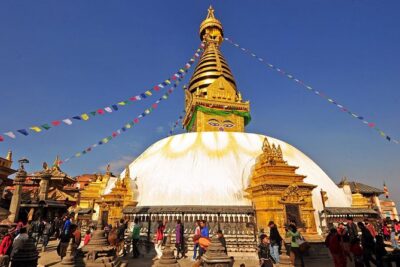
Private Kathmandu Sightseeing Tour | UNESCO World Heritage sites
Read our review →
Full Day 7 UNESCO Tour with Lunch – Private/Group
Read our review →
Full Day Top 4 UNESCO Tour with Lunch – Private/Group
Read our review →
Full-Day 7 UNESCO Tour with Lunch – Private/Group
Read our review →
Browse the lists this tour appears in