
REVIEW · SWAYAMBHUNATH MONKEY TEMPLE TOURS
Swayambhu and Kathmandu Durbar Square Half Day Tour
Kathmandu reveals itself quickly. This four-hour private tour links Swayambhu, the Monkey Temple, with Kathmandu Durbar Square, giving you two major UNESCO-listed places in one morning or afternoon. I like the hotel pickup and private vehicle, which remove much of the city’s transport hassle, and I like having admission fees and a local guide included from the start.
The tour also brings Hindu and Buddhist traditions into the same half-day outing. Guide Pankaj received praise for making the cultural background both informative and fun, a useful quality when you are trying to make sense of shrines, palace courtyards, and sacred symbols in limited time. The main drawback is the pace: with several short stops, you may get a good introduction rather than enough time for a slow, detailed look at every monument.
In This Review
- Key points to know before booking
- Why this half-day route works in Kathmandu
- Swayambhu, the Monkey Temple above the city
- Amideva Buddha Park and the quieter pause
- Kathmandu Durbar Square and the old royal center
- Kumari Chowk and the living Goddess Kumari
- A local market on the way to the square
- Hanuman Dhoka and the palace quarter
- Basantapur Tower and Freak Street
- Akash Bhairav Temple and a possible lassi stop
- What the guide and private vehicle add
- Who gets the best value from $65
- Timing, comfort, and practical expectations
- Should you book the Swayambhu and Kathmandu Durbar Square tour?
- FAQ
- How long does the Swayambhu and Kathmandu Durbar Square tour last?
- What is included in the tour price?
- Are food and drinks included?
- Is this a private tour?
- Can I see the living Goddess Kumari?
- What is the cancellation policy?
Key points to know before booking
- Swayambhu comes first, with hilltop views over Kathmandu and the valley beyond.
- The private format keeps the outing flexible, with only your group taking part.
- Kathmandu Durbar Square packs royal history, temples, markets, and living traditions into one visit.
- Kumari Chowk offers a chance to see the living Goddess Kumari, although an appearance is not guaranteed in the tour details.
- Hotel transfers, a private vehicle, a guide, and entrance fees are included in the $65 price.
- The four-hour schedule suits a first look, but it leaves little room for lingering at every stop.
Why this half-day route works in Kathmandu
Kathmandu can feel like several cities layered together. Buddhist stupas, Hindu temples, royal courtyards, market streets, and ordinary daily life all occupy the same compact urban area. This tour gives you a guided introduction to that mix without asking you to arrange taxis, entrance tickets, and directions on your own.
At $65 per person, the price covers hotel pickup and drop-off, private transport, a professional guide, and admission to the featured sites. That matters in Kathmandu, where a short outing can become less short once you factor in finding the right entrance or negotiating transport. Group discounts are also offered, and the activity is private, so your group does not share the vehicle or guide with other participants.
The timing is the tradeoff. Four hours sounds generous until you include transfers between sites and seven listed stops. The schedule gives the tour energy, but you should see it as a sampler of central Kathmandu rather than a full archaeological study. If you have only one free half-day, this is a sensible way to cover important ground.
More visits to Swayambhunath:
- Kathmandu: Chandragiri Cable Car and Monkey Temple Tour
★ 4.8 · 139 reviews - Monkey Temple – Swayambhunath Tour – Private/Small Group
★ 5.0 · 50 reviews - Chandragiri Cable Car & Monkey Temple Tour- Private/Group
★ 5.0 · 32 reviews
Swayambhu, the Monkey Temple above the city
Swayambhu sits on a high hill overlooking Kathmandu and the valley. Its nickname, Monkey Temple, comes from the large number of rhesus macaques living around the site. The monkeys are part of the atmosphere, but keep your attention on the religious setting rather than treating the place as a wildlife stop.
The hilltop position gives Swayambhu its first great appeal. You get a broad view over Kathmandu, and the setting helps explain why this has long been such an important spiritual place. Your guide can also help connect the Buddhist symbols and nearby Hindu practices, which is more useful than simply walking around the stupa and taking photographs.
The listed visit lasts about 45 minutes, making it the longest single stop. That is a reasonable amount of time for an introduction, though it may feel short if you want to study every shrine, carving, and view. Wear comfortable shoes and expect some walking around the hilltop complex. The tour description does not provide a detailed account of the route or stair count, so ask the operator about the exact pickup and walking arrangements if mobility is a concern.
Swayambhu is a strong opening stop because it gives you both a major religious monument and a view of the city before you enter the denser streets around Durbar Square. I would pay close attention to the guide here. The site can look like a collection of colorful objects without context, while a good explanation can show how the Buddhist and Hindu elements fit together.
Amideva Buddha Park and the quieter pause
The tour then includes about 15 minutes at Amideva Buddha Park, described as a smaller area inside the Monkey Temple complex. It includes a large statue representing three symbols and Buddha imagery, and it tends to receive fewer visitors than the better-known parts of Swayambhu.
This short stop gives the visit a change of pace. You get a chance to look more closely at a less familiar part of the complex, and your guide can point out details that are easy to miss when most attention goes to the main stupa and hilltop view. The brief timing also tells you what to expect: this is an add-on within the Swayambhu visit, not a separate major attraction.
If you want a slow, reflective visit, 15 minutes will pass quickly. Still, the stop is worthwhile for anyone who prefers seeing a less obvious corner of a famous religious site instead of moving only between the headline monuments.
Kathmandu Durbar Square and the old royal center
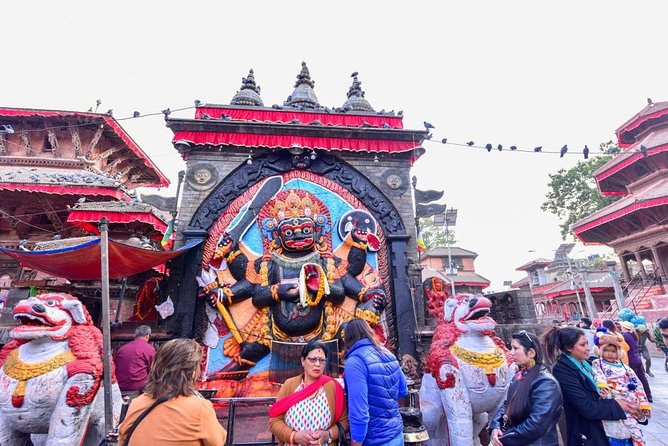
Kathmandu Durbar Square forms the historical heart of the second half of the tour. For more than 1,000 years, the square served as a royal center for dynasties ruling the Kathmandu Valley. Kings were crowned, lived, and governed here, and the courtyards and palace buildings preserve that connection to Nepal’s former monarchy.
The planned visit lasts about 30 minutes. That is enough to get your bearings and hear the basic story, but not enough to examine every building in detail. The square includes a large number of temples, palace structures, carved windows, and open courtyards, so you will benefit from deciding in advance what interests you most.
I like this part of the tour because it places Kathmandu’s political history beside its religious life. You are not visiting an isolated museum. The square remains part of the city, with people moving through it, worshipping, working, and shopping nearby. That makes the experience feel connected to present-day Kathmandu rather than frozen in the past.
The short schedule can also be a limitation. If you are especially interested in architecture or the former royal family, you may want to return later with more time. For a first visit, though, a guide helps you focus on the key courtyards and understand why the square matters.
More UNESCO World Heritage Tours in Kathmandu:
- Private Kathmandu Sightseeing Tour | UNESCO World Heritage sites
★ 5.0 · 756 reviews - Kathmandu: Full Day 7 UNESCO Tour with Lunch – Private/Group
★ 5.0 · 415 reviews - Kathmandu: Full Day Top 4 UNESCO Tour with Lunch – Private/Group
★ 5.0 · 269 reviews - UNESCO Seven World Heritage Tour in Kathmandu
★ 5.0 · 253 reviews
Kumari Chowk and the living Goddess Kumari
Kumari Chowk is one of the most distinctive stops inside Durbar Square. It is associated with the living Goddess Kumari and is also known for fine wood carving, including a peacock window. The tour allows about 15 minutes here.
The possibility of seeing the living Goddess Kumari is a major draw, but you should treat it as a chance rather than a promise. The supplied tour details say you may have the opportunity to see her, without guaranteeing an appearance. Your guide can explain the tradition and the etiquette expected at the courtyard.
This is a place where respectful behavior matters. Keep your voice low, follow instructions about photography, and remember that this is a functioning religious tradition, not simply a display for visitors. The peacock window and carved details also deserve attention, especially if the Kumari is not visible during your visit.
Fifteen minutes is enough for a brief look, but not for a long architectural study. If this stop matters greatly to you, tell your guide at the beginning so you can use the available time well.
A local market on the way to the square
The route includes time in Kathmandu’s busiest local shopping market, located on the way to Durbar Square. The description emphasizes watching local shopping rather than treating the market as a formal attraction, which is exactly what makes the stop useful.
You may see ordinary commerce unfolding around you, with people buying everyday goods and moving through the streets. This gives the tour a needed dose of daily life after the grand religious and royal sites. You are not only checking monuments off a list. You are seeing how those monuments fit into a working city.
The stop has no stated duration, so it may depend on traffic, walking conditions, and your guide’s judgment. Do not count on a dedicated shopping session. Think of it as a short observational pause and a chance to see Kathmandu between the major sights.
Hanuman Dhoka and the palace quarter
Hanuman Dhoka is another important part of Durbar Square. The name refers to the palace area within the square, and the stop offers more context about local life, people, and culture. The planned time is about 15 minutes.
This stop is likely to appeal most if you want the royal story explained rather than simply seeing courtyards and façades. Ask your guide how Hanuman Dhoka connects to the wider palace complex and the rulers who governed from this area. With only 15 minutes, a focused explanation will be more useful than trying to inspect every structure.
Because Hanuman Dhoka sits within the larger Durbar Square area, the boundaries between stops may feel fluid. That is not a problem, but it helps to understand that the tour is dividing one historic district into several short points of interest.
Basantapur Tower and Freak Street
Basantapur Tower is described as an open area around Durbar Square, close to Freak Street. You can browse handicrafts here and enter the Durbar Square area. The planned visit lasts about 15 minutes.
This is one of the more informal parts of the outing. The square and street setting give you space to observe local activity and perhaps look at handicrafts, though food and drinks are not included in the tour price. If you want to buy something, carry your own spending money and allow for the fact that the schedule is tight.
Do not expect a long shopping stop. Fifteen minutes may be enough to look around, but not enough for careful comparison shopping. The value here is the change from formal monuments to an open public area where the historic district meets present-day commerce.
Akash Bhairav Temple and a possible lassi stop
The final listed stop is Akash Bhairav Temple, a small but busy temple in town. The visit lasts about 15 minutes, and the description specifically notes the chance to enjoy delicious lassi nearby.
Akash Bhairav adds another religious site to the route without requiring a long detour. Its smaller scale may make it feel more immediate than the large palace grounds, and your guide can help explain its place in local worship. The mention of lassi is appealing, but food and drinks are not included, so any purchase is at your own expense.
This stop also shows why the tour is more than a pair of major monuments. You get a look at smaller sacred spaces and the everyday activity around them. The limitation is again time. Fifteen minutes gives you a taste, not a detailed visit.
What the guide and private vehicle add
The private format is one of the tour’s clearest advantages. Only your group takes part, and transport is by private vehicle. That means you can ask questions without worrying about holding up a large coach group, and your guide can shape explanations around your interests to some degree.
The value of the guide is especially clear at Swayambhu and Durbar Square. Hindu and Buddhist symbols can be difficult to interpret without local context, while royal buildings may look similar when you first encounter them. A guide helps turn a series of courtyards, statues, and shrines into a connected story.
One guide named in the feedback is Pankaj, who was praised for being informative and fun while covering both Hindu and Buddhist culture during the half-day outing. That balance is important. You want enough explanation to understand the sites, but not a lecture that leaves no time to look around.
Hotel pickup and drop-off also make sense for a four-hour tour. You avoid spending part of your limited day arranging transport to Swayambhu and then finding your way back from the old city. The exact pickup details are not provided, so confirm the meeting point and timing when you book.
Who gets the best value from $65
At $65 per person, this tour offers a useful bundle: private transport, a professional guide, hotel transfers, and entrance fees to both main sites. For someone short on time, that combination can be worth more than choosing the cheapest independent option and spending part of the day solving transport and ticket questions.
The value is strongest for a first visit, a short stay, or a morning or afternoon between other plans. It also suits you if you want cultural interpretation, not just sightseeing. Group discounts may improve the price for people booking together.
The value is weaker if you already know Kathmandu well or prefer spending hours at one site. The schedule covers many points in four hours, so you will move on before every detail has had time to register. Independent visitors who enjoy setting their own pace may prefer a single-site visit.
Food and drinks are not included. That is not unusual for a half-day sightseeing tour, but remember it when you see the lassi suggestion at Akash Bhairav Temple. Entrance fees are included, so the main extra cost is anything you choose to buy.
Timing, comfort, and practical expectations
The tour lasts about four hours and is available as a private activity. Most people can participate, and the route is near public transportation, though the tour itself uses a private vehicle. Comfortable footwear is a sensible choice because the sites include a hilltop religious complex and historic courtyards.
The individual stop times add up to roughly two and a half hours, leaving the rest for transfers and movement between nearby points. That explains both the tour’s strength and its limit. You see a lot without giving up a full day, but you should not expect long breaks or unhurried photography at every location.
The tour can be booked with free cancellation up to 24 hours before the start time for a full refund. Changes or cancellations made less than 24 hours before the start time are not accepted for a refund, and the cut-off follows local Kathmandu time.
Should you book the Swayambhu and Kathmandu Durbar Square tour?
Book it if you have four hours, want a guided first look at Kathmandu, and value private transport and hotel transfers. The combination of Swayambhu’s hilltop setting, the royal center at Durbar Square, Kumari Chowk, local markets, and smaller temples gives you a clear introduction to the city’s religious and political traditions.
I would especially recommend it for first-time visitors and anyone with a short Kathmandu stay. The guide’s role matters here, and Pankaj’s praised approach suggests the experience can be both informative and enjoyable.
Skip it if you want to spend most of a day at one monument, shop at length, or set your own pace. For everyone else, $65 is a reasonable price for a private, ticketed half-day route that handles the practical details and gives you a useful first reading of Kathmandu.
FAQ
How long does the Swayambhu and Kathmandu Durbar Square tour last?
The tour lasts approximately four hours.
What is included in the tour price?
Hotel pickup and drop-off, transport by private vehicle, a professional guide, and all entrance fees are included.
Are food and drinks included?
No. Food and drinks are not included. You may purchase lassi near Akash Bhairav Temple at your own expense.
Is this a private tour?
Yes. Only your group participates in the activity.
Can I see the living Goddess Kumari?
The tour gives you a chance to see the living Goddess Kumari at Kumari Chowk, but an appearance is not guaranteed in the provided tour details.
What is the cancellation policy?
You can cancel at least 24 hours before the experience start time for a full refund. Cancellations or changes made less than 24 hours before the start time are not accepted for a refund.
New in the Kathmandu listings
- Traditional Momo Making Class★ 5.0 · 10 reviews
- Kathmandu: Ancient City Kirtipur & Pharping Monastery Tour★ 5.0 · 2 reviews
- Kathmandu to Pokhara Premium sofa bus ticket★ 4.0 · 17 reviews
- Women Empowerment Project(Nepali cooking class & jewelry workshop★ 5.0 · 15 reviews
- 7-Day Langtang Valley Trek from Kathmandu★ 5.0 · 1 review
- Kathmandu 2 Nights 3 Days Chitwan Jungle Safari Tour★ 5.0 · 9 reviews
- Yoga Experience Day Trip with Private Transfer From Kathmandu★ 4.0 · 2 reviews
- Wildlife Adventure in Chitwan Nepal★ 4.0 · 4 reviews
Swayambhunath Monkey Temple Tours, compared.
Monkey Temple – Swayambhunath Tour – Private/Small Group
Read our review →
Chandragiri Cable Car & Monkey Temple Tour- Private/Group
Read our review →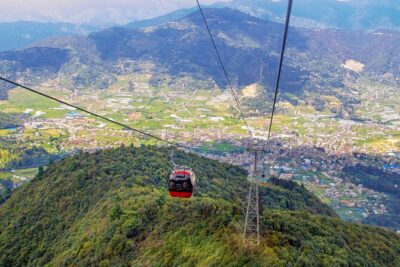
Private Chandragiri Cable Car and The Monkey Temple Tour
Read our review →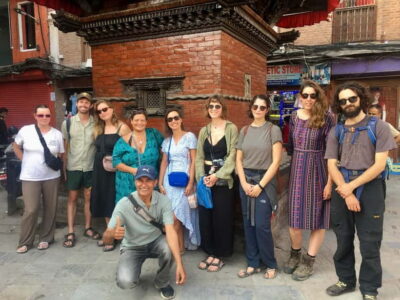
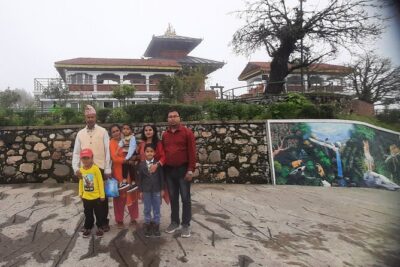
Kathmandu Chandrigiri Hill Cable Car & Monkey Temple UNESCO Tour
Read our review →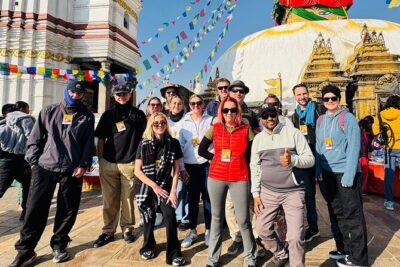
Chandragiri Cable Car Ride & Monkey Temple Tour – Private/Group
Read our review →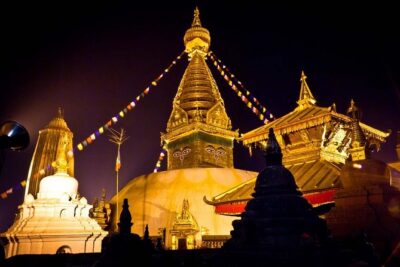
Private Half-Day Tour of Kathmandu Durbar Square and Swayambhunath Temple
Read our review →Browse the lists this tour appears in