
REVIEW · BOUDHANATH STUPA TOURS
The Boudhanath Yoga Experience in Nepal
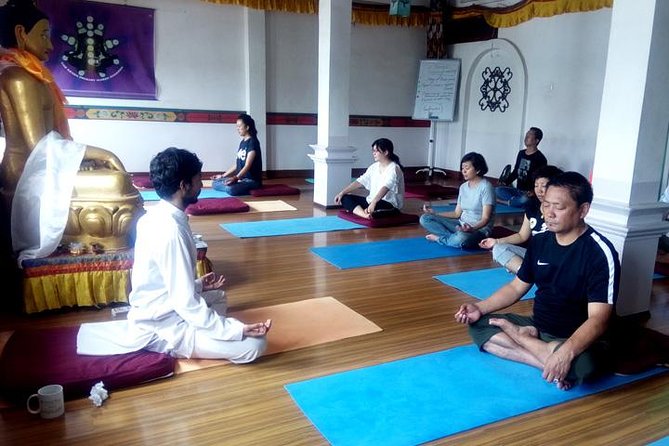
Yoga with a stupa for your backdrop. The Boudhanath Yoga Experience pairs a 2.5-hour hands-on class with time at one of Kathmandu’s most important Buddhist sites. I like the easy hotel pickup and drop-off, and I like that the session covers more than stretching, with breathing, hand gestures, concentration, and meditation included. The main consideration is the price: at $110 per person, this is a serious spend for a four-hour activity.
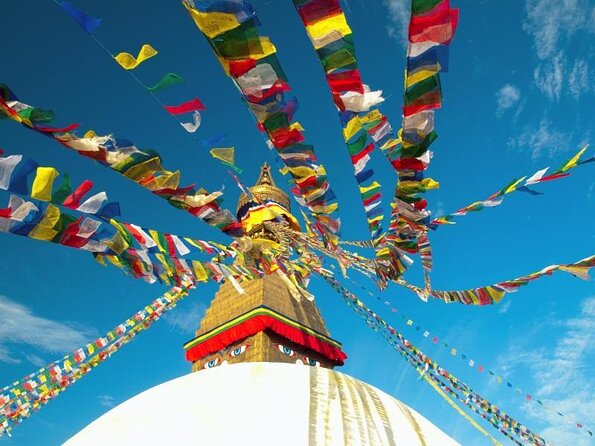
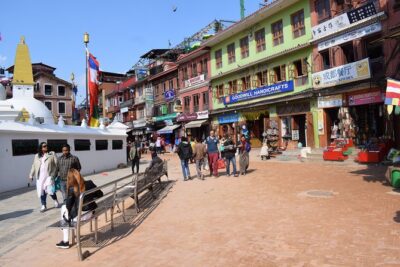
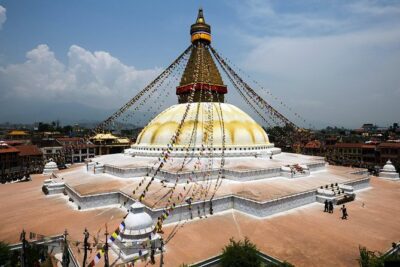
You’ll practice near Boudhanath Stupa, with its great white dome and watchful Buddha eyes close by. The setting gives the class real religious context rather than putting yoga in an ordinary studio. Still, Boudha is an active city area, so you should expect some background sound instead of mountain silence.
In This Review
- Key points to know before booking
- Why Boudhanath is a meaningful place for yoga
- What happens during the 9:00 am outing
- The five parts of the yoga lesson
- What the teaching style may feel like
- The Boudhanath Stupa visit adds real context
- Is $110 per person fair value?
- Clothing, comfort, and participation
- Who will enjoy this experience most
- Should you book the Boudhanath Yoga Experience?
- FAQ
- What time does the Boudhanath Yoga Experience begin?
- How long does the experience last?
- How long is the yoga class?
- Is hotel transportation included?
- Is entry to Boudhanath Stupa included?
- What should I wear, and are food and drinks provided?
Key points to know before booking
- A yoga class beside Boudhanath Stupa: The world’s largest Buddhist stupa provides a powerful setting for practice and reflection.
- More than physical exercise: The lesson includes asanas, mudras, pranayama, Dharana, and Dhyana.
- Hotel transfers are included: A private vehicle takes you from your Kathmandu hotel and brings you back.
- A small maximum group: The experience allows no more than 14 participants, which should give the instructor room to offer guidance.
- A full 2.5-hour session: The class takes up most of the four-hour outing, so this is not a quick introductory stretch.
- A costly but convenient package: The $110 price includes transport, instruction, and the Boudhanath Stupa entry fee, but not food or drinks.
Why Boudhanath is a meaningful place for yoga
Boudhanath is not simply a backdrop chosen for good photographs. It is a major Buddhist pilgrimage site and home to a large Tibetan community living outside Tibet. That setting matters because the class connects physical yoga with Buddhist ideas about attention, energy, and release from mental strain.
You will have the chance to see Boudhanath Stupa, described as the world’s largest Buddhist stupa, directly across from the yoga center. The exact amount of sightseeing time is not specified, so I would treat the stupa visit as part of the setting and tour flow rather than expect a separate guided history walk.
The stupa gives you a useful point of focus. Instead of practicing in a sealed room with no connection to the city, you are aware of a sacred place nearby. That can make breathing and meditation feel less like isolated wellness exercises and more like part of a living religious tradition.
At the same time, this is still Kathmandu. Boudha is an active urban area, and the setting may include ordinary city noise. One participant praised the peaceful feel of the meditation despite being in a busy area, noting that the surroundings did not interrupt the practice. That is encouraging, but you should not book this expecting complete quiet.
More visits to Boudhanath:
- Kathmandu Spiritual Sites: Bodhnath & Pashupatinath Tour
★ 5.0 · 185 reviews - PashupatiNath and BoudhaNath – Private/Small Group
★ 5.0 · 18 reviews - Sacred Pashupatinath: Aarati,Cremation Rites & Boudha Stupa
★ 5.0 · 18 reviews
What happens during the 9:00 am outing
The experience begins at 9:00 am, with pickup from your Kathmandu hotel. A private vehicle handles the transport, which removes one of the least pleasant parts of a short Kathmandu outing: working out how to reach Boudha and then arranging your return.
The total experience lasts about four hours. Since the yoga lesson itself runs for 2.5 hours, the remaining time covers transfers, entry, settling into the class, and the visit to the Boudhanath area. Your actual schedule may depend on your hotel location and road conditions, so leave a little room around the stated timing if you have another appointment afterward.
Once you arrive, the yoga instruction is designed as a hands-on workshop. That means you are not just listening to a talk about Buddhist philosophy. You are expected to practice the movements, breathing methods, gestures, mental exercises, and meditation techniques introduced by the instructor.
The class is led by a trained yoga instructor. The available feedback describes the teaching as clear, with movements explained one by one and questions welcomed. That detail is important for beginners, since traditional terms can sound imposing until someone breaks them into simple physical and mental steps.
The five parts of the yoga lesson
The teaching covers several parts of yoga, each aimed at a different part of your body or mind. The course describes these elements as part of a wider Buddhist-inspired approach.
Asanas are the physical postures. You will work on proper positioning of the body rather than simply moving through a fast sequence. Loose-fitting clothing is advised, and it is worth following that suggestion because a long class with restricted clothing can become uncomfortable quickly.
Mudras are hand gestures used to support the flow of energy. These may feel unfamiliar if your yoga experience has focused only on stretching, but they help show how this class differs from a standard fitness session.
Pranayama covers breathing techniques. The purpose here is relaxation, purification, and attention to the body’s energy. If you find that your mind races during meditation, the breathing section may be especially useful because it gives you something concrete to follow.
Dharana concerns concentration and control of the mind. This is where the session moves beyond flexibility. You work on directing attention toward positive energy rather than allowing every passing thought to take over.
Dhyana is meditation, described as a way to free the mind. The class does not promise a particular result, and you should not expect one session to transform your mental habits. Still, having a teacher guide you through the process can be more useful than trying to meditate alone with a phone app.
The program also refers to the Eight-Fold Path and Seven Disciplines taught by Buddha. The supplied details do not spell out a full lesson plan for each discipline, so I would expect an introduction rather than an academic course in Buddhist doctrine. The value comes from seeing how these teachings fit together as a whole, with physical posture, breath, attention, and meditation treated as related practices.
What the teaching style may feel like
The clearest praise for the experience concerns the instructor’s manner. One participant described feeling genuinely connected with the teacher and welcomed by his positive energy. The same feedback praised the way each movement was explained and encouraged participants to ask questions.
That suggests a class built around personal guidance rather than a silent, follow-the-leader routine. With a maximum of 14 people, the instructor should have a better chance to notice confusion and respond to questions than in a large commercial class.
The exact instructor’s name is not provided, so I cannot tell you who will teach your session. The company is Himalayan Advisor Pvt. Ltd., and the experience includes a highly qualified, trained yoga instructor. If the teacher’s background is especially important to you, ask for the instructor’s name and credentials before booking.
You should also be honest about your aims. If you want a hard workout, rapid flows, or advanced poses, this may not be the right fit. The description places equal weight on breathing, meditation, mental control, and spiritual practice. It is better suited to someone curious about the Buddhist side of yoga than someone looking only for a demanding exercise class.
More Yoga and Meditation Retreats in Kathmandu:
- 200 Hours Yoga Teacher Training at Nepal Yoga Home (starts on 1st of everymonth)
★ 5.0 · 125 reviews - 3 night 4 Day Yoga & Ayurveda Retreat to Detox the Body & Mind, Nepal
★ 5.0 · 37 reviews - 10 Days Ayurveda & Yoga Retreat in Kathmandu, Nepal
★ 5.0 · 24 reviews - 21 Day Ayurveda & Yoga Retreat in the Himalayan country, Nepal
★ 5.0 · 19 reviews
The Boudhanath Stupa visit adds real context
Entry to Boudhanath Stupa is included, which is useful because you do not need to handle another ticket during the morning. The stupa is located across from the yoga center, so the visit is closely tied to the class rather than being an unrelated stop added to the itinerary.
The tour gives you a chance to look at one of Kathmandu’s most important religious sites while taking part in a practice linked to the same broad spiritual setting. That connection is the strongest reason to choose this experience over a regular yoga class at your hotel.
I would keep your expectations measured about sightseeing time. The program is built around the yoga workshop, not a full Boudhanath tour with extended explanations of architecture, rituals, and Tibetan Buddhist communities. If the stupa is your main interest, plan another visit or a separate walking tour so you can explore at your own pace.
Is $110 per person fair value?
The price is $110 per person. That is not a bargain for a four-hour activity, especially since food and drinks are not included. You are paying for a private vehicle, round-trip hotel transport, a trained instructor, 2.5 hours of teaching, and entry to Boudhanath Stupa.
The value improves if you care about convenience. Kathmandu traffic and unfamiliar streets can make a short morning outing surprisingly tiring. Having pickup and drop-off arranged means you can focus on the class instead of finding the yoga center or negotiating a return ride.
The price also makes more sense if you would otherwise book a private yoga lesson, arrange transport, and pay separately for stupa entry. Group discounts are offered, so the experience may work better for couples, families, or friends traveling together. Ask how the discount applies before you reserve.
For a solo participant on a tight budget, $110 may feel high. You could likely find a less expensive yoga class in Kathmandu, but it may not include the Boudhanath setting, private transport, or entry fee. The question is not simply how much yoga you receive. It is how much you value the location and the ease of the morning.
The experience is often booked about 113 days ahead, which suggests that you should not leave it until the last moment if the date matters. Confirmation is provided at booking, and free cancellation is available if you cancel at least 24 hours before the start time. Changes or cancellations inside that window are not accepted for a refund.
Clothing, comfort, and participation
Wear loose-fitting clothes. You will need freedom of movement for postures, and comfortable clothing also helps during breathing and meditation.
Most people can participate, according to the provided information. No special fitness level is listed, and the maximum group size is 14. Still, yoga can feel demanding in unexpected ways, especially during a long session involving seated positions, stretching, and focused breathing.
If you have an injury, mobility concern, or medical issue that could affect exercise or breathing work, ask the provider before booking. The supplied details do not describe modifications, mats, changing facilities, or the exact class level, so do not assume those details without checking.
Food and drinks are not included. The outing starts in the morning and lasts about four hours, so have breakfast beforehand or ask the provider whether there is time to buy something nearby. Since no meal stop is listed, you should not count on food being part of the program.
Public transportation is nearby, but you will not need to use it if you take advantage of the included private transfers. That is a small but useful benefit for anyone staying outside central Kathmandu or anyone who prefers not to navigate the city before a reflective activity.
Who will enjoy this experience most
I would recommend this to you if you want a gentle introduction to yoga’s spiritual side and have a real interest in Boudhanath. The combination of posture, breath, hand gestures, concentration, and meditation gives you a broader lesson than a normal drop-in class.
It also suits you if convenience matters. Hotel pickup, private transport, stupa entry, and a morning start create a tidy package. You can fit it into a Kathmandu stay without spending half the morning arranging local transport.
Couples and small groups may find the group discount useful. The maximum of 14 people keeps the experience from becoming a huge class, while still allowing you to share the setting with others.
I would think twice if you mainly want sightseeing. The stupa is part of the experience, but the class takes 2.5 hours and remains the central activity. I would also hesitate if $110 is beyond your comfort zone or if you want a silent retreat far from city noise.
Should you book the Boudhanath Yoga Experience?
Book it if you want a structured yoga lesson with Buddhist context, not just a morning workout. The stupa, Tibetan setting, guided meditation, and private transfers give the experience a clear sense of place.
The strongest features are the peaceful focus reported during meditation, the instructor’s careful move-by-move explanations, and the chance to ask questions. The main drawbacks are the high price, the lack of included food, and the fact that Boudhanath remains an active city area.
For someone visiting Kathmandu who wants one thoughtful wellness activity, I think the package is worth considering. For a budget-conscious visitor or an experienced yogi seeking advanced physical practice, a simpler local class may be a better choice.
FAQ
What time does the Boudhanath Yoga Experience begin?
The experience starts at 9:00 am.
How long does the experience last?
The total duration is approximately four hours, including transportation, the stupa visit, and the yoga workshop.
How long is the yoga class?
The yoga class lasts 2.5 hours.
Is hotel transportation included?
Yes. Hotel pickup and drop-off are included, along with transport by private vehicle from your Kathmandu hotel.
Is entry to Boudhanath Stupa included?
Yes. The entry fee to Boudhanath Stupa is included in the price.
What should I wear, and are food and drinks provided?
Loose-fitting clothing is advised for comfort during the practices. Food and drinks are not included.
New in the Kathmandu listings
- Traditional Momo Making Class★ 5.0 · 10 reviews
- Kathmandu: Ancient City Kirtipur & Pharping Monastery Tour★ 5.0 · 2 reviews
- Kathmandu to Pokhara Premium sofa bus ticket★ 4.0 · 17 reviews
- Women Empowerment Project(Nepali cooking class & jewelry workshop★ 5.0 · 15 reviews
- 7-Day Langtang Valley Trek from Kathmandu★ 5.0 · 1 review
- Kathmandu 2 Nights 3 Days Chitwan Jungle Safari Tour★ 5.0 · 9 reviews
- Yoga Experience Day Trip with Private Transfer From Kathmandu★ 4.0 · 2 reviews
- Wildlife Adventure in Chitwan Nepal★ 4.0 · 4 reviews
Boudhanath Stupa Tours, compared.
Kathmandu Spiritual Sites: Bodhnath & Pashupatinath Tour
Read our review →
Sacred Pashupatinath: Aarati,Cremation Rites & Boudha Stupa
Read our review →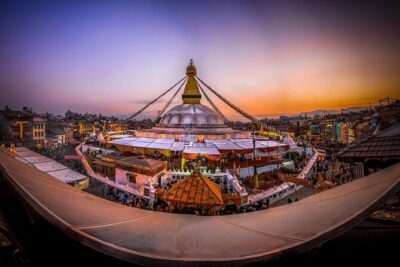
PashupatiNath and BoudhaNath – Private/Small Group
Read our review →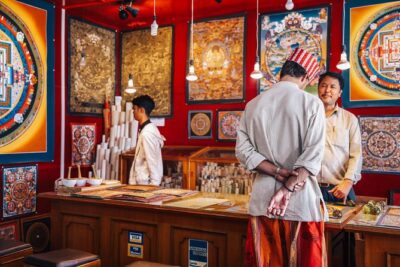
Private Half-Day Tour of Boudhanath and Pashupatinath Temples in Kathmandu
Read our review →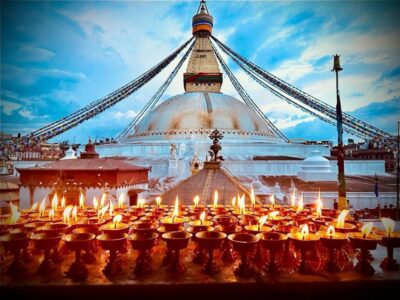
Browse the lists this tour appears in