
REVIEW · UNESCO WORLD HERITAGE TOURS
UNESCO Five World Heritage Tour in Kathmandu
Kathmandu’s sacred core rewards a full day. This private tour links Swayambhunath, both Durbar Squares, Pashupatinath, and Boudhanath, giving you a useful first look at the valley’s Buddhist and Hindu traditions without arranging several taxis yourself. I especially like the private car and included admission fees, two small details that make a packed sightseeing day much easier. The main caution is the pace: with so many courtyards, temples, and museums on the schedule, you will see a lot, but you will not linger everywhere.
I also like the personal guide service. Guides such as Shanti, Sarita, Tej, and Rabina have been praised for clear explanations and flexibility, with Shanti receiving repeated praise for her care and timing. At $130 per person, the value depends on your group size, but the price is reasonable for a private car, guide, hotel transfers within the Ring Road, and all listed entry fees. Food and drinks are extra, and the day can run seven to eight hours, sometimes longer if the schedule expands.
In This Review
- Five places, many layers: key points to know
- Why this private Kathmandu day works
- Swayambhunath and Amideva Buddha Park
- Kathmandu Durbar Square and the old royal center
- Patan’s courtyards, temples, and museum
- Pashupatinath and the Hindu heart of the valley
- Boudhanath, the Buddhist finish
- What the $130 price really buys
- The guide can make or break the pace
- Who should book this Kathmandu experience
- Should you book the five-site tour?
- FAQ
- What time does the tour start?
- How long does the tour last?
- Is hotel pickup included?
- Is this a private tour?
- What transport is provided?
- Are entrance fees included?
- Are food and drinks included?
- What is the cancellation policy?
Five places, many layers: key points to know
- Five major UNESCO sites in one day: The route covers Swayambhunath, Kathmandu Durbar Square, Patan Durbar Square, Pashupatinath, and Boudhanath.
- A private car removes taxi hassle: Pickup and drop-off are offered inside Kathmandu’s Ring Road, including the Boudha area.
- The guide makes the difference: Shanti, Sarita, Tej, and Rabina are specifically praised for cultural explanations, patience, and personal service.
- The schedule adds smaller landmarks: Kumari Chowk, Kaal Bhairab, Patan Museum, the Golden Temple, and several temples fill out the main stops.
- Expect a fast cultural survey: The itinerary gives you a strong overview, though some listed visits last only five to fifteen minutes.
- The price includes the costly basics: Admission to all heritage sites, private transport, guiding, and hotel transfers are included. Meals are not.
Why this private Kathmandu day works
Kathmandu is not a city you understand from a taxi window. Its important places are spread across busy streets and older neighborhoods, and each major square contains several layers of religion, royal power, craft, and daily worship.
This tour solves the basic problem of orientation. You begin at Swayambhunath, move through central Kathmandu, continue to Patan, and finish at Pashupatinath and Boudhanath. The route is ambitious, but it gives you a clear picture of how Hindu and Buddhist traditions share the same valley.
I would choose this experience if I had only a short stay in Kathmandu or wanted a guided first day before exploring at a slower pace. A private tour also lets your guide adjust the rhythm. One guest found Shanti especially accommodating during shopping and a longer-than-expected day, which suggests some flexibility is possible. Still, you should ask about timing at the start rather than assume every extra stop can be added.
The tour begins at 9:00 a.m. Hotel pickup is included inside the Ring Road, including the Boudha area. If your hotel is outside that zone, the supplied details do not promise a transfer, so check before booking.
More UNESCO World Heritage Tours in Kathmandu:
- Private Kathmandu Sightseeing Tour | UNESCO World Heritage sites
★ 5.0 · 756 reviews - Kathmandu: Full Day 7 UNESCO Tour with Lunch – Private/Group
★ 5.0 · 415 reviews - Kathmandu: Full Day Top 4 UNESCO Tour with Lunch – Private/Group
★ 5.0 · 269 reviews
Swayambhunath and Amideva Buddha Park
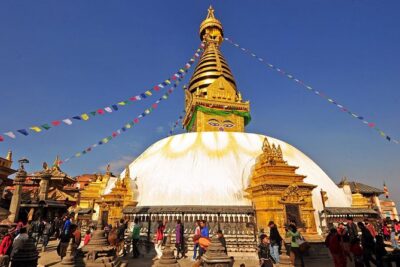
Swayambhunath is a strong opening stop because it introduces the shared religious character of Kathmandu. The hilltop stupa is important to both Buddhist and Hindu communities, and the site is listed among Nepal’s UNESCO World Heritage places.
You have about one hour here, including admission. That is enough time to see the stupa and listen to an explanation of its place in local worship, though the stop is not designed for a slow, reflective visit. The tour description does not specify the number of stairs or the exact walking conditions, so ask your operator if mobility is a concern.
Nearby, Amideva Buddha Park adds about fifteen minutes. Its three large Shakyamuni Buddha statues make it a short but worthwhile pause beside the Swayambhunath hill. I see this as a visual break rather than a major sightseeing stop. It gives your guide another chance to explain Buddhist imagery without taking much time from the larger sites.
Kathmandu Durbar Square and the old royal center
Kathmandu Durbar Square is the first major royal courtyard on the route. Plan on about an hour here, followed by shorter visits to Basantapur Tower, Degu Taleju Temple, Kumari Chowk, and Kaal Bhairab.
The square contains historic and religious structures, with some buildings still being reconstructed. That matters because you should expect an active restoration setting rather than a perfectly preserved old city. The damage and repairs are part of the site’s present story, but construction may affect what you can see on the day.
Basantapur Tower receives thirty minutes. It is described as one of the attractive points in the square, and it gives the royal complex a useful architectural focus. Degu Taleju Temple gets ten minutes. Built in 1564, it represents the kind of concentrated historical detail that can be easy to miss if you walk through the square alone.
Kumari Chowk is one of the most distinctive stops. This red-brick, three-level building contains a courtyard associated with the Kumari, the living goddess selected as a girl and traditionally replaced when she reaches puberty. The scheduled visit is only ten minutes, so your guide’s explanation will matter more than a long stay.
One particularly memorable possibility is seeing the Kumari herself. That is not guaranteed by the itinerary, but one account described being fortunate enough to see her. Treat it as a lucky moment, not a promised feature.
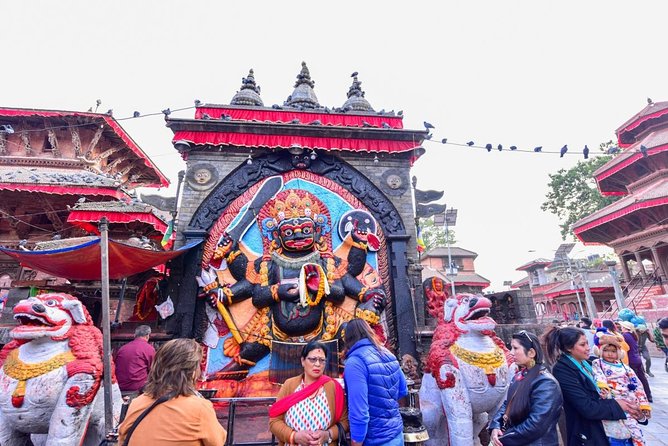
Kaal Bhairab takes about five minutes. The large statue represents Bhairav, a fierce form associated with Shiva. This is a quick stop, but it helps show how Kathmandu’s public squares remain religious spaces, not just museum pieces.
Patan’s courtyards, temples, and museum
Patan, also called Lalitpur, receives a substantial part of the day. The itinerary separates Patan Royal Palace and Patan Durbar Square, with roughly an hour at the palace area and forty-five minutes in the square.
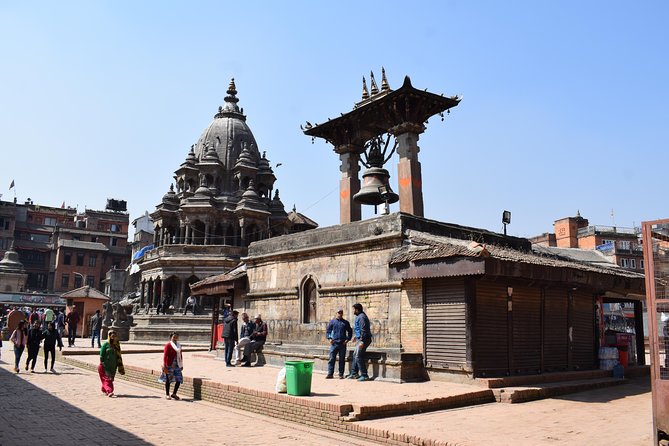
Patan is especially rewarding for architecture. Newar builders and artists shaped the courtyards, pagoda temples, brickwork, woodcarving, and metal details you see here. The royal complex includes Krishna Temple, Tulaja Devi Temple, Patan Museum, and the Golden Temple area.
The pace is still brisk. Fifteen minutes is assigned to Patan Museum, which is enough for a selected look but not a serious museum visit. Inside, you can see old statues, carved windows, and wooden pillars. If museum collections are a major interest, tell your guide early. You may need to choose between a fuller museum visit and some of the smaller temple stops.
The Golden Temple, or Hiranya Varna Mahavihar, is another ten-minute stop. This 12th-century, pagoda-style temple is decorated with silver and gold details and bronze figures. The itinerary identifies it as an important Buddhist site in Patan, making it a useful contrast with the Hindu temples elsewhere in the day.
The remaining Patan stops include Taleju Mandir Temple, Vishwanath Mandir Temple, and Bhimsen Temple. Taleju Mandir was rebuilt by Srinivasa Malla after a fire in 1676. Vishwanath Mandir was built during the reign of Siddhi Narsingh Malla and dedicated to Shiva. Bhimsen Temple, built in 1680 by Srinivasa Malla, is worshiped by the Newar community as a god of business and trade.
These short visits are best understood as a guided architectural walk. You will not have time to study every carving, but a good guide can connect the temples to royal patronage, trade, worship, and Newar life. Sarita, in particular, was praised for answering detailed questions about Nepali history and culture, so a question-led approach may work well here.
More history tours in Kathmandu:
- UNESCO Seven World Heritage Tour in Kathmandu
★ 5.0 · 253 reviews - Kathmandu Private Sightseeing Tour | UNESCO World Heritage Sites
★ 5.0 · 109 reviews - Kathmandu: Full Day Private Top 4 UNESCO Heritage Tour W/Lunch.
★ 5.0 · 86 reviews - Kathmandu World Heritage Tour
★ 5.0 · 74 reviews
Pashupatinath and the Hindu heart of the valley
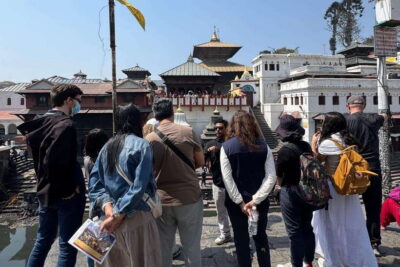
Pashupatinath receives about one hour and is one of the day’s most important stops. The complex contains more than 500 shrines and temples and is the principal temple center for devotees of Shiva.
This is not simply another ornate structure to photograph. It is a living Hindu religious complex, and your guide’s role is to help you understand what you are seeing while respecting the nature of the place. The tour description emphasizes the many pagoda structures around the complex, but it does not promise access to every building or area.
For me, Pashupatinath provides the clearest sense of Kathmandu as an active sacred center. Compared with the royal squares, where you focus on architecture and political history, here the religious purpose is central. Keep your clothing and behavior respectful, and follow your guide’s advice about where visitors may go.
The one-hour allocation is useful, but the overall schedule means you will need to keep moving. If this site is your main reason for booking, tell the operator before the day begins so you understand how much time can realistically be devoted to it.
Boudhanath, the Buddhist finish
Boudhanath closes the listed itinerary with another one-hour visit. The great stupa is described as a 36-meter-high dome surrounded by prayer wheels and images connected with Buddha.
This is a fitting final stop because it returns you to the Buddhist side of Kathmandu’s religious story after the Hindu focus at Pashupatinath. The large white dome and surrounding devotional features are visually different from the temple courtyards of Patan and Kathmandu, so the day ends with a clear change of setting.
I would pay attention here to the rhythm of the place rather than just the central structure. Walk around the stupa with your guide, ask about the prayer wheels and images, and notice how the site functions as a place of worship as well as a heritage attraction. The schedule gives you enough time for a proper circuit, though not necessarily an unhurried one.
Because pickup and drop-off include the Boudha area, this tour may be especially convenient if you are staying nearby. The itinerary lists Boudhanath as the final major stop, but the exact return timing is not stated.
What the $130 price really buys
At $130 per person, this is not a bargain independent sightseeing day. It is a convenience-focused private service, and the value improves when two or more people share the vehicle and guide.
The included items are important:
- Private car transport
- Professional guide
- Admission fees at all heritage sites
- Hotel pickup and drop-off within the Ring Road, including Boudha
Those admissions can add up across five major places and the smaller sites. You also avoid negotiating separate taxi rides between Swayambhunath, the two Durbar Squares, Pashupatinath, and Boudhanath. For a first day in Kathmandu, that simplicity has real value.
Food and drinks are not included. The schedule is long enough that you should plan for your own meals, although the supplied details do not name a restaurant or set meal break. Ask how lunch fits into the day before departure, especially if you prefer a relaxed meal rather than a quick pause.
The tour is private, so only your group participates. That is useful for solo visitors, couples, families, or friends who want to ask questions without holding up strangers. It also makes the $130 rate easier to justify for a small group.
The guide can make or break the pace
The strongest praise centers on the guides rather than the vehicle or the admission arrangement. Shanti is repeatedly singled out for being professional, attentive, flexible, and well informed. Sarita is described as a scholar of Nepali history who could handle detailed questions while keeping the day personable. Tej is credited with explaining how religion and culture developed in Nepal, and Rabina is praised for organizing a strong Patan and Bhaktapur visit.
Those names do not guarantee who will lead your tour. They do show the kind of service the company aims to provide. I would send your interests in advance if possible: architecture, Hindu worship, Buddhism, royal history, photography, or shopping. The more specific you are, the easier it should be for the guide to give the day a useful shape.
The tour has a five-site headline but many separate stops. That can feel generous or rushed, depending on your style. If you like seeing the main sights and learning the basic story in one day, the plan is efficient. If you prefer sitting quietly in one courtyard, studying carvings, or spending an hour in a museum, you may find the schedule too full.
Who should book this Kathmandu experience
I would recommend this tour to you if:
- You have one full day in Kathmandu
- You want a private guide rather than several independent taxi trips
- You care about religion, architecture, royal history, and local culture
- You are staying inside the Ring Road
- You want entrance fees handled in advance
- You prefer an organized overview before exploring alone
I would be more cautious if you dislike early starts, packed sightseeing days, or short visits. The start time is 9:00 a.m., the duration is about seven to eight hours, and some stops last only five or ten minutes. You may also want a different plan if Bhaktapur or Changu Narayan is essential to your understanding of the Kathmandu Valley, since they are not included in the listed route.
The tour is available with free cancellation up to 24 hours before the start time. Within 24 hours, the payment is not refunded, and changes are not accepted. That policy is worth remembering when arranging a tightly scheduled Nepal trip.
Should you book the five-site tour?
I would book it for a first Kathmandu visit, especially with limited time. The private car, included entry fees, Ring Road transfers, and strong guide service remove much of the day’s practical friction, while the route gives you a useful comparison between Buddhist stupas, Hindu temple complexes, and Newar royal squares.
I would not book it expecting a slow, scholarly examination of every monument. This is a broad introduction with many quick stops. To get the most from it, tell your guide which two or three sites matter most to you and ask for a little extra time there if the day allows. For a short stay, that tradeoff is sensible: you see a great deal, learn how the pieces fit together, and finish with a clearer sense of Kathmandu than you would likely gain by handling the route alone.
FAQ
What time does the tour start?
The tour starts at 9:00 a.m.
How long does the tour last?
The experience lasts approximately seven to eight hours.
Is hotel pickup included?
Yes. Hotel pickup and drop-off are included for hotels inside Kathmandu’s Ring Road, including the Boudha area.
Is this a private tour?
Yes. Only your group participates in the activity.
What transport is provided?
Transport is provided by private car.
Are entrance fees included?
Yes. Entry fees for all the heritage sites visited are included.
Are food and drinks included?
No. Food and drinks are not included in the price.
What is the cancellation policy?
You can cancel up to 24 hours before the experience starts for a full refund. Cancellations or changes made less than 24 hours before the start time are not accepted, and no refund is provided.
New in the Kathmandu listings
- Traditional Momo Making Class★ 5.0 · 10 reviews
- Kathmandu: Ancient City Kirtipur & Pharping Monastery Tour★ 5.0 · 2 reviews
- Kathmandu to Pokhara Premium sofa bus ticket★ 4.0 · 17 reviews
- Women Empowerment Project(Nepali cooking class & jewelry workshop★ 5.0 · 15 reviews
- 7-Day Langtang Valley Trek from Kathmandu★ 5.0 · 1 review
- Kathmandu 2 Nights 3 Days Chitwan Jungle Safari Tour★ 5.0 · 9 reviews
- Yoga Experience Day Trip with Private Transfer From Kathmandu★ 4.0 · 2 reviews
- Wildlife Adventure in Chitwan Nepal★ 4.0 · 4 reviews
UNESCO World Heritage Tours, compared.
Private Kathmandu Sightseeing Tour | UNESCO World Heritage sites
Read our review →
Full Day 7 UNESCO Tour with Lunch – Private/Group
Read our review →
Full Day Top 4 UNESCO Tour with Lunch – Private/Group
Read our review →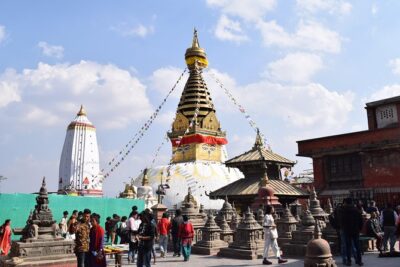
Full-Day 7 UNESCO Tour with Lunch – Private/Group
Read our review →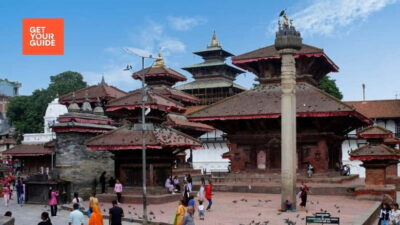
Browse the lists this tour appears in