
REVIEW · UNESCO WORLD HERITAGE TOURS
UNESCO World Heritage Site tour in Kathmandu
Kathmandu’s past is still in use. This private UNESCO tour links four major sites in one well-planned half-day: royal squares, Hindu temples, and Buddhist stupas. I like the private vehicle and guide, which keep the day practical, and I like that monument fees, hotel pickup, and local taxes are included. The main drawback is the pace: fitting so much into five to six hours leaves limited time for lingering.
You will visit Kathmandu Durbar Square, Pashupatinath Temple, Boudhanath Stupa, and Swayambhunath, also called the Monkey Temple. The tour suits first-time visitors who want a broad introduction, but you should expect traffic, crowds, steps at some sites, and a full schedule. Lunch and tips are extra.
In This Review
- Key points to know before booking
- What this Kathmandu heritage tour gets right
- Kathmandu Durbar Square and the old royal center
- Pashupatinath Temple beside the Bagmati River
- Boudhanath Stupa and Tibetan Buddhist tradition
- Swayambhunath, the Monkey Temple, and valley views
- A private vehicle changes the rhythm of the day
- What the $100 price includes
- The provider’s flexibility matters
- Who should book this experience
- Should you book this Kathmandu UNESCO tour?
- FAQ
- How long does the Kathmandu UNESCO tour last?
- Which sites are included in the tour?
- Is transportation included?
- Are monument entrance fees included?
- Is lunch included?
- What happens if bad weather cancels the tour?
Key points to know before booking
- Four UNESCO-era landmarks in one private outing: You cover Kathmandu Durbar Square, Pashupatinath, Boudhanath, and Swayambhunath without arranging separate transport.
- A useful mix of faiths and royal history: The route brings together Hindu worship, Tibetan Buddhism, Newar palace architecture, and living temple traditions.
- Private transport matters in Kathmandu: Your group travels by private vehicle, with hotel or port pickup and drop-off included.
- Tickets are already covered: Monument entry fees, taxes, guide service, and vehicle costs are part of the $100 per-person price.
- Plan on five to six hours: The listed visits add up to roughly six hours, so this is a focused sightseeing day rather than a leisurely stroll.
- Weather can affect departure: Poor weather may lead to a new date or a full refund, and cancellation is free up to 24 hours before the start time.
What this Kathmandu heritage tour gets right
Kathmandu Valley is not a place where history sits safely behind glass. Temples remain places of worship. Stupas still draw daily prayer. Palace squares continue to function as gathering places and public spaces. That gives this tour its real value: you are not simply checking off monuments, you are seeing religious and cultural life still taking place.
The route also solves a common Kathmandu problem. The sights are spread across the valley, and organizing four major stops by yourself can take time. A private vehicle, pickup, guide, entry fees, and return transport make the day easier to manage.
At $100 per person, the price deserves a closer look. It is not the cheapest way to see Kathmandu, especially for a solo visitor. But it includes a private vehicle, a professional guide, all listed monument fees, local taxes, and pickup and drop-off. For two or more people, the convenience becomes easier to justify, particularly if you value a fixed route and do not want to sort out city transport at every stop.
The tour is also private. Only your own group takes part, which gives you more control than a large shared bus. You can ask questions without competing with a crowd, though the tight schedule still limits how long you can spend at each monument.
More UNESCO World Heritage Tours in Kathmandu:
- Private Kathmandu Sightseeing Tour | UNESCO World Heritage sites
★ 5.0 · 756 reviews - Kathmandu: Full Day 7 UNESCO Tour with Lunch – Private/Group
★ 5.0 · 415 reviews - Kathmandu: Full Day Top 4 UNESCO Tour with Lunch – Private/Group
★ 5.0 · 269 reviews
Kathmandu Durbar Square and the old royal center
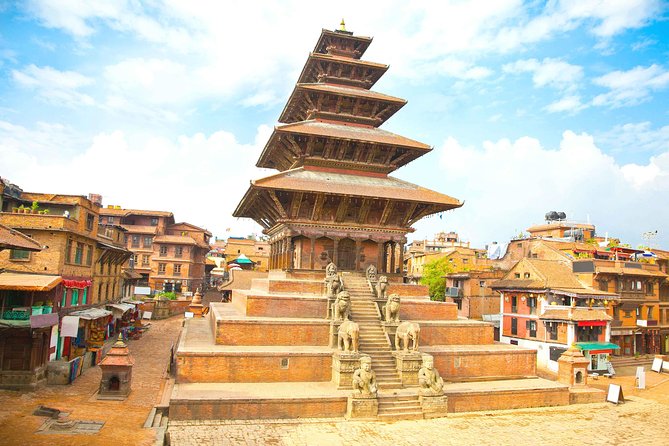
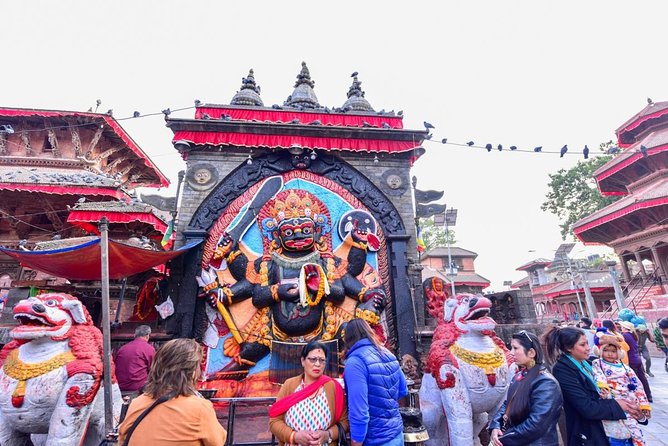
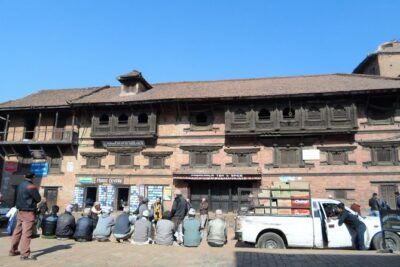
The tour begins with about 90 minutes at Kathmandu Durbar Square. The word durbar means palace, and this was the place where Kathmandu’s kings were crowned and ruled. The square remains the traditional heart of the old city, surrounded by the architecture associated with Nepal’s royal past.
This is a strong opening because it gives you a sense of how power, religion, and daily life met in one urban space. The buildings are not presented as isolated monuments. They form a setting of courtyards, temples, palace structures, and traditional design.
I would use this first stop to pay attention to the details rather than rush toward a single famous building. Look at the relationship between the palace complex and the surrounding religious structures. Your guide can help explain how the square functioned as both a royal center and a public place.
Ninety minutes is enough for an introduction, but not enough for every corner. If palace architecture is your main interest, you may wish the schedule allowed more time here. The tradeoff is clear: the tour gives you four major sites in one day, so each stop must remain focused.
The entry fee is included, which removes one small decision during the morning. Your guide is also important here because the square’s meaning is not always obvious from the buildings alone. A brief explanation of royal ceremonies and local traditions can turn a walk through old walls into a much clearer picture of Kathmandu.
Pashupatinath Temple beside the Bagmati River
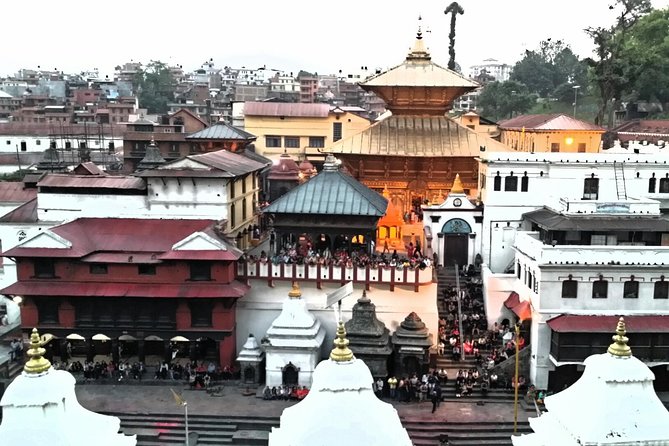
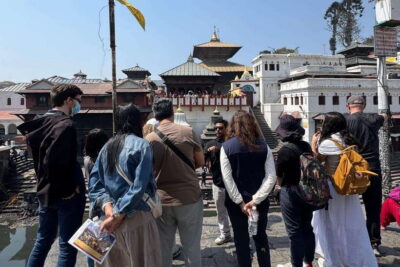
The next stop allows about 90 minutes at Pashupatinath Temple, Nepal’s most important Hindu temple and the oldest known Hindu temple in the country. It is dedicated to Lord Shiva and sits beside the holy Bagmati River.
This is one of the tour’s most significant visits, especially if you want to understand Nepal beyond architecture. Pashupatinath is a living religious center, not simply an archaeological site. The river, temple grounds, and daily worship give the stop a different feeling from the palace squares.
The tour description identifies Pashupatinath as the largest Hindu temple in Nepal and notes that its date of origin is unknown. That uncertainty is part of the site’s character. You are encountering a place whose importance reaches back beyond a single documented founding date.
Your 90 minutes here should give you time to take in the setting and listen to your guide’s explanation. Keep in mind that this is an active Hindu temple. The experience calls for quiet attention and respect for worshippers, ceremonies, and restricted areas.
This stop may feel more intense than the others because it combines devotion, the river, and a major sacred site in one compact visit. If you prefer only polished monuments and neat museum displays, Pashupatinath may feel less predictable. If you want to see how religion remains part of everyday life, it is one of the most valuable parts of the day.
Boudhanath Stupa and Tibetan Buddhist tradition
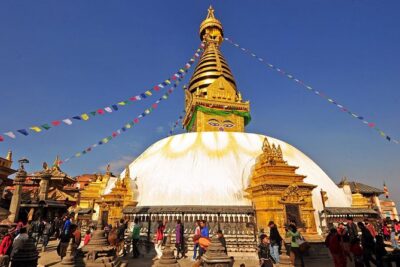
Boudhanath receives about one hour. Its white dome, gilded tower, and Buddha’s all-seeing eyes create one of the most recognizable monuments in Kathmandu. The structure is praised for its clean lines and careful proportions, and the overall effect is notably different from the Hindu temple complex at Pashupatinath.
This is the tour’s clearest introduction to Tibetan Buddhism in Kathmandu. The stupa is described as a center point for Tibetan Buddhist life in the city, while Nepal itself is closely associated with the birthplace of Gautam Buddha. The visit helps you see that Kathmandu’s religious identity is not limited to one tradition.
An hour is short, but it works for a first look. You can focus on the white dome, the gilded upper section, and the painted eyes that look out in the cardinal directions. A guide can explain the symbolism and show you how the monument fits into wider Buddhist practice.
The limited time is the main concern. Boudhanath rewards careful observation, and you might want to pause longer than the schedule permits. Still, this stop provides a strong contrast after Pashupatinath. One is centered on Lord Shiva and the Bagmati River; the other draws you toward the symbolism and devotional world of the stupa.
Because transport is private, the stop does not require you to work out a separate route between distant parts of the valley. That convenience matters here. You can spend your energy looking at the monument instead of worrying about the next connection.
More history tours in Kathmandu:
- UNESCO Seven World Heritage Tour in Kathmandu
★ 5.0 · 253 reviews - Kathmandu Private Sightseeing Tour | UNESCO World Heritage Sites
★ 5.0 · 109 reviews - Kathmandu: Full Day Private Top 4 UNESCO Heritage Tour W/Lunch.
★ 5.0 · 86 reviews - Kathmandu World Heritage Tour
★ 5.0 · 74 reviews
Swayambhunath, the Monkey Temple, and valley views
The final major visit is Swayambhunath, also known as Swoyambhu Mahachaitya or the Monkey Temple. The planned time here is about two hours, making it the longest stop of the day.
Swayambhunath is described as one of Kathmandu Valley’s crowning works of architecture. Its whitewashed dome rises toward a gilded spire, with four iconic faces of the Buddha looking toward the four cardinal directions. The design is simple in outline but powerful when seen as a complete monument.
This stop gives you more breathing room than the other three. Two hours allow your guide to explain the site while you take time with the dome, spire, and surrounding religious setting. The name Monkey Temple also signals that this is a place with a more informal character than a royal square or major Hindu sanctuary.
You should be ready for a more demanding visit if steps are involved. The supplied information does not specify the exact access conditions or number of steps, so ask the provider about your needs before booking if mobility is a concern. The tour states that most people can participate, but that is not the same as a detailed accessibility guarantee.
Swayambhunath is a fitting final stop because it gathers several themes from the day in one place: Buddhist devotion, traditional architecture, and the broad importance of the Kathmandu Valley. With two hours assigned here, you are less likely to feel rushed than at Boudhanath.
A private vehicle changes the rhythm of the day
Pickup and drop-off at your hotel or port are included, along with transport by private vehicle. In a city where four major sights are spread across different areas, that is more than a minor comfort. It keeps the route together and saves you from arranging separate rides.
The group size is also a major benefit. This is a private activity, so only your own party participates. That makes it easier to ask for clarification, adjust the pace within reason, and hear the guide clearly.
Do not mistake private transport for a completely relaxed schedule. The planned visits total about six hours, while the overall duration is listed as five to six hours. Traffic and the distance between sites can affect the exact timing. You should keep the rest of your day flexible rather than booking a tight connection immediately afterward.
A professional guide is included. No guide’s personal name is provided, so I cannot promise a particular guide. Still, a guide is especially useful at these sites because the value lies in context: why a palace square mattered, why a temple remains sacred, and how the Buddhist stupas differ in meaning and design.
What the $100 price includes
The $100 per-person cost includes:
- Monument entry fees during sightseeing
- Professional guide service
- Private vehicle transport
- Hotel or port pickup and drop-off
- Local taxes
- All listed fees and taxes
Lunch is not included. Tips for the guide and driver are also not included, so budget for those separately if you choose to give them.
The strongest value comes from combining admissions and transport in one price. You do not need to keep stopping to pay entry fees, and you avoid building a separate transport plan for each site. The price is easier to defend for a couple, family, or small private group than for one person traveling alone.
Group discounts are offered, though the exact discount is not specified. Ask for the current group rate before booking rather than assuming how much you will save. Since the tour is private, a larger party may find the per-person cost more attractive.
The lack of lunch is not a serious problem for a five to six hour outing, but you should plan around it. The tour information does not specify a meal stop, so do not assume lunch is part of the route.
The provider’s flexibility matters
The only detailed feedback supplied praises Extollo Adventures for caring and flexible service during travel and weather problems. The writer, John, specifically described the staff as dedicated and said that this helped make the wider trip, including Kathmandu sightseeing, memorable.
That comment does not tell you everything about the guide or the exact sightseeing pace. It does show the provider’s strongest praised quality: support when plans become difficult. That is useful in Nepal, where weather can affect departures.
The tour requires good weather. If poor weather forces cancellation, you are offered another date or a full refund. You can also cancel for a full refund up to 24 hours before the start time. Changes or cancellations made less than 24 hours before departure are not accepted for a refund.
A current valid passport is required on the day of the tour. At booking, you must provide each participant’s passport name, number, expiry date, and country. This is an important practical detail, so have those details ready before you reserve.
Who should book this experience
I would recommend this tour to a first-time visitor who wants a strong overview of Kathmandu’s cultural landmarks without spending several days arranging separate visits. It also suits couples, families, and small groups that value a private vehicle and direct access to a guide.
It is a good fit if you want both Hindu and Buddhist sites. The route does not limit you to palaces or monuments. You see royal history at two durbar areas in the wider tour description, along with Pashupatinath, Boudhanath, and Swayambhunath. The stated stops focus on Kathmandu Durbar Square, Pashupatinath, Boudhanath, and Swayambhunath, so confirm the exact route if seeing Patan Durbar Square is essential to you.
I would hesitate if you want a slow photographic outing, long museum visits, or substantial free time at every monument. The schedule is efficient rather than leisurely. You should also ask about access arrangements before booking if steps or walking are a concern, since detailed accessibility information is not provided.
Should you book this Kathmandu UNESCO tour?
Book it if you want to cover Kathmandu’s key sacred and royal sites in one private half-day, with transport, entry fees, and a guide handled for you. The mix of living Hindu and Buddhist centers gives you a far better introduction than visiting palace architecture alone.
Skip it if you already know these sites well or prefer setting your own pace. For most first visits, though, the $100 price offers a sensible package, especially when shared among a small group. Keep your schedule open, bring your passport details, plan for no included lunch, and allow the monuments enough attention to be more than a quick checklist.
FAQ
How long does the Kathmandu UNESCO tour last?
The experience lasts approximately five to six hours. The planned sightseeing time across the four main stops totals about six hours.
Which sites are included in the tour?
The listed stops are Kathmandu Durbar Square, Pashupatinath Temple, Boudhanath Stupa, and Swayambhunath, also called Swoyambhu Mahachaitya or the Monkey Temple.
Is transportation included?
Yes. The tour includes transport by private vehicle, along with hotel or port pickup and drop-off.
Are monument entrance fees included?
Yes. Monument entry fees during the sightseeing tour, local taxes, and all listed fees and taxes are included.
Is lunch included?
No. Lunch is not included in the tour price. Tips for the guide and driver are also excluded.
What happens if bad weather cancels the tour?
The experience requires good weather. If poor weather causes cancellation, you will be offered a different date or a full refund.
New in the Kathmandu listings
- Traditional Momo Making Class★ 5.0 · 10 reviews
- Kathmandu: Ancient City Kirtipur & Pharping Monastery Tour★ 5.0 · 2 reviews
- Women Empowerment Project(Nepali cooking class & jewelry workshop★ 5.0 · 15 reviews
- Kathmandu to Pokhara Premium sofa bus ticket★ 4.0 · 17 reviews
- 7-Day Langtang Valley Trek from Kathmandu★ 5.0 · 1 review
- Kathmandu 2 Nights 3 Days Chitwan Jungle Safari Tour★ 5.0 · 9 reviews
- Yoga Experience Day Trip with Private Transfer From Kathmandu★ 4.0 · 2 reviews
- Wildlife Adventure in Chitwan Nepal★ 4.0 · 4 reviews
UNESCO World Heritage Tours, compared.
Private Kathmandu Sightseeing Tour | UNESCO World Heritage sites
Read our review →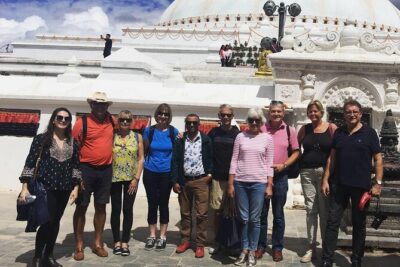
Full Day 7 UNESCO Tour with Lunch – Private/Group
Read our review →
Full Day Top 4 UNESCO Tour with Lunch – Private/Group
Read our review →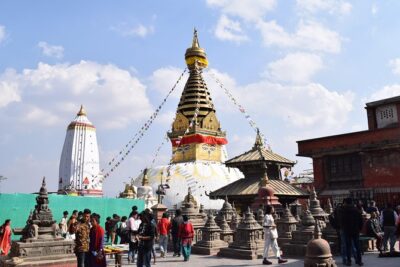
Full-Day 7 UNESCO Tour with Lunch – Private/Group
Read our review →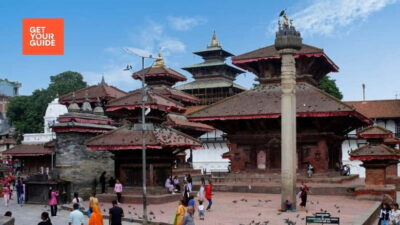
Browse the lists this tour appears in