
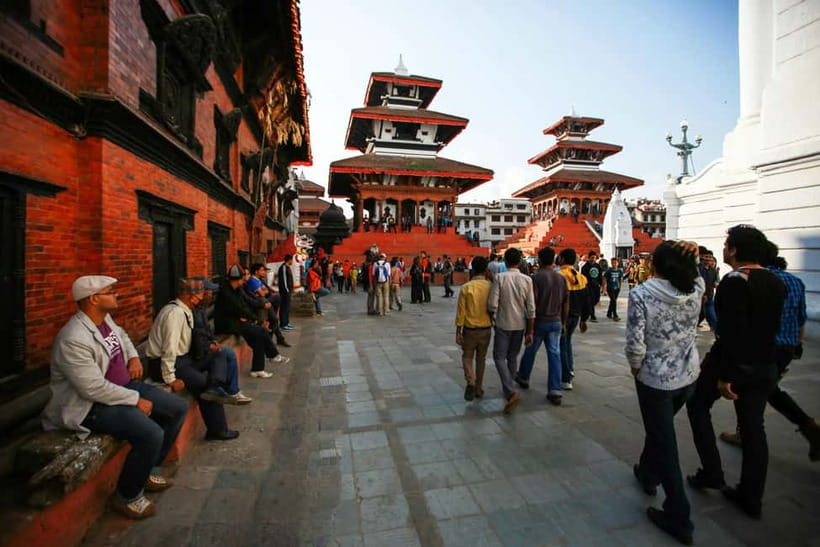
REVIEW · HISTORICAL TOURS
7-Heritage of Kathmandu: At your comfort 1-Day Tour
Kathmandu’s greatest sights fit into one ambitious day. This tour gives you a practical way to see all seven UNESCO World Heritage sites in the valley, from royal courtyards to Buddhist stupas and Hindu shrines. I like the private air-conditioned vehicle and the guide’s flexible pace, especially in a city where traffic can turn a short drive into a slow crawl. The main drawback is simple: ten hours is a lot of sightseeing, and the day includes plenty of road time.
I also like that the tour gives you a cultural spread rather than seven versions of the same monument. You’ll see the Kumari’s courtyard, walk among Patan’s carved temples, watch worship at Boudhanath, and finish near the Bagmati River at Pashupatinath. Entrance fees and lunch cost extra, so the $7 starting price is excellent value only after you add those expenses.
In This Review
- The seven stops that make this day worthwhile
- One day, seven UNESCO sites
- Kathmandu Durbar Square and the Kumari
- Swayambhunath, the Monkey Temple
- Patan Durbar Square, the valley’s art center
- Bhaktapur’s royal courtyards and tall temples
- Lunch, with a practical warning
- Changu Narayan on the hilltop
- Boudhanath, the great Buddhist stupa
- Pashupatinath and the Bagmati River
- What the $7 price really means
- Comfort, timing, and the guide
- Who should book this tour?
- Should you book the Heritage of Kathmandu tour?
- FAQ
- How long does the tour last?
- What sites are included?
- Is hotel pickup included?
- Are entrance fees and lunch included?
- What languages does the guide speak?
- Can I cancel the booking?
The seven stops that make this day worthwhile
- Kathmandu Durbar Square: See the former royal center and the courtyard associated with Kumari, Nepal’s Living Goddess.
- Swayambhunath: Climb or walk through the Monkey Temple complex, with Buddhist shrines and playful monkeys around the hilltop.
- Patan Durbar Square: Explore one of the valley’s finest collections of temples, courtyards, and stone and metal sculpture.
- Bhaktapur Durbar Square: Spend the longest visit among the 55-Window Palace, Golden Gate, Nyatapola Temple, and royal monuments.
- Changu Narayan: Visit an ancient hilltop Hindu temple with origins reaching back to the fifth century.
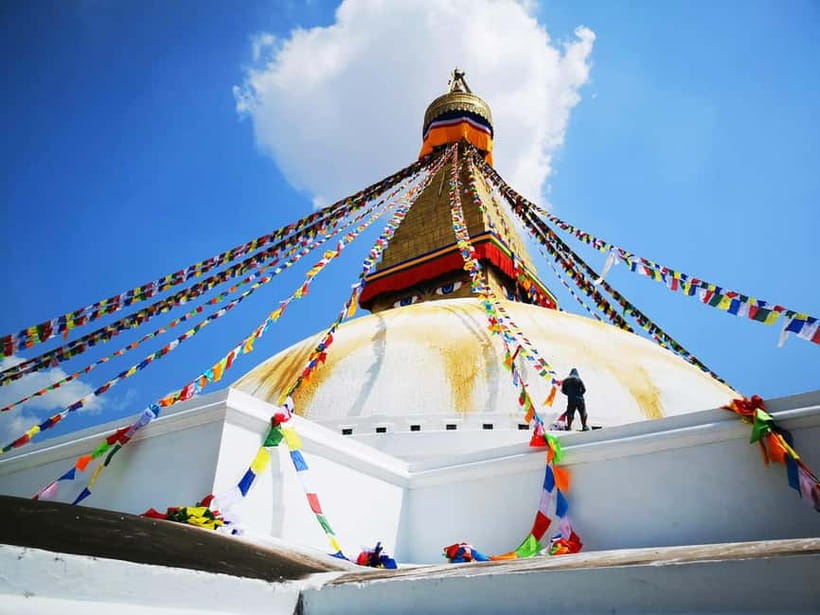
- Boudhanath and Pashupatinath: Compare Tibetan Buddhist devotion with one of Nepal’s most important Hindu pilgrimage sites.
- Private transport and a live guide: Hotel pickup, bottled water, an air-conditioned vehicle, and English or Hindi guiding keep the day organized.
One day, seven UNESCO sites
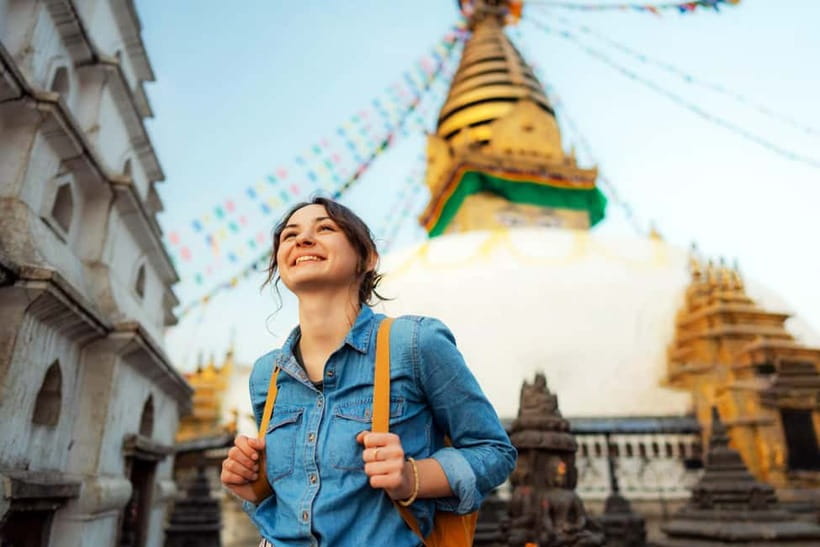
This is not a gentle wander through Kathmandu. It is a carefully packed survey of the Kathmandu Valley, designed for someone with limited time who wants to understand the city’s main cultural landmarks quickly.
The schedule begins at 8:00 AM with pickup at your Kathmandu hotel or apartment. The stated driving times look short on paper, but traffic is unpredictable. A 15-minute trip can take longer, so I would treat the schedule as a useful framework rather than a promise that every stop will begin exactly on time.
The tour uses a private air-conditioned vehicle with both a driver and a licensed guide. That matters here. You can leave water or small belongings in the vehicle between stops, get out of the city heat for a while, and adjust the pace if one monument catches your attention.
The advertised duration is ten hours, with a flexible return time. That flexibility is one of the best features. A strict group schedule would make this day feel like a race, while a good guide can give you more time at a favorite site and shorten a stop that feels less important to you.
More history tours in Kathmandu:
- Private Kathmandu Sightseeing Tour | UNESCO World Heritage sites
★ 5.0 · 756 reviews - UNESCO Seven World Heritage Tour in Kathmandu
★ 5.0 · 253 reviews - Kathmandu Private Sightseeing Tour | UNESCO World Heritage Sites
★ 5.0 · 109 reviews
Kathmandu Durbar Square and the Kumari
Your first stop is Kathmandu Durbar Square, reached after hotel pickup and a short drive. Allow about 45 minutes with the guide.
This former royal palace complex introduces the political and religious traditions that shaped the valley. Courtyards, temples, carved windows, and palace buildings sit close together, so the first visit can feel dense with detail. Your guide is especially useful here because the meaning of the buildings is not always obvious from their appearance.
The key possibility is seeing the Kumari, known as the Living Goddess. She resides in a courtyard within the square, though an appearance is not guaranteed. You should approach this part respectfully and follow the guide’s instructions about where to stand and whether photography is allowed.
Starting here is sensible. The site gives you a quick introduction to Nepal’s royal past before the day shifts toward Buddhist and Hindu places of worship. It is also a good moment to ask your guide how the seven sites connect, rather than treating them as isolated monuments.
Swayambhunath, the Monkey Temple
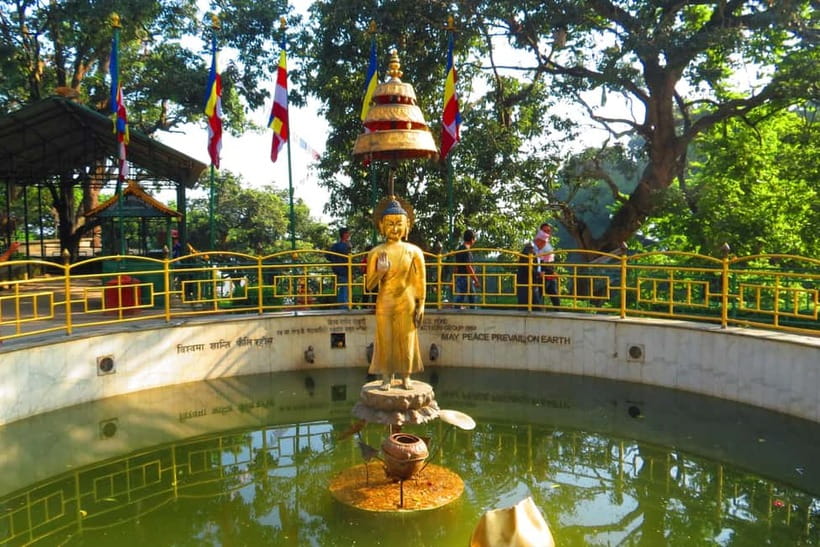
Around 9:00 AM, the vehicle heads uphill to Swayambhunath. The guided visit lasts about 45 minutes.
Swayambhunath is one of Kathmandu’s most recognizable Buddhist sites. The complex is traditionally dated to at least the fourth century, and its hilltop setting gives it a distinct presence above the city. Monkeys move through the grounds, which explains the popular name Monkey Temple, but they are still wild animals. Keep food and loose items secure.
This stop adds a different mood after Kathmandu Durbar Square. Prayer flags, shrines, and Buddhist symbols replace the palace courtyards, and the hilltop setting gives you a change of pace. The visit is fairly short, so listen closely while your guide explains the main features.
If stairs or uneven ground are difficult for you, ask about the route before arrival. The activity information is inconsistent about wheelchair access: one section calls the tour wheelchair accessible, while another says it is not suitable for wheelchair users. The vehicle may be accessible in some situations, but the heritage sites themselves can involve steps and rough surfaces. Confirm this directly before booking.
Patan Durbar Square, the valley’s art center
The next drive takes about 20 minutes, followed by roughly one hour at Patan Durbar Square.
Patan, also called Lalitpur, was once the seat of the Malla kings. Its square is known for closely grouped temples, courtyards, statues, and fine decorative work. The site feels especially rewarding if you care about wood carving, metalwork, and the way religious buildings are arranged around public spaces.
I would use this hour to slow down and look up. Carved windows and roof details are easy to miss when you focus only on the main temple. Your guide can point out the difference between Buddhist and Hindu imagery, which is important in a valley where the two traditions have long shared space.
Patan is also a good place to ask questions. The guide has been praised for being enthusiastic, flexible, and happy to explain the background of each place. That personal explanation is a major part of the tour’s value. Without it, you could see seven beautiful sites and still miss the connections between them.
A short list of alternatives around Kathmandu
- Everest Base Camp Trek – 14 Days
★ 5.0 · 1,499 reviews - Everest Base Camp Helicopter Tour landing at Everest View Hotel
★ 5.0 · 668 reviews - Half day cooking class in Thamel kathmandu
★ 5.0 · 607 reviews - Everest Base Camp Trekking
★ 5.0 · 485 reviews
Bhaktapur’s royal courtyards and tall temples
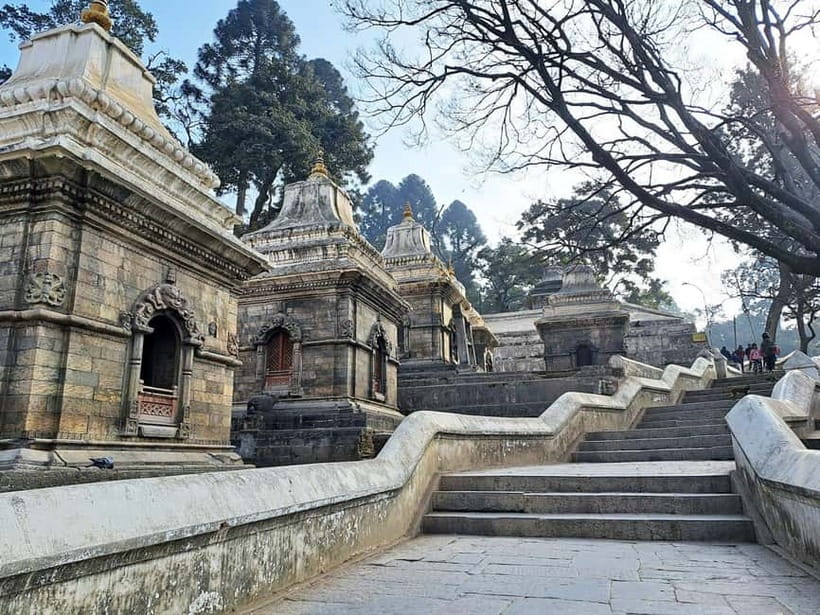
Bhaktapur comes next, after a drive listed at about 45 minutes. You receive approximately 85 minutes for the guided visit, followed by a one-hour lunch break.
This is the longest heritage stop, and that is appropriate. Bhaktapur Durbar Square is a former Malla royal complex with an unusually strong sense of architectural unity. The 55-Window Palace, Golden Gate, Nyatapola Temple, and statue of King Bhupatindra Malla form the main landmarks.
Nyatapola is particularly striking for its height and balanced form. The Golden Gate rewards a close look at its detailed decoration, while the 55-Window Palace gives you a feel for the courtly world of the old kingdom. Bhaktapur is the place where I would most want the guide to pause and explain rather than rush from one photo stop to the next.
The schedule gives you more time here than at Swayambhunath or Changu Narayan, but the day is still demanding. If Bhaktapur is your main reason for booking, ask in advance how much flexibility you have. The operator says the return time can be adjusted, but extending one stop may mean shortening another.
Lunch, with a practical warning
Lunch is scheduled for one hour at about 1:30 PM. Food and drinks are not included, so budget separately.
A rooftop restaurant has been used for lunch and was described as pleasant. That setting can provide a welcome break after a morning of walking and driving. Still, one reported case involved serious food poisoning later in the day. That does not prove the restaurant is unsafe, but it is enough reason to be careful with what you order and to choose bottled or sealed drinks if you have a sensitive stomach.
The tour includes bottled drinking water, which is helpful. I would still carry any personal snacks or medication you need, since this is a long day and the lunch stop is fixed into the schedule.
Changu Narayan on the hilltop
After lunch, allow about 15 minutes in the vehicle before the route continues to Changu Narayan. The guided visit is around 30 minutes.
Changu Narayan is an ancient Hindu temple dedicated to Vishnu, with origins reaching back to the fifth century. Its hilltop position makes it feel removed from the busier parts of the valley, even though it is part of the same packed touring day.
The visit is short, so it works best as a focused stop. Listen for the oldest architectural and religious details your guide points out, then take a moment to appreciate the setting. Changu Narayan may not have the scale of Bhaktapur or the fame of Boudhanath, but it helps complete the picture of the valley’s long religious development.
The drive is also a reminder of the tour’s tradeoff. You are covering a large area in one day, and the vehicle is what makes that possible. You gain access to all seven sites, but you give up the slower feel of exploring each neighborhood on foot.
Boudhanath, the great Buddhist stupa
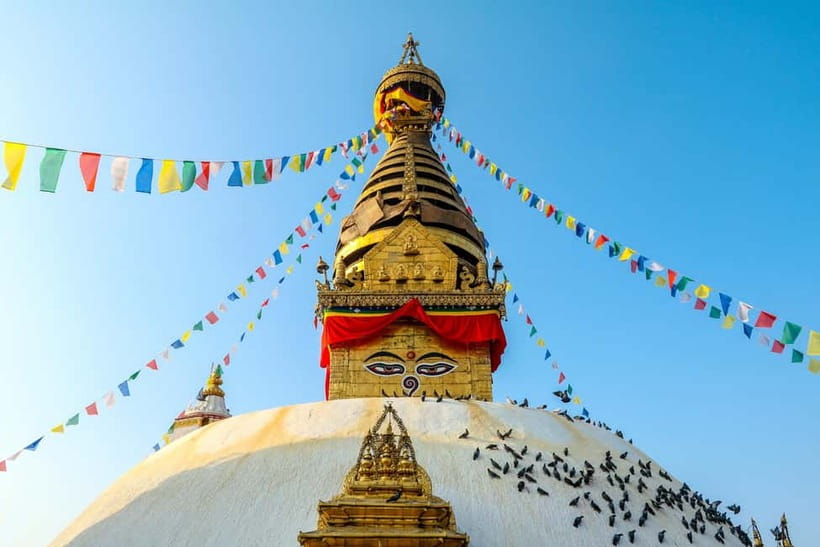
The journey to Boudhanath takes about 30 minutes, with about an hour at the stupa.
Boudhanath is one of Nepal’s largest spherical stupas and a major center of Tibetan Buddhism in Kathmandu. The surrounding area is often called Little Tibet, and the stupa’s circular layout creates a clear rhythm for your visit. You can walk around the monument while watching religious activity and the movement of people through the surrounding lanes.
This is one of the tour’s most valuable contrasts. Earlier sites focus on palaces, temples, and hilltop shrines. Boudhanath shows a different form of devotion, centered on the stupa and the daily act of walking around it.
An hour is enough for a guided introduction and a circuit, though you might want more time if you enjoy observing religious practice. Keep your camera respectful. Your guide can help you understand what is appropriate, especially near active worship.
Pashupatinath and the Bagmati River
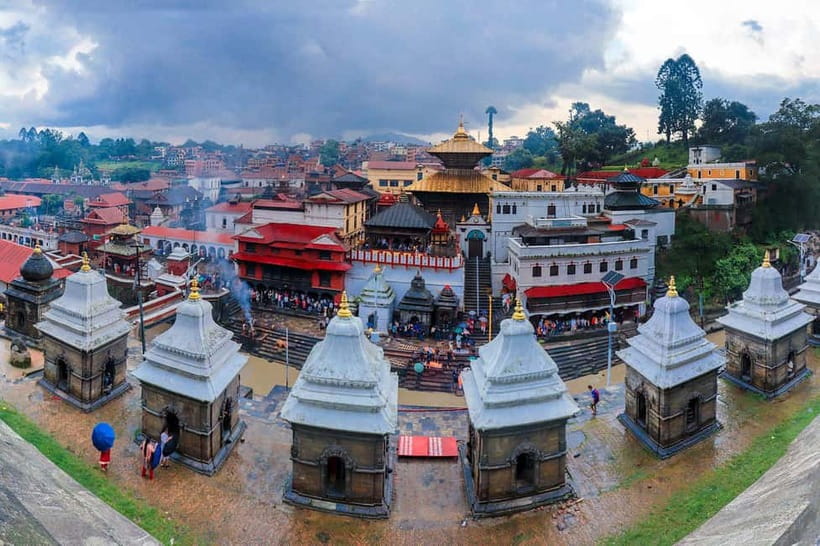
The final major stop is Pashupatinath Temple, reached after a drive of about 15 minutes. The scheduled visit lasts around 90 minutes, making it one of the longer stops.
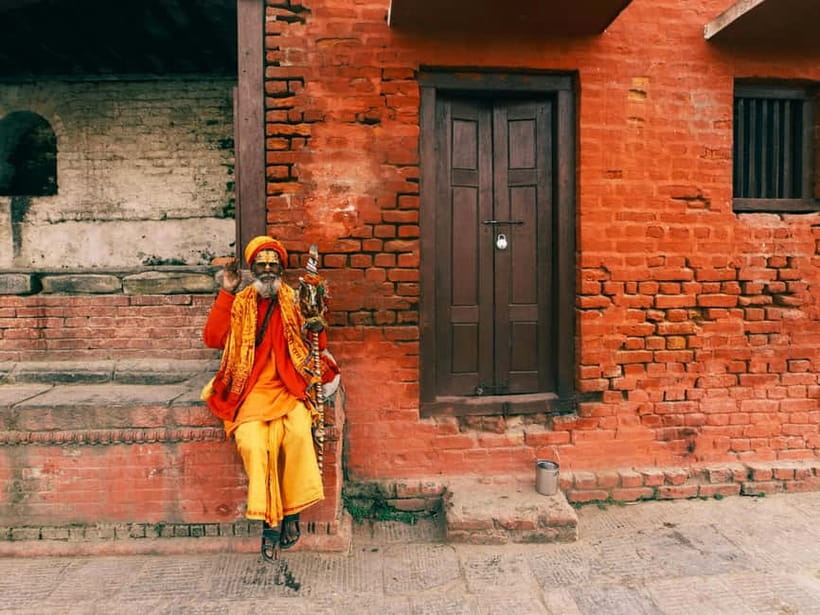
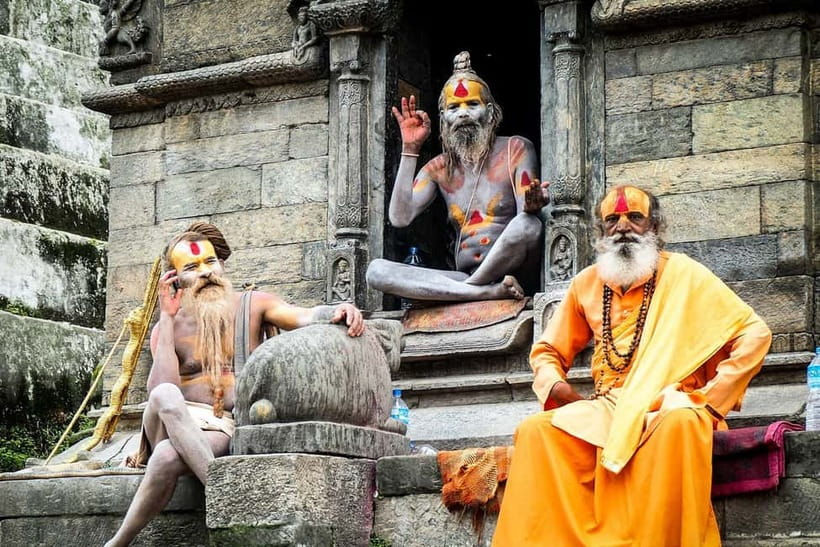
Pashupatinath is a major Hindu pilgrimage site dedicated to Lord Shiva, with origins dating at least to the fifth century CE. The complex lies beside the Bagmati River, where Hindu cremation ceremonies take place. These ceremonies are private religious events, not performances, so observe quietly and follow your guide’s advice about distance and photography.
The tour can also include the option to observe the evening arati. If the timing works, this creates a fitting close to the day because it brings together worship, music, fire, and the river setting. The activity details do not guarantee that the arati will be available during every departure, so treat it as an option rather than a promise.
Pashupatinath can be emotionally intense. You may see ceremonies connected with death, and the atmosphere is very different from the decorative palace squares. A guide who explains local customs without turning the moment into a spectacle adds real value here.
What the $7 price really means
At $7 per person, the advertised rate is remarkably low for a ten-hour private vehicle tour with hotel pickup, a driver, a licensed guide, and bottled water. The price becomes especially attractive if you are traveling alone or with a small party and want the convenience of private transport.
But the headline price is not your full budget. Monument entrance fees are excluded, as are lunch, other drinks, and personal expenses. An entrance-fee add-on is available, which may simplify the day. Check the final booking total carefully so you know whether you are comparing the base price or the package with admissions included.
The value is strongest for first-time visitors with only one free day in Kathmandu. You get a quick orientation to the valley and can decide which sites deserve a longer return visit. It is less compelling for someone who prefers slow photography, long café breaks, or detailed museum visits.
Comfort, timing, and the guide
The air-conditioned private vehicle is not a minor perk. Kathmandu’s roads can be chaotic, and the schedule involves repeated drives across the valley. Having a driver handle the route lets you focus on the sites rather than maps, taxis, or parking.
The guide is the other major strength. The strongest praise has focused on an excellent, enthusiastic, flexible guide who answered questions and adjusted to individual needs. The languages offered are English and Hindi. No guide name is provided, so you cannot request a particular person from the information available.
Expect a long day with plenty of movement. One booking report found the day lasted longer than planned and still covered every scheduled attraction without pressure. That can be a benefit if you want a full day, but it may feel tiring if you are not used to heat, stairs, uneven surfaces, and frequent transitions.
Pickup is from your Kathmandu hotel lobby or the entrance of your residential apartment. Wait there five to ten minutes before the scheduled time. Large bags, oversize luggage, alcohol, and drugs are not allowed, so bring only what you need for sightseeing.
Who should book this tour?
I would recommend it to you if:
- You have only one day for Kathmandu Valley.
- You want all seven UNESCO sites in one organized outing.
- You prefer a private vehicle over arranging several taxis.
- You want explanations in English or Hindi.
- You appreciate a guide who can adjust the pace.
- You are comfortable with a full ten-hour schedule.
I would think twice if you want a relaxed day with long meals and unplanned wandering. I would also avoid booking without clarification if you use a wheelchair, because the accessibility information is contradictory and the monuments may present physical difficulties.
The tour is best viewed as an introduction, not the final word on Kathmandu. It gives you the broad picture, then leaves you free to return to Patan, Bhaktapur, Boudhanath, or another favorite site on a quieter day.
Should you book the Heritage of Kathmandu tour?
Book it if your priority is coverage, comfort, and a strong cultural overview at a very low starting price. The guide’s flexibility and the private vehicle help make a demanding route manageable, and the chance to see the Kumari, Boudhanath, and Pashupatinath in one day is hard to match independently.
Before paying, confirm the total cost with entrance fees, ask about the exact lunch arrangement, and clarify wheelchair suitability. If you accept the long drives and packed schedule, this is a smart first-day introduction to Kathmandu Valley.
FAQ
How long does the tour last?
The tour is advertised as lasting 10 hours. It begins at 8:00 AM, and the return time is described as flexible depending on how long you spend at each heritage site.
What sites are included?
The route includes Kathmandu Durbar Square, Swayambhunath Temple, Patan Durbar Square, Bhaktapur Durbar Square, Changu Narayan Temple, Boudhanath Stupa, and Pashupatinath Temple.
Is hotel pickup included?
Yes. Pickup and return to your hotel or apartment in Kathmandu are included. You should wait in the hotel lobby or at the apartment entrance five to ten minutes before pickup.
Are entrance fees and lunch included?
No. Monument entrance fees, lunch, beverages, and personal expenses are not included. An entrance-fee add-on is available.
What languages does the guide speak?
The live guide service is offered in English and Hindi.
Can I cancel the booking?
You can cancel up to 24 hours before the scheduled activity for a full refund. The tour also offers a reserve-now-and-pay-later option.
New in the Kathmandu listings
- Traditional Momo Making Class★ 5.0 · 10 reviews
- Kathmandu: Ancient City Kirtipur & Pharping Monastery Tour★ 5.0 · 2 reviews
- Kathmandu to Pokhara Premium sofa bus ticket★ 4.0 · 17 reviews
- Women Empowerment Project(Nepali cooking class & jewelry workshop★ 5.0 · 15 reviews
- 7-Day Langtang Valley Trek from Kathmandu★ 5.0 · 1 review
- Kathmandu 2 Nights 3 Days Chitwan Jungle Safari Tour★ 5.0 · 9 reviews
- Yoga Experience Day Trip with Private Transfer From Kathmandu★ 4.0 · 2 reviews
- Wildlife Adventure in Chitwan Nepal★ 4.0 · 4 reviews
Historical Tours, compared.
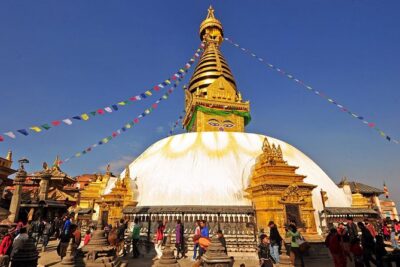
Private Kathmandu Sightseeing Tour | UNESCO World Heritage sites
Read our review →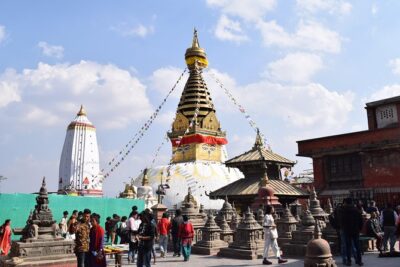
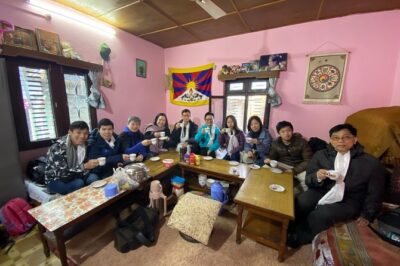
Full-Day Tibetan Cultural Tour to Tibetan Settlements Pokhara
Read our review →
Kathmandu Private Sightseeing Tour | UNESCO World Heritage Sites
Read our review →
Afternoon Tibetan Cultural Tour to Tibetan Settlements Pokhara
Read our review →
Full Day Private Top 4 UNESCO Heritage Tour W/Lunch.
Read our review →
Nagarkot Sunrise & Bhaktapur UNESCO Heritage Private Tour
Read our review →Browse the lists this tour appears in